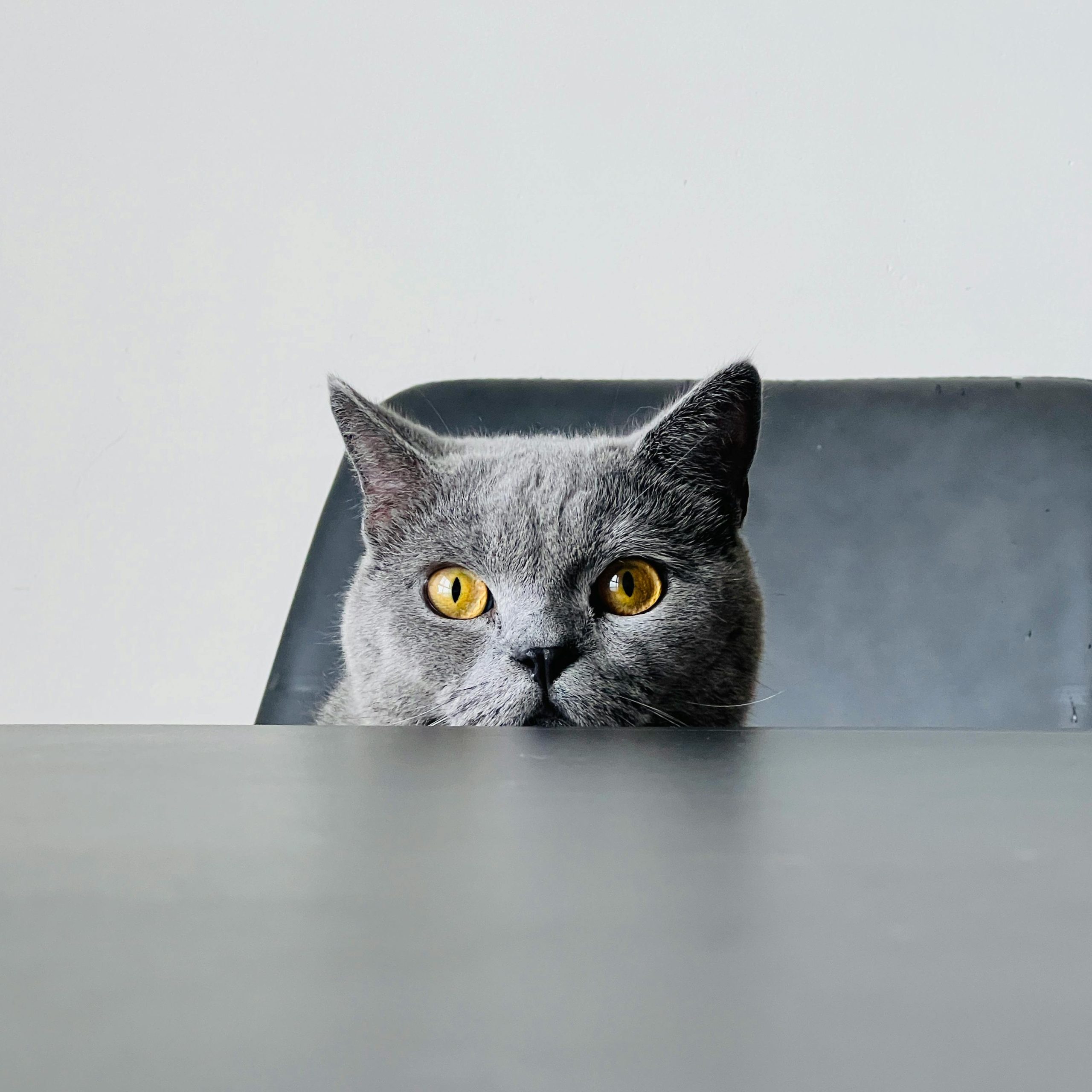
You set your coffee mug down. Your cat walks over, makes full eye contact with you, and slowly pushes it off the edge. Then looks at you. Then walks away.
If you’ve lived with a cat for longer than a week, this scene is painfully familiar. But what’s actually going on inside that fluffy little brain? Is your cat evil? Bored? Just deeply, personally invested in ruining your mornings?
The answer is more fascinating — and funnier — than you might think. Let’s break down exactly why cats knock things off tables, backed by animal behavior science.
1. They’re Testing Whether It’s Alive
Cats are natural-born hunters. Before they commit to a pounce, wild cats test their prey — poking, batting, and nudging it to see if it reacts. Your coffee mug, your phone, your favorite pen — to a cat’s instinct-wired brain, these are potential prey items until proven otherwise.
When your cat bats at an object and it falls, rolls, or makes a noise, they get an answer: this thing moves. That’s interesting. Extremely interesting. The nudging isn’t random — it’s a hunting probe, carried straight from their wildcat ancestors into your kitchen counter.
This is also why cats tend to do it more with objects that have some give or wobble to them. A flat book? Mild interest. A round pen that spins and rolls? Maximum investigation mode.
2. They Want Your Attention — and They Know It Works
Here’s the uncomfortable truth: your cat has trained you.
The first time your cat knocked something over, you probably reacted. Maybe you rushed over, said their name, moved the object, or scolded them. To a cat, any reaction — even a negative one — counts as attention. And once they discover that knocking your water glass over gets an immediate response, the behavior becomes a reliable tool.
Animal behaviorists call this learned attention-seeking behavior. The cat has run the experiment: push thing → human appears. From that point on, the behavior is reinforced every time it works.
The fix? Ignore the knock. Easier said than done when your laptop is about to go off a table, but breaking the attention loop is the only way to reduce it.
3. They’re Bored Out of Their Minds
Indoor cats spend an average of 16 hours a day sleeping — but the hours they’re awake? They need something to do. When there’s nothing stimulating in their environment, cats will make their own entertainment.
Knocking things off tables is, from a cat’s perspective, a pretty solid game. There’s a cause-and-effect element (I push, it falls), a sensory reward (the sound, the bounce, the roll), and sometimes a bonus prize (your horrified face).
If your cat is regularly going on counter-sweeping missions, it’s often a sign they need more enrichment: more play sessions, puzzle feeders, or at least some cardboard boxes to destroy.
4. They’re Claiming Space (Scent Marking Without the Spray)
Cats use scent glands in their paws to mark objects as theirs. When a cat walks across a surface and pats at things, part of what’s happening is territorial communication — this counter, these objects, this general area: mine.
Knocking an object off a surface can also be a way of “editing” an environment. Cats are sensitive to changes in their territory. A new object on the counter, a vase that wasn’t there yesterday, your keys sitting in a new spot — these all register as disruptions that the cat may feel compelled to investigate or remove.
They’re not being destructive. They’re being very thorough property managers.
5. They Like the Physics of It
This might be the most underrated reason: cats genuinely seem to enjoy the cause-and-effect of watching objects fall.
Research into feline cognition has shown that cats develop an understanding of object permanence — they know objects continue to exist even when out of sight. They’re also curious about how objects move and behave in their environment. Pushing something off a ledge and watching it land, bounce, or shatter is actually a form of environmental investigation.
Some cats will spend several minutes with one object — pushing it to the edge slowly, watching it teeter, retreating, then pushing again. That’s not random. That’s a cat studying physics.
6. They Can, and No One Has Stopped Them
Sometimes the simplest explanation is the right one. Cats knock things off tables because they’re able to, they find it interesting, and historically, the consequences have been either nonexistent or actively rewarding.
Cats respond to consistency. If the rule is “no knocking things off the table,” but that rule is only enforced sometimes, the behavior doesn’t go away — it just becomes less predictable. Consistent redirection toward acceptable behaviors (a puzzle toy, a dedicated knocking surface, an enrichment station) is the most effective long-term solution.
Frequently Asked Questions
Is knocking things off tables a sign of a behavioral problem? Not typically. It’s normal cat behavior rooted in curiosity, instinct, and learned attention-seeking. It only becomes a concern if it’s paired with other signs of distress, like excessive vocalization or destructive scratching.
What cat breeds are most likely to knock things over? High-energy, intelligent breeds — like Bengals, Siamese, and Abyssinians — tend to exhibit this behavior more. But any bored cat can become a committed table-sweeper.
Can you train a cat to stop knocking things over? You can redirect the behavior. Providing enrichment, ignoring the knocks, and removing high-value targets from surfaces all help. Outright stopping it entirely is a harder goal — you’re working against instinct.