Walk into any pet store, and you will find an entire aisle of cat accessories. Toys in every conceivable shape, beds in seventeen varieties, feeders and waterers, puzzle toys, dental treats, grooming tools, harnesses, window perches, collars, and tunnels. It is simultaneously impressive and overwhelming, and navigating it without a framework produces the universal cat owner experience of spending $200 on accessories that your cat ignores entirely while being obsessed with the cardboard box the accessories arrived in.
This guide changes that. Not by telling you which products to buy — but by explaining what each category of cat accessory actually does for your cat’s biological and behavioral wellbeing, which accessories genuinely improve their quality of life, which are optional extras, and how to make the most impactful ones yourself for a fraction of the retail cost. By the end, you will have a clear list of what your cat actually needs, an honest assessment of what is marketing, and the knowledge to make the most impactful pieces yourself this weekend.
The Five Categories of Cat Accessories — Ranked by Actual Impact on Wellbeing
Not all cat accessories are created equal. Some address fundamental behavioral needs that have direct impacts on physical and mental health. Others are pleasant additions that enrich an already adequate environment. And some are almost entirely for the benefit of the human purchaser. Here is the hierarchy.
Category One — Scratch Surfaces (Non-Negotiable)
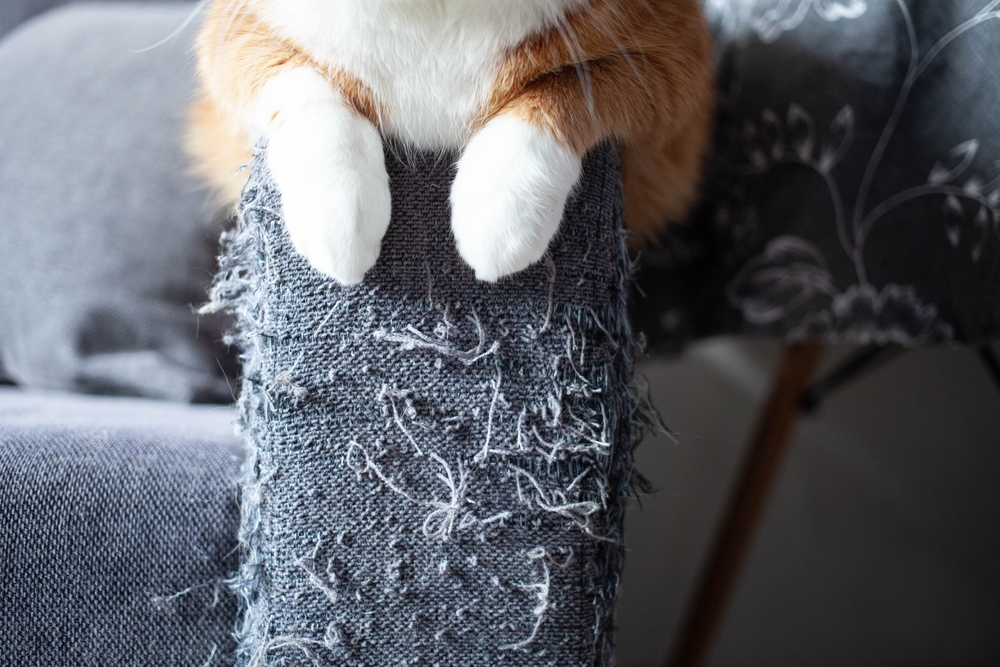
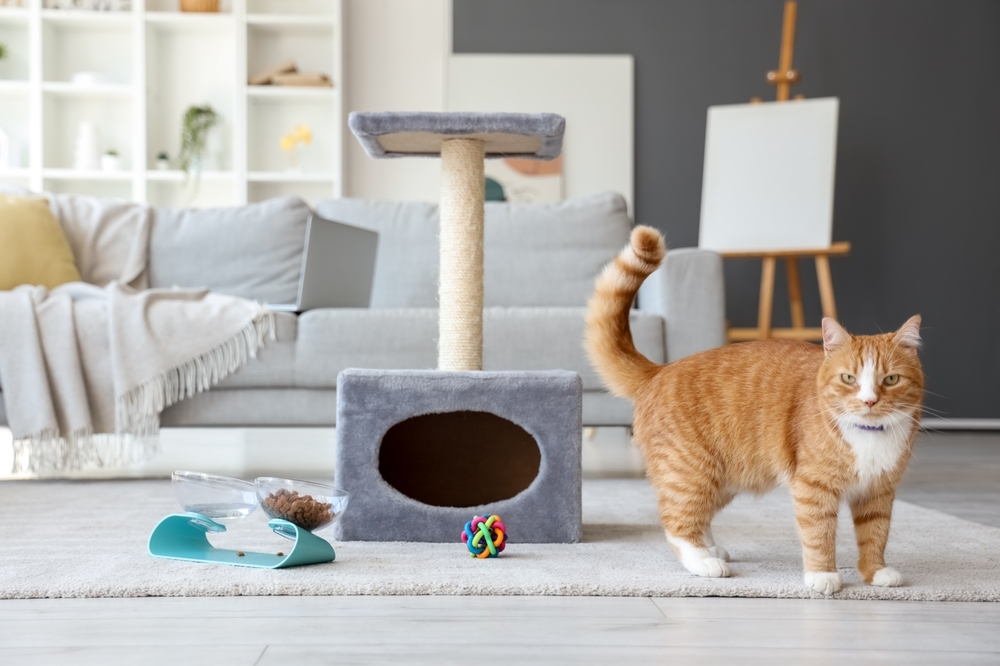
This is the category with the highest functional impact and the worst commercial options. Scratching is not optional behavior in cats — it is a biological necessity that cannot be trained away or redirected through punishment, only redirected toward the correct surface.
Scratching is a natural behavior for cats. It helps them mark their territory, stretch their muscles, and keep their claws in tip-top shape. Choosing materials that are sturdy and easy to clean is essential. A scratching post made from sisal rope or carpeted with durable fabric will provide a great outlet for the scratching instinct.
The commercial scratching post market produces many beautiful-looking products with serious functional flaws — posts that are too short for a full stretch, bases too light to resist the force of active scratching, synthetic carpet surfaces that do not satisfy the claw-sheath removal function, and wobbles that make the post feel unsafe and lead to immediate abandonment. The DIY sisal post in this collection’s dedicated build guide costs $25 and outperforms $80 store-bought equivalents in every functional category that matters to your cat.
The minimum scratching provision for one cat: one tall vertical sisal post of at least 30 inches and one horizontal scratch surface at floor level, placed in the most socially active room of the home. Every additional scratch surface in different rooms reduces the probability of your furniture being targeted.
Category Two — Climbing and Vertical Territory (High Impact)
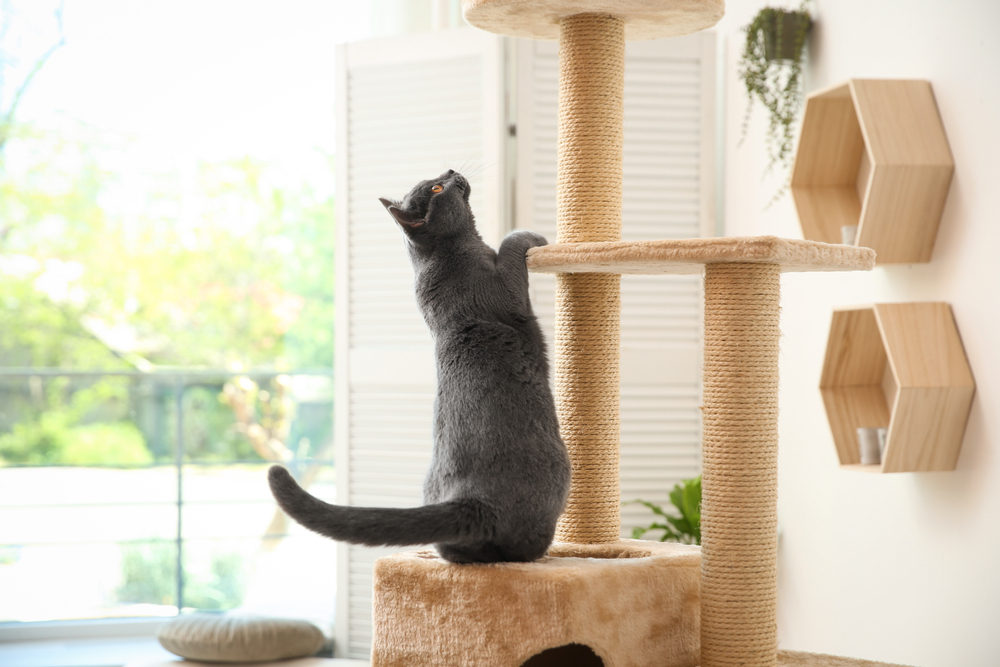
Shelves add vertical enrichment to your cat’s environment. This is especially important for indoor cats who don’t have the chance to climb trees and other obstacles outside. High spots give cats a sense of safety and security — many cats choose these spots for a nap or simply to lord it over their kingdom from on high.
Indoor cats without any vertical territory live in an environment that is perpetually at ground level — the most vulnerable position in feline evolutionary experience. The behavioral consequences of perpetual ground-level living include increased stress, increased territorial marking, and increased aggression toward other cats in the same space. Vertical territory reduces all three.
The minimum for one cat: one elevated perch of at least 24 inches height placed near a window or in the main social room. Optimal: a connected system of platforms at multiple heights as described in the cat wall build guide in this collection. This is the accessory category where DIY produces the most dramatic improvement over commercial options — in both cost and aesthetic integration with the home.
Category Three — Enrichment Feeding Accessories (High Impact, Often Ignored)
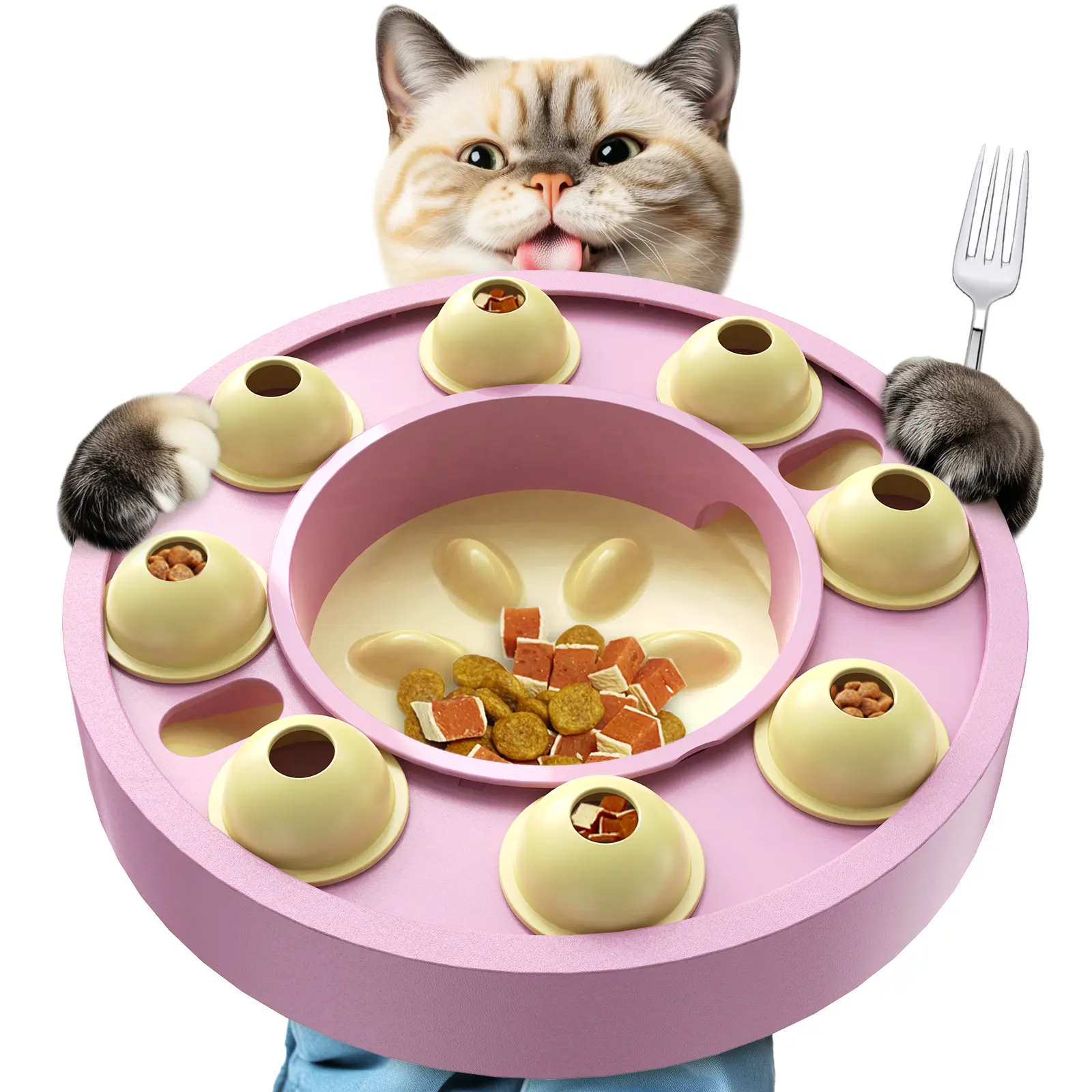
You can add catnip or treats to make DIY projects more appealing. Creating fun and engaging toys through enrichment feeding, where your cat works for their food, provides cognitive exercise while satisfying natural hunting behavior.
Cats in the wild do not eat from a bowl. They hunt — an activity that involves problem-solving, physical engagement, and approximately twenty small prey catches per day. A domestic cat who eats from a bowl twice daily is receiving the nutritional outcome of hunting with none of the behavioral process, and that process deficit produces the boredom and anxiety that manifest as the 3 am zoomies, the destruction of household objects, the excessive vocalization, and the general sense that your cat has too much unfocused energy.
The DIY toilet paper roll treat dispenser from this collection’s accessories article is the entry point to enrichment feeding, and it takes five minutes to make. More sophisticated options include a puzzle board — a shallow box with multiple different obstacles — made from a repurposed baking tray with wine corks, muffin tin compartments, and small plastic cups of different heights glued inside. The cat must navigate around and over different obstacles to reach hidden kibble. The cognitive engagement this produces in a typical feeding session is equivalent to thirty minutes of conventional play.
Category Four — Sleeping and Resting Accessories (Medium to High Impact Depending on Individual)
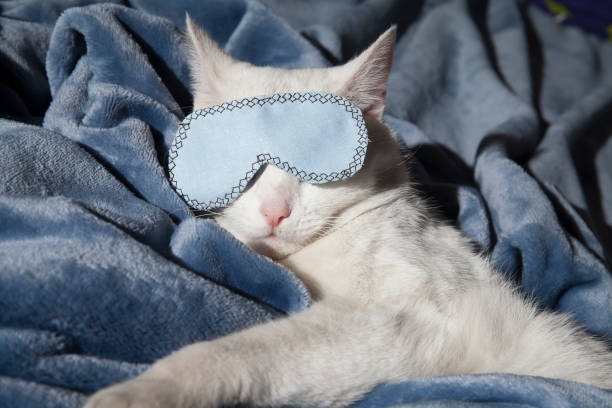
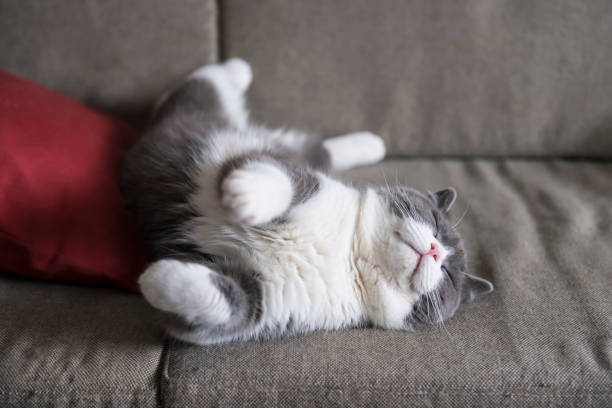
Cats sleep 12 to 20 hours a day, and the quality of their sleeping environment directly affects the quality of that sleep. The essentials for genuinely restorative cat sleep: an enclosed or semi-enclosed structure that provides the psychological security of a den, a surface that retains warmth (the sweater cave bed from the accessories article is one of the most effective for this), and a location that is above the main traffic paths of the household.
The commercial cat bed market is dominated by open, flat, basket-style beds that most cats ignore because they provide no enclosure or security — the cat equivalent of being asked to sleep in the middle of an open floor. An enclosed cave bed, a cardboard box with a door, a high shelf with a three-sided surround — any of these outperforms a flat basket for most cats because they replicate the enclosed resting spots cats use naturally.
The vintage suitcase bed and the sweater cave from the accessories article in this collection both satisfy the enclosure requirement and the warmth requirement at essentially zero cost, and both photograph so beautifully that they belong in a design magazine alongside cat content. If your cat is sleeping in an enclosed space anywhere in your home — a drawer, a box, a cabinet — that behavior is telling you directly that the open bed you bought is less appealing than the nearest enclosed alternative.
Category Five — Interactive Play Accessories (High Impact for Energy Management)
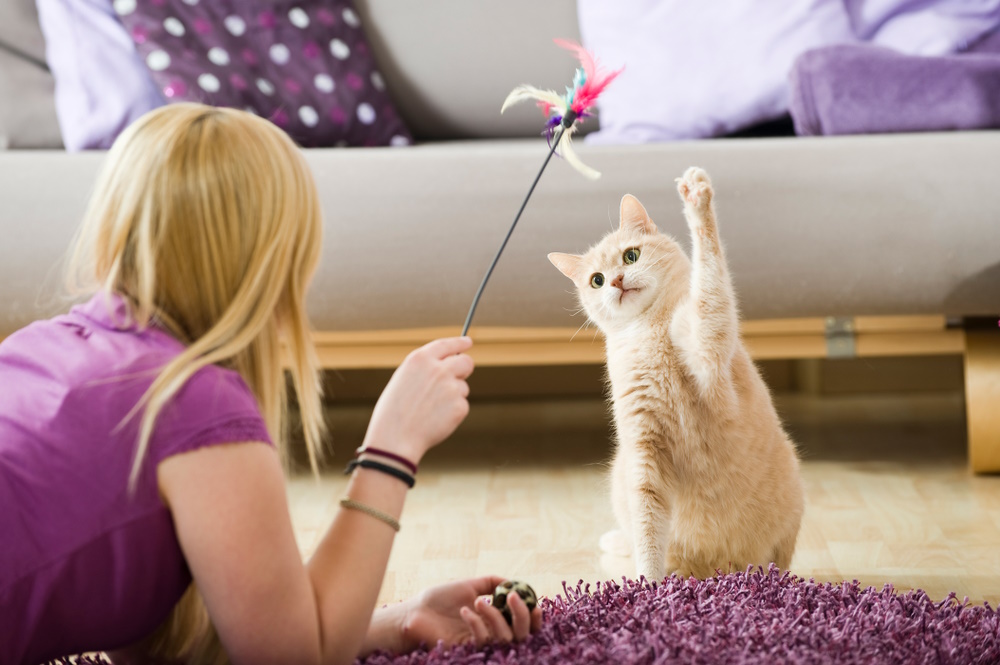
Cats sleep more than half the day and like to stay warm and cozy while napping. But active play periods are critical for physical health, mental stimulation, and the behavioral outlet of prey drive.
Interactive play accessories — wand toys and anything operated by a human — are categorically different from independent toys in their effectiveness. A wand toy operated by a human who moves it like prey provides an exercise session that independent toys simply cannot replicate, because the human’s responsiveness to the cat’s movements creates the specific unpredictability that activates the hunting response fully.
The DIY feather wand from the accessories article takes twenty minutes to make and provides better play sessions than $30 commercial alternatives because the connection between handler and toy through the rod is more direct, the movement is more naturalistic, and the attachment can be changed to match your cat’s current preference — feathers one week, crinkle ball the next, catnip sachet the next.
Two twenty-minute interactive wand sessions per day — one morning and one evening, timed around a cat’s natural crepuscular activity peaks — produce a level of behavioral calm, reduced nocturnal activity, and reduced furniture destruction that is more effective than any anxiety supplement or behavioral product on the market.
Category Six — The Accessories That Are Almost Entirely for Humans
This section exists because cat owners deserve honesty. Cat birthday party hats. Cat Halloween costumes. Cat-themed Instagram accessories. Designer collars with crystal decorations. Cat perfume. These are not accessories for your cat — they are accessories for your relationship with your cat, and there is nothing wrong with that as long as you are clear about the distinction.
Your cat will tolerate most of these with varying degrees of resignation. Some cats object strongly to any attached accessory, and the distress this causes is real and worth respecting. Others are relaxed enough about their physical body to wear a hat for the thirty seconds required to photograph it before removing it. Know your cat, photograph quickly, reward generously, and never prioritize the photograph over your cat’s comfort.
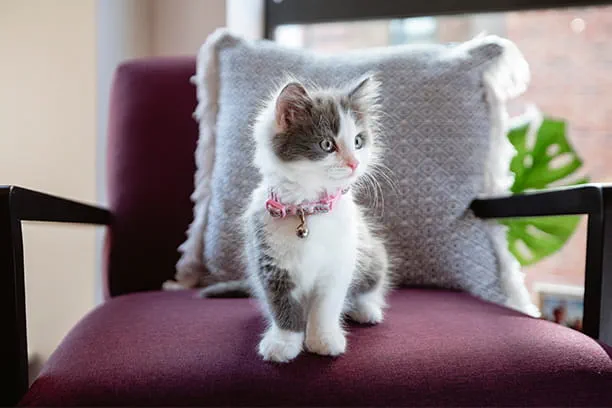
The one accessory in this category that actually bridges into genuine usefulness is the harness — specifically for cats who have been harness-trained from kittenhood or young adulthood. A cat who is harness-trained and walks on a leash outdoors gets outdoor territory access, sensory enrichment, and physical exercise that genuinely benefits their wellbeing. The commercial market for cat harnesses is full of options, but a crocheted harness pattern — referenced in the accessories source material for this collection — produces a soft, custom-fitted version at a fraction of the cost.
Building Your Cat’s Accessory Environment — The Priority Order That Matters
If you have no cat accessories beyond a food bowl and a litter box, build in this order. First, one tall sisal scratching post in the most-used room. Second, one elevated perch near a window. Third, one puzzle feeder or treat dispenser for enrichment feeding. Fourth, a wand toy for interactive play. Fifth, one enclosed sleeping space. Everything else — the additional climbing systems, the hammocks, the tunnel networks, the vintage suitcase beds, the gallery wall scratchers — layers on top of that foundation and enrich an already-adequate environment.
Every single item on that priority list can be made rather than bought. The sisal post, the floating shelf perch, the toilet paper roll dispenser, the feather wand, and the sweater cave — all five are covered in detailed build guides in this collection. All five together cost under $50 in materials. All five will be used daily by a cat who has them.
The expensive commercial cat accessories are not the problem — some of them are beautifully designed and genuinely well-engineered. The problem is buying commercial accessories without a framework for what actually matters to your cat’s wellbeing, and spending $200 on Category Six while your cat’s scratching needs and vertical territory needs remain unmet. Understand the priority. Build the foundation. Then add whatever beautiful extras your space and budget allow. Your cat will tell you, through enthusiastic daily use of everything in the foundation layer, that you finally understood what they needed.