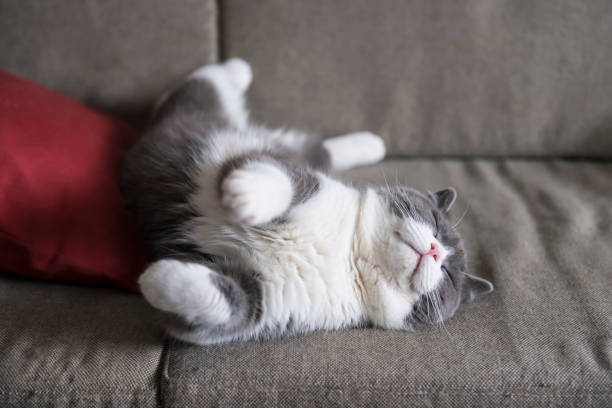
Your cat has food. Your cat has water. Your cat has a perfectly adequate litter box in a reasonably convenient location. Your cat has the entire sofa, the bed, and the warmest spot in the house. By any reasonable measure, your cat has everything.
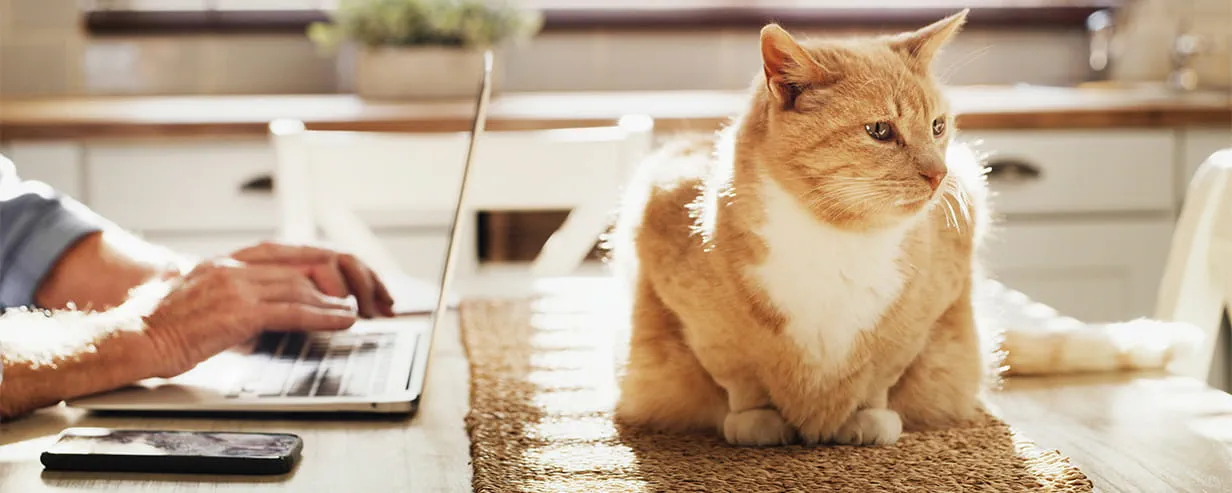
And yet. Your cat is knocking things off surfaces at 3 am. Your cat is scratching the corner of the sofa with a focused intentionality that suggests this is not an accident. Your cat is meowing with a persistence that suggests they have something specific to communicate and have decided volume is the way to ensure it is received. Your cat is chewing the plants.
The problem is not ingratitude. The problem is that a domestic indoor cat who is not receiving adequate mental and physical enrichment is — from the perspective of their evolutionary heritage — an apex predator who has been removed from every context that makes sense of their existence, and is coping with that situation through the behavioral expressions that an understimulated predator produces.
This is not a judgment. It is a diagnosis. And it is a completely solvable problem.
Also read 15 DIY Crochet Cat Toys That Are So Cute For This Summer
Why Indoor Cat Enrichment Is Not Optional
Cats are obligate carnivores whose behavioral repertoire is built around hunting — stalking, chasing, catching, and consuming prey. In the wild, a cat spends a significant portion of their waking hours in activities related to hunting. The indoor cat who receives their food from a bowl has the same drives, instincts, and behavioral needs as their outdoor counterpart — and zero appropriate outlet for any of them unless the owner provides one.
The behavioral problems most commonly reported by indoor cat owners — excessive vocalization, destructive scratching, aggression, furniture climbing, knocking things off surfaces, overgrooming, and redirected predatory behavior toward human ankles — are, in the majority of cases, the symptoms of insufficient enrichment. The cat is not being difficult. The cat is doing the only things available to a predator with no prey.
These twelve ideas create appropriate prey.
Idea 1: The Window Perch — The Cat Television
The single most important environmental addition you can make for an indoor cat is unobstructed access to a window with an interesting view.
A cat who can observe the world outside — birds, squirrels, passing pedestrians, blowing leaves — is a cat whose predatory observational instincts are engaged without requiring you to do anything beyond positioning furniture and clearing the window ledge.
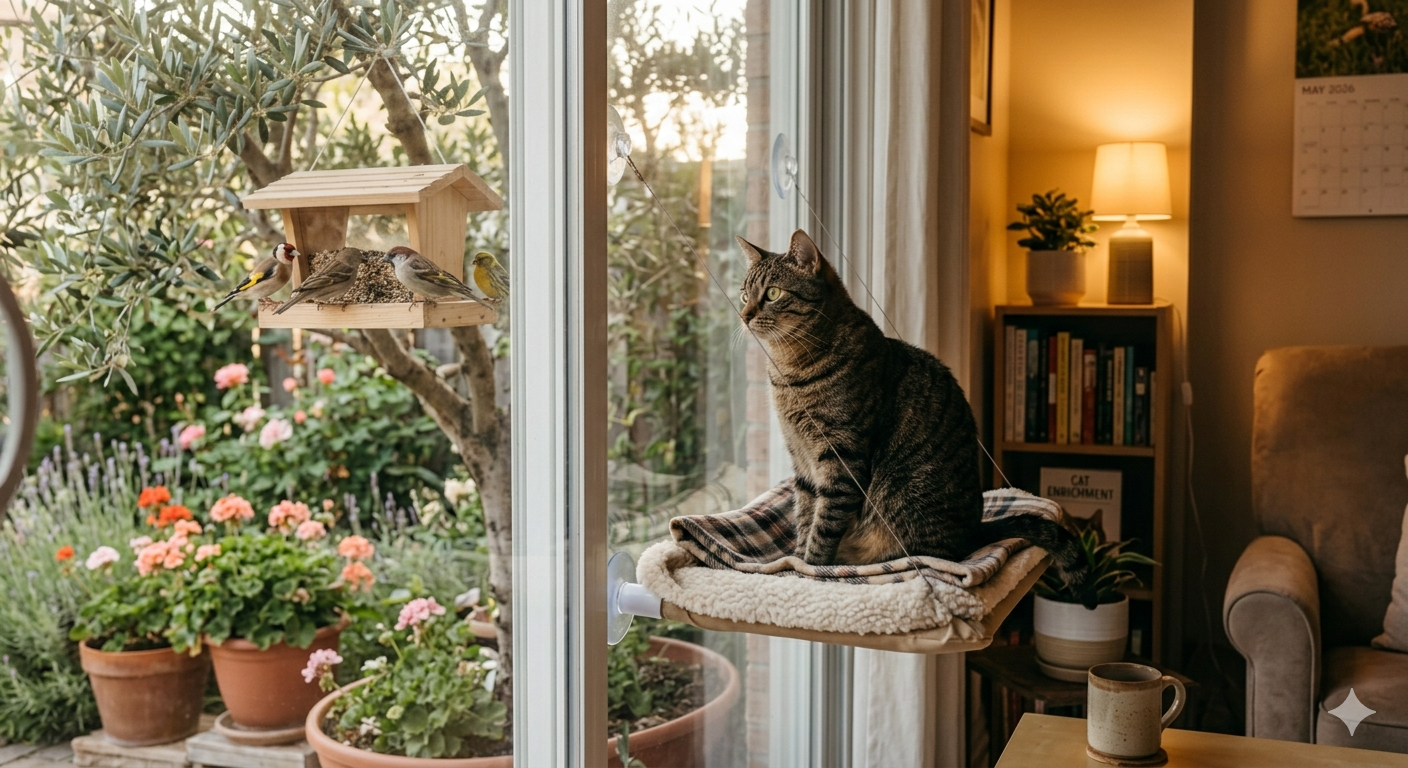
A dedicated window perch — a mounted shelf, a cat tree positioned against the window, or even a cleared table in front of the most active-view window — creates what cat behaviorists call a “cat TV” experience. This is not a metaphor. Cats genuinely engage with outdoor movement in ways that provide hours of passive enrichment.
The upgrade: Place a bird feeder outside the window. The resulting activity makes the view significantly more stimulating and extends the daily engagement time dramatically.
Idea 2: Puzzle Feeders — Make Them Work for Every Meal
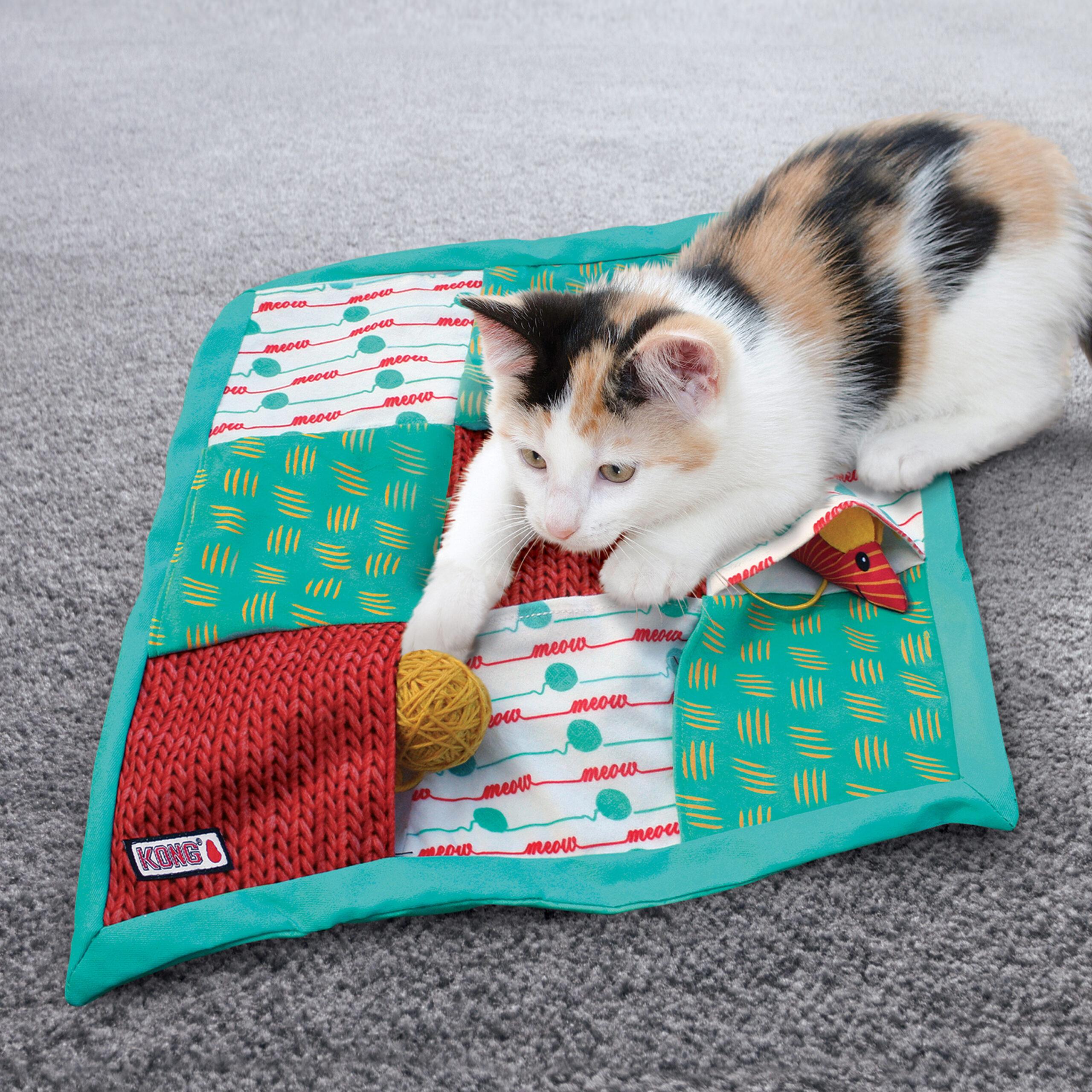
The food bowl is the single biggest missed enrichment opportunity in most indoor cat households. A cat that eats their entire daily food from a static bowl in approximately forty-five seconds has received their calories, but none of the mental engagement that the hunt for food is supposed to provide.
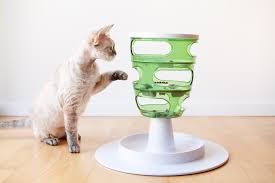
Puzzle feeders — containers designed so that the cat must manipulate them to access the food — restore the work component of feeding. The cat paws, rolls, lifts, and investigates to extract each piece of kibble. The meal takes longer, requires mental engagement, and provides the problem-solving satisfaction that a hunting sequence would provide in a natural context.
Start with a simple puzzle level — a muffin tin with kibble in each cup, or a treat-dispensing ball — and progress to more complex puzzles as the cat becomes more experienced. Many cats who were indifferent to food-related enrichment initially become enthusiastically engaged puzzle feeders once they understand the mechanism.
The wet food version: Smear wet food in the grooves of a licki mat (a textured silicone mat designed for licking) and freeze it. The frozen version extends the meal duration and provides significant licking enrichment.
Idea 3: The Wand Toy Session — 15 Minutes That Changes Everything
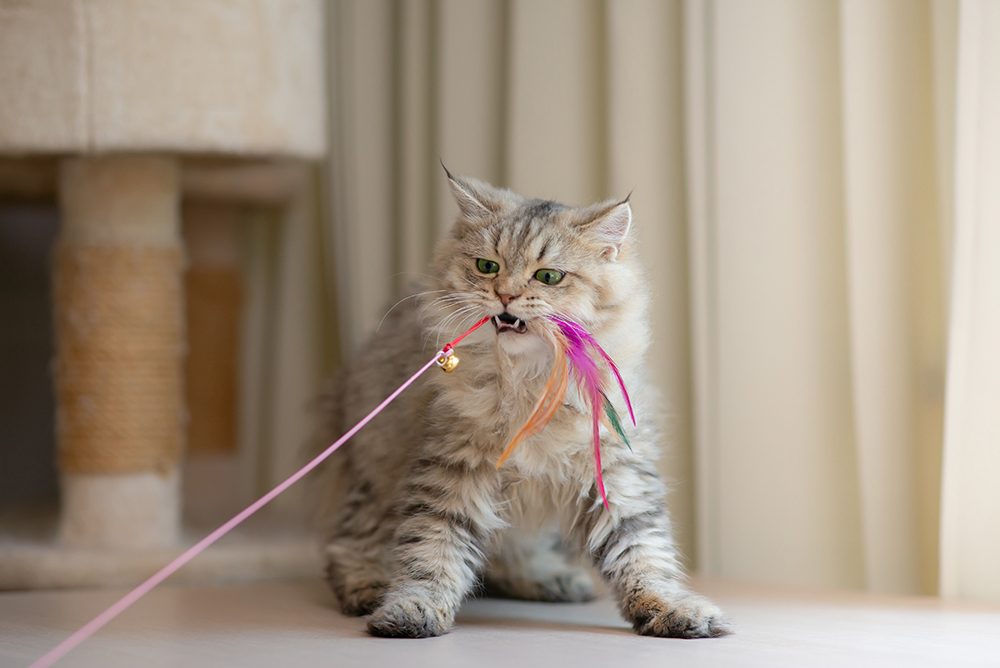
Interactive wand toy play is the most direct and most effective behavioral enrichment available for an indoor cat. Nothing else replicates the full hunt sequence — the stalk, the chase, the leap, the catch — in the way that a well-operated wand toy does.
The keywords are “well-operated.” A wand toy dragged halfheartedly while the owner watches television is not the same thing as a wand toy operated with attention to the cat’s behavior — accelerating when the cat begins to stalk, stopping when the cat freezes, and making the toy dart away when the cat approaches. The operator who plays the prey creates genuinely engaging hunting behavior. The operator who simply moves the toy randomly creates mild interest.
Fifteen minutes of properly engaged wand play, twice daily, addresses the majority of the behavioral problems that understimulation produces in indoor cats. This is not a large time investment relative to the behavioral improvement it produces.
After the play session: Allow the cat to catch and “kill” the toy several times before ending the session. A play session that ends without the cat ever catching the prey is frustrating — the equivalent of a hunt that produced nothing. End each session with successful catches and a feeding or treat, which completes the hunt-catch-consume sequence the cat’s instincts are organized around.
Idea 4: The Cat Tree — Vertical Space Changes the Entire Environment
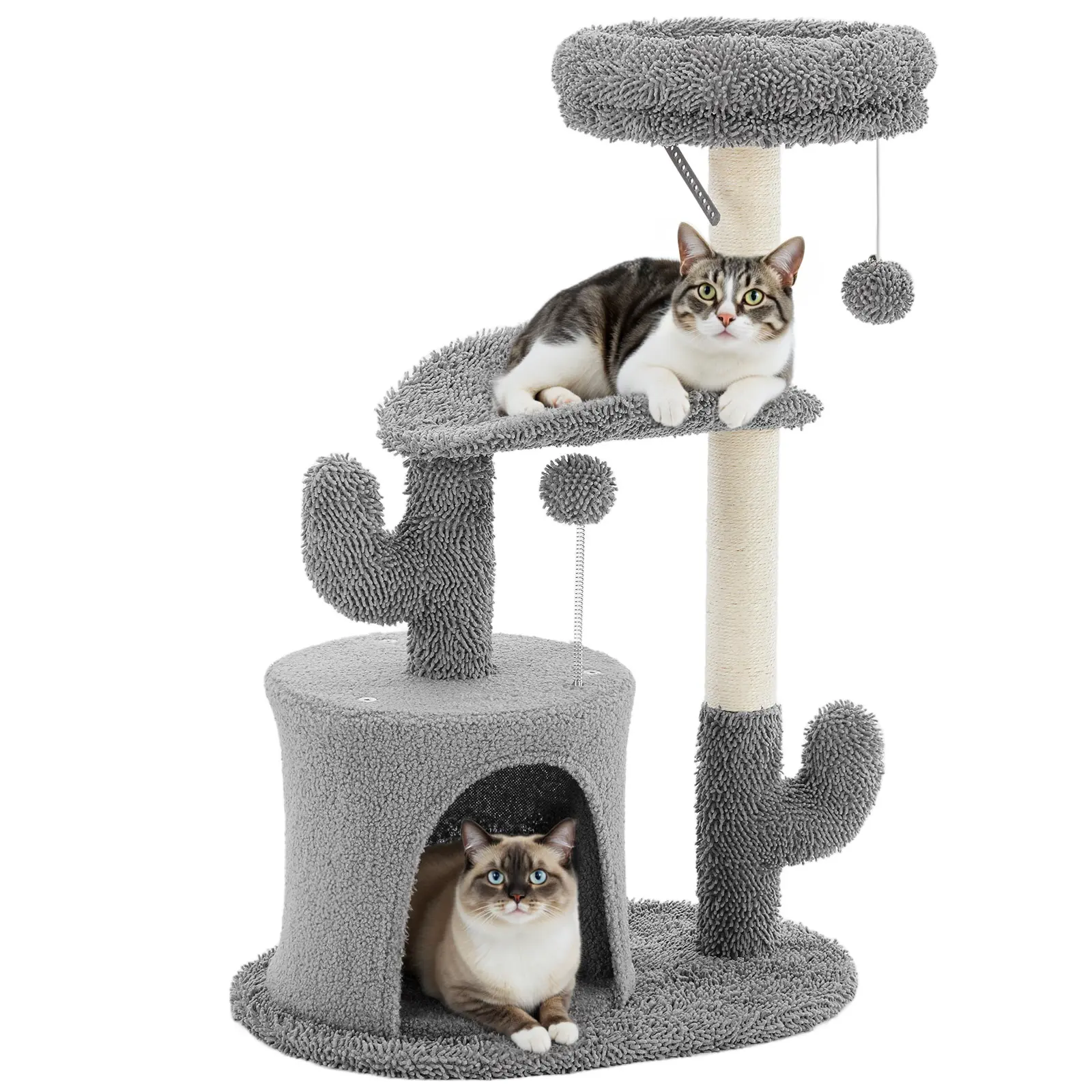
Cats are vertical animals — in nature, they use elevation for safety, for observation, and for the social signaling that comes from height. An indoor cat without vertical space to access is a cat whose spatial needs are entirely unmet by a horizontal floor plan.
A well-designed cat tree with multiple platforms at different heights, sisal scratching surfaces, and a high-level enclosed sleeping area gives the cat an entire additional dimension of their environment to use. The highest platform of the cat tree becomes the cat’s primary resting spot for many indoor cats — not because the floor is inferior, but because height is preferred.
Placement matters: Position the cat tree near the most interesting window view. A cat tree with a view is significantly more used than a cat tree facing a wall.
For multi-cat households: Vertical space is particularly important because it allows cats to establish social hierarchy through space use rather than through conflict. A home with multiple cats and insufficient vertical space produces social tension that appropriate elevation resolves.
Idea 5: Bring the Outdoors Inside — Safely
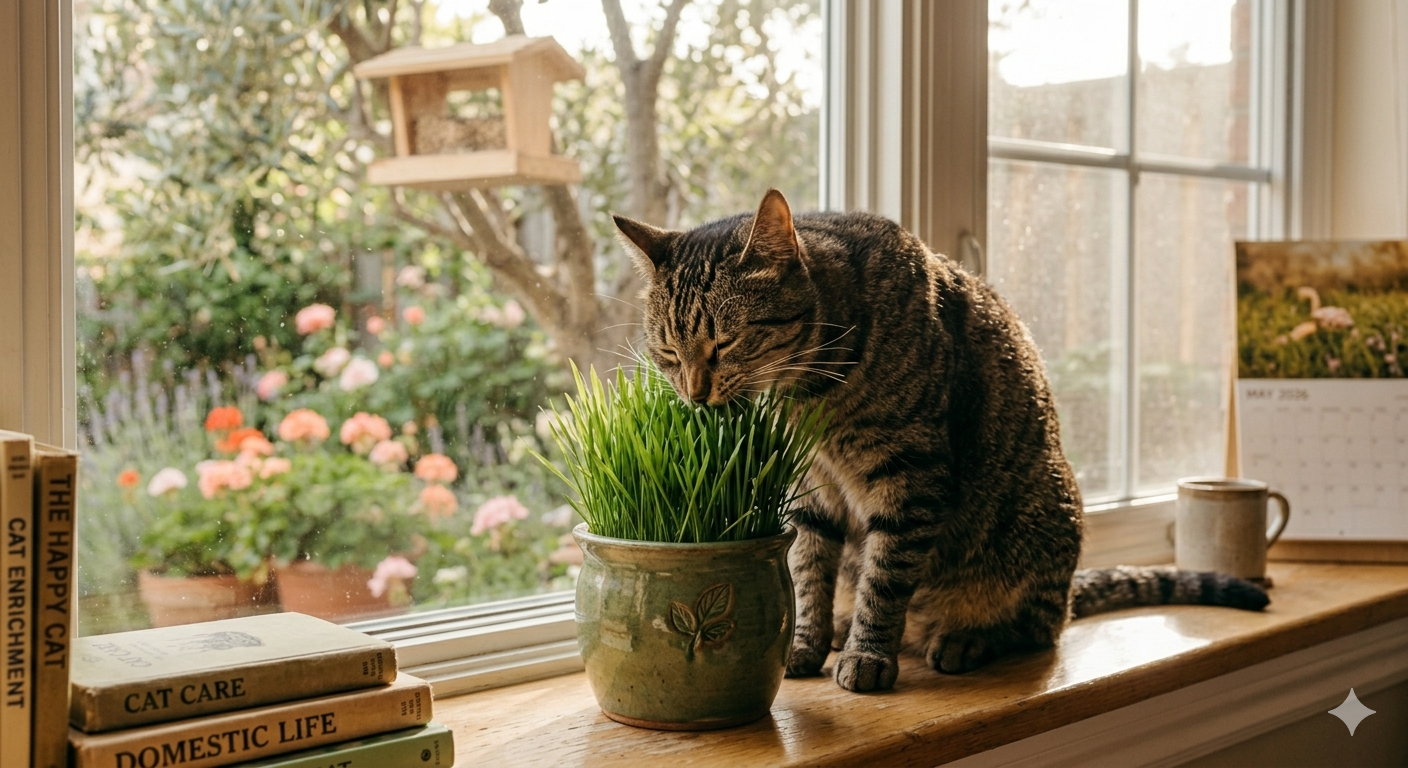
Many of the most effective indoor cat enrichment ideas involve safe elements of the outdoor environment brought inside — providing the sensory stimulation of an outdoor experience without the risks.
Catnip and silver vine: Dried catnip or silver vine sprinkled on a toy or a scratcher provides a brief but intense enrichment experience for cats who respond to it (approximately 50% of cats have the catnip response — silver vine produces a similar response in a higher proportion of cats, including many who do not respond to catnip).
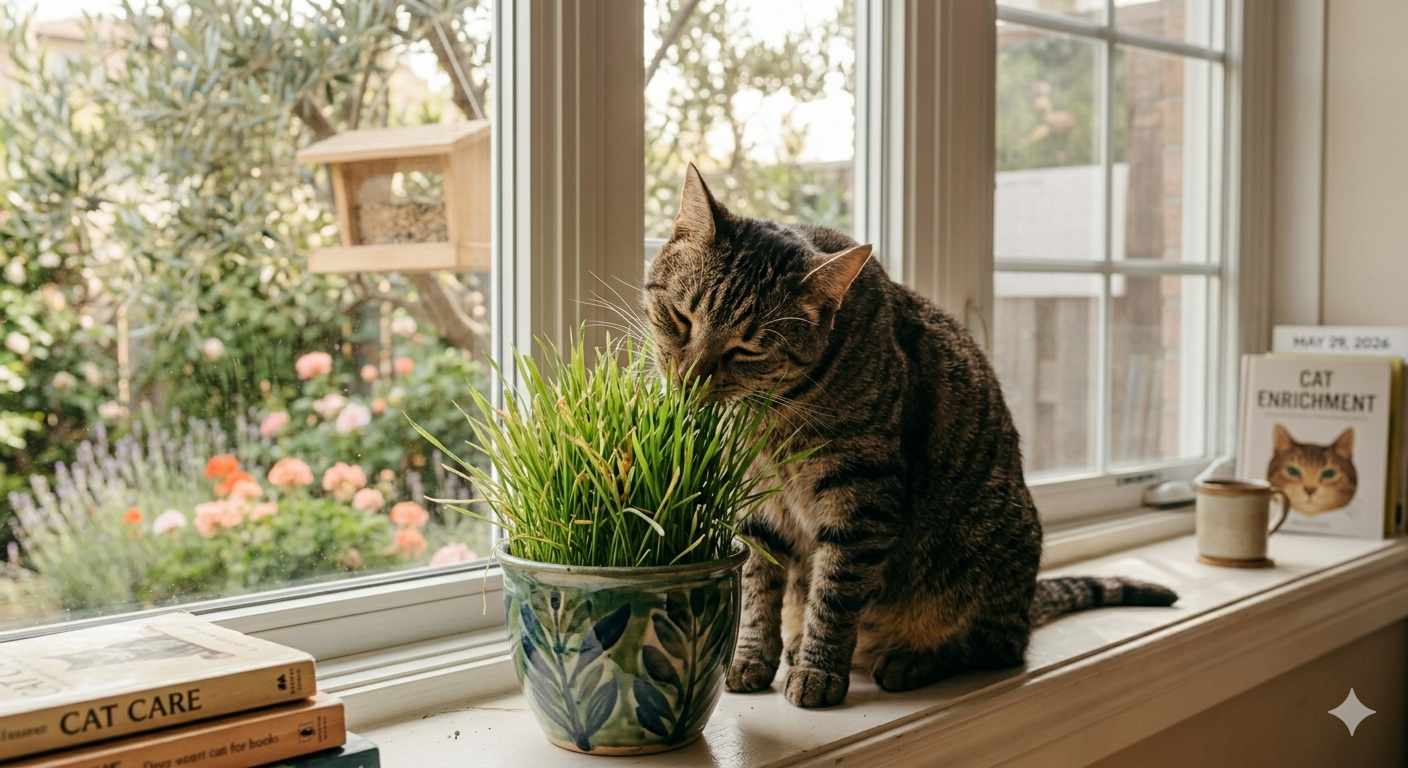
Cat grass: A pot of cat grass — oat grass, wheat grass, or commercial cat grass mixes — provides the chewing and plant interaction that cats engage in naturally outdoors. It is also the most effective solution for cats who chew houseplants — the cat grass provides the behavior’s natural outlet, protecting the other plants by default.
Crinkle leaves: A handful of dried leaves brought inside and scattered on the floor provides rustling, crunching sensory stimulation. The sound and texture trigger the alert hunting response that a mouse in leaves would produce outdoors.
Idea 6: The Foraging Scatter — Replaces the Bowl Entirely
Scatter feeding — spreading dry kibble across a textured mat, through the grass of a bathroom rug, or in a snuffle mat designed for this purpose — converts mealtime into a foraging activity. The cat uses their nose to locate each piece of food, which is more cognitively engaging than eating from a bowl and takes significantly longer.
This is the simplest enrichment transition available — it requires no purchasing, no construction, and no learning curve. Throw the kibble portion across the floor or a rug and let the cat find it.
For cats who are fast eaters and experience digestive issues related to rapid consumption — vomiting after meals, for example — scatter feeding slows the eating pace and frequently resolves the problem without dietary intervention.
Idea 7: Rotating Toys — Not More Toys, Different Toys
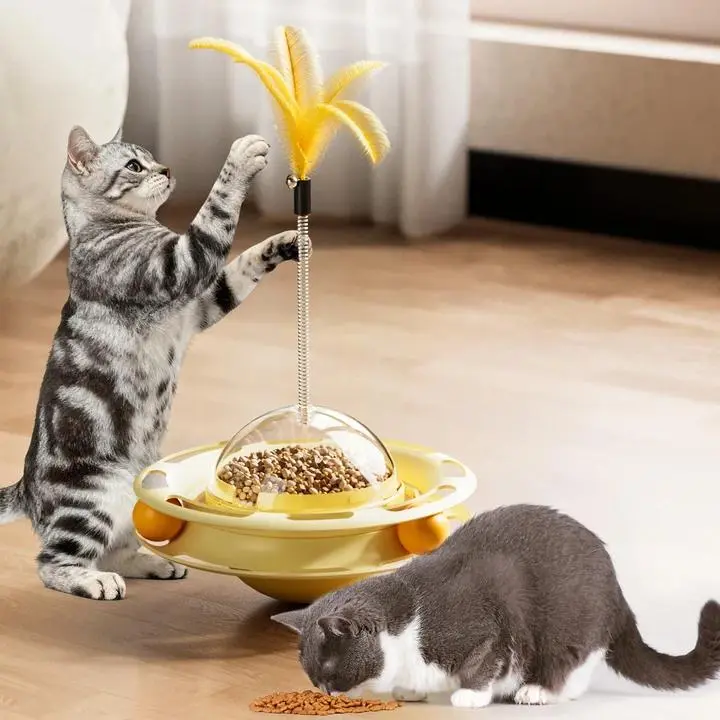
Most indoor cats who “don’t play with their toys” are not cats who are disinterested in play. They are cats who are bored with the specific toys that are always available. The same toy in the same location, accessible at all times, is no longer a novel stimulus — it is part of the permanent furniture, beneath notice.
The rotation principle: put 80% of toys away. Leave three or four out. After two to three days, swap them with a different selection. The toys that were stored for a week are novel again when they reappear — the cat investigates them with renewed interest.
This approach costs nothing and requires only a container for storage. It produces significantly higher play engagement than adding more toys to an existing collection that the cat is already ignoring.
Idea 8: The Paper Bag and Cardboard Box (It Is Always This)
You have bought toys. Considered toys. Researched toys. And your cat is inside the Amazon box the toys arrived in, demonstrating that the toy selection process was perhaps not the constraint.
Paper bags (handles removed — the handle is a neck entanglement risk) and cardboard boxes provide investigation, hiding, crinkle sound, scratching opportunity, and the enclosed space that triggers the prey-in-cover exploration behavior. They are free, immediately available, and consistently preferred over many purchased alternatives.
Accept this information. Leave the box on the floor for a week. Watch what happens. There is a lesson here about cat enrichment that goes well beyond boxes.
Idea 9: Training Sessions — Yes, With the Cat
Cats can be trained with positive reinforcement — this is documented, consistent, and entirely real despite the cultural assumption that only dogs participate in training. Training sessions of three to five minutes, twice daily, provide mental stimulation that many cats find genuinely engaging.
Start with target training: hold a small target (the end of a chopstick, a pen cap, or a specific toy) near the cat’s nose. When they sniff or touch it, mark the behavior immediately with a click or a verbal marker and reward with a small treat. The cat learns to follow the target for rewards. From this foundation, almost any behavior can be shaped — sitting, touching specific locations, navigating a simple obstacle course.
Training sessions provide the mental engagement of problem-solving, the social interaction of working with their person, and — for cats who are food-motivated — the hunting-adjacent satisfaction of working to earn food.
Idea 10: The Catio — The Best Long-Term Investment
A catio — a cat enclosure that attaches to the home through a window or door, allowing the cat to experience outdoor sights, sounds, and air without the risks of full outdoor access — is the most comprehensive indoor cat enrichment investment available.
A cat with catio access has: outdoor stimulation (birds, insects, wind, sunlight) on demand throughout the day, access to grass and plant textures, and the ability to choose between indoor and outdoor environments based on their own comfort preferences. The behavioral difference in cats with catio access compared to fully indoor cats without it is consistently reported by owners as dramatic.
Catios range from DIY window box enclosures costing under $100 to elaborate custom structures — any version, regardless of size, provides meaningful benefit. A cat who can access outdoor air and sounds through a secured enclosure has a fundamentally richer daily experience than one whose entire world is the interior of the home.
Idea 11: Second Cat — The Ultimate Enrichment (With Caveats)
A second cat provides companionship, play stimulation, grooming partnership, and social complexity that no number of puzzle feeders can replicate. For social cats who are showing signs of loneliness — excessive vocalization, following their person obsessively, soliciting attention with persistence — a compatible companion cat can be transformative.
The caveats are real: not all cats are social. Some cats who appear bored are actually territorial — they are not lonely, they are defending their space, and adding a second cat makes the situation worse rather than better. Introducing a second cat requires careful management — separate spaces initially, gradual introduction through scent, and then visual contact before full access.
How to assess whether your cat wants a companion: A cat who plays well with other cats at the veterinary clinic, who watches and approaches other cats when encountered rather than hissing or retreating, and who has previously lived with other cats without conflict is a good candidate. A cat with a history of aggression toward other cats is not.
Idea 12: The Consistent Daily Routine — The Foundation Under Everything Else
Cats are creatures of routine. The most enriched cat environment with the most varied toy collection and the most elaborate cat tree still produces behavioral problems if the daily schedule is unpredictable, because cats experience schedule unpredictability as a form of low-level chronic stress.
Feeding at consistent times. Play sessions at consistent times — ideally morning and evening, which align with the crepuscular activity patterns most cats naturally maintain. Consistent quiet time in the afternoon. These are not rigid constraints — they are the predictable structure that allows a cat to feel genuinely secure in their environment rather than simply adapted to uncertainty.
The behavioral benefits of a consistent daily routine — reduced anxiety-driven behaviors, more settled sleeping patterns, calmer responses to changes when they do occur — are consistently reported by cat owners who establish them and consistently absent in homes where the cat’s schedule is driven entirely by the owner’s variable availability.
ENDING:
Your indoor cat does not need a bigger home or a more elaborate toy collection. They need opportunities to be what they are — a hunter with instincts that require engagement, a curious animal whose intelligence is not sufficiently occupied by the static experience of a home that does not change.
These twelve ideas are the changes that make the home engaging. Implement three or four consistently, and the behavioral difference is typically visible within two weeks. The cat who was knocking things off shelves and meowing at walls becomes the cat who is focused on the puzzle feeder, watching the birds through the window perch, and chasing the wand toy with the enthusiasm of a creature whose needs are genuinely being met.
Save this to Pinterest, share it with every indoor cat owner you know who has described their cat as “difficult” — because the cat is probably not difficult. They are probably bored. And bored is entirely fixable.