Your cat is asleep. Again. For what appears to be the fourteenth hour of the day, in the seventeenth different position you have caught them in this week.
Here is the thing nobody tells you when you first get a cat: the sleeping is not the passive, unconscious activity it looks like from the outside. Cat sleeping positions often reflect comfort, temperature regulation, trust, and instinctive safety behaviors. Every curl, every stretch, every tucked paw and exposed belly is a communication — written in the body language that cats have been developing for millions of years, and directed, in ways that science is only beginning to fully understand, specifically at you.
A 2025 study from Research Publish Journals surveyed 200 cat owners about their cats’ sleeping positions and emotional states. The results confirmed what experienced cat owners already sense: belly-up and side-lying positions were most strongly associated with happiness and trust — 88.6% of belly-up cats were perceived as relaxed or happy.
In other words: your cat sleeping in front of you is a performance. Not a calculated one — but an honest one. The position they choose when they sleep in your presence tells you exactly what they feel about the world, about their safety, and about you. This is the guide that translates it.
Position 1: The Cinnamon Roll (The Tight Curl)
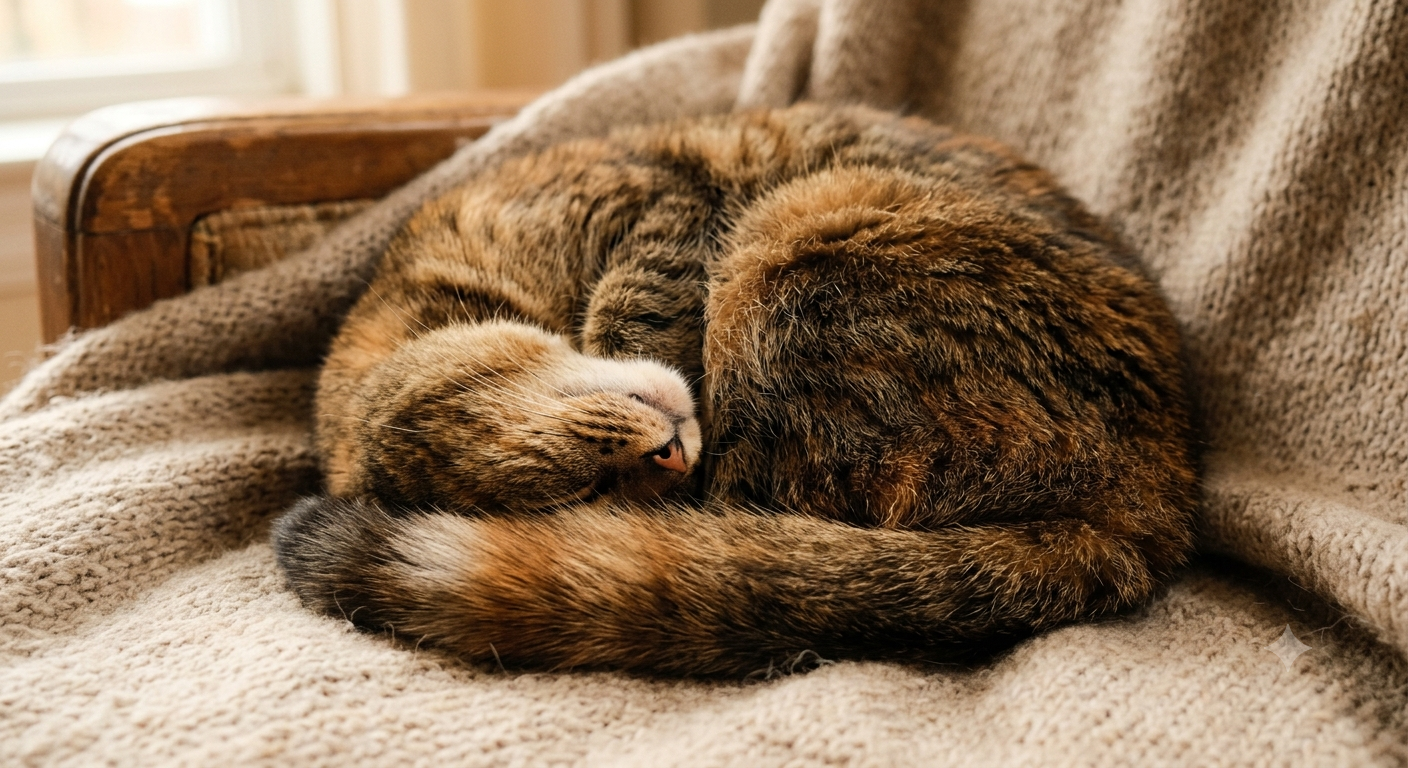
The nose tucked toward the tail, the body wrapped into a compact circle, every vulnerable surface facing inward. This is one of the most common cat sleeping positions overall. A 2025 owner survey found 26.8% of cats were most often observed in this position.
By curling into a tight ball, cats preserve body heat and protect their vital organs. When you see your cat sleeping curled up, it could be a sign they’re seeking warmth or might feel a bit vulnerable.
This position is not distress — it is pragmatic comfort. It is the position that wild felines have used for millions of years as the optimal sleeping configuration: maximum warmth, maximum protection of the soft abdomen and vital organs, minimum exposed surface area. Your domestic cat does it for the same reasons, even though the threats their ancestors slept against no longer exist in your living room.
What the cinnamon roll tells you: your cat is comfortable, but conserving. They feel safe enough to sleep but have not made the full surrender to vulnerability. In a cold room, this position is purely thermodynamic. In a warm room, it is the position of a cat who is content but not yet in a state of complete, unconditional trust.
The upgrade to watch for: A cat who regularly sleeps in the tight curl and then begins sleeping in the exposed positions below has made a significant trust shift. A sudden change in sleep posture is also worth noting, as it can occasionally signal discomfort or stress. Changes in either direction tell a story.
Position 2: The Side Sprawl (The Full Trust)
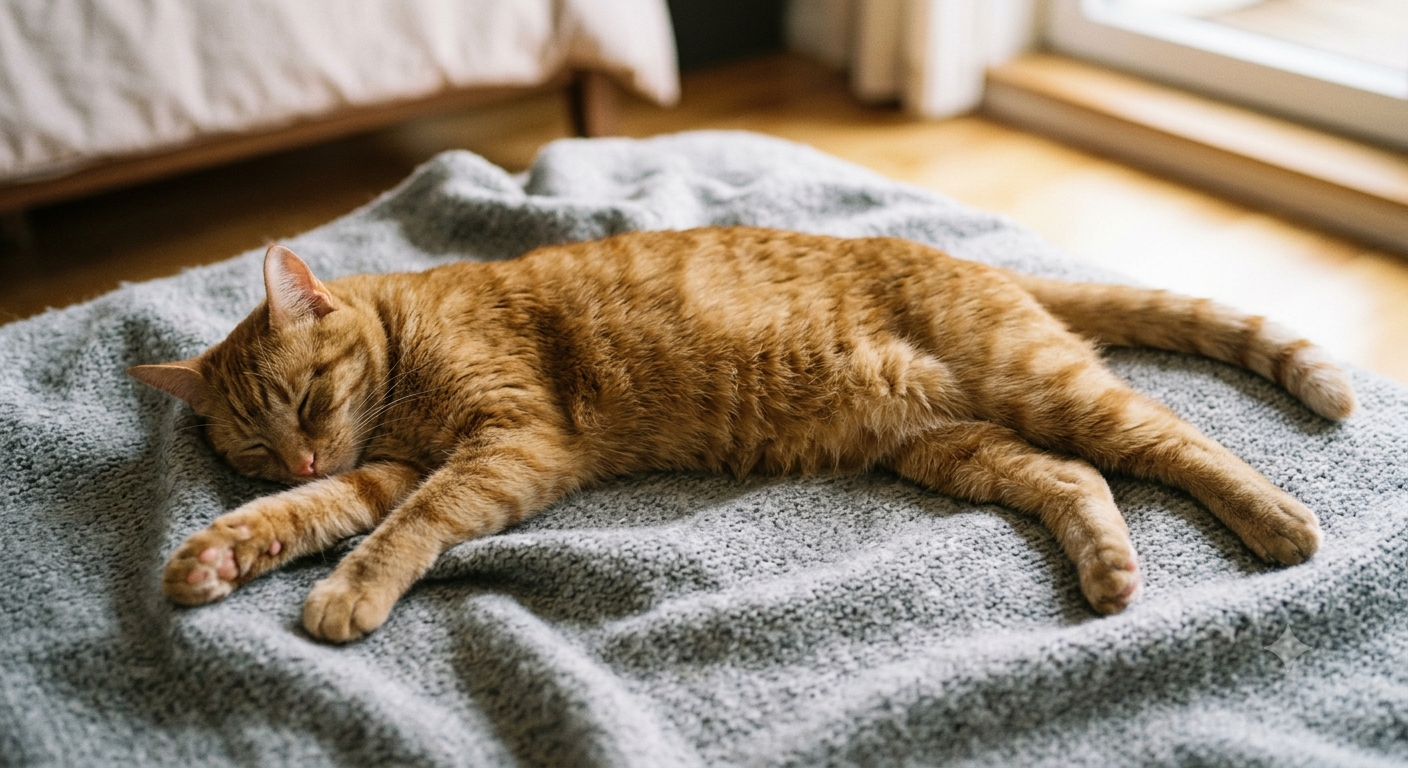
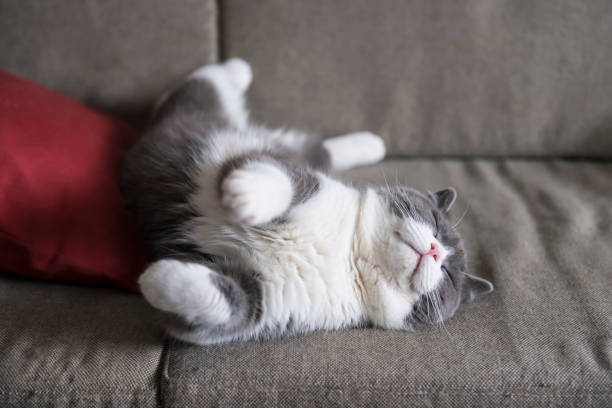
A cat lying on its side with limbs outstretched is in a deep, restful sleep. It means they’re feeling safe, stress-free, and completely at ease in their environment. This position is usually seen in well-adjusted, confident cats.
This is the sleep of a cat who has decided that nothing in this environment requires their vigilance. The belly is partially exposed. The legs are extended. The head is fully to one side. Every muscle that would tighten in response to a perceived threat is relaxed. This sleep position also indicates a high level of trust and comfort with their surroundings, as it leaves them quite exposed. Despite this vulnerability, the side sleeping position also has a practical advantage: it allows them to spring into action quickly.
The side sprawl is a gift. It is your cat communicating without words or ceremony that they feel completely, utterly safe in the space they share with you. You do not earn this position quickly. It is the product of consistency, gentle handling, reliable food, and the specific kind of home environment that a cat’s nervous system slowly, carefully decides is genuinely secure.
When your cat sprawls like this in your presence — when they choose to be maximally vulnerable while you are in the room — that is one of the purest expressions of trust that the feline behavioral vocabulary contains.
Position 3: The Belly Up (The Ultimate Compliment)
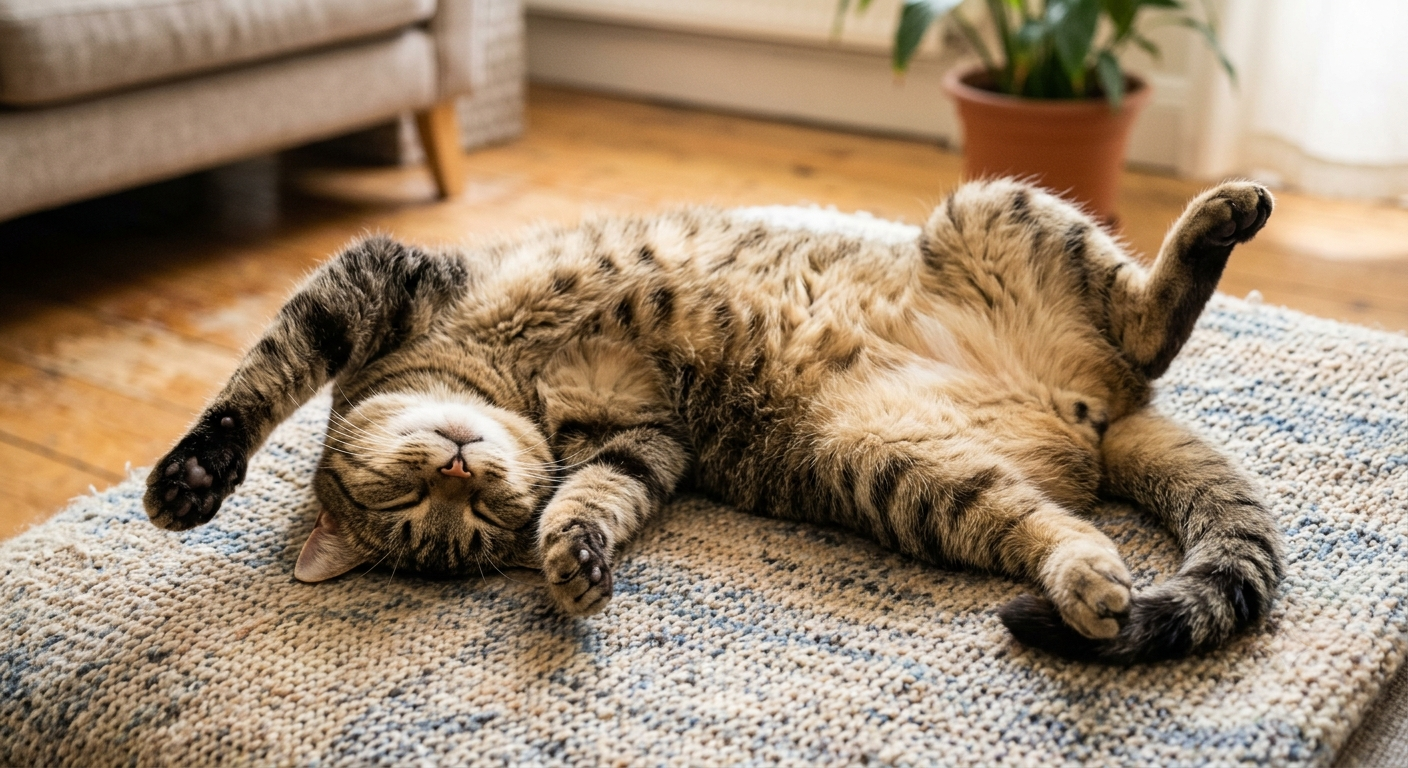
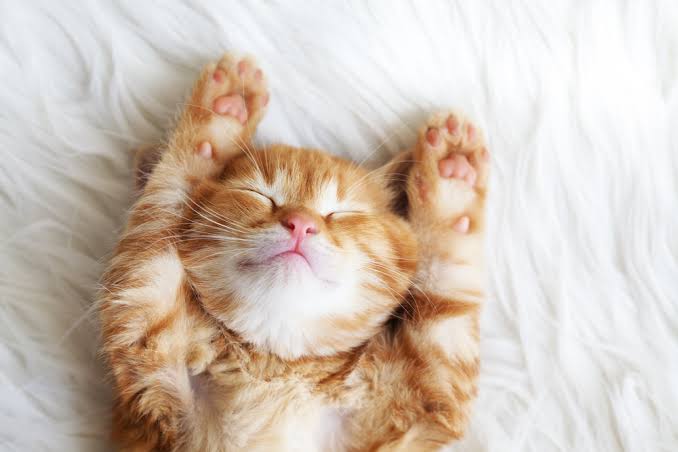
The belly is fully exposed. All four legs are in the air or splayed to the sides. The cat is showing you the softest, most vulnerable part of their body in the most unguarded position their species ever assumes.
This posture reflects complete trust and comfort in the environment. Nevertheless, it should not be misinterpreted as an invitation for physical interaction, such as belly rubbing.
Belly-up and side-lying positions were most strongly associated with happiness and trust — 88.6% of belly-up cats were perceived as relaxed or happy.
Here is the nuance that most cat owners learn the hard way: the belly display is not an invitation. It is a declaration. Your cat is not asking you to rub their belly — they are showing you that they trust you enough to be completely exposed in your presence. These are different things. Reaching for the belly typically triggers the love trap — the reflex wrap of all four legs and two rows of teeth that the cat cannot entirely suppress even when they love you — because the instinct to protect the belly is older and deeper than their trust in you.
Admire it. Appreciate it. But do not touch the belly unless your cat has given specific, individual, additional signals that this particular belly welcomes an invitation. A cat lying on their back with an exposed belly is a mood and a message. Receive the message without testing it.
Position 4: The Loaf (Alert Rest)
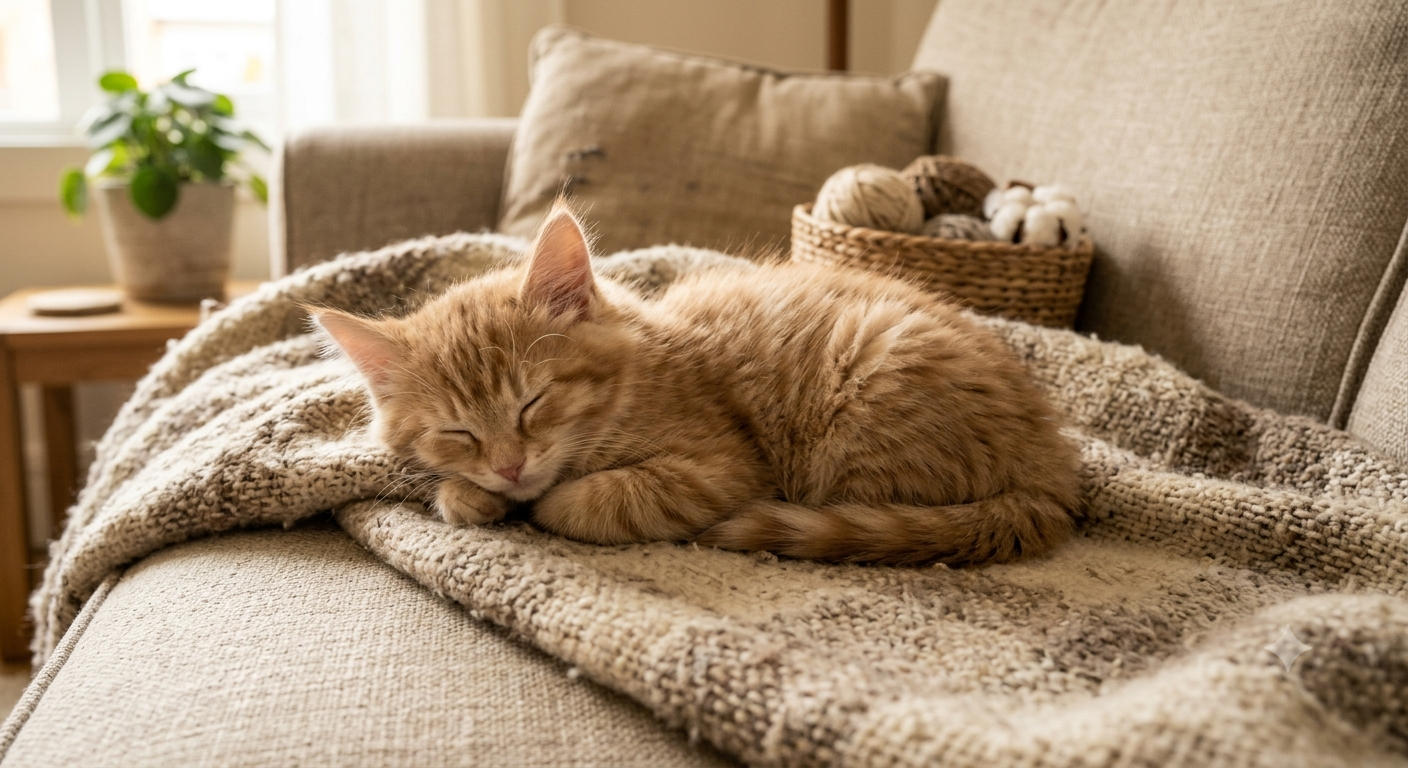
The front paws are tucked neatly under the chest. The tail is wrapped around the sides. The head is upright. The cat appears to have no legs whatsoever. They look, precisely, like a loaf of bread that has developed eyes and opinions.
The “cat loaf” is a common and adorable sleeping posture where cats tuck their front paws under their bodies, resembling a loaf of bread. This compact and cozy stance helps cats conserve body heat and shields their vital organs. When you see your cat in the loaf position, it usually means they are comfortable and at ease, yet they remain alert and ready to move quickly if necessary.
The loaf is the cat equivalent of the human sitting comfortably on the sofa while mentally tracking everything happening in the room. They are not fully asleep. They are resting the body while keeping the mind online. It is a position of moderate trust and deep comfort — the cat feels safe enough to rest but interested enough in the environment to stay partially engaged.
It is also, objectively, one of the most photographable positions in the entire cat behavioral repertoire. The legless, sphinx-like dignity of the loafing cat is the image that built half of cat internet.
Position 5: The Superman (The Exhausted Hero)
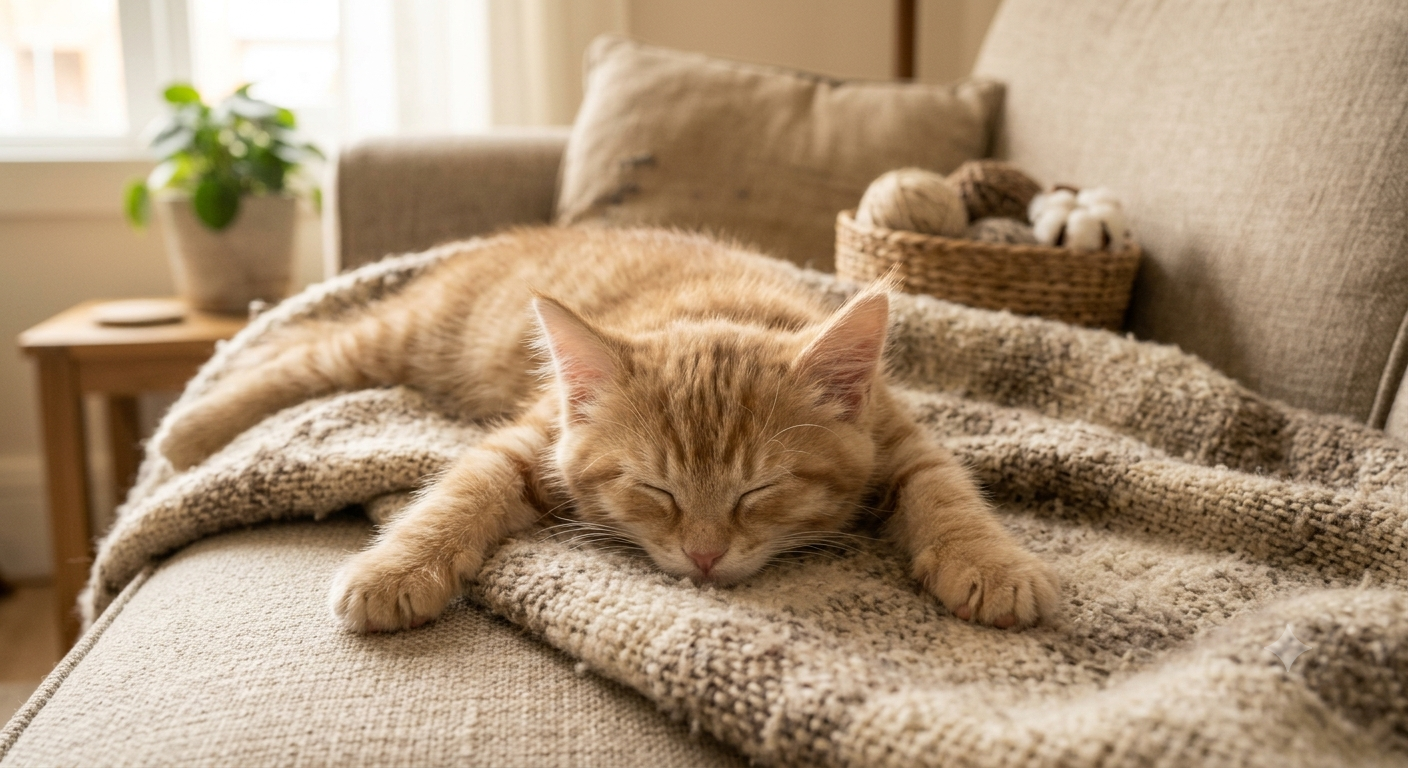
All four legs extended simultaneously — two forward, two back — with the belly flat on a surface and the head either down or slightly raised. The cat has the specific posture of an extremely tired superhero who has only just landed.
This position is almost exclusively associated with temperature regulation. Cats seek warmth while sleeping, which is why they often sleep on or near people. The Superman sprawl on a cool tile floor on a hot day is the inverse — the cat is maximizing contact with the cooling surface. On a warm surface in winter, the same posture maximizes heat absorption from below.
It also tends to appear after intense play sessions — the cat who has been ferociously hunting a wand toy and then collapsed in a Superman flatten has spent everything and is in the deepest possible post-play recovery.
Position 6: The Face Plant (Do Not Disturb)
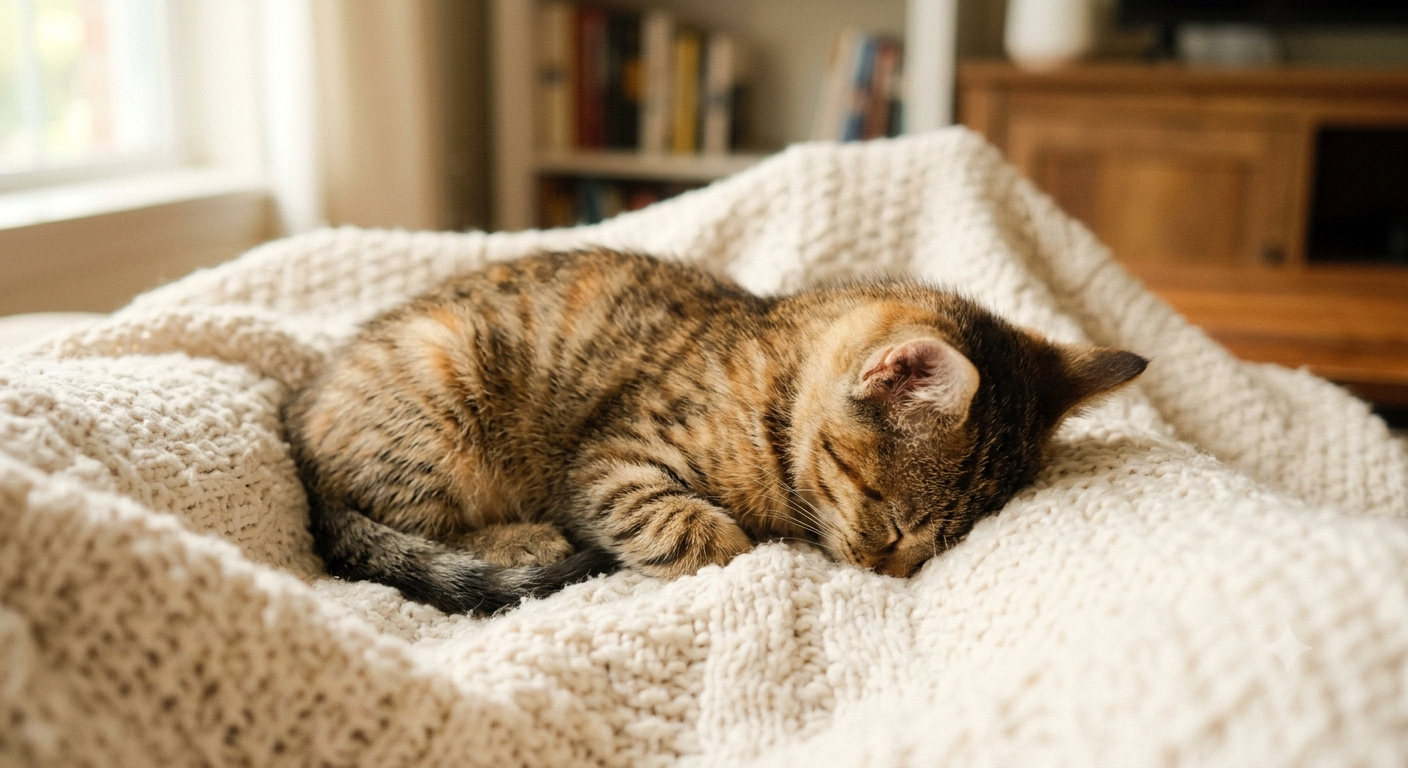
The face is buried completely — either tucked into the cat’s own paws, pressed against a surface, or hidden entirely from view. All light is blocked. All sensory input is being deliberately minimized.
In this position, the cat hides its head during sleep. It is typically an attempt to seek warmth or minimize sensory input, indicating that the cat desires undisturbed rest or is possibly overstimulated.
A paw over the eyes or face tucked into the body can be a sign of self-soothing. It helps block out light and keep the nose warm. If your cat buries its whole face, it might just want uninterrupted rest and solitude. This is common when they’re tired or overstimulated.
This is the cat’s equivalent of pulling the duvet over your head and silently communicating to the world that nothing can reach you right now. It is not a sign of illness. It is not a sign of distress. It is a sign of a cat who has had enough of being a cat today and would like to be left completely alone until further notice.
Honor this communication. The cat who face-plants into their paws is setting a boundary — a small, soft, entirely non-verbal boundary that deserves the same respect as any other. Leave them alone. They will be back when they are ready.
Position 7: The Contortionist (Complete Relaxation)
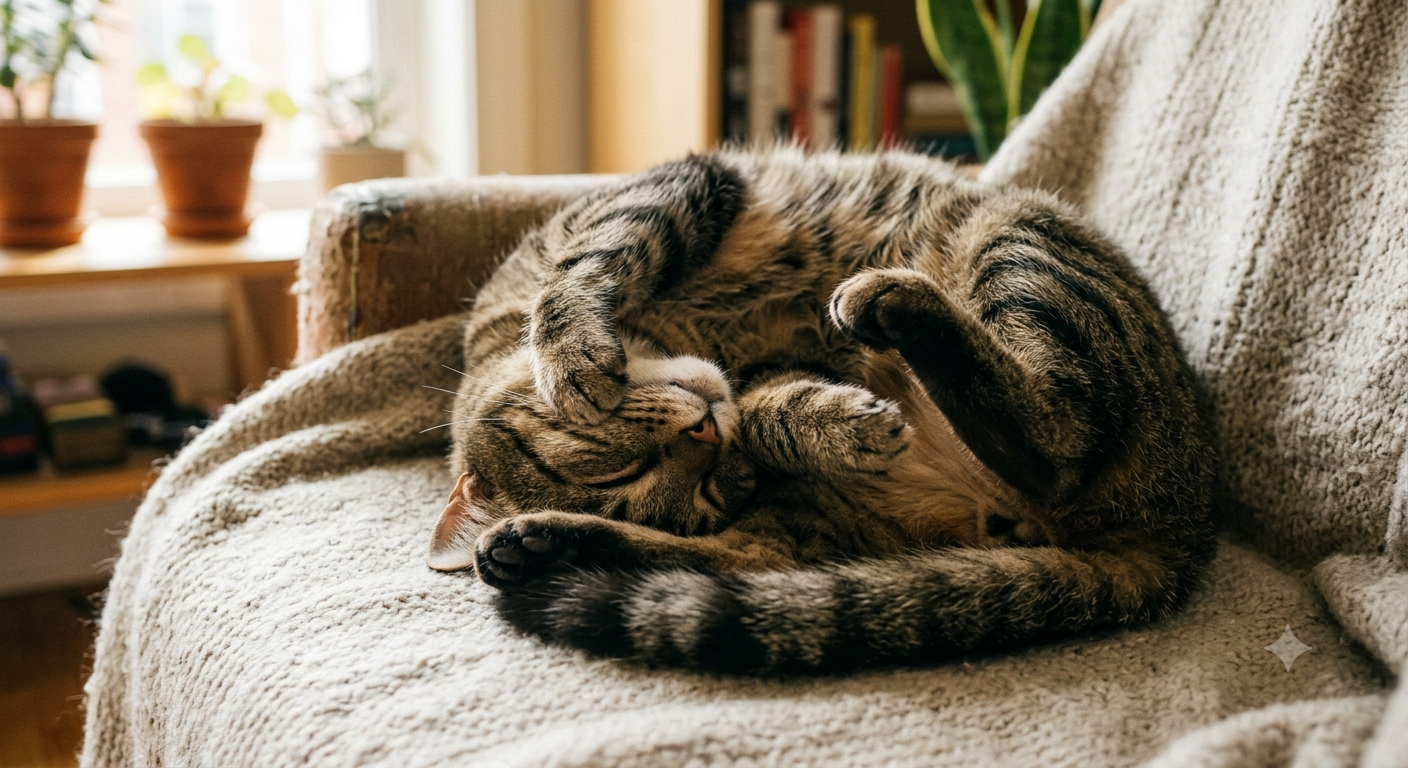
Cats that twist themselves into odd, contorted positions are usually in complete relaxation. It may look uncomfortable, but it signals deep sleep and physical flexibility. This often occurs in playful or confident cats that feel no need to hide or protect themselves.
The hind leg extended directly upward at what appears to be a physically improbable angle. The head twisted 180 degrees from what the body is doing. The back arched in a direction that seems structurally impossible. Yet the cat is deeply, peacefully asleep and the expression on their face communicates zero discomfort.
Cats have a skeletal structure — with highly flexible spines and independently rotating shoulder blades — that makes positions comfortable for them that would require emergency intervention if a human attempted them. When your cat is sleeping in a position that appears to require a chiropractor, they are actually demonstrating the peak of physical relaxation and trust. The weirder the contortion, the deeper the sleep. The deeper the sleep, the safer they feel.
Position 8: The Pressed-Against-You (The Statement)
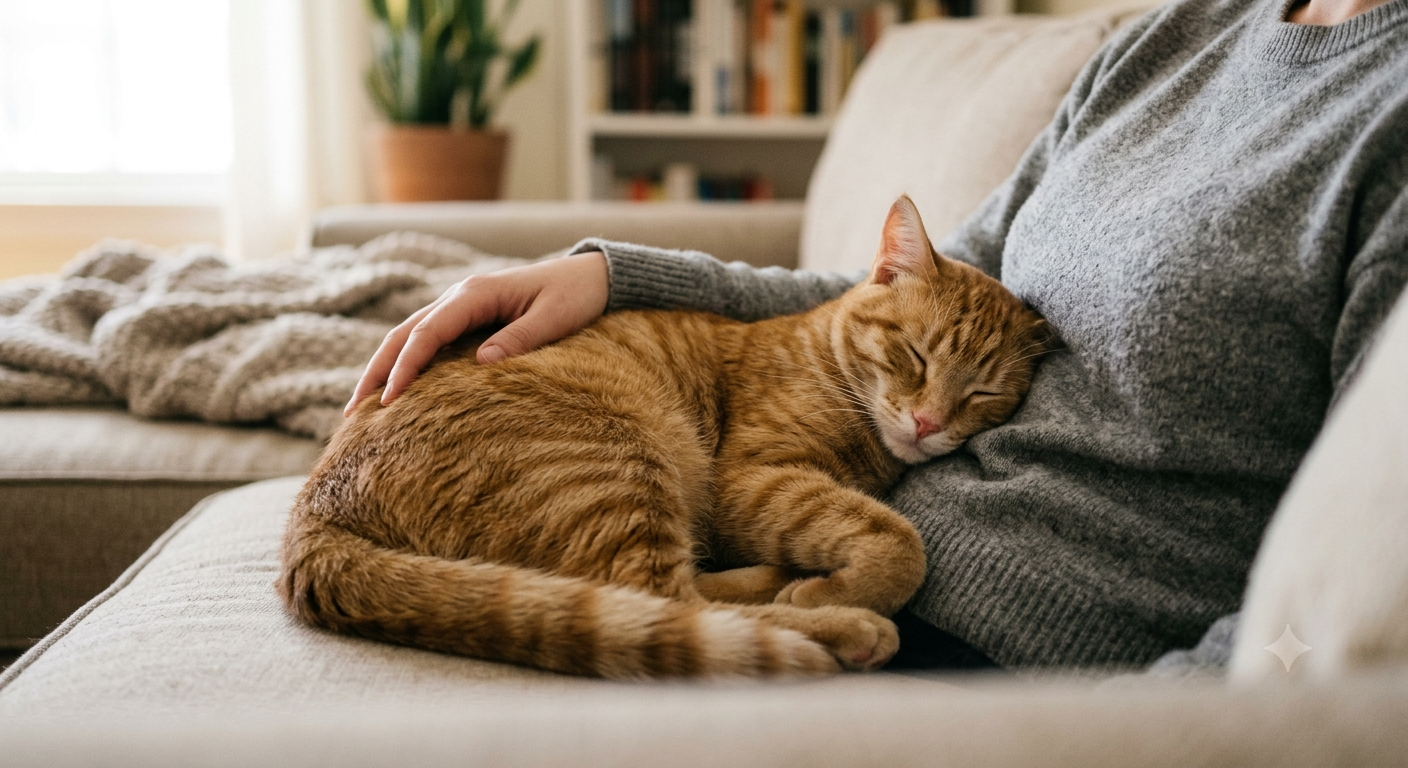
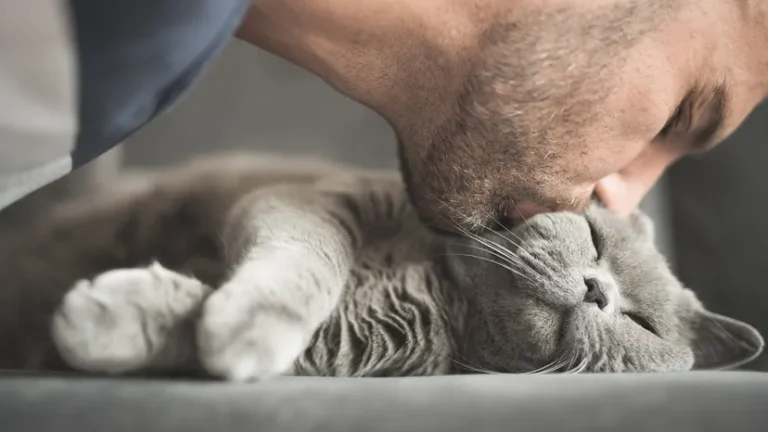
The cat is asleep, and they are touching you. Not beside you — touching you. One paw resting on your leg. The full body pressed against your side. Their head making contact with your arm.
When your cat chooses to sleep on or beside you, they are activating an ancient survival mechanism called Social Defense. A 2019 Oregon State University study found 65% of cats display secure attachment to their owners, explaining why they seek proximity during their most defenseless hours.
The contact is deliberate. Cats know exactly where their bodies are in space — they are not accidentally touching you. They are choosing to maintain physical connection with you during the most vulnerable hours of their day because your presence makes them feel safe. You are their safe place. Your warmth, your scent, your breathing, the specific quality of your presence — all of it tells their nervous system that this is where sleep is appropriate.
This is the position that people describe when they say their cat chose them.
Position 9: The Perch Sleep (The Lookout)
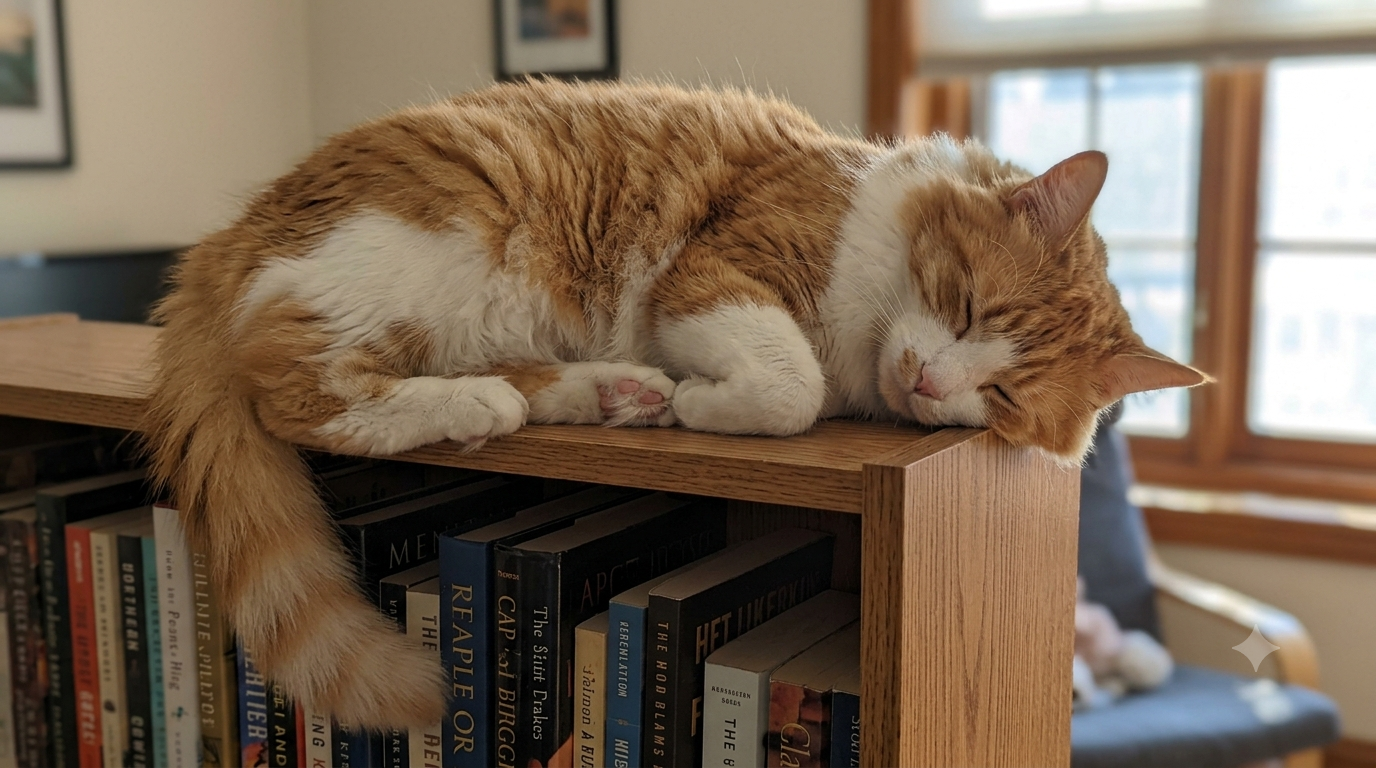
The cat is asleep on an elevated surface — the back of the sofa, the top of the bookshelf, a window ledge, your shoulder — with their body in one of the relaxed positions above, but their choice of location is specifically high.
The height is not incidental. Cats are both predators and prey animals, so they naturally remain aware of their surroundings. The elevated sleeping position provides the maximum field of vision available in the home — the cat can observe the entire room, including all entry points, while sleeping. This is the wild cat behavior of sleeping in trees, translated directly into domestic architecture.
A cat who regularly perch-sleeps is a cat with intact predator awareness — this is not anxiety, it is instinct. They feel secure enough to sleep but choose the position that keeps them most informed.
Position 10: The Slow-Eyes Sleep (Almost But Not Quite)
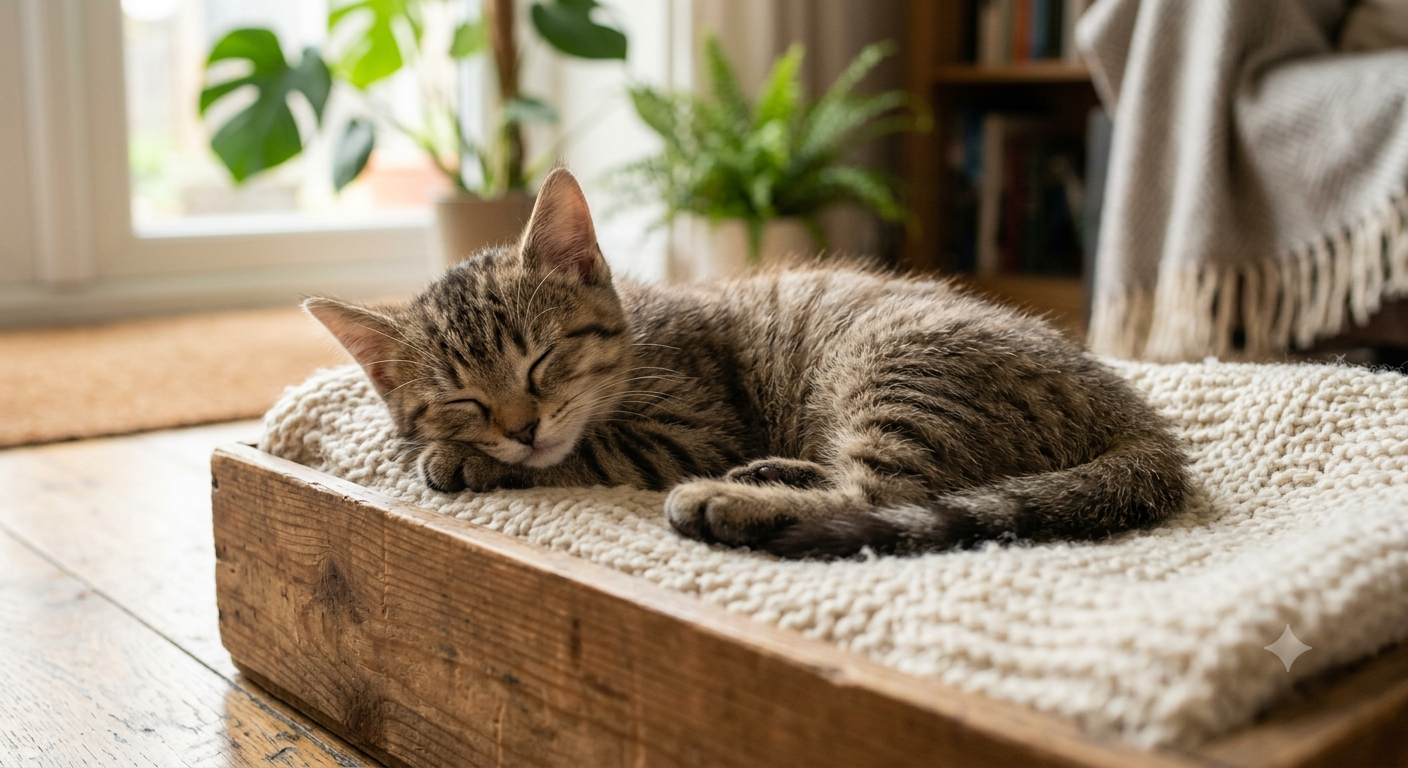
The eyes are half-open. The body is still. The breathing is slow. The cat appears to be in some intermediate state between wakefulness and sleep that does not have an equivalent in human experience.
When cats rest in this way, it often means they’re in a state of light sleep where they can quickly wake up if needed. This is the vigilant rest of a cat who wants to stay in proximity to the environment’s awareness — not fully asleep, not fully awake, occupying the useful middle ground where rest is possible without total vulnerability.
It is also entirely possible that your cat is watching you with precisely this degree of subtlety and you have been assuming they were asleep the entire time. The half-open eyes may be giving you far more observation than you realize.
Position 11: The Left-Side Preference (The Science-Backed One)
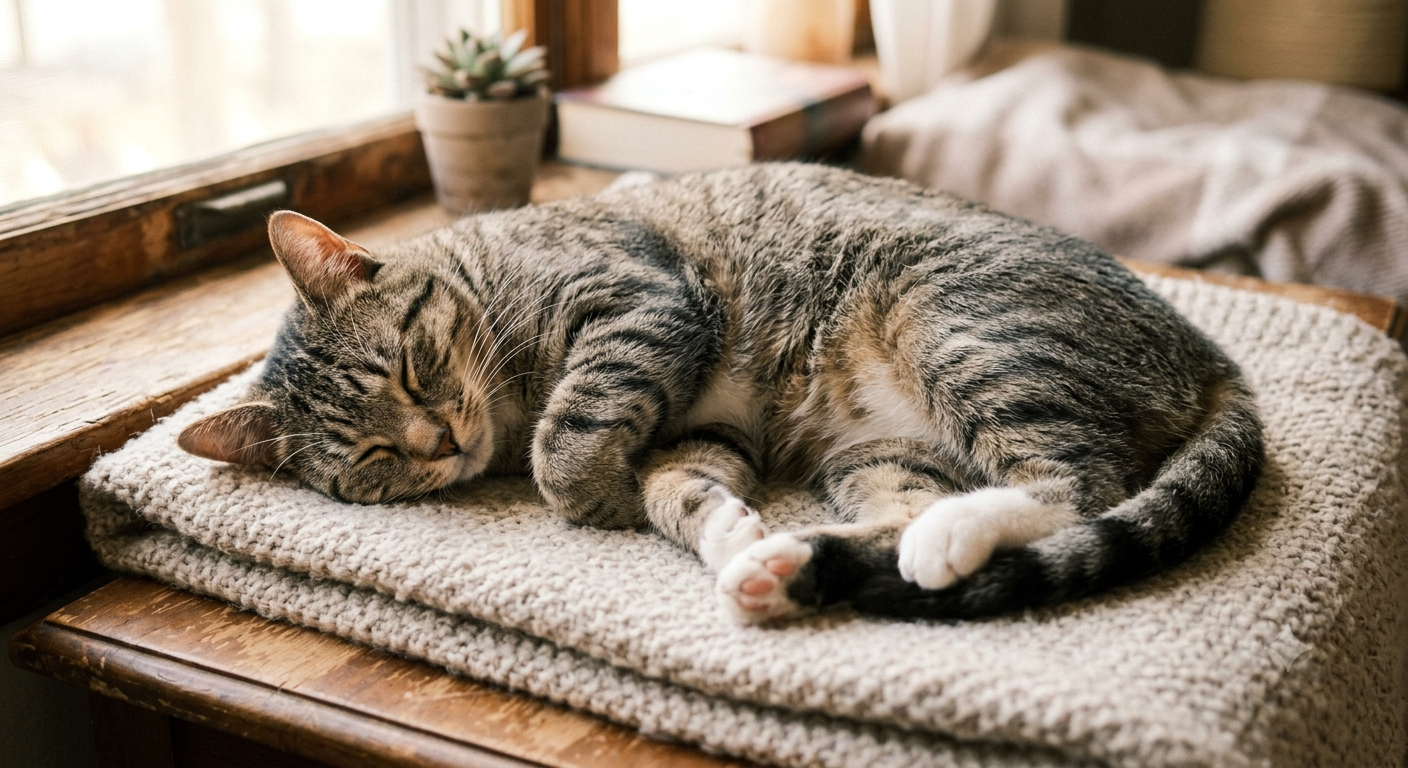
A landmark study published in Current Biology (Isparta et al., 2025) analyzed 408 YouTube videos of sleeping cats from an international research team spanning Italy, Germany, Canada, Switzerland, and Turkey. Their finding: approximately two-thirds of cats prefer to sleep on their left side. The reason is fascinating — by sleeping on the left, a cat’s right hemisphere (which specializes in threat detection and spatial awareness) has an unobstructed view upon waking. It’s a survival strategy baked in over millions of years of evolution.
Your cat sleeping on their left side is their brain running an ancient security protocol, quietly, every single night. Even in your completely safe home. Even with no threats anywhere in the environment. The instinct is operating, optimizing, performing its function — and your cat is completely unaware of any of it.
Pay attention to which side your cat prefers. The consistency of the left-side preference across millions of cats is one of the more quietly astonishing findings in recent feline science.
Position 12: The Two-Cat Cuddle (The Colony Bond)
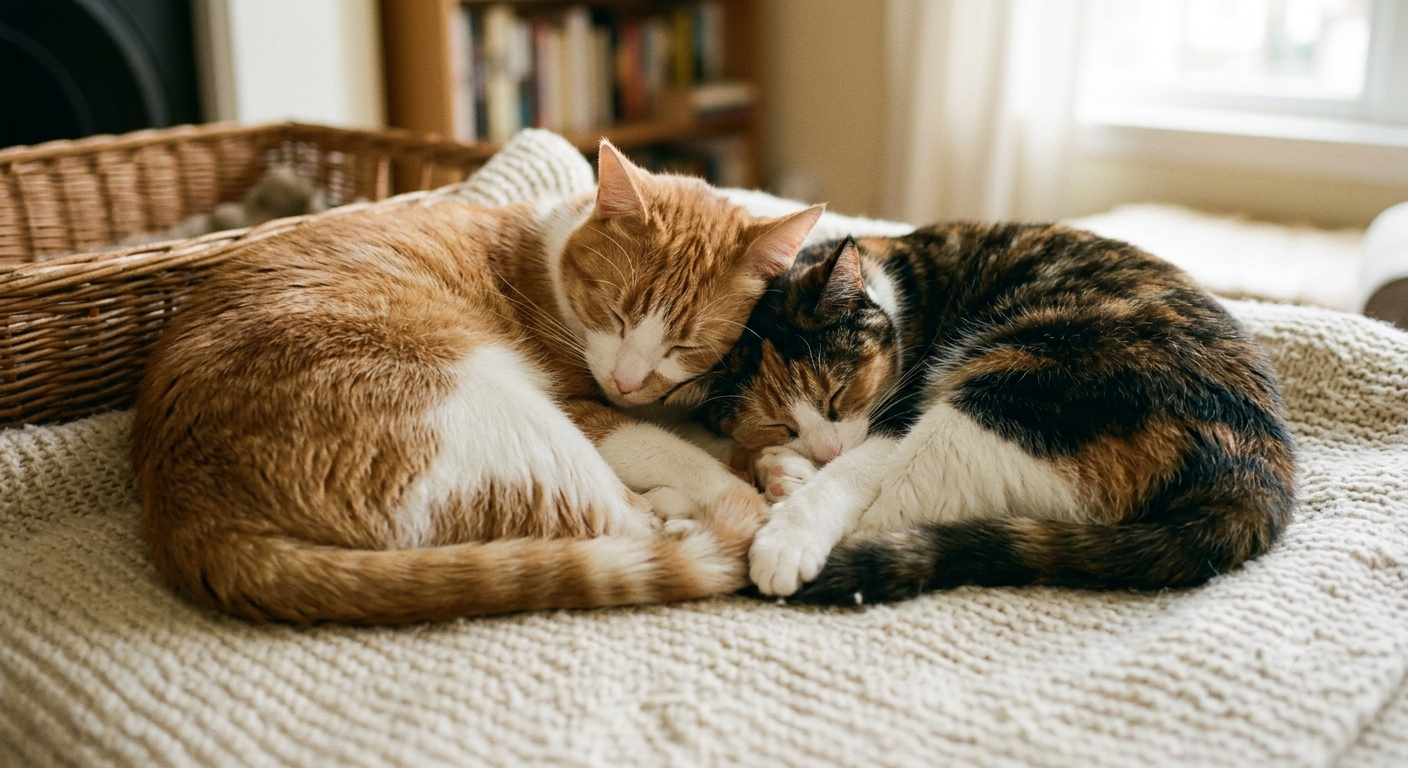
Two cats. One pile. Completely intertwined. The social bond made physically literal in the shared warmth, the shared position, the complete absence of personal space that cats who love each other choose.
Cats are not solitary animals by nature — they form colonies when resources allow, and the social bonds within those colonies are maintained through proximity, grooming, and shared sleep. Two cats sleeping pressed together are not simply sharing warmth. They are demonstrating the deepest available expression of feline social trust — I will be unconscious next to you.
If your two cats sleep together like this, what you are observing is one of the most genuinely tender things in the animal world. It looks comfortable. It is comfort — in its most complete and mutual form.
What a Change in Sleeping Position Means
Sudden changes in sleeping habits or unusual sleeping locations can sometimes signal a health concern. A cat who normally sleeps in open, exposed positions and begins sleeping in tight, hidden, curled positions consistently may be experiencing discomfort, illness, or stress. The closed-down positions are protective — and when a cat who did not previously need to protect themselves begins seeking them, the question is what they are protecting against.
Similarly: a cat who moves from sleeping near you to sleeping in a completely separate room consistently may be communicating a change in their physical or emotional wellbeing. Not a single incident — cats have off days like everything else. But a consistent pattern change warrants attention, and veterinary assessment if other signs of illness are present.
Twelve positions. Twelve different communications from a creature who does not speak and has never needed to. Every curl, every stretch, every half-open eye and tucked paw is a sentence in a language that took millions of years to develop and that your cat is speaking to you, right now, every day.
Watch them sleep tonight with this guide in mind. You will catch at least four of these positions before midnight — and each one will tell you something true about the specific, remarkable creature who has chosen to share your home and your sofa and your completely inadequate human warmth.
Save this to Pinterest. Share it with every cat person you know who has ever looked at their sleeping cat and wondered what they were thinking. Now they know.