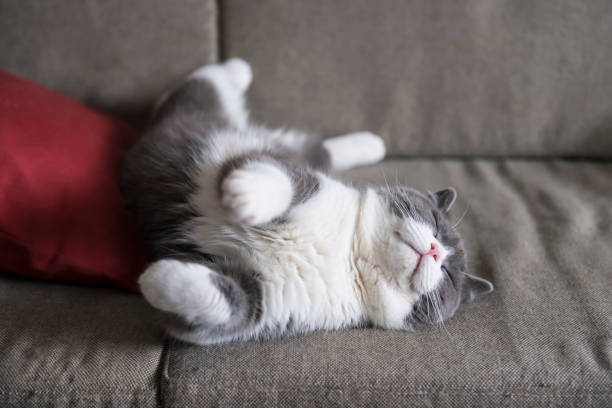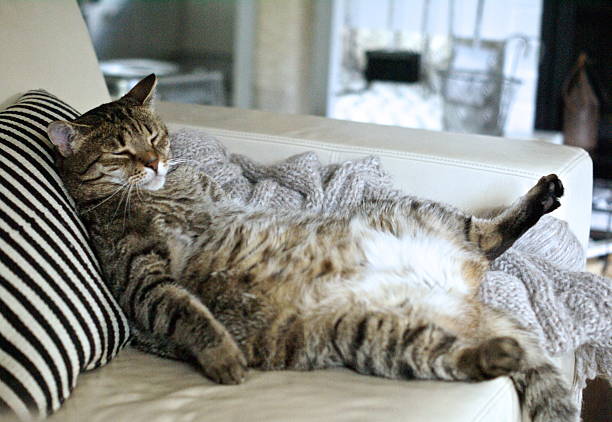
There is a moment that every cat owner knows intimately. You have just finished a full workday, cooked dinner, cleaned the kitchen, and returned to the living room — and your cat is in the same spot they were in when you left eight hours ago, still asleep, in what appears to be the most profound rest any living creature has ever achieved. You stare at them. They do not notice, because they are asleep. And somewhere between admiration and mild envy, a question forms in your mind that every cat owner has wondered at least once: what is going on inside that small body that requires this many hours of unconsciousness?
The answer is one of the most fascinating stories in animal biology — a tale of evolutionary pressure, apex predator energy economics, ancient hunting instincts, and a sleep architecture so sophisticated that it puts human sleep to shame. Your cat is not lazy. Your cat is not depressed. Your cat is not broken. Your cat is a finely tuned biological machine running the most efficient energy management system that tens of millions of years of evolution could design.
The Number That Stops Everyone Cold
According to veterinary experts, cats normally sleep anywhere from 12 to 20 hours a day. The average is 15 hours a day, with 40% of all cats sleeping over 18 hours a day. Let that number sit for a moment. Forty percent of domestic cats sleep more than 18 hours out of every 24. That is a creature spending 75% of its entire existence in some state of sleep or rest.
For most humans, this sounds pathological. We associate that level of sleep with illness, depression, or extreme exhaustion. We live in a culture that treats sleep as something to be minimized and productivity as something to be maximized, so an animal that sleeps 18 hours strikes us as having something fundamentally wrong with it. The moment you understand why cats sleep this much, that intuition dissolves completely — replaced by something that feels surprisingly close to respect.
The Hunter’s Energy Budget — Why the Math Demands Sleep
The domestic cat’s sleep architecture is a precision-engineered system with measurable cycles, distinct brain states, and an evolutionary logic that traces back millions of years. A cat sleeping 16 hours is not a broken animal. A cat sleeping 16 hours is an obligate carnivore maintaining the metabolic budget that evolution built for hunting 20 small prey per day in short, violent bursts.
Think about what hunting actually demands from a cat’s body. Every hunt begins with an extended stalking phase — a period of absolute stillness and concentration that looks like rest but is actually a state of intense neurological alertness. The stalk can last minutes or hours. Then, in the space of three to five seconds, the cat launches into an explosive sprint that can reach speeds of 30 miles per hour, followed by a leap, a grapple, a kill. The entire active sequence burns an enormous amount of energy relative to the cat’s body size. And then? The prey item is, in the case of a wild cat, a mouse or small bird — maybe 30 calories of nutrition to replenish the energy spent catching it.
This is the energy economy of an obligate carnivore predator: massive output, modest return, repeat twenty times a day. The only way to sustain that cycle without burning through muscle mass and organ reserves is to spend the time between hunts in a state of genuine metabolic conservation. Sleep is not recovery from the hunt. Sleep is the mechanism that makes the next hunt possible. Sleeping helps cats conserve energy, especially since they have a relatively high metabolic rate. Cats need to rest and recharge their batteries frequently to be ready for playtime, hunting, and other activities.
Your indoor cat, whose “prey” is a bowl of kibble that materializes twice a day with zero effort, is running this same ancient program. The body does not know that the hunt has been outsourced to a bag of dry food and a human with a can opener. It still allocates energy as though a hunt is coming. It still conserves. It still sleeps.
Crepuscular Wiring — Why Your Cat Runs Laps at 3 am
Most cats are most active at dawn and dusk. It is a trait that makes them crepuscular animals, alongside creatures such as ferrets, hamsters, and stray dogs. This is because, over millions of years, cats have evolved to be low-light predators, with their eyesight specifically adapted for activity at twilight.
Cats have eyes designed for the half-light hours — the period just before sunrise and just after sunset, when their preferred prey (rodents and small birds) are most active, and when their predators are least able to see them clearly. Six times more light-sensitive than human eyes at low light levels. A vertical pupil that can dilate to capture maximum light in dim conditions. A reflective layer behind the retina called the tapetum lucidum that bounces light back through the photoreceptors a second time, almost doubling light utilization. Every feature of the feline eye is built for dawn and dusk, not for the midday sun.
This means that the deep middle of the night and the middle of the day are both, biologically speaking, off-peak hours for a cat. They are the equivalent of asking a human to be at their most productive at 4 am. The body simply was not designed for it. The cat that is sprinting around your apartment at 3 am is not malfunctioning — it is experiencing its biological dawn surge, right on evolutionary schedule, completely indifferent to the fact that your schedule is arranged differently.
The practical implication of this wiring is that cats naturally front-load their activity into two roughly two-hour windows around dawn and dusk, sleep deeply during the remaining 20 hours, and experience the profound mismatch between their evolutionary clock and the domestic schedule as something they manage rather than something they notice.
The Sleep Architecture — What Is Actually Happening Inside a Sleeping Cat
Here is where cat sleep becomes genuinely remarkable. A sleeping cat is not simply unconscious. The feline sleep cycle is a layered, structured architecture with distinct phases that serve different biological purposes and operate on a remarkably short cycle compared to humans.
Unlike humans, who sleep for long, hopefully uninterrupted sessions, cats sleep in shorter spurts. A cat will usually sleep for anywhere between 50 and 113 minutes in one of these sessions. Within each of those sessions, the cat moves between light sleep and deep REM sleep in a cycle that is considerably faster than the human 90-minute sleep cycle.
Research from Dr. Tony Buffington at Ohio State University’s Indoor Pet Initiative, alongside foundational sleep neuroscience, reveals a 104-minute sleep cycle with distinct brain states. The light sleep phase — which makes up about 75% of total sleep time — is characterized by a brain state that remains partially alert. This is the sleep that allows your cat to be lying completely still, eyes closed, breathing slowly, and yet spring to fully alert wakefulness in under a second if they hear an unusual sound. The muscles do not fully relax in light sleep. The ears continue to pivot and track sounds. The brain continues to process sensory information. This is why your cat sometimes appears to be asleep but blinks open one eye when you walk past — they were not fully asleep at all. They were in the predator’s equivalent of standby mode.
It is known that cats spend two-thirds of their lives asleep, but they aren’t always in a deep sleep, the way we are. Oftentimes, they are just snoozing, and this light sleeping makes up about three-fourths of their sleeping time. Cats take light naps so that they can get the rest they need while still being alert and ready to pounce.
Deep REM sleep — the phase where genuine neural restoration, memory consolidation, and dreaming occur — accounts for the remaining 25% of cat sleep time, and it is during this phase that you will see the behaviors that make cat sleep so entertaining to watch. Rapid eye movements behind closed lids. Whisker twitching. Paw paddling. Tiny vocalizations — chirps, mrrps, soft meows — that seem to accompany whatever is happening in the dream. The evidence strongly suggests that cats do dream when in a deep sleep, experiencing REM sleep much like humans do, making it very likely that they have dreams the way we do.
What is your cat dreaming about? The honest answer is that science cannot tell us with certainty, but what it can tell us is that the REM dreaming in animals is believed to involve the replay and processing of recent sensory experiences. Your cat is likely re-running the afternoon’s play session, the prey that escaped, and the sound from outside the window. The neurological processing that happens during waking hours is being encoded into long-term memory during those twitching, whiskery REM sequences. Your sleeping cat is, in a very real sense, still working.
How Age Changes Everything — From Kitten to Senior
The amount of sleep a cat needs is not constant across its life — it shifts dramatically with age, and understanding those shifts prevents a lot of unnecessary worry.
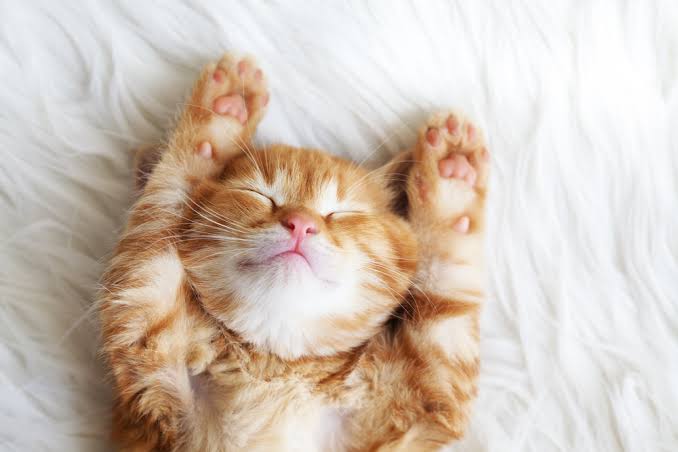
Kittens sleep up to 20 hours per day because nearly all of their sleep is brain-building REM sleep. A newborn kitten that is not sleeping is in acute distress. Sleep is the mechanism through which the kitten’s brain literally builds itself — the neural connections formed during development are laid down during REM sleep, and the sheer volume of development happening in those first weeks demands an extraordinary sleep investment. A kitten that sleeps 22 hours a day is not unusual. A kitten that sleeps 22 hours a day is a kitten whose brain is growing correctly.
Adult cats in their prime years typically settle into the 12 to 15-hour range, with the exact amount modulated by activity level, environment, and individual temperament. An indoor cat with limited stimulation will sleep more — not because they are unhealthy, but because indoor cats without adequate stimulation may default to sleep simply because nothing else is happening — a distinction between biological necessity and behavioural surplus that matters for welfare. An outdoor cat or a highly enriched indoor cat with interactive play sessions, puzzle feeders, and environmental complexity will sleep somewhat less and in shorter bursts.
Older cats tend to sleep more. This is partly due to a natural decline in energy, but it may also be because of pain from age-related diseases. If your older cat is suddenly sleeping more, you may want to visit the vet for a checkup.
The distinction between normal age-related sleep increase and medically significant excess sleep is one of the most practically important things a cat owner can know. A senior cat that gradually sleeps more over months is likely aging normally. A cat of any age that abruptly begins sleeping significantly more than their established baseline — especially if paired with reduced appetite, changes in grooming, or other behavioral shifts — is showing a symptom that warrants veterinary attention.
What Affects How Much Your Cat Sleeps — The Factors You Control
Not all influences on your cat’s sleep duration are biological. Several are directly shaped by the environment you provide, which means you have more influence over your cat’s quality of life and sleep patterns than you might realize.
Temperature is one of the most powerful sleep modulators for cats. Cats have a naturally high body temperature, around 100.5°F to 102.5°F, and their ancestors lived in desert areas. During sleep, body temperature drops, so it is a cat’s natural instinct to seek out a warm and cozy sleeping spot. A cat in a cold environment will sleep more, seeking warmth and conserving the energy required to maintain their elevated body temperature. A cat in a warm, consistently comfortable environment will have more discretionary energy for waking activity. This is why cats gravitate to warm spots with such single-minded determination — the sunny rectangle on the floor, the top of the cable box, the narrow strip of warmth behind your laptop. These are not preferences. They are the intelligent management of energy resources.
Enrichment — or its absence — is the other major factor within your control. The domestic cat’s sleep surplus is a distinction between biological necessity and behavioural surplus that matters for welfare. A cat with puzzle feeders, window perches, interactive toys, daily play sessions, and environmental complexity will sleep enough and be genuinely alert and engaged during their waking hours. A cat without those things will sleep more and more, filling the empty hours with the only alternative available to them. The extra sleep in an under-enriched cat is not harmful in itself, but it is a signal that the waking life is not as rich as it could be.
When Sleeping Too Much Is a Warning Sign — What to Watch For
After everything above, you might be wondering: at what point does a lot of sleep cross the line into too much? The answer is not a specific number of hours — it is a change from your individual cat’s baseline combined with other observable changes.
Watch for sudden increases in sleep duration paired with any of the following: reduced interest in food or water, changes in litter box behavior, changes in grooming habits (either overgrooming or neglecting grooming entirely), unusual vocalizations, swollen abdomen, labored breathing, or visible signs of pain or discomfort. Any single one of these, alongside increased sleep, is reason to contact your veterinarian. Several of them together are a reason to go today.
The beautiful thing about living closely with a sleeping cat — which is, let’s be honest, mostly what cat ownership is — is that you become intimately familiar with their normal. The way they always curl for afternoon naps. The corner they chose in winter. The position they sleep in when everything is right. That normal is your baseline, and any meaningful departure from it is the signal worth paying attention to.
The Privilege of Being Trusted by a Sleeping Cat
There is something worth pausing on in all of this science: a sleeping animal is a vulnerable animal. The biological mechanisms that make cats such efficient, alert, prepared predators are the same mechanisms that make sleep the moment of maximum exposure. The ears still work, the brain still monitors, the muscles still maintain partial readiness — but some degree of vulnerability is unavoidable. A deeply sleeping cat, paws paddling through whatever dream is unfolding behind those closed eyes, is a cat that has made a judgment about its environment.
That judgment includes you.
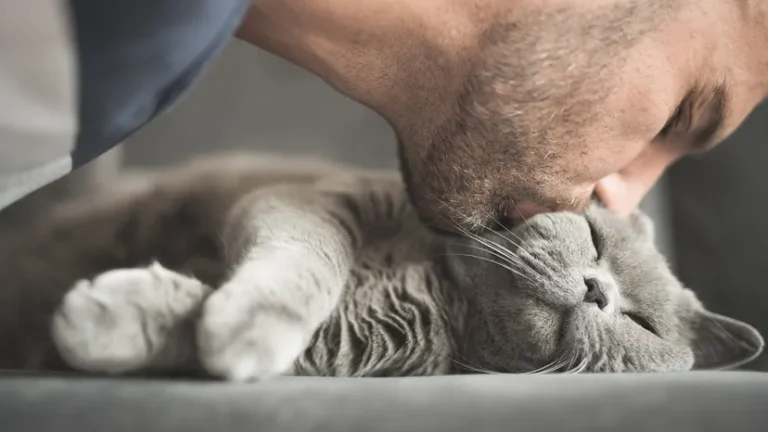
When your cat chooses to sleep in your lap, on your chest, tucked against your leg — they are not simply choosing warmth, though warmth is part of it. They are including you in their assessment of what is safe. You are the warm, familiar-scented element of an environment they have decided, in that moment, poses no threat worth staying alert for. When your cat sleeps on you, they are choosing you as a source of warmth, security, and familiarity. Modern research on feline attachment shows that many cats rely on their humans for emotional safety in much the same way that young children rely on their caregivers. Each time your cat chooses you as its favorite sleeping spot, it is quietly confirming that you are not just the person who fills the food bowl — you are its trusted friend, its secure base, and its favorite place to rest.
Your cat sleeping on you is not an inconvenience. It is a declaration. The one made by an animal whose entire evolutionary history primed it to stay alert, to stay watchful, to never fully let its guard down — who looked at you, considered the evidence, and decided you were worth the vulnerability of deep sleep.
That is the most honest kind of trust there is. It just happens to also involve a significant amount of drool on your shirt.