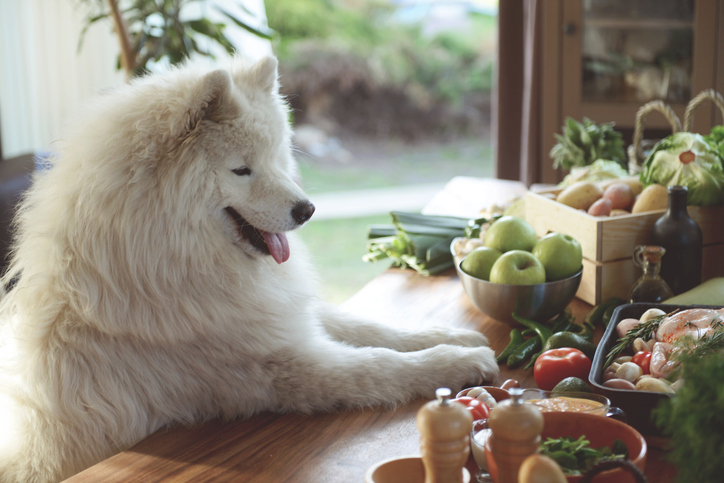
The first time you make a batch of homemade dog food and watch your dog approach the bowl with a different quality of attention than they give their regular kibble — the nose going lower, the tail going faster, the immediate consumption that contrasts with the occasional kibble-pushing they sometimes do — something shifts. Not just in the bowl. In the relationship.
Homemade dog food has been both enthusiastically promoted and cautiously critiqued in the veterinary and dog-owner communities for good reasons on both sides. The argument for it is compelling: you know exactly what is in every meal. You can adjust ingredients for your dog’s specific health needs. You are providing fresh, whole-food nutrition that some commercial processing has compromised. Your dog finds it genuinely more palatable.
The argument for caution is equally real: nutritional balance in homemade dog food is not automatic. A diet that appears healthy and whole-food-based can still be deficient in specific nutrients — calcium, zinc, essential vitamins — that cause real health problems over months of exclusive feeding. The dog who is thriving on homemade food has been fed correctly. The dog who is secretly developing bone fragility or immune system dysfunction from a nutritionally incomplete homemade diet may not show clinical signs for a year or more.
This guide gives you both: the complete information for making genuinely nutritious homemade dog food and the honest safety guidance that prevents the mistakes that well-intentioned homemade feeding sometimes produces.
The Nutritional Foundation: What Dogs Actually Need

Before any recipe: the nutritional categories that any complete dog food must provide, in sufficient quantities and the right ratios.
Protein: The primary macronutrient for dogs. Lean meats — chicken, turkey, beef, fish, lamb — provide the amino acid profile dogs require. Target approximately 40% of the meal by caloric content from protein.
Carbohydrates: Dogs are not carnivores — they are omnivores, and carbohydrate sources provide energy, fiber, and micronutrients. Brown rice, oats, sweet potato, quinoa, and cooked vegetables are appropriate carbohydrate sources. Target approximately 25 to 30% of the meal by caloric content.
Vegetables: Provide fiber, vitamins, and minerals. Dark leafy greens, carrots, green beans, peas, squash. Always cooked for easier digestibility. Target approximately 15 to 20% of the meal by volume.
Fat: Healthy fats support coat quality, joint health, immune function, and energy. Fish oil, flaxseed, and the natural fat in lean meats all contribute. Target approximately 15 to 20% of the meal by caloric content.
The critical addition — the calcium problem:
Meat-based homemade diets without bones or bone meal are calcium-deficient. This is the most common and most serious nutritional error in homemade dog food. A dog eating meat, vegetables, and carbohydrates without adequate calcium develops metabolic bone disease — a genuinely painful and potentially irreversible condition.
How to provide calcium in boneless recipes:
- Ground eggshell powder: 1/4 teaspoon of finely ground dried eggshell powder per pound of food provides approximately the right calcium level
- Bone meal (food grade, not garden/fertilizer grade): follow dosing guidelines for your dog’s weight
- Canned fish with bones (sardines, salmon): the soft bones are safe, digestible, and calcium-rich
Additional supplementation:
A high-quality dog multivitamin or supplement designed for homemade diets fills any gaps that whole food cannot reliably provide. This is not optional for exclusive homemade feeding. It is health infrastructure.
The Foods That Are Never Included — Toxic Review
Every homemade dog food recipe excludes these completely:
- Onions, garlic, leeks, chives (hemolytic anemia)
- Grapes and raisins (kidney failure)
- Xylitol (check every ingredient label)
- Macadamia nuts (neurological effects)
- Avocado (persin toxicity)
- Cooked bones (splinter and laceration risk)
- Chocolate, coffee, caffeine (methylxanthine toxicity)
- Nutmeg (myristicin toxicity)
- Salt in large quantities (sodium poisoning)
Recipe 1: Chicken and Brown Rice — The Classic Starter Recipe
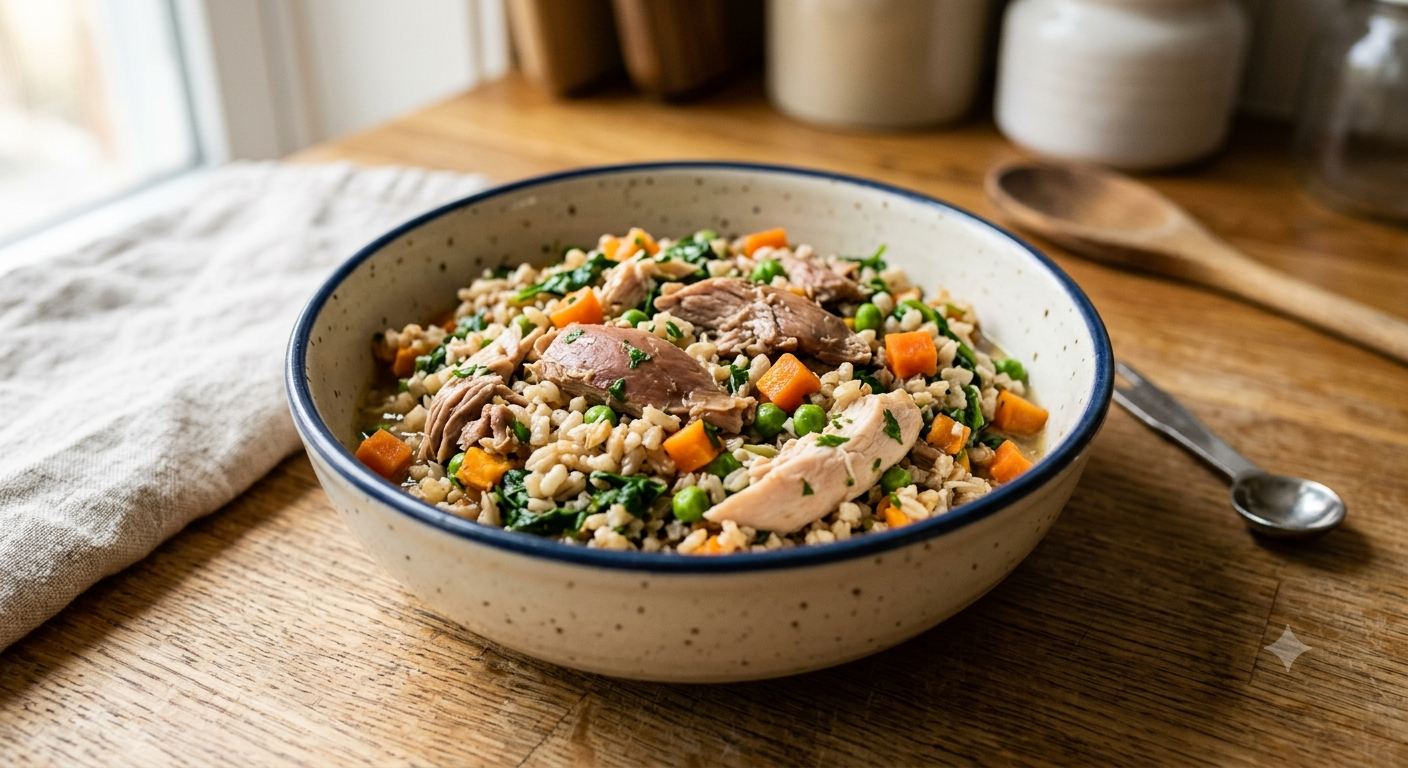
The most widely made homemade dog food recipe and the best starting point for any owner beginning homemade feeding.
Ingredients (makes approximately 8 cups, serves a medium dog for approximately 4 days):
- 2 lbs boneless skinless chicken breast or thighs
- 1.5 cups brown rice (dry, yields approximately 3 cups cooked)
- 2 cups mixed vegetables (carrots, green beans, sweet potato — diced small)
- 1 tablespoon fish oil
- 1 teaspoon ground eggshell powder OR 1 teaspoon food-grade bone meal
- Dog multivitamin per package instructions
Preparation:
Cook brown rice per package instructions. Dice chicken and simmer in a small amount of water until completely cooked through — no pink remaining. Dice and steam vegetables until soft. Combine rice, chicken, and vegetables in a large bowl. Stir in fish oil and calcium supplement. Allow to cool completely before serving.
Storage: Refrigerator: 3 to 4 days. Freezer: up to 3 months in portioned containers.
Portion: A 40-pound dog requires approximately 1 to 1.5 cups of food per meal, twice daily. Adjust based on your dog’s body condition — use the rib test monthly.
Recipe 2: Beef, Sweet Potato, and Kale — The Nutrient-Dense Version
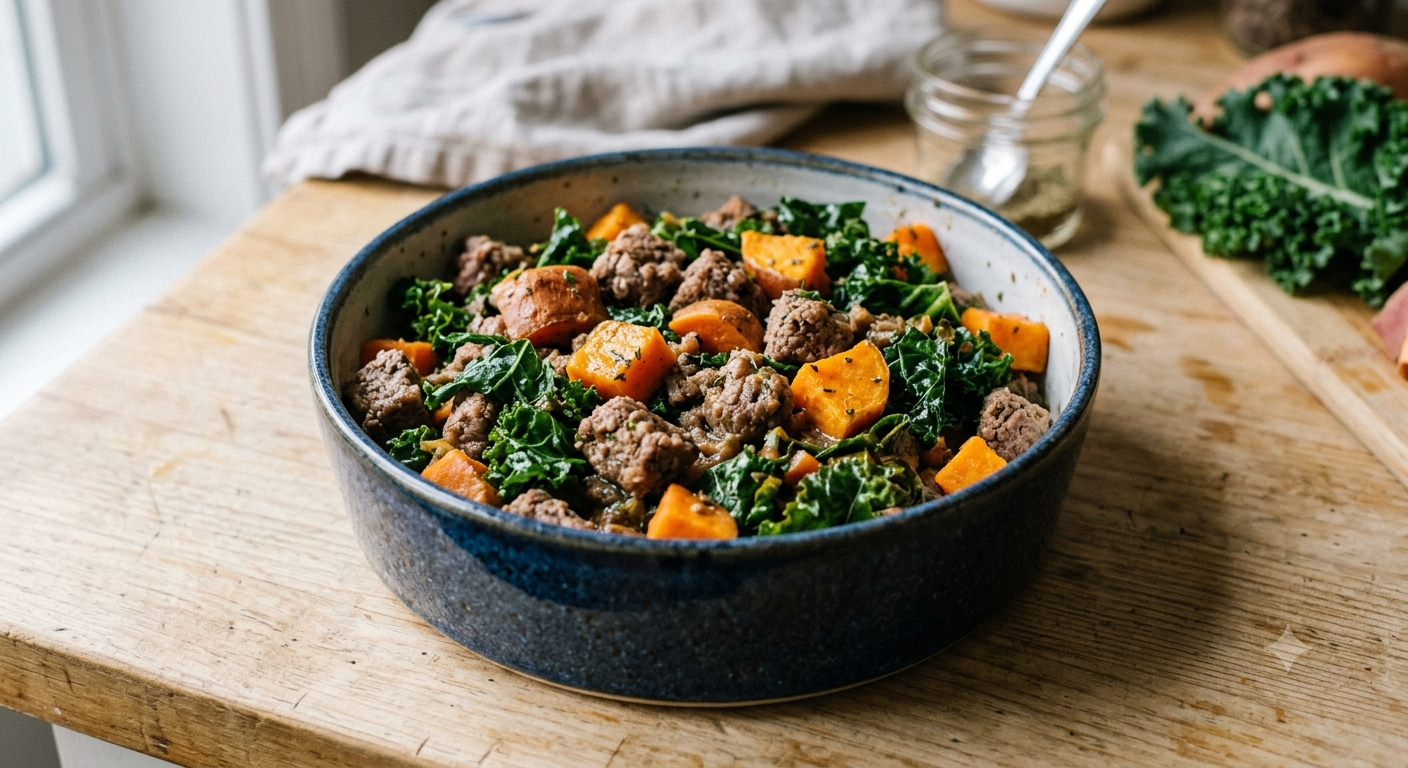
Ingredients:
- 2 lbs lean ground beef or beef stew meat
- 2 medium sweet potatoes, peeled and cubed
- 2 cups kale, stems removed, roughly chopped
- 1 cup peas (fresh or frozen)
- 1 tablespoon flaxseed oil
- 1 teaspoon ground eggshell powder
- Dog multivitamin per instructions
Preparation:
Brown ground beef in a skillet over medium heat until completely cooked. Drain excess fat. Steam sweet potatoes until soft. Steam kale lightly — 3 to 4 minutes. Combine all ingredients in a large bowl. Allow to cool completely.
The nutritional profile: Higher in fat than the chicken recipe — adjust portion size slightly downward for dogs who tend toward weight gain, or choose leaner beef.
Recipe 3: Turkey and Vegetable Stew
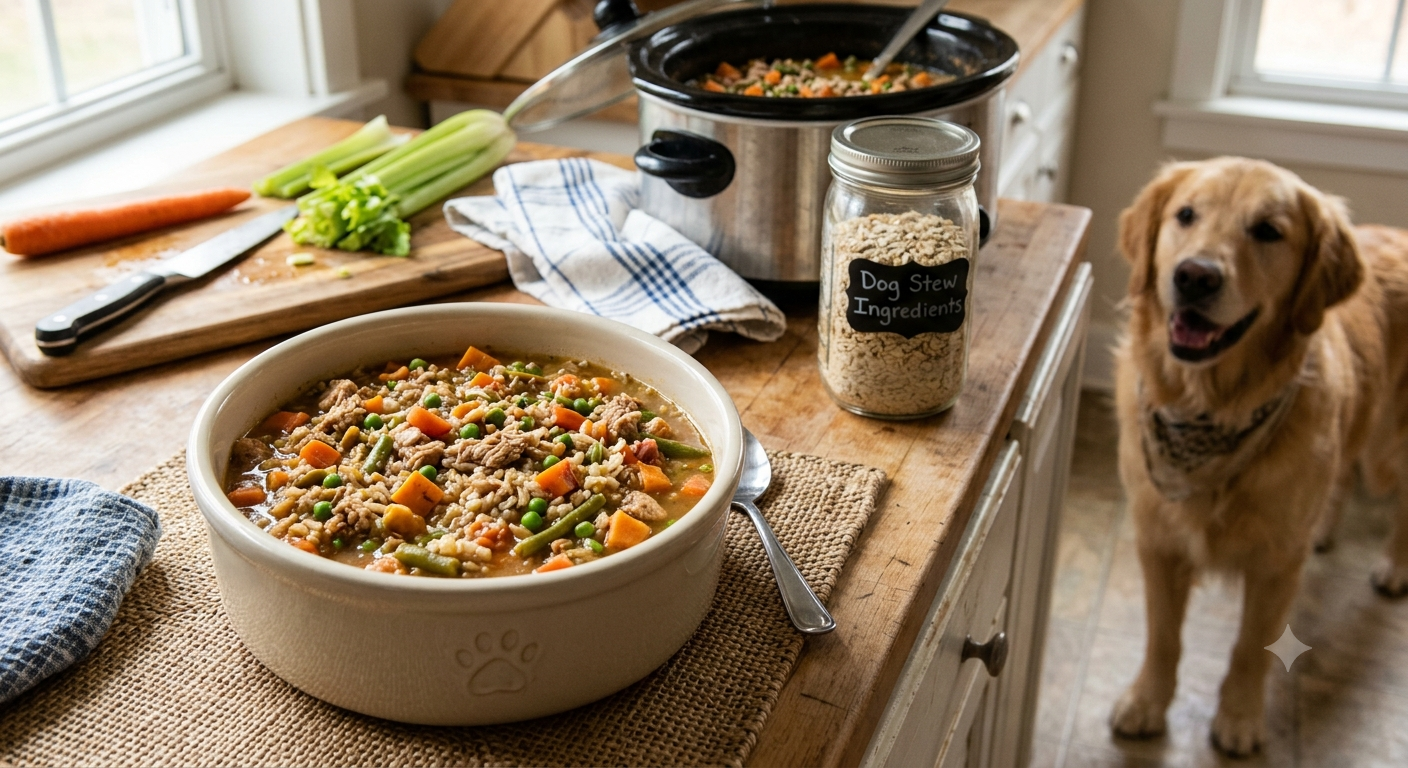
Ingredients:
- 2 lbs ground turkey
- 1 cup carrots, diced
- 1 cup celery, diced
- 1 cup sweet potato, diced
- 1/2 cup frozen peas
- 2 tablespoons parsley (fresh or dried — natural breath freshener and antioxidant)
- 1 teaspoon fish oil
- 1 teaspoon ground eggshell powder
Preparation:
Brown turkey in a large pot. Add carrots, celery, and sweet potato with enough water to just cover. Simmer on medium-low until vegetables are tender, approximately 25 minutes. Add peas in the final 5 minutes. Remove from heat, add parsley, fish oil, and calcium supplement. Cool completely.
The stew benefit: The broth produced during cooking is consumed with the meal, adding hydration — particularly valuable for dogs who are reluctant water drinkers.
Recipe 4: Salmon and Quinoa — The Omega-Rich Version
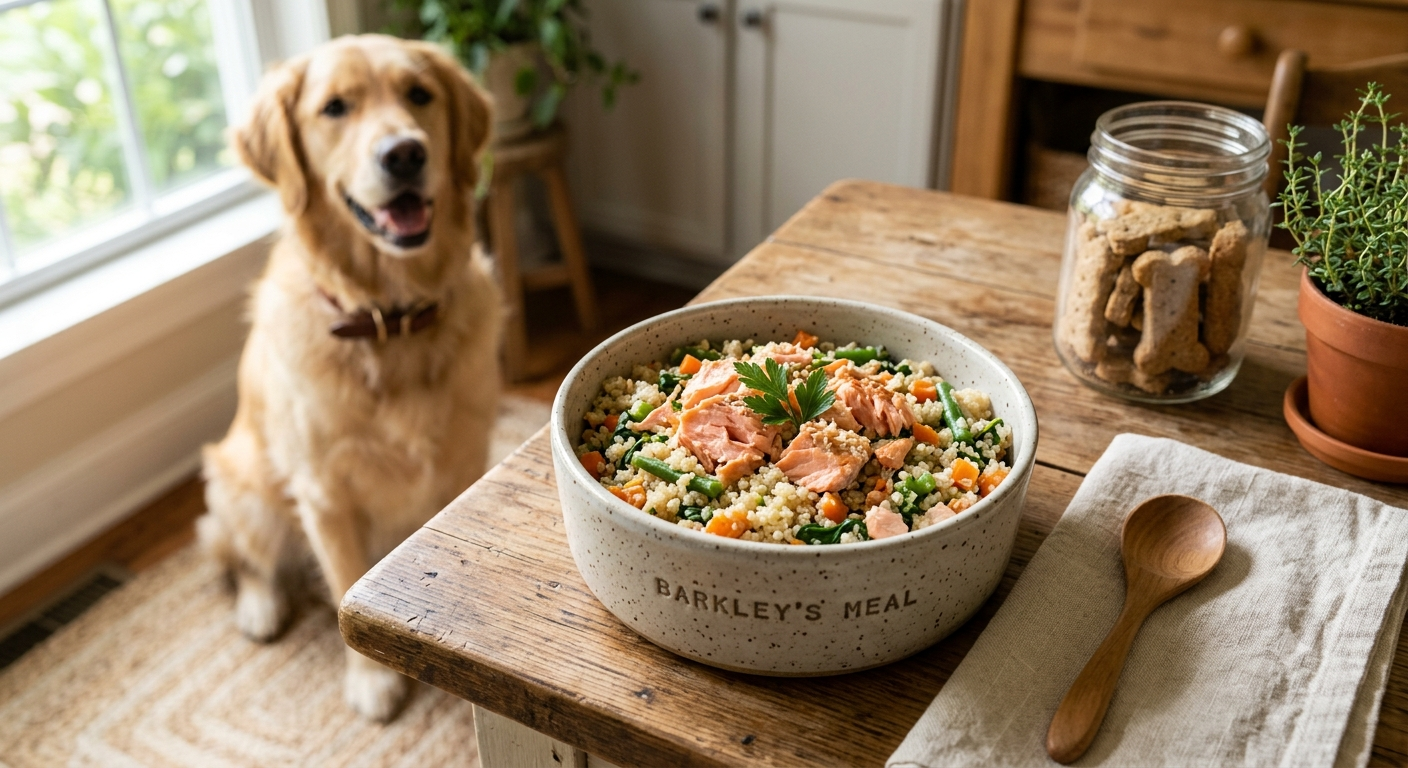
For dogs with beef or chicken sensitivities, salmon provides a novel protein source alongside extraordinary omega-3 fatty acids that support coat quality, joint health, and immune function.
Ingredients:
- 2 lbs salmon fillet (or canned salmon in water, with bones — the soft canned bones are safe and calcium-rich)
- 1 cup quinoa, dry (yields approximately 2 cups cooked)
- 2 cups broccoli florets, steamed
- 1 cup sweet potato, steamed and mashed
- 1 teaspoon dried parsley
The calcium note: If using canned salmon with bones (the most convenient option), the bones provide sufficient calcium and no additional supplement is needed. If using fresh salmon fillet, add eggshell powder as in other recipes.
Recipe 5: The Organ Meat Addition — Once a Week
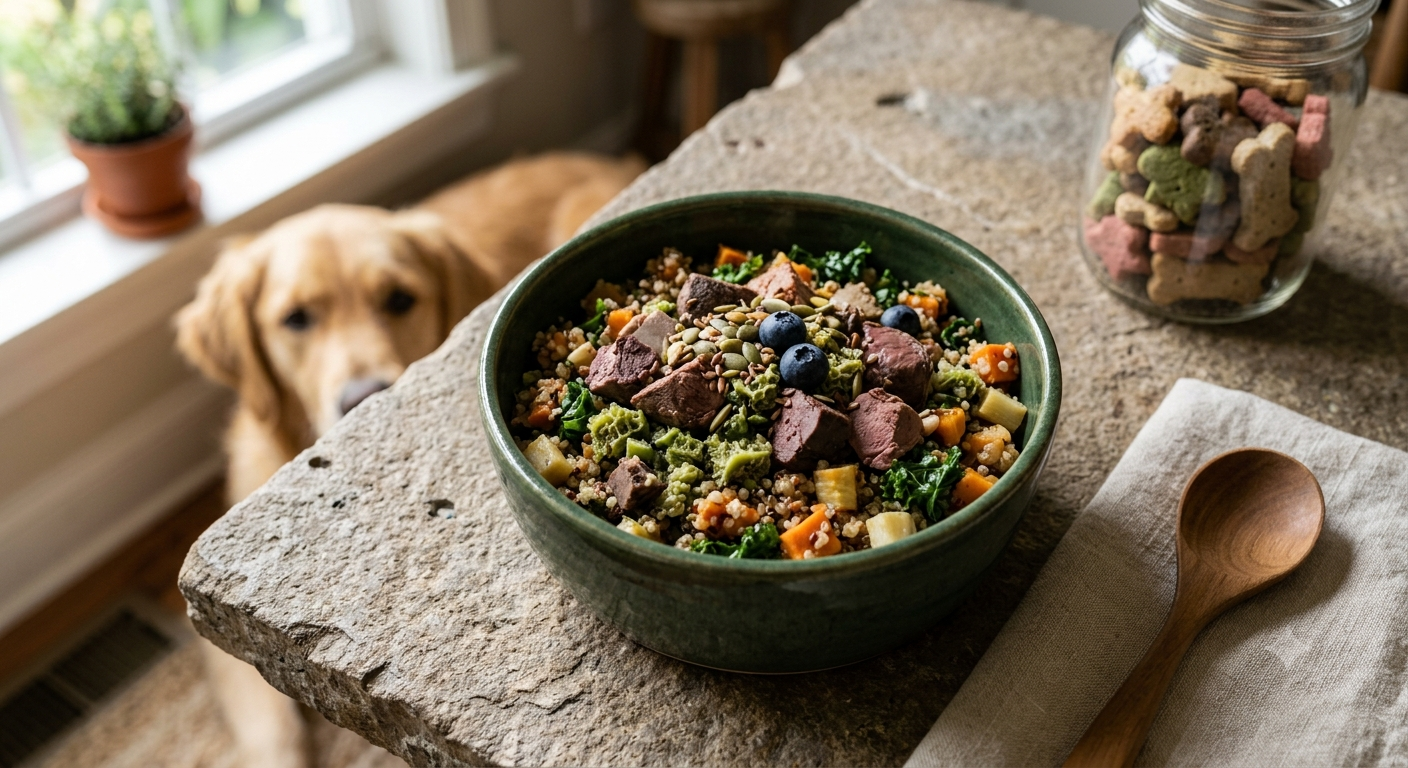
Organ meats — liver (chicken, beef, or lamb), kidney, and heart — are the most nutrient-dense foods available in a dog’s diet. They are rich in B vitamins, iron, zinc, copper, and vitamin A at concentrations that muscle meat cannot match.
The safe proportion: Organ meat should constitute approximately 5 to 10% of the total diet — not more. Excessive liver, in particular, can cause vitamin A toxicity over extended feeding. A small portion (1 to 2 ounces per meal for a medium dog) once or twice weekly is sufficient.
Add 2 to 4 ounces of lightly cooked chicken liver or beef liver to any of the above recipes as the organ meat component for that week’s batch.
Recipe 6: The Batch Cooking System — Making Homemade Sustainable
The practical challenge of homemade dog food is not the cooking — it is the consistency of production. A batch-cooking system solves this.
The Sunday batch cooking approach:
Once per week, cook one large batch of base food — typically a double batch of Recipe 1 or 2. Divide into daily portions and freeze. Remove tomorrow’s portion the night before. Feeding is exactly as fast as commercial food once the system is established.
Equipment that makes batch cooking practical:
A large stock pot (8 to 10 quart minimum). A rice cooker for hands-off grain cooking. A set of identical storage containers for portioned freezing. A kitchen scale for weight-based portioning.
Transitioning From Kibble to Homemade
Never switch immediately. A sudden diet change causes digestive upset in most dogs — diarrhea, vomiting, and significant discomfort.
The seven-day transition:
- Days 1–2: 75% kibble, 25% homemade
- Days 3–4: 50% kibble, 50% homemade
- Days 5–6: 25% kibble, 75% homemade
- Day 7+: 100% homemade
Monitor stool quality throughout the transition. Soft stools or diarrhea is a sign to slow the transition rate — go back one step for two or three more days before progressing.
The Veterinary Conversation
Tell your veterinarian you are transitioning to homemade feeding. Ask for a nutritional assessment of your planned recipes. Discuss supplementation. Schedule blood work six months after the transition to verify that nutritional levels are within normal ranges.
This conversation is not optional if you are feeding homemade exclusively. The vet who knows what your dog is eating can provide the monitoring that catches any developing nutritional deficiencies before they become established problems.
Homemade dog food is one of the most significant things you can do for your dog’s health and happiness — when it is done correctly. The whole-food nutrition, the absence of preservatives and artificial ingredients, the palatability that most dogs respond to immediately, and the satisfaction of knowing exactly what goes in every meal are genuine, real benefits.
The safety measures — the calcium supplement, the multivitamin, the veterinary monitoring — are not optional additions to an otherwise complete system. They are what makes the system actually complete.
Save this guide to Pinterest, share it with every dog owner who has thought about homemade food but was not sure where to start, and cook your first batch this weekend. Your dog has been waiting for this.