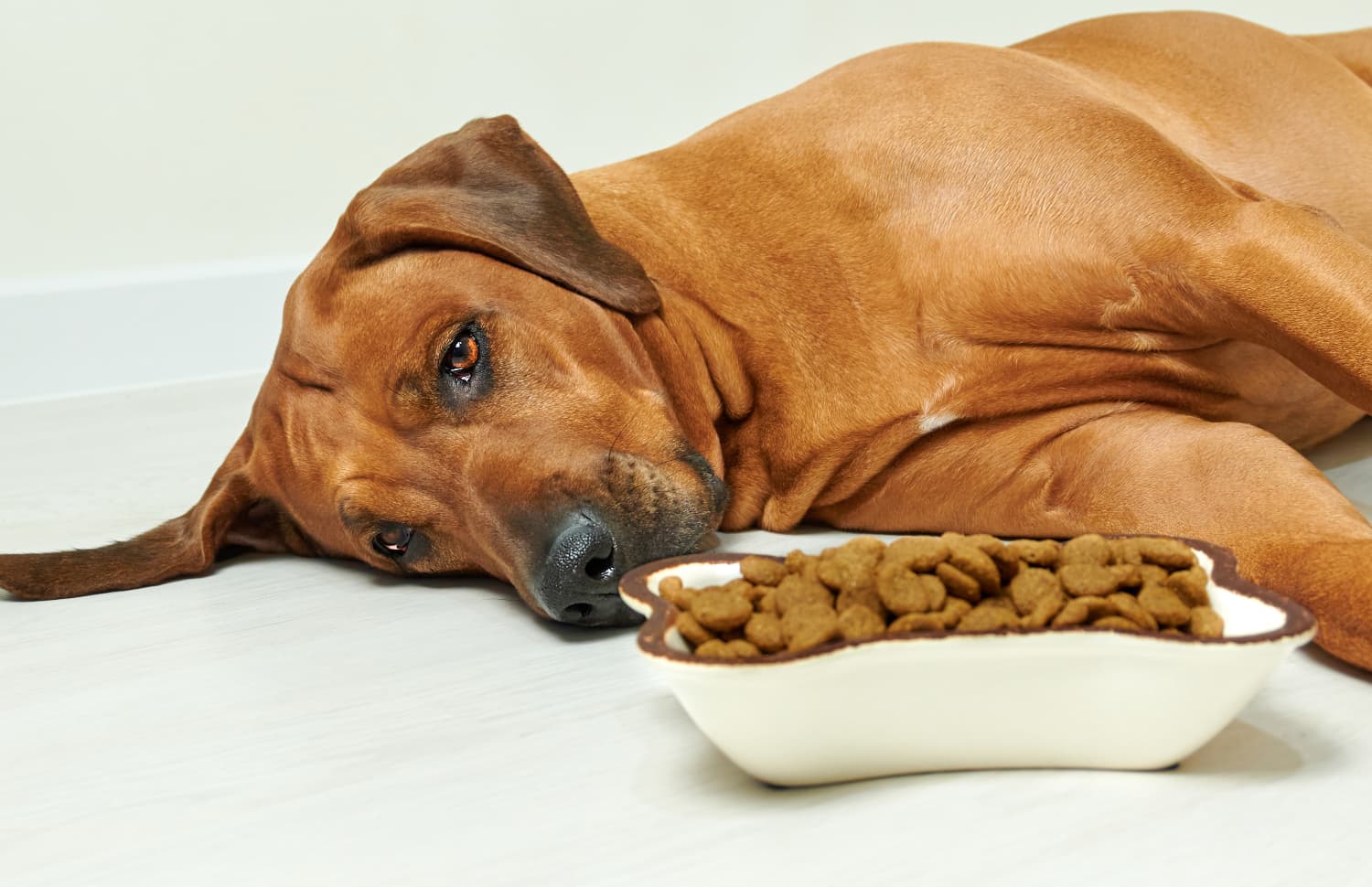
You pick up the bag of kibble, flip it over, and read the ingredient list. Somewhere between “chicken by-product meal” and “BHA preservative,” you think: when it comes to my dog’s food, my dog deserves better than this. And you are right. They do.
Homemade dog food is not as complicated, expensive, or time-consuming as most people assume. The ten recipes in this guide use affordable, widely available ingredients — the kind you can find at any grocery store — and they cost less per serving than most mid-range commercial dog foods. More importantly, they are made from real, recognizable food that genuinely supports your dog’s health, energy, coat quality, and long-term wellbeing.
A critical note before you begin: the information here documents general recipes and research. Always consult with your veterinarian before transitioning to a homemade diet, especially for dogs with existing health conditions. Your vet can confirm appropriate portion sizes and confirm that the recipe suits your specific dog’s nutritional needs.
What Goes Into a Balanced Homemade Dog Food
Before the recipes, a brief framework. A properly balanced homemade dog food needs four components:
Protein (40–50% of the meal): Lean muscle meat — chicken, beef, turkey, fish. This is the foundation. Dogs are primarily protein-driven, and the quality of the protein source directly affects muscle maintenance, immune function, and energy.
Carbohydrates (25–30%): Brown rice, white rice, oats, sweet potato, or quinoa. These provide sustained energy and digestible fiber. White rice is the most easily digested option for dogs with sensitive stomachs.
Vegetables (15–20%): Carrots, green beans, peas, spinach, zucchini, broccoli (in small quantities). These provide vitamins, minerals, and fiber that round out a balanced meal.
Healthy fats: A small amount of fish oil, coconut oil, or the natural fat in the protein source supports coat health, joint function, and brain health.
It can get pricey to make perfectly balanced homemade dog food, but hospital bills are even pricier. Healthy food equals good health — and making food in bulk, keeping it in the freezer, and thawing overnight as needed makes the process dramatically more convenient and cost-effective.
Now — the ten recipes.
Recipe 1: Classic Ground Beef and Brown Rice Bowl
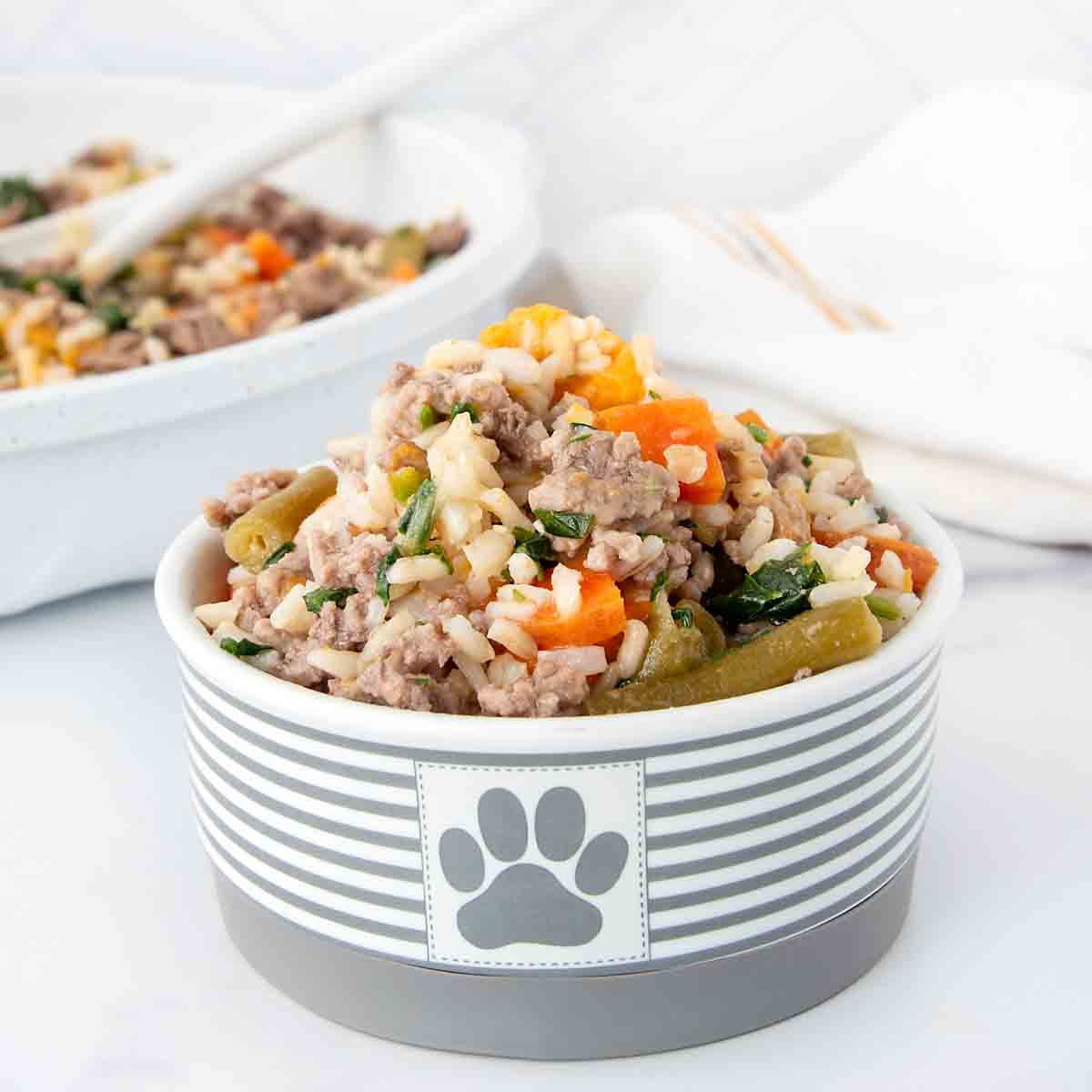
Why dogs love it: Ground beef is one of the most universally appealing proteins for dogs. Lean ground beef combined with wholesome brown rice, fresh vegetables, hard-boiled eggs, and tender herbs makes a healthy, vibrant alternative to traditional dog food. This recipe has given countless older dogs renewed energy and improved coat condition.
Cost per batch: Approximately $8–12 for a week’s supply for a medium-sized dog.
Ingredients (makes approximately 6 cups):
- 1 lb lean ground beef (85/15 or leaner)
- 1½ cups brown rice, uncooked
- 1 cup carrots, diced
- 1 cup peas (frozen is fine)
- ½ cup green beans, chopped
- 2 tablespoons fish oil or a drizzle of olive oil
- 3 cups water or low-sodium beef broth (no onion or garlic)
Instructions:
- Brown the ground beef in a large skillet over medium heat, breaking it up as it cooks. Drain excess fat.
- Cook brown rice separately per package instructions or add to the pot with 3 cups of water and allow it to absorb.
- Steam or lightly boil the carrots, peas, and green beans until just tender — not mushy.
- Combine all ingredients in a large bowl. Add fish oil and mix well.
- Allow to cool completely before serving. Never serve hot.
- Refrigerate for up to 5 days or freeze in portions for up to 3 months.
Nutritional highlights: Lean beef provides high-quality protein and B vitamins. Brown rice delivers complex carbohydrates for sustained energy. Carrots supply beta-carotene and natural sweetness. Peas add plant protein and fiber.
⚠️ Never include: Onions, garlic, seasoning, or heavily fatty cuts. Always use lean beef and drain the fat after browning.
How to Make Homemade Dog Food — 6 Recipes + Full Guide →
Recipe 2: Chicken and Sweet Potato — The Digestive Reset Bowl
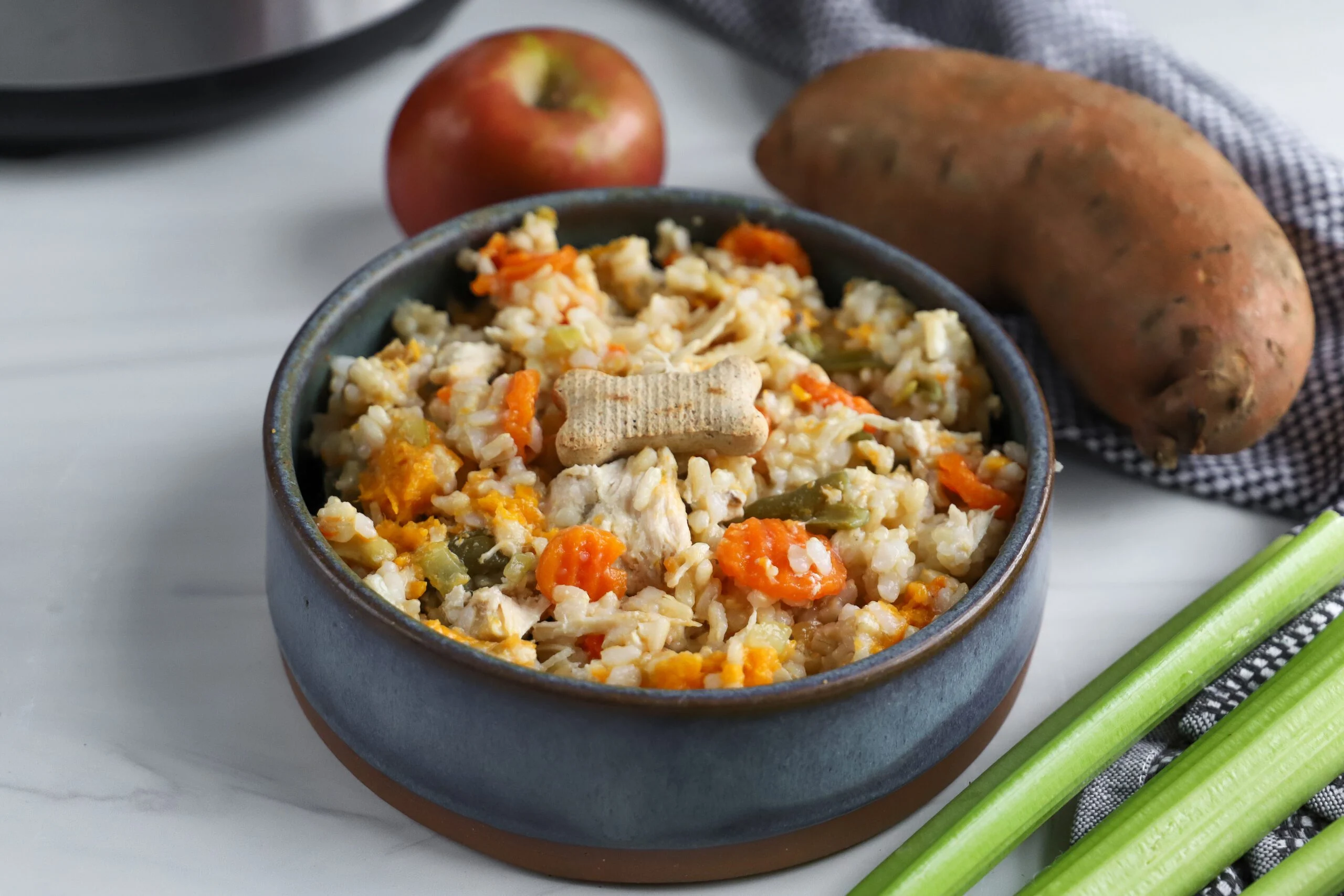
Why dogs love it: Chicken is the most widely eaten protein in the canine world, and sweet potato is one of the most digestible carbohydrate sources available. This combination is gentle enough to be the standard recommendation from veterinarians when a dog’s digestive system needs resetting — and appealing enough to be eaten with enthusiasm even by the pickiest eaters.
Cost per batch: Approximately $7–10 for a week’s supply for a medium-sized dog.
Ingredients (makes approximately 7 cups):
- 1.5 lbs boneless, skinless chicken breast or thighs
- 2 medium sweet potatoes, peeled and cubed
- 1 cup peas
- 1 cup carrots, diced
- ½ cup plain pumpkin puree (canned, not pie filling)
- 2 tablespoons fish oil
- 3 cups water or low-sodium chicken broth (no garlic)
Instructions:
- Boil chicken in unseasoned water or broth until fully cooked — approximately 15 to 20 minutes. Reserve the broth.
- Shred or dice the cooked chicken into small pieces appropriate for your dog’s size.
- Cook sweet potato cubes in the reserved broth until completely soft, approximately 15 minutes.
- Add peas and carrots to the pot for the final five minutes of cooking.
- Stir in pumpkin puree and fish oil. Mix everything well.
- Cool completely before serving.
Nutritional highlights: Chicken provides complete lean protein. Sweet potato delivers vitamin A, fiber, and natural energy. Pumpkin supports digestive health. This recipe is particularly well-suited for dogs recovering from digestive upsets, dogs with sensitive stomachs, or dogs transitioning from commercial food to homemade meals.
⚠️ Important: Never feed your dog a raw sweet potato, as it can cause serious blockages. Always cook sweet potatoes fully before including it in homemade dog food.
Recipe 3: Ground Turkey and Brown Rice with Green Beans
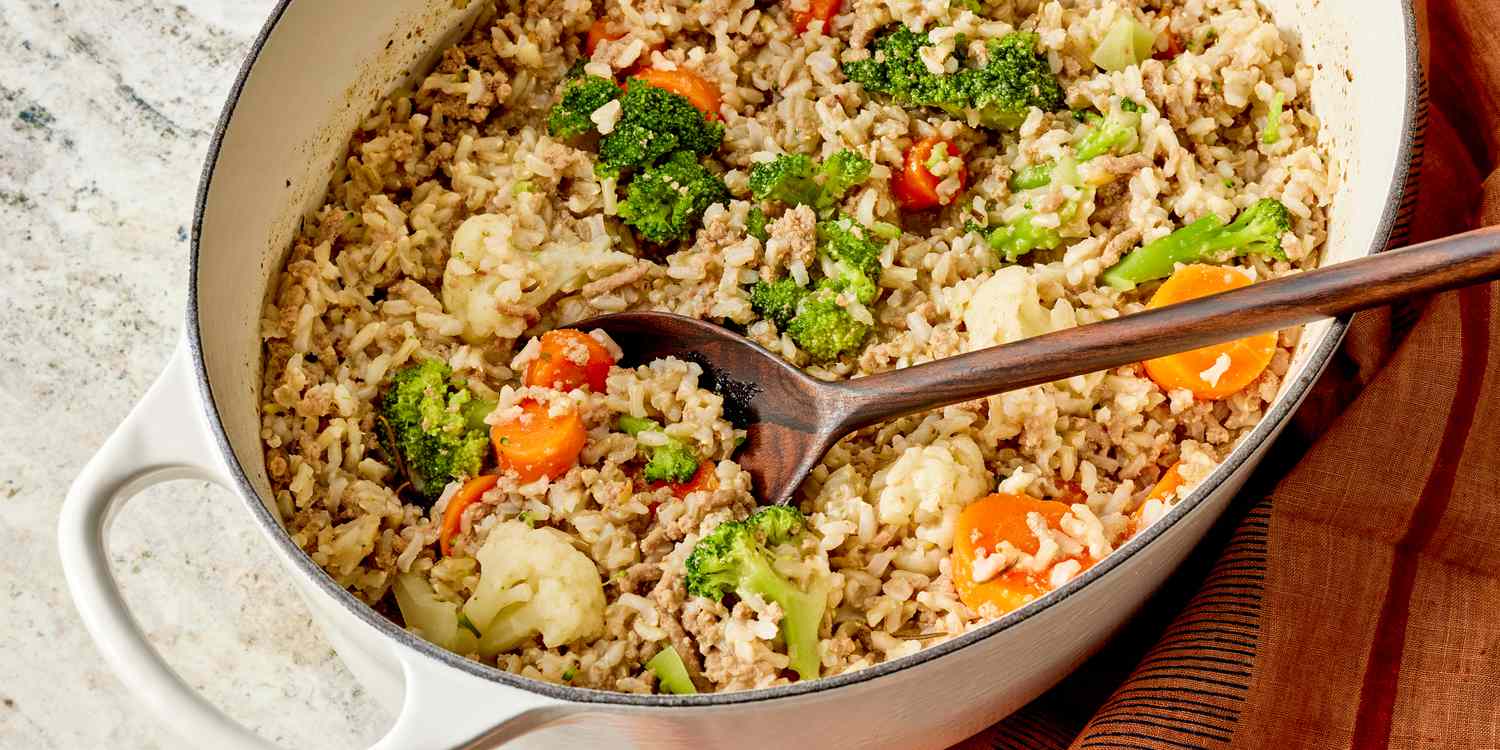
Why dogs love it: Ground turkey is a leaner protein than beef with slightly fewer calories — an excellent choice for dogs who need weight management or who are prone to pancreatitis. Paired with brown rice and green beans, this is a nutritionally complete, budget-friendly recipe that most dogs receive with immediate enthusiasm.
Cost per batch: Approximately $7–11 for a week’s supply for a medium-sized dog.
Ingredients (makes approximately 6 cups):
- 1 lb lean ground turkey
- 1½ cups brown rice, uncooked
- 1 cup green beans, chopped
- 1 cup carrots, diced
- ½ cup spinach, chopped
- 2 tablespoons olive oil or fish oil
- 2½ cups water
Instructions:
- Cook ground turkey in a skillet over medium heat, breaking it up until completely cooked through. No seasoning.
- Cook brown rice per package instructions using water or plain broth.
- Steam or lightly boil green beans and carrots until tender.
- Combine all ingredients. Stir in spinach — the residual heat will wilt it naturally.
- Add oil and mix thoroughly. Cool completely before serving.
Nutritional highlights: Turkey is one of the leanest available proteins and is particularly appropriate for overweight dogs or those with fat-related health conditions. Green beans are an excellent low-calorie vegetable rich in vitamins K, C, and B6. Spinach provides iron and folate.
Batch cooking tip: This recipe doubles and freezes exceptionally well. Make a double batch, divide into weekly portions, and freeze. Defrost overnight in the refrigerator.
Recipe 4: Salmon and Oatmeal Omega Bowl
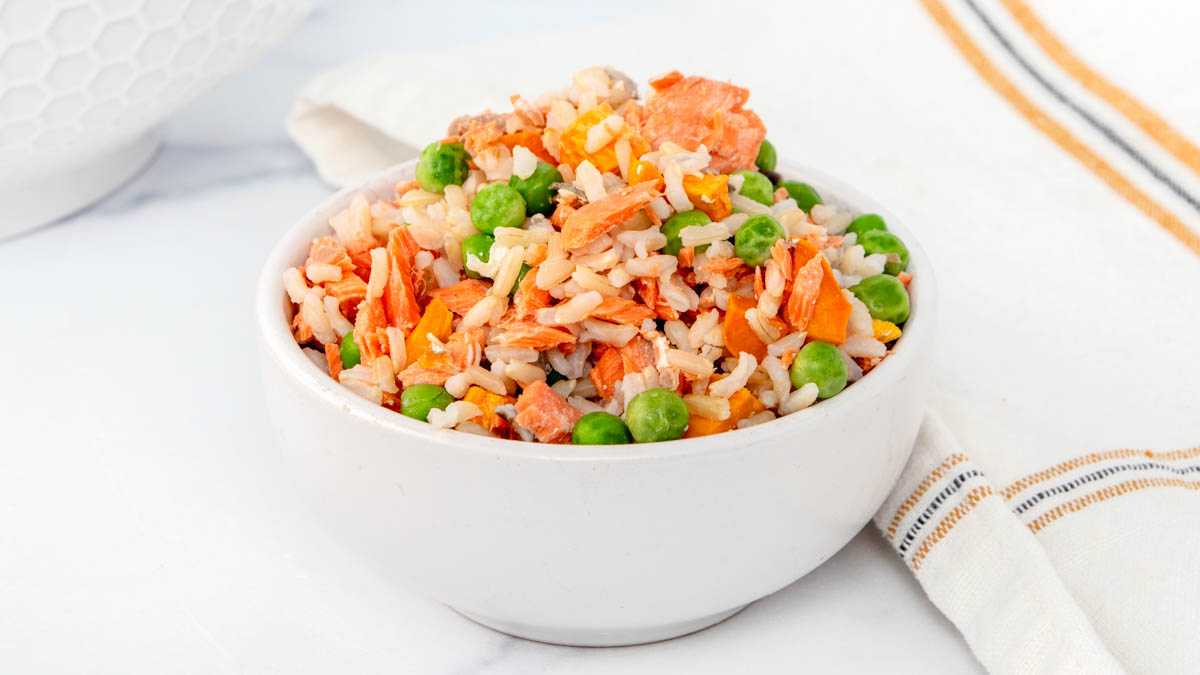
Why dogs love it: Salmon is one of the most nutritionally powerful proteins you can give a dog. The omega-3 fatty acids in salmon reduce inflammation, support joint health, produce a visibly glossier coat within weeks, and support cognitive function in senior dogs. Paired with oatmeal — one of the most digestive-friendly grains available — this is the recipe that delivers visible health results fastest.
Cost per batch: Approximately $10–15 for a week’s supply using canned wild salmon, significantly less expensive than fresh.
Ingredients (makes approximately 6 cups):
- 1 can (14–15 oz) wild-caught salmon, no added salt (or 1 lb cooked fresh salmon, all bones and skin removed)
- 2 cups rolled oats, cooked
- 1 cup zucchini, diced and steamed
- 1 cup carrots, diced and cooked
- ½ cup sweet potato, cooked and mashed
- 2 tablespoons fish oil (optional — the salmon itself provides significant omega-3)
- 2 cups water
Instructions:
- If using canned salmon, drain thoroughly and flake. Check carefully for any bone fragments and remove them completely.
- If using fresh salmon, cook completely — bake at 375°F for 15–20 minutes or poach in unseasoned water. Remove all bones and skin. Cool and flake.
- Cook rolled oats in water until completely soft.
- Steam zucchini and carrots until tender.
- Combine all ingredients and mix well. Add the mashed sweet potato as a binder.
- Cool completely. Refrigerate for up to 4 days (salmon-based food has a shorter refrigerator life than beef or chicken). Freeze the remainder immediately.
Nutritional highlights: Wild salmon is the single richest source of omega-3 fatty acids available in a budget-friendly protein. Oatmeal is exceptionally gentle on the digestive system, high in soluble fiber, and provides sustained energy. This recipe is particularly well-suited for senior dogs, dogs with joint issues, or any dog with a dry or dull coat.
⚠️ Critical warning: Never feed raw salmon to dogs. Raw salmon can carry Neorickettsia helminthoeca, the parasite responsible for salmon poisoning disease — a potentially fatal condition in dogs. Always cook salmon completely before serving.
Recipe 5: Pumpkin and Egg Breakfast Bowl
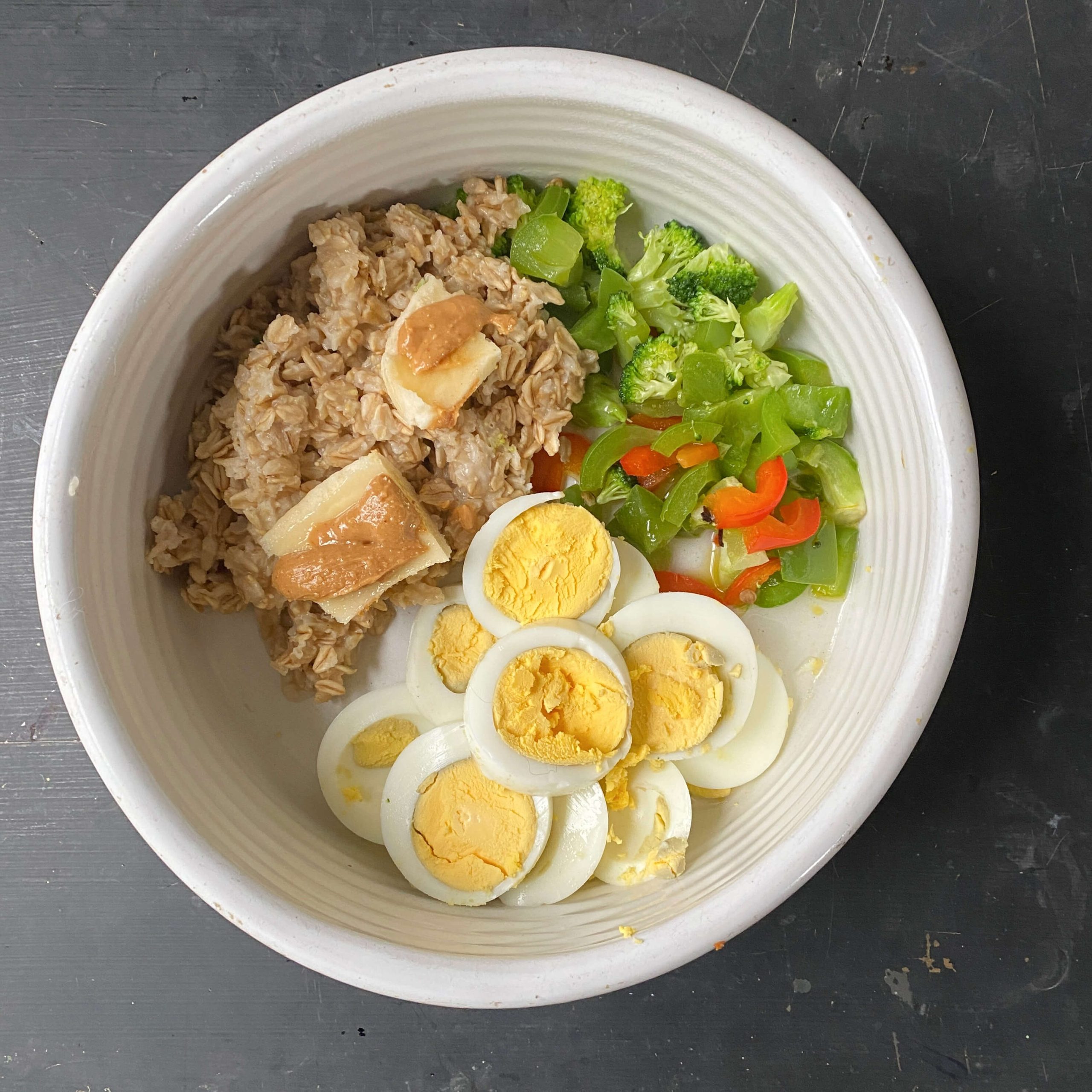
Why dogs love it: This is the lightest, most digestive-gentle recipe on the list — and the fastest to make. Eggs are one of the highest-quality protein sources available for dogs, pumpkin is the gold standard of canine digestive support, and oats provide the gentle fiber foundation that makes this an ideal everyday meal or a recovery meal after digestive upset.
Cost per batch: Approximately $4–6 for a week’s supply. The cheapest recipe on this list by a meaningful margin.
Ingredients (makes approximately 4 cups):
- 4 large eggs, fully cooked (scrambled or hard-boiled)
- 1 cup plain canned pumpkin (not pie filling)
- 1½ cups rolled oats, cooked
- ½ cup carrots, finely grated
- ½ cup peas
- 1 tablespoon coconut oil or olive oil
Instructions:
- Scramble eggs without any oil, butter, salt, or seasoning. Cook completely until no liquid remains.
- Alternatively, hard-boil eggs, cool, peel, and chop finely.
- Cook rolled oats in water until completely soft.
- Combine eggs, oats, pumpkin, grated carrots, and peas in a bowl.
- Add oil and mix well. The pumpkin acts as a natural binder.
- Cool before serving. Refrigerate for up to 4 days.
Nutritional highlights: Eggs are one of the highest quality forms of protein you can feed your pet. Not only can dogs eat eggs, but they absolutely should. A moderate daily amount of egg in addition to a regular diet can greatly improve a dog’s health. Pumpkin’s soluble fiber content regulates digestion in both directions — it firms up loose stools and gently relieves constipation. This recipe is particularly appropriate for very young dogs, senior dogs, or any dog recovering from illness.
⚠️ Important: Always cook eggs completely. Raw egg whites contain avidin, a compound that blocks biotin absorption and can cause deficiency with prolonged regular feeding.
Recipe 6: Beef Liver and Vegetable Power Meal
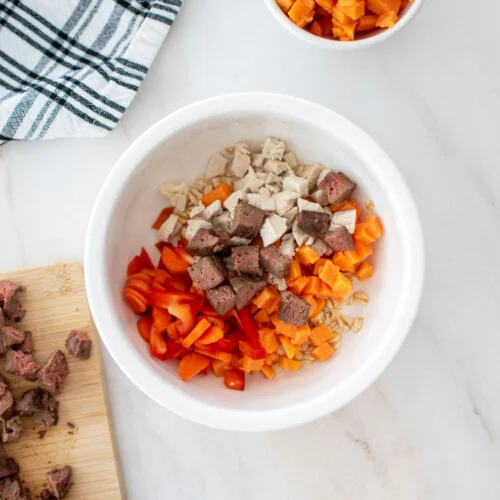
Why dogs love it: Liver is the most nutrient-dense food available to dogs — and one of the cheapest proteins you can buy. A small amount of liver provides an extraordinary concentration of protein, iron, vitamin A, B vitamins, and zinc. Dogs are instinctively attracted to organ meats, and the intensity of the liver’s aroma and flavor means even the most indifferent eaters approach this bowl with serious enthusiasm.
Cost per batch: Approximately $6–9 for a week’s supply. Beef liver is among the least expensive proteins per pound at most grocery stores.
Ingredients (makes approximately 6 cups):
- ½ lb beef liver, trimmed
- ½ lb lean ground beef (to balance the richness of liver)
- 1½ cups brown rice, cooked
- 1 cup carrots, diced
- 1 cup green beans
- ½ cup peas
- 1 tablespoon fish oil
Instructions:
- Rinse the liver under cold water and trim away any connective tissue or green bile duct material if present.
- Boil or sauté liver until completely cooked through — approximately 8 to 10 minutes. Do not leave any pink. Cool and chop into small pieces.
- Brown the ground beef separately. Drain fat completely.
- Cook rice per package instructions.
- Steam carrots, green beans, and peas until tender.
- Combine all ingredients. Add fish oil and mix well. Cool completely.
Nutritional highlights: Liver is the single richest food source of iron, vitamin A, and B vitamins available to dogs. Iron supports red blood cell production and oxygen delivery. Vitamin A supports immune function, vision, and skin health. The combination of organ meat and muscle meat provides a complete amino acid profile.
⚠️ Critical portion guidance: Liver should never exceed 5% of a dog’s total diet by volume. Too much vitamin A causes toxicity — a condition called hypervitaminosis A. In this recipe, liver is used in a responsible ratio alongside muscle meat. Do not increase the liver proportion beyond what is specified.
Recipe 7: Sardine and Brown Rice Budget Bowl
Why dogs love it: Canned sardines in water are one of the most underrated proteins in the homemade dog food world. They are extraordinarily rich in omega-3 fatty acids, extremely affordable, require no cooking, and are available in every grocery store. The pungent aroma that humans find challenging is precisely what makes sardines irresistible to virtually every dog.
Cost per batch: Approximately $5–8 for a week’s supply. This is the budget recipe that delivers the most nutritional value per dollar spent.
Ingredients (makes approximately 5 cups):
- 2 cans (3.75 oz each) sardines in water, no added salt — drained
- 1½ cups brown rice, cooked
- 1 cup spinach, lightly cooked
- 1 cup carrots, cooked and diced
- ½ cup sweet potato, cooked and mashed
- ½ cup peas
Instructions:
- Drain sardines thoroughly and break up with a fork. Check for any large bones — most canned sardine bones are soft and safe to consume, but large, hard bones should be removed.
- Cook brown rice per package instructions.
- Lightly steam spinach until wilted, carrots until tender, and ensure the sweet potato is fully cooked and mashed.
- Combine all ingredients in a large bowl and mix well.
- The mashed sweet potato acts as a natural binder and adds creaminess to the texture.
- Cool completely. Refrigerate for up to 4 days.
Nutritional highlights: Sardines provide exceptional omega-3 fatty acids that support coat health, joint function, and cognitive performance. They are also rich in calcium, vitamin D, and B12. Brown rice provides digestible complex carbohydrates. Spinach adds iron and vitamins K and C. This is one of the most omega-3-dense recipes on the list.
Buying tip: Look for sardines packed in water with no added salt. Sardines packed in oil or with seasonings added are not appropriate for dogs. The water-packed, no-salt varieties are typically the least expensive option and widely available.
Recipe 8: Egg and Rice Recovery Bowl
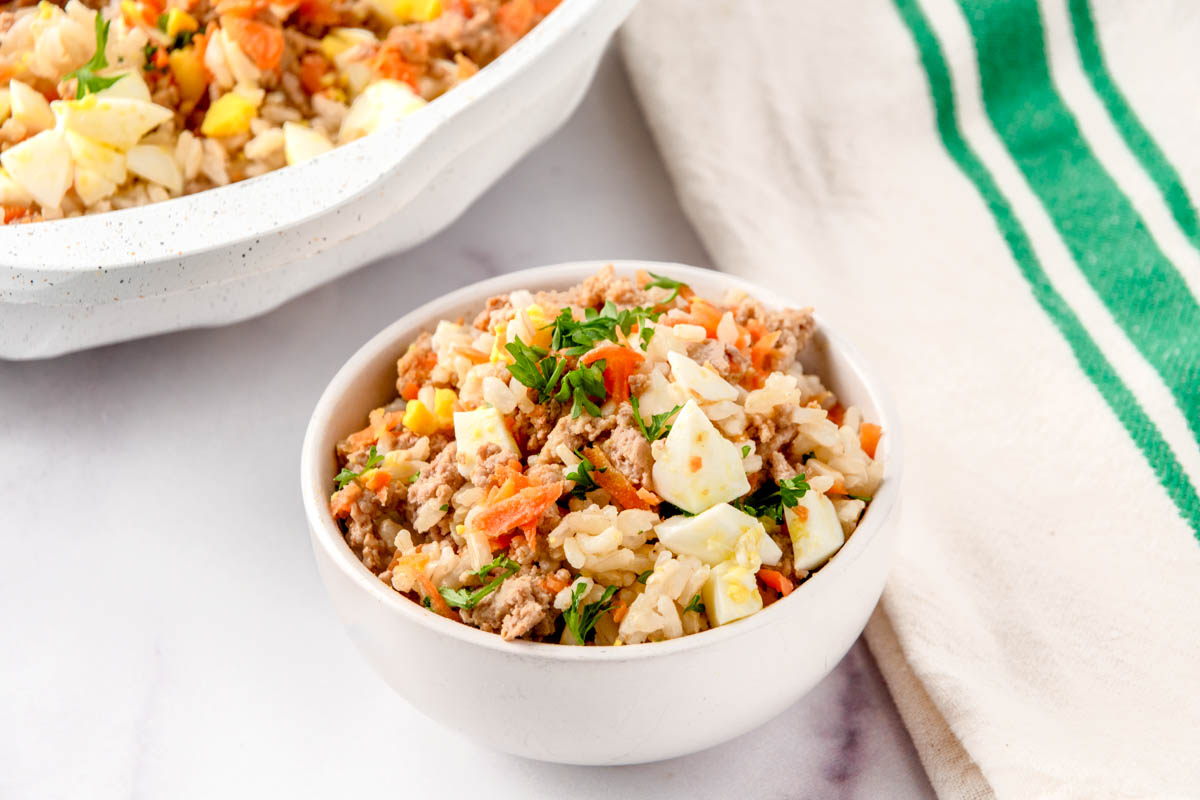
Why dogs love it: This is the simplest recipe on the list — and one of the most important. The egg and rice combination is the canine equivalent of comfort food. It is the meal veterinarians most commonly recommend for dogs recovering from illness, digestive upset, or surgery. It is gentle, highly digestible, and practically universally accepted, even by dogs who are feeling unwell.
Cost per batch: Approximately $3–5 for a week’s supply. The most affordable recipe on the entire list.
Ingredients (makes approximately 4 cups):
- 4 large eggs, fully cooked
- 2 cups white rice, cooked (white rice is more easily digested than brown during recovery)
- ½ cup carrots, finely grated
- ½ cup peas
- ½ cup plain pumpkin puree
- 1 tablespoon olive oil
Instructions:
- Cook eggs completely — scrambled without oil, butter, or seasoning is the simplest method.
- Cook white rice until completely soft and slightly overcooked for maximum digestibility.
- Combine eggs, rice, grated carrots, peas, and pumpkin.
- Add olive oil and mix gently.
- Cool to room temperature before serving.
- This recipe is designed for short-term use during recovery or digestive reset. For long-term feeding, transition to a more complete recipe once the dog’s digestive system has stabilized.
Nutritional highlights: White rice is the most easily digestible carbohydrate available to dogs — it passes through the digestive system with minimal irritation, making it the standard recommendation for dogs with diarrhea, vomiting, or post-surgical digestive sensitivity. Eggs provide complete protein and essential amino acids. Pumpkin regulates digestion.
When to use this recipe: This is your go-to recipe when your dog has an upset stomach, is recovering from illness, or has refused to eat. It is also an excellent transition meal when moving from commercial kibble to homemade food — the simplicity is easy on a digestive system adapting to a new diet.
Recipe 9: Slow Cooker Beef and Vegetable Stew
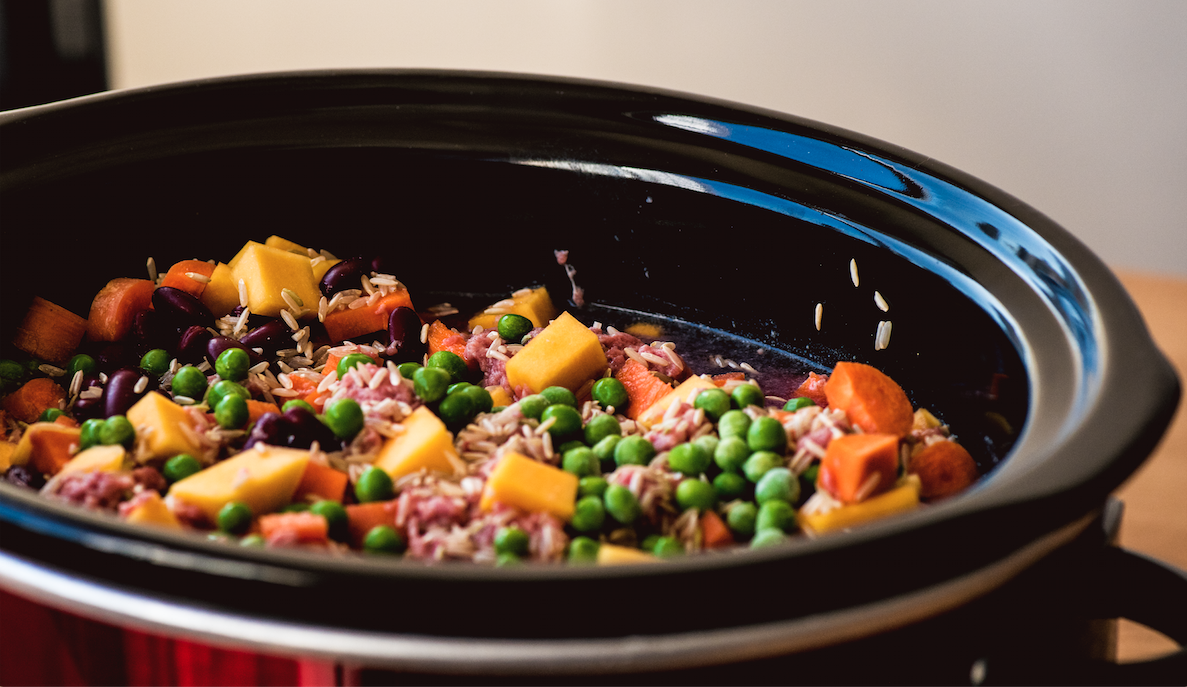
Why dogs love it: This is the Sunday batch-cook recipe — the one you set up in the morning, walk away from, and come back to find a full week of meals ready and waiting. The slow cooker method produces a stew consistency that most dogs find exceptionally appealing, with the meat falling apart into tender pieces and the broth creating a flavor-rich sauce that gets licked from the bowl last.
Cost per batch: Approximately $12–16 for a week’s supply. The slightly higher cost reflects the cut of beef and the larger batch size — the per-serving cost is competitive with any mid-range commercial food.
Ingredients (makes approximately 8 cups):
- 1.5 lbs beef stew meat or chuck roast, cut into 1-inch pieces (fat trimmed)
- 1½ cups brown rice, uncooked
- 2 medium carrots, diced
- 1 cup green beans, chopped
- 1 cup peas
- 1 medium zucchini, diced
- ½ cup plain pumpkin puree
- 4 cups water or low-sodium broth (no onion, no garlic)
- 2 tablespoons fish oil (added after cooking)
Instructions:
- Place beef pieces in the slow cooker.
- Add rice, carrots, green beans, zucchini, and broth.
- Cook on low for 6–8 hours or on high for 3–4 hours until the meat is completely tender and the rice has absorbed all liquid.
- Stir in pumpkin puree and peas for the final 30 minutes of cooking.
- Remove and check all meat pieces — ensure no bone fragments are present if using bone-in cuts.
- Allow to cool completely. Stir in fish oil after cooling.
- Divide into daily portions and refrigerate or freeze.
Nutritional highlights: Slow cooking retains more nutrients than high-heat methods. The extended cooking time breaks down connective tissue in cheaper cuts of beef — making tough, affordable cuts like chuck genuinely tender and nutritionally valuable. The broth produced during slow cooking is rich in collagen and glycine that support joint health. This is the ideal recipe for batch cooking — make it every Sunday and your dog’s meals are prepared for the week.
Batch storage: This recipe makes approximately 8 cups — about 8–10 servings for a medium-sized dog. Refrigerate what will be used within 5 days; freeze the remainder in daily portions.
Recipe 10: Bone Broth and Chicken Superfood Bowl
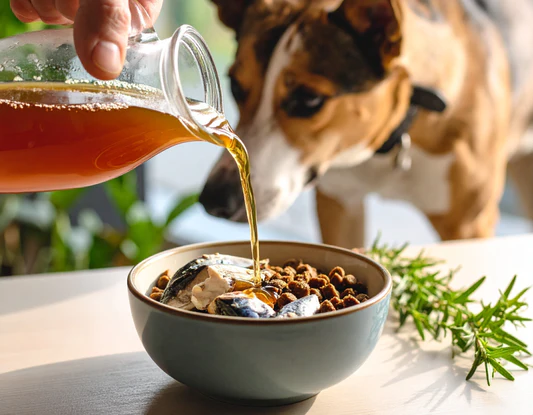
Why dogs love it: Bone broth is the single most powerful thing you can add to a dog’s homemade food. Rich in collagen, glycine, glucosamine, and chondroitin, properly made bone broth supports joint health, gut lining integrity, immune function, and liver detoxification. Combined with chicken and vegetables, it creates the most nutritionally complex and most genuinely medicinal recipe on this list.
Cost per batch: Approximately $8–12 for a week’s supply, including the time investment of making the broth. The broth itself can be made in large quantities and frozen for months.
Part 1 — Making the Bone Broth:
Ingredients:
- 2–3 lbs chicken carcass, backs, or necks (raw or from a previously cooked chicken — remove all cooked bones first and use only raw)
- 2 tablespoons apple cider vinegar (draws minerals from the bones)
- 8–10 cups of water
- Optional: a handful of parsley (added in the last 30 minutes for detox support)
Instructions:
- Place bones in a slow cooker or large pot. Cover completely with water.
- Add apple cider vinegar. Let sit for 30 minutes before heating — this helps extract minerals.
- Bring to a low simmer — do not boil. Slow cooker: 24 hours on low. Stovetop: 12–24 hours on the lowest possible setting.
- During the last 30 minutes, add parsley if using.
- Strain completely through a fine mesh sieve. Discard all bones — cooked bones are dangerous for dogs and must never be fed.
- Allow broth to cool. Skim the fat layer from the surface.
- Freeze in ice cube trays for easy portioning.
⚠️ Critical: Never give dogs cooked bones — they splinter and cause life-threatening internal injuries. Once the bones have been used to make broth, discard them completely.
Part 2 — The Superfood Bowl:
Ingredients (makes approximately 6 cups):
- 1 lb boneless, skinless chicken breast, cooked and shredded
- 1½ cups brown rice, cooked in bone broth instead of water
- 1 cup carrots, diced and steamed
- ½ cup spinach, lightly wilted
- ½ cup peas
- ½ cup bone broth (additional, for serving — pour over the bowl)
- 1 tablespoon fish oil
Instructions:
- Cook chicken completely in unseasoned water or broth. Shred finely.
- Cook brown rice in bone broth instead of plain water — this infuses the rice with collagen and dramatically increases the nutritional value of what appears to be a simple carbohydrate.
- Steam carrots and peas until tender. Wilt spinach in the residual heat.
- Combine all ingredients. Add fish oil. Mix well.
- When serving, warm a few tablespoons of bone broth and pour over the bowl — this creates the appetizing, aromatic presentation that dogs find irresistible and that helps maintain hydration.
Nutritional highlights: Cooking rice in bone broth instead of water significantly increases the collagen and mineral content of every serving without any additional cost or effort. The combination of chicken’s complete amino acid profile, rice’s digestible energy, vegetables’ vitamin contribution, and bone broth’s collagen and glycine creates the most complete recipe on this list — the one that supports joint health, gut health, immune function, and coat quality simultaneously.
How Much to Feed: A Practical Guide
This is the question every new homemade dog food maker asks. The answer depends on your dog’s weight, age, and activity level, but here is a reliable starting framework:
General feeding guidelines by weight: 10 lbs — 3 to 5 oz per day; 20 lbs — 6 to 10 oz per day; 30 lbs — 10 to 14 oz per day; 40 lbs — 13 to 19 oz per day; 50 lbs — 16 to 24 oz per day; 60 lbs — 19 to 29 oz per day; 80 lbs — 26 to 38 oz per day; 100 lbs — 32 to 48 oz per day.
Smaller dogs tend to eat amounts closer to the higher end of their weight range, while larger dogs tend to eat amounts closer to the lower end. If your dog is active, lean towards the higher amount. If your dog is a couch potato or overweight, lean towards the lower amount.
It is generally recommended to feed between 2–3% of your dog’s total body weight daily. For example, a dog weighing 12 lbs fed at 2.5% body weight requires 4.8 oz of food per day, divided across two meals.
Storage Guide for All Recipes
Refrigerator: All recipes keep for 4–5 days in an airtight container. Salmon and sardine-based recipes have a shorter refrigerator life — use within 3–4 days.
Freezer: All recipes freeze for 2–3 months. Freeze in daily portion containers or zip-top bags, removing all air before sealing. Defrost overnight in the refrigerator — never microwave dog food, as uneven heating can create hot spots that burn your dog’s mouth and destroy heat-sensitive nutrients.
Batch cooking: Making a large batch once or twice a month, keeping it in the freezer, and thawing overnight as needed is the most practical approach for busy dog owners. It also significantly reduces the per-meal cost because ingredients can be purchased in larger quantities.
Foods to NEVER Include in Homemade Dog Food
This list is non-negotiable. Every item here is genuinely toxic to dogs — some severely so.
Onions and garlic — damage red blood cells and cause hemolytic anemia. This includes powdered forms, which are more concentrated and more dangerous than raw. Always check any broth or stock for onion or garlic before using.
Xylitol — an artificial sweetener found in some peanut butters, yogurts, and sugar-free products. Causes rapid insulin release and potential liver failure. Can be fatal in small quantities.
Grapes and raisins — cause acute kidney failure. The mechanism is not fully understood but even small quantities have caused fatalities. No exceptions, ever.
Chocolate — contains theobromine, which dogs cannot metabolize. All forms are harmful; dark chocolate and baking chocolate are the most dangerous.
Macadamia nuts — cause weakness, vomiting, and tremors.
Raw salmon can carry the parasite responsible for salmon poisoning disease. Always cook salmon completely.
Cooked bones — splinter and cause life-threatening internal injuries. Never give a dog cooked bones of any kind.
Nutmeg — causes disorientation, seizures, and potentially fatal reactions.
Avocado — the persin content causes vomiting and diarrhea.
Also read 10 Homemade Puppy Treat Recipes That Are Safe, Simple, and Completely Adorable
ENDING
The ten recipes in this guide are not complicated. They do not require special equipment, exotic ingredients, or culinary skill. They require a pot, some affordable grocery store staples, and the willingness to give your dog something genuinely better than a bag of processed pellets.
Every recipe here is real food — the kind of food that produces visible results. A shinier coat. Better energy. Improved digestion. The deep satisfaction of watching your dog eat something that you made for them from scratch, and watching them lick the bowl clean.
That is not a small thing. Save this to Pinterest, share it with every dog owner you know who has been thinking about making this switch, and start with whichever recipe you have the ingredients for right now.
Your dog has been waiting for this.