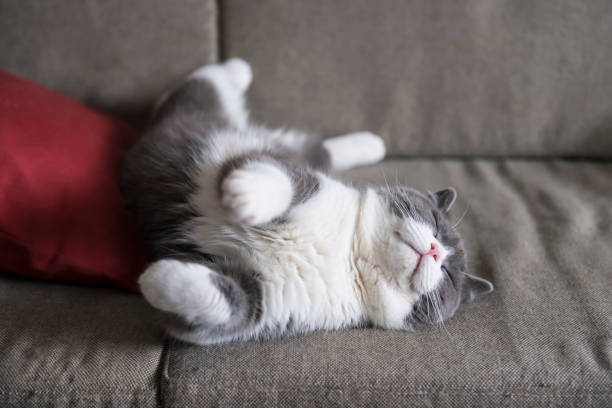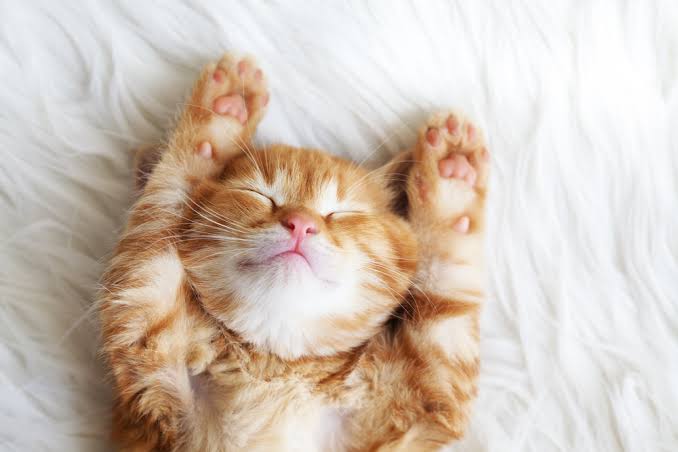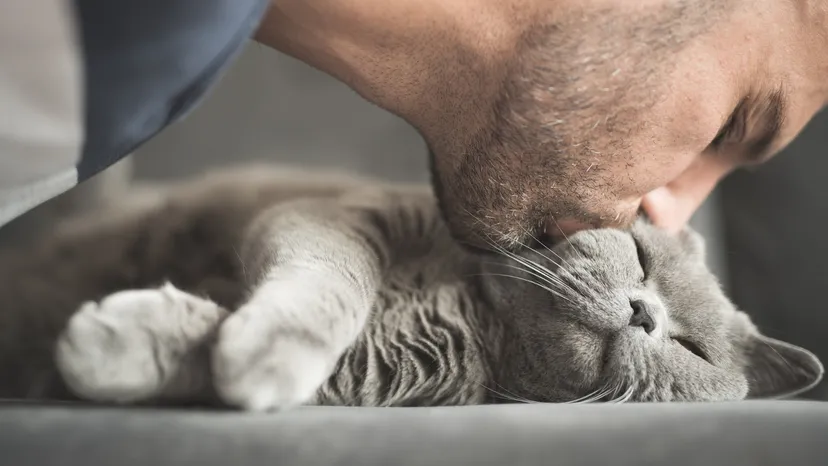
It happens in the same way every time. You settle onto the sofa. You reach a stillness. And within a few minutes — not always, but often enough to have noticed the pattern — the cat appears. They investigate the available surface of you, turn a careful circle, and then lower themselves with that specific deliberate weight that says this was always the plan and they are simply executing it.
They sleep on you. And somewhere between their purring and the warmth spreading through your shirt and the specific quality of quiet that a sleeping cat creates, you wonder — as everyone who has ever had a cat sleep on them has wondered — why this. Why you. Why here. Why, of all the surfaces in this home that they have evaluated and claimed and abandoned, do they choose this one?
The answer, it turns out, is chemistry. Biology. The activation of ancient survival mechanisms and the release of neurological compounds that bond organisms to each other across species lines. Your cat sleeping on you is not a preference or a habit. It is a declaration, spoken in the only language evolution gave them.
This is what the science says.
The Trust Explanation: Sleep Is Vulnerability
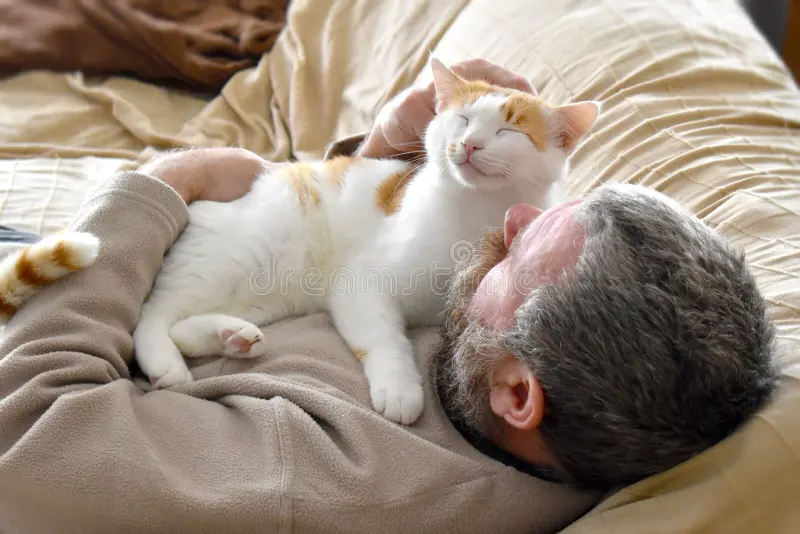
Begin here, because this is the foundation that every other explanation builds from.
When your cat chooses to sleep on or beside you, they are activating an ancient survival mechanism called Social Defense. A 2019 Oregon State University study found 65% of cats display secure attachment to their owners, explaining why they seek proximity during their most defenseless hours.
Sleep is the most vulnerable state that any animal enters. Consciousness is reduced. The ability to detect and respond to threats is significantly impaired. For a species that is simultaneously predator and prey — a species whose wild relatives must remain vigilant against threats even during rest — choosing where to sleep is not a casual decision. It is a survival calculation.
Your cat has evaluated every resting surface in your home. They know every corner, every elevated position, every enclosed space. They have assessed the thermal properties, the security, the predictability of the environment, and the relative safety of every option available to them.
Research found that cats who engage in frequent physical closeness with their owners display higher levels of relaxed body posture and lower stress markers during interactions — a strong indicator of emotional trust.
And they chose you. They assessed all of the inanimate options available, and they chose the one that breathes, that moves unpredictably, that requires navigation and adjustment and the ongoing management of a shared surface — and decided that this, this specifically, was where vulnerability was acceptable.
That is not a small thing.
The Chemistry: What Is Happening in Both Your Bodies
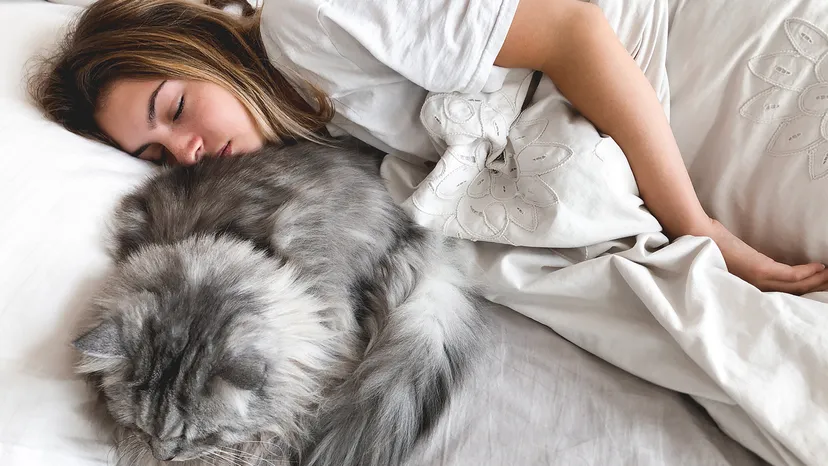
Cats release oxytocin during bonding, but only when they initiate contact. A cat’s attachment style determines whether the bonding hormone flows at all.
A February 2025 study found that when owners engaged in relaxed petting, cuddling, or cradling of their cats, the owners’ oxytocin tended to rise, and so did the cats’ – if the interaction was not forced on the animal. The researchers monitored oxytocin in cats during 15 minutes of play and cuddling at home with their owner.
Oxytocin — the hormone that bonds mothers to newborns, that floods during hugging and physical affection between humans, that creates the neurochemical signature of attachment — is present in this interaction. In both of you. When your cat chooses to sleep on you and the contact is not forced or resisted, both bodies are releasing a compound whose entire biological function is to create attachment.
Oxytocin also has calming effects in humans and animals, as it suppresses the stress hormone cortisol and activates the parasympathetic nervous system to help the body relax.
The purring against your chest is not just sound. The warmth is not just warmth. The contact between your body and your cat’s is actively modifying both of your neurological states — reducing stress hormones, activating the rest-and-digest parasympathetic system, reinforcing the bond through the repetition of shared chemistry.
The cat has to initiate the petting. Owners who forced cuddles on avoidant cats actually saw oxytocin levels drop. The chemistry only kicks in when the cat’s in the mood.
This is the critical nuance: the chemistry only works when the cat chooses it. A cat who is placed in your lap does not experience the bonding effect. A cat who climbs into your lap does. The initiative is the thing. The cat who seeks you out to sleep on you is actively choosing the neurochemical experience of attachment. They come to you because being with you feels, at the biological level, the way love feels.
The Heat Explanation: You Are a Radiator
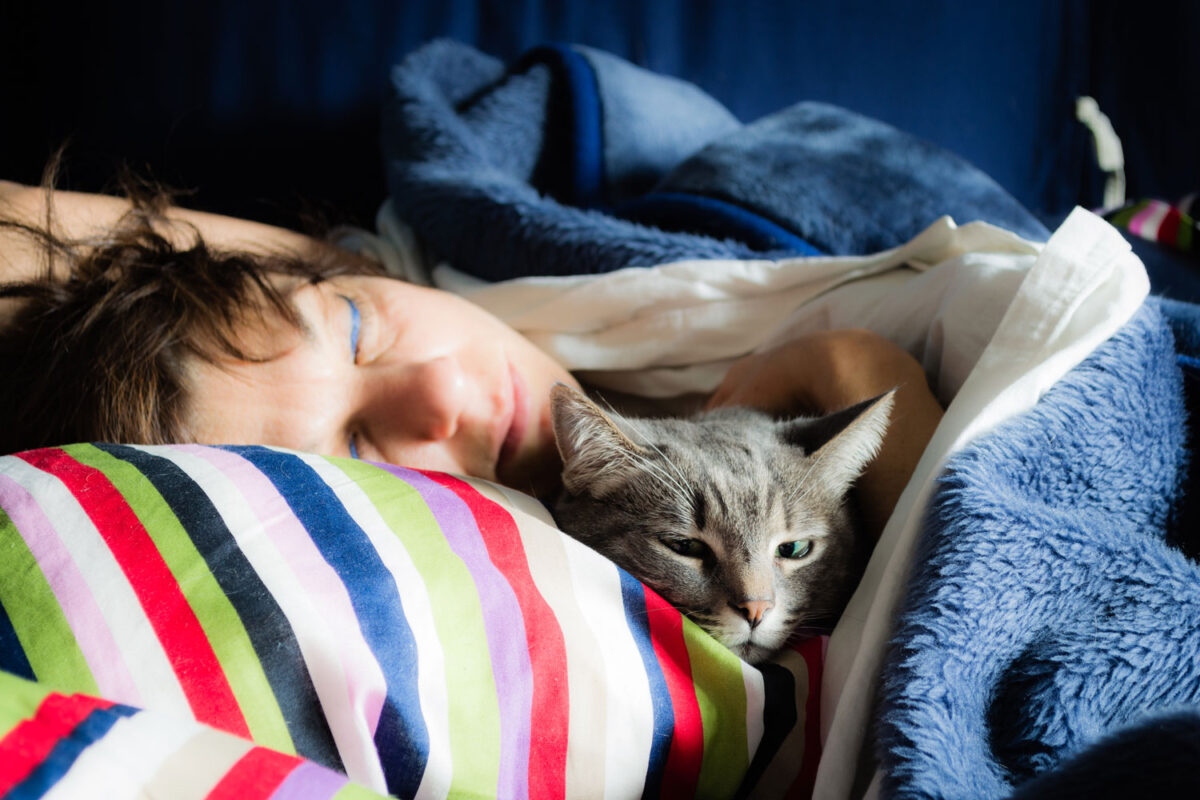
Cats have a baseline temperature of 102°F. This is the thermostat they are trying to maintain. The human body runs at approximately 98.6°F — slightly lower than optimal for a cat, but significantly warmer than any inanimate surface in the home. A tile floor is approximately room temperature. A sofa is approximately room temperature. A human being is six degrees above room temperature and breathing and generating metabolic heat continuously.
From a purely thermodynamic perspective, you are the warmest mobile option in the environment. Your cat sleeping on your lap, your stomach, your legs, or draped across your chest is seeking the most efficiently heated resting surface available.
This does not diminish the emotional component — it adds a layer of it. The cat who seeks your warmth specifically, rather than a heating pad or a sunny window, has decided that your warmth comes with the additional benefits of safety and connection that no inanimate heat source can provide. They want the specific warmth that comes from a trusted living body.
The Scent Explanation: You Are Being Marked
Territorial Claim: You’re “theirs” — sleeping close marks you with their scent.
Cats have scent glands located throughout their bodies — on the cheeks, the paws, the base of the tail, and the top of the head. When your cat presses any of these surfaces against you, they are depositing scent. When they sleep on you — for an extended period, in close body contact — they are performing a sustained, thorough scent-marking of their most valued territory.
You are their territory. Not in a possessive, controlling sense — in the deepest sense that their behavioral vocabulary has. Territory is what they protect. Territory is what they return to. Territory is what they feel is theirs in the fundamental way that matters. The cat who sleeps on you regularly is communicating to every other creature with a working nose that this human is spoken for.
This is love, expressed in the only territorial language cats have.
The Safety Explanation: The Social Defense Network
When your cat chooses to sleep on or beside you, they are activating an ancient survival mechanism called Social Defense. Your presence mimics a safe pride or litter.
Wild cats who live in social groups sleep in proximity to their group members — not only for warmth but for the distributed early-warning system that multiple sleeping animals provide. A group of sleeping cats is collectively more responsive to environmental changes than a single sleeping cat, because one member’s waking response can bring others to alertness without requiring each individual to maintain full vigilance alone.
Your cat sleeping on you is, in part, activating this ancient cooperative system. They are contributing to a sleeping group of two. You may not be monitoring the environment with feline-level sensory acuity while you sleep — but your breathing changes, your body tenses, your heart rate alters in response to stimuli that wake or disturb you, and your cat, pressed against your body, feels all of these changes and responds to them.
You are their security system. They are yours.
The Attachment Style Explanation: Not All Cats Are the Same
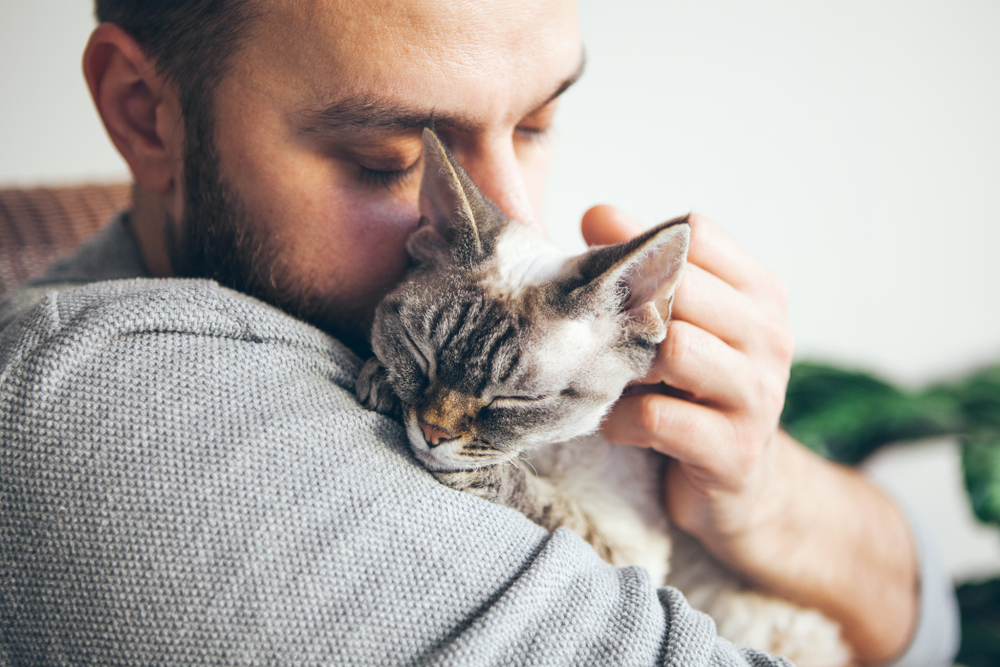
A 2025 study in Applied Animal Behaviour Science tracked oxytocin levels in 30 cats during interactions with their owners. The results revealed that attachment style determines whether the bonding hormone flows at all.
Not all cats sleep on their owners — and this is not a statement about which cats love more. It is a statement about attachment styles, early socialization, individual temperament, and the specific history of each cat-human relationship. A cat who was poorly socialized as a kitten, or who experienced inconsistent care, or who has a constitutional independence that predates their relationship with you, may express affection in completely different ways than sleeping on you.
A 2019 Oregon State University study found 65% of cats display secure attachment to their owners. The remaining 35% have different attachment styles — not less attached, but differently attached. The cat who sits nearby without contact, who watches you from across the room with soft eyes, who follows you from room to room without touching you — this cat is showing you affection in the register that is comfortable for them.
Do not measure the love by the weight on your lap.
Why Your Cat Suddenly Sleeps on You More (or Less)
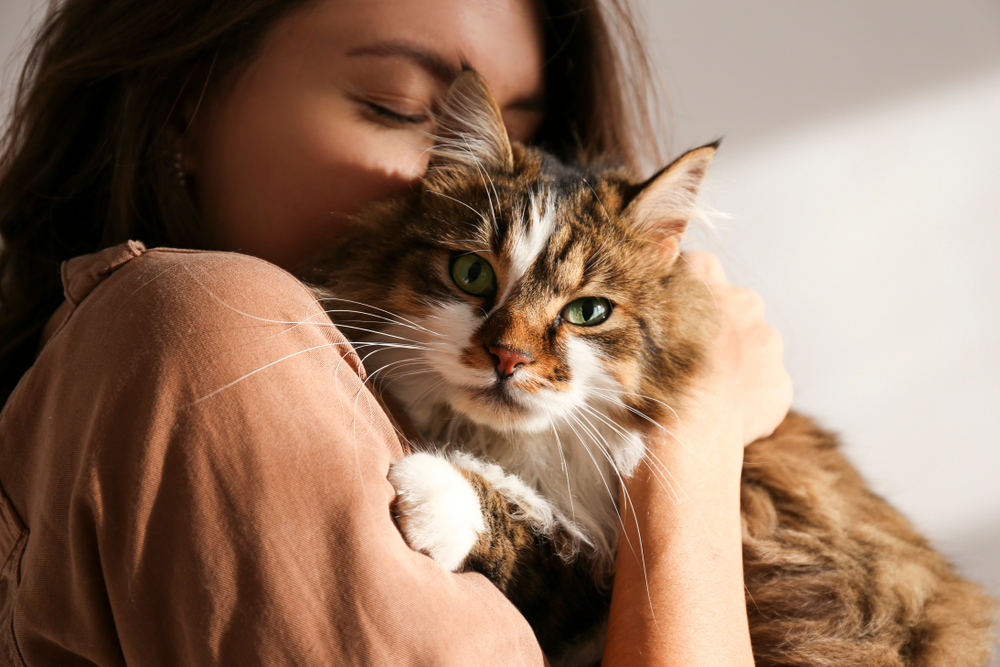
Research found that cats who engage in frequent physical closeness with their owners display higher levels of relaxed body posture and lower stress markers during interactions.
A cat who begins sleeping on you more than usual has typically experienced a change — in the household, in their own physical state, in their perception of safety. New furniture, new people, changes in routine, stress events in the environment — all of these can drive a cat toward closer physical contact with their trusted person as a comfort-seeking behavior.
A cat who suddenly stops sleeping on you — particularly if the change is accompanied by other behavioral shifts — warrants attention. Withdrawal from physical contact is one of the signs that cats show when they are physically uncomfortable or unwell. If your cat who always slept on you stops doing so and the change is consistent rather than occasional, a veterinary check is a reasonable response.
The Specific Locations — and What They Mean
On the chest: The most bonded position. Your heartbeat, your breathing, your warmth, and your scent are all maximally available. This is the position a cat takes with the person they trust most completely.
On the legs: Warm and still — a comfortable resting surface. Often chosen by cats who want closeness without the full vulnerability of the chest position. The warmth is good, the escape route is better.
On the head or pillow: Particularly attached to your specific scent and warmth. The head and hair carry some of the most individual human scent available.
Pressed against the side: Social sleeping — the position used between bonded cats. You are being treated as a member of their social group. This is the position of genuine equals.
Your cat sleeping on you is the single most scientifically complex thing that happens on your sofa every evening. Chemistry, biology, evolutionary instinct, attachment theory, and the ongoing neurological conversation between two different species who have been figuring out how to bond with each other for approximately ten thousand years — all of it happening simultaneously, quietly, in the form of a small warm animal who has decided that your lap is the best place in the world.
92% of cat owners report stronger bonds after encouraging nighttime cuddles, per a 2025 ASPCA survey.
Let them sleep on you. The science says you are both better for it.
Save this to Pinterest, share it with every cat person who has ever sat completely still for forty minutes rather than disturb their sleeping cat — because you know who you are — and know that the science is entirely on your side.