There is something about a Schnauzer before-and-after transformation that stops every scroll. It is not just the grooming result — it is the revelation of a completely different dog hiding inside the overgrown fur that arrived at the grooming table. The same breed that looks like a very earnest dust mop when its coat has grown out for three months emerges from a skilled grooming session looking like a completely different animal — sharp, expressive, confident, and visually striking in a way that makes people ask what breed it is even when they are looking at the same dog they saw twenty minutes earlier. These ten transformation stories cover every major Schnauzer haircut style, explain what the cut involves, why it works, and what it reveals about the dog underneath. Some will make you immediately book a grooming appointment. All of them will make you look at your own Schnauzer’s current coat in a new light.
Transformation 1 — The Classic Schnauzer Cut: The Return to Identity
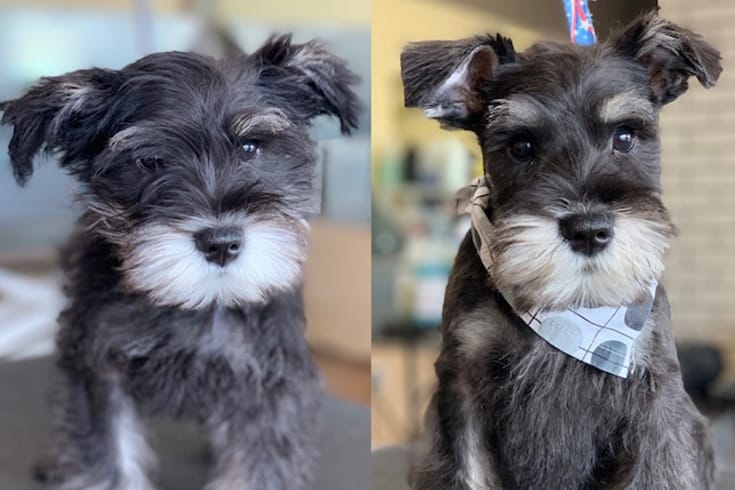
The Before: A Miniature Schnauzer whose coat has grown out for twelve weeks without a professional appointment. The body coat is soft and slightly wavy from clip regrowth. The leg furnishings have tangled and lost their distinct silhouette. The beard has grown beyond manageable, and the eyebrows have grown over the eyes, giving the dog an expression halfway between shaggy and confused.
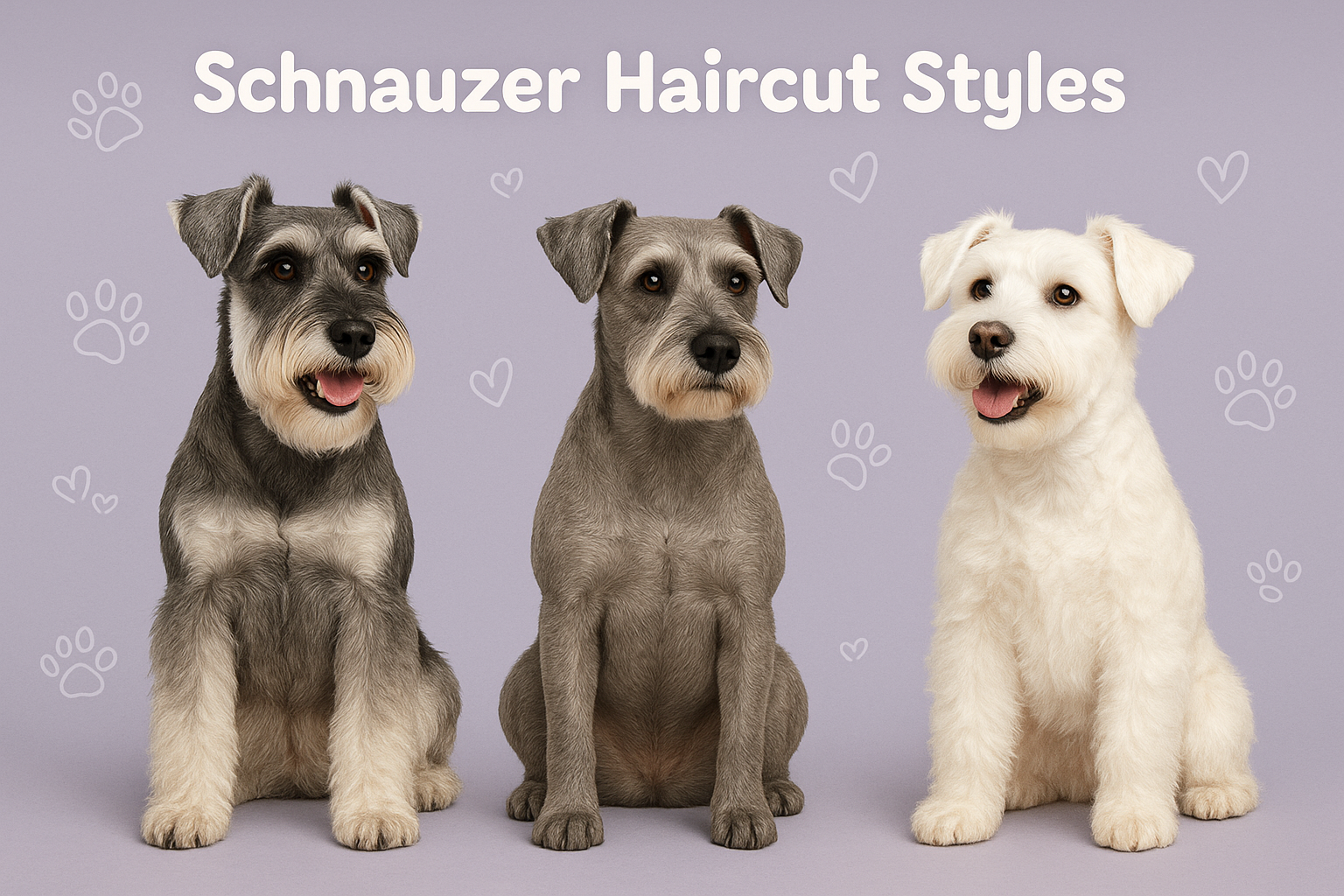
The After: The traditional Schnauzer cut restores the breed’s defining silhouette: a tight, smooth body coat that emphasizes the square, muscular physique. Long, full furnishings on the legs that form a distinct skirt from the body coat. Eyebrows that are shaped at a sharp, dramatic angle over each eye. A beard that falls clean and full below the chin. A typical Miniature Schnauzer cut includes keeping a tight coat on their bodies and a trim of their trademark beards.
The transformation reveals a completely different dog from the same animal — the structural elegance of the breed’s compact, squarish body becomes visible again, the facial expression becomes sharp and expressive, and the overall impression shifts from “needs a haircut” to “just had their portrait taken.”
What It Takes: This cut requires either clippers on the body coat or hand-stripping for show dogs. Professional execution every six to eight weeks. Daily beard brushing and wiping to maintain a clean look. Twice-weekly brushing of the leg furnishings to prevent tangling between appointments.
Transformation 2 — The Teddy Bear Cut: The Round-Faced Reinvention
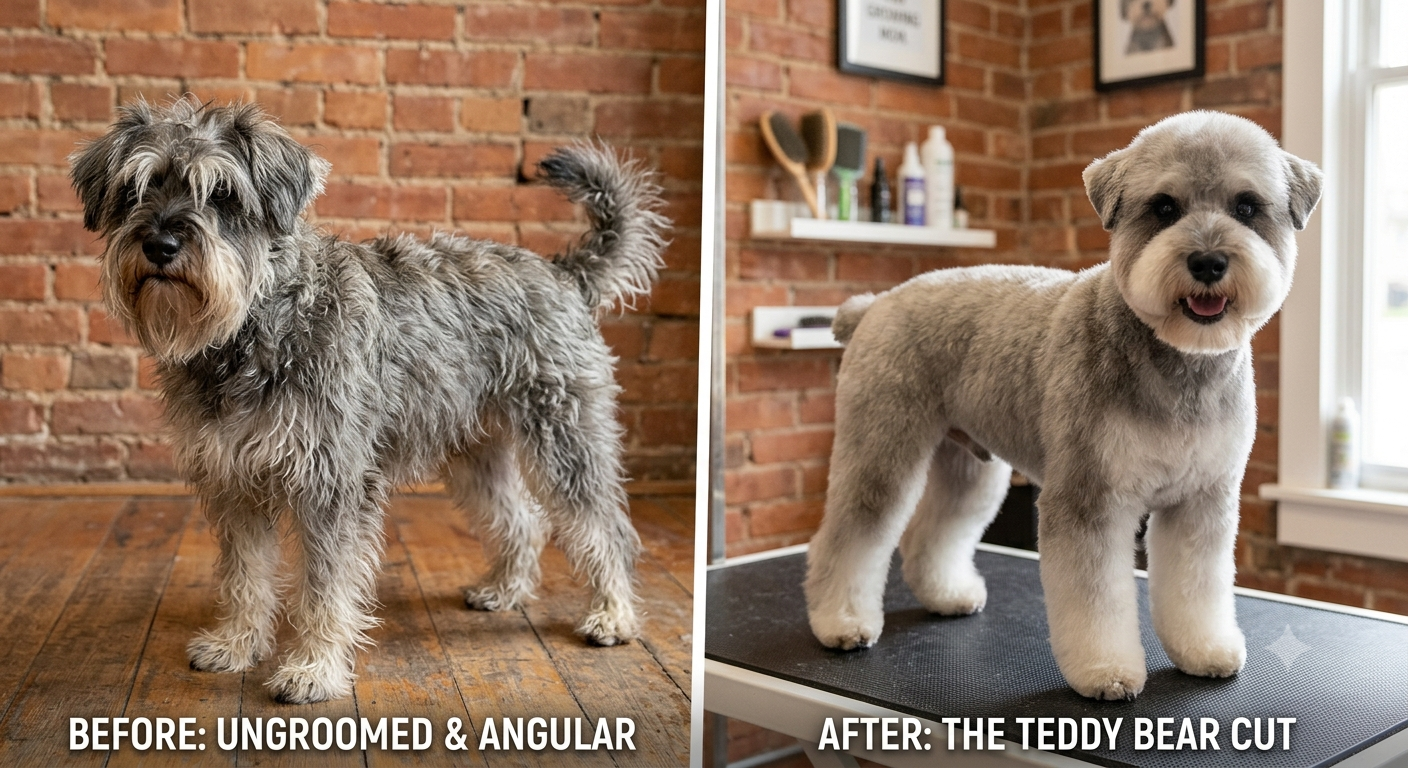
The Before: A standard salt-and-pepper Mini in any state of overgrowth — the same as Transformation 1 in terms of before conditions.
The After: The teddy bear Schnauzer haircut gives your dog a round, soft face and fluffy legs. It’s adorable and makes Schnauzers look extra huggable. The head is cut in a rounded, fluffy shape to promote that round-eyed, teddy bear look — hence the cut’s name. All over, the hair is kept moderately long and fluffed.
The teddy bear cut transforms the angular, geometric Schnauzer silhouette into something entirely different — softer, more circular, more immediately approachable. The face loses the sharp-browed, aristocratic expression of the classic cut and gains a warm, rounded look that many owners find even more photogenic. This is the cut that appears most often in the viral Instagram Schnauzer content and the one that non-Schnauzer owners describe as “that fluffy little dog.”
What It Takes: Regular professional grooming every four to six weeks because the rounded shape loses definition faster than the tighter classic cut. Daily brushing through the legs and body coat to prevent the longer coat from matting. The face requires careful scissor work to maintain the rounded shape without sliding into asymmetry.
Transformation 3 — The Summer Cut: Maximum Transformation, Minimum Maintenance
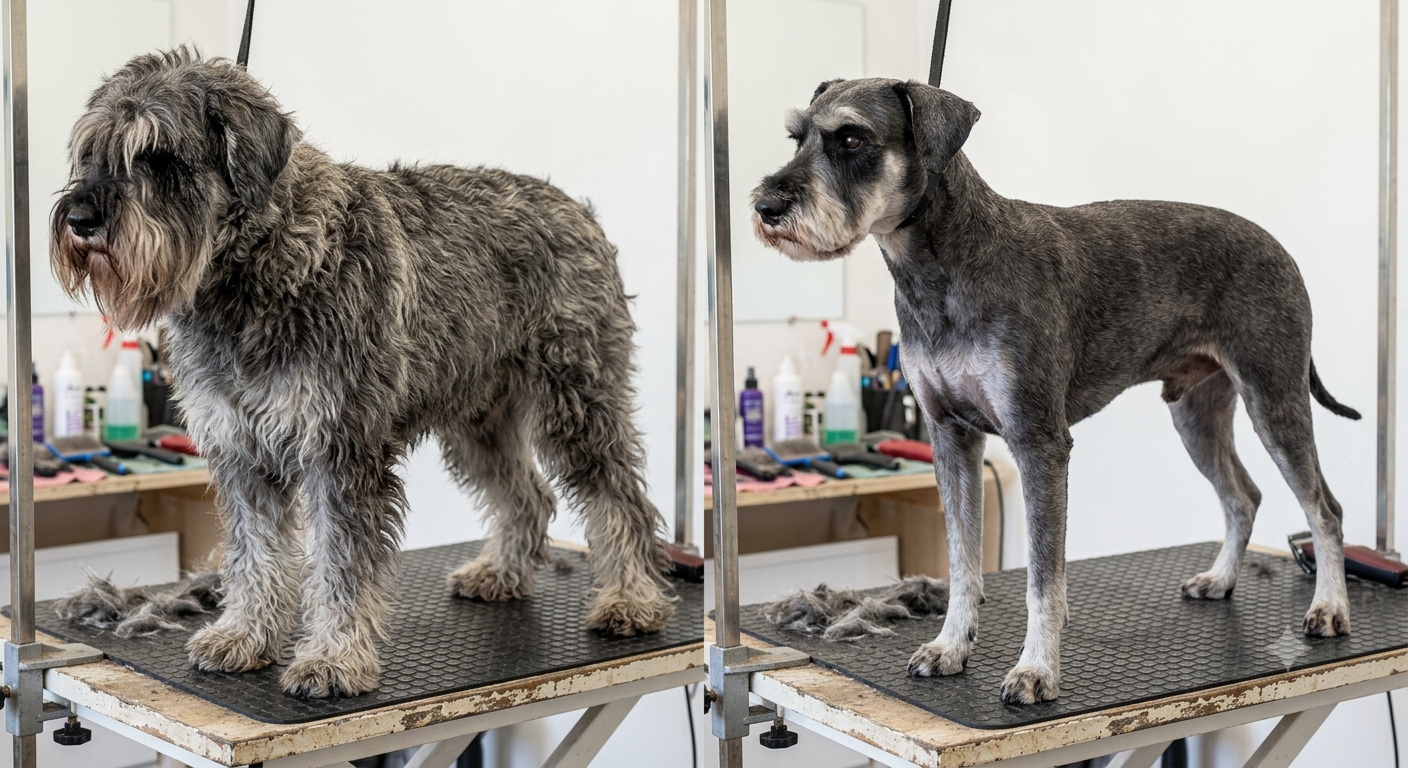
The Before: A Miniature Schnauzer entering summer with a full coat that has had no significant reduction — potentially several months of regrowth that has softened and lengthened considerably.
The After: The summer cut keeps the coat clipped very close to the body and head, with a trimmed, shorter beard and leg hair. It’s a terrific choice to keep cool in the summer and ward off mats and tangles.
No cut on this list produces more dramatic before-and-after photography than the summer cut simply because the volume reduction is so total. The dog that arrived looking like they were wearing a fur suit leaves looking like an entirely different and considerably smaller dog. The body structure that was invisible under the coat is suddenly visible. The face that was partially obscured by overgrown eyebrows and an exuberant beard is suddenly clear and almost delicate.
Owners are divided on the summer cut — some find the result too stark, missing the Schnauzer’s characteristic long furnishings. Others find it liberating, the low-maintenance alternative that allows their dog to be genuinely comfortable through hot weather without the mat-prone long coat that humid summer conditions create.
What It Takes: One professional grooming appointment to achieve the transformation. Significantly less home maintenance than any other cut because the shorter coat requires only weekly brushing rather than multiple weekly attention. The trade-off is the loss of the breed’s distinctive leg-furnishing silhouette until regrowth.
Transformation 4 — The Hand-Strip Versus Clip Side by Side: The Coat Texture Revelation
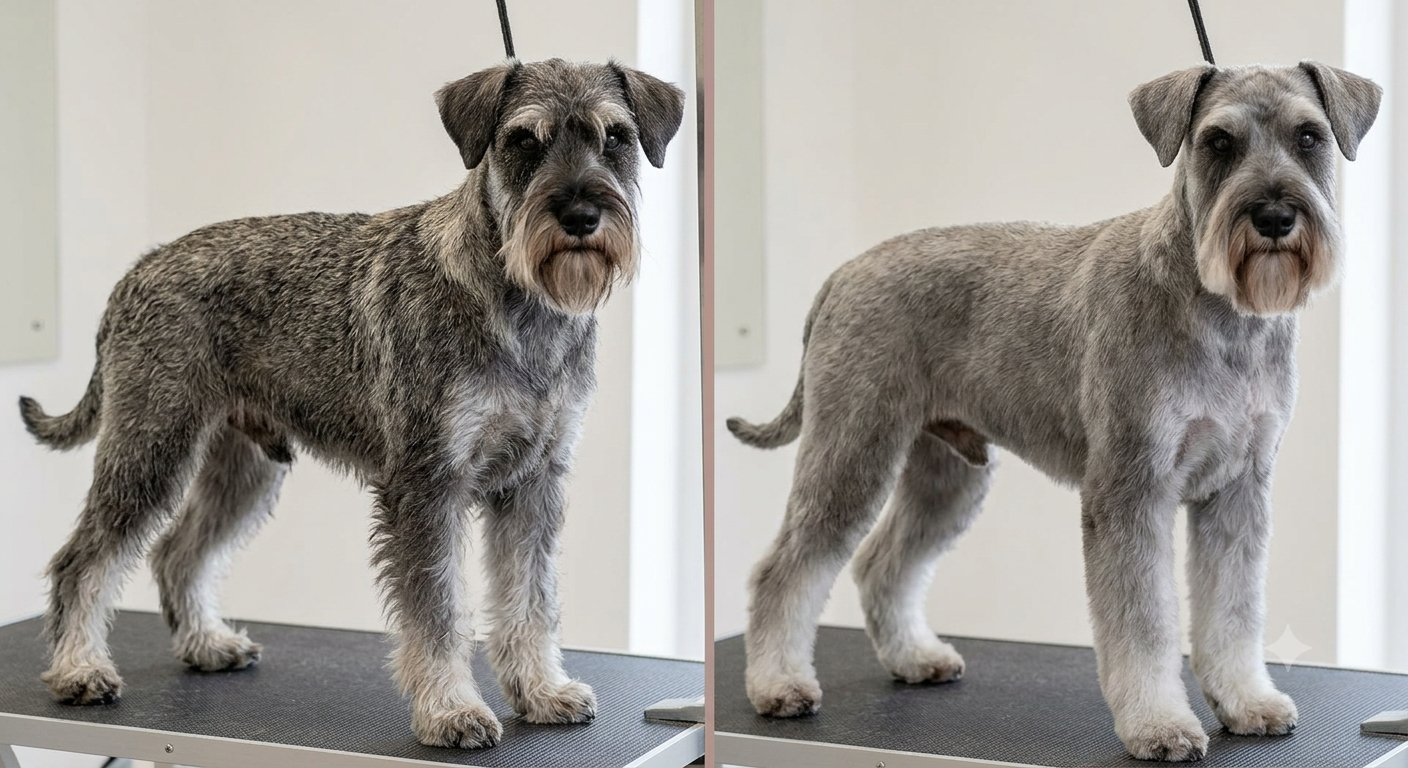
This is not a single dog’s before and after — it is the most instructive side-by-side in Schnauzer grooming: two identical dogs, same color, same age, one maintained by clipping and one maintained by hand-stripping. The clipped dog has a softer, more uniform coat that lies flat. The hand-stripped dog has the characteristic wiry texture that stands slightly away from the body — the coat that catches light differently, that has the grain and texture of natural wire rather than trimmed fiber, that shows the breed’s true color in its most vivid form.
Some Miniature Schnauzer purists would say that their coats should never be clipped because it will make your dog’s coat softer and more prone to matting. When you see the two results side by side, the preference of the purist becomes immediately understandable. Both coats are well-maintained. The hand-stripped coat simply looks fundamentally more like a Schnauzer coat is supposed to look.
What It Takes: Hand-stripping is a skill that requires learning and practice. It is time-consuming but not painful when done correctly on a coat that is ready for stripping. Show dog owners typically maintain a rolling hand-strip schedule, working a section of the coat at a time throughout the year.
Transformation 5 — The Puppy Cut: The Age-Erasing Makeover
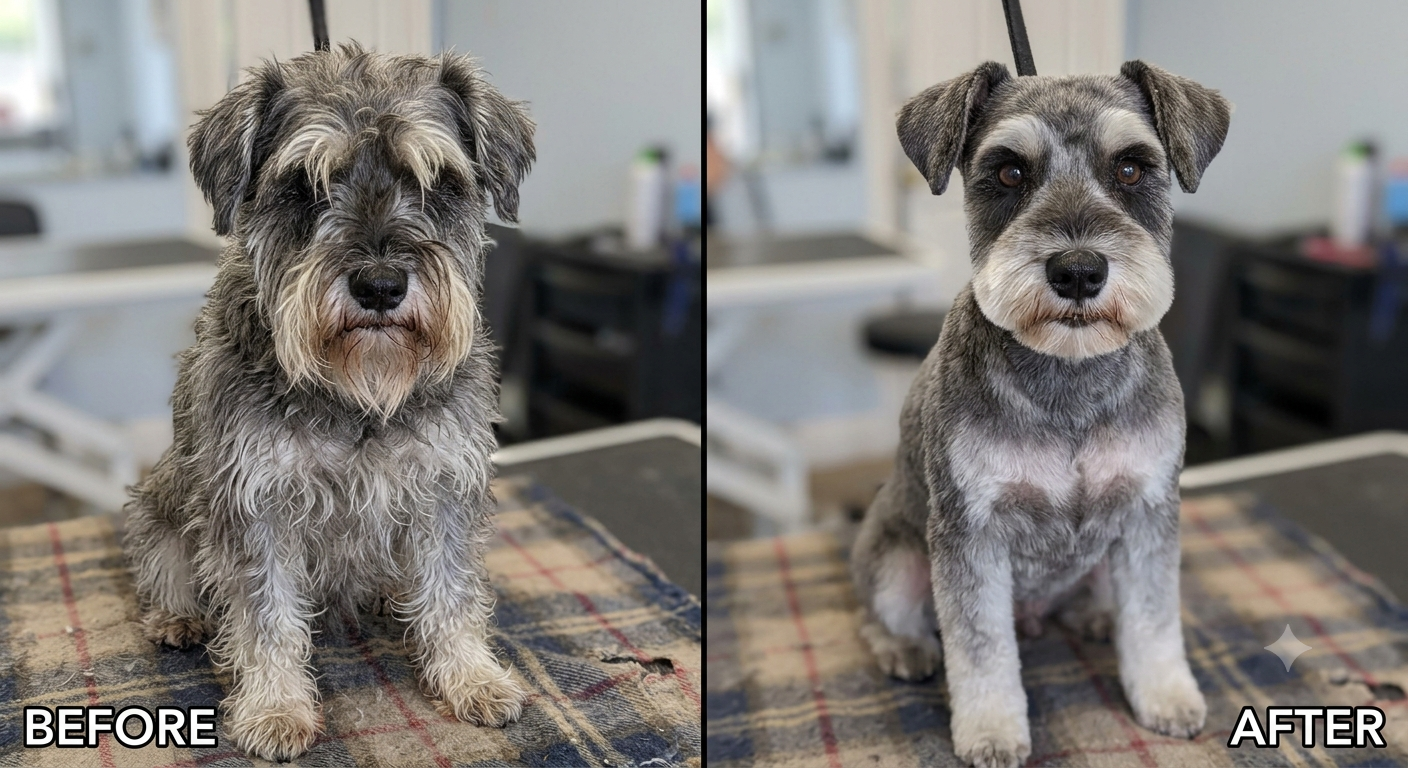
The After: The miniature Schnauzer haircut is designed to show off the breed’s small size. The face is rounded and fluffy while the body stays neat. It requires frequent brushing. Good for mini schnauzers, puppies, or dogs with softer coats.
The puppy cut on an adult Schnauzer produces one of the most consistently asked questions in the grooming industry: “How old is this dog?” The rounded face, the moderate overall coat length, and the clean and even overall silhouette remove whatever aging quality the longer, more dramatic classic cut adds to an older dog’s appearance. A seven-year-old Schnauzer in a puppy cut can look two years younger with remarkable consistency. The puppy cut is the anti-aging makeover of the Schnauzer grooming world.
Transformation 6 — The Schnauzer From Completely Matted to Fully Restored
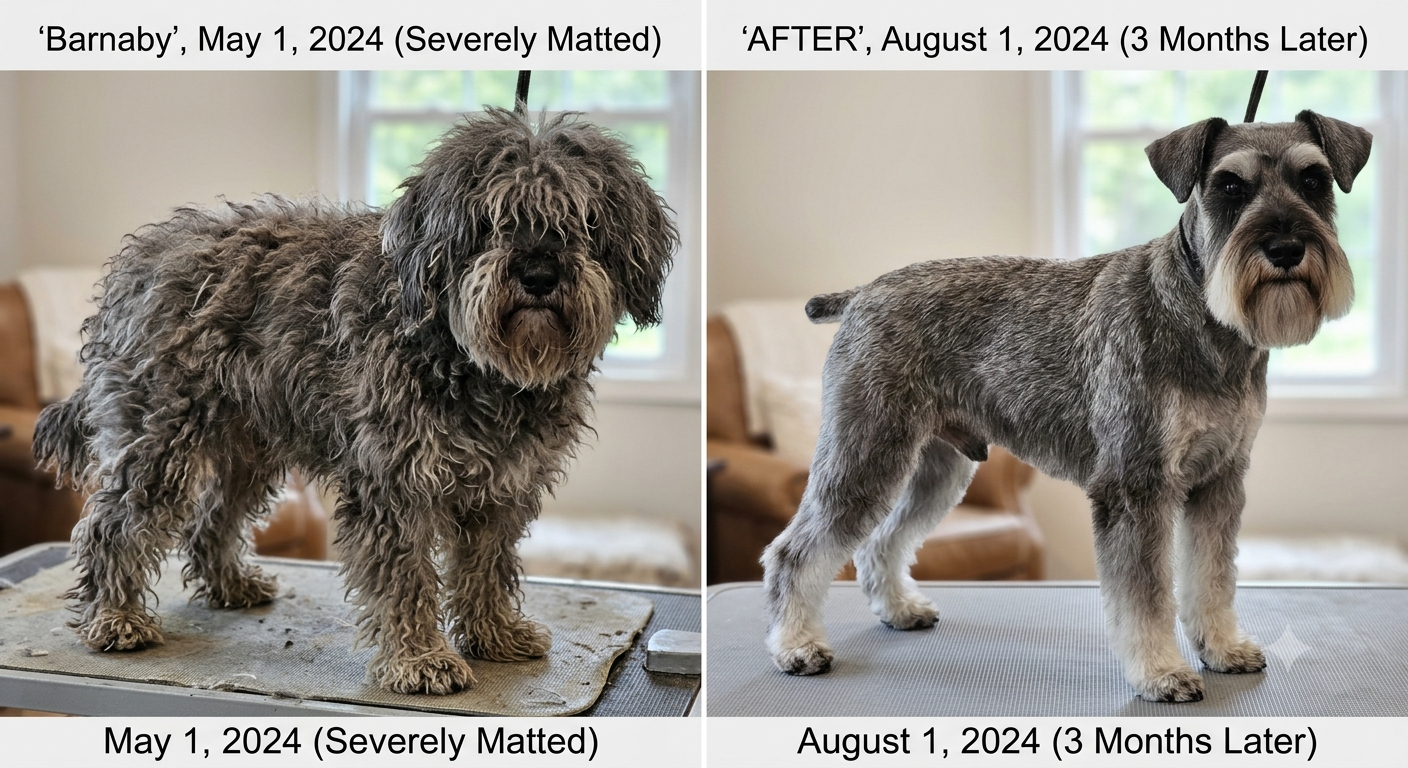
This is the most dramatic transformation in grooming, and it is more common than most people realize. A Schnauzer that has gone four or five months without professional grooming and whose home brushing has been inconsistent arrives at the groomer as a dog wearing what can only be described as a felt suit. The mats have merged. The coat cannot be brushed out. The only humane option is a full shave-down.
What comes out from under the mats, three months of regrowth later, is a dog whose transformation is remarkable precisely because of the contrast with where they started. The full shave-down feels catastrophic in the moment — owners who have not experienced it before are sometimes distressed by how different their dog looks immediately after. Three months later, the coat is back. The dog is healthier. The mats are gone. The experience motivates a maintenance routine that prevents a return to the previous state.
What This Transformation Teaches: The mats that require a shave-down build over weeks, not overnight. Monthly professional grooming and three-times-weekly home brushing make this transformation permanently unnecessary. Every Schnauzer in the grooming world who has experienced a full shave-down had an owner who was one grooming appointment per month away from never needing one.
Transformation 7 — The Salt and Pepper Winter to Summer: The Seasonal Reveal
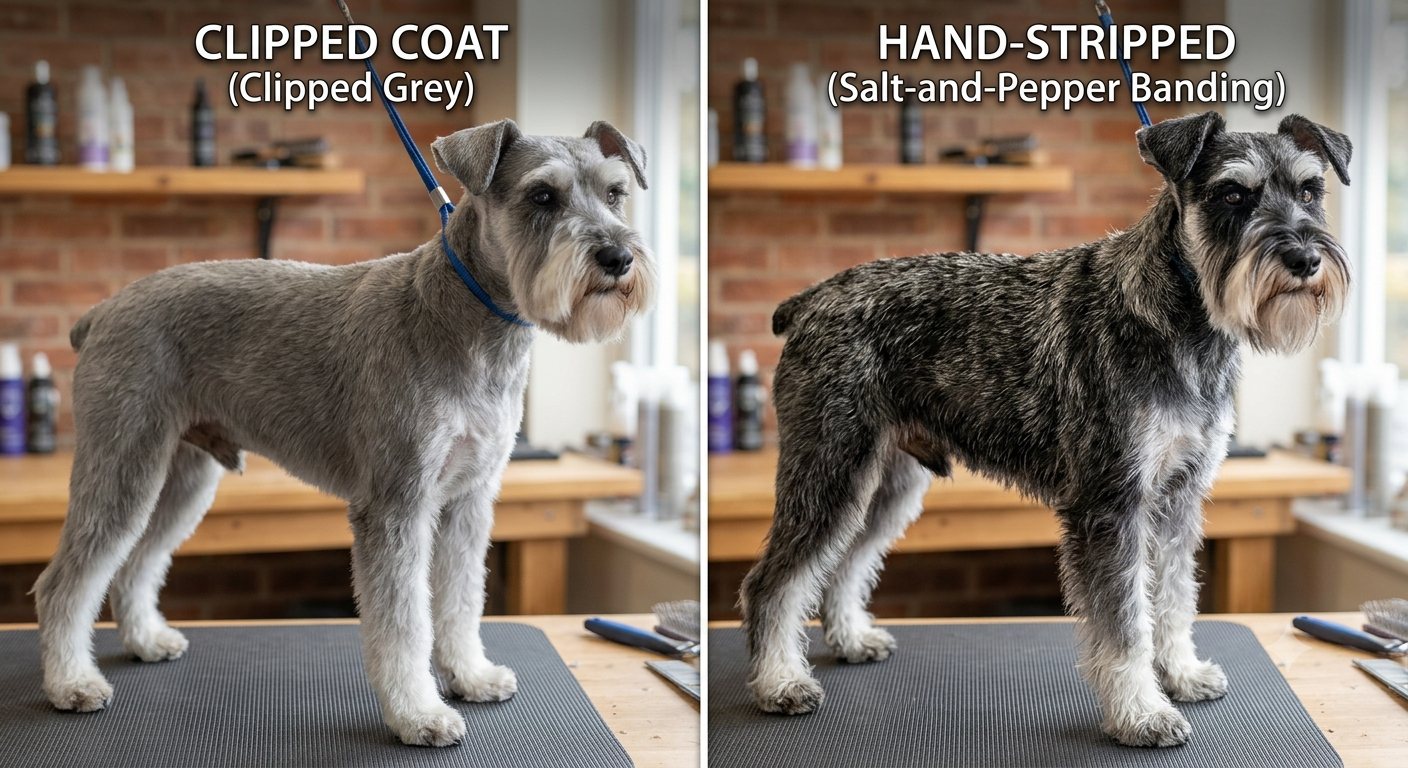
The story: Salt-and-pepper Schnauzers have one of the most complex and beautiful color profiles in the breed — the alternating dark and light banding on individual hairs that creates the characteristic pepper-and-salt overall appearance. But this color is entirely dependent on coat length and coat condition. An overgrown salt-and-pepper coat that has been clipped repeatedly without hand-stripping loses the banding and shifts toward a faded, uniform grey. A hand-stripped salt-and-pepper coat in peak condition shows the full complexity of the alternating bands.
The transformation from a clipped, faded grey to a hand-stripped coat that reveals the true salt-and-pepper patterning is one of the most frequently documented and most impressive Schnauzer grooming photography subjects. The “same” dog looks dramatically different not because the coat grew or was cut differently, but because the technique used revealed the color that was present but obscured.
Transformation 8 — The Black Schnauzer in Show Trim: The Wet Silk Effect
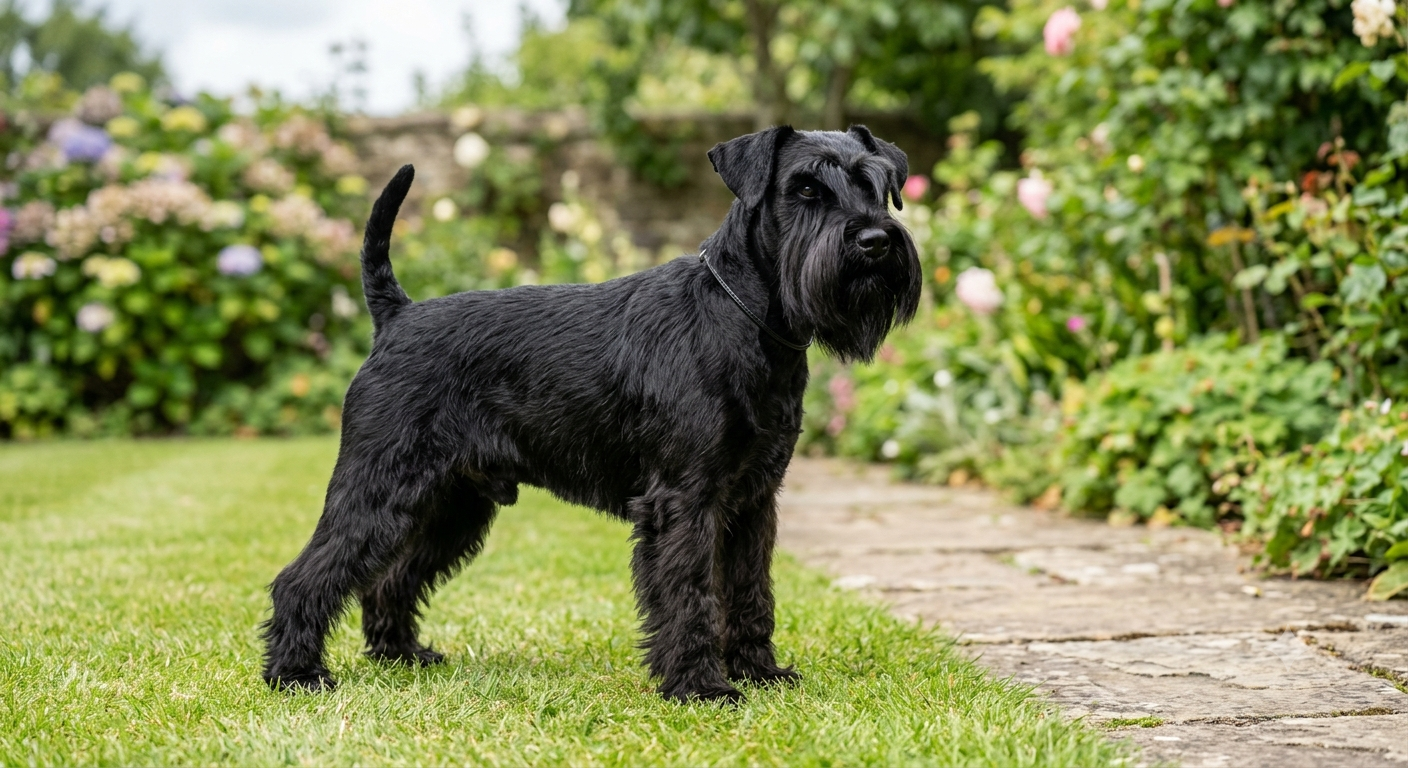
A black Miniature Schnauzer in a perfectly executed show trim is one of the most dramatic single-breed appearances in the dog show world. The tight black body coat against the long flowing furnishings, the precisely shaped black eyebrows over the vivid eyes, the full fall of the black beard — in good light, a black Schnauzer in show trim has a coat quality that appears almost liquid.
The transformation from a pet trim to a show trim in a black Schnauzer is one of definition and precision. The pet trim is neat and comfortable. The show trim requires hand-stripping, specific coat preparation, and the kind of precision scissor and comb work that reveals the breed’s structural standard in the way that judging requires. For non-show owners who want to achieve something close to this result, a skilled groomer who specifically understands Schnauzer conformation grooming produces a noticeably different result from a general groomer who clips to a pet trim standard.
Transformation 9 — The White Schnauzer Puppy Cut: The Snow Globe Effect
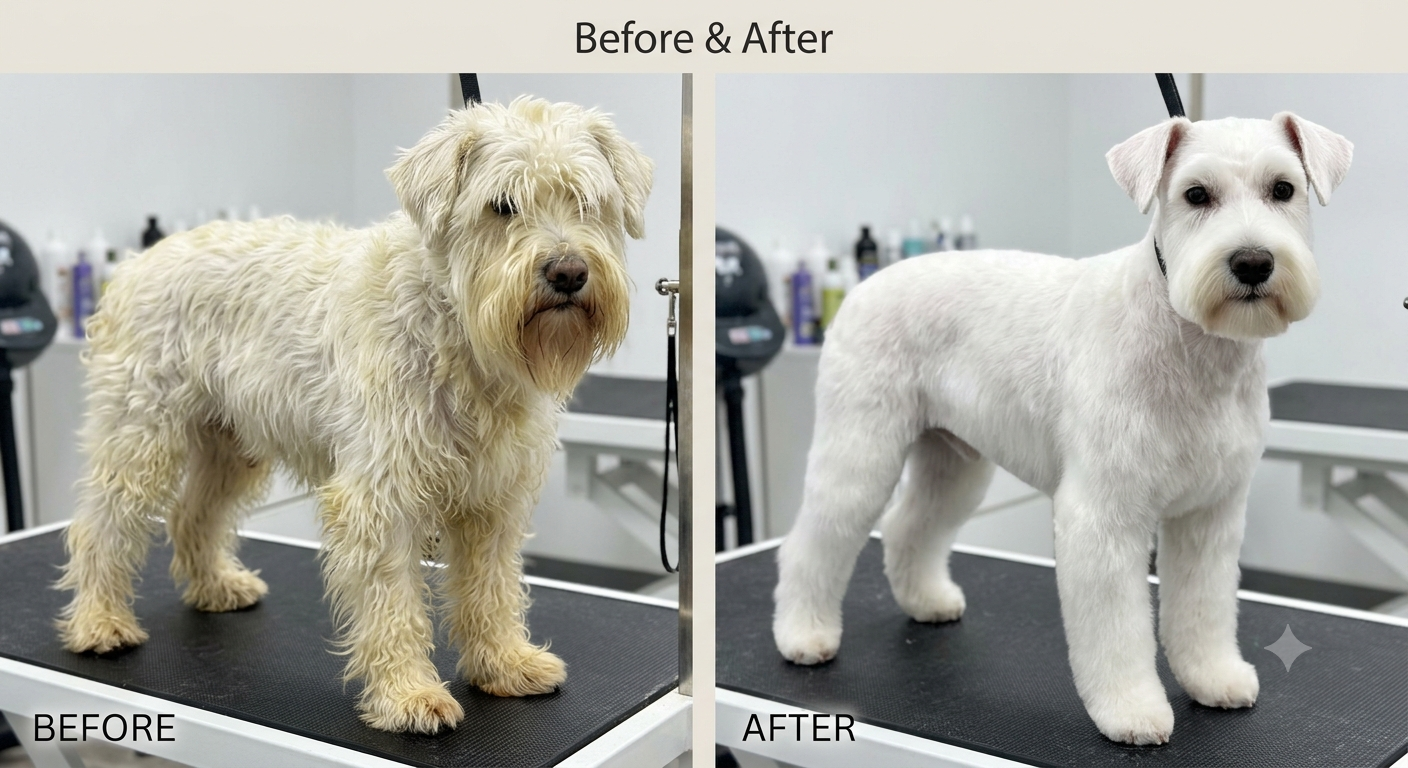
White Schnauzers are uncommon and spectacular. A white Miniature Schnauzer in a freshly groomed, rounded puppy cut has the specific quality of a very beautiful small toy — the bright white coat rounded into clean shapes, the dark eyes and dark nose providing the only contrast against the white expanse. The before state for this transformation is a white Schnauzer whose coat has yellowed from environmental staining and gone out of shape from growth.
The transformation back to a bright, clean, rounded white coat requires not just trimming but the specific grooming products designed for white coats — brightening shampoos, regular coat maintenance that prevents the yellowing that accumulates from environmental exposure. The result, in the transformation comparison, is one of the most visually extreme in the list simply because the color change from dingy yellow to bright white is as dramatic as any structural change.
Transformation 10 — The Senior Schnauzer: When Grooming Becomes the Best Self-Care
This is the transformation that matters most, feels most meaningful, and is photographed least often. A senior Miniature Schnauzer — eight, ten, twelve years old — whose coat has been maintained throughout their life but whose overall condition carries the quality of age: the white muzzle, the slightly slower movement, the eyes that have seen everything and remain warm and present throughout.
A skilled groomer working with a senior Schnauzer does not try to restore them to looking young. They do something better: they reveal the beauty that age has given the dog — the dignity of the white around the muzzle, the expressiveness of eyes that have been looking at their people for more than a decade, the way a well-maintained coat at twelve years carries the evidence of a life well-groomed and well-loved.
The dog before is a senior Schnauzer who needs an appointment. The after is the same dog — cleaned, shaped, comfortable, and looking exactly like the distinguished and deeply loved animal they are.
The transformation that matters most is not always the most dramatic one. It is the one that makes your dog feel good and shows the world who they really are.