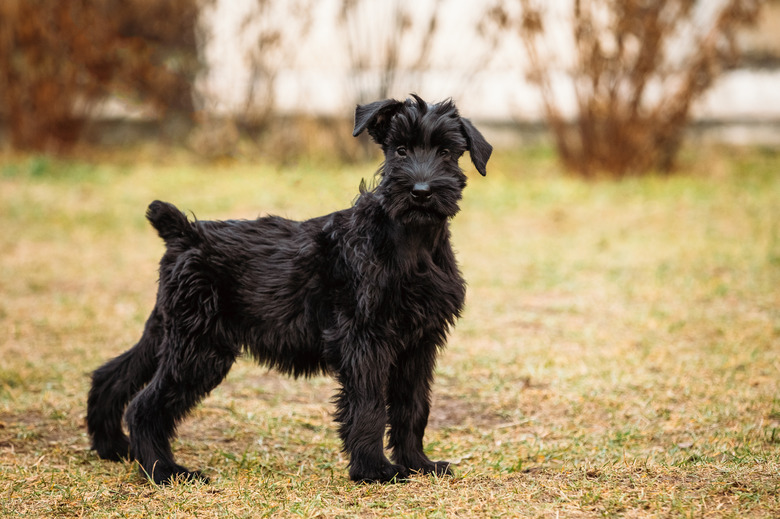
A Giant Schnauzer won Westminster in 2025 for the first time in history. If you have not heard about Monty yet, you are about to understand why the dog world is currently obsessed with a breed that most people outside the Schnauzer community have never given a second thought. Monty the Giant Schnauzer won the top prize at the Westminster Kennel Club dog show, becoming the first of his breed to be tapped as Westminster’s best in show, the most prestigious prize in the U.S. dog world. He bested approximately 2,500 dogs for the honor. But the Giant Schnauzer’s story is much bigger than one magnificent dog winning one magnificent show. These twelve facts are the ones that make people who know this breed unwilling to own anything else.
Fact 1 — A Giant Schnauzer Just Made History at Westminster — For the First Time Ever
Monty’s win at Westminster marks the first time a breed from the working group has won Best in Show since 2004. The winner of the Working Group for the past three years at Westminster, Monty, becomes the first Giant Schnauzer ever to win Best in Show at the prestigious contest.
Think about that. The Westminster Kennel Club Dog Show has been running since 1877. In all those years, across all those competitions, no Giant Schnauzer had ever taken the top prize. Monty is bold, cocky, and fun, according to co-owner Sandy Nordstrom. “He’s just a really cool dog.” He is also, it turns out, the face of a breed that is about to get significantly more attention than it has historically received.
Fact 2 — Monty’s Show Preparation Involved Physical Therapy and Cold Laser Therapy
To prepare for his shows, Monty adheres to rigorous training and exercise regimens. He prepares for his shows with a mix of physical therapy and cold laser therapy. On the training front, he does lots of ball work for exercise, which is often complemented by FitPaws Training Paw Pods, which assist in developing motor skills, improve how dogs bear their weight, provide lots of stimulation to their paw pads, and, for Monty specifically, help exercise his legs and his core.
Cold laser therapy. Physical therapy. Core workouts. This is an athlete’s preparation schedule, not a pet’s beauty routine, and it tells you everything you need to know about the Giant Schnauzer: these are working dogs at their most essential, requiring and thriving on the kind of physical engagement that most breeds could not sustain.
Fact 3 — The Giant Schnauzer Was Originally Bred to Drive Cattle
The name suggests something enormous. The reality is specifically enormous and historically purposeful. Originally bred as farm dogs in Germany, Giant Schnauzers were known for their distinctive whiskered snouts. The Giant was developed in Bavaria from the Standard Schnauzer crossed with larger working breeds — possibly including the Great Dane, Bouvier des Flandres, and local sheepdogs — to produce a dog large and powerful enough to drive cattle to market. This required a dog that could cover ground all day, maintain focus through noise and distraction, respond to commands at a distance, and manage large animals with controlled force. Every characteristic of the modern Giant Schnauzer — the intelligence, the stamina, the responsiveness to training, the physical presence — was designed for exactly this job.
Fact 4 — They Are Used by Police and Military Services Worldwide
The Giant Schnauzer transitioned from cattle-driving to police and military work so naturally that it has been used by law enforcement in Germany, across Europe, and internationally for over a century. Their size, intelligence, trainability, scent detection capability, and controlled protective drive make them one of the most practical working police breeds available. In Germany particularly, the Giant Schnauzer has historically competed directly with the German Shepherd and Malinois for police work placements — a competitive field that reveals the genuine working capability required to succeed in it.
Fact 5 — They Are Not a Large Miniature Schnauzer — The Difference Is Fundamental
This is the fact that catches the most people off guard when they encounter their first Giant Schnauzer, expecting a large Mini. The Giant is not a scaled-up version of the Miniature. It is a fundamentally different dog in terms of energy level, drive, physical power, and the level of owner commitment required. The Giant Schnauzer needs high levels of physical and mental exercise. Their energy levels are higher than those of the other Schnauzer varieties, and they require more stimulation to avoid becoming bored or destructive.
A Giant Schnauzer in the hands of an owner who approached their needs like a large version of the Mini becomes a very large, very intelligent, very bored animal that expresses that boredom in ways that are memorable and not in a good way. In the hands of an owner who provides the exercise, training, and engagement a Giant actually requires — the transformation is complete. This breed becomes one of the most capable, impressive, and deeply loyal companions in the dog world.
Fact 6 — Their Size Range Is Wider Than Most People Realize
The Giant Schnauzer stands between 23 to 28 inches tall and can weigh anywhere from 55 to 85 pounds or more. That “or more” is doing significant work in that sentence. A large male Giant Schnauzer at the top of the breed range is a physically imposing animal that registers in the same visual weight class as a German Shepherd or a Labrador at their largest. The female Giant at the smaller end of the range is significantly more compact. The variation within the breed is wide enough that two Giants standing next to each other can look like they might not be the same breed to someone unfamiliar.
Fact 7 — The Breed Has Specific Cancer Risks That All Owners Must Know
Giant Schnauzers are susceptible to various conditions, such as cancer (including toe cancer and lymphoma), hip dysplasia, and heart conditions, all of which can affect longevity. Toe cancer — squamous cell carcinoma of the digit — appears with higher frequency in Giant Schnauzers and dark-coated breeds generally than in the broader dog population. The practical implication is that any persistent nail bed abnormality — swelling, discharge, resistance to healing, unusual growth — requires prompt veterinary examination rather than watchful waiting. Caught early, digit cancer is managed with surgical intervention. Missed early, it can spread to lymph nodes and beyond. Know what to watch for and check the paws regularly.
Fact 8 — They Require at Least 2 Hours of Vigorous Exercise Daily
Giant Schnauzers have the highest energy demands and need intense daily exercise, including structured training, running, and advanced obedience work. Two hours is the baseline for a healthy adult Giant Schnauzer whose training and mental engagement are already excellent. This is not two hours of casual walking — it is two hours of real physical activity that raises the dog’s heart rate, challenges their problem-solving, and provides the predatory engagement that a working breed needs. Running partners, hiking, dog sports, advanced obedience and protection work, agility — the Giant thrives in all of these. The apartment dweller who goes for occasional walks has chosen the wrong Schnauzer.
Fact 9 — Their Intelligence Makes Them Exceptional at Dog Sports
All Schnauzer sizes excel in obedience and agility training due to their intelligence and eagerness to please. In the Giant, this intelligence is combined with the physical drive of a large working breed to produce a dog that frequently excels at Schutzhund/IPO (a demanding three-part competition sport involving tracking, obedience, and protection), competitive agility, search and rescue certification, and advanced obedience competition. The Giant Schnauzer that has a structured sport or work program is fundamentally happier, calmer, and easier to live with than a Giant without one — not because the activity tires them out, but because it provides the purposeful engagement that this breed’s psychology requires.
Fact 10 — Monty’s Handler Was Emotional About Their Last Lap Together
This is the fact that will either make you look up Giant Schnauzers immediately or at least understand why the dog show community responded the way it did to Monty’s win. Winning was exhilarating and bittersweet for owner-handler Katie Bernardin, who took her last lap around the show ring with the Giant Schnauzer she and her family raised from a puppy and who is now retiring. When asked what she was thinking about as she and Monty took their final lap, Bernardin told The Guardian, “That it would probably be our last lap together. And I just wanted him to enjoy it, and I wanted to enjoy it.”
The relationship between a working dog and their handler is one of the most genuine partnerships in animal companionship — and Monty’s story captures exactly what makes the Giant Schnauzer so compelling to the people who love them. Not just what they can do. Who they are to the people they belong to.
Fact 11 — They Have a Lifespan of 10 to 12 Years — Shorter Than the Other Schnauzers
Giant Schnauzers may live for 10 to 12 years. This is typical of most dog breeds, in which smaller dogs have a longer average lifespan than larger breeds, a trend linked to genetic changes for size that make giant breeds more susceptible to health issues.
This is not a discouraging fact — it is a practical one that belongs in an honest guide. The Giant Schnauzer’s shorter statistical lifespan compared to the Miniature’s 12 to 15 years is a known characteristic of larger breeds generally, driven by the physiological costs of larger body size. It is not a reason to avoid the breed. It is a reason to know what you are signing up for and to ensure that every one of those years is genuinely excellent for the dog and for you.
Fact 12 — Giant Schnauzer Owners Almost Never Own Any Other Breed Again
This is not a fact that appears in any official breed registry. It is the consistent testimony of the Giant Schnauzer community — the owners who found this breed, committed to what it required, and built the bond that a Giant’s intelligence and loyalty produce. The combination of physical impressiveness, genuine trainability, deep family loyalty, and the specific kind of intelligence that means your dog is always aware of what you are doing and interested in being part of it creates an experience of dog ownership that is, for the people who are right for it, genuinely irreplaceable.
“A standout because of everything from his attitude to his structure,” Monty is bold, cocky, and fun. That description fits every Giant Schnauzer that their owners would recognize. Bold, cocky, and fun — and completely, deeply theirs.