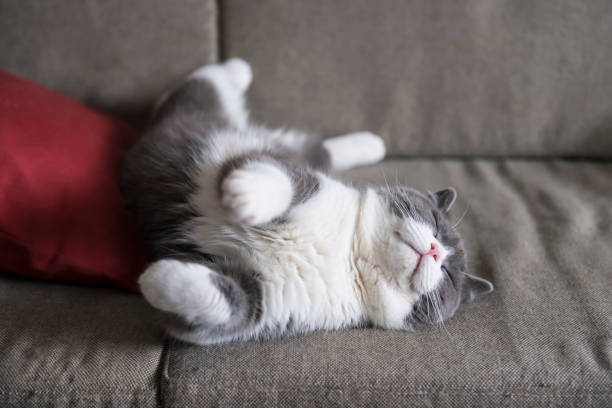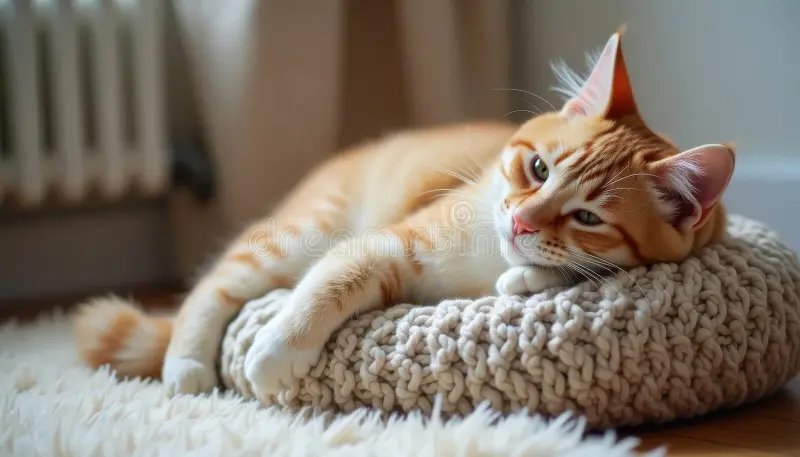
Somewhere between a crochet cat bed and a crochet cat toy lies the specific, underrated, thoroughly charming category of the crochet cat pillow. Not a full structured bed with walls and a base. Not a toy for active play. A soft, crocheted pillow — flat or slightly raised, textured and scented with familiar yarn smells, sized right for a cat to curl against, knead before settling, or simply claim as the center of their gravitational field and permit you to sit near. Cat pillows are the fastest crochet project in the pet-craft category, the most flexible in terms of size and shape customization, and one of the most consistently used items in any cat’s environment because cats, it turns out, have a deep and lifelong commitment to stealing soft things.
This guide covers twelve crochet cat pillow designs from the flattest, simplest five-minute project to the most textured, embellished, room-décor-worthy afternoon build — each with full yarn requirements, construction details, and the specific design element that makes each one genuinely irresistible to a cat.
The Pillow Principle — What Makes a Cat Pillow Different From a Human Pillow
A crochet pillow for a cat needs to satisfy several different criteria from a human pillow. The filling must be firm enough to hold its shape under repeated kneading and body weight — fiberfill that compresses completely after one week of use produces a flat, shapeless disc that cats stop using because the tactile satisfaction of settling onto it disappears. The cover must be crocheted tightly enough that claws do not catch and pull loose strands, and the yarn must be a fiber that your specific cat does not consume, as some cats are attracted to and will eat certain synthetic yarns in extended contact situations. Acrylic in bulky or super-bulky weight, tightly crocheted, is the correct material for the highest-use cat pillows. For decorative pillows that will receive lighter traffic, the material range broadens considerably.
The size target for a single-cat pillow is approximately 14 to 18 inches in the widest dimension — large enough for a curled cat to occupy completely, small enough to be carried to a new location, because cats carrying their own pillows to the best spot in the house is something you are going to want to witness and photograph.
Pillow 1 — The Basic Square Pillow (Beginner, 1 to 2 Hours)
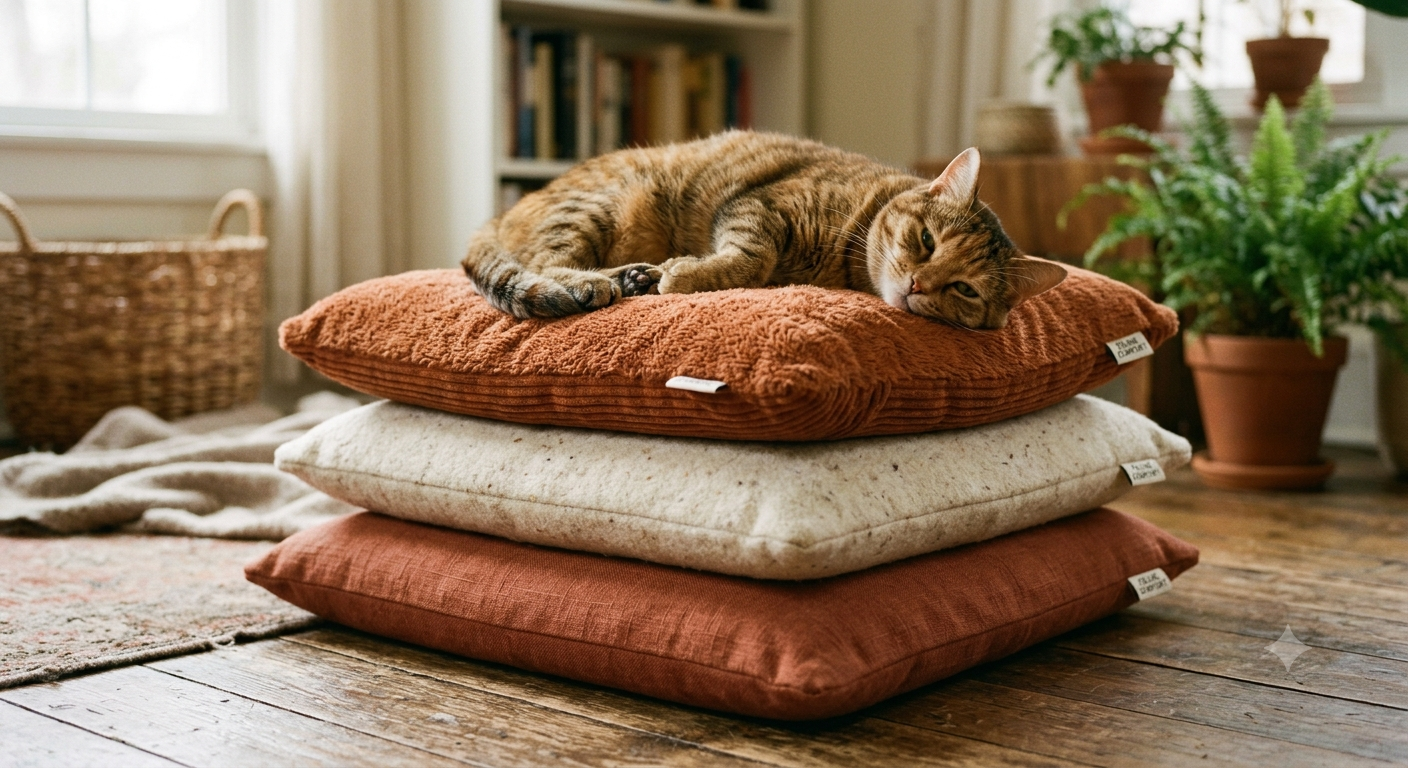
The foundation. A 16×16 inch crocheted square, two pieces joined on three sides, stuffed with polyester fiberfill, and closed. Single crochets throughout, firm tension, machine-washable acrylic in your home’s color palette. Every technique a beginner crocheter needs to make every other pillow in this guide is present in this one design.
Construction: Chain 40. Single crochet in every stitch across, chain 1, turn. Repeat for 40 rows to produce a square. Make two identical squares. With right sides facing out, single crochet around three sides to join. Stuff firmly — very firmly, because the pillow should resist the pressure of a cat kneading without compressing flat. Close the fourth side with single crochet.
Pillow 2 — The Chunky Textured Bobble Pillow (Beginner to Intermediate, 2 to 3 Hours)
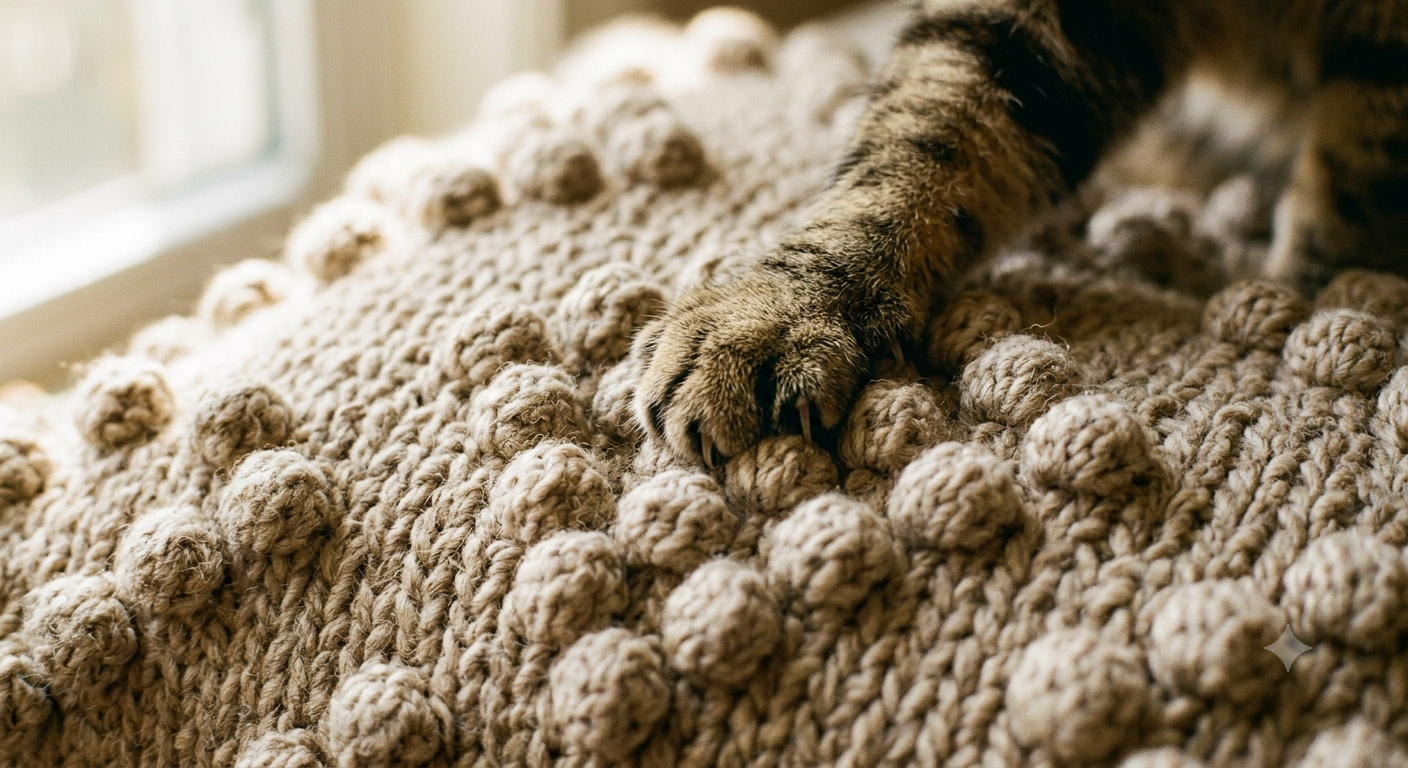
The chunky textured pillow uses post stitches to create raised patterns. The texture adds interest and gives cats something to grab with their claws. Although it may look complex, the repeating pattern makes it manageable for many skill levels.
Bobble stitches scattered across a single crochet background create a pillow surface with raised tactile nodes that cats specifically enjoy kneading — the variable height surface under the paws provides sensory feedback that a flat surface does not. Work a 5-double-crochet bobble stitch every 4th stitch and every 4th row across the flat single crochet ground. The bobbles push to the right side of the work automatically, giving the front face all the textural interest with minimal additional technique beyond a basic bobble.
Pillow 3 — The Cat Face Appliqué Pillow (Intermediate, 3 to 4 Hours)

Work the standard square pillow in a solid base color. For the appliqué face, crochet a slightly smaller circle of 8 inches in diameter using increasing rounds in a contrasting color. Add two small triangle ears on the upper edge. Embroider eyes, nose, and whisker lines with embroidery thread. Sew the face circle onto the center of the pillow front before joining the front and back panels.
The finished pillow is a whimsical, visually distinctive piece that works as a room decoration element when the cat is not using it and as their preferred resting surface when they are. The cat appears to appreciate the irony of sleeping on a cat face pillow. Or they do not appreciate it at all and simply find it warm and appropriately scented. Both are valid.
Pillow 4 — The Granny Square Patchwork Pillow (Beginner, Variable)
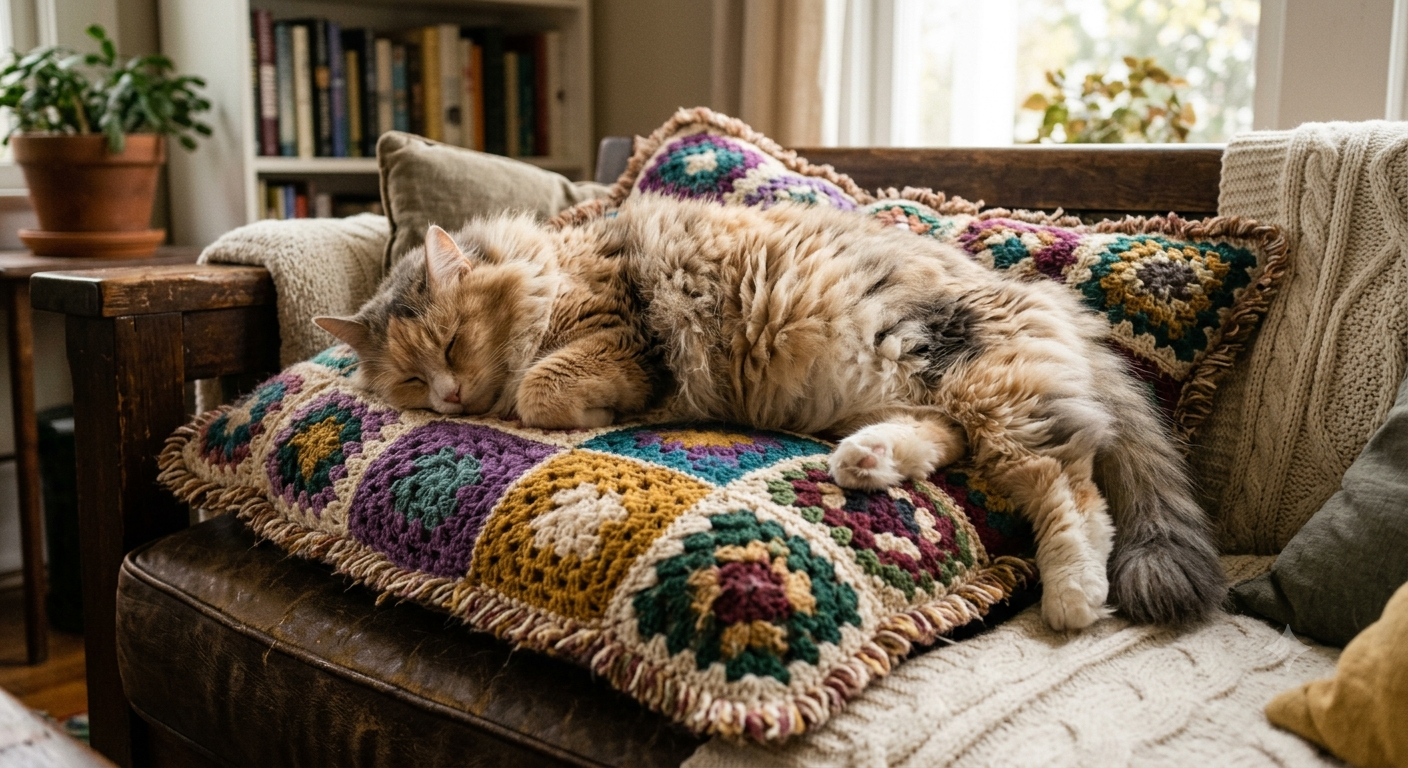
The classic granny square pattern makes a wonderful cat mat. I like to use bright colors for a fun look. The squares work up quickly and join together to create a thick, comfy base.
Four to six granny squares joined into a 16×16 inch panel, backed with a solid crocheted square or even a piece of fleece fabric, and stuffed, creates the most visually complex pillow in the beginner category — the colorwork of multiple squares looks ambitious but requires only the single granny square pattern repeated. This is the pillow for the crocheter who wants a project that builds their granny square skill and produces something both useful and beautiful.
Pillow 5 — The Mandala Round Pillow (Intermediate, 4 to 5 Hours)
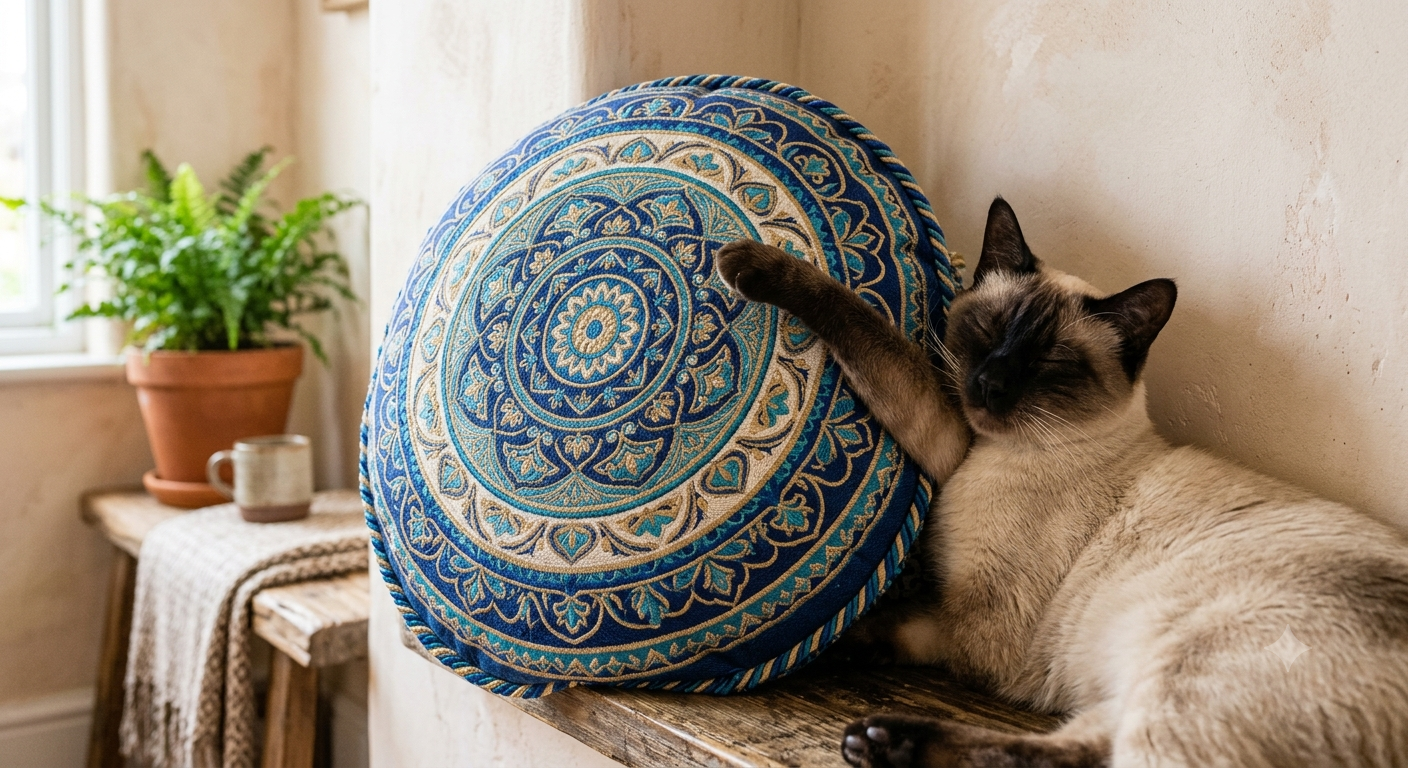
Work a mandala pattern to approximately 16 inches in diameter using alternating colors every 2 to 3 rounds. Crochet a solid back circle of the same diameter. Join the two circles around the perimeter with single crochets, stuffing firmly before closing. The resulting round pillow has the aesthetics of textile art and the practical utility of a firm cat resting surface.
Round pillows sit against walls, fit in corners, and roll slightly under cat weight in a way that many cats find actively satisfying — the slight give and wobble of a well-stuffed round pillow appears to appeal to the prey-movement instinct in the same way that a very light wobble makes a toy more interesting than a stationary one.
Pillow 6 — The Catnip-Stuffed Meditation Pillow (Any Level, 2 to 4 Hours)
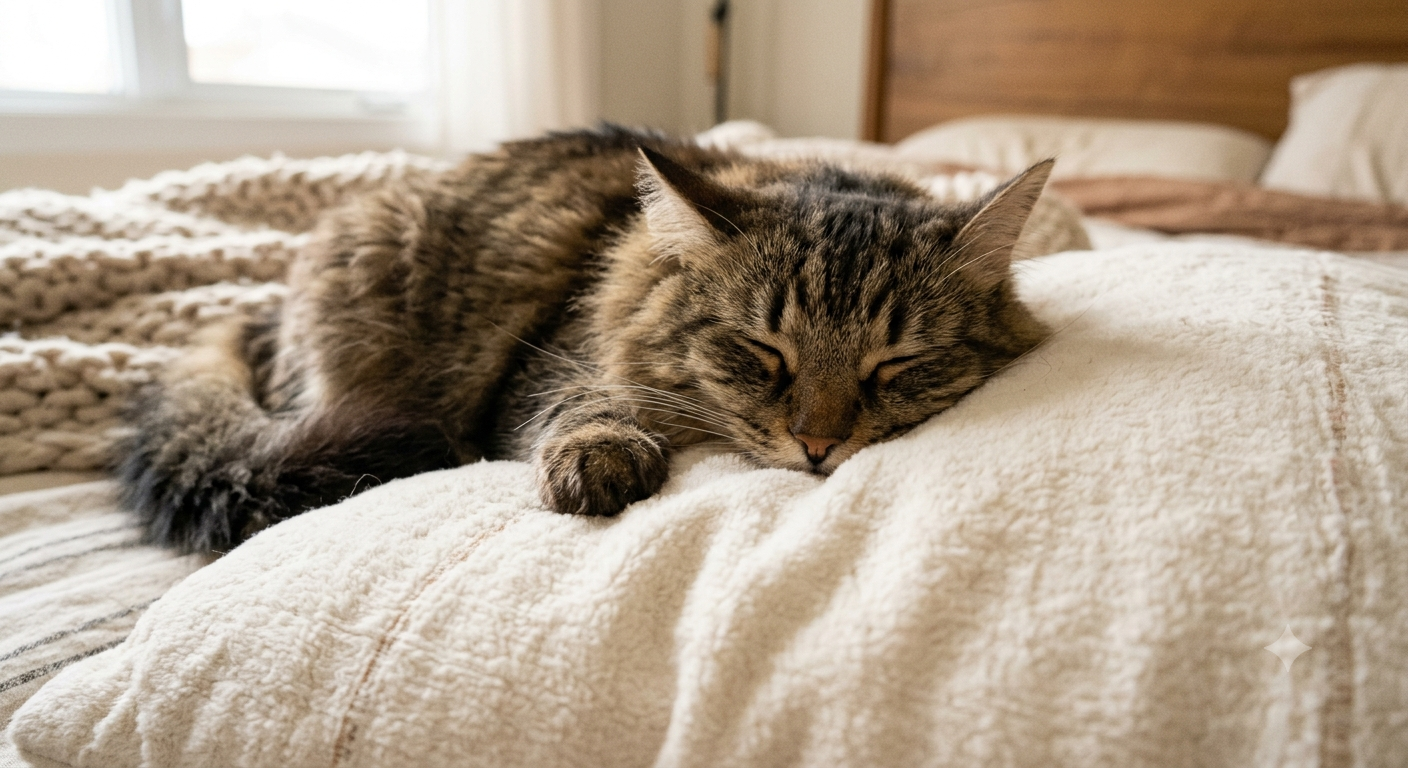
Work any square or round pillow design, but replace 30% of the fiberfill stuffing with dried catnip. The catnip aroma slowly releases over weeks and months through the crocheted fabric, maintaining constant low-level interest from the cat. The “meditation pillow” name references the cat’s behavior of pressing their face into this pillow and inhaling deeply with the specific blissed-out expression of an animal in complete olfactory rapture.
The catnip-stuffed pillow is the most immediately and reliably adopted pillow style in this guide — no introduction period, no adjustment week, no patience required. The cat will find it within minutes of placement, and it will be their possession from that moment forward. Replace the catnip filling every 3 to 4 months as the scent diminishes.
Pillows 7 Through 12 — Quick Build Descriptions
Pillow 7 — The Chunky Yarn Body Pillow: A 12×24 inch elongated pillow in super-chunky yarn — long enough for a cat to lie along lengthwise, firm enough to support their spine. The body pillow is for cats who sleep stretched rather than curled.
Pillow 8 — The Faux Fur Cushion: A flat faux-fur-yarn pillow in ivory or cream — the long fibers create a surface that most cats find impossible to resist kneading, and the resulting cat-fur-mixed-with-yarn surface becomes scent-marked territory within hours of introduction.
Pillow 9 — The Seasonal Color Pillow: The basic square pillow pattern applied to seasonal colors — summer pastels, autumn jewel tones, winter cream and silver — gives you the option to rotate your cat’s bedding with your seasonal décor, which is either charmingly coordinated or mildly excessive, and you can decide which.
Pillow 10 — The Cable Stitch Statement Pillow: Front and back post double crochets alternated in a cable pattern create the most visually impressive pillow in this guide. The cable texture provides excellent claw-grab surface for kneading and the finished pillow looks like something from a luxury home goods store.
Pillow 11 — The Heart Motif Pillow: A heart worked in contrasting color using the intarsia technique on the front panel of the basic square pillow. Technically straightforward for anyone who understands color changes. Photographically irresistible when a cat sleeps on it with their paw over the heart.
Pillow 12 — The Monogram Letter Pillow: A letter of your cat’s name worked in surface slip stitch after the pillow is complete — a personalized marking that makes the ownership statement official and the pillow genuinely singular. Also the most effective way to settle a household dispute about whose cat this pillow belongs to.