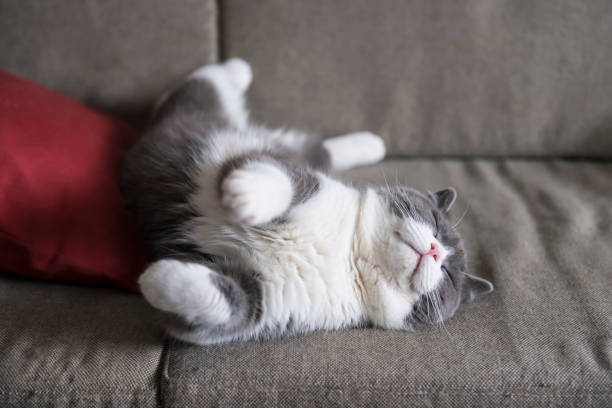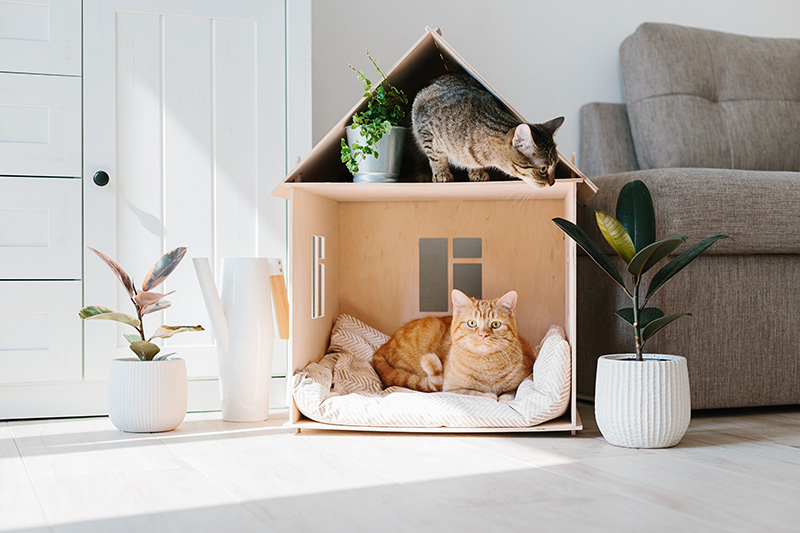
Most cats live in human-designed spaces that accommodate their needs as an afterthought — a cat tree in the corner, a litter box in the bathroom, a bed that gets used occasionally. But there is a growing movement of cat owners who approach a dedicated room, or a dedicated section of a room, as a design project that serves their cat’s behavioral needs as the primary brief. The results are extraordinary. A cat who has a room — or even a corner, a wall, or a window bay — designed specifically around their climbing, scratching, sleeping, watching, and playing needs is a demonstrably calmer, more confident, and more content animal than one living in a generic human space. This guide covers ten DIY ideas for building a cat-specific environment in whatever space you have available, from a full dedicated room to a single converted closet.
Why Cats Need More Than a Bed and a Toy
Before the ideas, the behavioral context that makes all of them make sense. Indoor cats need access to vertical territory — elevated spaces for surveying their environment from a position of security. They need multiple scratch surfaces positioned where they naturally want to scratch, not where you wish they would. They need hiding spaces for decompressing and feeling safe. They need stimulation from the outside world — windows, activity to watch, seasonal changes. And they need spaces that are genuinely theirs, where the smells and textures accumulate into a scent environment that reads as belonging to them. A dedicated cat room or cat-specific design area addresses all of these needs simultaneously in a way that scattered, individually purchased accessories never quite achieve.
Idea 1 — The Floor-to-Ceiling Cat Wall
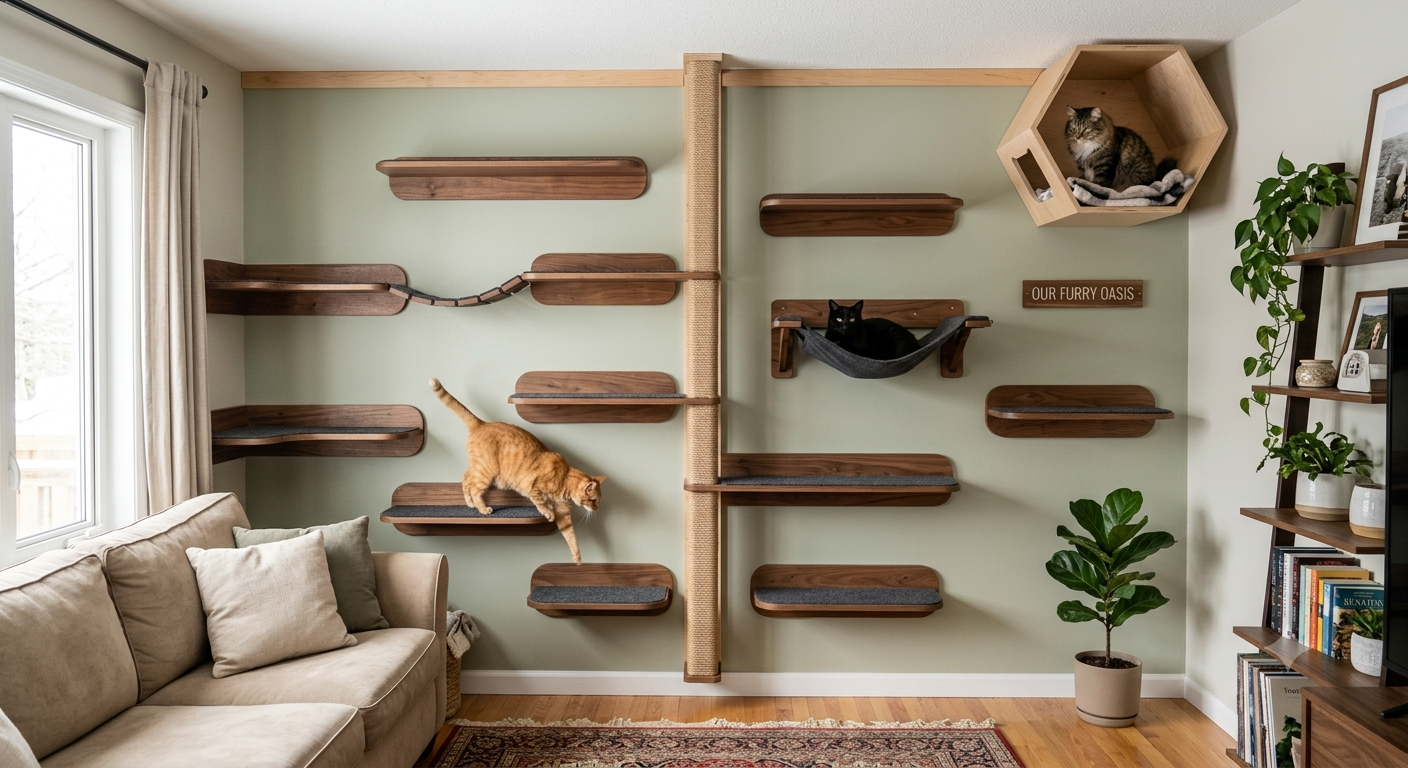
The single most impactful DIY project for indoor cat enrichment is converting one wall of a room into a continuous climbing and perching system from floor height to ceiling height. Floating shelves in graduated heights, a tension pole in one corner extending to the ceiling, a hammock between two shelf points at mid-height, and an enclosed sleeping box mounted at the highest level — this is the cat wall that has become the defining Pinterest cat room image and the one that produces the most dramatic behavioral change in cats who have been living with only ground-level territory.
Floating pine shelves in three-quarter-inch plywood, stained in dark walnut or painted to match the room, mounted with hidden L-brackets, and secured into wall studs give the system the furniture-quality appearance that makes the wall look like a design choice rather than a pet accommodation. Build the complete system using the full instructions in the DIY cat wall guide elsewhere in this collection — the foundation principles, stud-finding, spacing calculations, and introduction protocols are all covered in detail there.
Idea 2 — The Converted Closet Cat Room
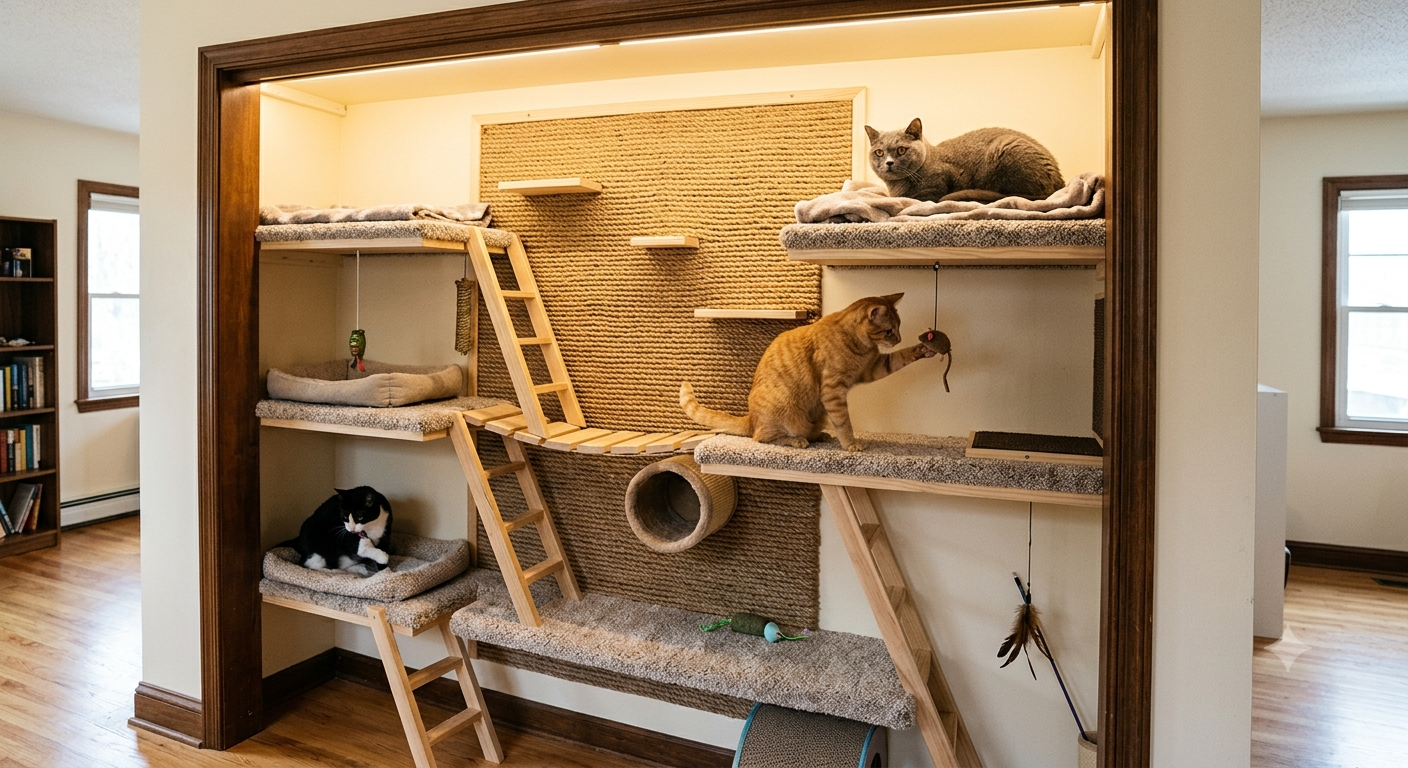
A standard reach-in closet with the door removed is one of the most efficient small spaces for a DIY cat room build. The depth is sufficient for a sleeping platform, a litter box with airflow, and a scratching surface. The height accommodates two to three stacked platforms accessible via small wooden steps or cut-out footholds in the side panels. The single access opening creates the enclosed, den-like quality that anxious cats specifically seek.
Remove the existing closet rod and shelving. Install a plywood base platform at floor level, a mid-height platform at approximately 24 inches using shelf brackets, and a high platform at 48 inches for sleeping and surveying. Cover all platforms with carpet or fleece. Wrap the back wall of the closet from floor to ceiling with sisal matting or individual sisal rope sections — the three-sided enclosure becomes a scratch-zone wonderland. Add a small battery-powered LED strip light inside the upper section so the enclosed space feels warm rather than dark and uninviting.
Idea 3 — The Window Bay Cat Sanctuary
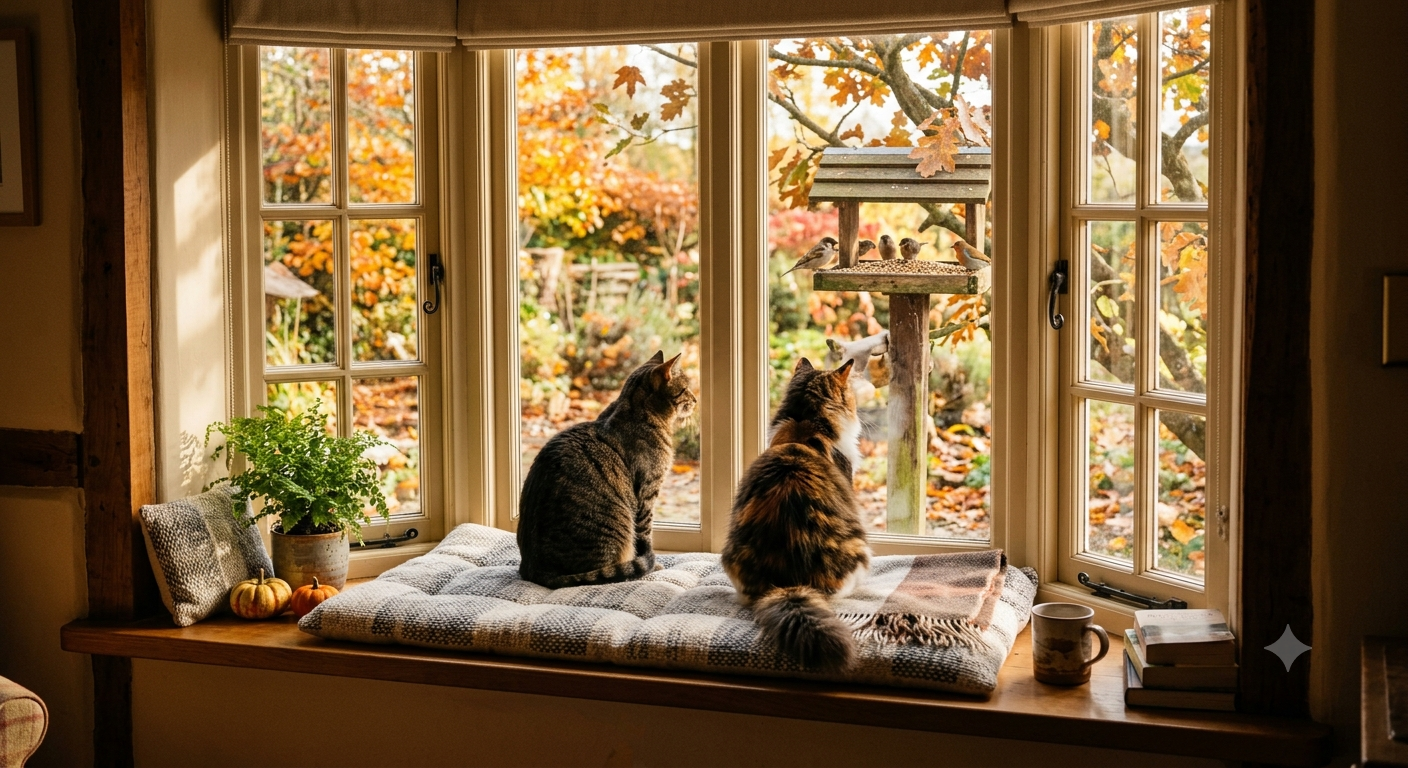
A window bay — those slightly recessed window sections common in older homes — becomes the perfect enclosed cat watching station with minimal intervention. Install a wide shelf across the bottom of the bay at window sill height using heavy-duty wall brackets and three-quarter-inch plywood. Pad the shelf with outdoor carpet or a custom-cut foam cushion covered in washable fabric. Add a smaller shelf at the same height on either side of the bay to create a U-shape seating area. Install bird feeders on the exterior window sill to create live entertainment.
If your window bay does not have a built-in ledge, a purpose-built window seat frame of plywood — essentially a hollow box the width and depth of the bay, set on the floor and reaching to the sill — creates the same elevated, enclosed watching position. Hinge the top for storage inside. Add a custom cushion in a fabric that complements your existing room textiles, and the result is a piece of furniture that belongs in the room aesthetically while serving your cat’s territorial watching instinct perfectly.
Idea 4 — The Cat Tunnel Wall
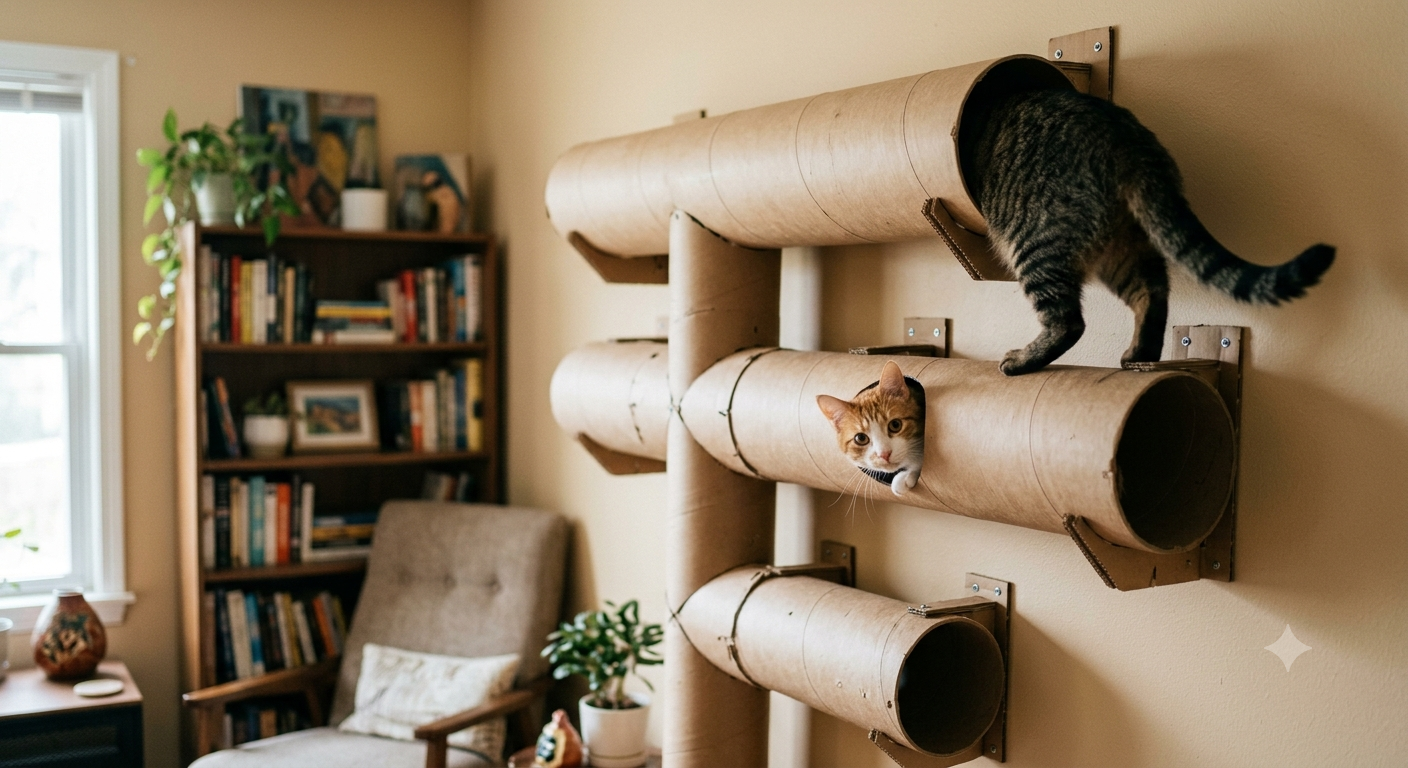
A system of wall-mounted PVC or cardboard tubes connecting different levels of a cat room creates the most interactive and exploratory DIY cat space in this guide. Cats are genetically driven to investigate and move through tunnel-like spaces — the confined passage replicates the burrow and dense vegetation environments that cats navigate in their natural range, and the unpredictability of emerging from a tunnel into an open space satisfies the exploration instinct that indoor cats often cannot meet.
Mount 12-inch diameter cardboard concrete forms horizontally on wall brackets at different heights, connecting them with L-junction pieces where the tunnels change direction. The tunnels can run horizontally, vertically, and diagonally — the configuration is entirely determined by your wall space and your imagination. Cut entry and exit holes at the junctions and at the dead ends. Carpet the interior of each tube for traction and warmth.
Idea 5 — The Cat-Friendly Bookshelf Integration
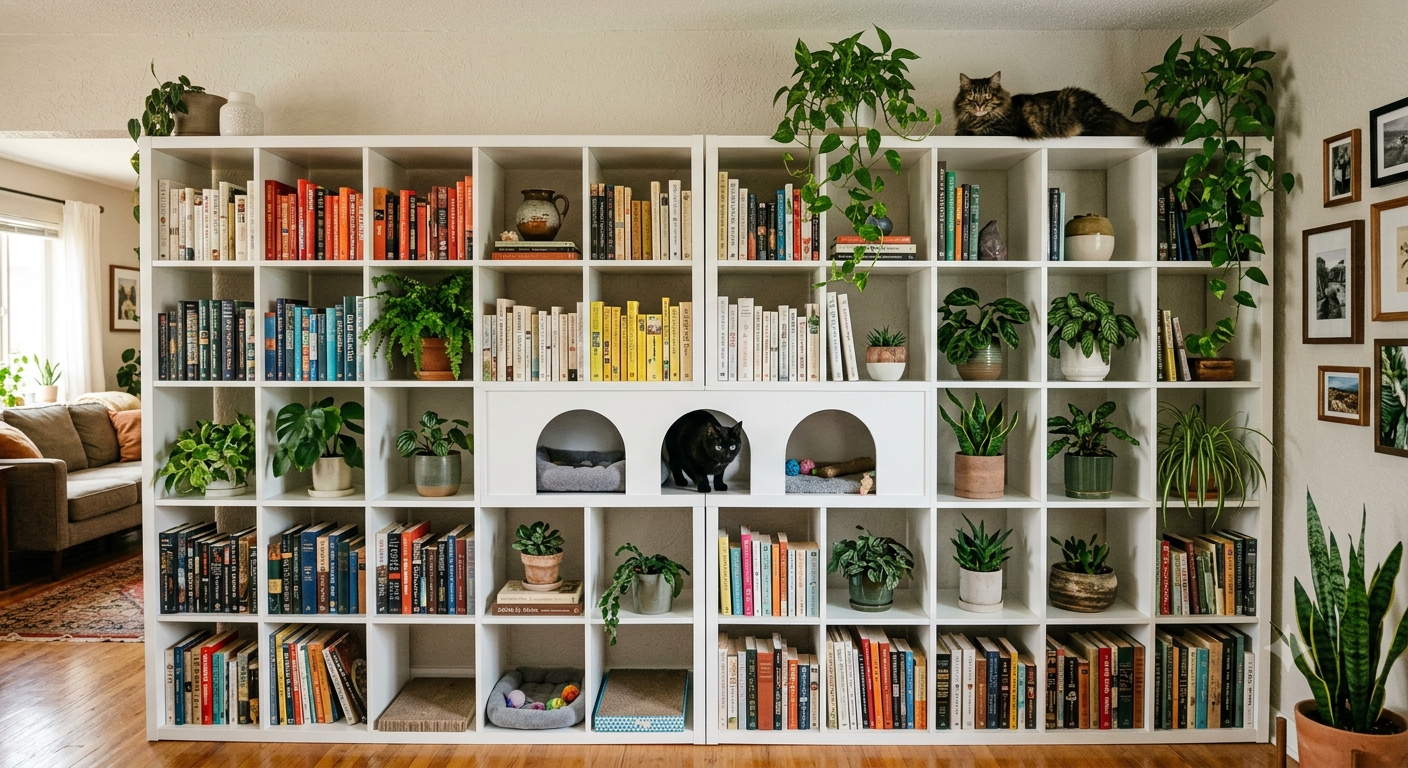
Standard IKEA Billy or Kallax bookshelves become integrated cat rooms by removing some panels, adding fabric-covered platforms inside the open sections, and cutting arched openings between adjacent shelf units. The result is a bookshelf system that functions as both storage for books and other objects and as a multi-room cat exploration space hidden within it.
Remove the back panels from several Kallax cube openings at the same level across two adjacent units. Cut arched openings in the dividing panel between adjacent cubes using a jigsaw. Cover the interior of the modified cubes with adhesive velvet or carpet for warmth and traction. The cat can enter from the side of the first cube, move through the arched opening into the second, and continue exploring horizontally across the shelf system at multiple height levels. The combination of occupied book cubes and cat-accessible cubes creates a complex, varied interior that genuinely different cats use differently — some preferring the high cubes, some the enclosed middle ones.
Idea 6 — The Outdoor Catio Enclosure
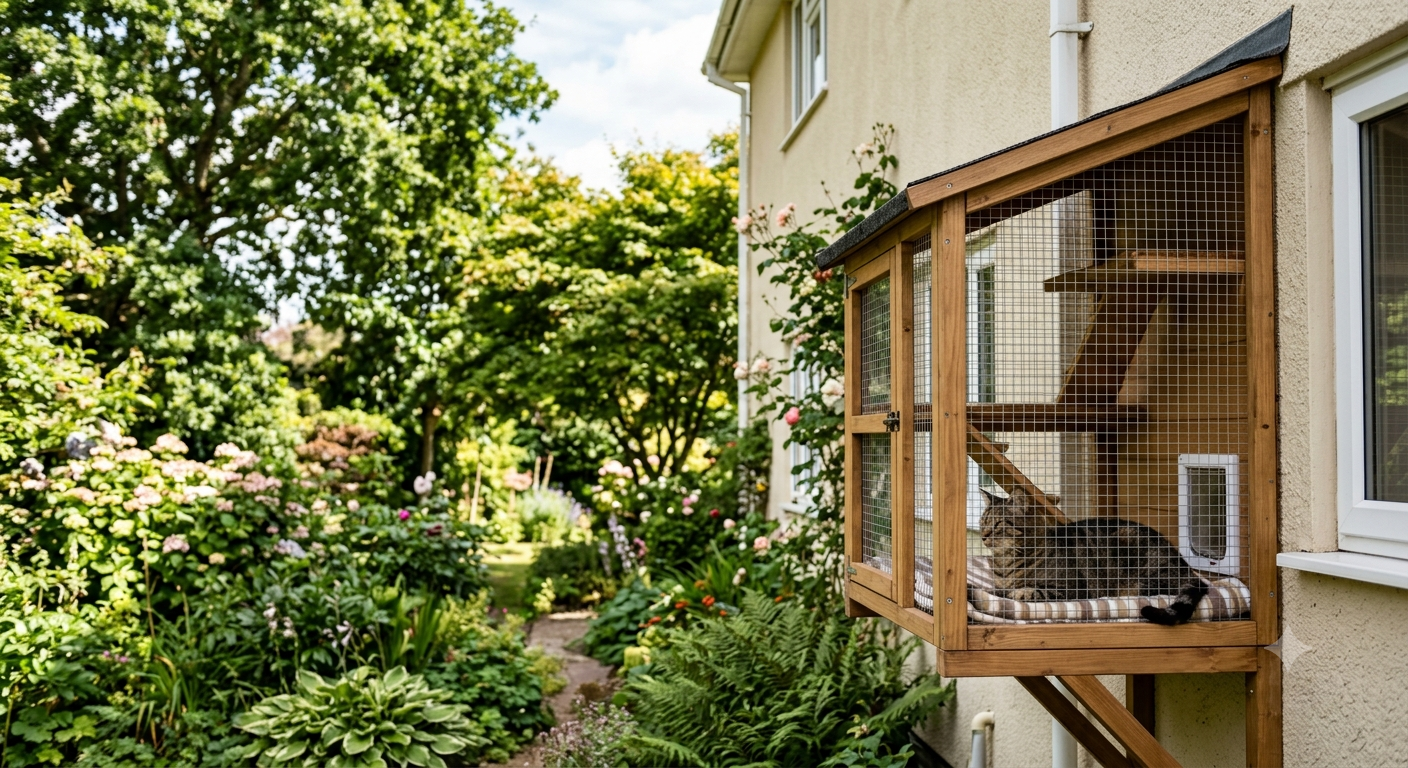
A catio — a patio for cats — gives indoor cats the sensory experience of the outdoors without the risks of unsupervised outdoor access. Even a small catio attached to a window provides access to fresh air, natural sounds, the smell of soil and plants, and the visual stimulation of outdoor movement that dramatically enriches the indoor cat’s environmental experience.
The simplest catio is a wooden frame structure of 2×4 lumber, attached to the exterior wall around a window opening, covered in half-inch hardware cloth on all sides and the top. Interior dimensions of 3 feet wide by 4 feet long by 6 feet tall accommodate one to two cats comfortably with room for a shelf, a hanging toy, and a protected outdoor lounging area. Install a pet door through the window to allow access from inside. Add weatherproof carpet on any interior shelves and a waterproof roof section for rain shelter.
Idea 7 — The Cat Highway Along the Ceiling Perimeter
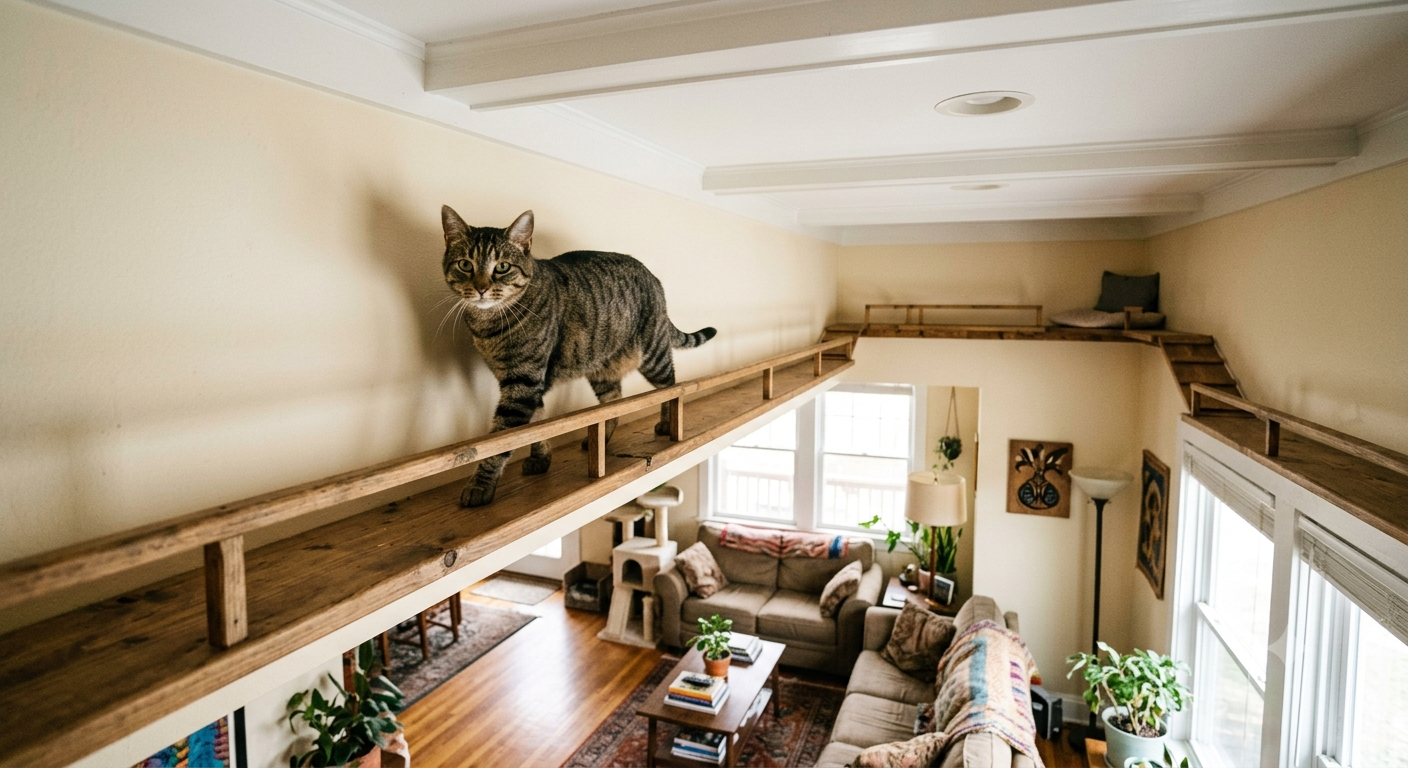
Rather than building from floor to ceiling, the ceiling-perimeter highway builds along the tops of all four walls of a room at 12 inches below the ceiling height — a continuous route that a cat can walk completely around the room without ever touching the floor. This is the cat room idea that most impresses visitors because it is genuinely dramatic and because watching a cat use a fully perimeter highway reveals an elegance and confidence in their movement that floor-level cats rarely display.
Build the highway from 12-inch-wide plywood sections, carpeted, mounted on heavy-duty shelf brackets secured into wall studs every 18 inches. Add one access ramp — a gently sloping carpeted board angled from the floor to the highway height — at one point in the perimeter. Add one enclosed sleeping box somewhere along the route. The highway loops continuously; a cat can enter at the ramp, walk the entire perimeter, and return to the ramp entrance without backtracking.
Idea 8 — The Cat Garden Room
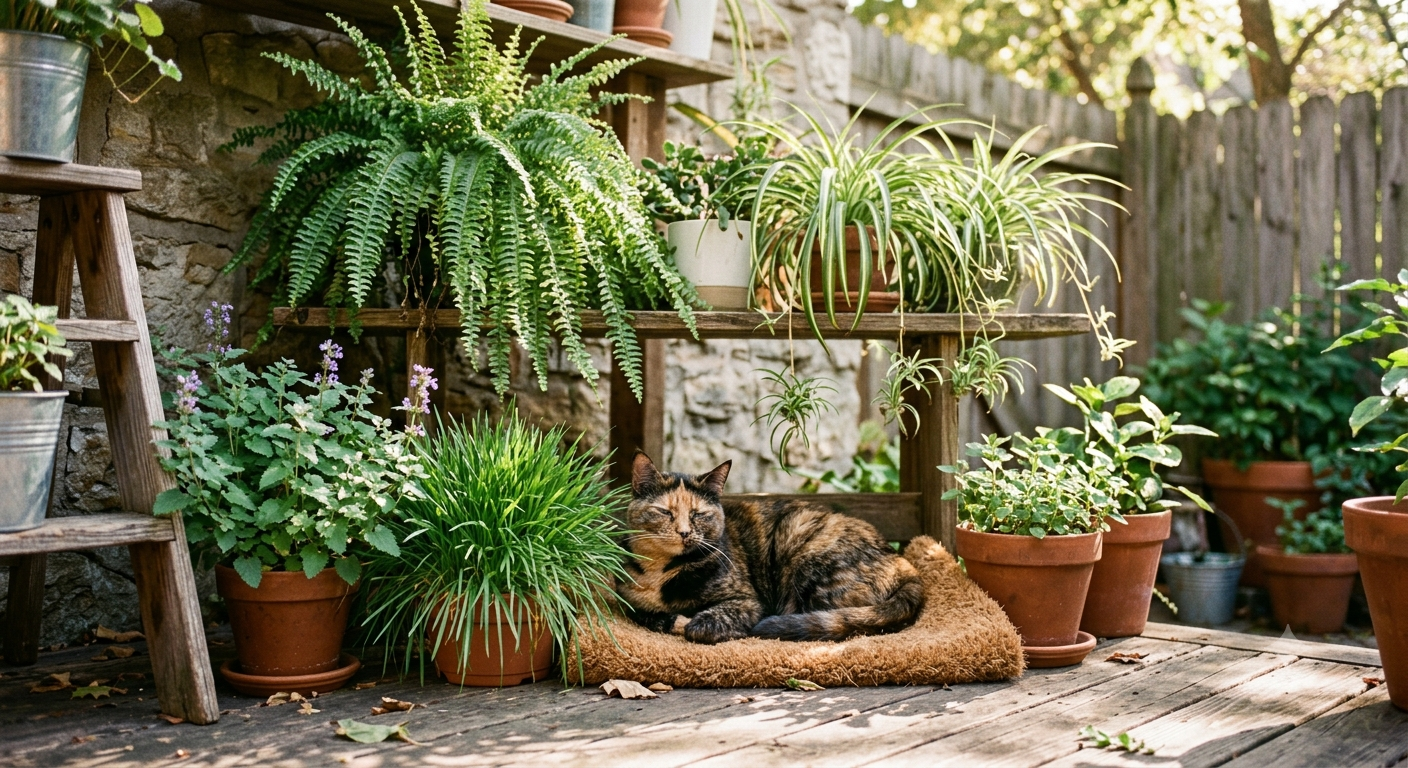
Cats are drawn to plants — not only to eat certain ones but to rest near, press against, and generally coexist with vegetation. A dedicated cat garden area — a sunny room corner or window bay filled with cat-safe plants on raised platforms accessible to the cats — creates a genuinely naturalistic environment that indoor cats find deeply enriching.
Research cat-safe plants thoroughly before planting — valerian, catnip, cat grass, wheatgrass, spider plants, and Boston ferns are all safe options. Plant them in heavy ceramic pots arranged at different heights using plant stands, upturned boxes, and stacked books to create a varied terrain. Add several large smooth stones that heat up in sunlight for cats to press against. Install a small tabletop water fountain for ambient sound and fresh water access. The resulting micro-environment combines visual interest, scent enrichment, sound stimulation, and thermal variety in a way that a bed and scratching post simply cannot replicate.
Idea 9 — The Converted Laundry Room Cat Suite
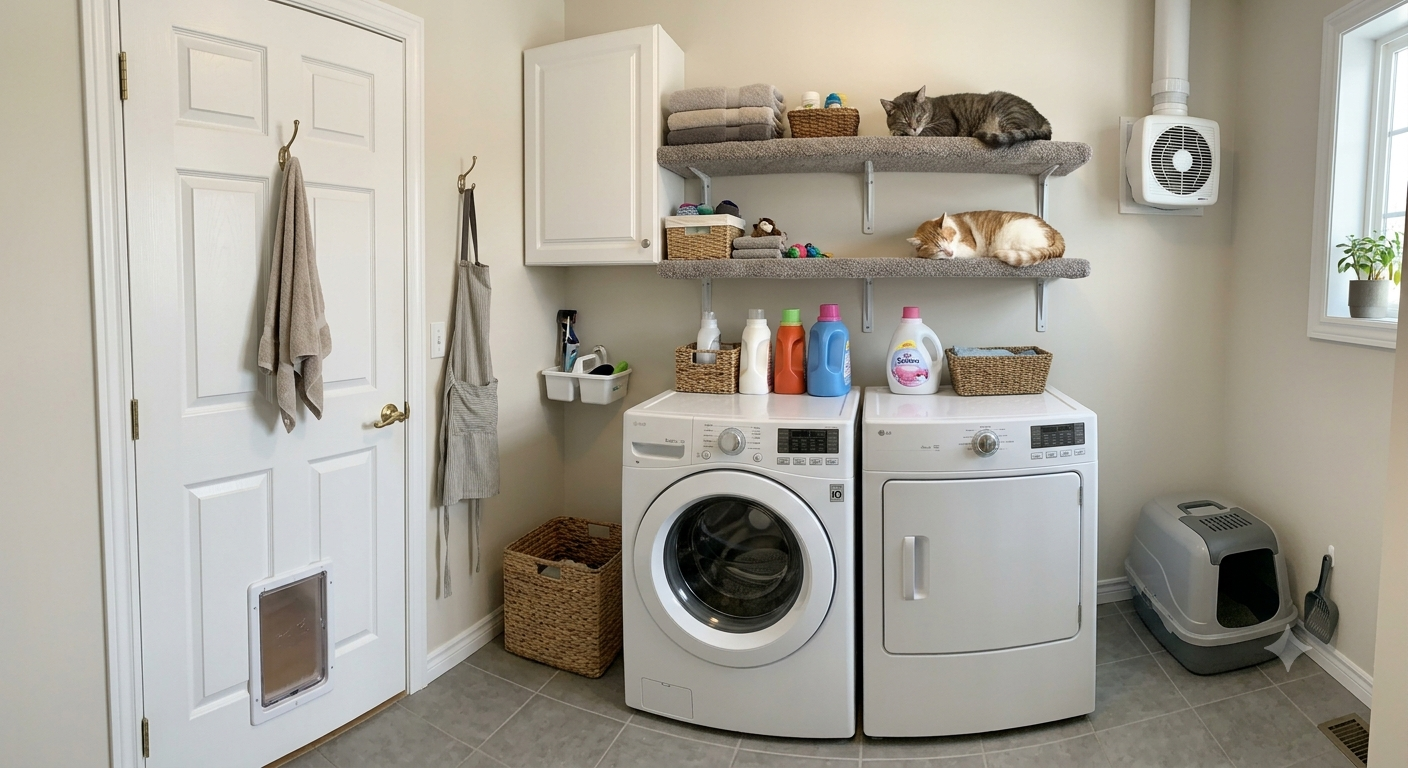
A laundry room that is used for nothing but laundry and litter box storage is an underutilized space for a cat owner. Installing a cat door in the laundry room door, mounting two platforms on the wall above the appliances, adding a litter box with an automated lid and a ventilation fan above it, and placing a cat bed on top of the dryer — which produces the perfect combination of warmth and vibration — turns a purely functional utility space into the best-used room in the house from your cat’s perspective.
The height of the appliances gives an immediate elevated territory. The enclosed room gives security. The warmth of the dryer during use provides intermittent thermal enrichment. The ventilated litter box location keeps odors entirely contained to one room. And the cat door allows independent access — the cat comes and goes on their own schedule without ever being locked in or out.
Idea 10 — The Dedicated Cat Room
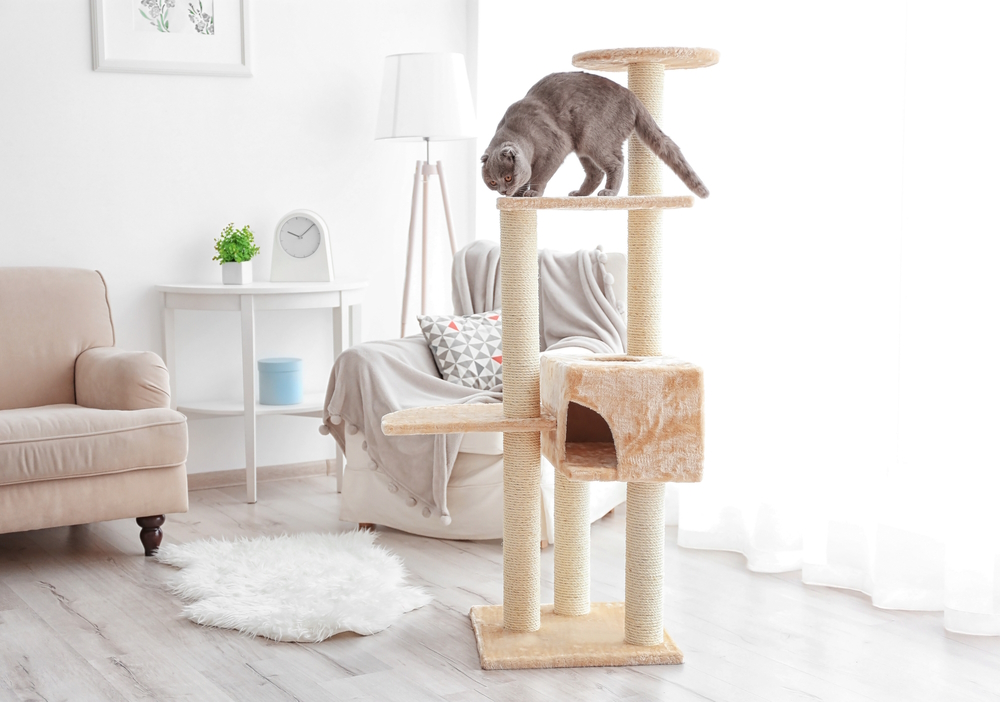
If you have a spare bedroom, a study that goes mostly unused, or any room with a door that can be designated for your cat exclusively, the fully dedicated cat room is the ultimate expression of the commitment to meeting your cat’s behavioral needs. Everything that appears in ideas 1 through 9 can be incorporated into one dedicated space: the full cat wall, tunnel sections, a catio window, a cat garden corner, multiple sleeping stations at different heights, a litter area with ventilation, a water fountain, a bird-watching window seat, and a TV mounted at cat eye level playing bird and fish videos on a loop.
The dedicated cat room for a multi-cat household resolves territorial conflicts by providing genuinely separate vertical territories for each cat — higher cats and lower cats can coexist in the same room when there are enough separate perching levels that every cat can maintain the height position they prefer. The room becomes the place every cat chooses to be.