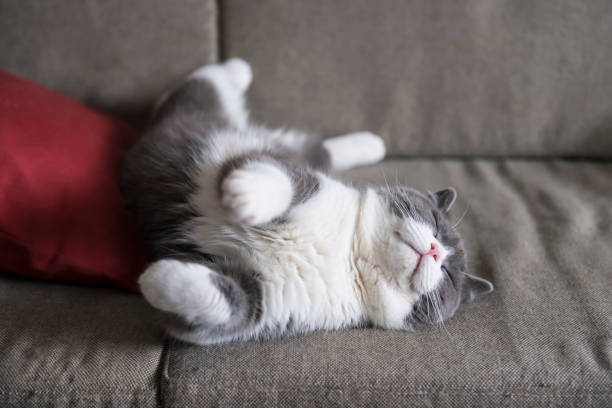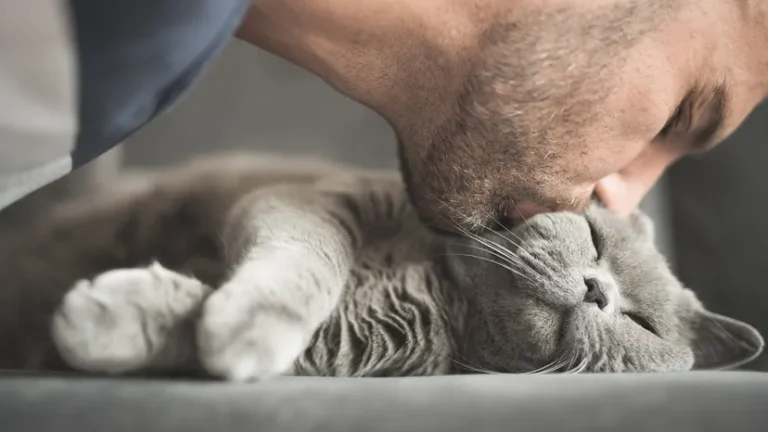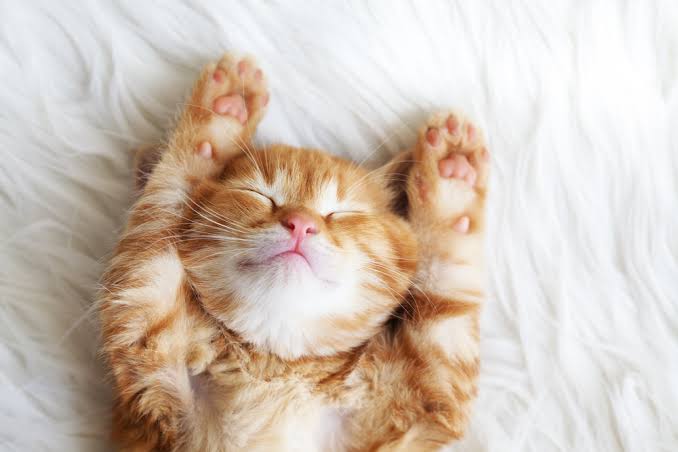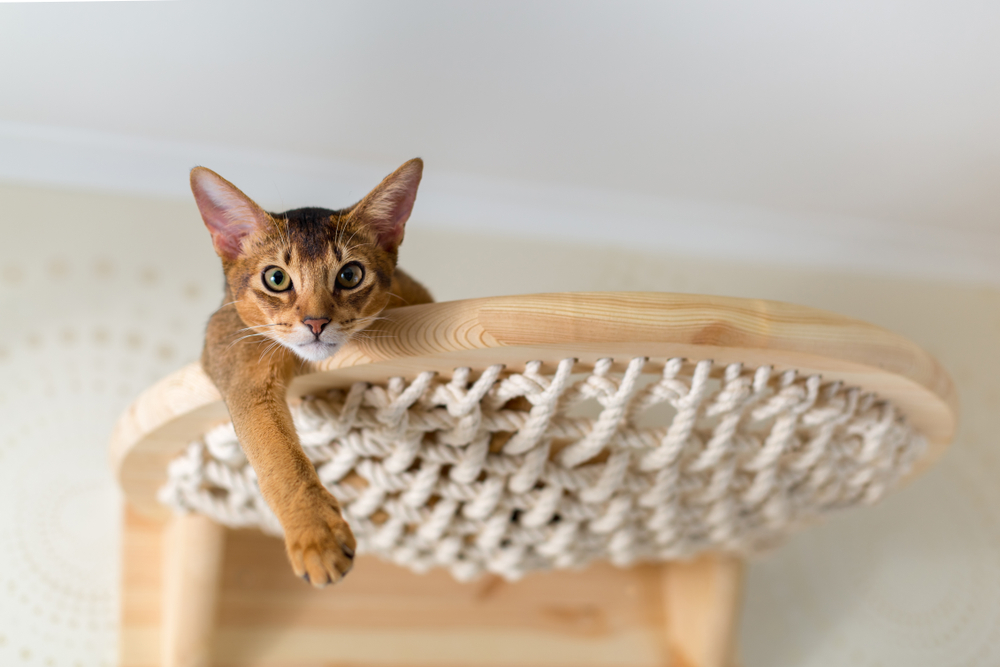
You have asked the question. Every cat owner has asked the question. You have walked through your home, opening closet doors, peering under beds, lifting sofa cushions, and producing treats in a rustling bag while calling a name that is clearly being heard but being deliberately ignored. And then they appear — from somewhere you did not expect, from somewhere you cannot immediately explain, with the expression of a creature who is entirely comfortable and sees no reason to justify their choice of location to you.
Cats hide. Not because something is wrong. Not because they are frightened. Because the instinct to have a private, enclosed, secure space — separate from the main social areas of the household — is fundamental to feline psychology and does not require a reason beyond itself.
The cat who hides in the back of your wardrobe behind the winter coats, the cat who sleeps under the bed between the dust ruffle and the floor, the cat who has claimed the narrow space between the refrigerator and the cabinet — these cats are not being difficult. They are expressing a need that their environment is not meeting through any dedicated, appropriate space. So they found their own.
A DIY cat hideaway acknowledges this need and meets it deliberately — giving your cat a private space that is designed for the purpose, appropriate for the use, and positioned where they want it rather than where they found it. The result is typically a cat that uses the dedicated hideaway and abandons the wardrobe.
These ten DIY cat hideaway ideas range from the simplest fabric modification to elaborate furniture integration. All of them are made to be hidden in — and all of them will be.
What Makes a Hideaway Different from a Cat Cave or Bed
The distinction is behavioral. A cat cave is primarily a sleeping space — enclosed, dark, comfortable, and relatively fixed in position. A cat bed is a resting surface. A hideaway is specifically about privacy — the ability to withdraw completely from the social environment of the household while remaining within it.
The hideaway is typically positioned lower to the ground than other cat furniture (lower positions feel more secure for hiding than elevated ones), more enclosed than even a cave (ideally with no visible gap between the cat and any observer from the room), and positioned away from the highest-traffic areas of the home rather than in the center of activity.
The cat who uses their hideaway during veterinary visits, during children’s parties, during thunderstorms, or during any period of elevated household activity is using it exactly as intended.
Hideaway 1: The Furniture-Integrated Side Table Hideaway
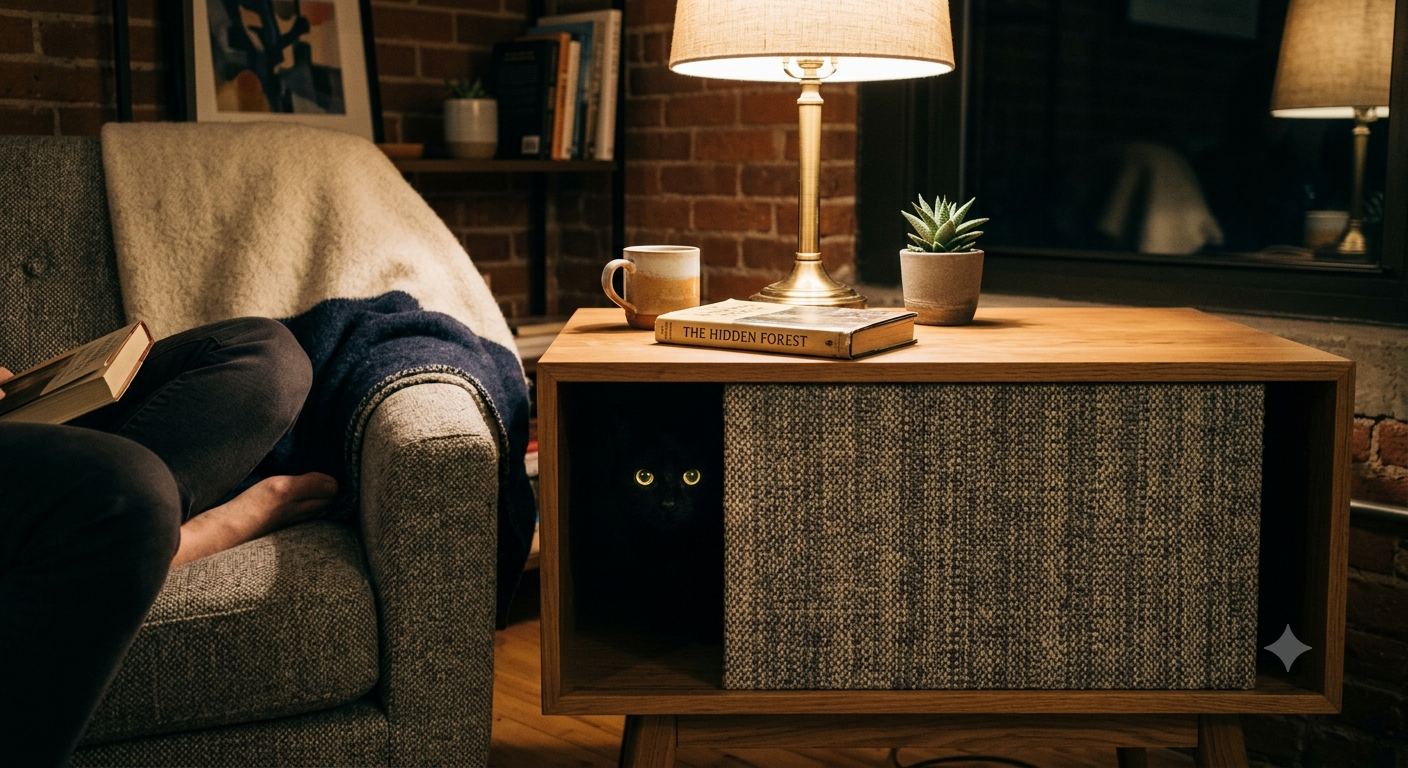
The most sophisticated hideaway design — because it is entirely invisible until you know to look for it. A standard side table or nightstand, with its door replaced by a fabric curtain in a coordinating color, with a comfortable interior, becomes a cat hideaway that reads as furniture to any guest and as a private sanctuary to the cat.
The modification: Purchase or build a side table with a door or an open cubby. Remove the door if present. Cut a piece of fabric to approximately 1.3 times the opening width — this creates the natural draping and slight fullness that allow the cat to enter and exit without effort while maintaining visual privacy when they are inside. Attach the fabric with a tension rod or a fabric rod above the opening.
Line the interior with a non-slip mat and a folded Sherpa blanket. The interior floor should be at approximately the same level as the room floor for easy access.
The result: From across the room, a well-coordinated side table. Upon close inspection, a cat is watching you from the darkness inside while appearing to be in a piece of furniture.
Hideaway 2: The Bookshelf Nook Hideaway
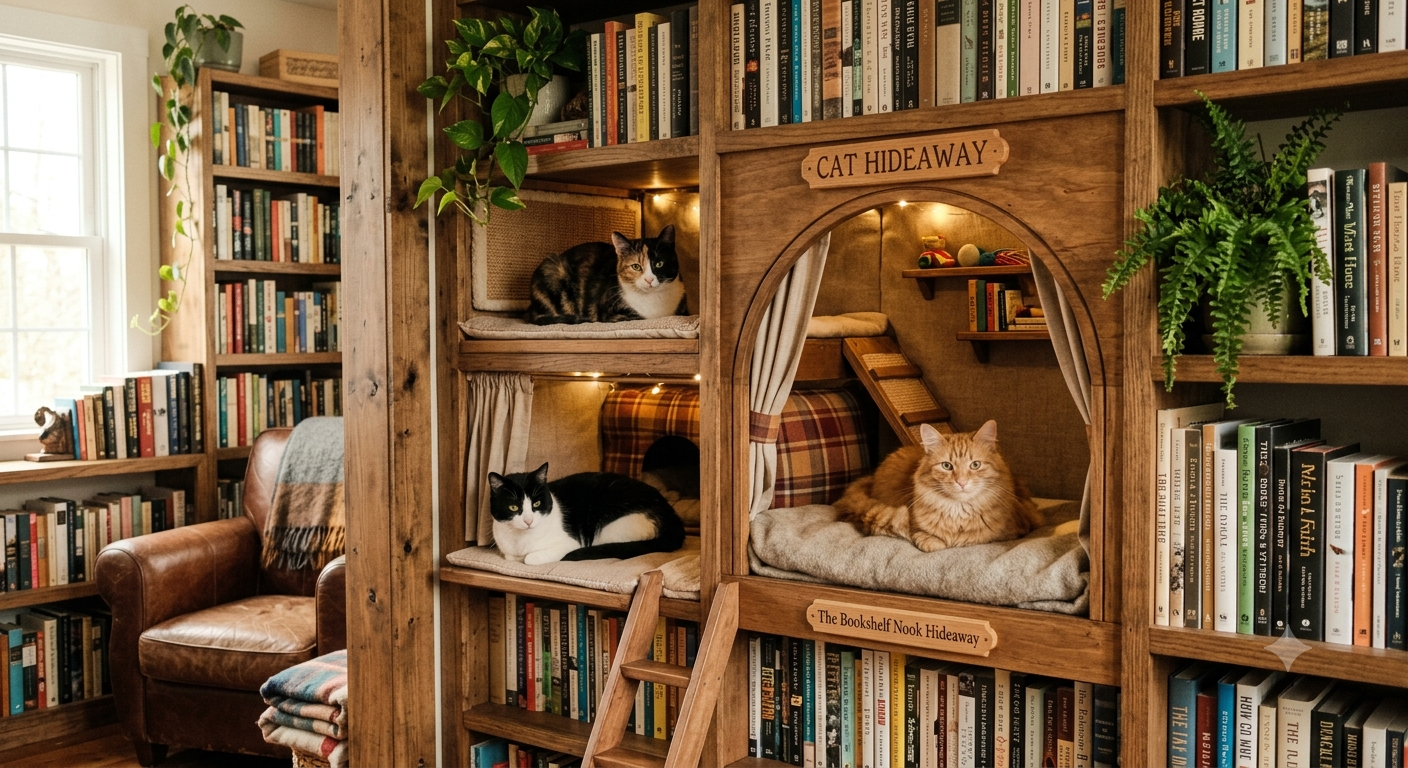
A bookshelf with one shelf designated exclusively as a cat hideaway — lined with Sherpa, provided with a fabric curtain or half-curtain across the front, and positioned at the appropriate height for your cat’s preference.
The ideal shelf height for a bookshelf hideaway: approximately 12 to 18 inches from the floor for cats who prefer to be at floor level when hiding, or 36 to 48 inches for cats who prefer elevated positions even when hiding. Many cats have a strong and consistent preference — observe where your cat currently hides to determine which height applies.
The curtain can be as simple as a piece of fabric cut to the shelf opening dimensions, hemmed at the edges, and attached with curtain clips to a small tension rod. The curtain should reach three-quarters of the way to the shelf floor — leaving the bottom visible reassures the cat that the escape route is clear while providing visual privacy from above and from the sides.
Hideaway 3: The Under-Stair Nook Conversion
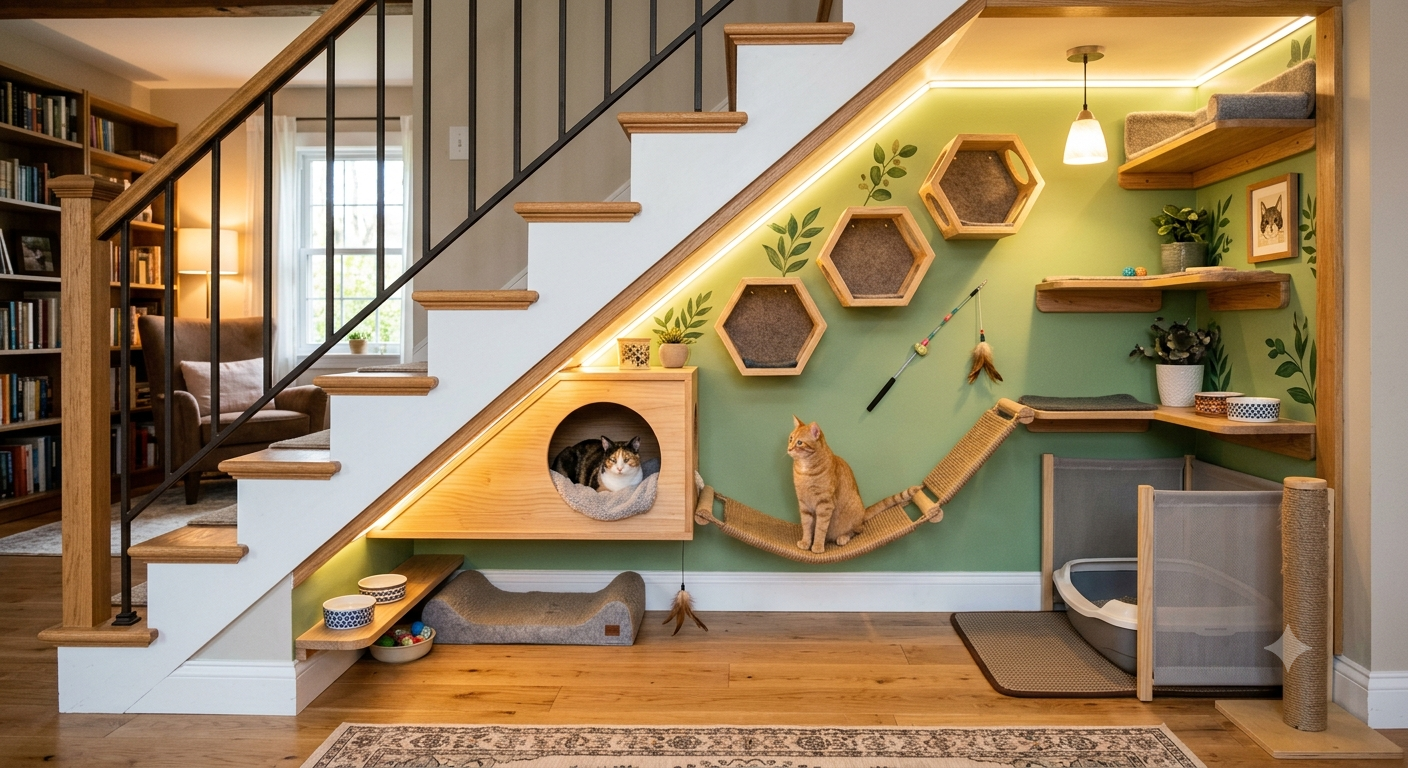
If your home has a staircase, the space under the lowest three to four stairs is one of the most natural cat hideaway locations available — low, enclosed, triangular in cross-section, and naturally shielded from visual observation by the stairs above. Converting this space from unused storage to a dedicated cat sanctuary requires minimal modification.
The conversion: Clear the under-stair space. Install a small hinged door or fabric curtain at the entrance opening. Line the floor with a non-slip mat. Add a removable Sherpa blanket and a low LED strip light on a timer that provides very dim illumination inside during the hours your cat is most likely to use the space. The light is not for the cat’s benefit — they see in near-darkness — but for the human’s ability to check on them without disturbing them.
If the under-stair space has existing storage in it, partition a section — even 2 feet by 2 feet — as the dedicated cat space and leave the remainder for storage.
Hideaway 4: The Floating Shelf Hideaway Box
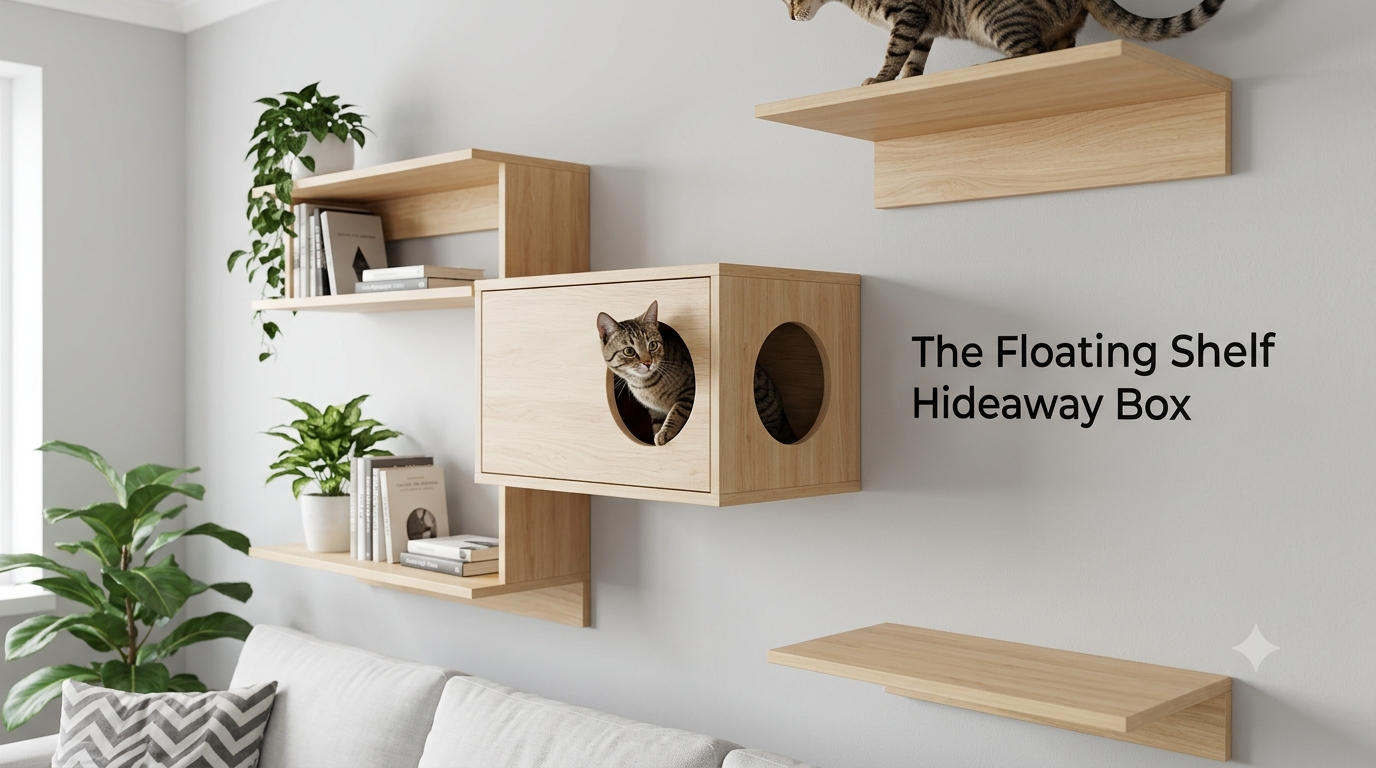
A shallow wooden box — open at the front, approximately 18 inches wide by 12 inches deep by 12 inches tall — mounted on the wall at the cat’s preferred hiding height. The box provides an enclosed, shielded resting space without consuming any floor area.
Construction: Build the box from 1×6 lumber using simple butt joints secured with wood glue and screws. Sand all surfaces and edges. Line the interior with Sherpa fabric or faux fur. Mount to the wall using appropriate anchors — the box and cat combined may weigh 15 to 20 pounds and the mounting must accommodate this load safely.
The entrance decision: An entrance from the front (a full opening across the front face) produces a different behavioral use from an entrance from the side (a cutout on one side wall). The front-entrance box is used primarily for observation while resting. The side-entrance box is used for more complete hiding — the angle of entry allows the cat to be positioned facing the entrance while being fully enclosed.
Hideaway 5: The Repurposed Cabinet Hideaway
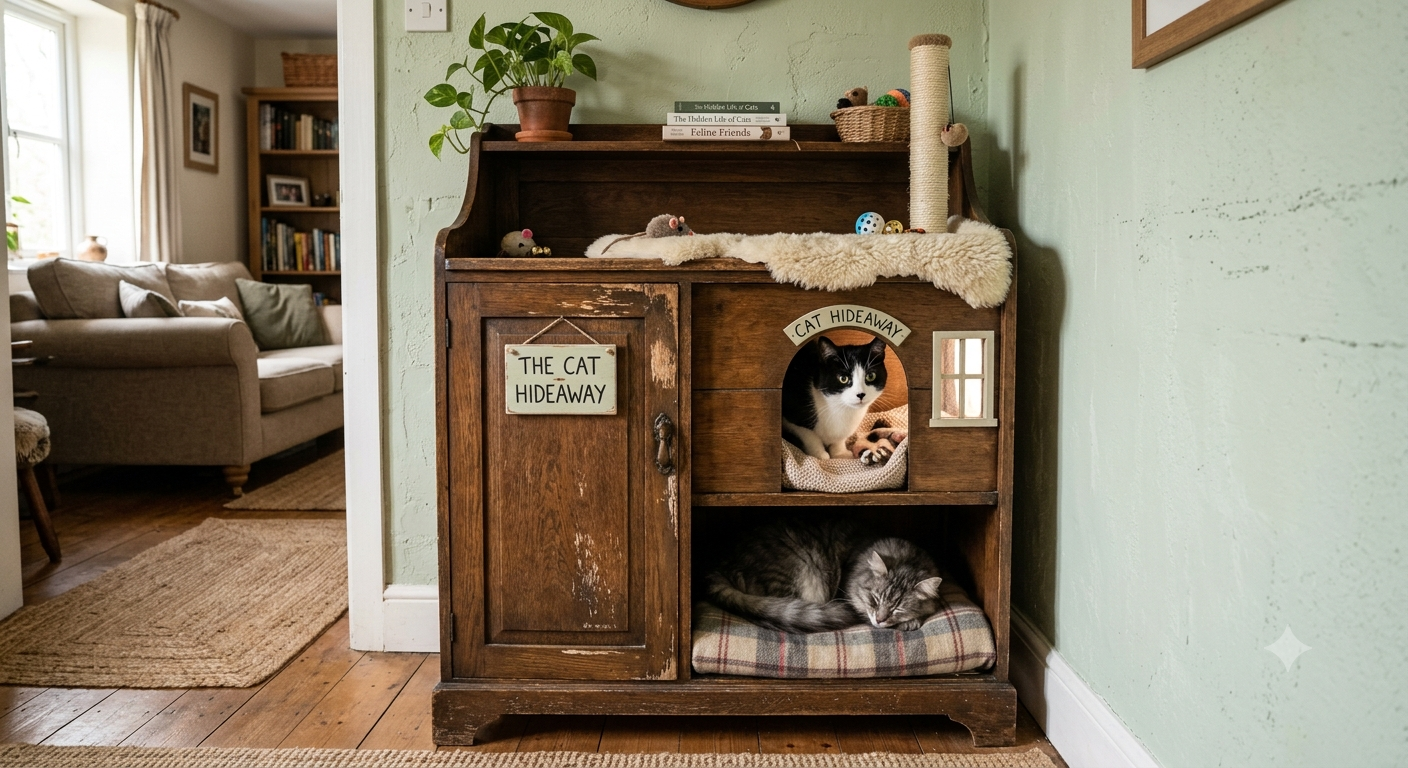
A small cabinet — a filing cabinet, a bedside cabinet, a storage cube — with the interior cleared, a cat-sized entrance hole cut through the door or side, and a comfortable interior installed, becomes one of the most durable and most complete hideaway spaces available.
The entrance hole: Cut using a jigsaw. The ideal dimensions for a standard domestic cat are 7 inches wide by 7 inches tall. Sand the cut edges thoroughly and apply edge banding or a smooth trim piece to prevent any rough edge contact with the cat passing through.
Interior: Line with Sherpa fabric glued to all interior surfaces. Install a non-slip mat on the floor that extends slightly out of the entrance to prevent the cat from slipping on a hard floor when exiting. Leave the existing ventilation of the cabinet functional — air circulation inside the hideaway prevents the mustiness that makes enclosed spaces less appealing.
Hideaway 6: The Planter Box Hideaway
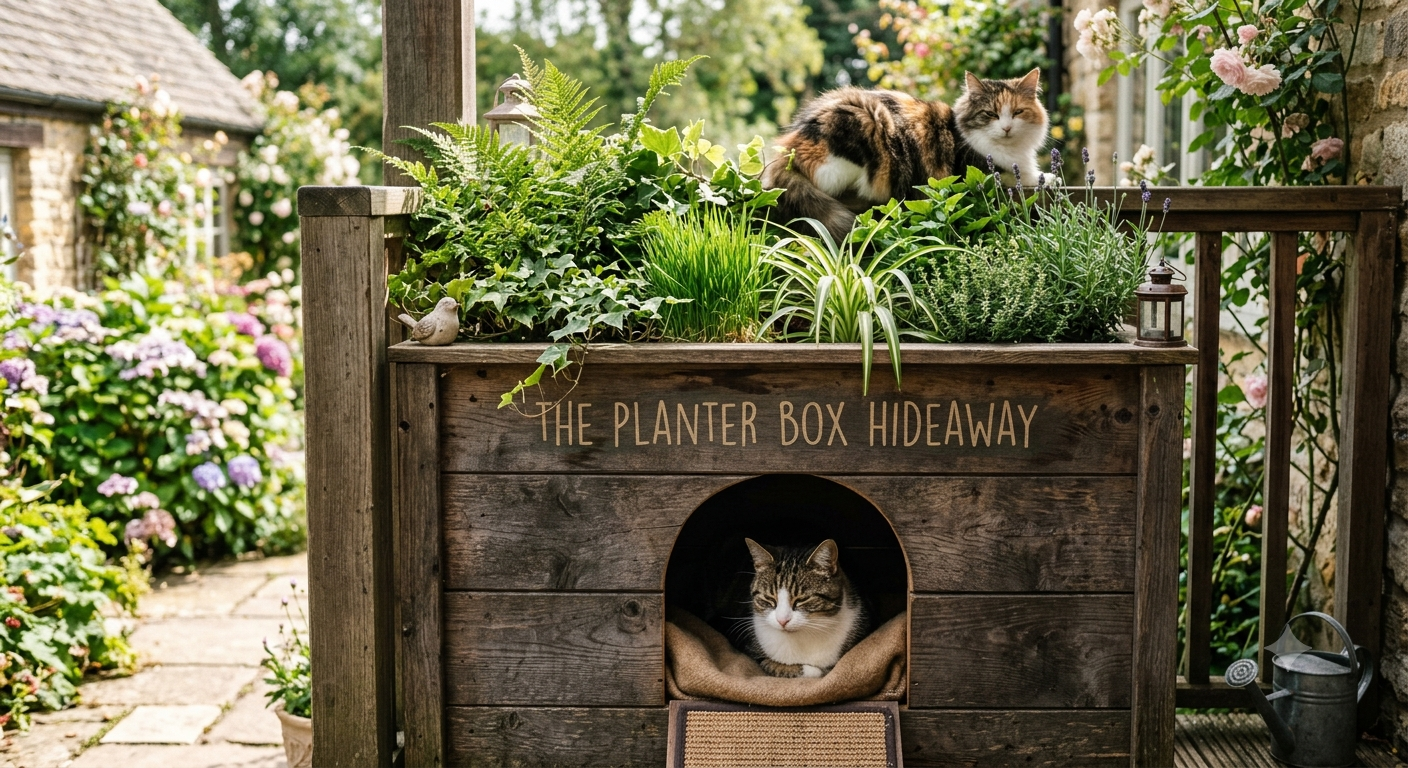
A large rectangular planter box — the wooden slatted kind available from garden centers — with the drainage holes blocked, the interior lined with fabric, and a fabric curtain across the entrance provides one of the most visually appealing and most organically aesthetic cat hideaways available.
The natural wood slat construction reads as garden-adjacent décor and integrates well into homes with plant-heavy interiors. The slatted construction provides natural ventilation. And the size — typically 16 to 18 inches in height and 20 to 24 inches in length — is ideal for a single cat’s private retreat.
Hideaway 7: The Wardrobe Corner Hideaway
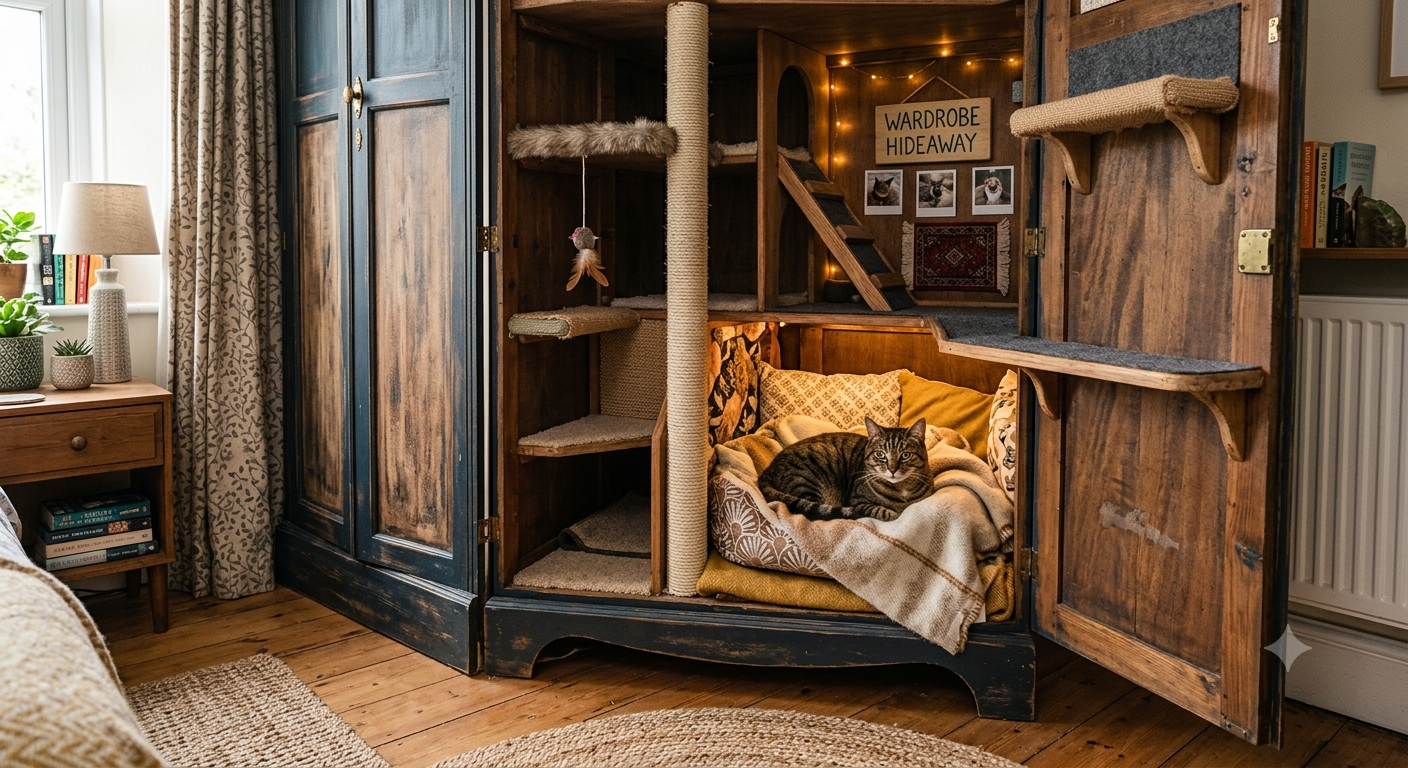
Your cat is already using the back of your wardrobe. Acknowledge this and make it work better for both of you.
The modification: Designate one lower corner of a wardrobe or closet as the cat’s permanent space. Install a small shelf at floor level with a non-slip surface. Add a removable Sherpa blanket. Create a defined entrance by installing a fabric curtain across the corner section that separates it from the rest of the wardrobe contents. Cut a small opening in the curtain for the cat’s exclusive use.
The wardrobe stays organized for your use, the cat has their designated and permanent private space, and the mystery of the disappearing cat is permanently resolved.
Hideaway 8: The Crate Hideaway — The Simplest Permanent Option
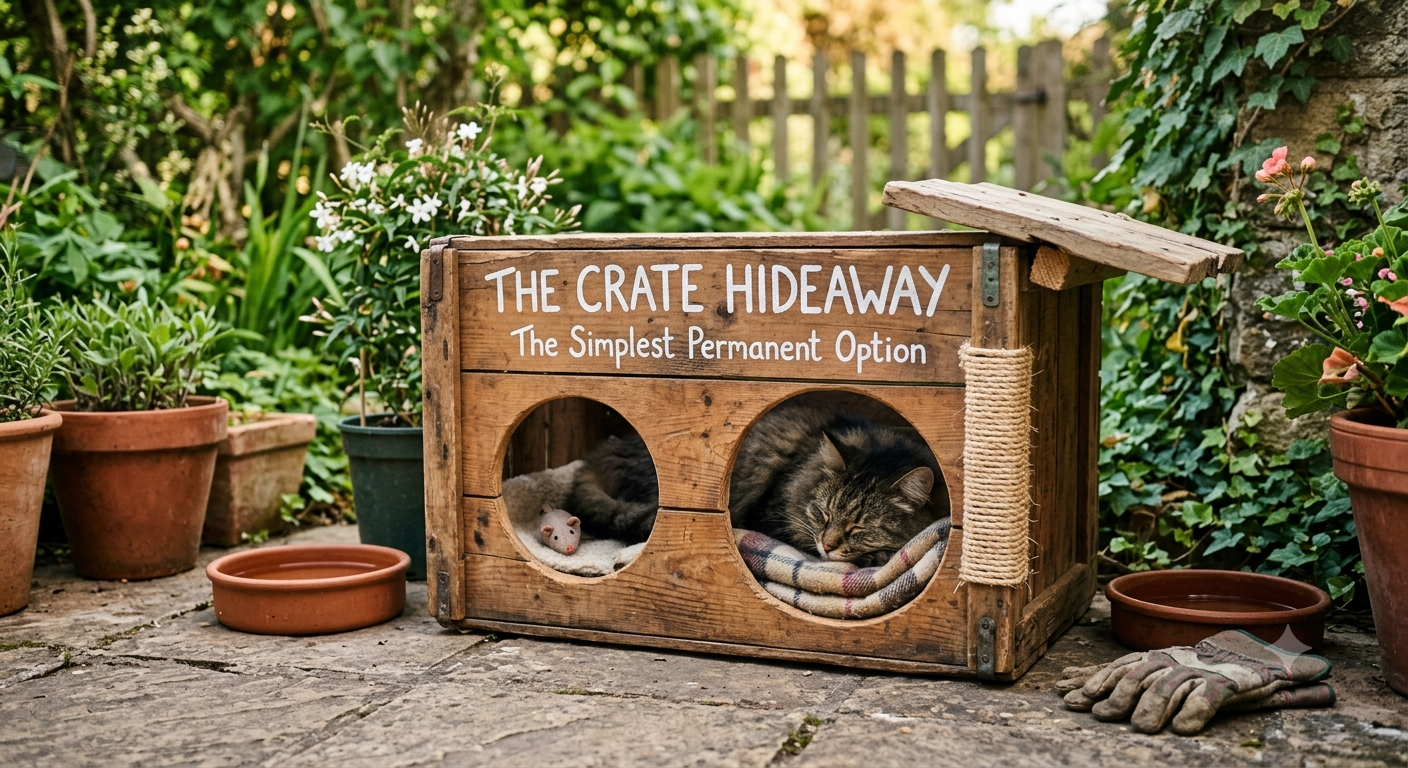
A standard wire dog crate — covered on three sides and the top with a heavy throw blanket that blocks light and reduces sound — with a soft interior mat becomes one of the most-used cat hideaways in any multi-cat household. The wire construction provides complete airflow, the size accommodates even large cats comfortably, and the covered blanket creates the visual enclosure that makes it function as a hideaway rather than simply a crate.
The wire door left open at all times ensures the cat can exit freely — the hideaway loses its function if the cat ever experiences being trapped inside.
Hideaway 9: The Tunnel Hideaway System
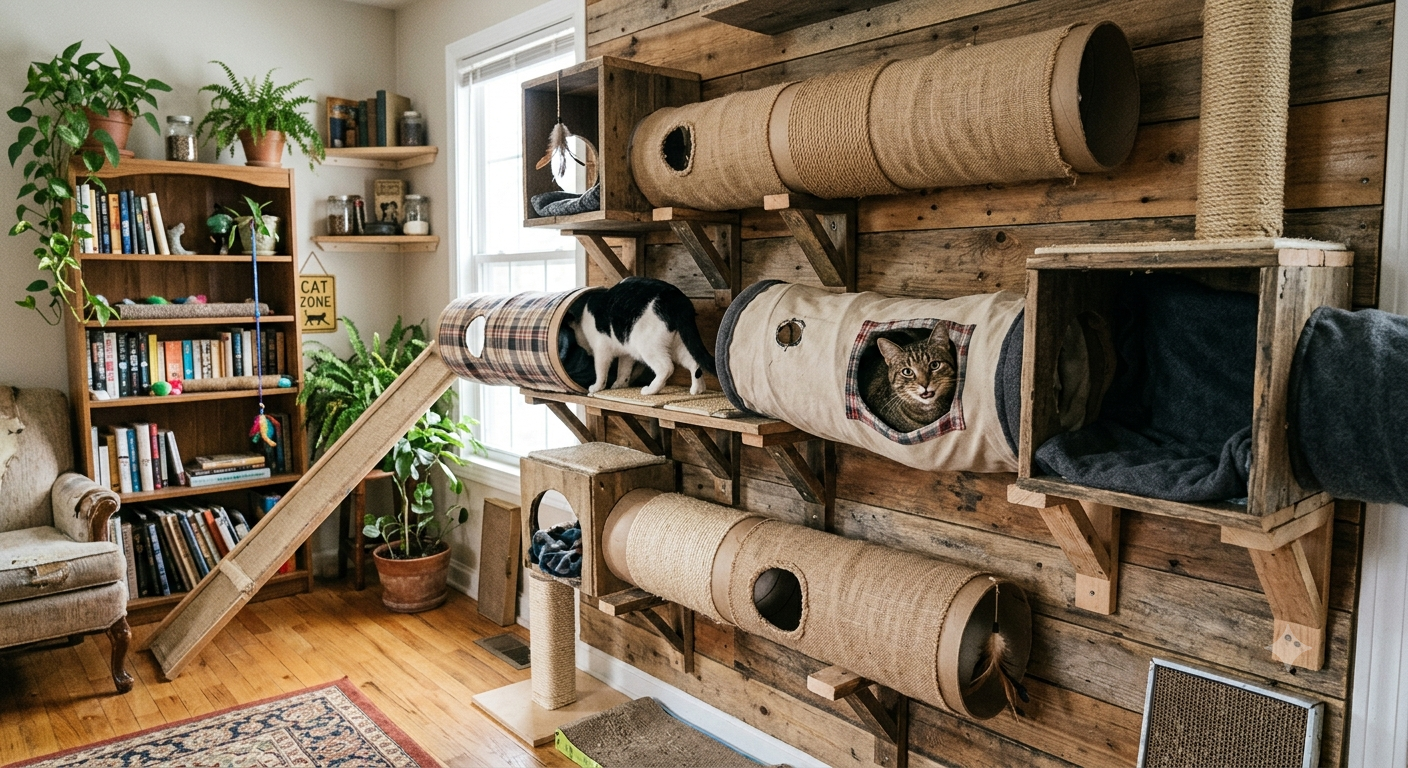
Multiple connected tunnels — commercial crinkle cat tunnels or fabric tubes sewn from heavy canvas — create the most elaborate hideaway system available: a network of private passageways that the cat can navigate entirely out of sight from any position in the room.
The tunnel system works best when positioned along walls, under furniture, and in the periphery of the room — where cats naturally travel when moving through space (cats hug walls and furniture edges rather than crossing open floor space when they have a choice). Connecting the tunnels to a final enclosed space at the end of the network creates a complete private world within the existing room.
Hideaway 10: The Seasonal Fabric Hideaway
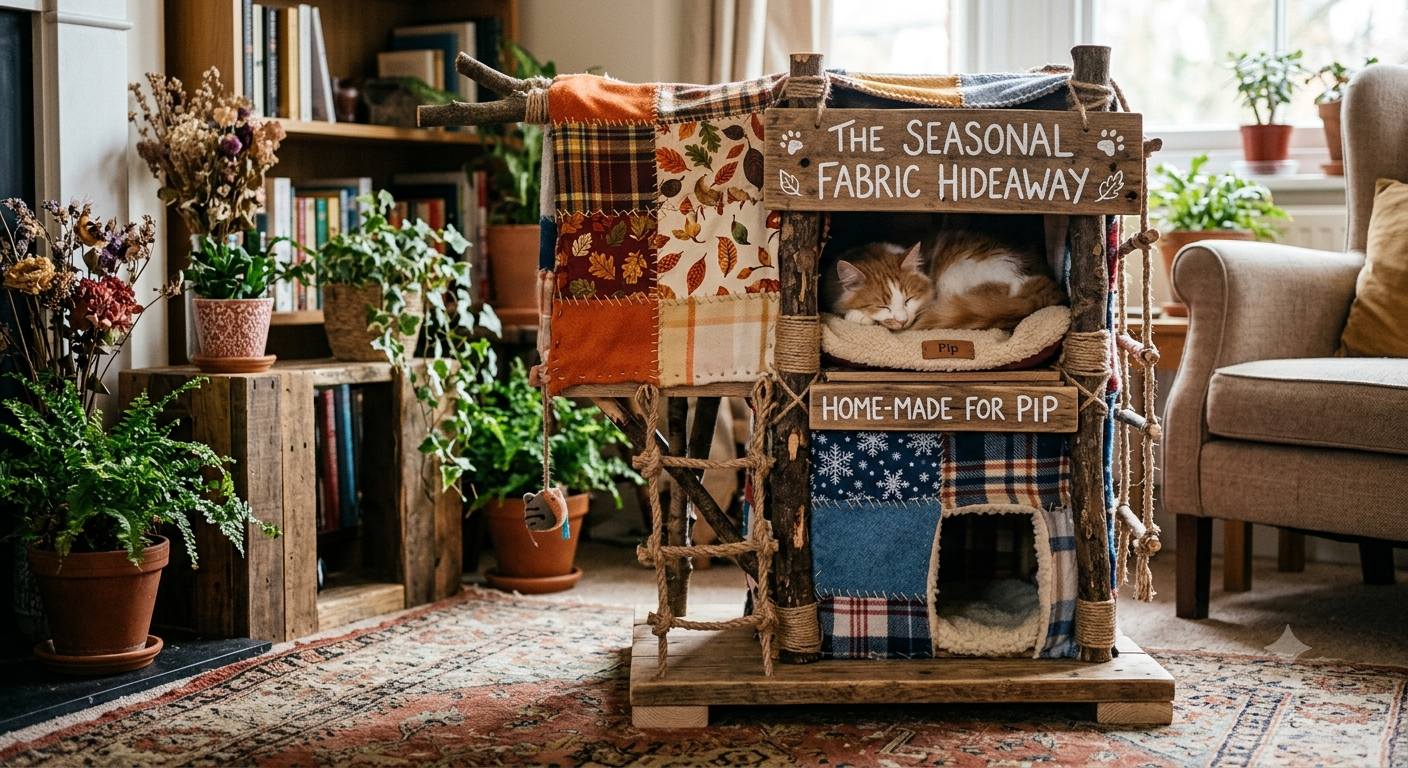
The simplest hideaway available — and one that can be updated seasonally for practically no cost. Drape a heavy blanket over a low coffee table, ensuring the blanket reaches the floor on three sides. Place a Sherpa mat inside. That is the complete build.
A heavy blanket draped to the floor creates a complete visual enclosure at floor level. The cat can enter and exit freely from the open side. The interior is dark, enclosed, and thermally stable. And when the season changes, a different blanket of a different weight and color replaces it.
This is the cat hideaway that requires no tools, no materials beyond blankets you already own, and no skills beyond the ability to drape fabric. It works because the principle — enclosure, darkness, appropriate size — works regardless of whether the construction is elaborate or completely minimal.
Your cat is going to hide. This is not negotiable, and it is not a problem to be solved — it is a need to be met. The question is whether they hide in your winter coat pocket at the back of the wardrobe (which is a problem for your coat) or in the beautiful fabric-curtained side table you built for them specifically (which is a solution for everyone).
Ten ideas. Ten ways to give your cat a private world within your shared one. Pick the one that fits your space, your skills, and your aesthetic — build it this weekend — and put it where your cat currently hides.
Save this to Pinterest, share it with every cat owner who has ever spent fifteen minutes finding their cat in an entirely unexpected location, and know that the solution is not to look harder. It is to build better.