Commercial cat toys are not made for cats. They are designed to appeal to humans standing in a pet store aisle. The crinkled ball that photographs beautifully may be ignored entirely in favor of the bottle cap that fell on the floor. The plush toy with twenty components may sit untouched while the receipt from the pet store becomes the obsession of the week.
Creating your own DIY cat toys offers numerous benefits that go beyond just saving money. When you make your own, you can tailor them to your cat’s preferences. Whether your feline friend prefers soft, plush toys or more durable, chewable ones, you can create the perfect toy to keep them entertained. Additionally, you can choose safe, non-toxic materials to ensure your cat’s safety.
These twelve DIY cat toy ideas range from the five-minute no-skill version to beautiful crochet projects worth photographing. All of them are inexpensive. All of them use materials you probably already have. And all of them have been tested by actual cats who did not care that the materials came from a craft store rather than a pet boutique.
What Makes a Cat Toy Actually Work
Before the ideas, the science. Understanding what triggers your cat’s play drive is what separates DIY toys that get a five-second sniff from toys that produce twenty-minute play sessions.
Cats are predators. Their play behavior is hunting behavior. A toy that is effective is a toy that mimics prey — in size, shape, texture, movement, or smell. Dragging the wand along the ground mimics the movements of prey, encouraging your cat’s natural predatory instincts and providing fantastic exercise.
The three things that make any cat toy more effective: Movement: Irregular, unpredictable movement triggers prey-chase instinct. A toy that moves like a mouse — stopping, starting, changing direction — is more compelling than one that moves smoothly. Sound: Crinkle sounds and jingle bells mimic the sounds of small animals moving through foliage. Bells or crinkly material introduce a new auditory sensory experience. Smell: Catnip is the most powerful tool available. If your cat enjoys catnip, adding the herb to toys can increase their interest.
Idea 1: The Crochet Fish (15 Minutes, Beginner)
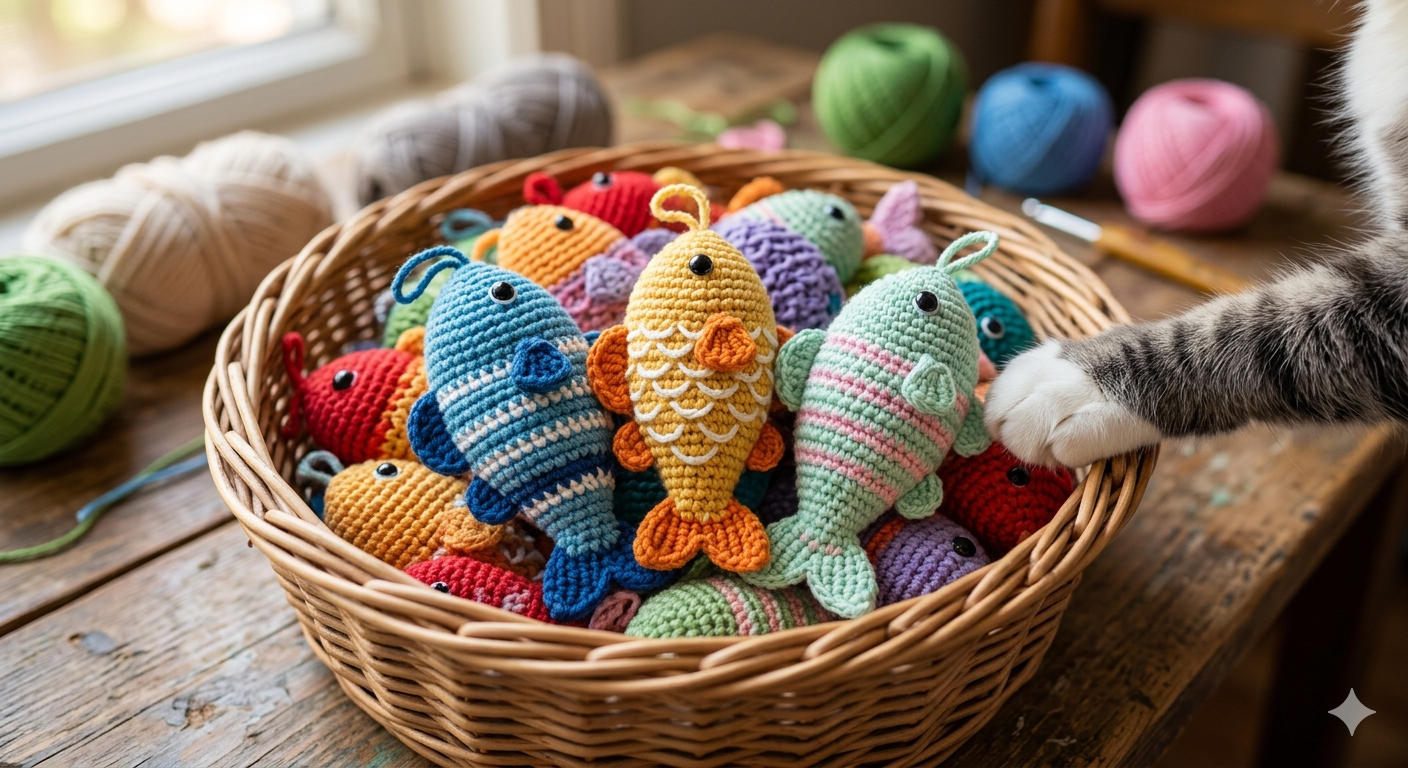
The cornerstone DIY cat toy — small, firm, fish-shaped, and stuffed with catnip. Cotton yarn, a small crochet hook, and fifteen minutes. The result is a toy that most cats carry in their mouths, kick, and return to repeatedly.
The crochet fish earns its place at the top of this list because it combines ease of making, speed of completion, use of stash yarn, and genuine play value in a single project. Make several at once and rotate them to keep the catnip scent fresh and the novelty factor high.
Materials: Cotton or acrylic yarn, 3.5mm hook, fiberfill, catnip Skill required: Beginner crochet — single crochet, magic circle Time: 15–20 minutes
Idea 2: The Sock Catnip Toy (5 Minutes, No Skills)
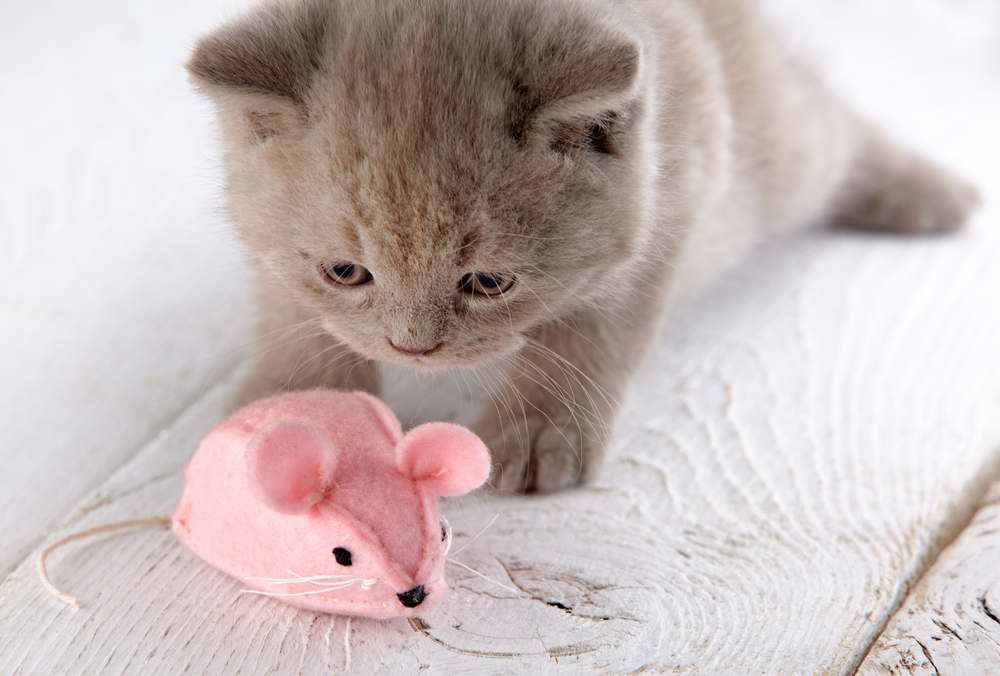
Stuff the sock with soft material or catnip if desired. Tie the sock securely at the open end. Attach a string or ribbon to the sock and drag it along the floor for your cat to chase. This toy mimics prey, and the sock’s texture, combined with the movement, stimulates your cat’s predatory instincts.
The sock toy is the entry point for everyone — the non-crocheter, the parent with five minutes and a child’s lost single sock, and the cat owner at 11 pm who realizes the toy supply has been comprehensively demolished and needs an immediate replacement. Stuff it with dried catnip, tie the end, and drop it on the floor. Done.
Materials: One clean sock (any size), catnip or fiberfill Skill required: None Time: 5 minutes
Idea 3: The Toilet Paper Roll Ball (10 Minutes, No Skills)
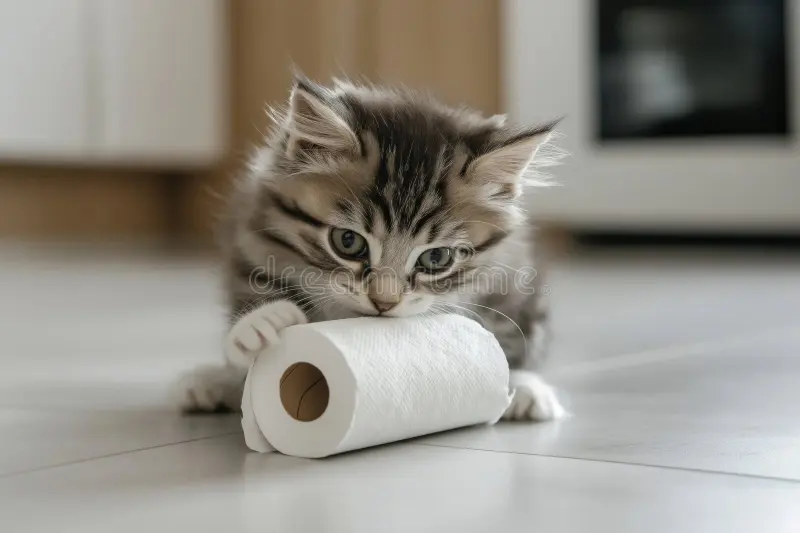
Take a toilet paper roll, cut it into rings, and interlock the rings to form a sphere. Place a few treats or a pinch of catnip inside, and watch as your cat bats it around for hours of fun. This toy stimulates both mental and physical activity.
The toilet paper roll ball is both a toy and a puzzle — the cat can smell and hear the treats or catnip inside, but must work to access them. The lightweight structure rolls unpredictably across floors and is satisfying to bat. When it eventually gets destroyed, it costs nothing to replace.
Materials: 2–3 toilet paper rolls, scissors, treats or catnip Skill required: None Time: 10 minutes
Idea 4: The DIY Feather Wand (15 Minutes, Minimal Tools)
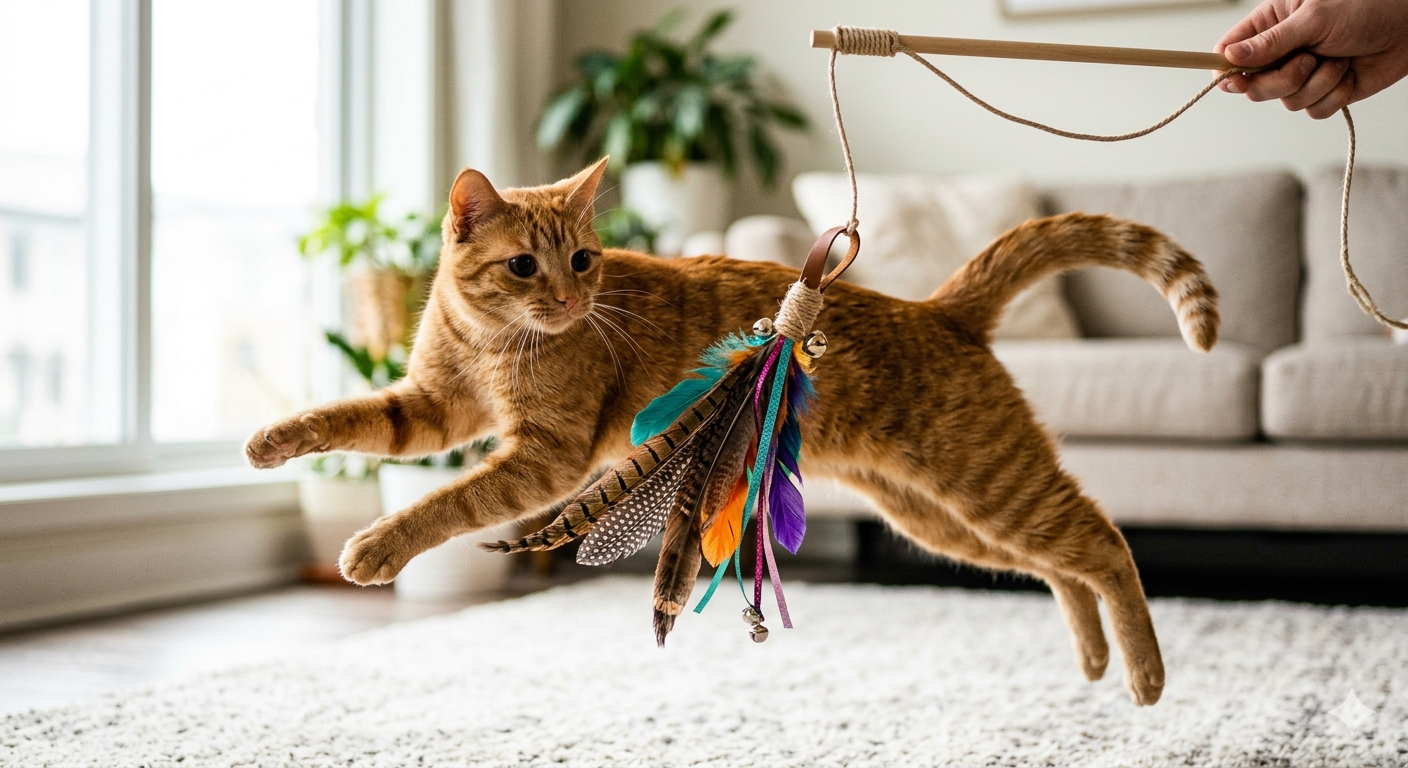
Secure a bundle of feathers to the end of a sturdy stick or wooden dowel using strong, non-toxic glue or a tightly wrapped strip of fabric. Add a few bells or crinkly paper for extra allure.
The feather wand is the most interactive cat toy format available — it requires human participation and produces the most sustained hunting behavior of any toy type. The DIY version uses a wooden dowel or thick chopstick, a length of sturdy string, and whatever you attach to the end — feathers, crinkly material, a crochet toy head, or a simple strip of fleece.
Always trim loose threads and avoid adding thin ribbons or cords to the toy. These can become tangled during play and pose a choking hazard.
Materials: Wooden dowel or thick chopstick, 18 inches of thick string or twine, feathers or crinkled material, non-toxic glue Skill required: None Time: 15 minutes
Safety note: Wand toys must be stored away when play is finished. A dangling string is a strangulation hazard for unsupervised cats.
Idea 5: The Crochet Kicker Toy (30 Minutes, Beginner)
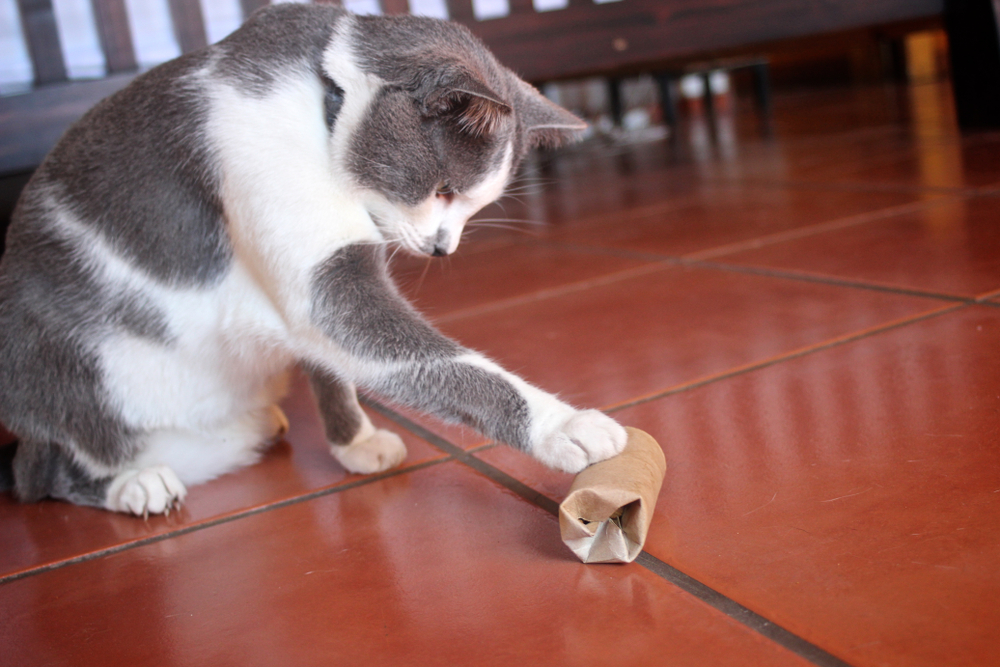
The kicker toy is the format that produces the most dramatic, most satisfying, and most photographable cat response — the full body roll-and-kick that turns any cat into a tiny wild animal wrestling its prey.
The best fabric for homemade cat toys is something durable yet soft. For the crochet version, cotton yarn provides durability, washability, and safety for cats who carry toys in their mouths.
The crochet kicker is made in a cylinder shape — single crochet in the round, increased at one end for a rounded nose and decreased at the other, stuffed firmly with fiberfill and catnip. The shape matters: firm stuffing produces resistance when kicked, which is what makes the response so enthusiastic.
Materials: Cotton yarn, 4.0mm hook, fiberfill, catnip Skill required: Beginner crochet — single crochet in the round, increases and decreases Time: 25–35 minutes
Idea 6: The Crinkle Catnip Pouch (No Sew, 10 Minutes)
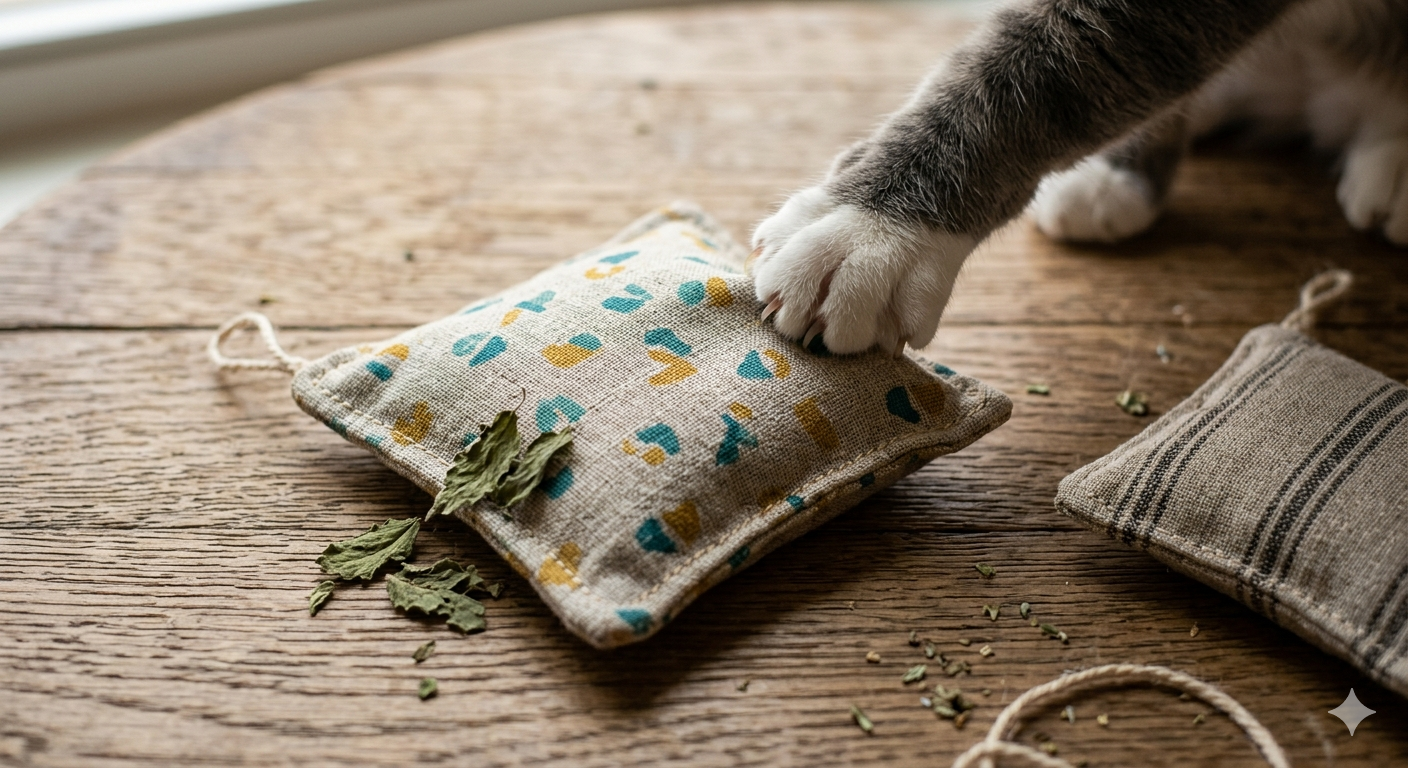
Stuff a piece of fabric around a sheet of newspaper with catnip throughout the fiber fill. Wrap the fiber fill up in the newspaper and fold in the ends. Twist both ends of a fabric tube closed and tie tightly with a string.
The crinkle pouch is the simplest toy that incorporates both catnip scent and crinkle sound — the two most universally effective sensory triggers for cat engagement. Cut a rectangle of fabric (fleece works best as it does not fray), layer it over a piece of cellophane or mylar wrapping, add a generous pinch of catnip, fold, and tie both ends. Ten minutes, and your cat has a toy that crinkles on every touch.
Materials: Fleece rectangle (4″ x 6″), cellophane or mylar, catnip, two strips of ribbon or twine for tying. Skill required: None — no sewing required. Time: 10 minutes
Idea 7: The DIY Catnip Kicker with Fabric (No Crochet, 20 Minutes)
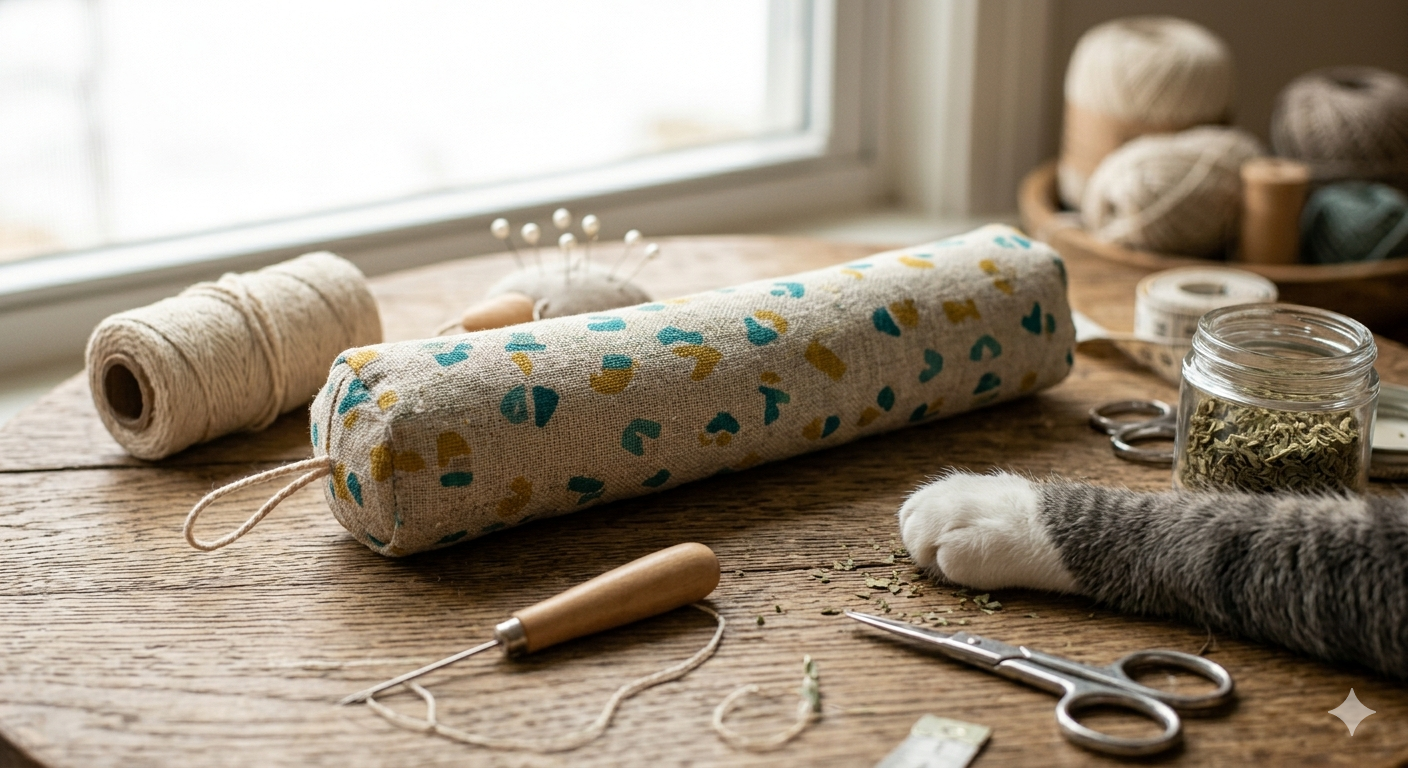
The best fabric for homemade cat toys is something durable yet soft, like fleece, denim, canvas, or cotton. Fleece is especially popular because it doesn’t fray, is easy to sew, and feels cozy for your cat to snuggle or kick. Cut a rectangle of fabric to be 11 by 4 inches. Fold the fabric in half lengthwise, sew along the long edge and one side edge, turn right side out, add a spoonful of catnip into the fabric pouch, add fiberfill, and sew the open end shut.
The fabric kicker requires basic sewing, but no pattern, no measuring precision, and no special skill. A rectangle of fleece, a straight stitch, and a handful of catnip produce a kicker toy that is indistinguishable from commercial versions in play value and dramatically more satisfying to make.
Materials: Fleece rectangle (11″ x 4″), fiberfill, catnip, sewing needle and thread (or sewing machine) Skill required: Basic hand sewing or machine straight stitch Time: 15–20 minutes
Idea 8: The Crochet Ball with Jingle Bell (15 Minutes, Beginner)
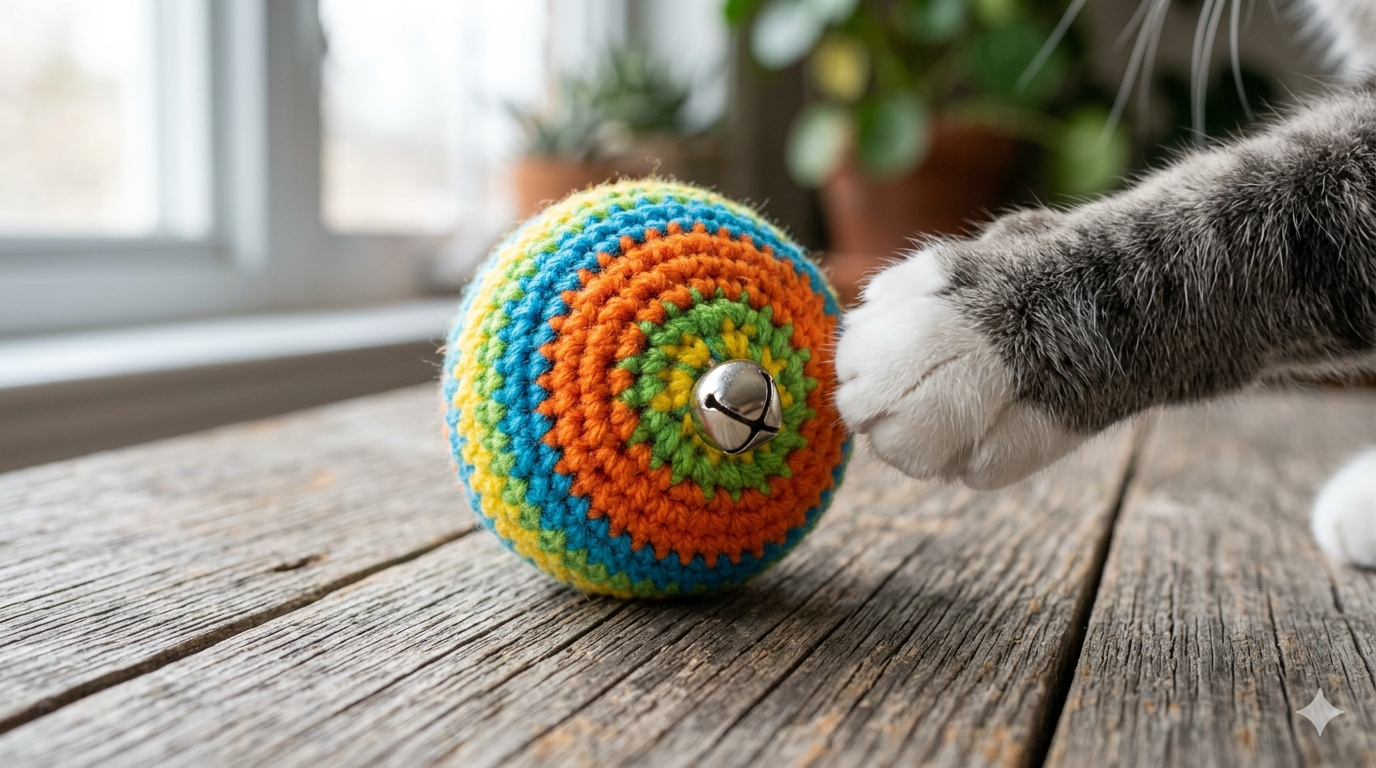
Adding unique touches to your homemade catnip toys can boost their appeal. Bells or crinkly material introduce a new auditory sensory experience.
A small crocheted ball with a jingle bell placed inside before closing — the combined visual movement and auditory cue of a bell-filled ball produces engagement from cats who are indifferent to silent toys. Make them in bright, high-contrast colors for maximum visual appeal in play.
Materials: Cotton or acrylic yarn, 3.5mm hook, fiberfill, small jingle bell. Skill required: Beginner crochet — single crochet, magic circle, increases, and decreases. Time: 10–15 minutes Safety note: Ensure the jingle bell is sealed completely inside the crocheted ball with no possibility of extraction. Check periodically and retire the toy when wear creates gaps.
Idea 9: The Catnip Sachets (Batch Project, 5 Minutes Each)
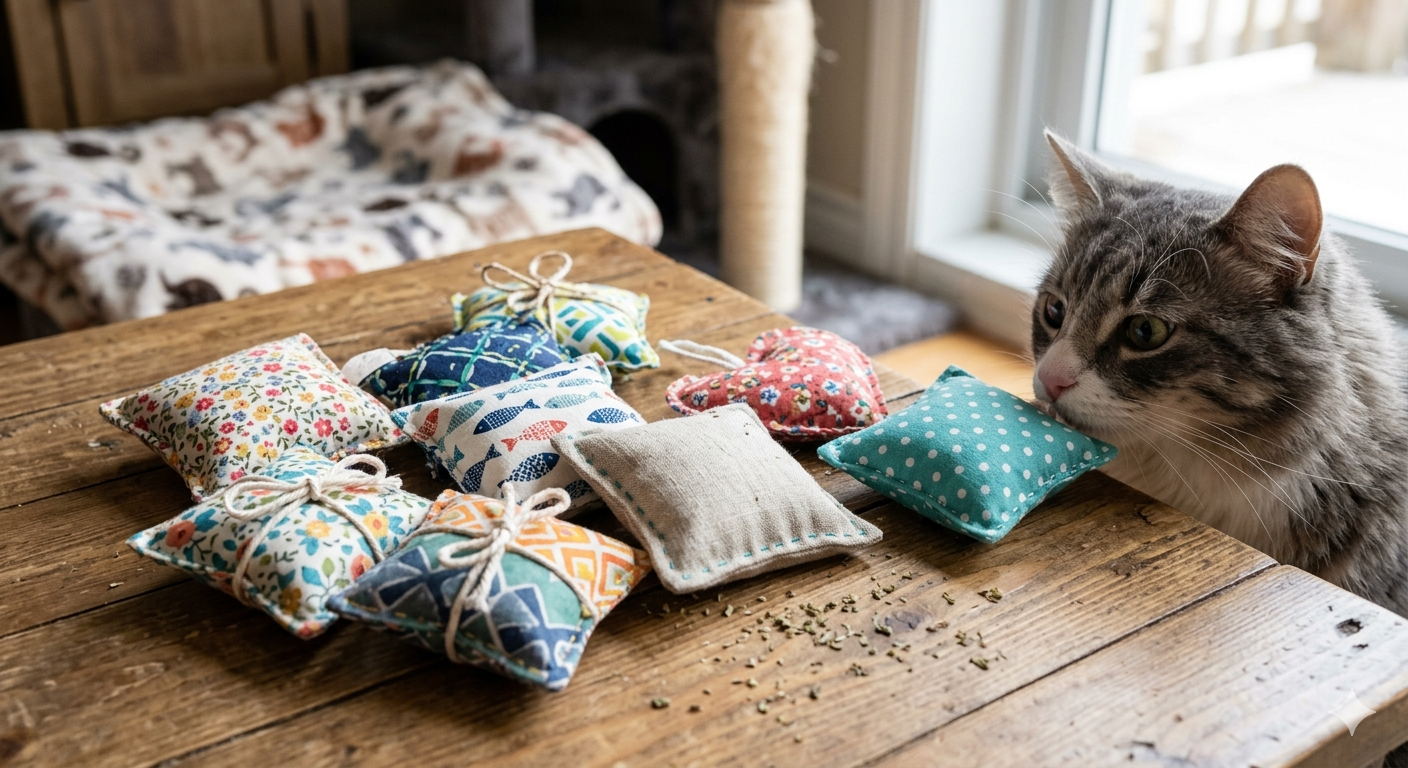
Cut two squares of fabric about 5×5 inches, sew three edges together, turn it inside out, fill it with catnip and optional stuffing, then sew the open edge closed. Use non-toxic materials, avoid small parts that could be choking hazards, and inspect toys regularly for wear and tear.
Make ten in an afternoon. Keep them in a sealed bag with extra catnip to refresh the scent. Scatter them around the house. Put one on top of the refrigerator for your cat to discover during their daily inspection tour. The catnip sachet is the background presence of your cat’s toy landscape — always there, always worth investigating.
Materials: Cotton fabric squares, dried catnip, needle, and thread. Skill required: Basic hand sewing or none (fabric glue version) Time: 5 minutes each
Idea 10: The Crochet Amigurumi Mouse (25 Minutes, Beginner)
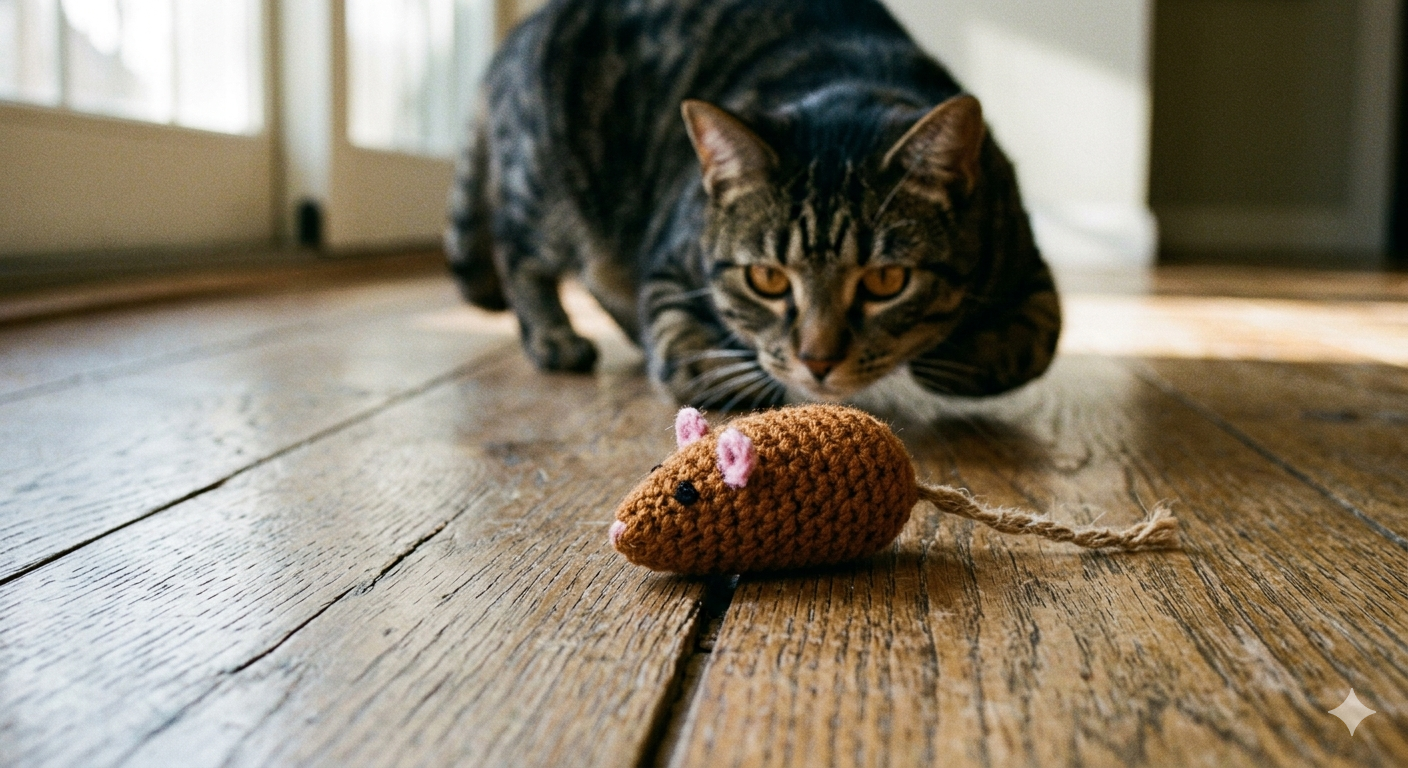
The full crochet mouse — body, ears, tail — in cotton yarn stuffed with catnip. The completed mouse is small enough for the cat to carry, shaped enough to trigger prey recognition, and firm enough to survive enthusiastic bunny-kicking.
The tail is the most important element. A long, firmly attached tail in thick thread or thin cord gives the cat a natural carrying point and adds the movement that makes the toy genuinely compelling when it is batted across the floor.
Materials: Cotton yarn in gray or brown, 3.0mm hook, fiberfill, catnip, thick thread for tail Skill required: Beginner amigurumi — magic circle, single crochet, increases, decreases Time: 20–25 minutes
Idea 11: The Corks-in-a-Bag Noise Toy (5 Minutes, No Skills)
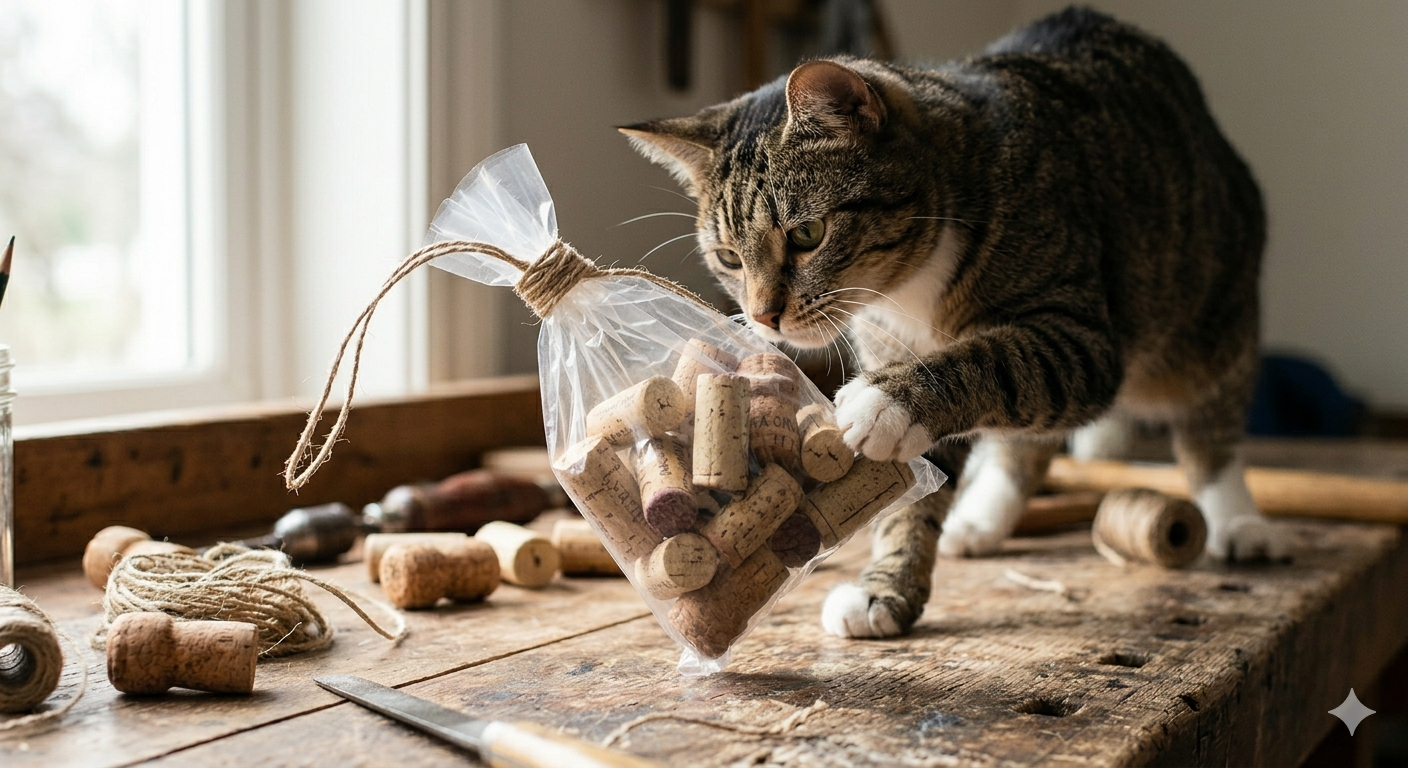
Corks are loads of fun to chase, and they also absorb scents. Store them in a bag of catnip for a few weeks to make them an even more enticing toy.
Place three or four wine corks in a small cotton bag or a tied-off sock with some catnip. The corks rattle against each other, absorb and release the catnip scent, and roll unpredictably across floors. This is the toy made from the contents of your recycling bin.
Materials: 3–4 wine corks, one sock or cotton bag, dried catnip Skill required: None Time: 5 minutes
Idea 12: The Tissue Box Puzzle Feeder (15 Minutes, No Skills)
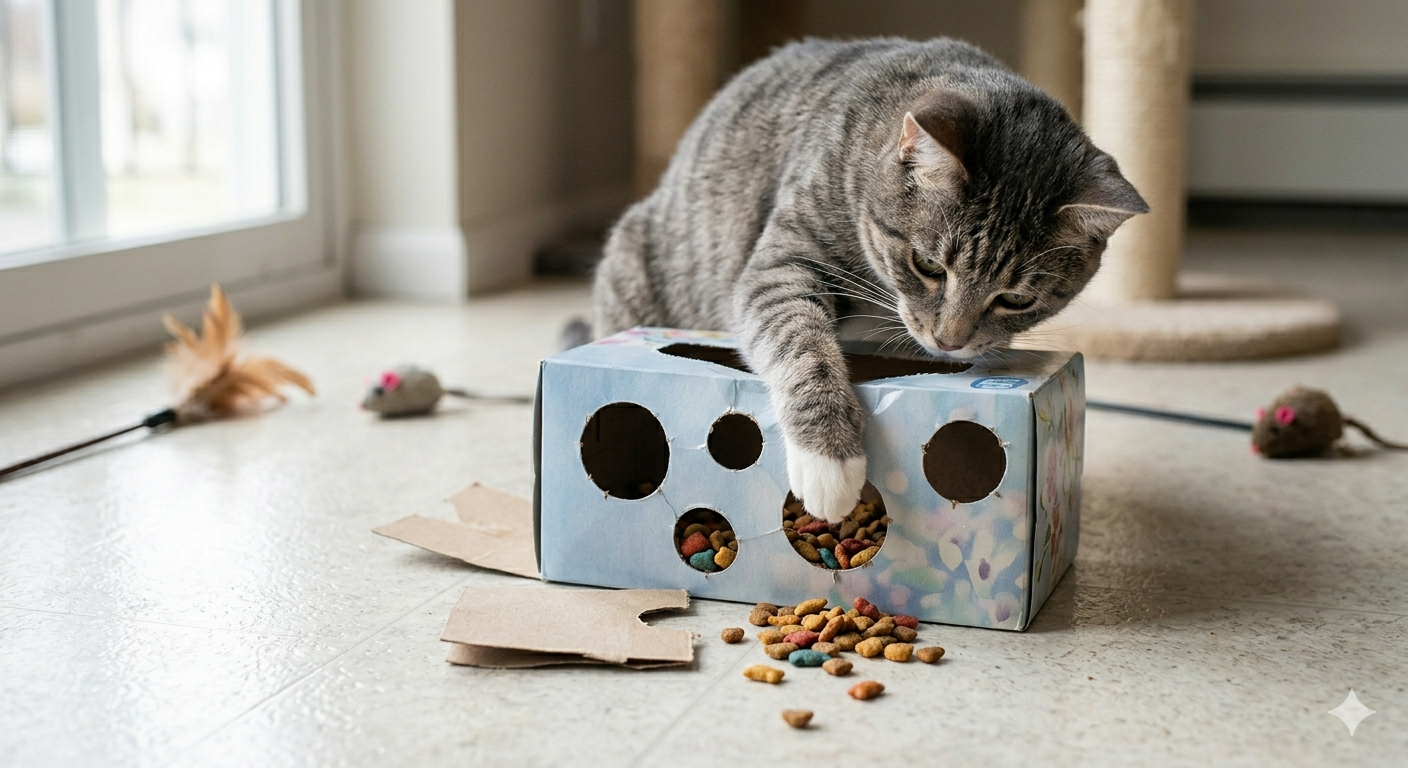
Place toys or treats inside a tissue box to make these recyclable options irresistible to curious cats. Most pet supply stores carry sturdier, ready-made, holey boxes.
The tissue box puzzle feeder is the simplest enrichment toy available — place a handful of treats or small toys inside an empty tissue box and watch your cat spend twenty minutes extracting them. For added complexity, cover the opening with a piece of fabric secured with a rubber band. For even more complexity, tape the box closed and cut smaller holes in the sides.
Materials: Empty tissue box, treats or small toys, optional fabric scrap. Skill required: None. Time: 5–10 minutes setup
Care and Safety: The Rules That Matter
Cat toys take a beating during play sessions. Plush toys: place toys in a mesh bag and wash in the washing machine with scent-free detergent and tumble dry on low. Catnip-filled toys: for toys with sewn-in catnip, spot clean with a damp cloth. For refillable toys, empty them and wash according to their material, then refill with new catnip.
Even if all your cat’s toys are cat-safe, watch to see if they start licking or sucking on certain materials excessively. This could be a sign of a medical issue or nutritional deficiency, and you should inform their vet.
Rotate toys — cats can get bored with toys, so keep things fresh by rotating different enrichment activities. Putting toys away for a week and then reintroducing them reliably produces a renewed interest response that makes familiar toys feel novel again.
ENDING:
Your cat does not need to be expensive. They need to be engaged. They need the specific combination of smell, sound, texture, and movement that triggers the predator brain they share with their wild relatives — and most of those combinations are available from your yarn stash, your craft drawer, or your recycling bin.
Save this guide to Pinterest, share it with every cat owner who has ever spent twenty dollars on a toy that was ignored in favor of the paper bag it came in, and make something today. Your cat has been patient. They deserve the crochet fish.