If you are reading this article, you are almost certainly one of two people. Either you bought a poodle puppy in a color you loved and are now watching that color change in ways that were never explained to you, or you are considering buying a poodle, and you have heard that their colors change, and you want to understand what you are actually committing to before you hand over a deposit. Both of you are in exactly the right place. Poodle color change — called clearing or fading, depending on the mechanism involved — is one of the most significant and least-communicated facts about this breed. It affects the majority of poodle colors to varying degrees, it is entirely genetic, it cannot be prevented or reversed, and it produces results that range from a subtle softening of tone to a complete transformation from one named color to another. This guide explains every mechanism, every color that changes and how, and exactly what to expect from your specific poodle’s coat over time.
The Two Mechanisms Behind Poodle Color Change
The Progressive Greying Gene — The G Locus
Silver poodles undergo a progressive greying process associated with a gene referred to as G, with two known alleles. The gene is incompletely dominant, meaning one copy affects the dog, while two copies have a stronger impact. The fading process begins around 4 to 6 weeks and takes 1 to 2 years to fully clear.
This is the primary mechanism behind the most dramatic color changes in poodles — the transformation of black puppies into silver or blue adults. The G gene affects the eumelanin pigment — the dark pigment responsible for black and brown coloring — and when active, progressively dilutes the dark pigment over the first one to two years of life. Dogs with two copies of the gene clear faster and more completely. Dogs with one copy clear more slowly and may retain darker coloration in some areas permanently.
The progressive greying gene explains why black puppies could fade into blue, charcoal grey, medium grey, or silver. Brown puppies can become lighter brown, café au lait, silver beige, or cream. The outcome of the clearing process depends on both the number of copies of the G gene the dog carries and the base color the clearing gene is acting on.
UV Fading and Pigment Degradation — The Phaeomelanin Factor
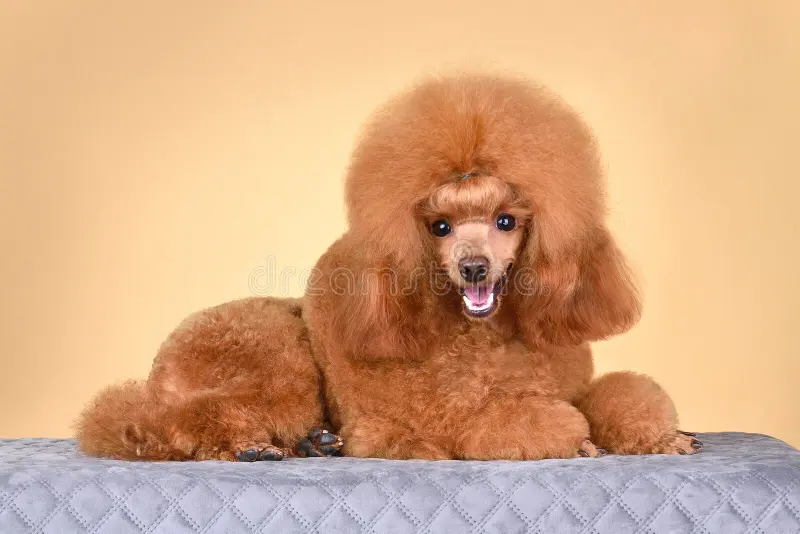
The second mechanism affects the warm colors — red, apricot, and cream — and operates through a completely different pathway. Apricot and red may also fade with UV exposure. The warm colors in poodles are produced by phaeomelanin pigment rather than eumelanin, and phaeomelanin is more susceptible to both genetic dilution factors and environmental UV degradation than dark pigments. A red or apricot poodle that spends significant time in direct sunlight will fade faster than one kept primarily indoors — and while the underlying genetics determine the maximum depth of color achievable, the UV environment determines how quickly the coat approaches its minimum.
Color by Color — What to Expect From Your Poodle’s Coat
Black — The One That Does Not Change
A true black poodle will not clear or fade. The face when shaved will remain deep black at any age. If you have a true black poodle, the color you have at 8 weeks is the color you will have at 8 years. There is one important caveat: a puppy that appears black but is genetically silver or blue will change dramatically over its first two years. The practical test that most experienced poodle breeders use is the face-and-paws check at 6 weeks. At 6 weeks, look for a brownish or rusty shading at the roots. That is an early indicator of clearing. A true black has no root color variation at any age and no brownish tinge anywhere on the coat.
Silver — The Most Dramatic Transformation in the Breed
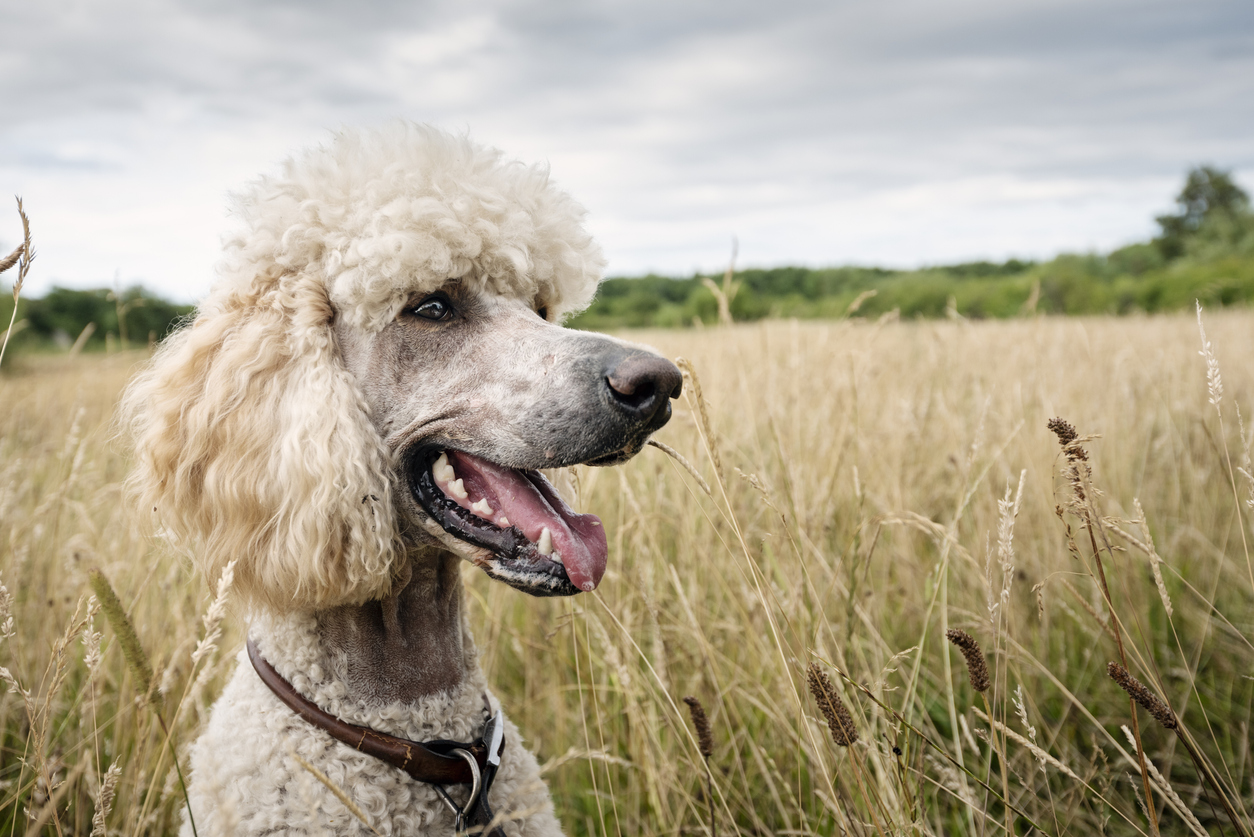
A silver poodle’s color journey is one of the most extraordinary in the dog world. The coat of black poodle puppies may clear to silver or blue by the age of two. A poodle puppy could start off with a blackish coat that will clear to a gray color and eventually a platinum silver color. The clearing process follows a consistent pattern: face and paws lighten first, body coat follows, and the final platinum silver tone is typically established by 18 to 24 months. Blue and silver are related but distinct colors. Silver is unmistakably silver by 18 months, whereas a blue may not begin clearing until 2 years of age.
What this means practically for a buyer is that you cannot reliably identify a silver puppy from a black one without either knowing the breeding lines or waiting for the face-and-paw lightning to appear at 4 to 6 weeks. Reputable silver poodle breeders know their lines and can identify silver puppies reliably. Be cautious of breeders selling “silver” puppies younger than 4 weeks without documented silver lines.
Apricot — The Color That Breaks Hearts at Age Two
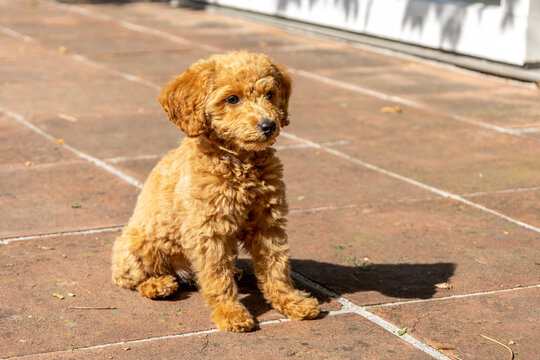
Apricot is the color that generates the most buyer surprise — and sometimes disappointment — when the transformation from deep puppy richness to pale adult cream happens faster than anyone warned them about. Some poodles that are born a darker shade may eventually clear to an apricot shade by the time they are two years old. The reverse is also true — deeply apricot puppies frequently lighten toward cream by two years.
The mechanism involves both the genetic dilution of the phaeomelanin pigment and UV exposure. The depth of apricot color a dog achieves and maintains depends on how many intensity genes they carry — dogs with more copies of intensity-boosting genes maintain deeper color longer. The best practical advice for a buyer who loves deep apricot is to choose a breeder whose adult dogs are deeply colored — not just whose puppies are — because the adult coat is the honest indicator of what the genetics are producing rather than the transient puppy richness.
Red — Fades Toward Apricot, Never to Cream
Red puppies may end up as rust or some kind of apricot or blonde tone as they fade. True red poodles — those with the maximum intensity of phaeomelanin expression — maintain more of their depth than apricots do, but they still fade. The direction is always toward apricot rather than toward white, which is a useful distinguishing feature — a dog that fades to cream was never a true red, only an apricot. The color some breeders market as “dark red” in puppies, which becomes indistinguishable from standard apricot by age two, was never genuinely red by breed standards.
Brown — May Clear Toward Café au Lait
Brown puppies can become lighter brown, café au lait, silver beige, or cream. Whether a brown poodle clears depends on whether it carries the progressive greying gene. Brown poodles that do not carry the gene will remain brown throughout their lives. Those that do will progressively dilute toward café au lait or silver beige depending on the degree of clearing. The liver points — nose, eye rims, nails — remain liver-colored regardless of how much the coat clears.
White and Cream — Stable With Subtle Age Changes
Black, white, and cream poodles are generally color-stable throughout their lives. The one change white owners notice over time is a yellowing or ivory toning that can occur with age — this is not the progressive greying gene but simply the natural aging of the coat pigment and the accumulation of environmental staining. Regular professional grooming with a whitening shampoo maintains coat clarity in white poodles significantly better than infrequent bathing.
What This Means When You Are Buying a Puppy
The Questions to Ask Every Poodle Breeder
Before purchasing any poodle in a color you love specifically for that color, ask these questions directly. What color are the parents as adults — not as puppies? Do you have photos of dogs you have bred at 3 and 5 years of age? Does this line carry the progressive greying gene? Have any previous puppies from this pairing or similar pairings changed color significantly by age two?
A breeder who knows their lines well will answer all of these questions immediately and confidently. A breeder who cannot tell you what their adult dogs look like or who does not know whether their lines carry the greying gene is a breeder who is not tracking the color genetics in their program, which means their puppies’ adult colors are genuinely unpredictable.
DNA Color Testing
Given the complexity of coat color inheritance in poodles and other dog breeds, breeders and owners often resort to genetic testing to determine color genetics precisely. Services like Embark and Animal Genetics offer coat color panels that identify the specific genes responsible for color and pattern, including the presence of the progressive greying gene, the intensity genes affecting red and apricot expression, and the pattern genes for parti and phantom. A breeder who has tested their breeding dogs and can share those results is providing you with a level of certainty about adult color that experience alone cannot match.
Your Poodle’s Color Change Is Not a Betrayal. It Is Biology.
Every poodle owner who has been surprised by a color change feels, at some level, that they were somehow misled. The reality is that poodle color genetics are genuinely complex, that the breed has been changing color for as long as it has existed, and that the puppy you fell in love with grew into an adult with a coat determined by genes that were set at conception and that no amount of care or feeding will alter. The color that emerged is the one your dog was always going to have — and in almost every case, it is beautiful in a way the puppy color was only a preview of.