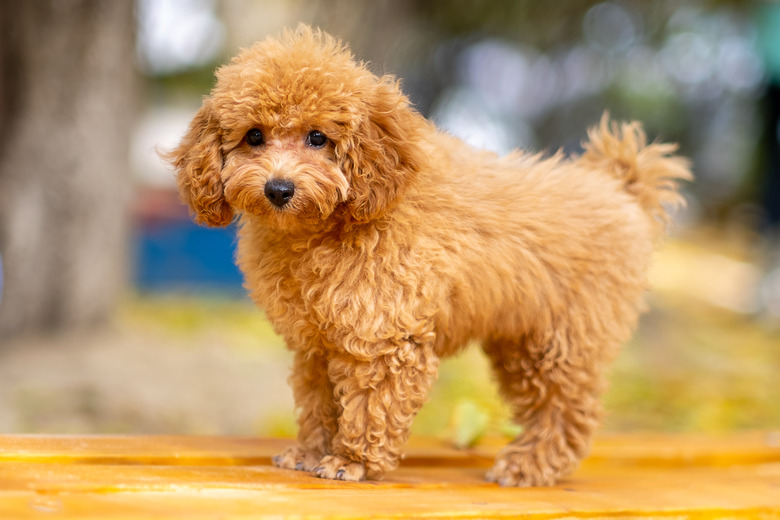
The Poodle’s reputation for high-maintenance grooming is not exaggerated. It is, if anything, slightly understated. The Poodle has the most demanding coat in the domestic dog world — a single-layer, continuously growing, dense and curly coat that does not shed in the normal sense but instead forms mats when not maintained, grows into an increasingly elaborate structure that requires skilled trimming to manage, and — when maintained correctly — produces an appearance so striking that entire competitive subcultures have developed around its possibilities.
The Poodle’s coat is also, and this point is often missed in discussions of the grooming burden, one of the reasons the breed is so widely recommended for allergy sufferers. The continuous growth without shedding means far less airborne dander than most other breeds, and the coat’s texture traps loose hair within itself rather than distributing it through the home.
Understanding the coat — why it behaves the way it does, what it needs, and what happens when it does not receive it — is the foundation of everything else in Poodle grooming. This guide covers all of it.
Understanding the Poodle Coat
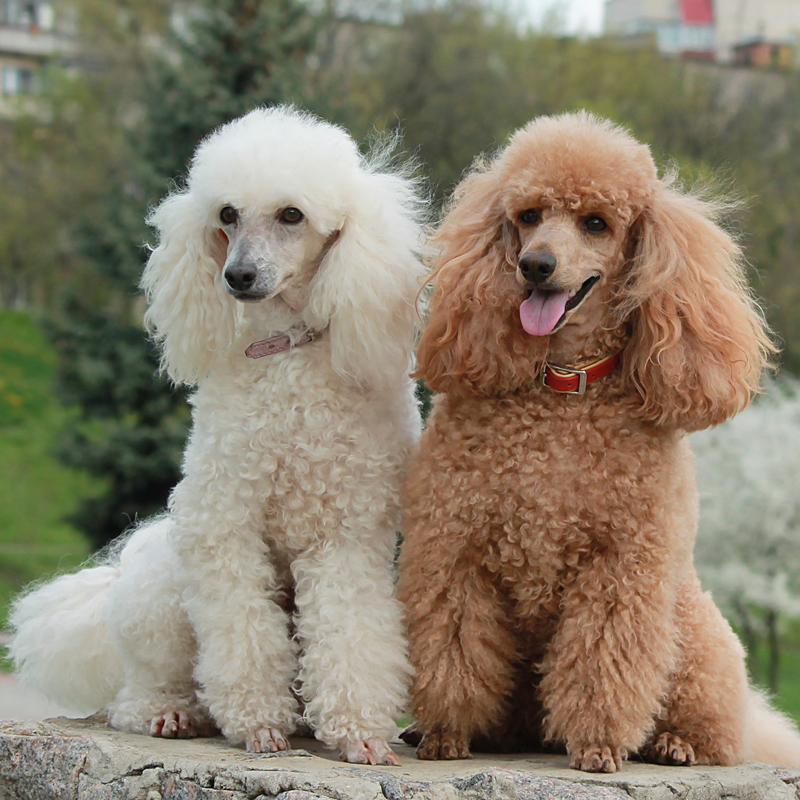
The Poodle’s single-layer, curly coat differs from the double coats of most dog breeds in one critical way: it grows continuously without shedding. In most dogs, the hair growth cycle includes a shedding phase where old hair falls out naturally, limiting the coat length and keeping the texture controlled. The Poodle’s growth cycle has no shedding phase — the hair simply keeps growing, keeps curling back on itself, and — without intervention — forms the dense, continuous mat structure that produces the felted appearance of a neglected Poodle coat.
The curly structure that makes the coat so visually impressive when groomed is also what makes it prone to matting: as loose hair grows and curls, it interlocks with surrounding hairs rather than falling away. The result, without regular brushing, is a coat that mats from the inside out — surface appearance may be maintained while the undercoat has felted completely.
This is the hidden mat problem that most new Poodle owners discover at their first professional grooming appointment: the dog who appeared reasonably maintained at home arrives at the salon with a coat that is mat-free at the surface and completely felted beneath.
The At-Home Brushing Routine
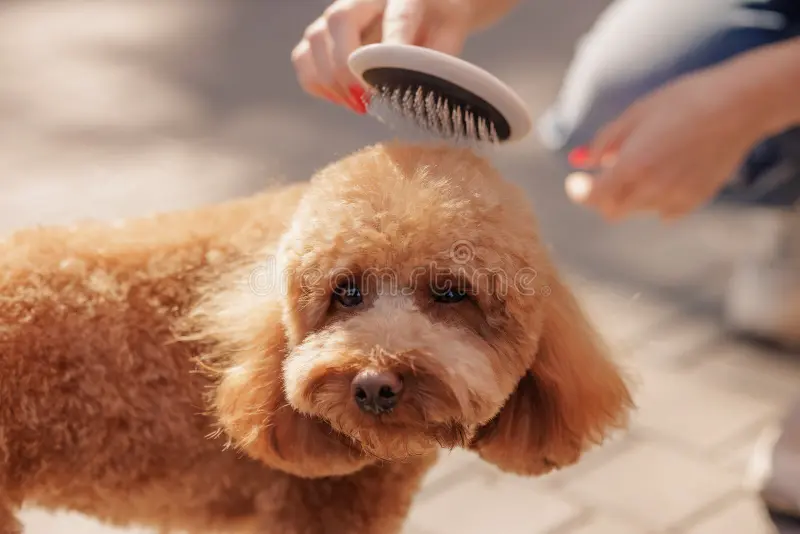
The Poodle requires brushing every one to three days to prevent the mat formation that the coat’s structure makes inevitable without intervention. This is not a suggestion — it is the mathematical reality of a continuously growing, self-interlocking coat.
Tools:
- Slicker brush: For the surface layer. Use daily or every other day.
- Metal comb (wide-tooth): The verification tool. After slicker brushing any section, draw the metal comb through the same section from skin to tip. If the comb catches, the section still has early mat formation that the brush did not fully address.
- Dematting comb or mat splitter: For any mat that has formed. Never pull — always split the mat into smaller sections before attempting to brush through.
- Detangling spray: Applied before brushing to reduce breakage and make the process more comfortable for the dog.
The line-brushing technique:
Part the coat into sections and work each section from skin to tip — not just the outer surface. Hold the coat above the section you are working to prevent pulling the skin, and work the brush from the skin outward, section by section. Follow every section with the metal comb.
Most mats in Poodles develop in the same locations: behind the ears, in the armpits, in the groin area, and anywhere that fur-on-fur contact creates friction. Give these areas extra attention in every brushing session.
Bathing: Frequency and the Right Products
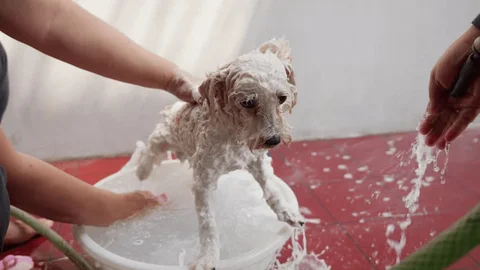
Poodles should be bathed every three to four weeks — more frequently for very active dogs or dogs with skin conditions, less frequently for dogs who are not exposed to significant environmental dirt or moisture.
Pre-bath preparation: Always brush completely before bathing. A wet mat is significantly harder to remove than a dry one — the water causes the curly fibers to tighten around each other, transforming an early-stage mat into a solid felt structure. If mats are present before bathing, either remove them before wetting the coat or plan for a post-bath dematting session.
Shampoo choice: Use a Poodle-specific shampoo or one formulated for curly coats. Many Poodle owners use a shampoo-conditioner combination to reduce tangling. For white or light-colored Poodles, a brightening shampoo maintains the coat’s white quality over time. For Poodles with skin issues, a hypoallergenic or medicated shampoo prescribed by a veterinarian is appropriate.
The bathing process: Wet the coat completely — the Poodle’s dense, curly coat requires thorough saturation before shampoo can penetrate effectively. Apply shampoo and work from neck to tail, squeezing the product through the coat rather than scrubbing (scrubbing tangles the curly fibers). Rinse thoroughly — once is not enough. Rinse until the water runs completely clear. Apply conditioner, leave for the instructed time, rinse completely.
Drying: This is the most skill-intensive step of Poodle bathing at home. Towel dry by pressing rather than rubbing — rubbing creates tangles and frizz. Follow with a hair dryer and a slicker brush simultaneously — this technique, called “fluff drying” or “blow drying straight,” stretches each curl slightly as it dries and prevents the tight, frizzy ball that air drying or towel drying alone produces.
Proper blow drying and brushing while the coat is damp makes the finished coat significantly easier to work with than the same coat dried without attention.
Professional Grooming: How Often and What to Expect
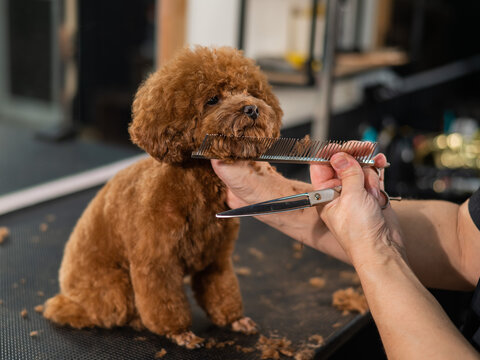
Poodles require professional grooming every four to eight weeks depending on the coat style maintained and the keeper’s at-home maintenance quality. A show-standard Poodle in an elaborate trim requires professional attention every four weeks. A pet Poodle in a shorter, simpler style maintained with excellent at-home brushing can extend to six to eight weeks.
The professional groom for a Poodle includes: full bath and blow dry, complete brushing and dematting, haircut to the desired style, ear cleaning including ear canal hair removal, nail trimming, and finishing.
The ear hair consideration: Poodles grow hair inside the ear canal — hair that, if not regularly removed, creates the warm, moist, low-airflow environment that causes chronic ear infections. Many groomers remove this hair during the professional appointment using ear powder and forceps. Some veterinarians prefer not to remove it (the process can cause inflammation) — ask your vet’s preference before beginning this practice.
Poodle Haircut Styles — The Full Menu
The Continental Clip: The classic show clip. The rear is shaved, with pompoms on the hips, tail, and feet. The front has full length. This is the clip most people associate with “a Poodle” and the one that has become the breed’s cultural symbol. It is genuinely functional in its origins — it allowed swimming performance while protecting joints from cold water.
The English Saddle Clip: A variation of the Continental with a different rear configuration — the rear is left fuller with specific shaved sections rather than the Continental’s more dramatically bare rear.
The Puppy Clip: A uniform length throughout, rounded and soft. Standard for show Poodles under twelve months and the most popular pet clip worldwide. Easy to maintain, suits every color, and produces the “fluffy ball” appearance that many owners prefer.
The Teddy Bear Clip: The modern favorite for pet Poodles — a rounded, plush appearance throughout with specific emphasis on the rounded head and facial shaping that produces the stuffed-animal aesthetic. Similar to the puppy clip but with more deliberate head shaping.
The Lamb Clip: Short and uniform throughout, close to the body. The most minimal-maintenance Poodle trim. Significantly reduces between-appointment home care requirements.
The Lion Clip: A shorter body with a mane-like ruff left around the chest and neck. Produces the most dramatic visual contrast of any pet Poodle clip.
Recommendation for beginners: Start with the Puppy clip or Teddy Bear clip. Both are forgiving of imprecise home maintenance, suit every age and size of Poodle, and produce consistently appealing results.
Size-Specific Grooming Considerations
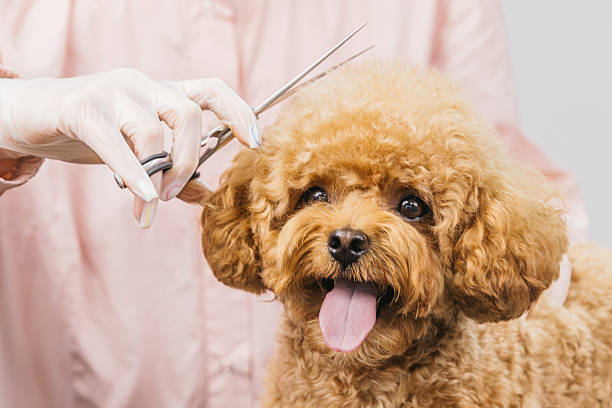
Standard Poodle: The full-sized breed. Grooming sessions are longer, and the coat volume is significantly higher than in smaller varieties. Professional grooming appointments typically take two to three hours. At-home maintenance sessions may take thirty to forty-five minutes.
Miniature Poodle: Easier to groom than the Standard simply due to scale — less coat volume, faster professional appointments, shorter at-home sessions. The same techniques apply.
Toy Poodle: The smallest variety and the fastest to groom. Particularly prone to ear infections due to the dense ear hair and small ear canal — ear maintenance is even more important in Toys than in larger varieties.
Ear Care, Nail Care, and Dental Health
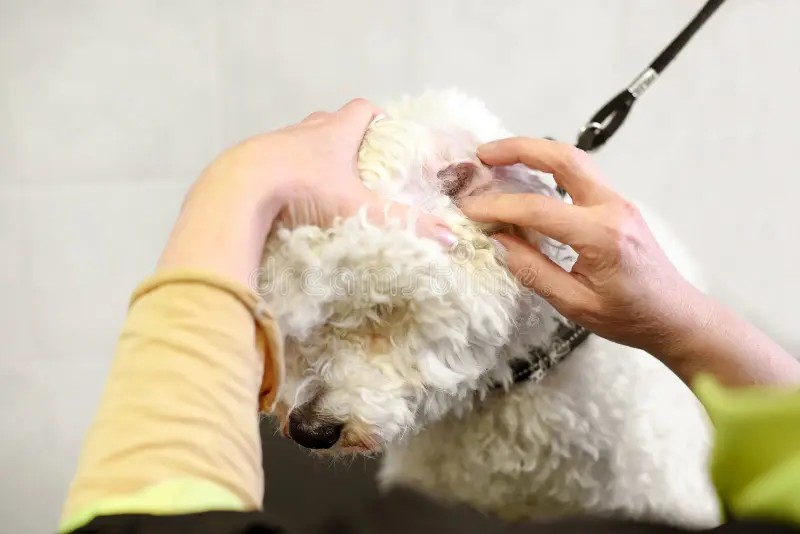
Ears: Weekly cleaning with a vet-approved ear solution. Check weekly for redness, odor, or dark discharge indicating infection. The Poodle’s drop ears combined with the dense ear hair creates conditions for chronic infection without consistent management.
Nails: Every three to four weeks. The Poodle’s typically dark or black nails make the quick (blood vessel) harder to see than in light-nailed breeds — trim conservatively, taking small amounts with each clip.
Teeth: Daily brushing. Poodles, as a small-to-medium breed, have significant dental disease susceptibility. Daily brushing from puppyhood is the most impactful preventive practice available.
Starting the Grooming Habit from Puppyhood
The Poodle who has been brushed daily from the first week at home, who has had their paws touched and their ears examined and their face handled, becomes the adult dog who accepts the grooming process calmly. The Poodle who first encounters regular grooming at six months old may require significant patience and conditioning to develop acceptance.
Handle daily. Pair every grooming touch with high-value treats. End every session before the puppy loses interest. The investment in the first three months of grooming habituation pays dividends in every professional grooming appointment for the next ten to fifteen years.
The Poodle’s grooming commitment is real. It is also, for the keeper who makes peace with it and builds the routine, one of the more satisfying aspects of the ownership experience — the specific pleasure of a beautifully maintained curly coat, the relationship built through the handling that the routine demands, and the knowledge that the coat your dog is wearing is the product of your consistent care.
Save this guide to Pinterest, share it with every new Poodle owner who has just discovered what “high maintenance” actually means in practice, and go buy the metal comb. That comb is the tool that tells the truth about the coat.