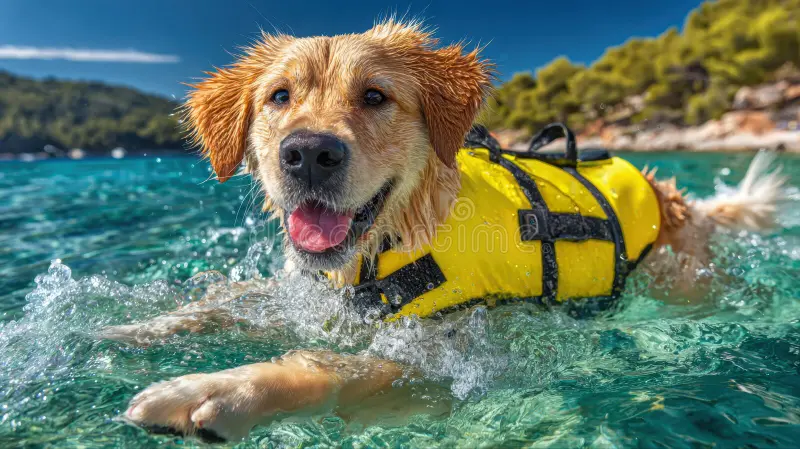
Watch a Golden Retriever enter water for the first time and you will understand immediately why the breed spent its formative centuries retrieving waterfowl from Scottish Highland lochs. The nose goes down. The eyes go wide. Something shifts in the body — a recalibration, a recognition — and then the dog simply enters the water the way water always enters water: completely, unreservedly, with the whole of itself.
Golden Retrievers are natural swimmers. Their coat was specifically designed for it — the water-repellent outer layer sheds water rapidly after emergence, the dense undercoat provides insulation during immersion, and the webbed feet provide propulsion that casual observers sometimes mistake for professional-grade swimming technique. The breed’s retriever heritage adds behavioral drive to the physical capability: many Goldens do not simply swim when water is available. They seek it.
In summer, this native water enthusiasm becomes the most valuable thermoregulation tool available — a way to exercise the dog fully while simultaneously cooling them, in a format that most Goldens find genuinely, viscerally joyful.
This guide covers eight summer water activities for Golden Retrievers, the safety considerations for each, and the post-water care that keeps the magnificent coat in good condition through a season of repeated immersion.
Why Water Is the Perfect Summer Exercise for Goldens
The physics of exercise in water versus exercise on land is the key: when a dog runs on land in hot weather, the metabolic heat generated by muscular activity accumulates in the body. The dog must dissipate this heat while simultaneously managing the ambient heat load — double thermoregulation pressure on a system that was not designed for hot, still air.
When the same dog swims, the water conducts heat away from the body twenty-five times more efficiently than air. The metabolic heat generated by swimming exits the body immediately into the surrounding water. The ambient cooling effect of the water surface is available across the entire body simultaneously. The thermoregulation system that is under stress during land exercise in heat is essentially bypassed by the water’s physics.
Twenty minutes of swimming in a cool lake or pond provides exercise equivalent to forty minutes of running — with the thermal load not only managed but actively reversed. It is the most efficient summer exercise available for any dog, and for a breed like the Golden Retriever with natural water affinity and heritage, it is also the most enthusiastically received.
Activity 1: Natural Lake or River Swimming
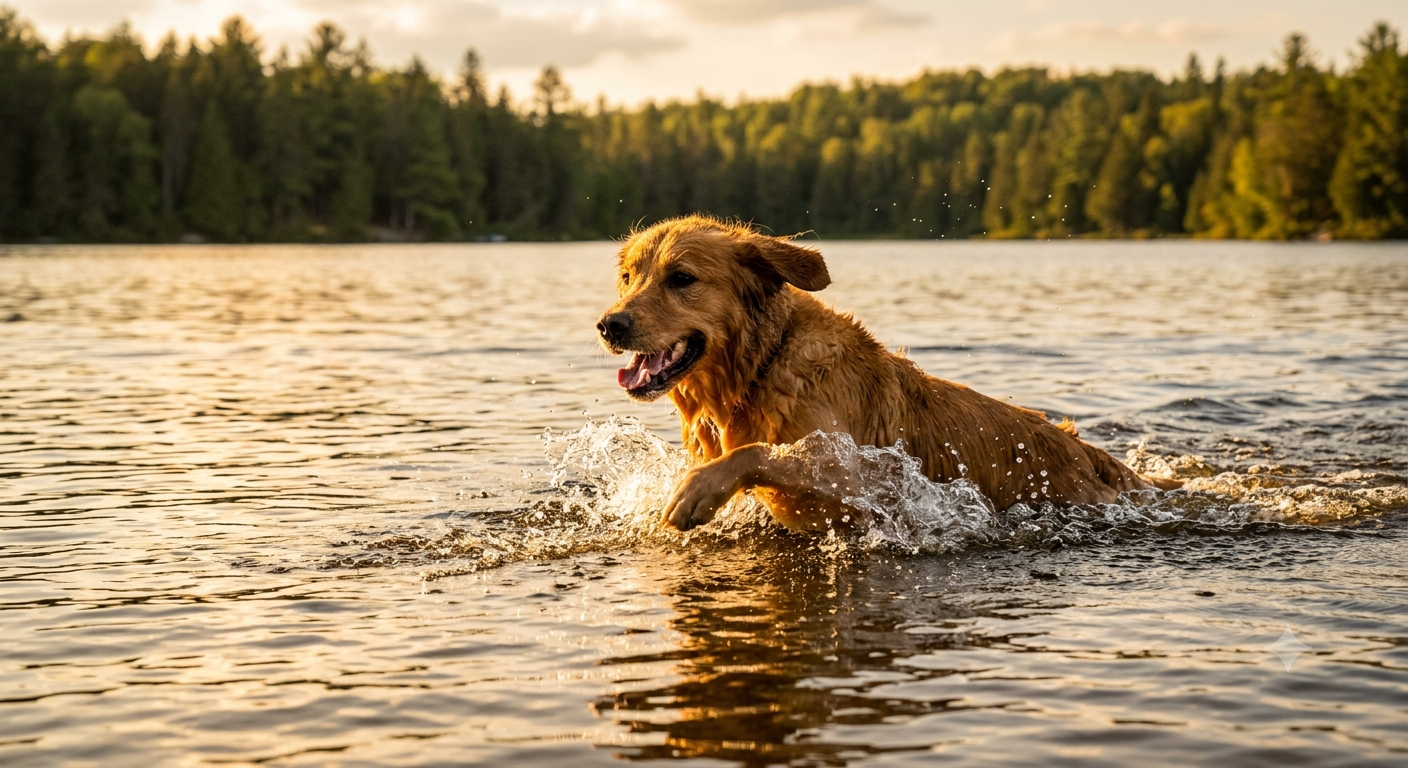
The foundational Golden Retriever water activity — finding a dog-friendly natural water body and letting the dog do what several thousand years of selective breeding has prepared them for.
Safety considerations: Check water quality before swimming. Algae blooms — particularly blue-green algae (cyanobacteria) — are toxic to dogs and can cause rapid, severe poisoning. Any water with visible algae accumulation, particularly in warm still water, should be avoided. Do not let dogs drink from natural water sources. Bring fresh water for drinking separately.
Depth management: Introduce dogs new to natural water swimming in areas where they can touch the bottom initially. Most Golden Retrievers take to swimming immediately, but the confidence of being able to stand allows the first few experiences to be positive without anxiety.
Current awareness: River swimming with significant current is not appropriate for any dog. If you would not swim in the current yourself, do not put your dog in it.
Post-swim ear care: Natural water in the ears creates ideal conditions for bacterial and yeast growth. After every natural water swim, dry the ear flap thoroughly with a towel and apply a few drops of drying ear solution. This step prevents the ear infections that can develop rapidly in dogs with Floppy ears who swim regularly without post-swim ear maintenance.
Activity 2: The Paddling Pool
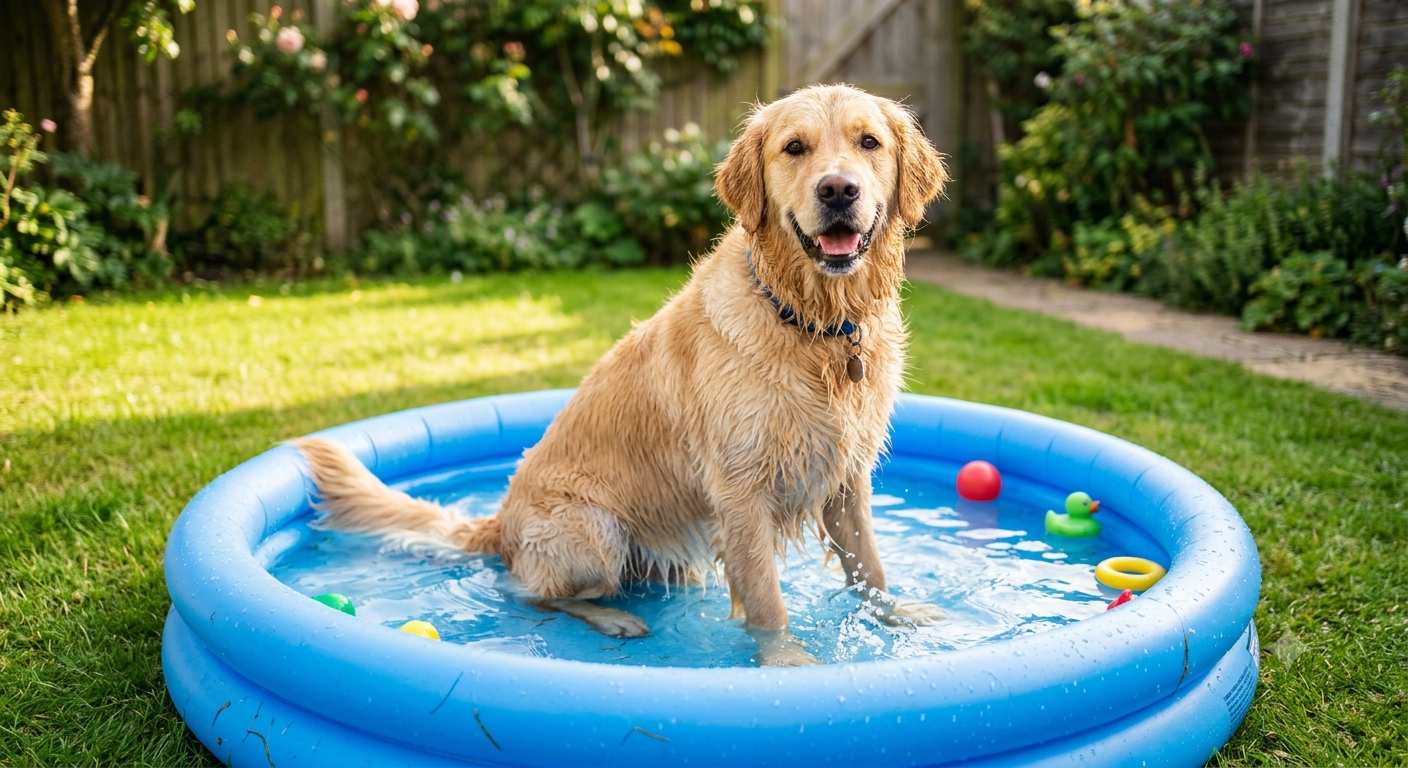
For backyard setups without natural water access, a large paddling pool — the kind available from garden centers and toy stores during summer — provides a fully functional Golden Retriever cooling station in approximately five minutes of setup.
Golden Retrievers are large enough that a standard small paddling pool works as a wading and drinking station rather than a swimming pool. For a dog who wants to lie in cool water — which many Goldens do, pressing their belly to the pool floor — any pool they can fit their entire body into is sufficient.
The engagement upgrade: Toss treats or a favorite toy into the paddling pool. Many Goldens who are initially uncertain about shallow paddling water immediately overcome any hesitation when their toys are present on the other side of it.
Water change frequency: A Golden Retriever in a paddling pool on a hot day introduces significant bacteria from their paws, coat, and drool. Change the water daily or more frequently in hot weather.
Activity 3: The Garden Hose
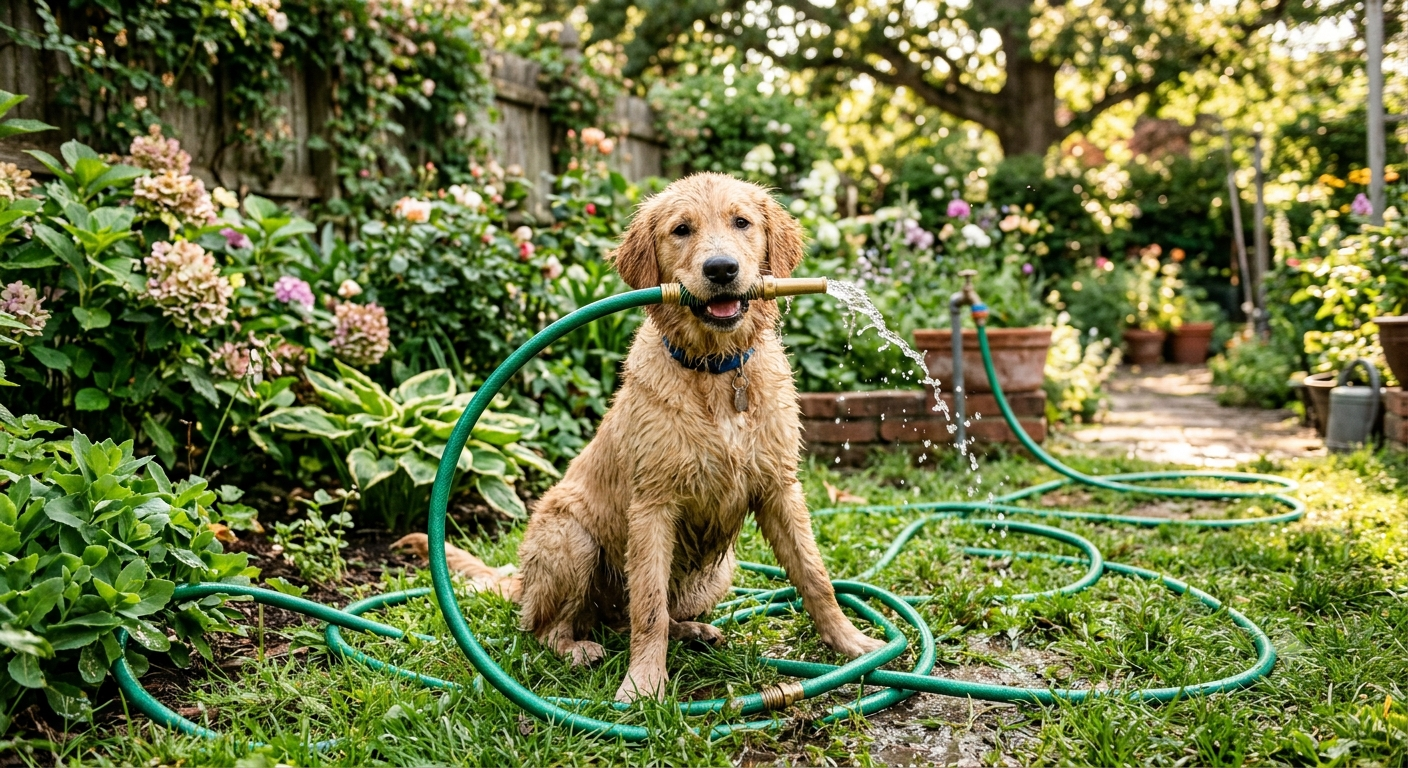
One of the most universally loved summer activities for Golden Retrievers who have not been frightened of hoses — the garden hose provides a moving, spattering, chasing target that engages both the retriever drive (the moving thing) and the water enjoyment simultaneously.
Run the hose across the lawn. Spray it into the air. Direct it at the dog’s chest and back. The Goldens who engage with hoses tend to do so with a specific explosive enthusiasm that communicates that this, specifically, is what the summer was for.
Introduction: A Golden who has never interacted with a running hose should be introduced gradually — water running on the ground first, inviting the dog to investigate at their own pace, before directing any spray toward them.
Activity 4: Fetch in Water
The synthesis of the two most fundamental Golden Retriever drives — retrieving and water — produces an activity that most Goldens will perform indefinitely until the human calling the game lacks the energy to continue.
Throw a buoyant toy (never a stick — the injury risk from sticks carried in running dogs’ mouths is significant and well-documented) from the water’s edge into water of appropriate depth. The dog retrieves it. Repeat.
Water fetch safety: Never throw further than the dog can comfortably swim in conditions where they can exit the water easily. Do not play fetch in water with significant current. Monitor for fatigue — a dog who loves fetch will continue past the point of safe fatigue if not managed.
Post-fetch: Each water fetch session that ends in the dog drinking from the water body rather than the fresh water you brought means a potential ingestion of pathogens. Always provide fresh drinking water during and after water activities.
Activity 5: The Sprinkler Run
Set up a garden sprinkler on a hot afternoon and stand back. The Golden Retriever encountering a sprinkler has access to an activity that satisfies the water drive, the play drive, and the chasing drive simultaneously.
Sprinkler play requires no setup beyond turning on the tap. It uses no equipment. It produces the kind of physical exuberance — bounding, leaping through the water arc, circling, zooming — that earns the specific name of zoomies and the equally specific category of content that performs well on every social media platform that has ever existed.
Activity 6: Dock Diving Introduction
Dock diving — jumping from an elevated dock into deep water to retrieve a floating toy — is a competitive sport with a substantial Golden Retriever participation base, because the combination of elevated jump, water entry, and retrieving game is precisely the activity profile they were designed for.
At its recreational level, dock diving requires only an elevated dock or platform over sufficient water depth and a floating retrievable toy. At its competitive level, it offers titles, community, and the specific pleasure of an activity where your dog’s happiest behavior happens to be the point.
Most areas have recreational dock diving facilities or clubs — the entry barrier is lower than most performance sports.
Activity 7: Ice Treat Enrichment — Cooling From Inside Out
Frozen treats served outdoors in the garden combine the cooling benefit of internal temperature reduction with the outdoor enrichment that summer weather makes more appealing. A frozen watermelon popsicle consumed in the garden on a hot afternoon, a frozen peanut butter Kong in the paddling pool, an ice block with treats frozen inside — each provides cooling, enrichment, and the specific pleasure of summer food.
The paddling pool and the frozen treat combined — a frozen treat floated in the paddling pool — provide the highest simultaneous cooling and enrichment available in a single activity.
Activity 8: The Post-Swim Zoomies Management
Every experienced Golden Retriever owner knows what happens after a swim. The dog exits the water, shakes approximately fifty times, looks at you with an expression of complete satisfaction, and then begins running at maximum speed in no particular direction with no apparent destination.
The post-swim zoomies are a combination of temperature change response (the evaporation of water cooling the skin rapidly), relief after an intensely enjoyable activity, and the pure physical exuberance of a dog who is completely content and has energy to express it.
Manage the post-swim zoomies by ensuring the area is clear, the dog is on-lead if near roads, and you have approximately three minutes of patience. They end. The dog collapses in the sun for a nap. The summer is complete.
Post-Water Coat and Ear Care
Every water activity ends with the same care routine:
Ears first: Pat dry the ear flap surface. Apply a few drops of ear-drying solution and massage the base of the ear gently. This step is not optional for a Golden Retriever swimming regularly.
Coat: Towel dry by blotting rather than rubbing. Allow natural air drying in a shaded, slightly breezy location. Brush gently once the coat is approximately 80% dry — brushing wet hair causes breakage.
Check between the toes: Pebbles, debris, and occasionally water-borne irritants accumulate in the webbing between the toes during natural water swimming. Check and clean after every natural water session.
The Golden Retriever in water is the breed in its element. Not just behaviorally, not just physically — something more complete than either. The dog who was bred to enter cold water and retrieve from it expressing that heritage in a summer paddling pool, a backyard sprinkler, a morning swim in a lake that catches the early light.
Summer is not the dangerous season if you manage it correctly. With the right activity choices, the right timing, and the right post-water care, summer is the Golden Retriever’s favorite season. The season of frozen Kongs and paddling pools and post-swim zoomies in the garden.
Save this to Pinterest, share it with every Golden owner heading into summer, and take your dog swimming this weekend. The expression on their face when they hit the water for the first time this season is worth every wet car seat it produces.