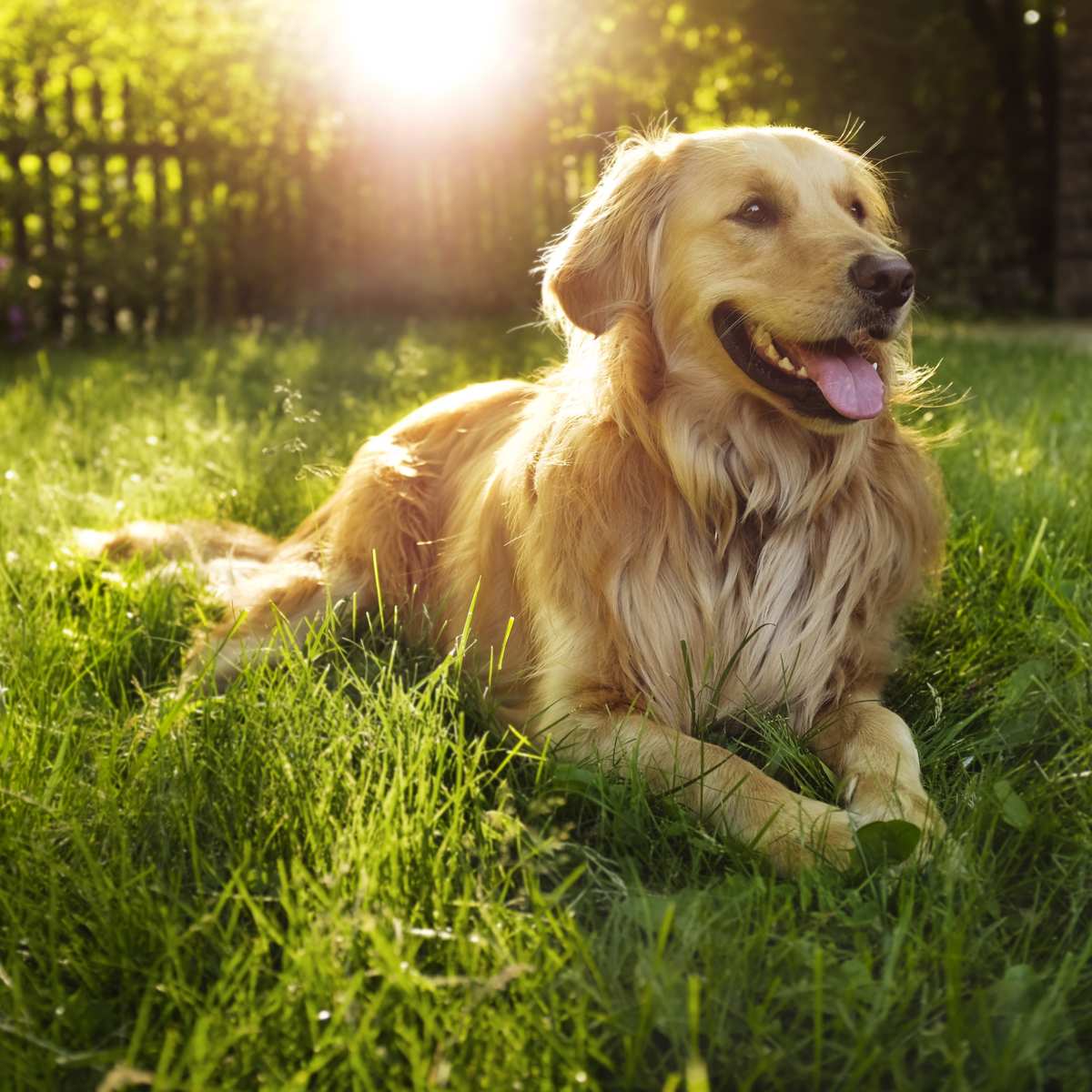
Your Golden Retriever is wearing a full-length fur coat. Every day. Including the hottest one of the year. And unlike you, they cannot take it off, cannot turn on the air conditioning themselves, and cannot tell you when they are getting too hot until the signs are already alarming.
Golden Retrievers are not naturally well-adapted to summer heat. Their double coat — the dense, water-repellent undercoat and the flowing outer coat that makes them one of the most beautiful breeds in the world — is genuinely excellent for cold, wet Scottish Highland conditions. It is considerably less excellent for a July afternoon in a suburban backyard.
Understanding how to support your Golden through summer is not optional care. It is the management of a genuine physiological vulnerability that makes this specific breed, in hot weather, require specific attention that a short-coated dog in identical conditions might not need.
These ten tips are what experienced Golden owners implement every year as temperatures rise — the practices that keep the coat working as thermoregulation rather than a heat trap, keep the water fresh and cold, and keep the walks timed for the hours when the pavement does not burn paws.
Tip 1: Time Your Walks to the Early Morning or Late Evening
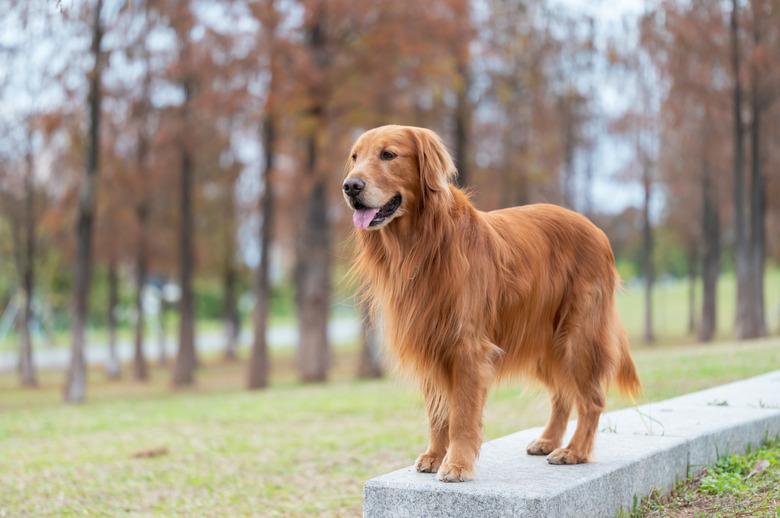
The pavement that was 70°F at 7 am may be 140°F at 2 pm. Dog paw pads burn at temperatures above approximately 125°F — contact that can cause blistering within 60 seconds. A simple test: hold the back of your hand flat on the pavement for seven seconds. If you cannot hold it there comfortably for the full count, neither should your dog’s paws.
Walk your Golden only in the early morning (before 9 am when possible) or late evening (after 7 pm when the pavement has begun cooling). The benefit is not only for the paws — the cooler ambient temperature during these windows means the dog is exercising in conditions their double coat can manage, rather than conditions that push their thermoregulation to its limits.
The time shift consequence: Your Golden does not know it is summer. They still want their walk at their usual time. The behavioral work of shifting to an early morning or late evening schedule takes approximately one to two weeks of consistent new timing before the expectation adjusts.
Tip 2: Never Shave the Double Coat
This is the summer tip that surprises most new Golden owners and is most often ignored because the logic seems obvious — a shaved dog must be cooler than an unshaved one. It is not.
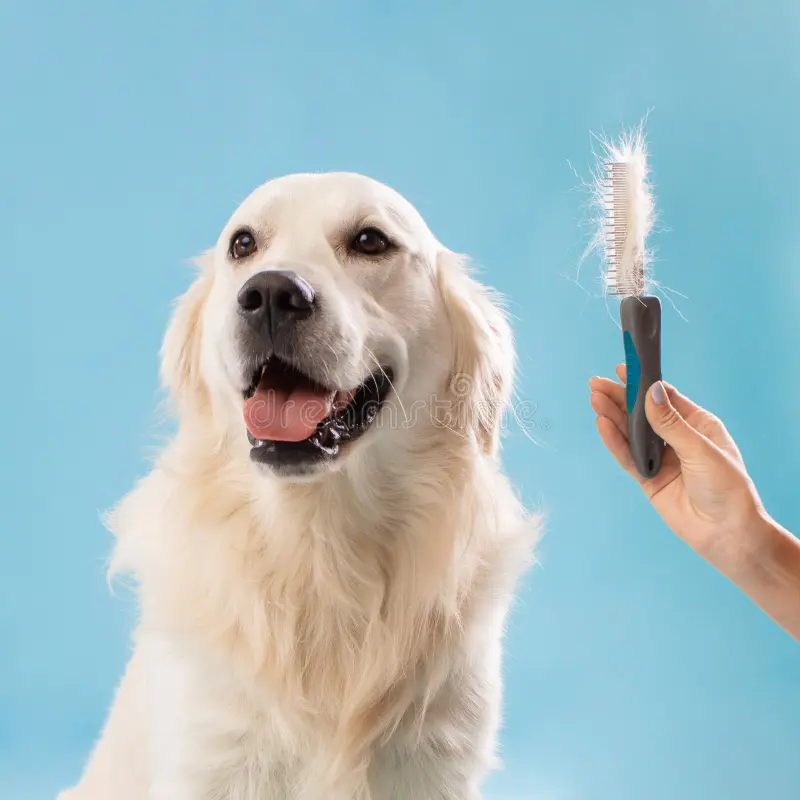
The Golden Retriever’s double coat provides thermoregulation in both directions. In winter, it traps body heat. In summer, it traps a layer of cooler air close to the skin and acts as insulation against radiant solar heat reaching the skin surface. A shaved Golden is exposed to direct sun on unpigmented skin — skin that can sunburn — and loses the thermoregulation benefit of the undercoat air-trapping mechanism.
Additionally, shaving disrupts the natural growth cycle of the double coat and can cause a condition called post-clipping alopecia in which the coat grows back unevenly or not at all in affected areas.
The correct summer coat management: Regular brushing to remove the dead undercoat that accumulates and prevents airflow. Professional deshedding treatment to remove the heaviest undercoat buildup while leaving the coat structure intact. These approaches help the coat function as intended rather than removing it entirely.
Tip 3: Upgrade to a Cooling Mat
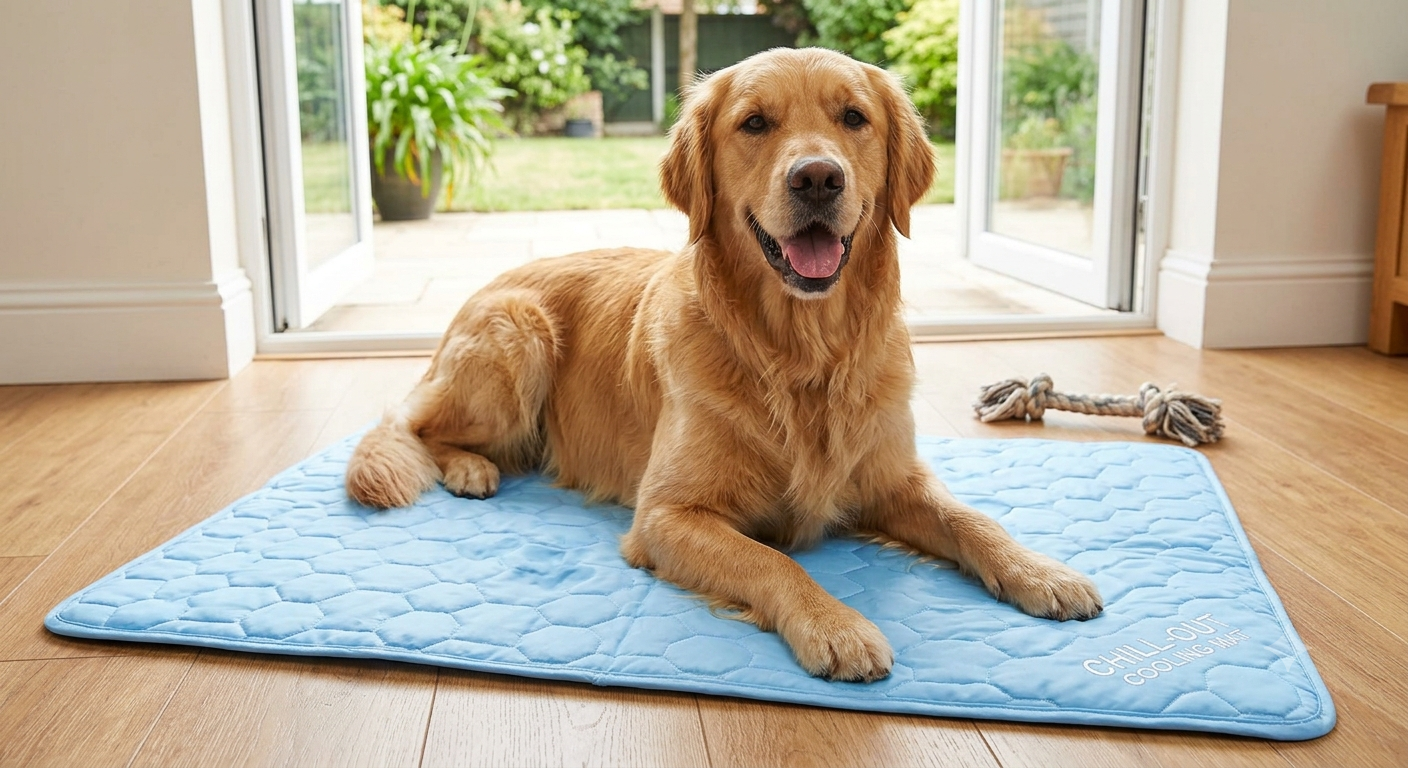
A cooling mat — filled with pressure-activated cooling gel — provides a surface that the dog can press their body against to dissipate heat without any refrigeration or electricity. The gel absorbs body heat, and the mat surface remains significantly cooler than the ambient room temperature.
Positioning: Place in the shadiest, most-used resting area. Cover partially with a light blanket — some dogs are reluctant to lie directly on the gel surface initially but will use it when it is partially familiar.
Alternative cooling surfaces: A damp towel placed in the freezer for 20 minutes provides a short-term cooling surface. Ceramic tile floors stay naturally cooler than carpet — ensure your Golden has access to tile spaces during the hottest part of the day.
Tip 4: Frozen Treats Are Not a Luxury — They Are a Cooling Tool
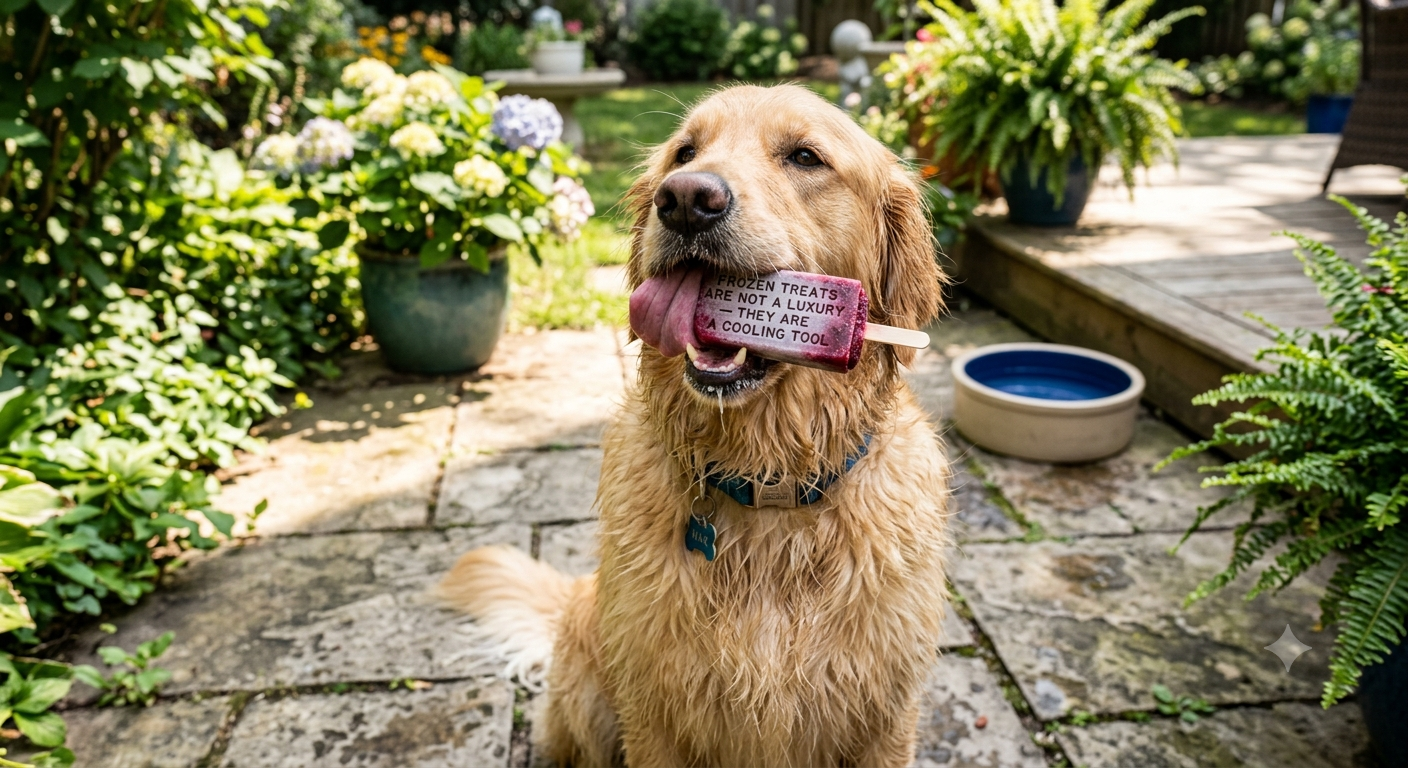
A frozen treat is cooling from the inside out — the temperature of the food as it is consumed contributes to lowering core body temperature. For a dog who is already warm, a series of frozen treats through the hottest afternoon hours maintains a lower core temperature than ambient conditions alone would produce.
The most effective summer frozen treats for Golden Retrievers:
- Frozen peanut butter Kong (filled and frozen the night before)
- Frozen watermelon chunks (seedless)
- Peanut butter and plain yogurt popsicles frozen in a mold
- Ice blocks with treats frozen inside — the dog licks to extract them, extending both the cooling and the enrichment
The frozen Kong during the hottest afternoon hours simultaneously provides cooling, enrichment, and the mental stimulation that replaces outdoor activity during the heat of the day.
Tip 5: Provide Multiple Water Stations
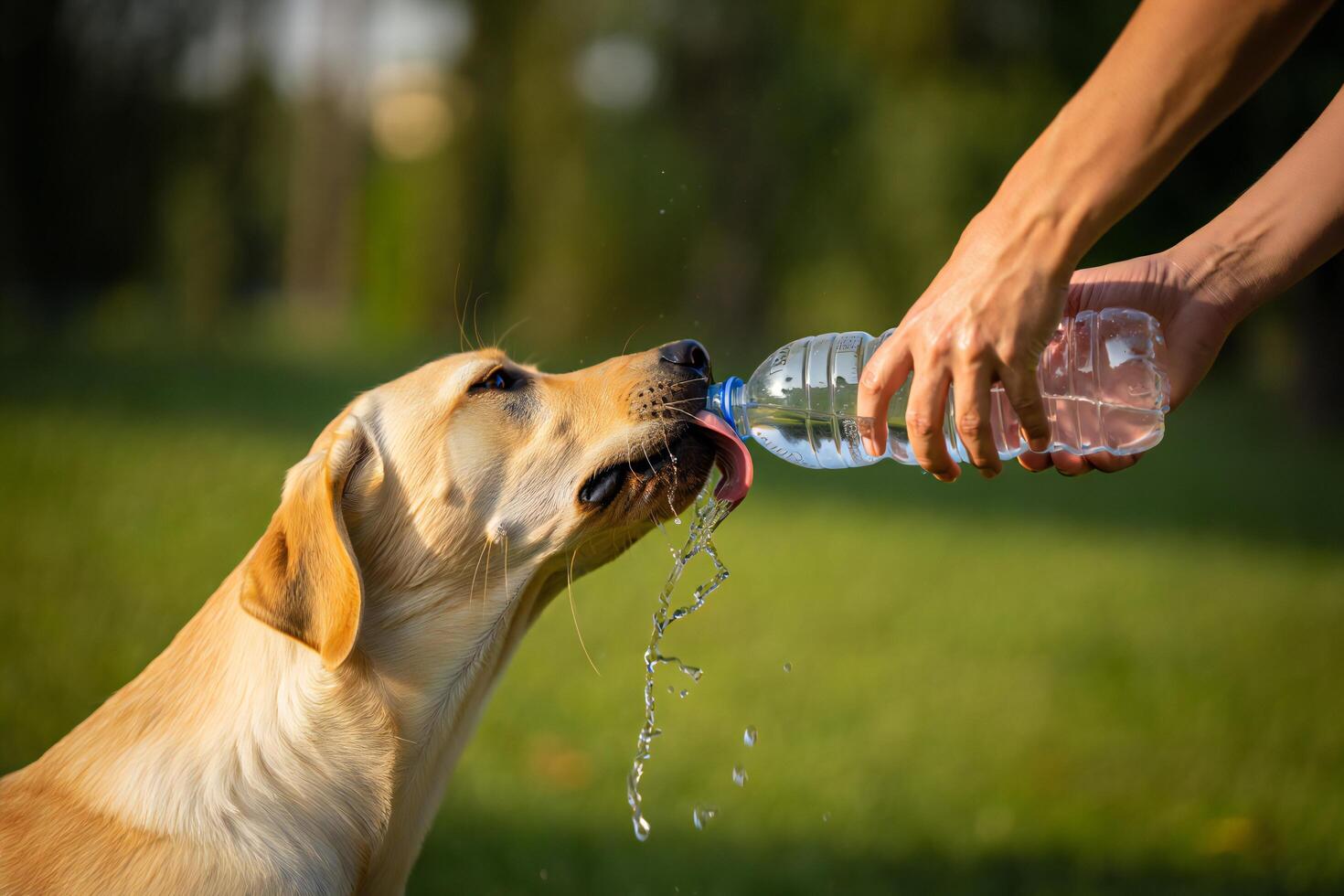
A single water bowl empties faster in summer, gets warmer faster, and may be in a location that a dog who is avoiding the sun cannot reach without leaving shade. Multiple water stations — in the shadiest areas of both indoor and outdoor spaces — ensure that water is always accessible without requiring the dog to move into a suboptimal environment to drink.
Ice in the water: Adding ice cubes to the water bowl in the morning keeps water cool for two to three additional hours in most home temperatures. Some dogs actively enjoy playing with the ice, which further reduces core temperature through the water contact on their paws and face.
Change water frequently: Stagnant summer water accumulates bacteria more rapidly than in cooler conditions. Change all water stations at minimum twice daily during hot weather.
Tip 6: Recognize Overheating Before It Becomes Heat Stroke
The early signs of heat stress in a Golden Retriever appear before the dramatic ones. The owner who knows the early signs can intervene at the manageable stage rather than at the emergency stage.
Early signs: Heavier-than-normal panting that does not resolve quickly with rest in shade. Seeking cool surfaces (tile, damp ground) with unusual urgency. Reduced enthusiasm for activity they normally enjoy. Slightly elevated drooling.
Serious signs: Panting with audible effort, visible fatigue, stumbling or uncoordinated movement, brick-red or very pale gums, glazed expression, collapse.
What to do at early signs: Move immediately to a cool, shaded, or air-conditioned space. Provide cool (not ice) water in small amounts. Place cool damp cloths on the paw pads, armpits, and back of neck. Allow the dog to rest until respiratory rate returns to normal.
At serious signs: This is a veterinary emergency. Apply the same cooling measures while calling the emergency clinic and beginning transport. Do not wait to see if it improves without intervention.
Tip 7: Swim — It Is the Best Exercise for Summer
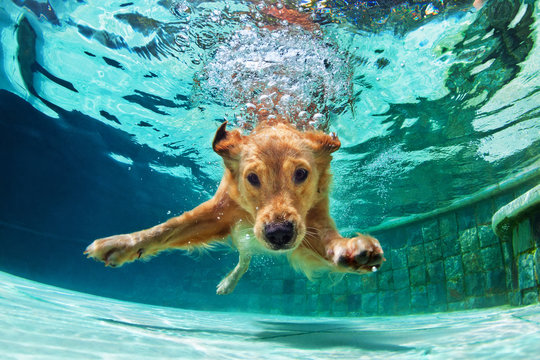
Golden Retrievers are natural swimmers. Their water-repellent coat, webbed feet, and retrieving heritage all make water activity not only possible but genuinely preferred. Swimming provides complete full-body exercise at a metabolic intensity equivalent to running — without any of the thermoregulation challenges that running in hot weather creates.
A dog who is swimming in cool water is simultaneously exercising and cooling themselves. The water contact cools the skin, the metabolic heat generated by exercise disperses into the water rather than accumulating in the body, and the thermoregulatory challenge of heat plus exercise is completely removed.
If you have access to a dog-friendly water source — a lake, a river, a dog beach, a paddling pool — summer swimming sessions replace the midday walks that heat makes inadvisable. Twenty minutes of swimming in cool water is more exercise and significantly better thermoregulation than any midday walk.
Tip 8: Never Leave Your Golden in a Parked Car
This instruction is simple, absolute, and worth restating every summer because it results in preventable deaths every year.
The interior of a parked car in summer sun rises by approximately 40°F within the first hour regardless of ambient temperature. A car that is 70°F outside reaches 110°F inside within one hour. Windows cracked do not meaningfully affect this. Air conditioning running while parked is unreliable — engine heat, the variable nature of car air conditioning systems, and the risk of malfunction make running AC insufficient protection.
No duration is safe. Not five minutes. Not “I’ll be right back.” The car in summer is not a parking option for a dog.
Tip 9: Adjust Exercise Intensity, Not Just Timing
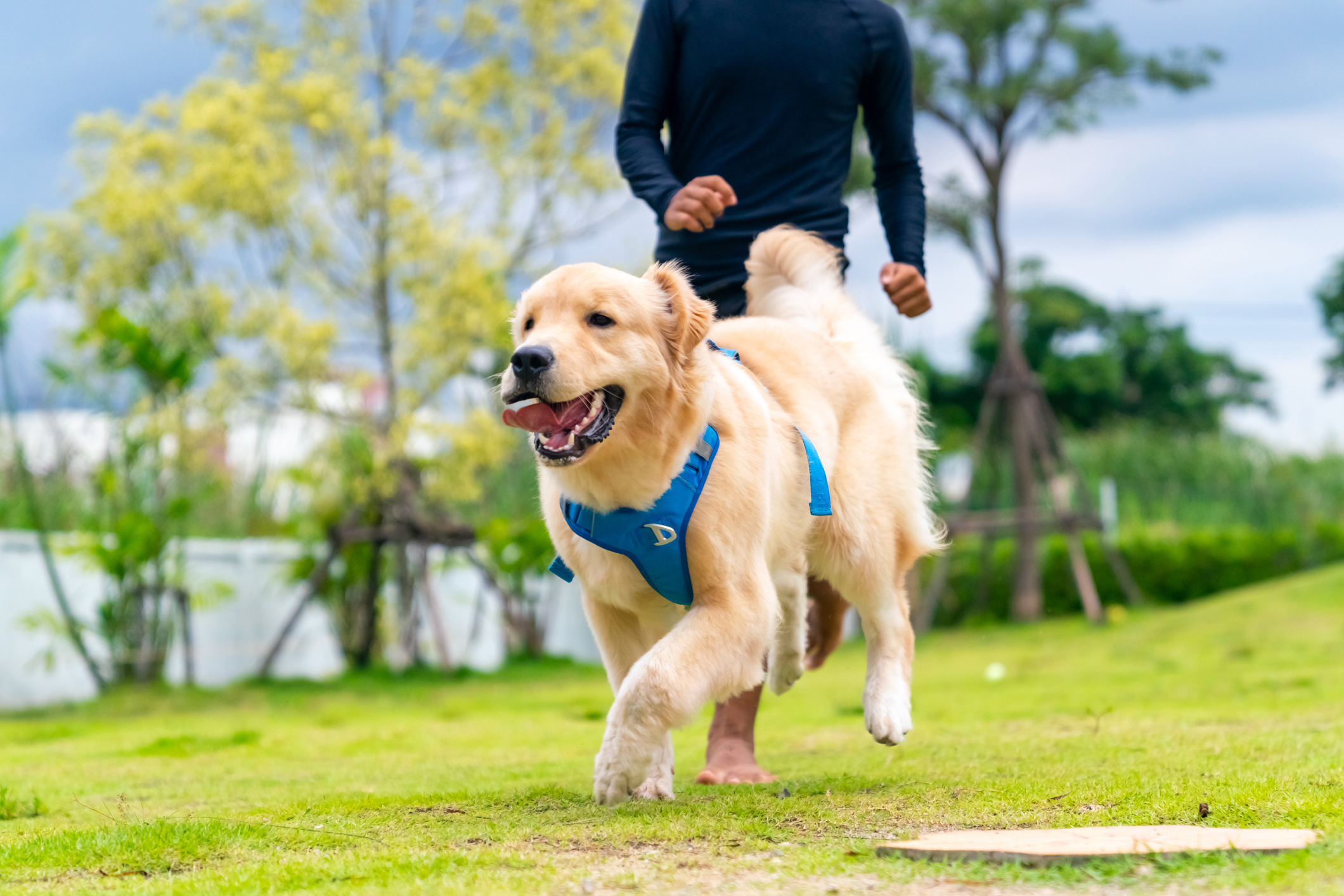
Even during the cooler morning and evening windows, the exercise your Golden Retriever can safely sustain in summer is different from their capacity in cooler months. A dog who can run comfortably for 45 minutes in October may need to be managed to 20 to 25 minutes in July, even in the early morning.
Watch the panting rather than the clock. A dog who is panting heavily after 15 minutes on a July morning is telling you their thermoregulation is being tested. A dog who is barely breathing harder after 20 minutes is within their comfortable range. The dog communicates what the watch cannot.
Tip 10: Provide Mental Exercise to Replace Physical During Heat
The hours of the summer day when physical exercise is not appropriate — the 10 am to 7 pm window in peak heat — are hours when your Golden Retriever’s mind still needs engagement. The boredom that develops in an under-stimulated Golden is not suspended because it is hot outside. It expresses itself through destructive behavior, attention-seeking vocalization, and the specific restlessness of a high-energy intelligent dog who has nothing to do.
Puzzle feeders, training sessions in air-conditioned spaces, nose work (hiding treats around the home for the dog to find), and new trick training all provide mental stimulation that genuinely tires a Golden Retriever without the thermoregulation challenges of physical exercise in heat.
A mentally exercised Golden is a settled Golden — and summer, with its limited physical exercise windows, is when mental enrichment practices matter most.
Your Golden Retriever trusts you to manage the summer for them. They do not know that 1pm in July is dangerous. They do not know that the pavement is too hot. They do not know that the enthusiasm they feel for the walk in the heat is their body’s excitement overriding their thermoregulation’s distress signals. They just want to be with you, wherever you are going, doing whatever you are doing.
Ten tips. The difference between a summer that is genuinely safe and one that has a crisis that could have been prevented. Keep the water fresh, the walks timed, the coat intact, and the frozen Kongs ready.
Save this to Pinterest before the hottest week of the year, share it with every Golden owner you know, and walk your dog at 7am tomorrow. The early light is worth getting up for — and so is the dog.