There is a moment every cat lover knows. You are looking at a photograph of a cat you have never seen before — a shimmering silver smoke, a pale pink-grey lilac, a tortoiseshell mosaic of black and amber — and you think, how does a cat get that color? The answer is one of the most beautiful stories in biology: a small set of pigment genes, dilution modifiers, pattern controllers, and sex-linked inheritance mechanics combining and recombining across generations to produce the most visually diverse domesticated animal on earth. This guide covers every cat color, every pattern, every rare shade, the specific breeds most associated with each one, and the genetics behind the combinations that confound even experienced cat owners — including why your calico is almost certainly female and why most orange cats are male. By the end, you will understand your cat’s coat in a way that makes every future cat you encounter feel like a living genetics lesson.
The Two Pigments Behind Every Color Your Cat Will Ever Have
Before any specific color, breed, or pattern can be understood, one foundational fact makes everything else make sense. Every cat coat color in existence comes from the interaction of two types of melanin — eumelanin, which produces black and dark brown pigmentation, and pheomelanin, which produces red and yellow hues. That is it. Two pigments. Every shade from jet black to pale cream, from rich chocolate to silver smoke, from vivid orange to dusty lilac is a variation on those two base pigments modified by genes that control how much pigment is produced, where it is deposited, how densely it is packed, and whether it is diluted, inhibited, or patterned. The KIT gene plays a major role in determining how pigment-producing cells called melanocytes are distributed, resulting in the colors and patterns we see. Each gene has dominant and recessive forms, which combine to create a cat’s unique appearance.
Understanding that two pigments create this entire spectrum is also the key to understanding why color genetics in cats feels so counterintuitive at first. A cat that appears grey is not producing grey pigment — it is producing black eumelanin that has been diluted by a modifier gene. A cat that appears cream is not producing cream pigment — it is producing red pheomelanin that has been diluted. A cat that appears silver did not inherit a silver gene — it inherited an inhibitor gene that prevents pigment from reaching the base of the hair shaft. Every unusual color is a modification of the same two building blocks.
The Base Colors — From Black to Red and Every Variation Between
Black — The Dominant Color That Starts Every Coat Story
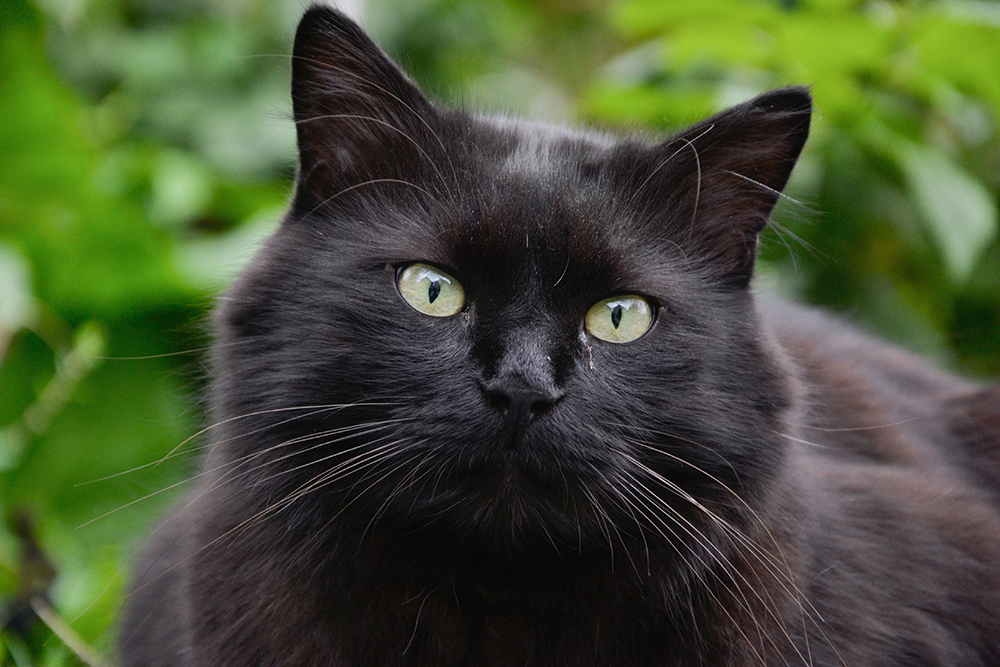
Black is the most genetically dominant solid coat color in domestic cats. A cat expresses solid black when it has two functional copies of the gene for black eumelanin and no dilution genes active in its genotype. True black cats have a coat that appears glossy and deeply pigmented in good light, with matching black nose leather, paw pads, and dark amber or green eyes. One fascinating detail about black cats that most owners never know: black cats can develop orange-brown coloration from UV exposure, particularly on the tips of the hair shaft. A black cat that spends significant time in strong sunlight may develop a rusty tinge across the outer coat that is entirely caused by UV degradation of eumelanin and is not a sign of any health or color change.
Breeds strongly associated with black include the Bombay — the only breed specifically developed to be an all-black cat — as well as black variants of the Maine Coon, British Shorthair, Persian, and the sleek Oriental Shorthair. The black coat’s genetic dominance means it appears frequently across both purebred and mixed-breed cats.
White — The Color That Isn’t a Color
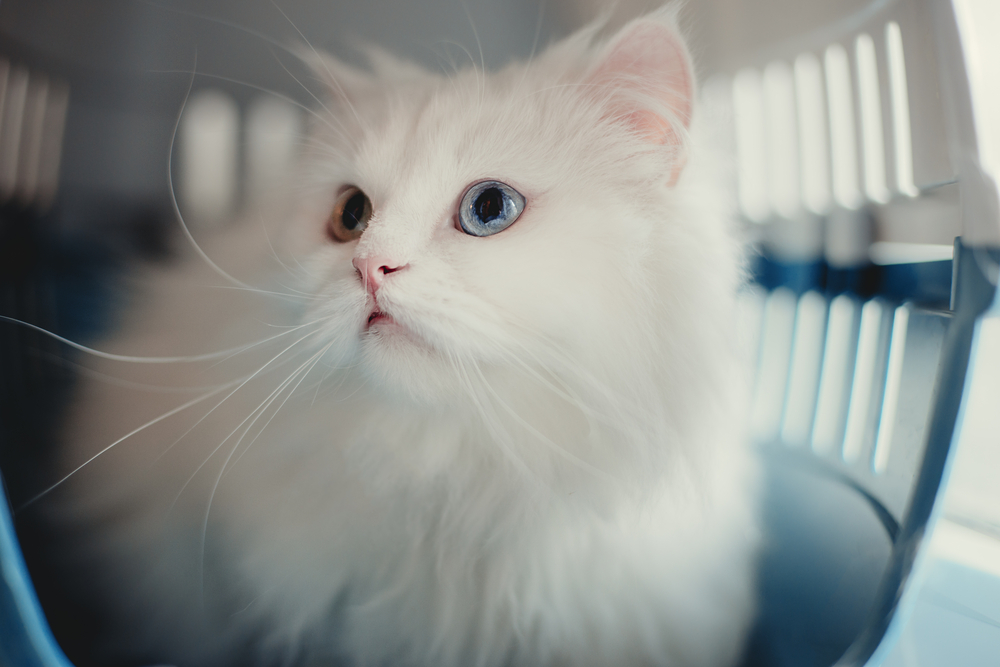
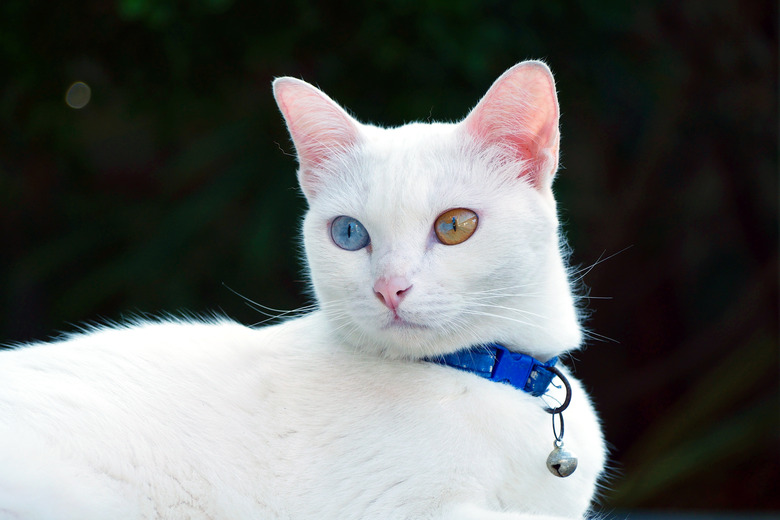
White in cats is genetically distinct from all other colors and requires separate explanation because it operates through a completely different mechanism. White genes either completely mask underlying color through the dominant white gene or create white spots through the white spotting gene. A white cat with the dominant white gene is not actually without underlying pigment — it has a coat color hidden beneath the white masking. This has a critical health implication: true albino cats lack pigment entirely due to a rare genetic mutation, and this is an entirely different condition from dominant white. Albino cats have pink eyes due to the absence of pigment in the iris, while dominant white cats typically have blue, green, copper, or odd eyes — one of each color.
The association between white cats with blue eyes and deafness is real and worth knowing. The dominant white gene that masks coat color also affects the development of melanocytes in the inner ear, where melanocytes are essential for the hair cells that enable hearing. White cats with blue eyes have an elevated rate of congenital deafness, and those with odd eyes — one blue and one colored — often have deafness on the blue-eyed side only. This is not universal, and many blue-eyed white cats hear perfectly well, but it is a genetic consideration that prospective white cat owners should discuss with a veterinarian.
Breeds renowned for their white coats include the Turkish Angora, the Turkish Van, and the white variety of the Persian.
Orange, Ginger, and Red — The X-Chromosome Color
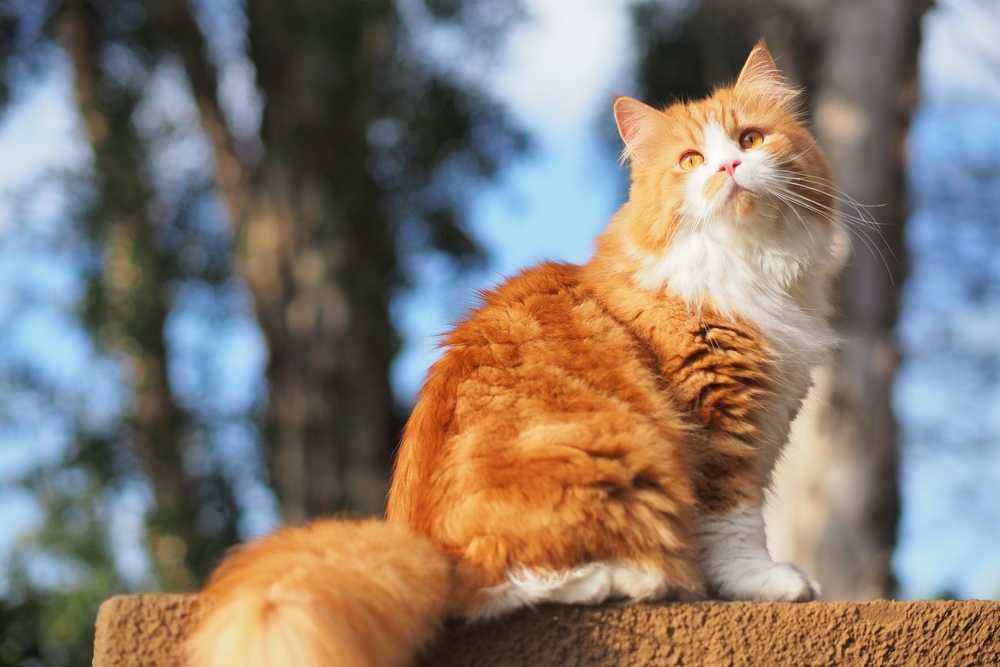
Orange is the most genetically interesting common cat color and the one that explains why most orange cats are male. The color genes for black and red in cats are contained within the X chromosome. They are alleles — two variations of the same gene in one location on the chromosome.
Here is how sex and coat color intertwine. Males have one X chromosome and one Y chromosome. A male cat who inherits the orange allele on his single X chromosome will be orange across his entire body — there is no second X chromosome carrying a different instruction. Females have two X chromosomes. A female who inherits the orange allele on both X chromosomes will be a solid orange female, rarer because this requires the same gene from both parents. A female who inherits the orange allele on one X chromosome and the non-orange allele on the other X chromosome becomes a tortoiseshell or calico — the patchwork of both colors that requires two X chromosomes to produce. This explains precisely why the vast majority of orange cats are male and why tortoiseshell and calico cats are almost always female.
It is much less likely for female cats to be completely orange, as they usually need to inherit the orange variant from both parents. This genetic combination is much less common, making fully orange females comparatively rare. This fundamental difference in how the trait is passed down is exactly why orange males significantly outnumber orange females.
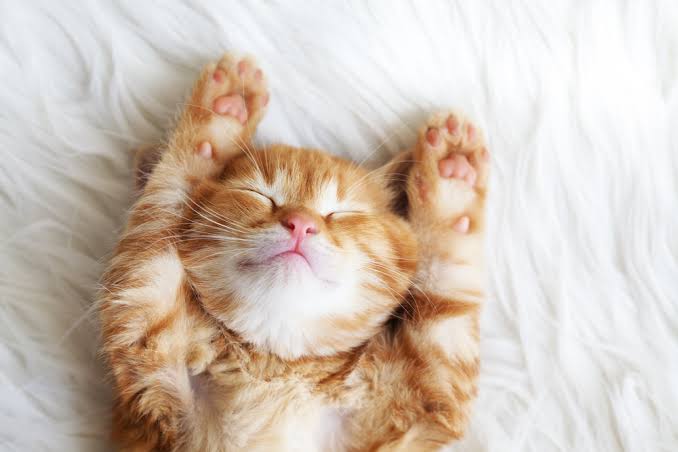
Breeds associated with orange and ginger include the Maine Coon, Exotic Shorthair, Persian, and British Shorthair in their red variants. The ginger tabby — an orange cat with the tabby pattern — is one of the most recognized cat appearances in the world and carries one of the most persistent personality myths in cat culture: the idea that ginger cats are universally bold and friendly. There is some evidence that orange cats are perceived as more sociable, but the association is cultural rather than genetically deterministic.
Grey, Blue, and Silver — Three Distinct Shades Often Confused
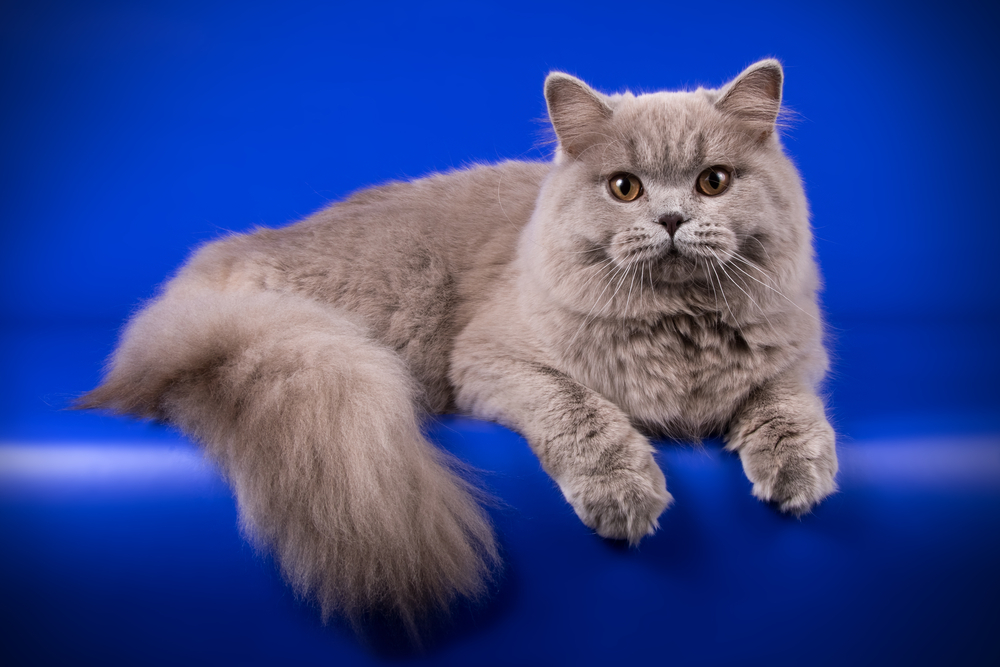
These three coat appearances look similar to the casual observer but are produced by completely different genetic mechanisms.
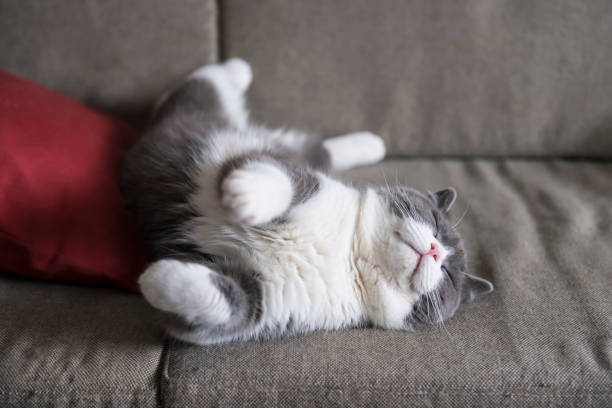
Grey, called “blue” in the cat fancy world, is diluted black. The dense/dilute pigment gene codes for melanophilin and changes how pigment is deposited, creating dilute versions of darker colors. Black becomes blue, red becomes cream, brown becomes lilac, and cinnamon becomes fawn. A blue cat has the same underlying black eumelanin as a black cat but carries two copies of the dilution gene, which disrupts how the pigment granules are distributed within each hair shaft. The pigment is still present — it is simply scattered rather than densely packed, which causes it to appear as a soft, even grey rather than deep black.
Breeds most associated with solid blue include the Russian Blue — whose dense, plush double coat gives the dilution a particularly luminous quality — the British Shorthair in its blue variety, the Chartreux, the Korat, and the Nebelung. The Russian Blue’s coat is distinctive not just for color but for texture: each hair has a silver tip that catches light differently from the blue base, creating the shimmering effect the breed is famous for.
Silver is produced by the inhibitor gene — a gene that prevents pigment from reaching the base of the hair shaft. The inhibitor gene stops pigment from reaching the entire hair shaft. The result is a hair that is white at the base and colored at the tip. This creates smoke, silver, or chinchilla effects. A silver tabby has a black tabby pattern on the visible outer coat but white roots throughout — creating the characteristic pale, sparkling appearance. A chinchilla cat, such as the Chinchilla Persian, has only the very tip of each hair colored, giving the coat an extraordinarily fine, pale sparkle.
The Patterns — How Color Is Distributed Across the Coat
Tabby — The Most Common Pattern on Earth
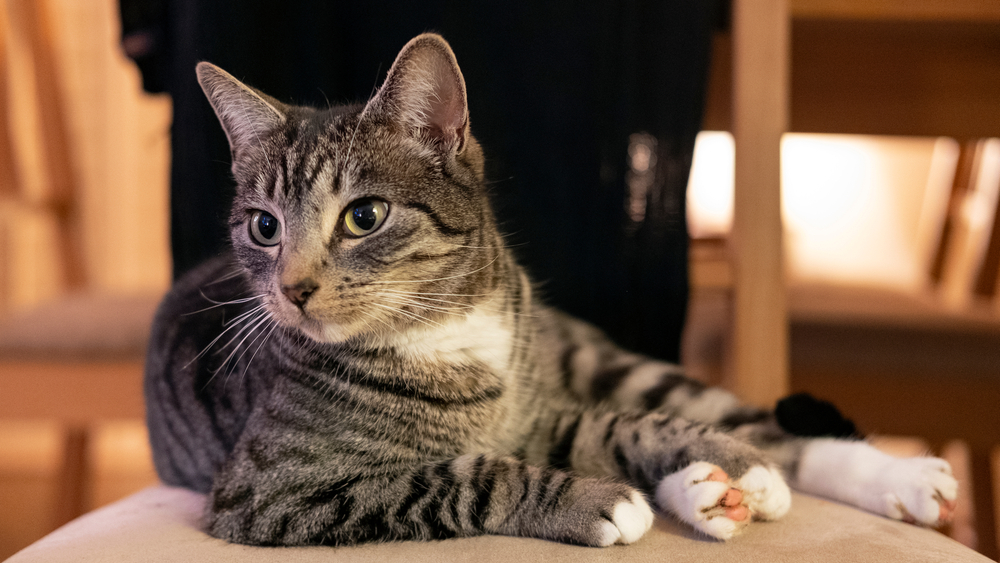
Among all the colors and patterns in cat coat genetics, tabby is the most popular. Adorned with stripes, spots, and swirls, the markings’ appearance and arrangement depend on the genetic makeup. The tabby pattern comes in four forms: mackerel, classic, spotted, and ticked.
The mackerel tabby has narrow parallel stripes running down the sides of the body like fishbones — the pattern most people picture when they think of a striped cat. The classic tabby, also called blotched, has bold swirling marble-like patterns on the sides and a distinctive bullseye marking. The spotted tabby has the stripes broken into distinct oval or round spots. The ticked tabby — most visible in the Abyssinian — has no visible stripes or spots on the body, only alternating bands of color on each hair shaft, creating a shimmering, almost glowing uniform coat appearance that is unlike any other pattern.
Every tabby has the M marking — a distinctive M-shaped marking on the forehead between the eyes. This marking is present in every tabby regardless of color, pattern variant, or breed, and it is genetically inseparable from the tabby pattern itself.
The tabby pattern exists in every tabby-compatible color — brown tabby, silver tabby, blue tabby, red tabby, cream tabby, chocolate tabby, and cinnamon tabby — and can appear in every breed that does not specifically exclude it from the breed standard.
Tortoiseshell — The Living Mosaic That Biology Creates Randomly
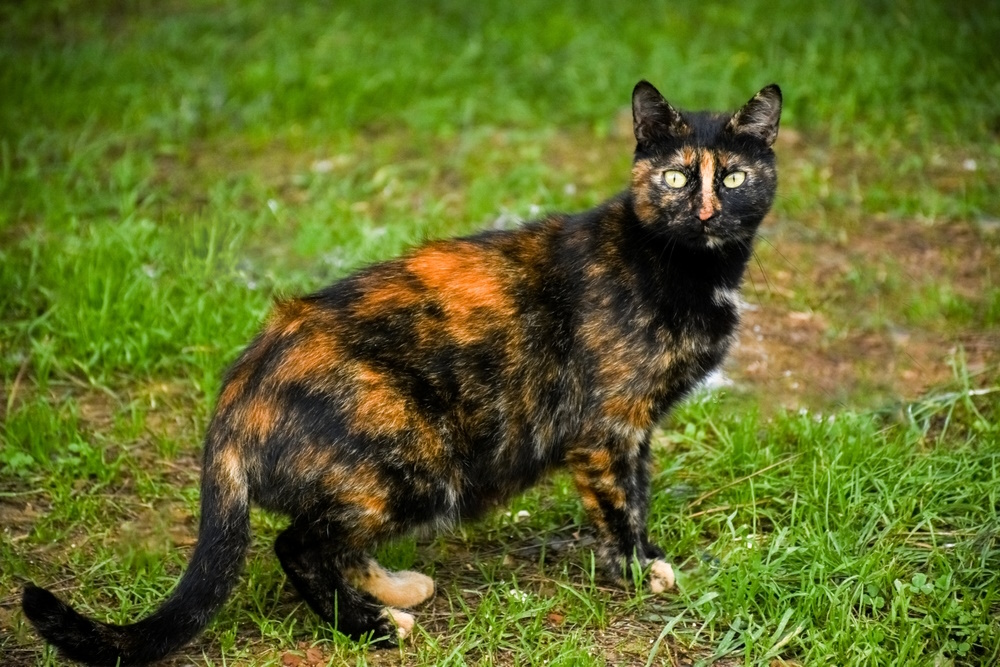
Tortoiseshell cats have a mixture of orange and black fur, blended in an irregular pattern. Torties appear blended black and orange with almost no white. They are almost always female.
The biology behind the tortoiseshell pattern is one of the most extraordinary processes in mammalian genetics. In female mammals, one of the two X chromosomes in each cell is randomly inactivated during early development. This results in a phenomenon known as mosaicism, where different cells express different coat colors depending on which X chromosome is active.
As a result, some clusters of cells keep the orange chromosome active, while other clusters keep the non-orange chromosome active. Areas where the orange chromosome remains active produce pheomelanin and orange fur, while areas where the non-orange chromosome remains active produce darker eumelanin-based fur. The result is a living mosaic.
Because the X chromosome inactivation happens randomly in each cell during early embryonic development, no two tortoiseshell cats have the same pattern. The swirl of black and orange is unique to each individual — a biological fingerprint generated by randomness. This is why every tortoiseshell looks different from every other tortoiseshell, even from the same litter.
According to a study by the University of Minnesota College of Veterinary Medicine, only about 1 in 3,000 calico cats are male. Male calico cats are typically the result of the XXY chromosome condition, known as Klinefelter syndrome. These male tortoiseshells and calicos are almost always sterile, which means they cannot contribute to a breeding line.
The dilute tortoiseshell — a softer, more muted version — replaces the vivid black with blue-grey and the vivid orange with cream, creating a watercolor-like palette of smoky grey and pale peach that is even more unusual looking than the standard tortie. Dilute tortoiseshells have the same pattern as torties but in softer shades of gray and cream instead of black and orange. Their pastel coats are subtle, yet just as beautiful.
Calico — The Tortoiseshell With White
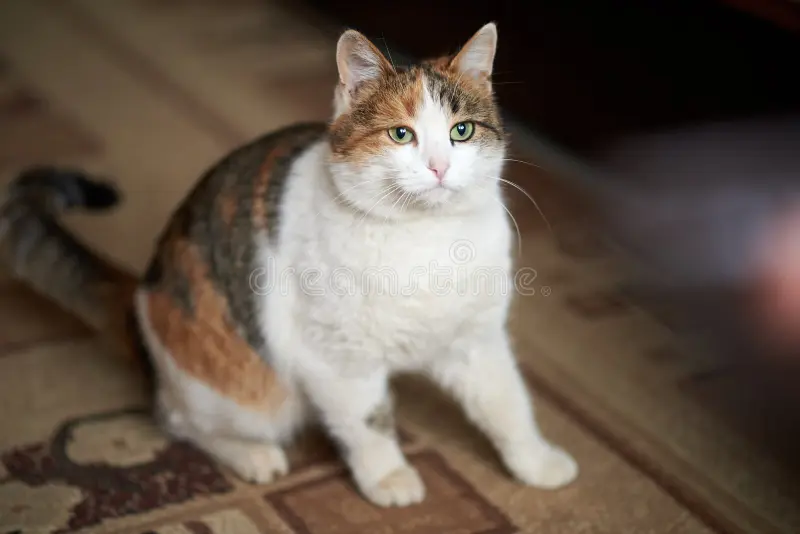
Calicos always have distinct white patches alongside patches of black and orange. Both calicos and tortoiseshells are almost always female and can be found in many purebred and mixed breeds.
The calico pattern is produced by the same tortoiseshell genetics — the X-linked orange gene creating the black and orange mosaic — with the addition of the white spotting gene, which creates the white areas by preventing melanocytes from populating those regions of the skin. The distribution of the white is controlled separately from the black-and-orange distribution, which is why calico patterns are three-part designs of different genetic origins happening simultaneously.
In Japan, the calico cat — called Mi-ke, meaning “three fur” — is considered the luckiest of all cats and is a traditional symbol of fortune. The Japanese Bobtail breed is particularly associated with the calico pattern and is one of the most recognized calico breeds internationally.
Dilute calicos feature gray, cream, and white patches. The effect is dreamy and watercolor-like, often giving them a gentle, misty appearance. These dilute calicos are rarer than standard calicos because they require both the calico genetics and the dilution gene to be active simultaneously.
Pointed — The Color That Moves to the Extremities
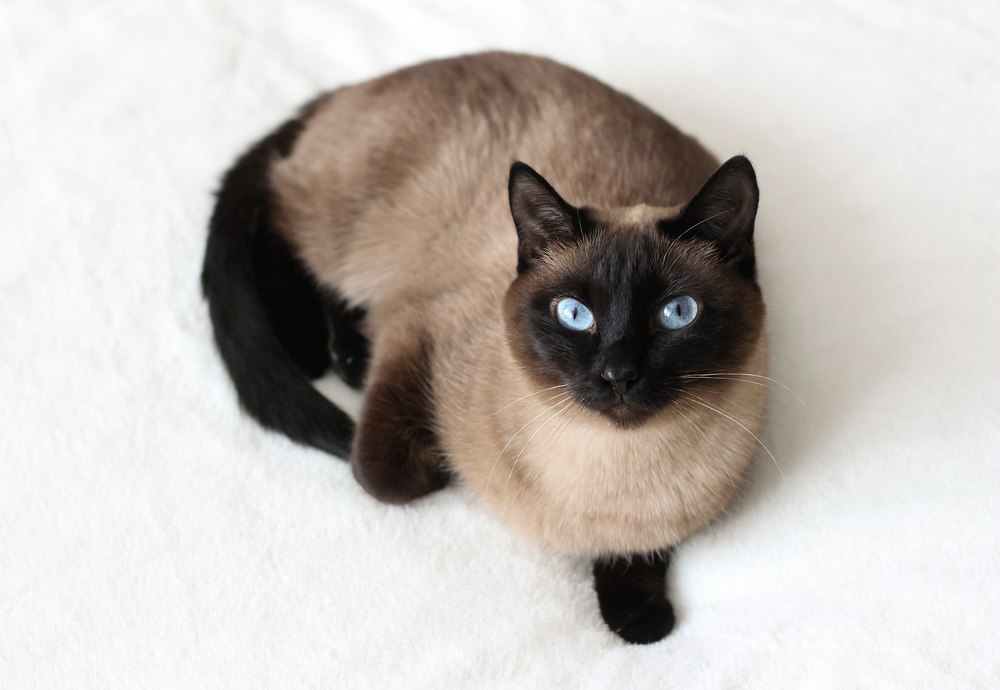
Color point cats — best known from the Siamese but present in many other breeds — have a pale body with darker coloration on the face, ears, paws, and tail. Cats with a pale body and darker extremities, such as the face, ears, feet, and tail, are considered to have point coloration.
The genetics behind pointed coloration are among the most elegant in cat coat biology. The gene responsible is temperature-sensitive — the enzyme it controls functions normally in cooler extremities and fails at the warmer core body temperature. This is why the face, ears, paws, and tail — the parts of the body furthest from the core, exposed to cooler ambient temperatures — develop full dark pigmentation while the body remains pale. A Siamese kitten is born completely white because the womb is uniformly warm, suppressing the color-developing enzyme everywhere. The points develop gradually after birth as the extremities cool to ambient temperature.
There are 16 different point colors, including lilac, chocolate, seal, and blue. These are Siamese breed color variants, and many other breeds have developed from them. Seal point is the classic dark brown-black points on a cream body. Blue point is a grey point on white. Chocolate point is warm brown on ivory. Lilac point is the palest — a barely-there lavender grey on white that is the rarest and most sought-after of the Siamese point colors.
Breeds with pointed patterns include the Siamese, Birman, Ragdoll, Himalayan, Balinese, Tonkinese, and Snowshoe. The Ragdoll is currently the most popular pointed breed and consistently ranks among the top five most popular cat breeds worldwide for its docile temperament and striking blue-eyed pointed appearance.
Smoke — The Color That Hides in Plain Sight
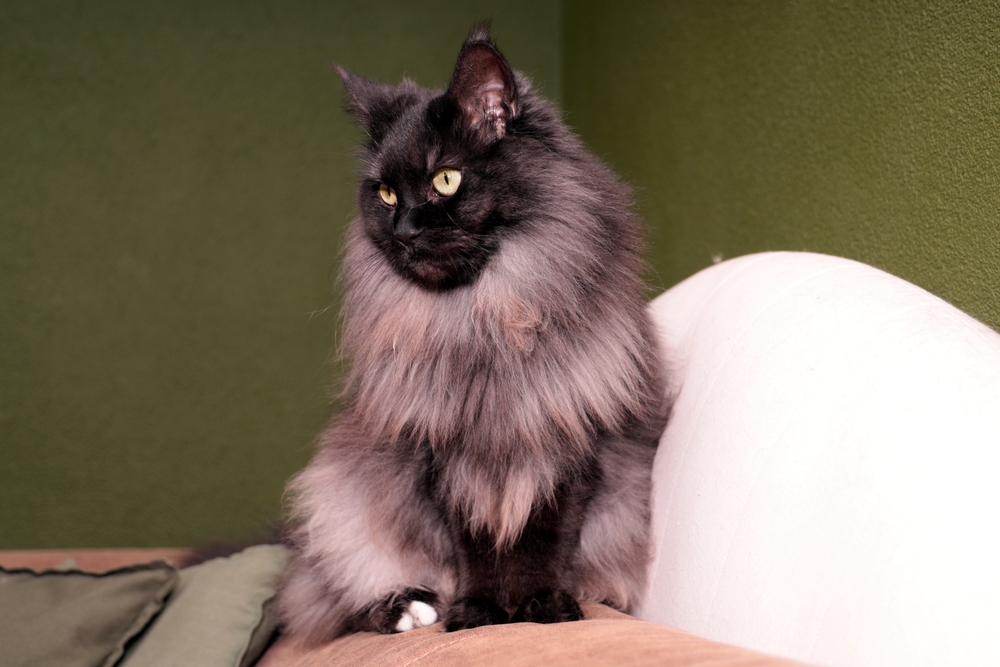
Smoke cats have a pale undercoat with dark tips on their fur. This effect is due to a genetic mutation, which affects the pigment distribution along the hair shaft and creates a smoke pattern. Persian and Maine Coon are among the cat breeds that exhibit this coat pattern.
At rest, a smoke cat appears to be a solid color — black, blue, or red. When they move, run, or are stroked against the grain of the coat, the pale silver undercoat becomes visible in dramatic flashes of contrast beneath the darker outer layer. This hidden pale undercoat is the product of the same inhibitor gene responsible for the silver pattern, but acting more extensively — blocking pigment from the lower two-thirds of the hair shaft rather than just the base.
The effect when a smoke cat moves is genuinely striking and unlike any other coat pattern in domestic cats. A black smoke Maine Coon in motion is one of the most visually dramatic sights in the cat world — the jet-black outer coat parting to reveal shining silver beneath with every movement.
The Rare Colors — The Genetic Treasures That Require Specific Inheritance
Chocolate — Rich, Warm, and Genuinely Uncommon
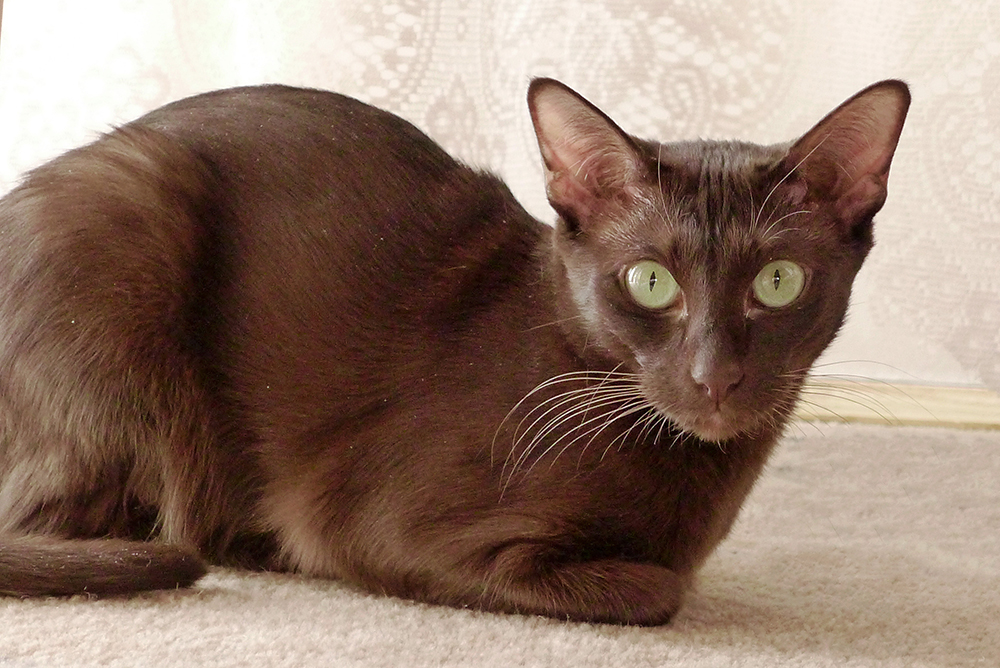
Chocolate coats are a rich brown, distinct from darker “seal” shades. This color is most common in purebred cats such as the Havana Brown or Siamese varieties with chocolate points.
Chocolate requires two copies of a recessive mutation in the B gene — the gene that controls the production of black eumelanin. The mutation reduces the intensity of black pigment production, producing a warm, rich brown rather than true black. Because both copies of the gene must be recessive for the color to express, chocolate is uncommon even in breeds where it is a recognized color. Genetics for a black coat are dominant over the colorings for a chocolate coat, and chocolate is dominant over cinnamon.
The Havana Brown is the breed most completely defined by its chocolate coat — it is the only cat breed developed specifically to produce a rich, warm, all-over brown coat, including the nose and paw pads, which are liver-pink in true chocolate cats.
Cinnamon — The Rare Warmth That Glows in Sunlight
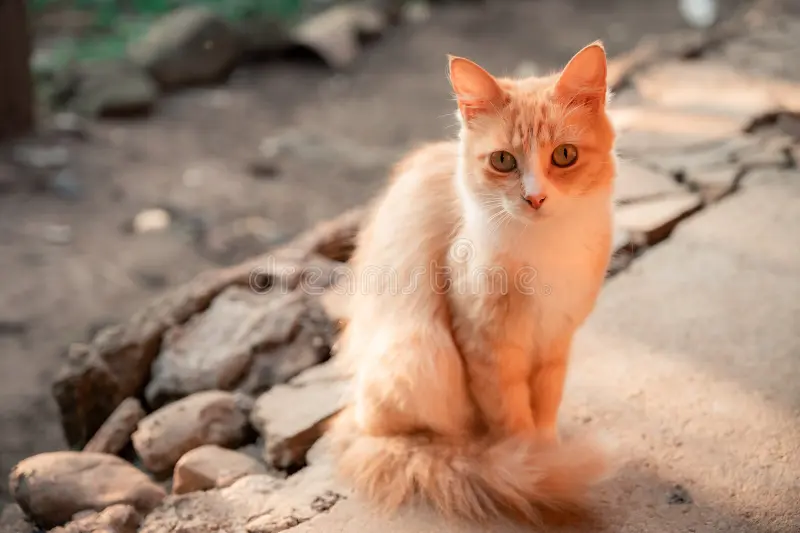
Cinnamon is a warm, light reddish-brown color. The cat’s nose leather is cinnamon-brown, and the paw pads go from cinnamon-brown to pinkish-tan. Cinnamon is lighter than chocolate.
Cinnamon is even rarer than chocolate because it requires a further mutation at the same B gene locus — a recessive allele that reduces black pigment production even more than the chocolate mutation, producing a lighter, redder-brown that seems to glow with warmth in sunlight. Chocolate is recessive to black, and cinnamon is recessive to chocolate. This hierarchical recessiveness means cinnamon requires the alignment of two specific recessive alleles that are individually uncommon and rarely paired.
The Abyssinian is the breed most associated with cinnamon coloration, where the warm reddish-brown combines with the ticked tabby pattern to produce a coat that genuinely resembles a wild felid. The Oriental Shorthair also produces cinnamon in its vast color range.
Lilac — The Almost-Purple That Barely Exists
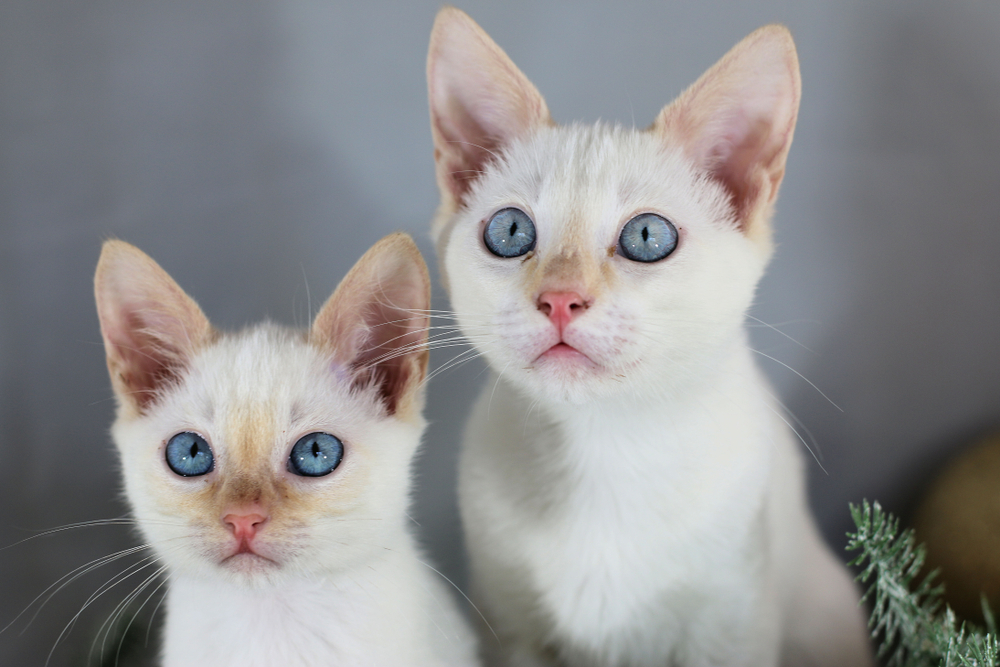
Lilac is a dilute version of the color brown with a slight purple tinge. To be lilac, a cat must carry two copies of the recessive allele for the primary coat color and two copies of the recessive allele for dilute pigmentation.
This unique hue happens when a cat inherits two copies of the recessive allele gene for chocolate fur and two copies of the recessive allele for diluted pigment. The result is a rare cat coat color that is light, lilac, and extraordinarily uncommon.
Four recessive alleles must align for lilac to appear — and recessive alleles by definition are less common than dominant ones. This stacking of recessive requirements is why lilac is considered one of the rarest colors in domestic cats and why it appears almost exclusively in specific purebred lines where it has been deliberately maintained. The Sphynx, Ragamuffin, Selkirk Rex, British Shorthair, and the Burmese are among the cat breeds that may display the lilac coat color. In the Siamese family, the lilac point — pale lavender-grey points on a white body — is the rarest and most treasured of all point colors.
Fawn — The Color That Requires Everything to Go Right
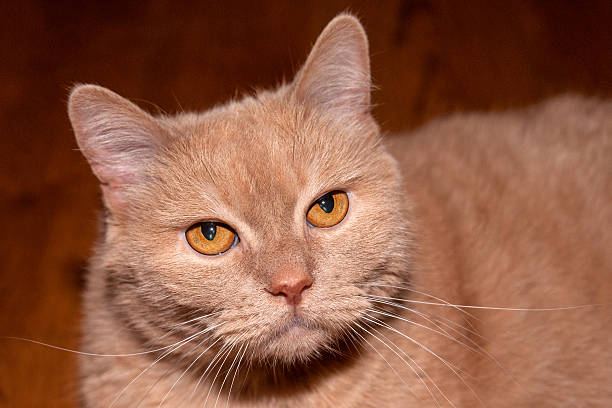
Fawn is a dilution of cinnamon and is even rarer than cinnamon. You can identify fawn cats by their smooth caramel tones. You will only find this rare cat coat color in purebred cats that have been specifically bred to produce it.
Fawn is a variation of the cinnamon color, determined by a specific recessive gene and diluted by the dense pigment gene. For a cat to be fawn, it must be a recessive homozygote for the primary gene for coat color and a recessive homozygote for the dense pigment gene.
Fawn represents the maximum dilution of the warm brown series — the end point of the chocolate-cinnamon-fawn dilution ladder. The resulting color is a rose-tinted pale beige, described variously as warm mushroom, light caramel, or pale rosewood. It is photographically one of the most beautiful cat colors to capture because the warm undertone glows differently at different light angles.
True Albino — The Rarest of All
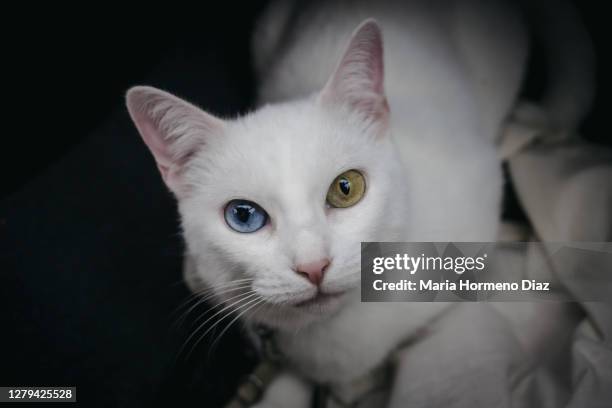
The rarest cat color is true albino. Unlike dominant white, which masks an underlying color, true albino cats lack any pigment due to a complete genetic failure of melanin production. Albino cats have pale pink eyes due to blood vessels visible through the unpigmented iris and are extremely photosensitive — their eyes require protection from bright light throughout their lives. True albinos are distinguished from dominant white by eye color: dominant white cats may have blue, green, amber, or odd eyes, while true albinos have only pink or very pale blue eyes.
The Color-Breed Connection — Why Certain Breeds Own Certain Colors
Some colors exist in isolation — the Havana Brown’s chocolate, the Russian Blue’s blue, the Chartreux’s particular shade of grey — because those breeds were developed specifically around that color as a defining characteristic. Others, like tabby, calico, and tuxedo, are pattern types that appear across dozens of breeds because they do not conflict with any breed standard. Understanding which colors are breed-exclusive and which are distributed broadly helps anyone identify what they are looking at and choose a breed that matches the specific color they love.
The Siamese family — including the Balinese, Oriental Shorthair, Colorpoint Shorthair, and related breeds — carries the broadest range of pointed colors of any breed group. The Oriental Shorthair specifically is recognized in more coat color and pattern combinations than any other cat breed, making it the most color-diverse breed in the world, with over 300 recognized combinations. For anyone who wants a specific rare color — cinnamon, fawn, chocolate, lilac — the Oriental Shorthair is often the most accessible source because breeders in this group have actively maintained the full spectrum of recessive color genetics.
The Science That Made Your Cat Beautiful
Every color in this guide is the expression of a gene that has been inherited from ancestors going back thousands of years to the African wildcat from which all domestic cats descend. The same two pigments — eumelanin and pheomelanin — that produced the sandy coat of a desert wildcat now produce the silver smoke of a Persian, the lilac of a Balinese, the tortoiseshell mosaic of a barn cat, and the vivid orange of a Maine Coon photographed in summer light. The genome remained almost entirely the same. The modifiers stacked, diluted, inhibited, and rearranged — and the result is the most visually extraordinary collection of coat variation in any domesticated species. Your cat’s color is not decoration. It is thousands of years of genetics written on the outside of a living animal. Look at it accordingly.