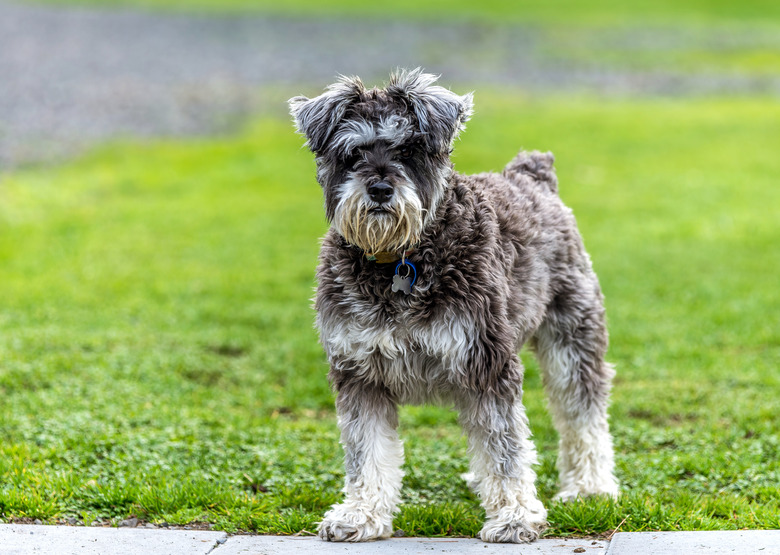
You just bathed your Schnauzer. The house smelled wonderful for approximately forty-five minutes. And then — gently, persistently, with the quiet confidence of something that knows it is going to win — the smell returned. You are not imagining it. Your Schnauzer is not uniquely dirty or defective. This is a breed with specific anatomical features that create specific smell risks, and most of them are fixable once you know which one you are dealing with. This guide identifies the seven most common sources of Schnauzer odor with honesty and specificity, explains what each smell indicates, and tells you exactly what to do about each one. Start at the top and work through the list — your nose will tell you when you have found the right entry.
First — How to Locate the Smell Before You Can Fix It
The most important diagnostic step that most Schnauzer owners skip is identifying where the smell is coming from, rather than treating the whole dog as if the smell is general and uniform. Get your nose close to your dog — yes, genuinely close — and check each zone: the beard and muzzle area, the ears, the skin along the body, the paws between the toes, the rear end, and the teeth and gums. Smell the beard to determine if the odor is mild or strong — persistent foul odors could indicate a yeast or bacterial infection. Run your fingers through the beard to feel for sticky or greasy buildup from food, saliva, or dirt. The location of the smell determines the cause and the solution. Guessing and bathing repeatedly without identifying the source wastes time and strips the coat of oils unnecessarily.
Cause 1 — The Beard: The Most Schnauzer-Specific Smell of All
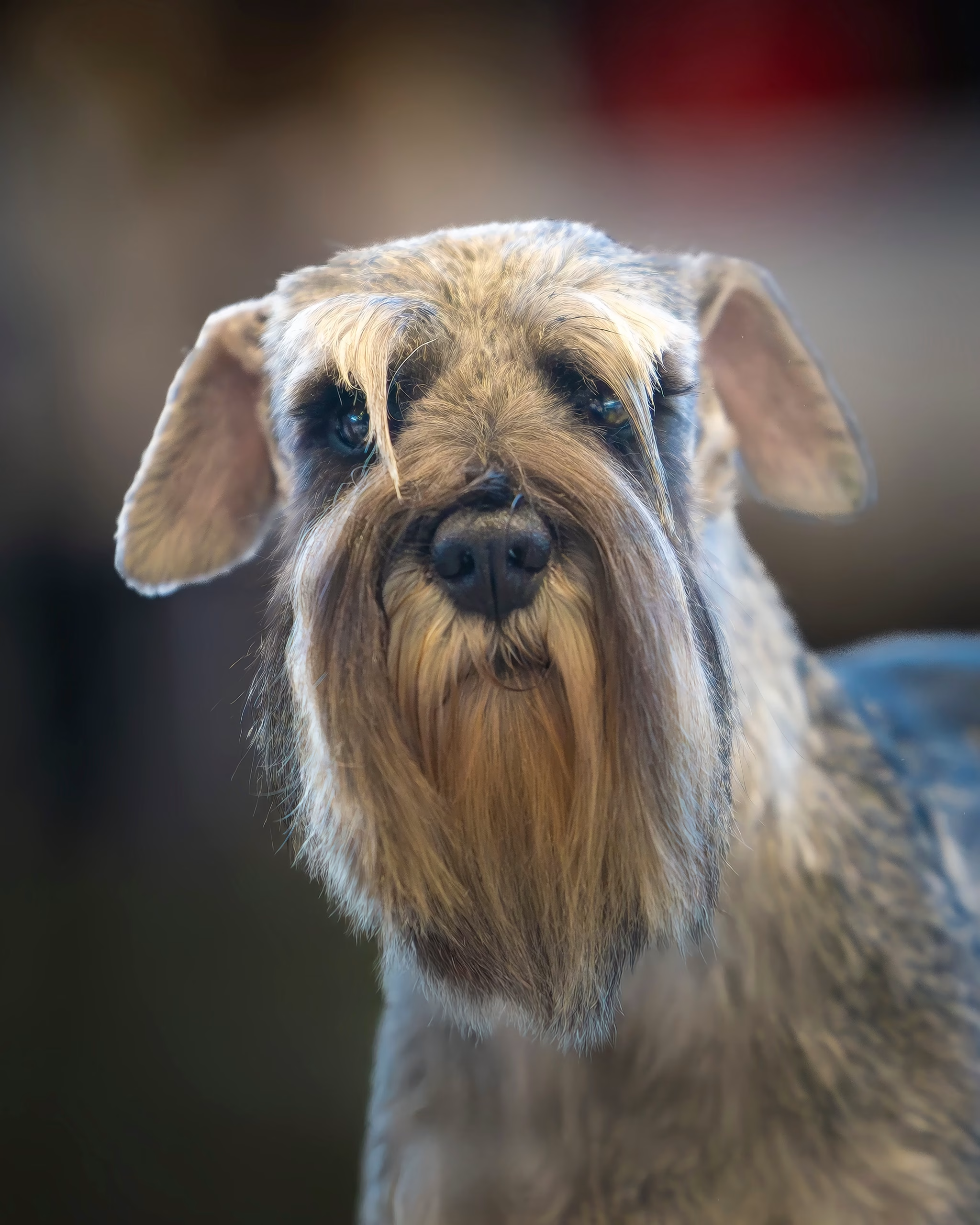
The number one reason Schnauzers develop beard odor is trapped moisture. When food particles, water, and saliva stay in the beard for too long, bacteria and yeast begin to grow. This is the cause of what Schnauzer owners describe as the permanent “wet dog” quality to their dog’s face — a mild but persistent musty smell that returns within hours of a bath because the moisture that produces it is being continuously replenished by every drink of water and every meal.
The smell is not the beard hair itself. It is the ecosystem that develops inside the dense, continuously damp environment of the beard — bacteria and yeast that have found conditions nearly ideal for colonization. If the smell persists despite regular cleaning, it could indicate a yeast or bacterial infection. Look for signs of redness, excessive itching, or skin irritation. If you suspect an infection, consult your vet for further treatment options.
The Fix: Daily beard wiping is not optional — it is maintenance. Use an unscented dog-safe wipe on the beard after every meal and after every drink. Once or twice weekly, wash the beard specifically using a deodorizing dog shampoo, scrubbing gently down to the skin beneath. If necessary, use a low-heat setting on a blow dryer to ensure the beard is completely dry — moisture left behind can lead to a mildew-like odor. A beard that is dried completely after every wash smells dramatically better than one that is washed but left damp. This single change, applied consistently, resolves the majority of beard odor complaints.
Cause 2 — Anal Glands: The Fishy Smell That Stops Every Conversation
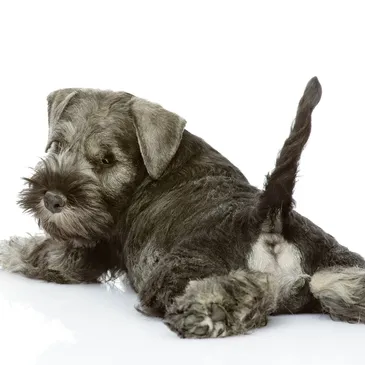
Excessive anal gland secretion can result in a musty, pungent odor. Anal sacs can also become abscessed or infected, with bacteria or yeast organisms then producing an odor. If you’ve ever noticed a strong, fishy odor coming from your dog, chances are it’s related to their anal glands. The anal glands are two small scent sacs located on either side of the rectum. They normally express a small amount of fluid during defecation, but when they become full, impacted, or infected, they produce the specific rotten-fish odor that is impossible to mistake once you know what it is and impossible to ignore once it is present in your living room.
Signs that anal glands are the issue: your Schnauzer is scooting their rear end across the floor, licking or biting the base of their tail, or sitting with unusual reluctance. Persistent licking, biting, or chewing at the base of the tail or anus can indicate gland discomfort.
The Fix: Veterinarians and trained groomers can manually express a dog’s anal glands to remove built-up fluid. While some pet owners attempt this at home, improper technique can cause irritation or injury. Have your vet or groomer express the glands every 6 to 8 weeks as part of a regular schedule if your Schnauzer is prone to buildup. A high-fiber diet and regular exercise can improve stool consistency and promote natural gland expression. Soft stools are one of the primary reasons anal glands do not empty naturally — firm stools during defecation provide the pressure that empties the glands naturally with every bowel movement.
Cause 3 — Ear Infections: The Smell That Is Closer Than You Think
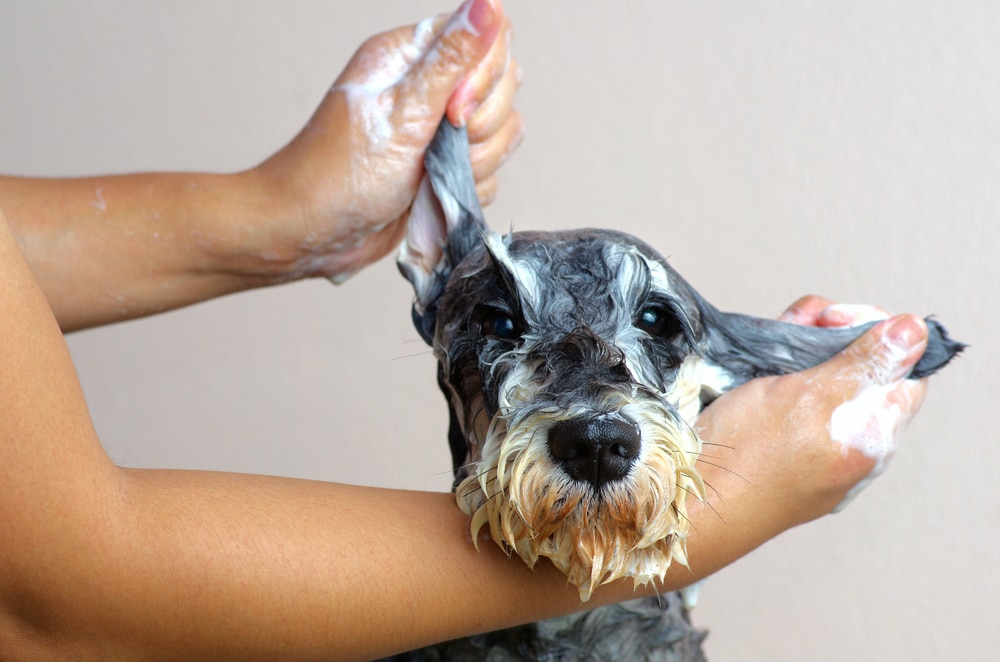
Ear infections, or otitis, are a common source of odor in dogs. The smell can be yeasty or actually smell like sewage. Schnauzer ears — whether natural drop ears or cropped — have an enclosed structure that reduces airflow to the canal and creates a warm, moist environment that favors both yeast and bacterial overgrowth. The smell of an ear infection ranges from mild mustiness to a genuinely foul odor that is immediately obvious when you lift the ear flap.
Signs of ear infection beyond the smell: your Schnauzer is shaking their head repeatedly, scratching at one or both ears, tilting their head to one side, or flinching when their ear is touched. Any of these alongside an unusual odor is a veterinary appointment, not a home cleaning situation.
The Fix: Regular ear cleaning with a veterinary ear cleaning solution every one to two weeks prevents the buildup of wax and debris that creates the conditions for infection. Apply the solution, massage the base of the ear for 20 seconds, allow your Schnauzer to shake, then wipe visible debris with a cotton ball — never insert cotton swabs into the canal. An active ear infection requires veterinary diagnosis and prescription medication — the cause may be bacterial, yeast, or a combination, and treating the wrong one produces no result.
Cause 4 — Skin Conditions: Seborrhea and Yeast Dermatitis
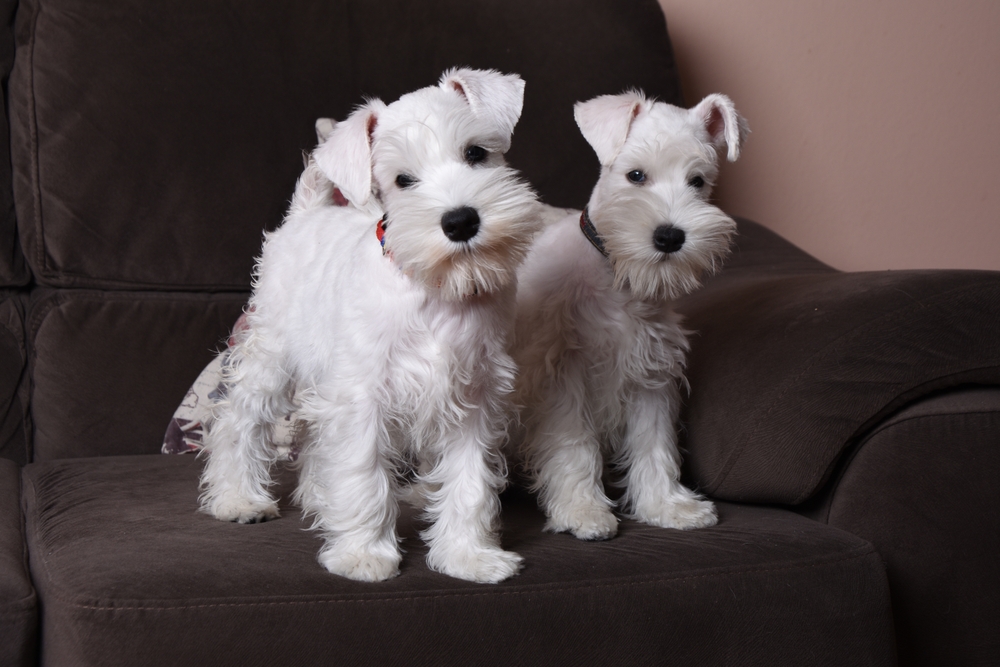
A strong unpleasant smell in Schnauzers can stem from skin infections, often worsened by inactivity. Bathing with medicated shampoos and monitoring for infections help manage odor. Consult a vet for possible underlying causes like seborrhea or allergies.
Miniature Schnauzers are specifically susceptible to a skin condition called seborrhea — a disruption of the skin’s oil production that creates either excessively oily or excessively dry skin, both of which produce a characteristic smell. This condition requires regular bathing with a special medicated shampoo to eliminate the odor and heal the skin. Yeast dermatitis — an overgrowth of Malassezia yeast on the skin surface — produces a distinct sour or musty odor that is often accompanied by skin that appears slightly greasy, red, or flaky.
The Fix: If your Schnauzer smells persistently despite regular bathing and the smell is coming from the skin rather than the beard or ears, this warrants a veterinary examination. The best approach to address bacterial or fungal infections is frequent bathing with a different shampoo designed to flush the hair follicles. Chlorhexidine shampoos address bacterial causes. Antifungal shampoos like Malaseb address the yeast causes. Your vet will identify which applies before prescribing either.
Cause 5 — Dental Disease: The Breath That Changed Everything
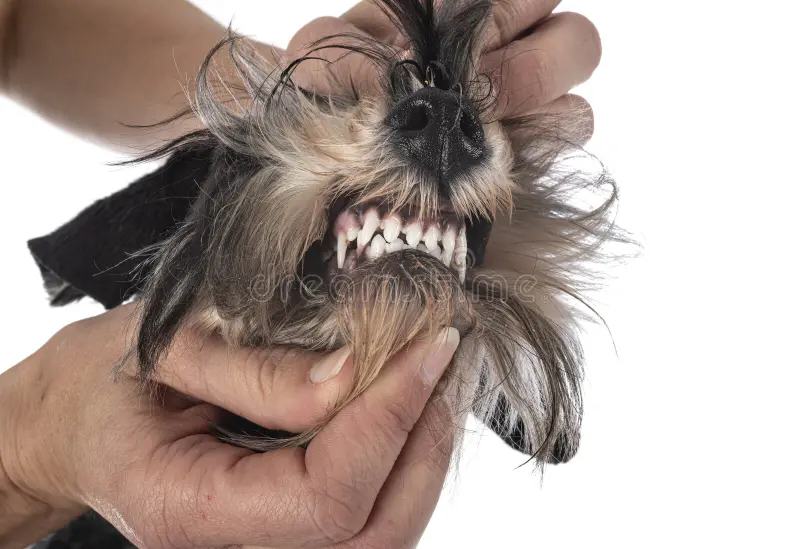
Various dental diseases can cause bad breath, or halitosis. Dental calculus harbors numerous bacteria that produce odor. Dental disease can also lead to excessive drooling, causing the skin around the mouth to become infected and odiferous. Miniature Schnauzers have all their teeth compressed into a small jaw, creating the crowding and tartar accumulation that make dental disease one of the most common health problems in this size variety. The smell of advanced dental disease is genuinely impossible to be in the same room with — but early dental disease has a milder, persistent breath odor that owners often normalize because it develops gradually.
The Fix: Brush your Schnauzer’s teeth three to five times per week with dog-specific toothpaste. This is the single most impactful thing you can do for dental health and the associated breath odor. Annual professional dental cleanings under anaesthesia remove the tartar and calculus that home brushing cannot address. Dental chews approved by the Veterinary Oral Health Council provide supplementary plaque control between brushings.
Cause 6 — Diet: The Smell Is What You Feed
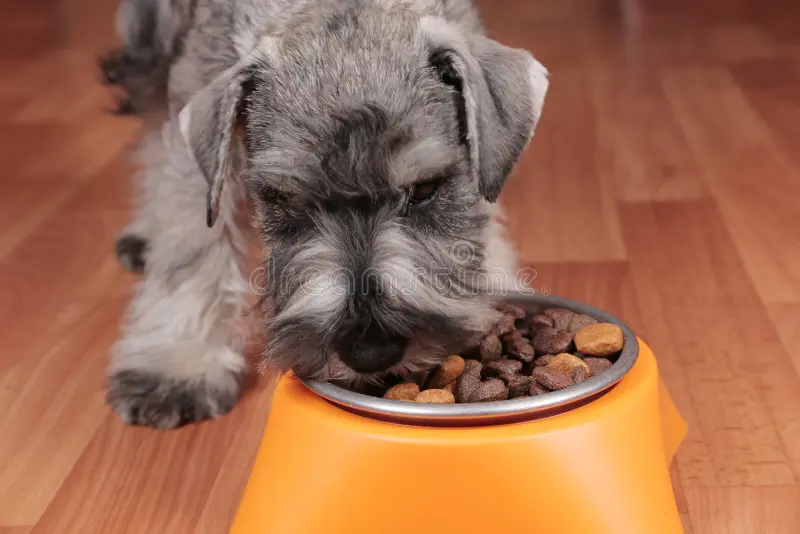
Some dog foods based on fish meal or with added fish oil can make for fishy-smelling dogs. The food your Schnauzer eats directly affects their body odor, breath, and stool odor in ways that are immediate and measurable. High-fat foods cause flatulence, which in a small Schnauzer in an enclosed room is an experience that requires no further description. Fish-based diets or fish oil supplements — genuinely beneficial for coat health — can produce a persistent fishy quality to the overall dog.
The Fix: If your Schnauzer’s smell changed around the same time their diet changed, the diet is almost certainly a contributing factor. Switching to a lower-fat formulation and monitoring the response over two to three weeks identifies diet as a cause or eliminates it. For Miniature Schnauzers specifically, low-fat diet management is both a smell intervention and a pancreatitis prevention strategy — these two goals are aligned.
Cause 7 — The Coat Itself: When “Regular Bathing” Is Not Enough
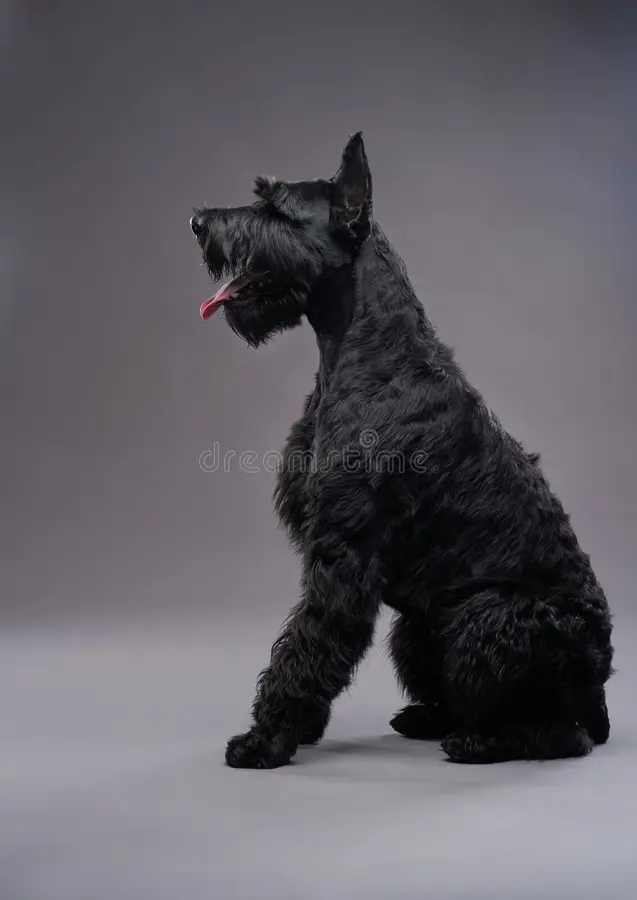
A coat that is not kept clean and groomed can trap dirt and other substances with unpleasant odors. If a dog’s haircoat is chronically wet, it can harbor lots of bacteria and yeast. A Schnauzer coat that has gone too long between professional grooms — longer than eight weeks in most cases — develops a coat texture that traps odors rather than repelling them. The distinctive wiry double coat that is one of the breed’s most practical features becomes an odor sponge when it is overgrown, matted in any areas, or damp from rain or water exposure without thorough drying.
The Fix: Professional grooming every six to eight weeks is the maintenance schedule, not the ambitious one. Between professional appointments, the coat needs brushing two to three times weekly to prevent the mat formation that traps moisture and odor. After rain walks or baths, dry the coat thoroughly — especially in the beard area, between the leg furnishings, and along the belly where airflow is lowest. A blow dryer on low heat directed at those areas after every wet exposure dramatically reduces the chronic mild odor that owners often attribute incorrectly to their dog simply being a smelly dog.
Your Schnauzer Is Not a Smelly Dog. They Have Specific Smell Risks With Specific Solutions.
Work through the seven causes in this guide, locate your specific smell by zone, and apply the targeted fix. Most Schnauzer odor problems resolve within two to four weeks of consistent attention to the correct cause. The one that does not resolve with home management warrants a veterinary visit — because an infection, a dental issue, or a skin condition that is causing smell is also causing your dog discomfort. Fix the smell. Help the dog. Both outcomes arrive together when you address the cause rather than the symptom.