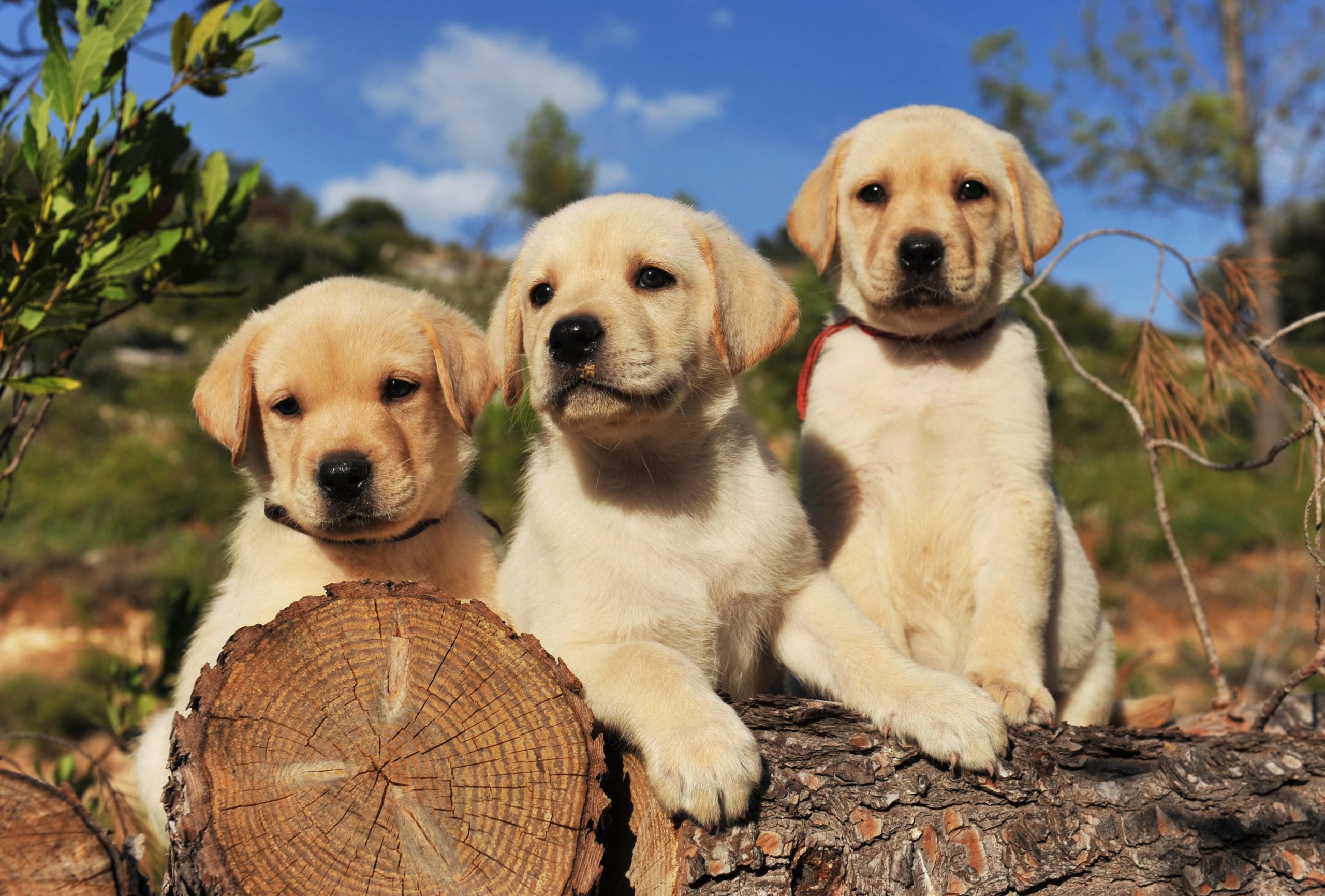
Here is the truth about Labrador Retrievers: they are among the most intelligent, most eager-to-please, most trainable dogs in the world. They understand new commands in as few as five repetitions. They are motivated by food, by play, and by the approval of their person in ways that make positive reinforcement training almost effortlessly effective.
Labradors are exceptionally intelligent, ranking among the top ten smartest dog breeds. This intelligence makes them quick learners when it comes to training. They can understand new commands in as few as five repetitions and obey a first command 95% of the time or better. And yet — and this is the part that surprises new Lab owners — a Labrador without consistent, intentional training is one of the most chaotic domestic animals available. Their energy is genuine, their enthusiasm for everything is absolute, and their impulse control starts essentially at zero. The gap between the dog they are by nature and the dog they can become through training is one of the most dramatic transformations in the dog world. These twelve tips are how you make that transformation happen.
Why Impulse Control Is the Foundation of Everything
Here’s the thing most Lab owners get wrong: they think they have a behavior problem. They don’t. They have an impulse control problem. Your Lab knows they shouldn’t jump on guests. They know they shouldn’t steal the roast chicken off the counter. They know they should walk nicely on a leash. They just can’t help themselves in the moment because the impulse to do the fun thing overwhelms the training. This is the reframe that changes everything. A Lab that jumps on every guest, pulls the leash horizontally on walks, and eats everything within reach is not a badly behaved dog — they are a dog with undeveloped impulse control. And impulse control is trainable. Systematically, deliberately, one small moment at a time.
Build impulse control into daily life: Wait at every door. Before going outside, before coming inside, before getting out of the car. A dog who learns to pause at thresholds learns to pause everywhere.
Tip 1: Start the Day They Come Home
Training a Labrador should begin as soon as you bring them home, whether they are a puppy or an adult. Early training ensures they develop good habits and prevents behavioral problems.
Labrador puppies adore people, food, and fun. Usually in that order. Early training helps them learn what’s okay and what’s not — like sock-stealing and slipper-shredding. It also builds confidence with new people, sounds, and situations.
There is no settling-in period before training begins. Every interaction from the first hour in your home either teaches the dog something you intended or something you didn’t. The Lab, which is allowed to jump up as a puppy because it’s cute, learns that jumping is how you greet people — and a fifty-pound adult Lab greeting people that way is not cute at all. Begin as you mean to continue, from day one.
Tip 2: Keep Sessions Short, Frequent, and Fun
Keep sessions short and engaging — about 5–10 minutes for puppies and up to 15 minutes for adults — to maintain focus.
Keep sessions short and varied. Labs learn fast but get bored with repetition. Five minutes of focused training beats thirty minutes of the same exercise over and over. Mix up the cues, change locations, and end on a success. A bored Lab starts freelancing — offering random behaviors to see what sticks — which is entertaining but counterproductive.
Multiple short sessions across the day produce significantly better results than a single long one. The Lab’s brain consolidates learning during rest periods between sessions — the gap is not wasted time, it is processing time. End every session on a behavior the dog can do successfully, reward it generously, and release the dog to free time. The session should end before either party wants it to.
Tip 3: Make Positive Reinforcement Non-Negotiable
Positive reinforcement training is a cornerstone in Labrador Retriever training. This technique involves rewarding your dog with treats, praise, or toys when they exhibit desired behaviors. Start with simple commands like “sit” and “stay” and reward your Labrador each time they follow the command correctly. Over time, your dog will associate these behaviors with positive outcomes, making them more likely to obey your commands.
Positive reinforcement is a powerful training tool, especially for Labradors. They are naturally eager to please and respond enthusiastically to praise and rewards.
The specific reward matters as much as the fact of rewarding. Labs are food-driven — this is one of their most consistent breed characteristics — and this drive makes them exceptionally responsive to food-based training. Use high-value treats (small pieces of real chicken, cheese, or freeze-dried meat) for new behaviors and difficult environments. Lower-value treats are appropriate for well-established behaviors in distraction-free settings.
We save higher-value treats for hard moments — vet visits, grooming, recall work — not every sit. Once your Labrador masters a command, begin phasing out treats and replacing them with verbal praise or affection.
Tip 4: The Age-by-Age Training Roadmap
8–12 weeks — The Sponge Stage: Your Lab is absorbing everything. Focus on gentle socialization, handling (ears, paws, mouth — especially useful for vet visits), starting toilet training, and introducing simple cues like sit or come. Manage calm introductions to visitors.
3–6 months — The Enthusiastic Explorer: This is the peak mouthy, curious, and high-energy phase. Continue socializing, add short obedience sessions, and reinforce clear boundaries. Reward calm behavior and maintain consistent routines.
6–12 months — The Teenage Years: When your adorable puppy develops selective hearing, tests boundaries, and forgets everything they learned. Stay patient, reinforce good manners and positive habits. It pays off eventually.
The teenage months between six and eighteen months are when most people give up on training — and when consistent training matters most. The Lab that gets through their adolescence with maintained training expectations becomes the reliably calm, wonderful adult that the breed is famous for.
Tip 5: Teach Housebreaking with Routine, Not Punishment
Start by taking your Labrador outside to the same spot each time you need to take them out, such as immediately after meals or naps. Positive reinforcement is also essential in housebreaking your Labrador. Whenever they do their business outside, be sure to praise and reward them with treats and affection. This encourages good behavior and helps them associate going potty outside with positive outcomes.
Clean accidents thoroughly with an enzymatic product and never punish. It only delays learning.
Punishment for accidents inside does not accelerate toilet training — it teaches the puppy to hide when they need to go rather than communicating the need. Punishment works against you. The routine — outside immediately after waking, after eating, after play — works for you. Maintain the routine without exceptions, and most Labs have the concept reliably within two to four weeks.
Tip 6: Crate Training Is a Gift to Everyone
Crate training is essential for ensuring your Labrador Retriever is well-behaved, especially when left alone or during housebreaking. Dogs have an instinct to keep their sleeping area clean, so a crate can help establish a designated space for them.
A crate should be your puppy’s safe space and an aid to house training.
Introduce the crate with positive association: meals inside the crate, treats thrown in randomly, calm praise for voluntary entry, never use it as punishment. Increase duration gradually. A Lab who has been crate-trained with patience and positive association will use their crate voluntarily as an adult — retreating there when tired, stressed, or simply seeking a quiet moment. It becomes their space, not a punishment, and that distinction is everything.
Tip 7: Leash Training Requires Patience and Consistency
When it comes to leash training a Labrador Retriever, one of the most important things to keep in mind is to approach the process with patience and consistency. Gentle walking is an effective technique that allows you to establish a calm and relaxed atmosphere for both you and your dog. To practice gentle walking, start by choosing a quiet area with minimal distractions where your Lab can focus on you. Hold the leash loosely but firmly, allowing your dog to set the pace. As you walk, reward your dog with treats and praise for remaining by your side. Avoid pulling or jerking the leash, as this can create anxiety and make the training more challenging.
Leash training is essential for Labradors, as their strength can make pulling problematic. Start with short walks using a comfortable harness and practice in a quiet area with few distractions.
The technique that works consistently for Lab leash pulling: the moment the leash goes tight, stop completely. Stand still. Wait for the dog to release the pressure by stepping back toward you. The instant the leash has any slack, mark and reward, and begin walking again. You will stop a lot in the first weeks. You will stop less each week after that. The pattern communicates — through pure consequence rather than correction — that a tight leash stops all forward movement.
Tip 8: Master the Recall — Then Protect It
Control issues with off-leash dogs are really common. A dog that cannot be trusted without a leash faces a very restricted life, so it’s really worth getting on top of these problems early. One problem that can take longer to fix is a broken recall.
The recall is the most important behavior your Lab will ever learn. Build it through relentless positive association: every single recall is rewarded generously, enthusiastically, and immediately. Every time. Without exception. Never call your Lab to you for anything they dislike — baths, nail trims, the end of a fun outdoor session. Go to them for those things. Reserve “come” exclusively for the prediction of the best possible outcome.
Labs who learn self-control as youngsters become the calm, reliable adults that make the breed so beloved. They’re the dogs you can take anywhere — restaurants, offices, road trips, family gatherings — because they know how to regulate their own excitement.
Tip 9: Channel the Retriever Drive
Channel the retriever drive. Instead of fighting your Lab’s need to carry and fetch things, use it as a training reward. A game of fetch can be more motivating than treats for some Labs. Structured retrieve games, scent work, and hide-and-seek with toys all engage the breed’s instincts while reinforcing impulse control.
Labrador puppies are mouthy by nature. Labs were bred to retrieve game, so carrying things in their mouth is deeply satisfying to them. Puppy mouthing tends to be more intense with this breed, but it’s completely normal behavior. Redirect it — give them something appropriate to carry, rather than punishing it. A Lab without something in its mouth is a Lab looking for something to put in its mouth.
Work with the breed’s instincts rather than against them. Teaching “fetch,” “bring it,” and “drop it” channels the retriever drive productively. These commands are also among the easiest for Labs to learn because they are doing what their entire genetic history has prepared them for.
Tip 10: Socialize Early, Deliberately, and Positively
Socialization is a crucial aspect of Labrador Retriever training. Early exposure to various environments, people, and animals helps prevent behavioral issues such as fearfulness or aggression. Take your Labrador to parks, beaches, and other dog-friendly places to expose them to different experiences.
Socialize early and deliberately. Labs are naturally social, but “naturally social” without proper exposure turns into excitement-based reactivity. A Lab who loses its mind every time they see another dog hasn’t been socialized — they’ve just been excited.
True socialization produces a dog who encounters new people, dogs, environments, and sounds with calm curiosity rather than overwhelming excitement. The key is that every socialization experience should be calm and positive — the puppy should be below the threshold of overexcitement throughout, and rewarded for calm rather than excited behavior during new encounters.
Tip 11: Use Clicker Training for Precision
Clicker training is another effective method for Labrador Retrievers. It involves using a small handheld device that emits a distinct clicking sound when pressed. The click is paired with a reward, such as a treat, to reinforce good behavior. Labradors quickly learn to associate the click with a positive outcome, making it a powerful tool for teaching new commands. Consistency and timing are key to successful clicker training.
The clicker’s primary value is timing precision — the click marks the exact moment of correct behavior, allowing the reward to arrive seconds later without confusion about what was being rewarded. For complex behaviors, shaping (clicking increasingly close approximations of the final behavior), the clicker is particularly powerful and the Lab’s intelligence makes them excellent candidates for complex shape training.
Tip 12: Enroll in Group Classes
Group training classes are the ideal environment for Lab training because they combine everything this breed needs: structured learning, socialization with other dogs and people, impulse control practice in a distracting environment, and the mental stimulation of learning new skills.
Enrolling your Labrador Retriever in obedience classes is an excellent way to ensure comprehensive training. Professional dog trainers can provide expert guidance, socialization opportunities, and structured training sessions. Be sure to choose a reputable trainer who uses positive reinforcement methods.
The distracting environment of a group class is not a problem — it is the point. A Lab that can maintain focus and respond to commands while surrounded by other dogs and unfamiliar people has genuinely learned self-regulation. A Lab who only responds in a quiet kitchen has not yet.
Common Training Challenges — And How to Handle Them
Jumping up: Redirect their excitement by teaching the “sit” command when greeting people. Every person who greets your dog must apply the same rule — no greeting until four paws are on the floor. Consistency across every person eliminates the behavior faster than any other approach.
Chewing: Provide chew toys to satisfy their natural tendency to chew and prevent destructive behavior. Boredom, excess energy, and lack of appropriate chew outlets drive the majority of destructive chewing in Labs. A tired Lab who has appropriate chewing options rarely destroys anything valuable.
Excessive barking: Identify the trigger, address it with desensitization and counter-conditioning, and teach a specific “quiet” cue that is rewarded every time silence follows a bark.
Counter surfing: Management first — nothing on the counter that the dog can access. Then teach “off” and reward generously every time the dog keeps four paws on the floor when something appealing is within reach.
ENDING:
A well-trained Labrador Retriever is one of the most versatile, enjoyable dogs on the planet. They can hike with you all day, lie quietly at your feet during dinner, greet your friends without bowling them over, and adapt to just about any lifestyle you throw at them. That’s the dog you’re building toward. The investment in impulse control and socialization during the first two years pays off for the next ten-plus.
The training is not a phase. It is a relationship — one that deepens with every session, every successful recall, every morning walk that is genuinely pleasant rather than a leash-pulling endurance event. Start now. Be consistent. Be patient with the teenage months. And save this guide to Pinterest for the days when selective hearing strikes and you need the reminder that this stage is temporary and the brilliant dog on the other side of it is absolutely worth it