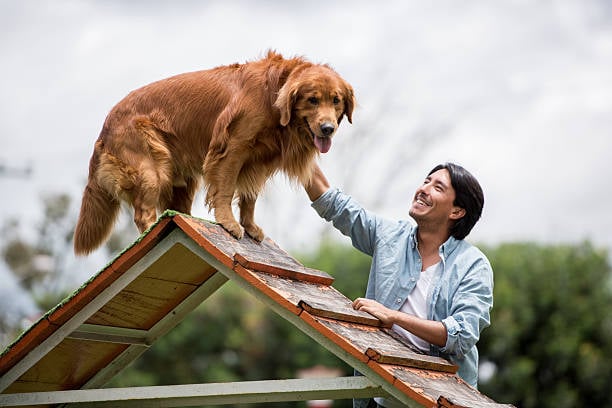
Your dog is not trying to ruin your life.
This is the thing that gets lost somewhere between the chewed shoes, the jumping on guests, the recall that doesn’t recall, and the leash pulling that has given you the shoulder of a retired tennis player. Your dog is not stubborn, vindictive, dominant, or broken. In almost every case where a dog’s behavior is consistently frustrating, the root cause is something the owner is doing — or not doing — during training.
This is actually excellent news. Because if the problem is coming from your end of the leash, the solution is too.
These twelve mistakes are not obscure edge cases. They are the patterns that professional trainers, veterinary behaviorists, and experienced dog owners see repeated constantly — across breeds, across ages, across households. Recognizing your own behavior in this list is not a reason to feel bad about yourself as a dog owner. It is the first step toward having the dog you always pictured when you brought them home.
Mistake #1: Starting Training Too Late
The most common thing a dog trainer hears from a new client is some version of: “We thought he’d grow out of it.” He did not grow out of it. He grew into it. And now the behavior that would have taken two weeks to address at eight weeks old is going to take six months to reshape at two years.
Puppies are like sponges, absorbing information and experiences rapidly. According to experts, the best time to start teaching dogs is around eight weeks of age. However, even if you’ve adopted an older animal, it’s never too late to begin training — but expect the process to take longer the more established the habits have become.
The assumption that young puppies are “too young” to train is one of the most damaging myths in dog ownership. Young puppies are actually the most receptive learners available. Their habits are not yet formed. Their associations are still being made. The window where everything is negotiable is brief — and owners who miss it spend years trying to renegotiate behaviors that a puppy would have accepted as simply how the world works.
The fix: Start the day the dog comes home. Not after they’ve “settled in.” Not after the first vet visit. The first day. Every interaction from that point forward is training — whether you intend it to be or not. You are either teaching the dog what you want, or you are teaching the dog what you didn’t mean to allow.
Also read 12 Things Nobody Tells You Before Getting a Yorkie Puppy (Read This First)
Mistake #2: Being Wildly Inconsistent
Monday, the dog is allowed on the sofa. Tuesday, they are not. Wednesday, your partner lets them up. Thursday, you are annoyed at the dog for being on the sofa. The dog is completely bewildered, and you have decided it is being difficult.
Many behavior problems are not caused by a bad dog. They are often the result of confusion, inconsistency, unclear expectations, or too much freedom too soon. Even very well-meaning owners can accidentally reinforce the exact behaviors they are trying to stop.
Dogs learn through pattern recognition. They are extraordinarily good at it. When the pattern is consistent, they learn fast and hold the behavior reliably. When the pattern is inconsistent — when the rules change based on who is in the room, what mood the household is in, or whether someone had a long day at work — the dog learns that rules are negotiable. And a dog who has learned that rules are negotiable tests them constantly, because the pattern they have actually learned is that persistence sometimes works.
The fix: Decide on your rules before you need to enforce them. Write them down if it helps. Share them with every person in the household and establish that the rules apply to everyone, every time. A dog can adapt to almost any reasonable set of expectations — but only if those expectations are presented consistently enough to be learned.
Mistake #3: Repeating Commands Until They Lose All Meaning
Cue nagging is when your dog doesn’t respond to a cue, so you keep repeating it. Pretty soon, your dog doesn’t pay attention until you’ve said the word five or six times. By repeating the cue, you’ve taught your pet that he doesn’t have to respond right away — and your cue is now “sit, sit, sit” rather than “sit.”
This is one of the easiest mistakes to make and one of the hardest to break in yourself once it becomes a habit. The natural human response to being ignored is to repeat what you said, louder and more insistently. Dogs do not respond to this the way humans might. They respond to pattern, and the pattern you are teaching is that the word means nothing until it has been said four times.
When you repeat a cue multiple times, your dog will learn that the repeated version is the complete cue, instead of just the single word. They’ll wait for it to be said multiple times before responding.
The fix: Say it once. Mean it once. If the dog does not respond, do not repeat the command — instead, help the dog succeed by physically guiding them into the desired position, then reward that position. The goal is to make one clear cue consistently produce one clear response. That only happens when you stop giving the dog the option to wait out the first, second, and third repetition.
Mistake #4: Rewarding the Wrong Behavior at the Wrong Moment
You ask the dog to sit. The dog sits. You reach for the treat. The dog stands up in excitement. You give the treat anyway because they did sit, technically. You have just been rewarded for standing up.
Whatever your dog is doing when they get a reward will be reinforced. If you ask your dog to lie down but they’re sitting again when you give them the treat, you’ve really reinforced sitting, not lying down. Timing is everything in positive reinforcement training.
Reward timing is the most technically demanding part of positive reinforcement training and the part most owners underinvest in. The dog connects the reward to what they were doing at the precise moment it arrived — not to what they did three seconds earlier. Three seconds is an eternity in dog learning time.
The fix: Mark the behavior the instant it happens, then deliver the reward. A verbal marker — a sharp, consistent “yes” — or a clicker tells the dog exactly which behavior earned the reward, even if the treat takes a few more seconds to arrive. Practice marking speed with a friend before your training sessions. The improvement in your dog’s response rate will be immediate and measurable.
Mistake #5: Using Punishment as the Primary Training Tool
The dominance theory of dog training — the idea that dogs are constantly trying to climb a social hierarchy and must be shown who is boss through forceful correction — was based on studies of captive wolf packs conducted in the 1940s. Those studies have since been comprehensively discredited. The wolves were unrelated animals forced together under artificial conditions — about as representative of natural canine social behavior as a prison population is of human social behavior.
The dominance cliché has led to many faulty assumptions that aren’t grounded in science. Canine behavior experts warn that harsh corrections can lead to fear, anxiety, and even aggressive responses. Dogs punished frequently may become withdrawn, less responsive, or develop defensive behaviors.
The specific danger of punishment-based training is not just that it is less effective than positive reinforcement — it is that it can actively worsen the behaviors it intends to address. A dog who growls is communicating discomfort. Correcting the growl suppresses the communication without addressing the discomfort. The dog stops growling — and starts biting without warning, because you have removed the warning signal while leaving the underlying problem completely intact.
Fear-based behavior in dogs should not be suppressed but addressed using humane training and behavior modification methods. Correcting behaviors that are outward manifestations of stress, anxiety, or fear without addressing those emotions can lead to suppressed behavior and increased aggression.
The fix: Redirect rather than punish. When a dog offers an unwanted behavior, interrupt it calmly and guide the dog toward the behavior you do want — then reward that behavior generously. Address the underlying emotional state driving the behavior, not just the surface behavior itself. If the behavior involves fear, anxiety, or aggression, work with a qualified trainer or veterinary behaviorist rather than attempting to correct your way through it.
Mistake #6: Training Sessions That Go Too Long
Dog owners tend to think of training sessions the way they think of gym sessions — more time equals more progress. The opposite is true. A dog’s attention and retention drop dramatically after ten to fifteen minutes of focused work. Training past that point produces diminishing returns at best and actively undoes earlier progress at worst — the dog ends the session in a frustrated, disengaged state and carries that association into the next one.
Starting with shorter periods and adjusting as you go allows your pet to get used to training without becoming stressed, and allows you to modify unwanted behaviors in real-time. Throughout your training, keep sessions short enough that both you and the dog finish them wanting more rather than feeling done.
The optimal training session for most dogs is five to ten minutes of focused work, ending on a successful behavior, followed by a break. Multiple short sessions across the day produce significantly faster learning than a single long one, because the dog’s brain is processing and consolidating what it learned during each break between sessions.
The fix: Set a timer. When it goes off, end the session — even if the last repetition didn’t go well. Always end on a success by asking for a behavior the dog knows reliably, rewarding it generously, and releasing the dog to free time. This ensures that training ends on a positive note and that the dog’s last memory of the session is one of success and reward.
Mistake #7: Skipping Socialization — Or Doing It Wrong
Socialization is the process by which a young dog learns that the world is safe. It is not the same as simply exposing a puppy to things. It is the deliberate, positive introduction to the full range of people, animals, environments, sounds, surfaces, and situations the dog will encounter throughout their life — done in a way that creates positive associations rather than overwhelming ones.
Proper socialization is crucial for a well-behaved and well-adjusted dog. Many pet owners make the mistake of neglecting this aspect of training, which can lead to fearfulness and aggression toward other dogs and people. Make an effort to expose your dog to various environments, people, and animals from a young age.
The mistake that gets less attention is not under-socialization but poorly executed socialization — flooding. Flooding is the practice of exposing a dog to something frightening and leaving them in that situation until they stop reacting.
Flooding — literally immersing your dog in an experience in hopes they’ll get over it — is one of the most damaging approaches in dog behavior work. It frequently creates or deepens fear rather than resolving it, and the behavioral fallout can take months or years to address.
The fix: The socialization window is between approximately three and fourteen weeks of age — act urgently and intentionally during this period. Introduce new things at a pace that keeps the dog curious and engaged rather than overwhelmed and retreating. Watch the dog’s body language carefully. If they are backing away, freezing, or showing other signs of stress, you have moved too fast. Reduce the intensity of the experience before trying again. Every positive exposure builds confidence. Every overwhelming one erodes it.
Mistake #8: Misreading Your Dog’s Body Language
The yawning dog seems bored during training. The tail-wagging dog who seems happy to meet a stranger. The dog who “knows they did something wrong” and looks guilty when you come home. Each of these common owner interpretations is almost certainly incorrect — and acting on them produces training decisions that make everything worse.
Dogs communicate primarily through body language, using a complex system of signals that go far beyond simple tail wagging or barking. Many owners make the critical mistake of misinterpreting their pet’s physical and emotional signals, which can lead to miscommunication and potential behavioral issues. A tucked tail might indicate fear or submission, while a stiff posture could signal potential aggression or discomfort. A low, slow wag with a tense body can actually indicate anxiety or uncertainty — not happiness.
The yawning during training is not boredom. It is a stress signal telling you the session has gone too long or the demands have become too great. The dog greeting a stranger with a wagging tail may be genuinely happy — or may be anxious and using the wag to appear non-threatening while their tight body posture tells a completely different story. The guilty look when you come home is not guilt — it is the dog responding to your body language and tone, offering appeasement signals to diffuse what they perceive as your threatening energy.
The fix: Learn the full vocabulary of canine body language before interpreting your dog’s responses during training. Watch for stress signals — lip licking, yawning, looking away, shaking off, ears pinned back — and respond to them by reducing pressure rather than increasing it. A dog who is shutting down during training is not being stubborn. They are telling you something important. Listen.
Mistake #9: Giving Too Much Freedom Too Soon
The puppy has been doing really well. No accidents in the house for two weeks. No destructive behavior. They seem to understand the rules completely. So you stop supervising so closely. You leave them loose in the house while you work. You expand their access to rooms they weren’t allowed in before.
And then the sofa cushion happens.
Many behavior problems are the result of too much freedom too soon. Owners who expand a dog’s access to the home before the dog has truly earned that freedom through consistent demonstrated behavior are essentially setting the dog up to fail — and then responding to the failure with frustration directed at the dog for doing exactly what an unsupervised dog with access to valuable objects was always going to do.
Freedom is earned incrementally. A dog who is reliable in one room is not automatically reliable in the entire house. A dog who is reliable in the house is not automatically reliable in an unfenced yard. Each new environment and level of freedom is effectively a new test — and dogs need to demonstrate reliability in each context before that context can be considered safe for unsupervised access.
The fix: Expand freedom in small, deliberate steps. When you cannot supervise the dog directly, confine them to a space where they cannot make mistakes — a crate, a gated area, a puppy-proofed room. This is not punishment. It is management. It prevents the dog from practicing behaviors you don’t want practiced, and it prevents you from experiencing the frustration that makes training harder for everyone.
Mistake #10: Using the Wrong Rewards — or No Rewards at All
Too many people are stingy with rewards or won’t use anything but praise. But would you go to work if you stopped getting a paycheck? Behaviors that are reinforced are repeated. A reward is only reinforcing if it’s good from your dog’s point of view. Your dog might be crazy about cheese, but if you choose to reward them with kibble, their performance will drop.
This mistake operates on two levels. The first is owners who rely entirely on verbal praise as a reward during early training — praise from someone the dog barely knows, yet is not a high-value reward. It becomes meaningful over time as the relationship deepens, but in the early stages of teaching a new behavior, it rarely provides sufficient motivation for consistent performance.
The second level is owners who do use food rewards but use low-value ones when the situation calls for high-value ones. Training in a distraction-free kitchen with kibble works. Training recall at the dog park with kibble does not. The reward must be compelling enough to compete with whatever alternative the dog is being asked to disengage from.
The fix: Build a reward hierarchy for your specific dog. Know what they find irresistible — for most dogs, real meat, cheese, or freeze-dried liver are the highest value food rewards available. Use these for new behaviors, high-distraction environments, and recall training. Save lower-value rewards for behaviors the dog has already mastered in calm environments. And never forget that life rewards — play, a walk, access to a favorite space — are powerful reinforcers that cost nothing.
Mistake #11: Poisoning Your Cues
You spent two weeks teaching your dog a reliable recall. “Come” means run to me, and something great happens. It was working beautifully. Then one day you called the dog to come, and bathed them. The next day, your recall was 40% less reliable. The week after that, you couldn’t get a consistent response at all.
This is cue poisoning — when you accidentally associate a cue with something your dog views negatively, so they stop responding. If there’s something your dog really dislikes, avoid using trained cues in relation to that activity when you first start training. Once the cue has been thoroughly reinforced, you might be able to get away with it occasionally — but during initial learning, a single negative association can undo weeks of positive work.
Cue poisoning happens most frequently with recall — the most important behavior a dog can know and the one most frequently ruined by owners calling the dog to end their fun at the dog park, to put them in the crate, or to administer something unpleasant. Every time “come” predicts something the dog dislikes, the cue loses a little of its value. Eventually, the dog learns to hesitate — or ignore it entirely.
The fix: Protect your recall with your life. Never use it for anything the dog finds unpleasant. If you need to leash the dog at the park, walk to them rather than calling them to you. If you need the dog to come for a bath or a nail trim, use a different word — or go get them rather than calling. Your recall should reliably predict the best thing that happens to the dog all day, every single time, without exception.
Mistake #12: Not Accounting for Breed and Individual Instincts
A Border Collie owner in a suburban apartment who cannot understand why their dog is neurotic. A Beagle owner who cannot understand why their dog ignores them and follows their nose across three blocks. A Dachshund owner who cannot understand why their dog destroys the backyard garden bed with focused and systematic efficiency.
Getting a dog of a specific breed and not accounting for what that breed was actually developed to do is one of the sneakiest training mistakes. Dog training is not a one-size-fits-all deal. A dog bred for herding may want to nip or chase kids — not out of defiance, but because they were born to control movement. Small terriers will dig and bark, not because they’re disobedient, but because they were bred to hunt rodents. These are hard-coded instincts that training cannot simply override — but that can be channeled productively.
The mistake is not choosing a high-drive or instinct-heavy breed. The mistake is choosing one and then being surprised by — or worse, punishing — the behaviors those breeds were specifically developed to perform. A sighthound chasing a squirrel is not misbehaving. A herding dog nipping at children’s heels is not aggressive. A retriever who cannot stop carrying things is not broken. They are all doing exactly what thousands of years of selective breeding designed them to do.
The fix: Research your breed’s instincts and drives before you bring the dog home — and research them honestly. Then channel those instincts rather than fighting them. Give the Border Collie a job. Giving the Beagle controlled scent work. Give the terrier designated digging spaces. A dog whose instincts are honored and channeled is dramatically easier to train than one who is asked to suppress them entirely. Work with the dog you have, not the dog you imagined.
The Bigger Picture: It Is Almost Never the Dog
Most dog owners genuinely want to do the right thing. They love their dogs, want them to listen, and hope that everyday life will become easier with time. But one of the biggest misconceptions in dog training is the idea that good behavior simply develops on its own. In reality, many behavior problems are not caused by a bad dog. They are the result of confusion, inconsistency, unclear expectations, or too much freedom too soon.
Every single mistake on this list is fixable. Not one of them requires starting over with a new dog, giving up on training, or resigning yourself to a difficult relationship with your pet. They require changing what you are doing — consistently, patiently, and with the understanding that your dog is always trying to make sense of the world you are presenting to them.
When you change the information your dog is receiving, the behavior changes. It is not complicated. It is just consistent.
When to Call a Professional
Some behavior problems are beyond the scope of what any article — however thorough — can fully address. If your dog’s behavior includes:
Aggression toward people or other animals that goes beyond reactive barking — Persistent anxiety that affects daily quality of life — Behavioral changes that appeared suddenly in a previously well-adjusted dog — Responses to correction that include escalation rather than de-escalation
These are situations for a qualified professional. Professional dog trainers have the knowledge and experience to tackle complex behavioral issues and tailor training plans to a specific dog’s needs. They can identify underlying causes of problems, provide expert solutions, and offer insights that might be beyond the scope of DIY training. Investing in a professional trainer often saves time, reduces frustration, and can prevent long-term problems that might require more extensive interventions later.
Look for trainers who use force-free or positive reinforcement methods and who hold credentials from recognized organizations. A good trainer is not just training your dog — they are teaching you how to train your dog, which is a meaningfully different and more valuable service.
ENDING
The relationship between a person and a well-trained dog is one of the genuinely extraordinary things available to a human life. It is built not on dominance or compliance but on communication — a shared language that develops through consistency, patience, and the willingness to understand how the dog actually learns rather than how we assume they should.
The twelve mistakes in this guide are not character flaws. They are the predictable products of loving a dog more than understanding them. Now you understand them better. Go use that.
Share this with every dog owner you know who is in the middle of a frustrating training situation, and remind them: it is rarely the dog. It is almost always something fixable. And fixing it starts right now.