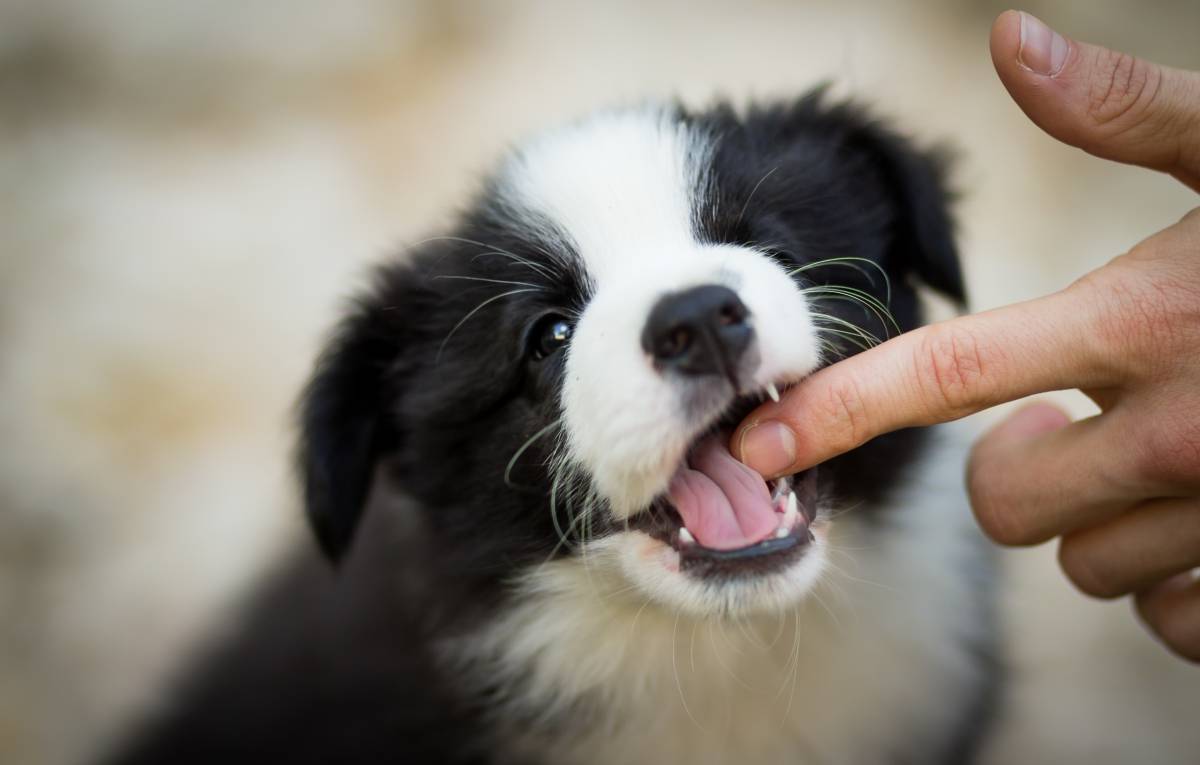
Week three with a new puppy’s behavior, and I had bite marks on both hands, a torn sleeve, and a very real question about whether I had made a catastrophic life decision.
My puppy did not seem mean. She seemed absolutely delighted — tail wagging, eyes bright, fully engaged in what she clearly believed was a wonderful two-player game involving her teeth and every exposed inch of my skin. The problem was entirely hers. Or so I thought, until I started doing the research and realized with uncomfortable clarity that the problem was almost entirely mine.
Puppy biting affects 90% of dog owners during the first few months of puppyhood. You are not alone, you are not failing, and your puppy is not broken. But you do need a plan — because the thing about puppy nipping is that it does not stop on its own. It stops when you consistently teach the right lessons, the right way, starting now.
These are the ten tricks that worked. Not in theory. Actually worked, in a real house, with a real puppy who had genuinely alarming enthusiasm for using her teeth on human beings.
First: Understand Why Your Puppy Is Actually Doing This
Before the tricks, the context, because understanding the why changes how you respond to the what.
Puppies usually learn bite inhibition during play with other puppies. If you watch a group of puppies playing, you’ll see plenty of chasing, pouncing, and wrestling. Now and then, a pup will bite his playmate too hard. The victim of the painful bite yelps and usually stops playing. The offender is often taken aback by the yelp and also stops playing for a moment.
When your puppy came home, they left behind the entire social feedback system that was teaching them how hard is too hard. Their littermates were doing the job. Now you are. And unlike a littermate who yelps and walks away, most humans react to puppy nipping in ways that accidentally teach the puppy to do it more — by pulling their hand away sharply, squealing in a tone that sounds like an invitation to play, or engaging with the puppy’s energy in ways that escalate rather than de-escalate the behavior.
It is helpful to understand the motivation behind your puppy’s nipping so you can modify your training. Your puppy might be nipping for different reasons depending on the time of day or how they’re feeling. Knowing the why will help you decide how to respond at that moment. Common reasons include: they want to play; they are overstimulated; they are tired; they are teething; or they want your attention.
The goal is not to teach your puppy never to use their mouth. The goal is to teach them that human skin is off-limits — always — and to give them appropriate outlets for the mouthing behavior that is completely natural and necessary for their development.
Trick #1: The Yelp Method — Speak Their Language
This is the most immediate, instinctively correct response to a puppy nip and the one that works fastest when executed correctly. The problem is that most people execute it incorrectly.
Veterinarian Jennifer Coates, DVM, recommends mimicking how another dog would respond to a too-hard nip. “Shriek as if you are truly injured, walk away, and ignore your puppy,” she says. “Go into a separate room and close the door if you have to. After a few minutes, you can play with your puppy again, but pick a game or toy that is unlikely to result in biting. Fetch is a good example.” If you consistently end playtime every time your puppy puts his mouth on a person, the behavior should disappear fairly quickly.
The keyword in that instruction is “shriek.” Not a mild “ouch.” Not a theatrical performance that looks and sounds like an excited play. A genuine, sharp, high-pitched yelp that sounds like actual pain — because that is exactly what your puppy’s littermates did when they bit too hard, and that is the feedback your puppy’s brain is already wired to understand and respond to.
The instant you feel your puppy’s teeth touch you, give a high-pitched yelp. Then immediately walk away from them. Ignore them for 30 to 60 seconds. If your puppy follows you or continues to bite and nip at you, leave the room for 30 to 60 seconds.
What goes wrong: The yelp sounds too playful, and the puppy reads it as an invitation. Or the owner yelps but then immediately re-engages with the puppy, canceling the lesson entirely. The yelp must be followed by complete withdrawal of attention — that combination is what communicates that biting ends the fun.
What it teaches: Human skin produces a reaction that makes everything stop. This is the most direct bite inhibition lesson available.
12 Terrible Dog Training Mistakes Owners Make →
Trick #2: Redirect Before the Bite Happens
Redirection is arguably the most important skill in managing puppy nipping — not because it stops a bite in progress, but because it prevents the bite from happening in the first place. The difference between reactive management and proactive prevention is the difference between a frustrating months-long battle and a relatively swift resolution.
“Chewing is a natural behavior for a dog, and it’s important to provide puppies with safe ways to chew to help satiate that behavior,” says dog-training expert Erin Askeland, senior manager of program development at Camp Bow Wow. “Options may include safe bones, rubber items like Kongs, and stuffed toys designed for puppies. If they don’t have access to these items, puppies will find other things to chew and bite on.”
The practice of redirection means having a toy immediately accessible at all times during interaction with the puppy — and offering that toy the moment you see the pre-nipping signals. Stiff body posture, dilated pupils, increased excitement, crouching into a play bow with a glazed focus on your hand — these are the tells. Redirect before the teeth arrive.
It is a good idea to keep a puppy chew toy at hand at all times, so you can anticipate biting behavior and substitute the toy for your hand or furniture. If they start nibbling at your fingers or toes while you are playing, offer a toy instead. If they continue to nip, stop the play session immediately.
What it teaches: There is always something appropriate available to bite. Your hands are not that thing. The toy is a better option — and the puppy learns this through consistent, cheerful redirection rather than through correction.
Also read 12 Terrible Dog Training Mistakes Owners Make
Trick #3: The Hand-Tuck — Remove the Target Completely
This is the trick that most people try for exactly one second before instinctively yanking their hand away — which is precisely the wrong response. When a puppy nips and you pull your hand back quickly, you have just activated every predatory instinct in a young dog’s brain. The retreating hand becomes the most interesting thing in the room.
AKC dog trainer and columnist Kathy Santo suggests turning around and tucking your hands into your armpits. “It’s actually a calming signal and a minor form of attention withdrawal,” she says.
The hand-tuck removes the target without creating the movement that escalates the behavior. Combined with turning your body away from the puppy and going completely still, it communicates disinterest in a language that dogs understand instinctively. You are not punishing. You are simply becoming the least interesting thing in the environment.
Avoid jerking your hands or feet away from your puppy when they mouth you. Fast, jerky movements encourage mouthing and nipping because these types of actions tap into their instinct to chase and capture. Instead, set up your puppy for success by using calm, smooth movements.
What it teaches: Biting produces stillness and the disappearance of the thing they wanted to engage with. The opposite of biting — gentle contact or no contact — produces continued interaction. This is a powerful lesson delivered without any confrontation.
Trick #4: The Time-Out — Brief, Boring, and Immediate
The time-out is the escalation protocol. When the yelp-and-withdraw method is not breaking the momentum of a particularly excited puppy, a brief, completely unstimulating time-out communicates the consequence with clarity.
When redirecting isn’t working, and the puppy is in full “bitey monster” mode, calmly remove them to a boring space for 30 to 60 seconds. Use a bathroom because they are small, safe, and utterly unstimulating. Don’t announce the time-out or make it dramatic. Just pick them up if they’re small, or lead them by the collar, place them in the space, and walk away. Release them when they are calm, not when they are whining or scratching at the door.
The critical elements of an effective time-out: it must happen immediately after the bite, not thirty seconds later. It must be genuinely boring — no toys, no attention, no drama. It must end when the puppy is calm, not when they are demanding to be let out. And it must be brief — thirty to sixty seconds is sufficient for a young puppy whose memory of the preceding event is already fading.
Their attention span at this age is maybe 30 seconds, so keep the response immediate and the time-out brief. The timing of consequences matters far more than the intensity or duration of it.
What it teaches: Biting causes the sudden and total loss of everything good — play, company, stimulation, and access to the room they want to be in. This is the clearest possible consequence for a behavior you want to extinguish.
Trick #5: Teach “Gentle” as a Separate Skill
Most puppy owners focus on stopping nipping. Fewer teach an explicit alternative. Teaching “gentle” — a specific cue that means use your mouth softly or not at all — gives the puppy a behavior to offer in place of nipping and gives you a tool to use proactively rather than reactively.
Hold a treat in your closed fist. Let the puppy sniff, lick, and investigate — the moment they stop mouthing the fist and make soft, gentle contact or pull away entirely, open your hand and reward immediately. Repeat until “gentle” reliably produces soft mouth contact. Then add the verbal cue before presenting your hand.
A puppy or dog that does not have good bite inhibition could bite a person too hard, even when playing. Bite inhibition training requires patience, consistency, and a gentle approach — but the payoff is a dog who understands how to use their mouth appropriately in all contexts, not just during training sessions.
Once the puppy understands “gentle” in the treat-delivery context, generalize it: ask for “gentle” before petting sessions, before greeting the puppy at the door, before any interaction that has historically produced nipping. The puppy learns to offer a soft mouth as the default behavior when interacting with human skin.
What it teaches: There is a specific way to interact with humans using their mouth that produces rewards. That behavior has a name, and the puppy can offer it on cue.
Trick #6: Manage the Environment During Overtired and Overstimulated Moments
Every puppy has a window of the day where the nipping becomes dramatically worse — typically in the late afternoon or early evening, a period that puppy owners worldwide have affectionately labeled “the witching hour.” The puppy is overtired but too stimulated to settle, and their bite inhibition essentially goes offline.
Your puppy might be nipping for different reasons depending on the time of day or how they’re feeling. Knowing why your puppy is nipping in a given moment will help you decide how to respond. If your puppy is overtired or overstimulated, redirection to an appropriate chew toy and quiet downtime is the correct response — not engagement, however gentle.
The management approach here is preemptive: before the witching hour begins, set the puppy up with a frozen Kong, a long-lasting chew, or a puzzle toy in a calm, contained space. This channels the mouthing energy into an appropriate outlet during the period when bite inhibition is at its lowest, and it gives the puppy the decompression they need without the escalating interaction cycle that inevitably produces biting when a tired puppy continues playing.
Proper environment management can reduce biting incidents by up to 50%. Create designated areas where your puppy can safely explore and play without accessing inappropriate items to bite. Consider rotating toys daily to maintain interest and prevent boredom-induced biting.
What it teaches: The environment provides appropriate outlets. Calm, quiet spaces with good chews are good things that happen naturally — not punishment. This prevents the puppy from practicing nipping behavior during the window when they are least equipped to make better choices.
Trick #7: Play Games That Keep Teeth at a Distance
There are all kinds of exciting games you can play with your puppy that will keep their teeth away from your skin. Teaching your dog to play fetch is a great way to bond, provide exercise, and have fun. Tug-of-war is another game that allows you to interact with your puppy while keeping their mouth at arm’s length. It also encourages impulse control and makes a perfect training reward in place of treats.
The substitution principle applies to games as much as it applies to toys. The more of your puppy’s play energy you channel into games that are structurally incompatible with nipping, the less nipping energy they have available. A puppy engaged in a genuine game of fetch is a puppy whose mouth is busy with a ball and whose instincts are being satisfied through an appropriate outlet.
When playing with puppy toys, choose larger options and keep them away from your body. That way, when your puppy mouths or bites the toy, you won’t be caught in the crossfire and get nipped accidentally.
Rules for tug-of-war that prevent it from escalating into nipping: the puppy never gets the toy without releasing it first. If teeth touch skin — even accidentally — the game ends immediately with the hand-tuck and a brief withdrawal. The toy is always longer than the distance between the puppy’s mouth and your hand. “Drop it” is always rewarded generously.
What it teaches: There are deeply satisfying games available that do not involve teeth on skin. Those games are available on demand, as long as the puppy keeps its teeth off humans.
Trick #8: Socialize With Other Vaccinated Puppies
No human can fully replicate the bite inhibition feedback that a puppy receives from another puppy. Other young dogs correct each other’s bite pressure with immediate, unmistakable, and completely natural consequences — the kind that a human can imitate but never perfectly reproduce.
Playing and socializing with dog buddies is important for your puppy’s development. If your puppy expends a lot of energy playing with other puppies, they will feel less motivated to play roughly with you. Consider enrolling your puppy in a good puppy class where they can have supervised playtime with other puppies and learn some important new skills.
Socialization helps your puppy learn to interact with others and control biting behavior. Introduce your puppy to other dogs and people in a controlled and safe environment.
Puppy classes offer the dual benefit of professional training guidance and supervised peer interaction. A puppy who spends an hour in a well-run puppy class will come home significantly more tired and significantly calmer than one who has spent that hour inside with a human who cannot match a littermate’s feedback quality. The exhaustion alone is worth the class fee.
What it teaches: The force calibration that human feedback can approximate, puppy-to-puppy feedback delivers precisely. Socializing with other young dogs is the most efficient bite inhibition teacher available and the only one whose authority the puppy already completely respects.
Trick #9: Stop Roughhousing — Even When It Seems Fine
This is the trick that surprises people most because the problem does not feel like a problem — it feels like fun. Your puppy loves it when you wrestle with them. They love it when you wave your hands near their face. They love it when you tap their nose playfully. All of these things are genuinely enjoyable for both parties — right up until they are not.
Be careful not to roughhouse with your young pup in ways that only encourage them to lose control and bite you. Avoid waving your fingers or toes in your puppy’s face or slapping the sides of their face to entice them to play. Doing these things can actually encourage your puppy to bite your hands and feet.
The problem with roughhousing is not that it is mean or inappropriate — it is that it trains the puppy that hands near their face and quick movements toward their body are invitations to use their mouth. That training does not stay in the roughhousing context. It generalizes. And six weeks later, the puppy is nipping at guests who reach down to pet them, because reaching hands near a dog’s face is a thing they have been consistently taught is the start of a game.
If you roughhouse with your new pet, you might encourage them to play-bite and mouth you. They won’t understand where to draw the line, and you could end up looking like a pincushion.
What it teaches: When you eliminate roughhousing and hand-waving games from your interaction repertoire, you remove the context that most consistently triggers nipping. You are not removing fun — you are removing the specific kind of fun that has been making the problem worse.
Trick #10: Make Every Family Member Respond the Same Way
This is the trick that determines whether everything else works — or whether it works for you and nobody else. Consistency across every person in the household is not a nice-to-have in puppy nipping training. It is the single most important structural variable.
All family members must respond to biting in the same way. Mixed messages confuse your puppy and delay progress in training.
A puppy who gets a time-out from you for nipping but gets delighted laughter from your partner has not learned that nipping is never rewarding. They have learned that nipping’s outcome depends on who is available. And a behavior that is intermittently rewarded is one of the most persistent behavioral patterns in any species.
If you are inconsistent with your commands, boundaries, and rewards, your dog will become confused and may exhibit undesirable behaviors. Ensure that all members of your household are on the same page when it comes to training methods and expectations.
Hold a household meeting. Seriously. Go through the ten tricks in this guide and agree on which responses you are all going to use. Decide on the vocabulary — what word or sound you are all going to make when a nip happens, how long the time-out will be, which games are allowed, and which are not. Post it on the fridge if it helps. Because the puppy is not learning from the rules you have in your head — they are learning from the pattern of responses that every person in their environment produces consistently.
What it teaches: The lesson is simple and the same regardless of who delivers it: nipping ends fun, every single time, for every single person. That consistency is what produces the reliable behavioral change that feels like the puppy finally “got it.”
The Timeline: What to Actually Expect
Most puppies show significant improvement within two to four weeks of consistent training. However, the timeline varies based on breed, age, and individual temperament. Teething puppies between three and six months may have temporary setbacks as they deal with the pain and discomfort of losing baby teeth and adult teeth coming in.
Two to four weeks is the honest answer — with consistent, household-wide application of the methods above. Inconsistent application extends that timeline significantly. Breed matters too.
For some breeds — particularly herding breeds like Australian Cattle Dogs, Border Collies, and Corgis — nipping behavior may need to be managed for their entire life. Providing these types of dogs with appropriate enrichment and outlets for these instincts will go a long way in making sure they aren’t nipping at people.
German Shepherds, Belgian Malinois, and cattle dogs often respond to yelping by playing harder. With these breeds, skip the yelp entirely and go straight to becoming a “tree” — completely still and unresponsive until they release.
If your puppy’s nipping involves growling, stiffening, or any behavior that feels less like play and more like genuine aggression — particularly in a puppy over four months old — this is a different situation that warrants professional evaluation rather than a DIY solution.
“Play biting does not mean your puppy is vicious,” says Dr. Jerry Klein, Chief Veterinarian for the AKC. “However, if you haven’t been able to moderate the behavior by the time they’re six months old, it’s a good idea to consult an experienced dog trainer or animal behavior specialist.”
What Never to Do — The Hard List
These responses are common. They are all counterproductive. They all make the problem worse.
Flicking or tapping the puppy’s nose. This triggers defensive biting and damages trust between you and the puppy. It does not communicate “stop nipping” — it communicates “hands near my face are unpredictable and potentially threatening.”
Yelling “no” repeatedly. Repeated verbal commands without behavioral consequence teach the puppy that “no” is background noise. One calm verbal marker followed by an immediate consequence is more effective than twenty repeated commands.
Physical punishment of any kind. Never hit, tap, or physically punish your puppy for biting. This can lead to fear, aggression, and damaged trust between you and your pet. Physical punishment often makes biting behavior worse in the long run.
Letting it go “just this once.” Intermittent reinforcement — where a behavior is sometimes rewarded and sometimes not — produces the most persistent behavioral patterns of any reinforcement schedule. Every time nipping is tolerated without consequence, the lesson that consistency was building gets partially undone.
Giving the puppy attention of any kind immediately after a nip. Negative attention is still attention. A puppy who bites and receives a long verbal lecture, direct eye contact, and engaged human energy has still received a significant reward relative to being ignored.
ENDING
The puppy who turns into a piranha during every play session is not bad. They are a puppy who has not yet been consistently and clearly taught the lesson they are absolutely capable of learning.
Two weeks of consistent, household-wide application of these ten tricks produces a recognizable change in almost every puppy. The nipping reduces. The redirections work faster. The yelp produces an actual pause rather than escalation. And somewhere in that process, the puppy who seemed determined to remove your fingerprints starts to become the gentle, engaged, wonderful dog you knew was in there all along.
That puppy is still in there. These ten tricks are how you bring them out. Save this to Pinterest, share it with every new puppy owner you know who is currently nursing fresh bite marks, and remind them: it is a phase. A fixable one. Starting today.