You just learned to crochet. Or you learned to crochet a while ago and then stopped, and are starting again. Either way, you want to make something useful before you commit to the blanket that has been making you nervous. You have a cat. The answer is obvious.
If you’re new to crochet, don’t worry! These patterns are made with basic crochet techniques like the single crochet, the single crochet decrease, and more.
All of these patterns seem like perfect ones for beginning crocheters.
Cat toys are the ideal beginner crochet project. They are small, so they are finished quickly. They do not need to be perfect because cats do not care about tension consistency. They use small amounts of yarn, which means you can practice with yarn from your stash without committing to a full skein. And the recipient’s reaction — immediate, enthusiastic, and completely uncritical of your technique — is one of the most gratifying things in the craft world.
Here are ten free patterns, organized from absolute beginner to slightly more confident beginner.
What You Need to Start
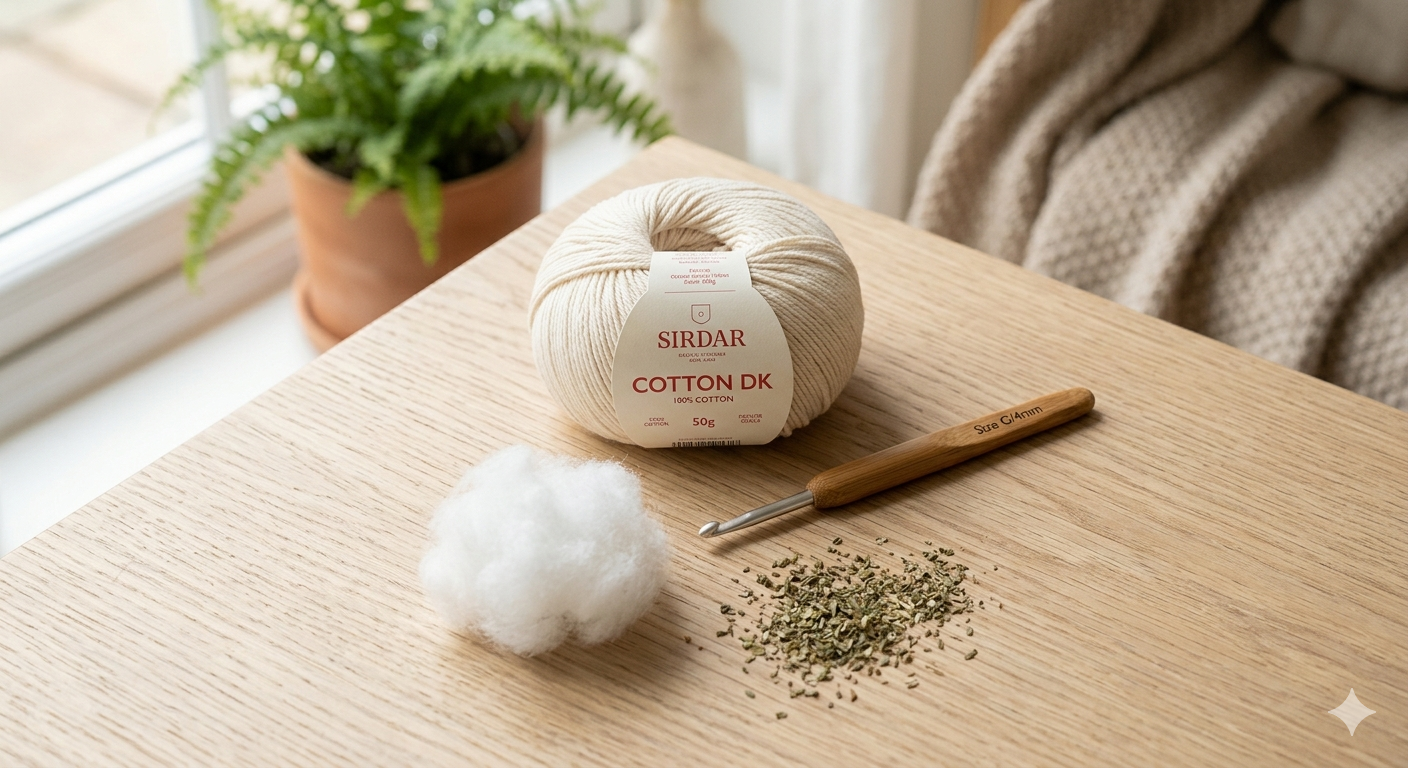
Hook: A 4.0mm (G) crochet hook handles most worsted-weight yarn comfortably. A 3.5mm (E) is useful for toy projects where a tighter gauge prevents stuffing from showing through.
Yarn: Worsted-weight cotton or acrylic for most toys. You will need worsted-weight yarn and a 5mm H crochet hook for basic beginner patterns, though smaller hooks produce better toy results.
Stuffing: Polyester fiberfill is available at craft stores in small bags. For cat toys, catnip stuffing (or catnip mixed into the fiberfill) is optional but dramatically increases engagement.
Stitches used in beginner patterns:
- Magic circle (or chain start alternative)
- Single crochet (sc)
- Increase (inc) — 2 single crochets in the same stitch
- Decrease (dec or sc2tog) — single crochet two stitches together
- Slip stitch (sl st)
- Chain (ch)
These six techniques cover 90% of everything in the patterns below. Learn them once, and these projects are all accessible.
Pattern 1: The Yarn Ball (Absolute Beginner — 0 Experience Required)
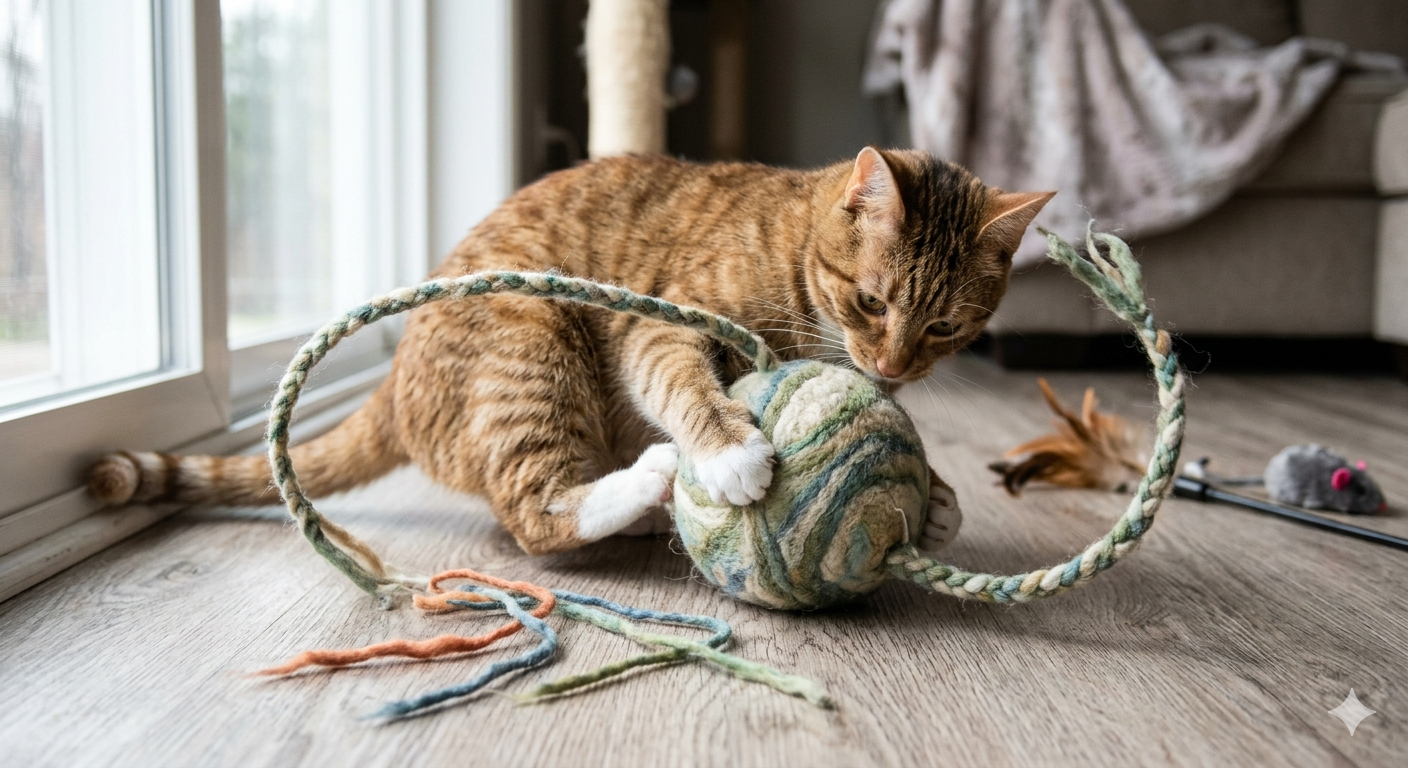
The yarn ball is the most forgiving crochet project in existence. Make a magic circle, single crochet 6 stitches into it, increase every stitch for two rounds, crochet even for three rounds, decrease every stitch for two rounds, stuff firmly, and finish closing. Done.
There is no way to make this project look wrong. Imperfect tension produces a slightly lumpy ball — cats prefer lumpy balls because they roll less predictably. Your beginner tension is an asset here, not a problem.
Time: 10 minutes Difficulty: If you can single crochet, you can make this. Key tip: Start with a magic circle rather than a chain join — the magic circle eliminates the hole at the center that often appears in beginner yarn balls.
Pattern 2: The Flat Catnip Sachet (Absolute Beginner)
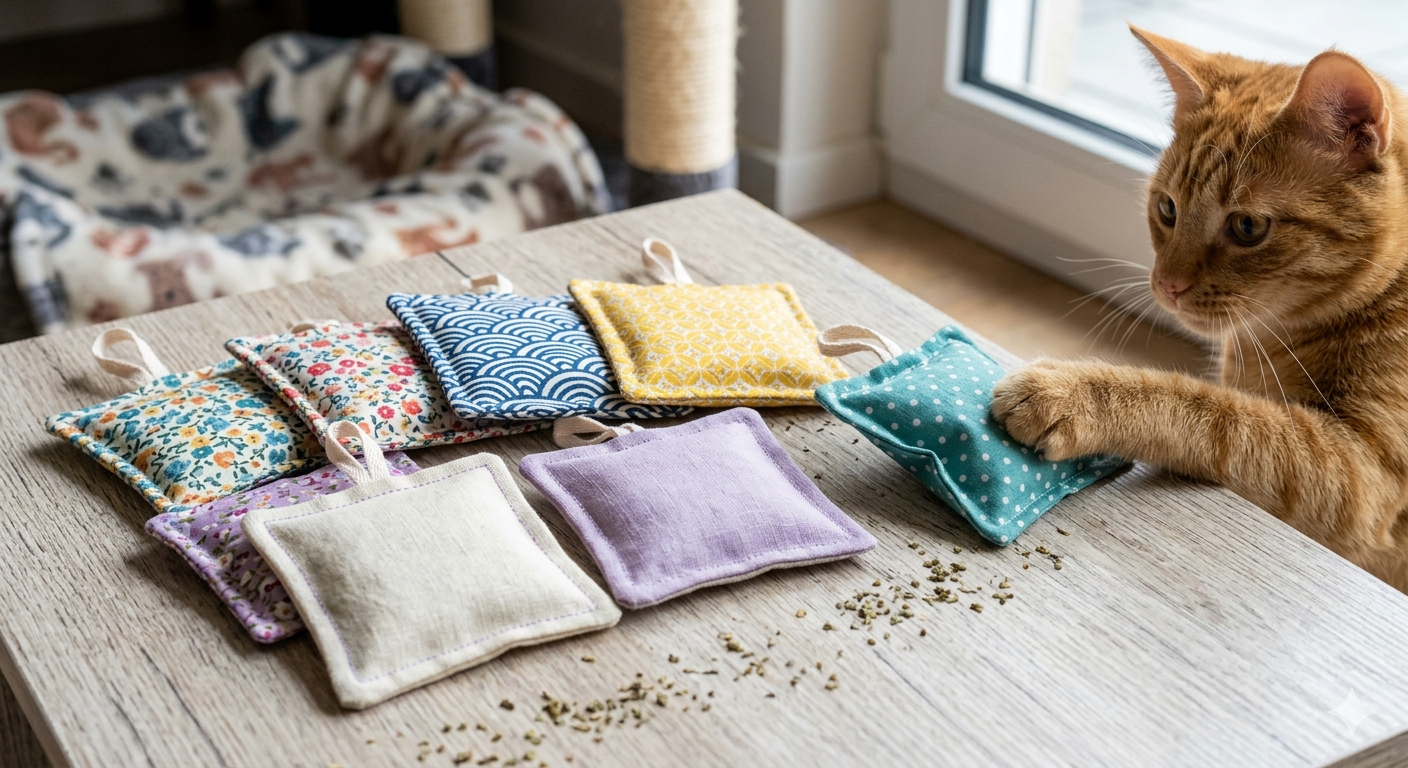
Chain 8. Single crochet across. Chain 1, turn. Single crochet across. Repeat until you have a square approximately 2 inches by 2 inches. Fold in half, single crochet the three open edges together, stuff with catnip before closing the last edge. Done.
This project teaches two foundational skills — working in rows (rather than in the round) and working a seaming edge. It produces something immediately useful. The pattern fits on a notecard.
Time: 5–10 minutes Difficulty: First project friendly Key tip: Use cotton yarn — it breathes, allowing the catnip scent to pass through the fabric for better cat engagement.
Pattern 3: The Easy Fish (Beginner — 20 Minutes)
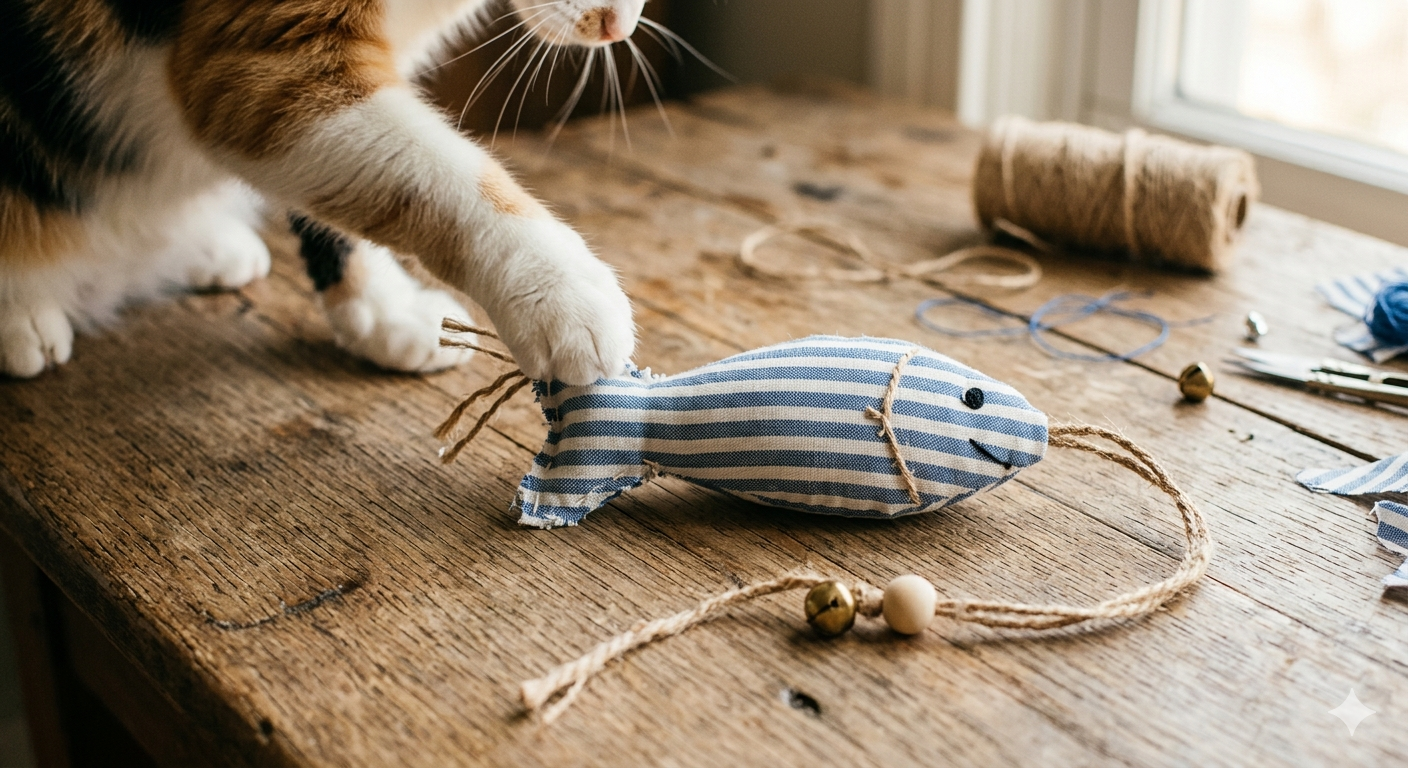
This free crochet cat toy fish pattern is beginner-friendly and works up quickly with just a small amount of yarn. No-sew assembly, with full video tutorials available.
The fish is the first project where shaping becomes visible — the magic circle starts, the rounds of even crochet for the body, the slight taper toward the tail, and the attached fin detail that makes it recognizable as a fish. Cats respond to the fish shape with specific enthusiasm.
Time: 20–25 minutes. Difficulty: Beginner — introduces working in the round and basic shaping. Pattern note: The tail can be a crocheted triangle sewn on, a simple loop of chain stitches, or a fan of straight chain lengths. All three work equally well for the cat’s purposes.
Pattern 4: The No-Sew Mouse (Beginner — 15 Minutes)
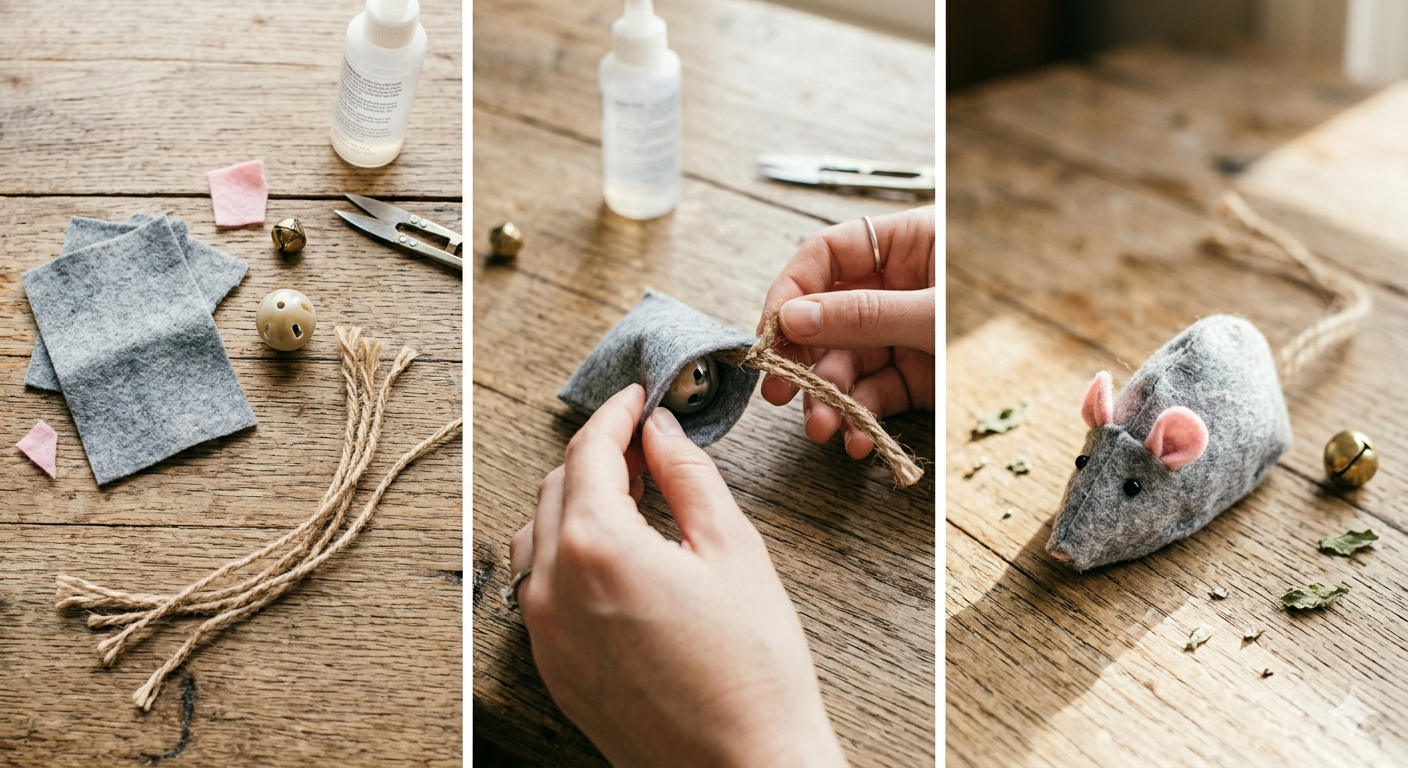
These free crochet cat toy patterns include a mouse that is no-sew, beginner-friendly, and works up quickly with just a small amount of yarn.
The no-sew mouse simplifies the traditional amigurumi mouse construction by working the entire body in one continuous piece without separate components to sew together. The ears are worked directly into the body stitches; the tail is a length of chain stitches extended from the starting end. The result is a mouse that looks immediately recognizable and requires no sewing needle.
Time: 15 minutes Difficulty: Beginner — introduces single-piece amigurumi construction Key tip: The tail is the most important element for cat engagement. Make it at least three inches long using thick embroidery thread or thin cord — long enough to trail attractively across the floor.
Pattern 5: The Octopus Toy (Beginner — 30 Minutes)
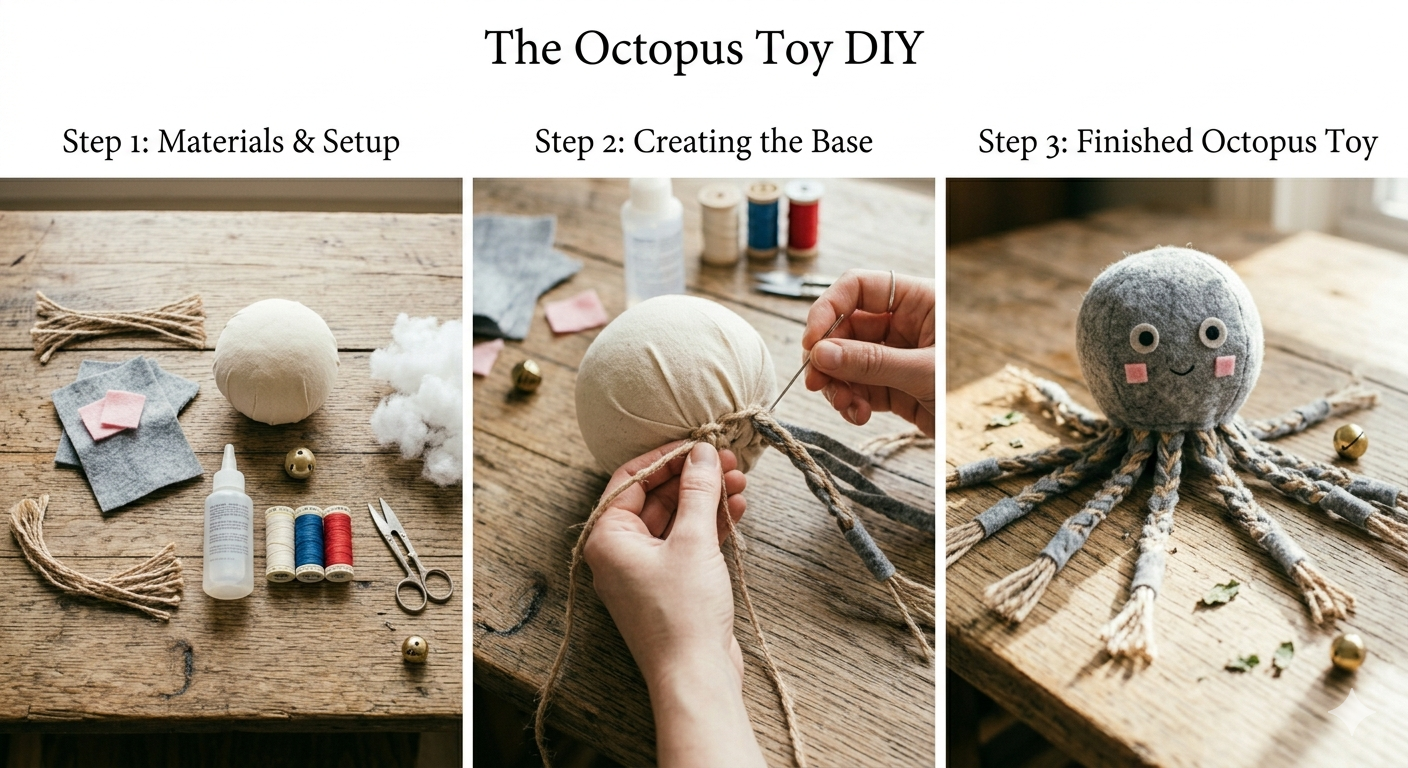
The octopus pattern is one of four in this beginner-friendly 4-in-1 toy collection. No-sew, full video tutorials available, works up quickly with just a small amount of yarn.
The octopus is the beginner’s introduction to adding details — the tentacles are simply chains worked into the base of the body, but they add movement and visual complexity to an otherwise simple sphere. Eight chains of varying length, each ending in a slip stitch, create the tentacles that trail attractively during play.
Time: 25–30 minutes. Difficulty: Beginner — introduces chain detail attachments. Play value: High — the tentacles trail unpredictably during play, mimicking prey movement more effectively than smooth toys.
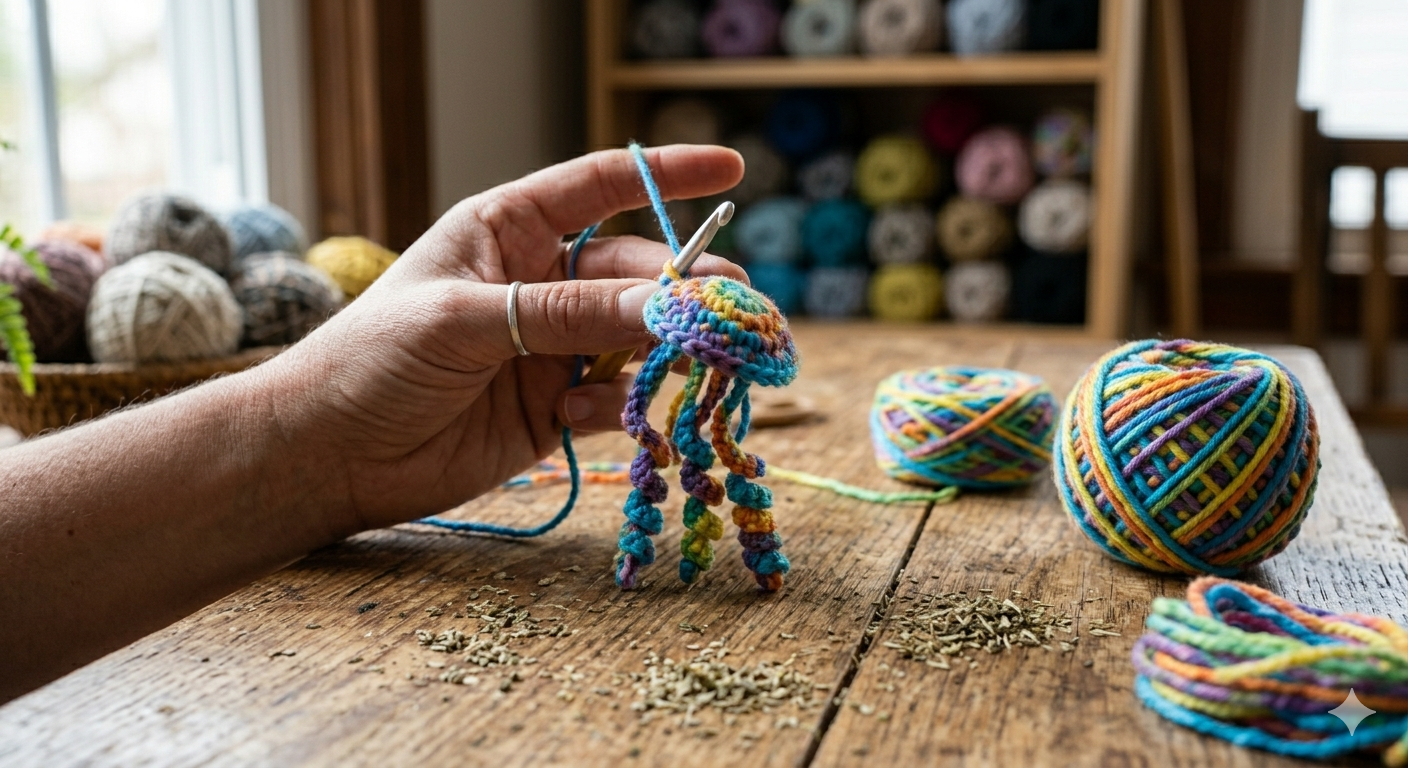
Pattern 6: The Jellyfish (Beginner — 20 Minutes)
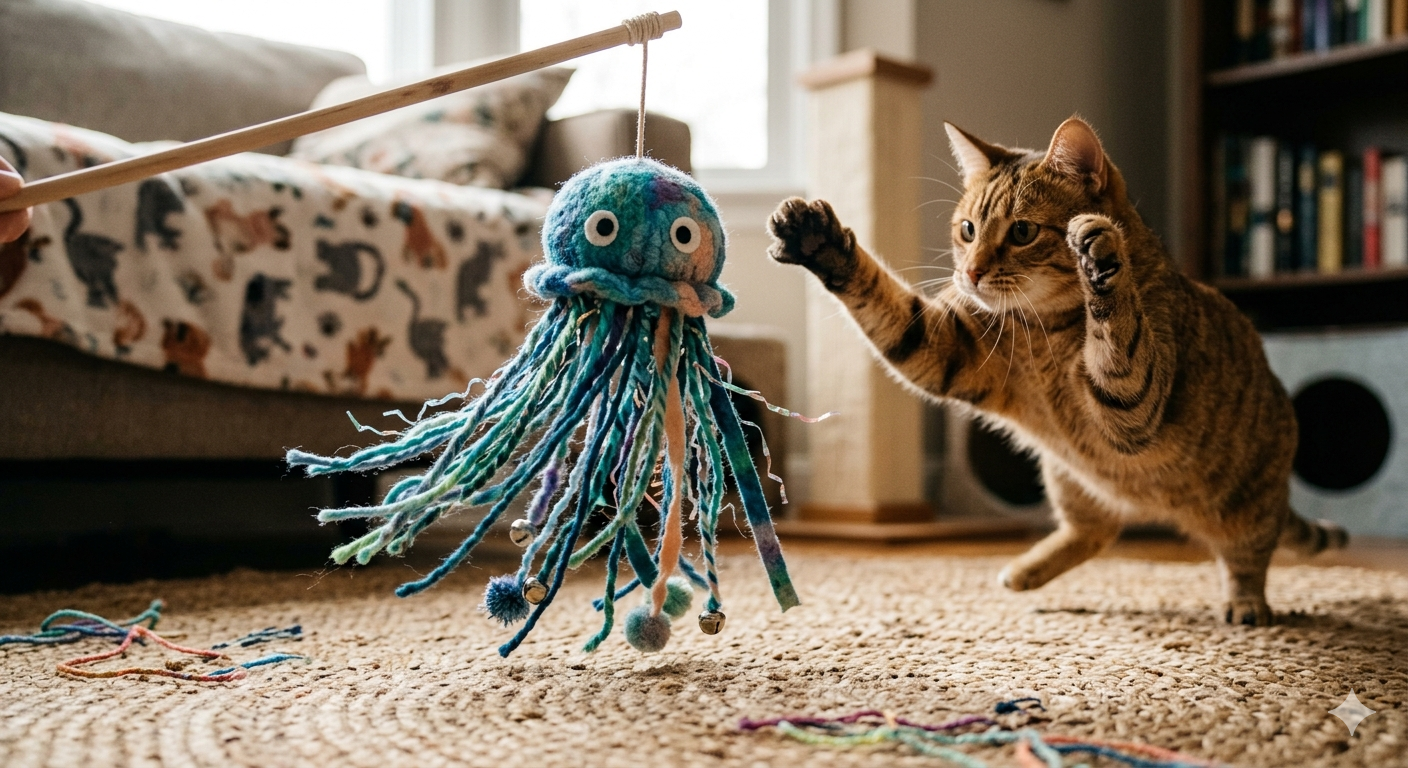
The jellyfish is the fourth pattern in the beginner-friendly 4-in-1 collection. Beginner-friendly with a full video tutorial. Works up quickly.
Structurally similar to the octopus but with a flat, disc-shaped dome rather than a round body, and longer, more gossamer tentacles made with slip stitch chains. The jellyfish is particularly suitable for wand attachment — hung from a length of string tied to a dowel, it floats and trails in a way that closely mimics the movement that triggers play behavior.
Time: 20 minutes. Difficulty: Beginner. Best use: Wand toy attachment — hangs and moves particularly well.
Pattern 7: The Crinkle Ball (Beginner — 15 Minutes)
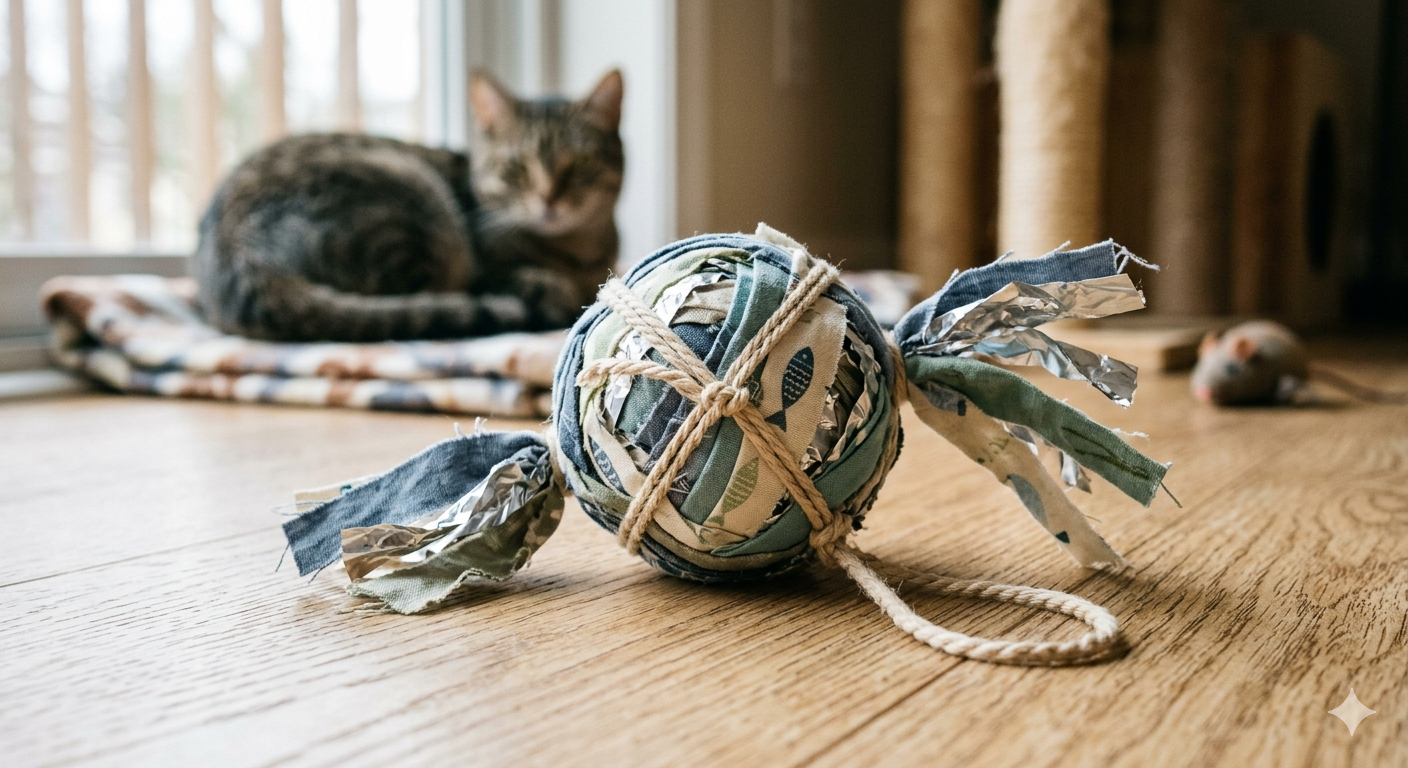
Everything from Pattern 1 (the yarn ball) with one addition: before stuffing and closing, tuck a piece of cellophane or mylar wrapping inside alongside the fiberfill. The crinkle sound produced when the cat bites or squeezes the finished ball adds the auditory dimension that makes this version significantly more engaging than the plain ball.
Time: 12–15 minutes Difficulty: Same as Pattern 1 with one additional material Key tip: Use a large enough piece of crinkled material that its sound can be heard through the yarn — approximately 3 inches square for a 2-inch ball.
Pattern 8: The Toilet Roll Crochet Cover (Absolute Beginner — 15 Minutes)
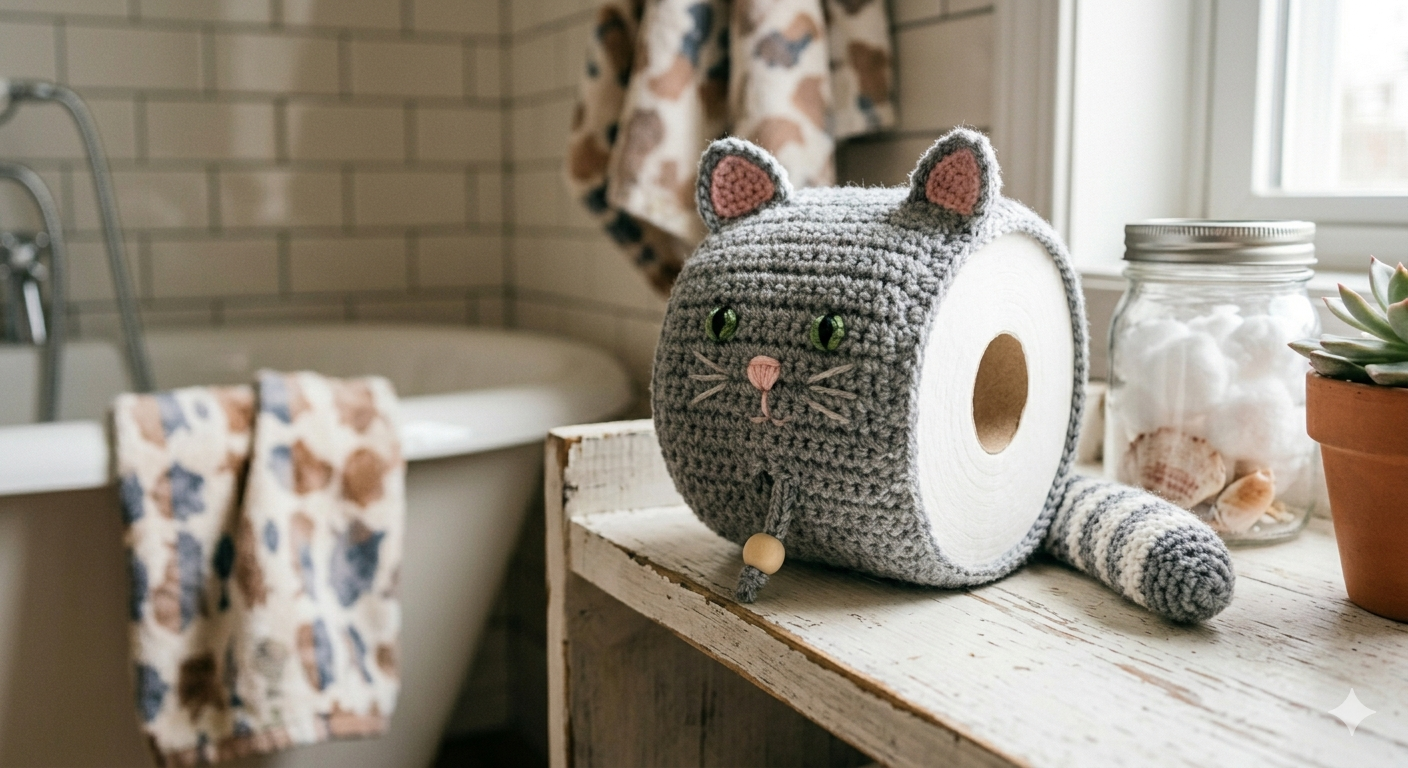
Turn a cardboard toilet paper roll into an awesome toy for your cat using your love of crochet. You can simply replace the roll when the cat chews it up.
Chain enough stitches to equal the circumference of a toilet paper roll (typically 22–24 chains for worsted weight on a 4.0mm hook). Join with a slip stitch to form a ring. Single crochet in the round for enough rounds to cover the length of the roll. Slip the finished tube over the roll.
This project teaches crocheting in the round without increasing or decreasing — the simplest possible tubular crochet. When the cat destroys the inner roll (and they will), the crochet cover is slipped off and a new roll inserted.
Time: 10–15 minutes. Difficulty: Absolute beginner — teaches the tube in the round. Key tip: Add a handful of treats inside the roll before covering for puzzle enrichment.
Pattern 9: The Kicker Cylinder (Beginner/Intermediate — 30 Minutes)
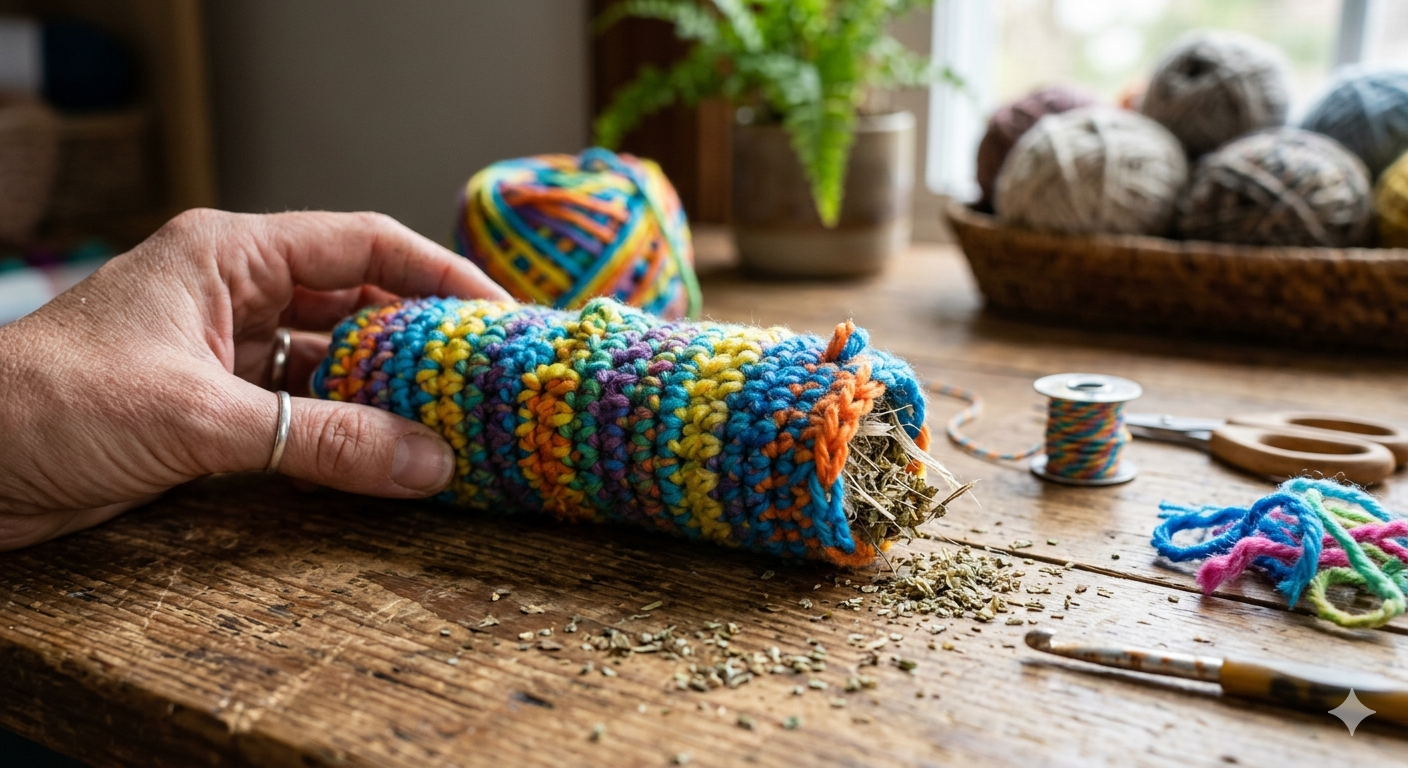
The full kicker toy — a longer tube with a rounded nose and tail, firmly stuffed with a mixture of fiberfill and catnip. This is the project where beginner crocheters typically first encounter the satisfaction of a substantial, well-made finished object.
The kicker is worked in the same way as the ball, but on a cylindrical rather than spherical template — rounds of even crochet between the increased beginning and decreased end. Stuff very firmly for the best play response.
Time: 25–35 minutes Difficulty: Confident beginner — familiar construction applied to a longer shape Key tip: Place the densest catnip concentration in the center of the stuffing, surrounded by fiberfill on both sides, to prevent catnip from leaking through small gaps.
Pattern 10: The Catnip Corn (Beginner/Intermediate — 35 Minutes)
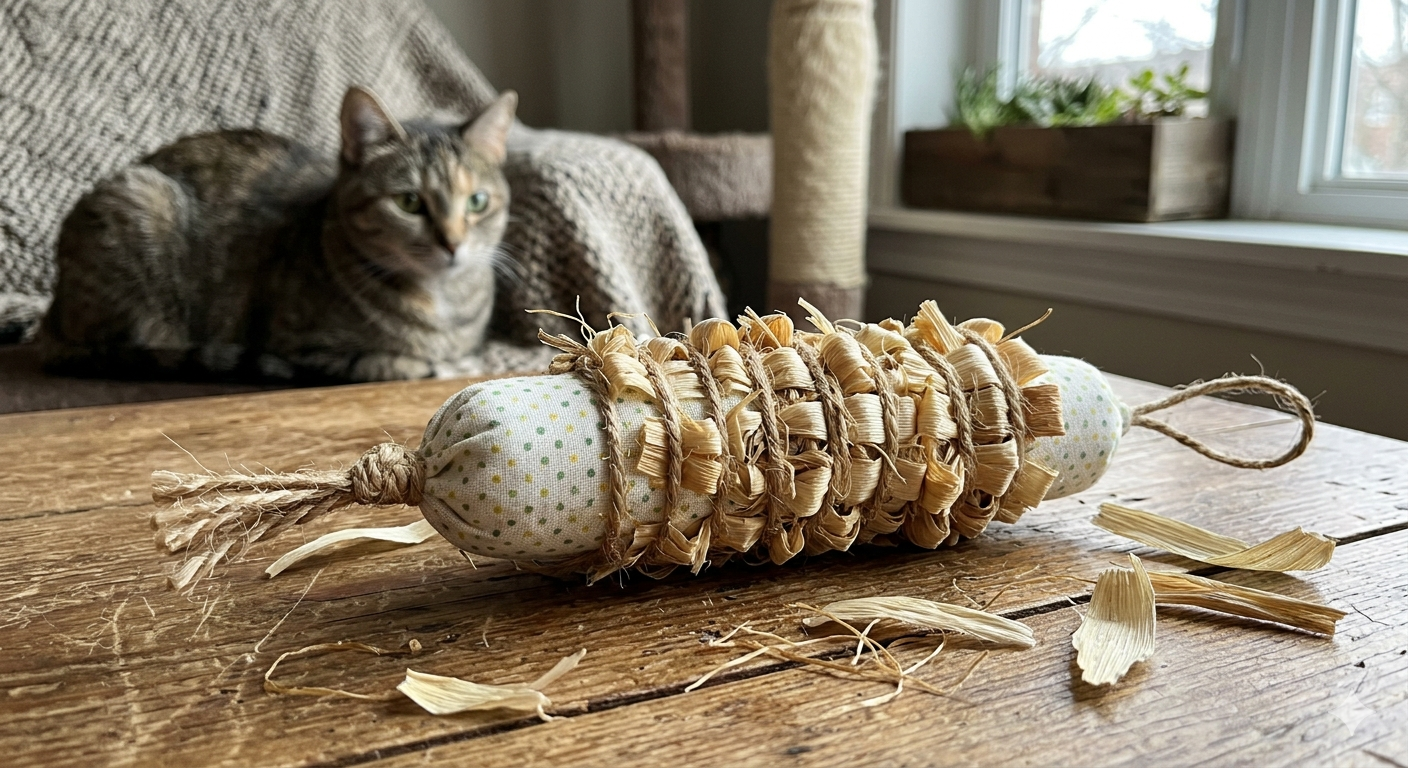
A corn-shaped kicker toy — yellow body with green husk detail at the top, either worked in stripes or with a simple green section at the crown. The corn shape is one of the most beloved crochet cat toy shapes on Pinterest and makes an excellent first project after the simpler shapes above because the husk detail introduces the concept of working in a different color without requiring complex color change techniques.
These patterns are easy to follow and use basic crochet techniques, making them perfect for beginners and cat lovers alike.
Time: 30–35 minutes Difficulty: Confident beginner — introduces simple color sections Gift value: High — the finished corn is immediately recognizable, photographs beautifully in yellow yarn, and makes a charming cat gift.
Your First Crochet Cat Toy: The Decision
If you are truly at the beginning, you have learned to single crochet, and you are not yet confident with the magic circle — start with Pattern 2 (the flat sachet). It uses only chains and single crochets worked in rows. There is no circle, no increasing, no decreasing. Fill it with catnip, close it, and you have made something useful.
If you are comfortable with the magic circle and single crochet in the round, start with Pattern 1 (the yarn ball). It is the fastest way to learn increases and decreases in a context where the result is immediately functional, and the stakes of imperfection are exactly zero.
If you want a project that looks impressive from day one, go straight to Pattern 3 (the fish) or Pattern 5 (the octopus). Both are genuinely beginner-accessible and produce finished objects that photograph beautifully.
Your cat does not care about your skill level. They care about the catnip inside. Start wherever you are.
ENDING:
Every beginner crocheter needs a project that teaches real skills while producing something real — something that gets used, gets played with, gets destroyed, and then gets made again. Crochet cat toys are the project. They teach everything while requiring almost nothing, and the recipient’s response is immediate, enthusiastic, and completely unconditional.
Save this list of free patterns to Pinterest, share it with every new crocheter who has a cat, and go make something tonight. Start with the sachet if you need to. Start with the ball if you’re ready. But start.