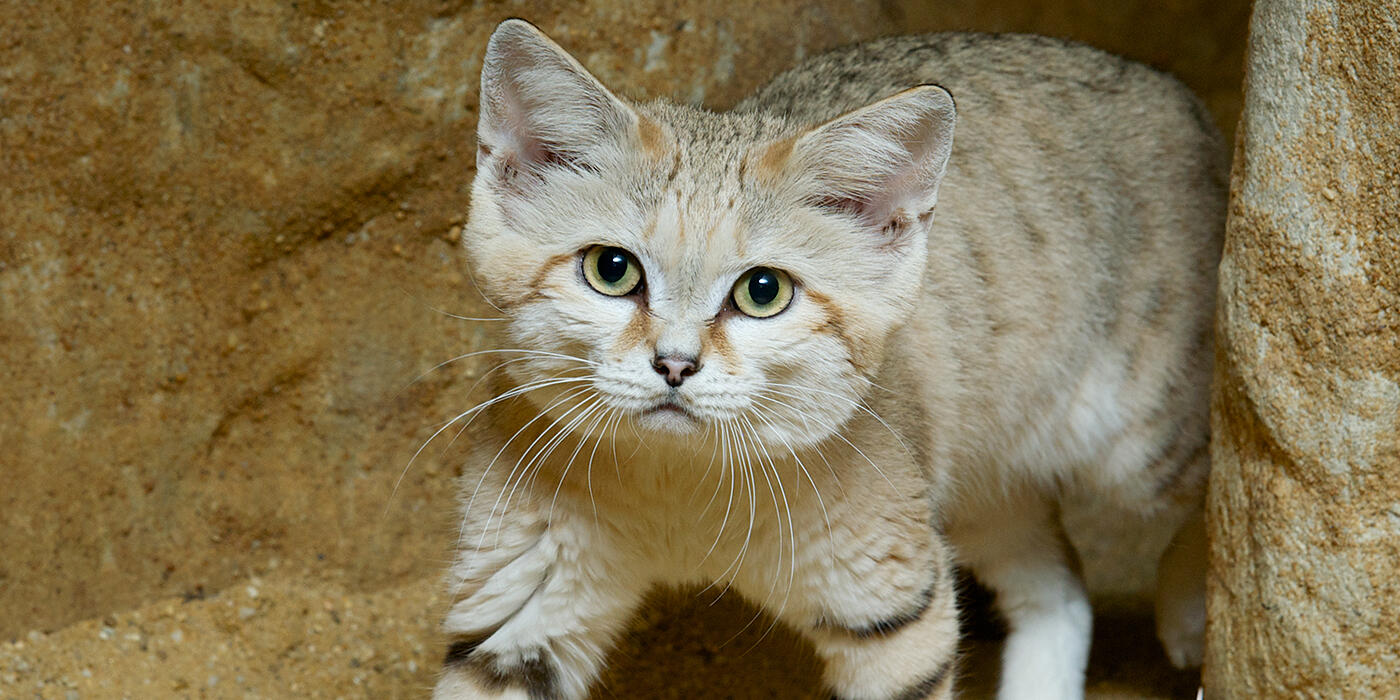
It weighs less than four pounds. It fits in your hands. It has enormous eyes and tiny, rounded ears, and it looks, at first glance, like a slightly exotic house kitten. And then you find out it has the highest hunting success rate of any wild cat species on the planet — including lions, leopards, and every other predator you’d think of first. The black-footed cat is one of those animals that makes you reconsider almost everything you think you know about “small” and “dangerous.” Here are 10 facts that reveal what this extraordinary wildcat is actually about.
10 Black-Footed Cat Facts
1. They Have the Highest Kill Rate of Any Wild Cat on Earth
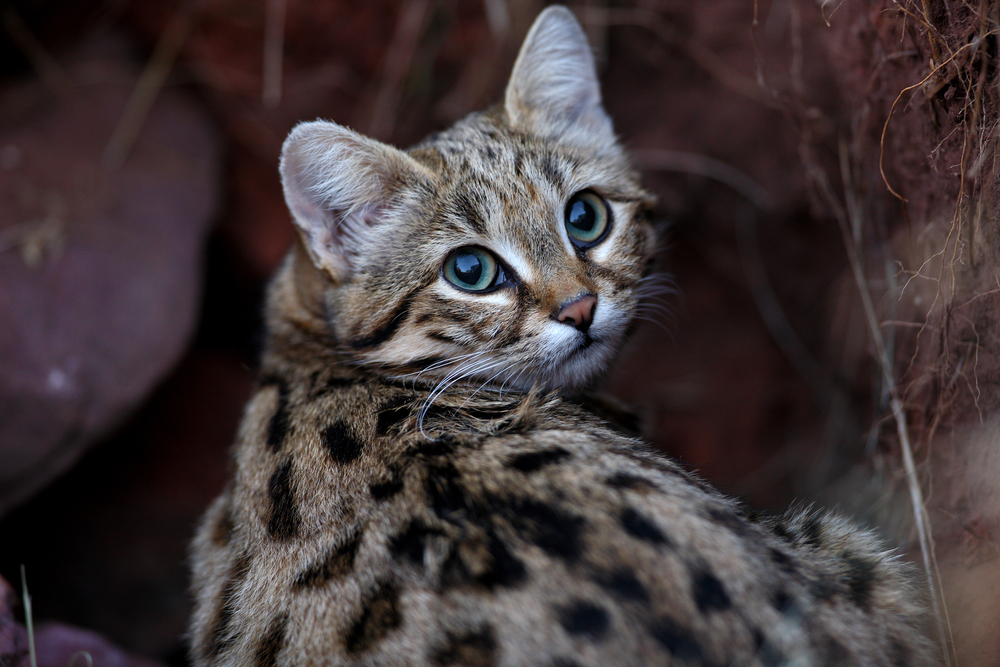
Lions succeed in roughly 20–25% of their hunts. Leopards hit around 30–38%. The black-footed cat? Documented studies in the wild have recorded kill success rates of approximately 60% — meaning this cat, the size of a large house kitten, is hunting more successfully than virtually every other predator on the continent. The reason comes down to a combination of extraordinary hunting instinct, relentless drive, and a metabolism that demands they hunt almost constantly just to sustain themselves.
2. They’re Among the Smallest Wild Cats in the World
Adult black-footed cats typically weigh between 2.4–5.4 lbs (1.1–2.5 kg) — females often weighing under 3 lbs. In terms of size, they’re comparable to a small domestic cat or a large kitten, which is part of what makes their predatory success rate so astonishing. Their small size is actually partly an adaptation to their environment — Southern African scrublands and semi-arid regions where prey can be small and resources require covering large distances efficiently.
3. Their Name Comes From the Black Pads on Their Feet
The “black-footed” name is specific: while the cat’s overall coat is a warm tawny-brown with bold black or dark brown spots and stripes, the distinctive feature is the solid black coloring on the soles of their feet — not the toes or claws, but the pads themselves. This is unusual even among spotted and marked wild cats. In the wild, this black colouration on the foot pads is believed to help with heat regulation on hot ground surfaces.
4. They Have to Eat an Extraordinary Amount Relative to Their Size
To sustain their energy levels and metabolism, black-footed cats need to consume approximately 250–300 grams of prey per night, which, relative to their body weight, is roughly equivalent to a 150 lb human eating 15–20 lbs of food per day. This means a single black-footed cat might make 10–14 kills per night, primarily targeting small rodents, birds, and insects. Their need to hunt this frequently is one of the reasons their high kill success rate isn’t just impressive — it’s existentially necessary.
5. They’re Actually Nocturnal and Rarely Seen in the Wild
Despite being one of the most talked-about small wild cats in recent years (particularly online), black-footed cats are extraordinarily difficult to observe in the wild. They’re strictly nocturnal, spend their days sleeping in borrowed burrows (usually those abandoned by springhares, aardvarks, or porcupines), and their spotted camouflage makes them nearly invisible against dry grassland vegetation. Most of what we know about their behavior comes from long-term field research in South Africa using radio telemetry tracking — without technology, they’d be almost impossible to study.
6. They’re Solitary and Fiercely Territorial
Black-footed cats don’t form social groups — each individual maintains a home range of between 3.5 and 20 square kilometers, depending on prey availability, and they defend it actively. Males and females only come together briefly during mating season, and females raise kittens alone. Unlike domestic cats, which can form loose social hierarchies when resources allow, black-footed cats appear to be fundamentally solitary — their lifestyle and metabolic needs make resource sharing essentially impossible.
7. Despite Their Reputation, They’re Not a Threat to Humans
The “deadliest cat” framing, while accurate in the context of hunting success rate, can create a misleading impression. Black-footed cats pose no realistic threat to humans — their prey size is limited to small rodents, birds, and insects, and their instinct when confronted with anything much larger than themselves is to retreat. The “deadliest” label refers to proportional hunting efficiency, not to predatory behavior toward large animals.
8. They’re Listed as Vulnerable — and Facing Real Threats
Despite their extraordinary hunting ability, black-footed cats are considered a vulnerable species with a declining population. Their threats include habitat destruction (overgrazing degrading scrubland habitat), locust pesticides that reduce prey populations, hunting by farmers who mistake them for threats to livestock or poultry (despite their actual prey size), and accidental poisoning through secondary consumption of poisoned rodents. Their restricted geographic range — primarily South Africa, Namibia, and Botswana — makes population recovery slower and more fragile.
9. They Have a Surprisingly Gentle Side (In Captivity)
Black-footed cats in captive conservation programs (primarily in South African wildlife facilities and a small number of international zoos) have been documented showing behaviors very different from their wild counterparts — playing, exploring with curiosity, and in some cases accepting gentle handling when raised from kittenhood in human care. This doesn’t make them pets — they remain wild animals with complex needs — but it does reveal an adaptability beneath the predatory exterior that researchers find informative.
10. They’re One of the Most Studied Small Wild Cats in the World
Thanks largely to the Black-Footed Cat Working Group, an international research and conservation organization founded in South Africa, the black-footed cat has become one of the better-studied small wild cat species — a category that’s historically received far less research attention than large cats. Long-term field studies in the Benfontein and Nuwejaarsfontein regions of South Africa have produced some of the most detailed behavioral data on any small wild felid, which is part of why this cat has captured so much attention both scientifically and online.