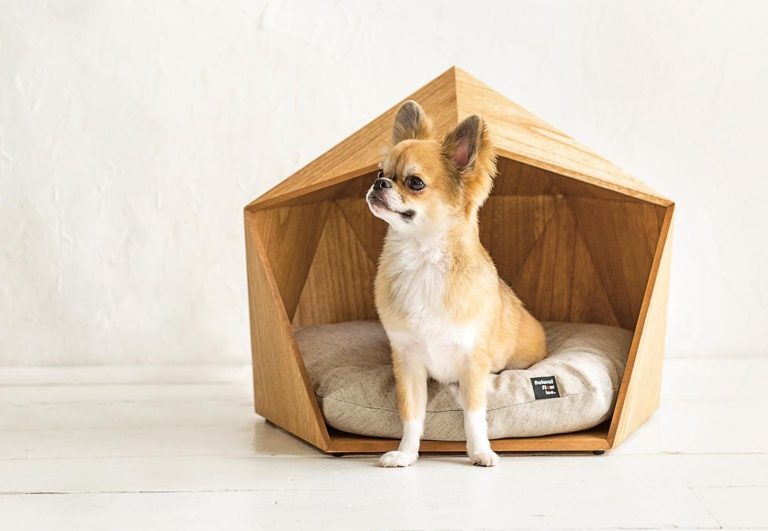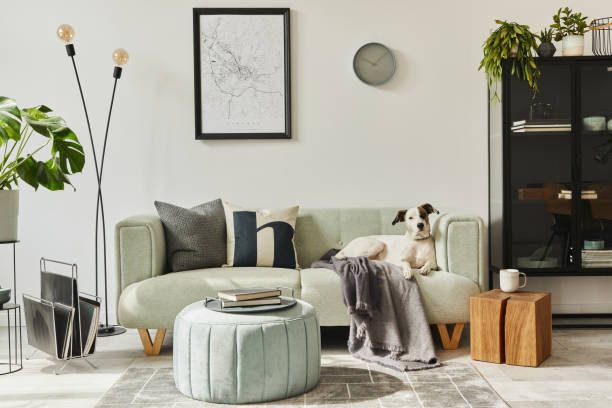
There is a corner of your home that has been waiting for this. The corner where the sofa meets the wall in the living room. The narrow space between the wardrobe and the bedroom door. The spot beside the fireplace that is too small for another piece of furniture. The area behind the armchair that catches the afternoon light through the south window.
Your dog has already found it. They have tested it, circled in it twice, and pressed themselves against the wall with the satisfied expression of an animal who has located the optimal resting position in the room. They have been living in that corner for months. The question is whether the corner is organized around them or around the absence of them.
The dog corner is the dog room idea for households that cannot give a full room to the dog — which is most households. It is the intentional, deliberate creation of a defined space that belongs to the dog: their bed, their supplies, their visual territory, their known location. The corner that is organized says something different from the corner where the dog happens to sit. It says: this was designed for you. This is yours.
These ten dog corner ideas work in living rooms, bedrooms, home offices, and kitchens. In rentals and owned homes. In studio apartments and four-bedroom houses. In spaces that already have established aesthetics and in spaces that are still being defined. Every one of them transforms a corner from incidental to intentional — and every dog who gains one benefits from the psychological clarity of a space that is unambiguously, permanently theirs.
Idea 1: The Defined Rug Corner — The Simplest, Most Effective Dog Space
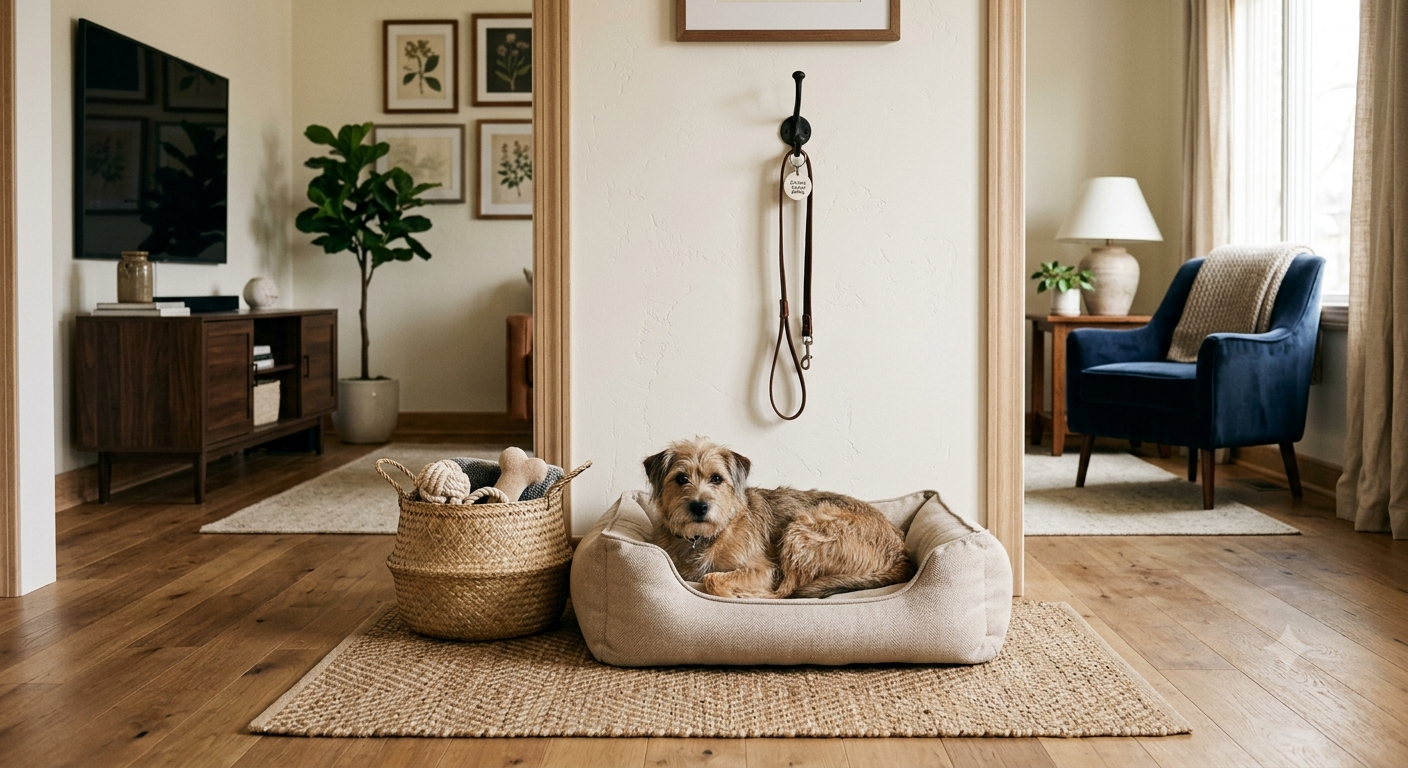
The most minimal, most accessible, and — for the dog’s psychology — most functional dog corner idea available. A rug that defines the corner boundary. A quality dog bed sized to fill the rug appropriately. A single organizational element (a basket for toys or a hook for the leash). Nothing more is required.
The rug does the foundational work of every dog corner: it defines the space visually, physically, and territorially. The dog who learns that the rug boundary is their space — that settling on the rug is the correct behavior in this room — has a clear behavioral directive that reduces the anxiety of uncertainty. “Where should I be?” is answered before it is asked: on the rug.
The rug selection principles:
Choose a rug that complements the existing room palette — not one in a wildly different color or pattern. The dog corner should read as a designed element of the room, not as an exception to it. A jute rug, a flatweave in a neutral tone, or a low-pile wool rug in a complementary color all work well. Avoid high-pile rugs in the dog’s corner — they trap hair and are difficult to clean compared to flatweave options.
The size principle: The rug should be large enough to contain the bed with 6 to 12 inches of margin on all sides. This margin is the visual frame that makes the bed look placed rather than dropped, and it defines the “personal space bubble” that teaches the dog where their area ends.
The placement principle: Position the corner at the dog’s preferred location — the spot they already choose when they have freedom. The corner that is built where the dog wants to be is the corner that will be used without training. The corner that is built where you want the dog to be may require behavioral work to establish.
Idea 2: The Corner Framed by Furniture — Architecture Without Construction
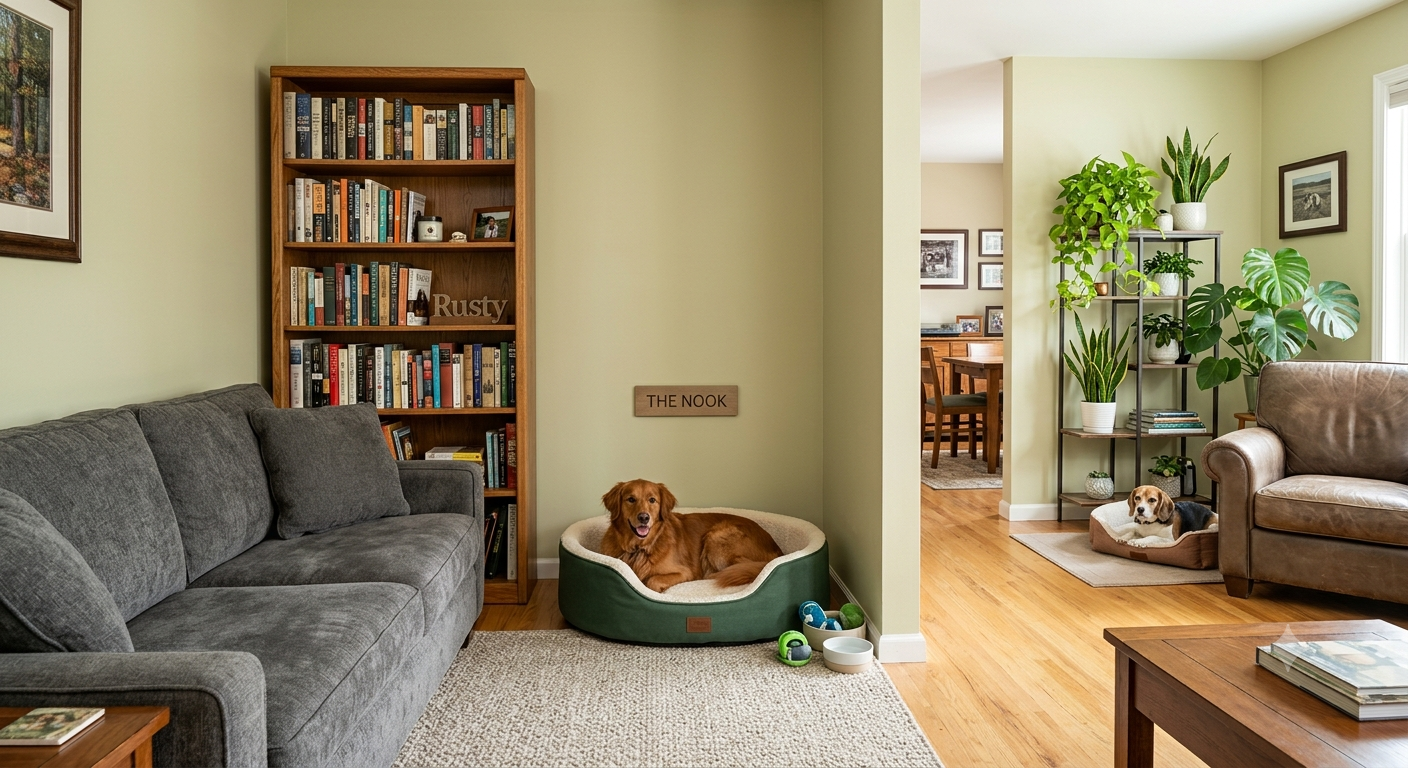
Two pieces of existing furniture, positioned at a 90-degree angle to each other or angled toward each other to create a defined enclosure, framing the dog’s corner without any construction or installation. The furniture creates the walls of the dog’s space. The dog’s bed is inside the frame.
The sofa-bookshelf corner: A bookshelf positioned perpendicular to the sofa at the sofa’s end creates a nook between the two pieces — the back of the sofa on one side, the bookshelf on the other, the wall at the back. This defined three-walled corner is naturally enclosed enough that most dogs choose it voluntarily. Add a bed, organize the space, and name it — the corner becomes a dog nook without any installation.
The armchair-plant stand corner: An armchair positioned in a corner with a tall plant stand on one side creates a softer version of the furniture-frame corner. Less enclosed, more aesthetic, entirely appropriate for dogs who prefer a more open resting environment while still having defined proximity to human activity.
10 DIY Dog House Ideas That Cost Less, Last Longer, and Look Better Than Store-Bought →
Idea 3: The Built-In Bench Dog Corner — Permanent Elegant Integration
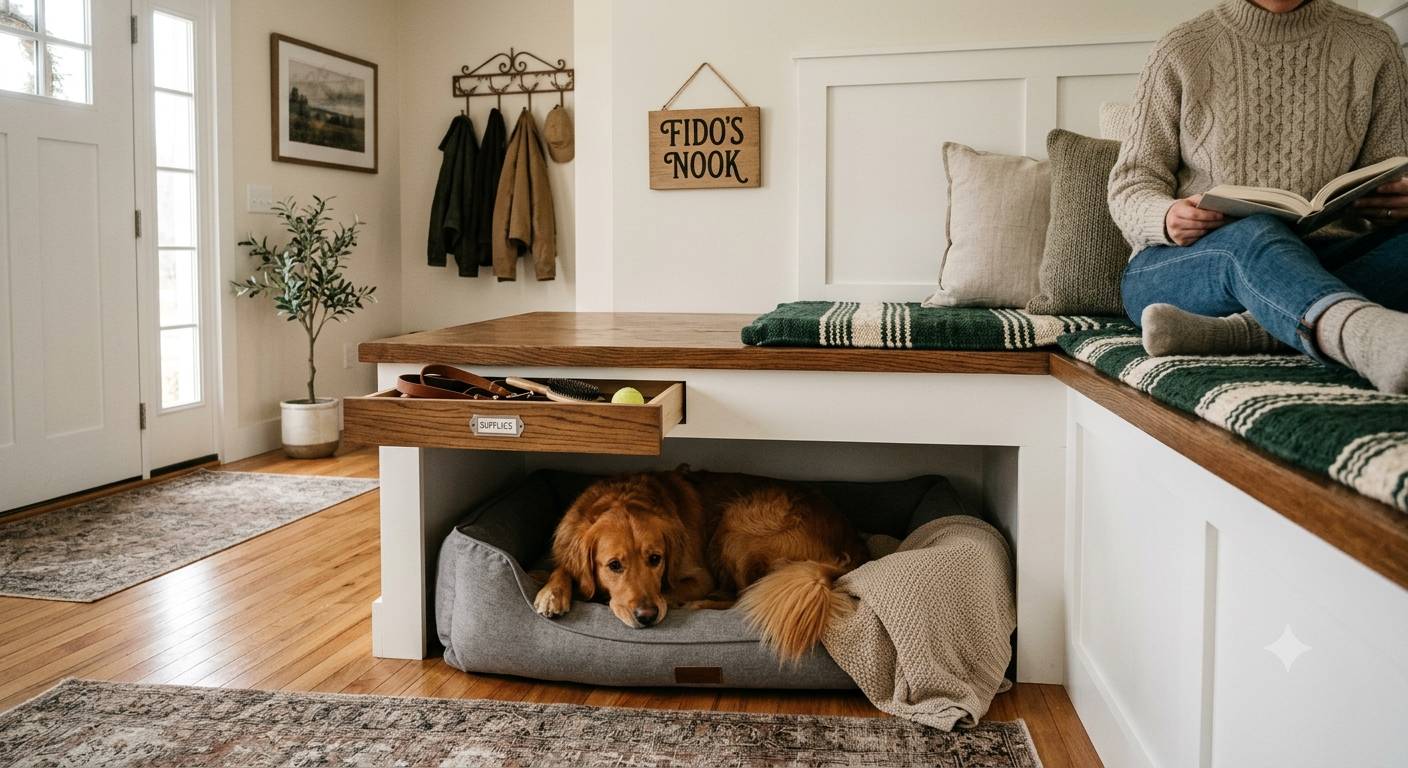
A built-in bench with storage beneath, positioned in a living room, entryway, or bedroom corner, with the dog’s bed integrated into the bench space at floor level — either beneath the bench seat in an open or gated space, or on the surface adjacent to the bench area.
The under-bench dog space: Remove the toe-kick panel from a standard built-in bench and insert a dog bed that fills the space. The dog can slide in and out from beneath the bench as desired. The bench surface above is usable human seating. The bench interior drawer or door space above stores dog supplies.
The cost range: Built-in bench construction by a carpenter: $500–$2,000 depending on size and finish. IKEA hack version using standard IKEA storage units with a custom top: $150–$400.
Idea 4: The Window Corner — Light, View, and Warmth
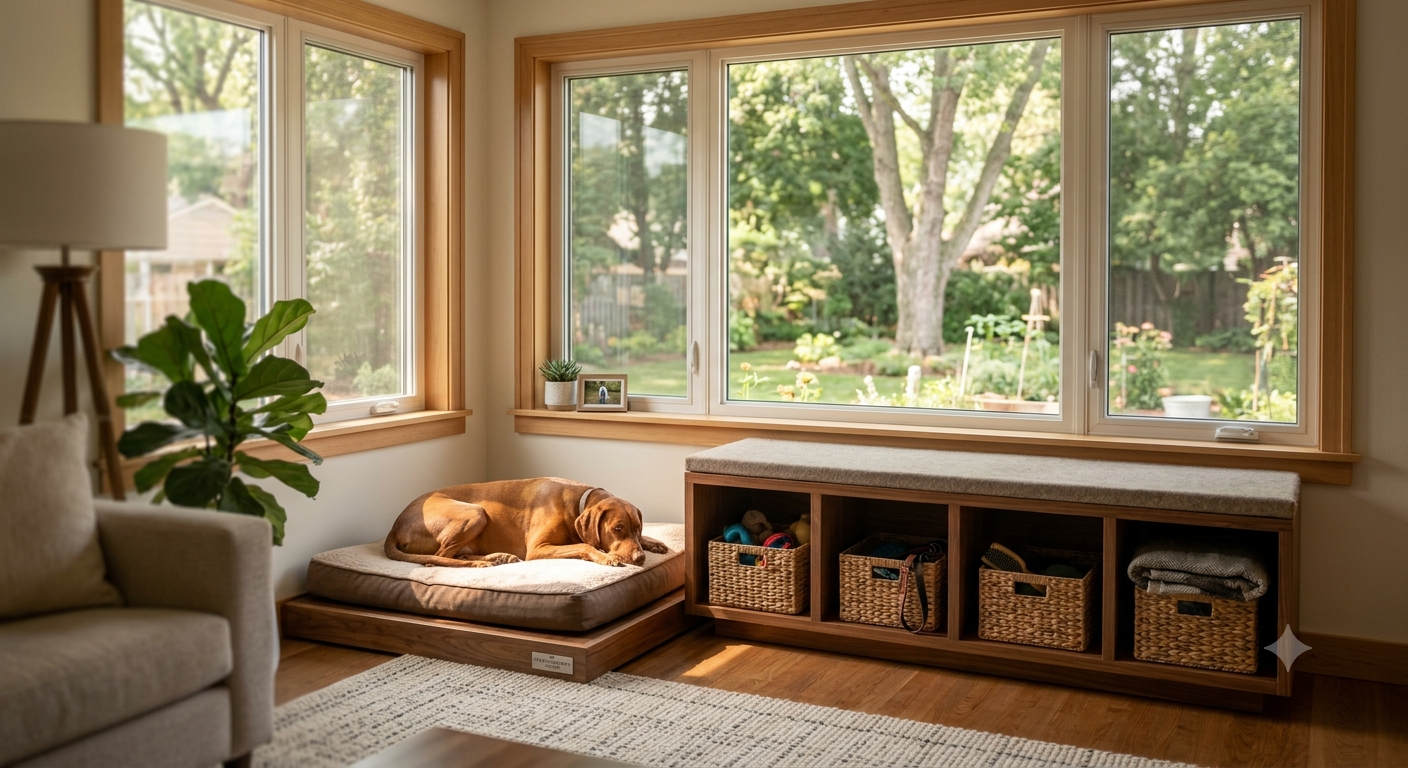
The corner that catches the most sunlight in the home is almost always the corner where the dog already spends the most time. The dog who sun-seeks has selected their preferred location with biological precision — the warmth of sunlight on fur is genuinely thermoregulatory, and the view through a sunny window provides the surveillance opportunity that predator-prey instinct seeks.
Formalizing this as the dog’s corner requires only: a bed that fits the space correctly, a way to define the boundary (rug or low platform), and — if the windowsill is accessible — a clear-off of the sill for the dog to look through. Some dog owners add a low platform or dedicated window perch at sill height, allowing the dog to observe the exterior world from a physically comfortable position rather than standing with their paws on the sill.
The window corner enhancement: A low bookshelf unit positioned under the window creates an elevated platform with storage — the dog can rest at window height with a view, and the storage beneath holds supplies.
Idea 5: The Fireplace Corner — Warmth at Its Most Natural
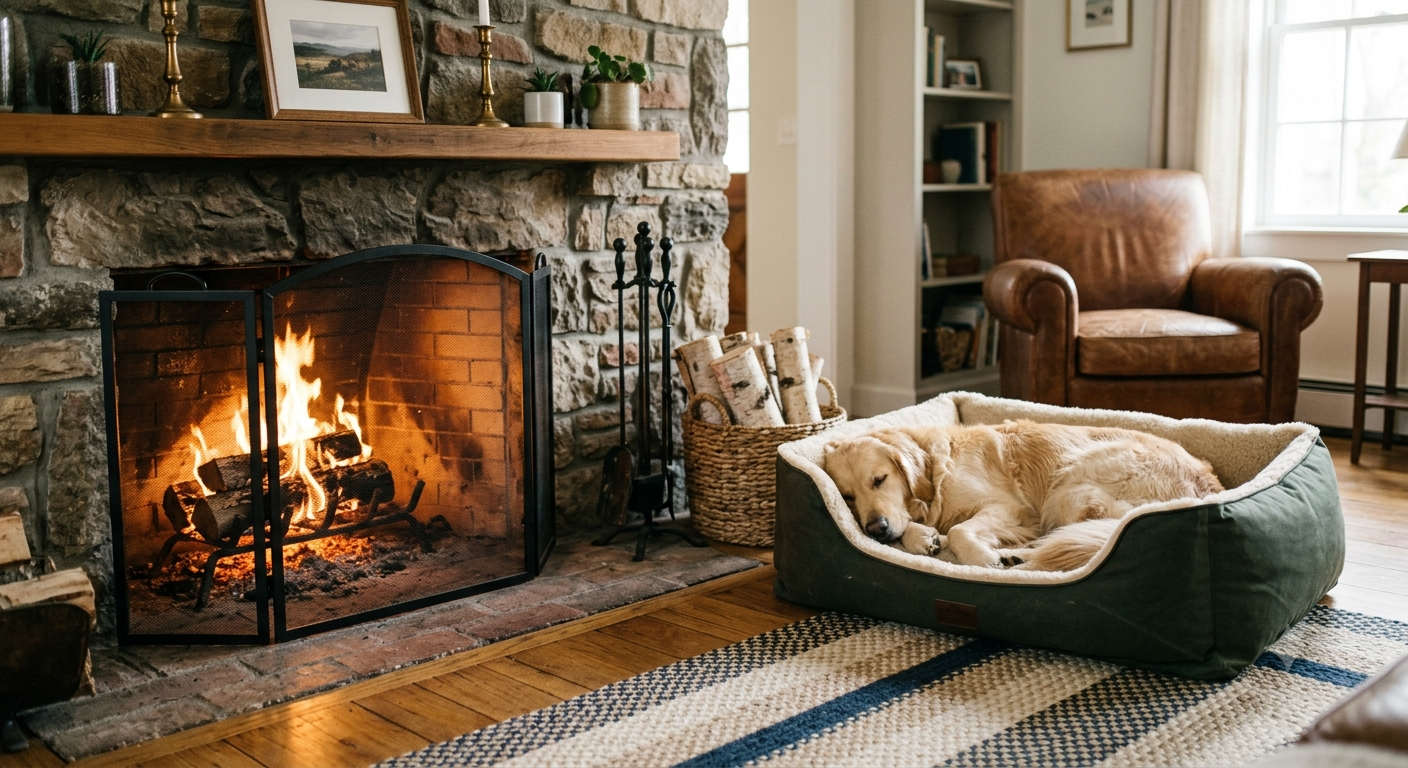
The corner adjacent to the fireplace or wood stove is the dog’s thermodynamic first choice in any home that has one. The consistent, gentle warmth radiates into the adjacent space and creates a microclimate that most dogs identify and claim immediately.
The consideration: Ensure the dog’s bed is positioned at a safe distance from any flame-producing or high-heat-producing heat source — at minimum three feet from a gas or wood fireplace, and positioned so that a sleeping dog cannot roll into contact with any surface that generates significant heat.
The aesthetic integration: A fireplace corner dog bed in a natural material — wool, canvas, or leather — that coordinates with the room’s fireplace surround materials creates a visually cohesive resting area that looks as though it was always there.
Idea 6: The Charging Station Dog Corner — Tech-Integrated Modern Space
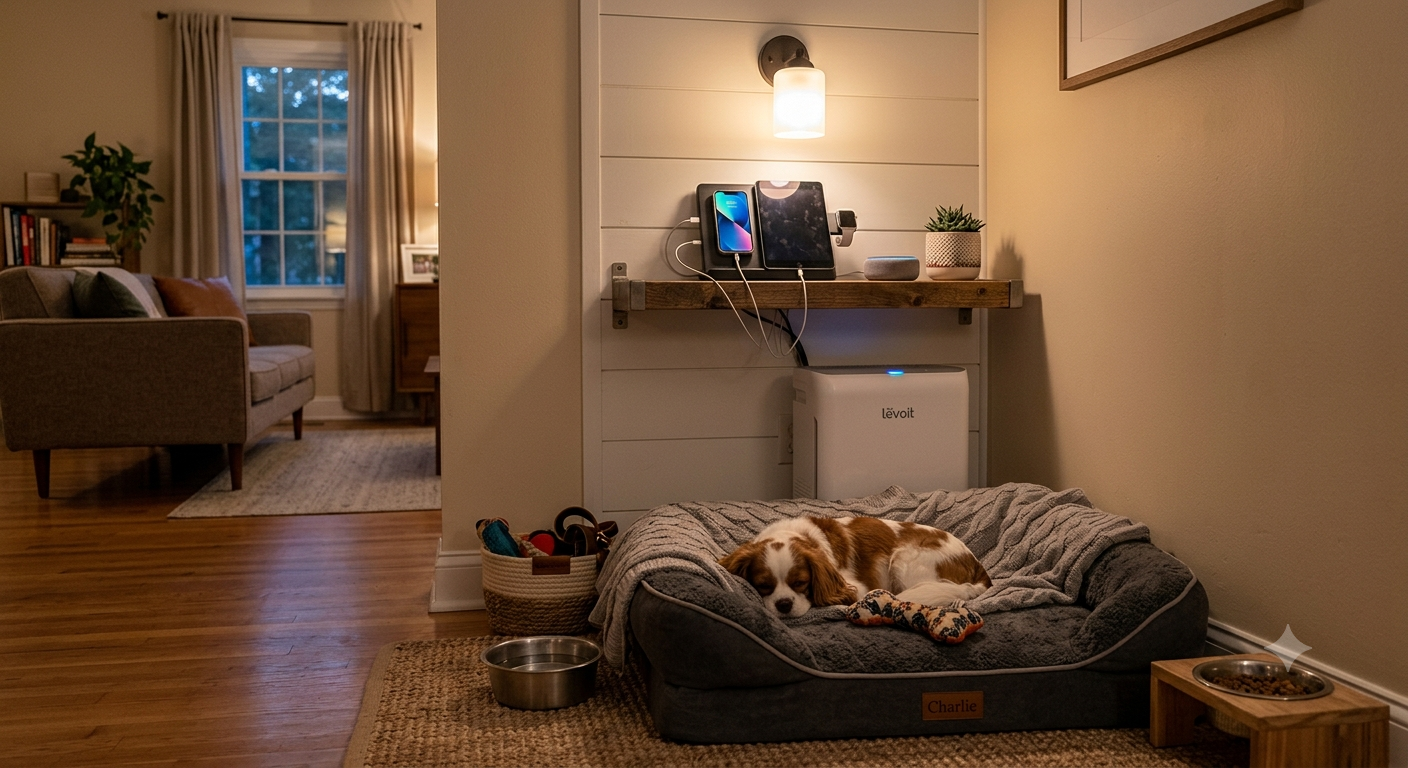
For households where the corner also needs to accommodate human technology — a charging station, a small home hub, a smart speaker — the dog corner can be integrated alongside rather than competing with these elements.
A compact charging station mounted at a comfortable human height above the dog’s corner. A small smart speaker that plays white noise or calming music during alone time. An air purifier positioned at the back of the corner to maintain air quality in the dog’s immediate resting area. A low ambient light in warm tone that can be left on during the evening as a settling cue.
This is the tech-forward dog corner for households where the dog space needs to serve multiple functions simultaneously.
Idea 7: The Bedroom Dog Corner — Sleep Space Integration
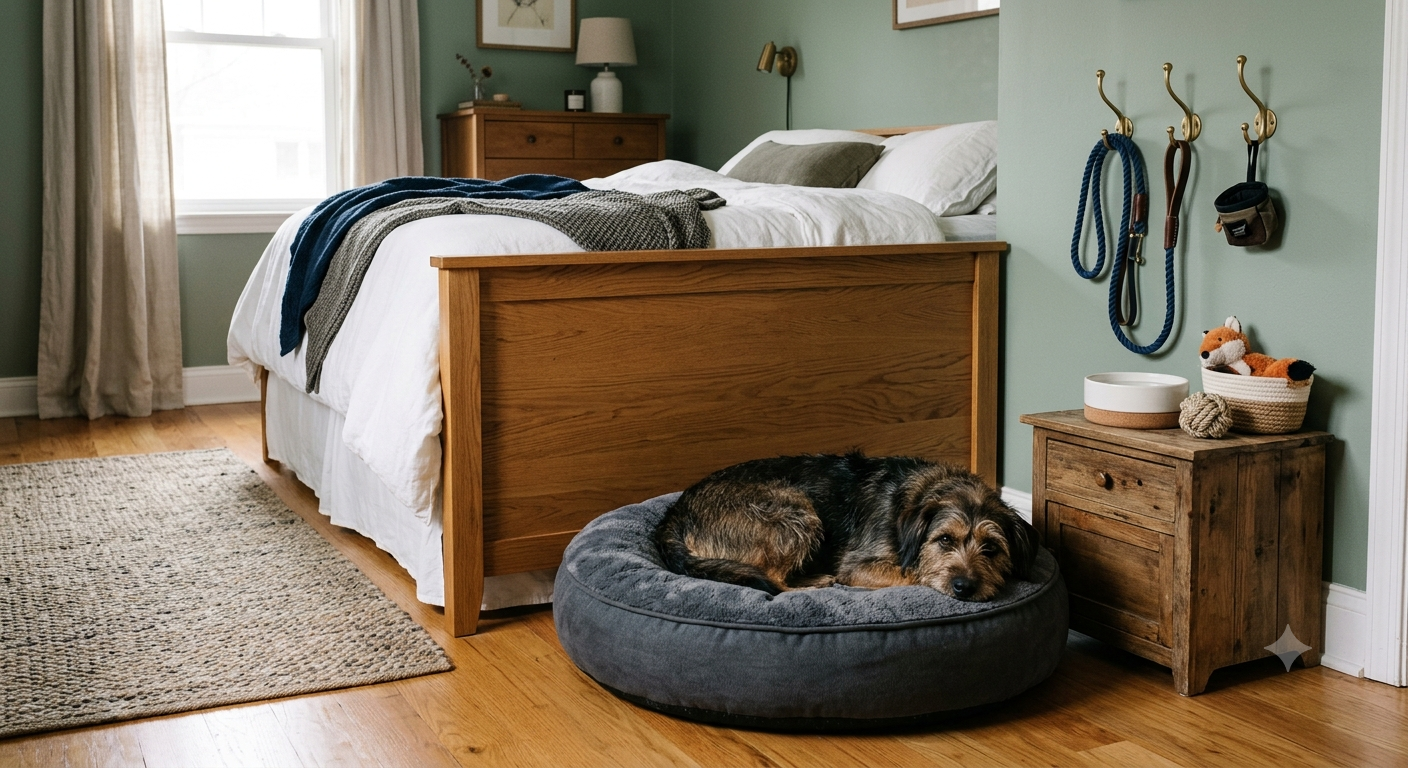
The bedroom dog corner responds to the specific situation of the dog who sleeps in or near the owner’s bedroom — not in the bed, but close enough to maintain the proximity and perceived safety that their attachment requires.
The foot-of-bed corner: A dog bed positioned at the foot of the main bed, with the foot of the main bed as the back wall of the corner. This position keeps the dog in the room, maintains olfactory proximity (the scents of the sleeping human are most concentrated near the head but present throughout the room), and gives the dog their own defined surface rather than the ambiguity of the main bed.
The bedroom corner with organization: A small cabinet or set of hooks beside the dog’s corner bed — for the leash (hung for morning accessibility), a small toy or two, and a water bowl with a non-spill base. The bedroom corner that has its own organization communicates permanence and intentionality.
Idea 8: The Home Office Dog Corner — The Coworking Space
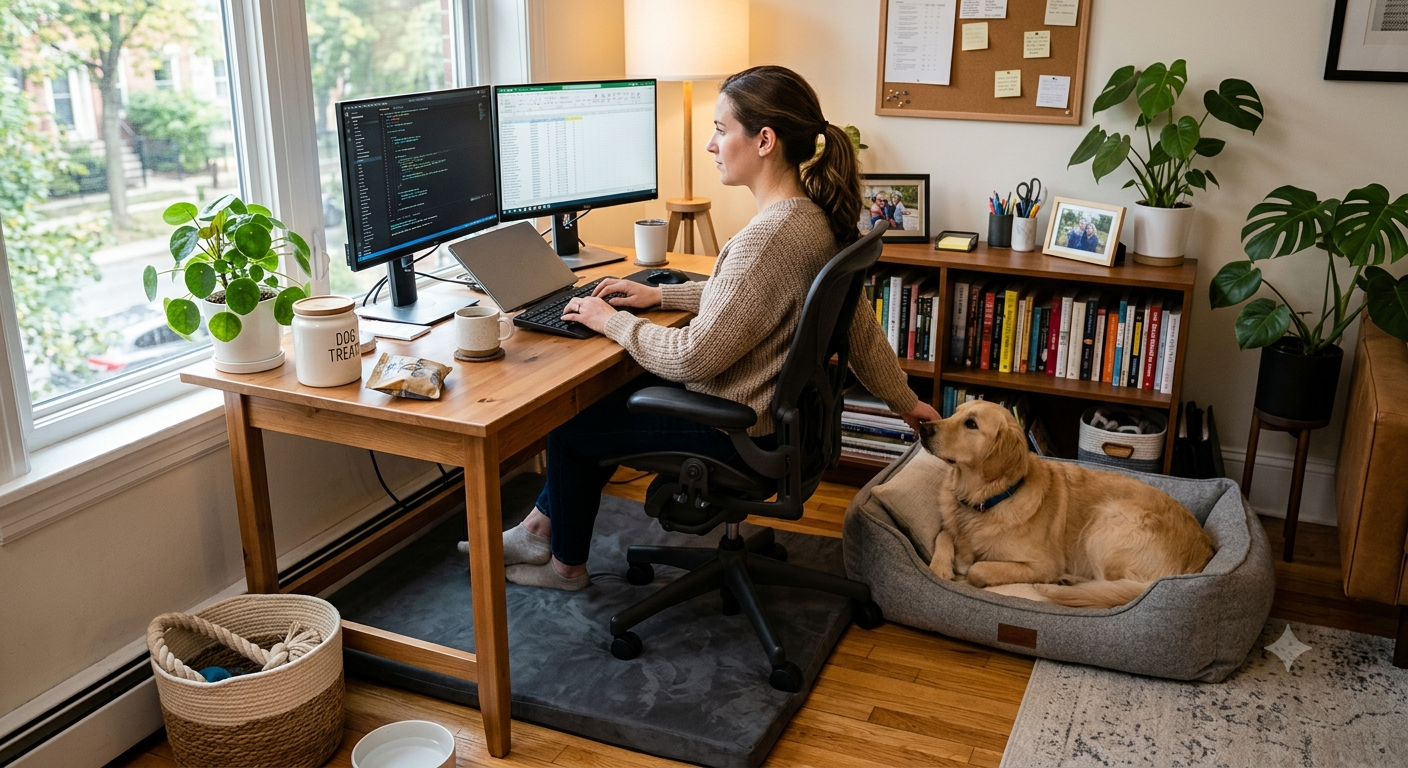
The dog who needs to be near their person during working hours requires a working-hours-specific corner solution. The challenge is providing enough comfort that the dog settles rather than seeking attention — and enough proximity that the anxiety of distance does not produce behavioral disruption.
The solutions that work:
A dog bed positioned beside (not under) the desk, within the owner’s peripheral vision and within easy reach for brief contact during breaks. A desk-height snack dispenser or occasional treat delivery that makes the dog’s position beside the desk intermittently rewarding. An orthopedic mat under the desk — not the full bed, but a pressure-relieving surface — for dogs who want to be as close as possible during work.
The working-from-home reality: The dog who has a defined and rewarding corner position in the home office is the dog who develops the settled working companion behavior rather than the attention-demanding behavior that emerges from dogs who have no defined place during work sessions.
Idea 9: The Minimalist Dog Corner — When Less Is Genuinely More
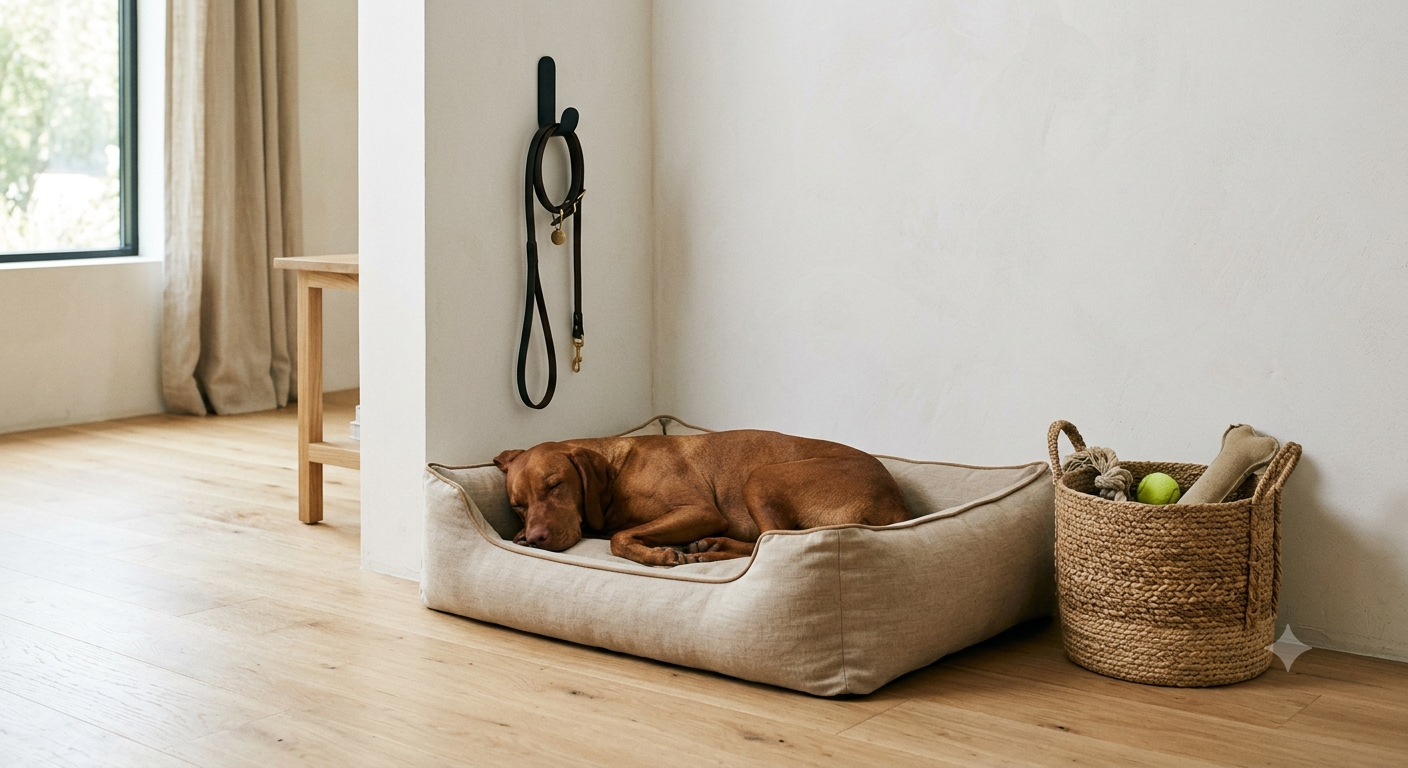
The minimalist dog corner is the antidote to the tendency to over-furnish the dog’s space. One quality dog bed. One hook. One basket for toys. Nothing else. No cluttered shelves of dog supplies, no excessive decorative elements, no layers of bedding and pillows that the dog never uses.
The minimalist dog corner works because dogs do not need visual complexity in their resting space. They need: a surface that is comfortable, a boundary that is clear, and a location that is consistent. Everything beyond this is for the human observer. The minimalist corner provides exactly what the dog needs while maintaining a clean, uncluttered visual integration with the room.
The minimalist dog corner materials: Natural linen or canvas dog bed cover in a neutral tone. Rattan or jute basket for toy storage. Matte black hook for the leash. That is the complete material list.
Idea 10: The Dual-Dog Corner — Two Dogs, One Organized Space
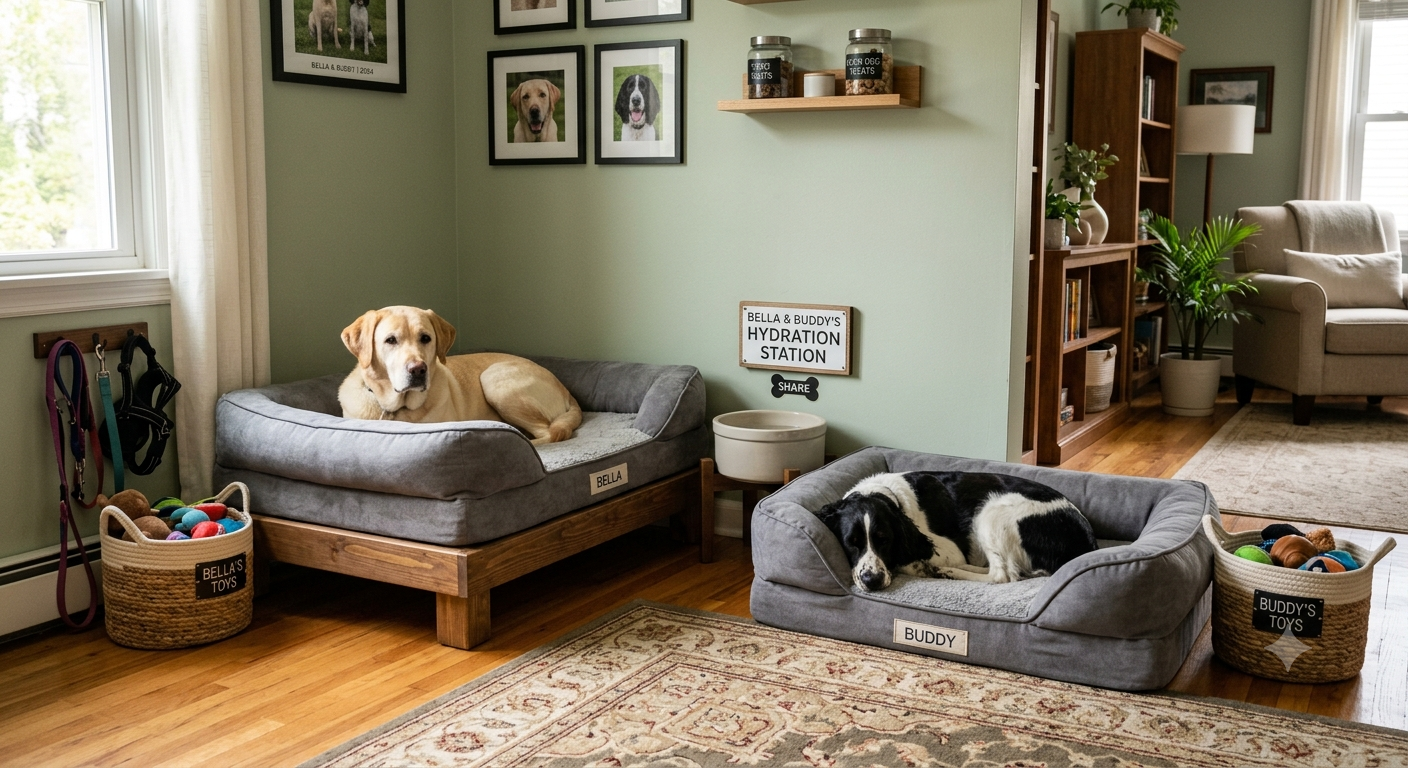
The household with two dogs requires a corner organization that serves both without either competing for territory or feeling that their space is inadequate.
The side-by-side arrangement: Two identical beds of the appropriate size for each dog, positioned side by side with a shared water station between them and individual toy baskets on the outside edges of each bed. The symmetry communicates equality — neither bed is positioned more prominently than the other.
The hierarchy acknowledgment: In a household where one dog is clearly dominant, positioning the dominant dog’s bed slightly higher (on a low platform or elevated base) while the other bed remains at floor level acknowledges the existing social structure without causing conflict. Dogs understand and navigate hierarchy through spatial positioning — the corner that reflects their existing hierarchy is one they are more likely to share peacefully.
The Organization System That Makes Any Dog Corner Work
Three items make any dog corner function as a designed space rather than as a collection point for dog-adjacent clutter:
One basket or container for toys: Low enough that the dog can self-select from it. Made of a natural material (rattan, woven seagrass, or jute). Large enough to hold the toy collection without overflow. One hook for the leash: At the wall above the dog’s corner, at a height convenient for the owner but not reachable for the dog. This hook holds the leash and harness — the first things needed every morning — in one consistent location. One water station: A non-spill bowl on a mat that catches overflow, positioned at the accessible edge of the corner. The mat prevents the water bowl from being pushed and defines the feeding/drinking area within the corner.
The corner of your home where your dog already sleeps is the corner you should build first. They have already done the location scouting. They have already evaluated the sunlight, the proximity to human activity, the thermal properties, and the sight lines. They chose that corner for reasons that make complete sense within their behavioral framework.
Honor the choice. Build the corner intentionally. Give the space a bed that fits, a basket for the toys, and a hook for the leash, and the corner transforms from where the dog happens to be into where the dog belongs.
Save this to Pinterest, share it with every dog owner who has been placing dog beds wherever is convenient, and start with the rug. The rug defines the space. Everything else follows.