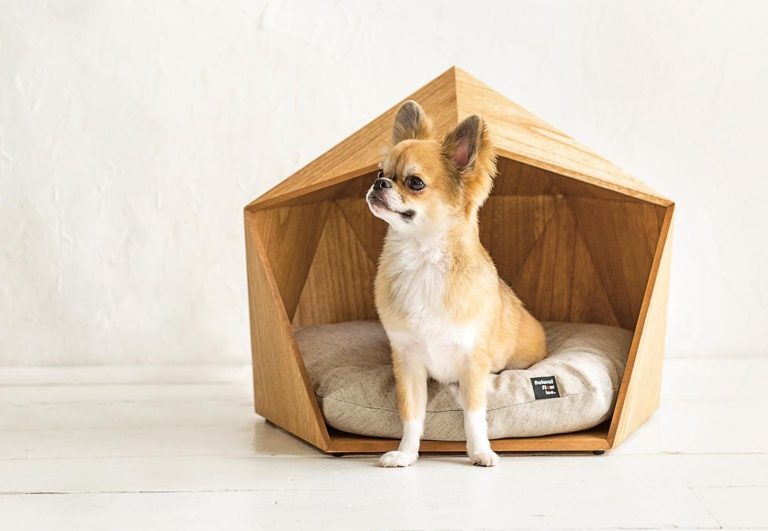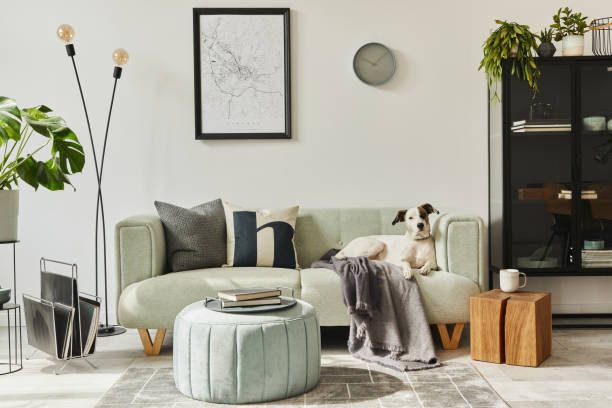
Your dog follows you from room to room. They have claimed the sofa cushion that catches the afternoon light, the corner of the bedroom floor closest to the bed, the specific spot on the kitchen rug that positions them optimally for both warmth and food proximity monitoring. They have, without asking permission, evaluated every space in your home and decided where they belong.
The question that more and more dog owners are asking — the question that is driving one of the fastest-growing home design trends of 2025 — is not whether the dog should have a space. It is whether the dog’s space should be intentional.
Everyone’s showing off these amazing pet spaces, and it’s inspiring others to level up. The result is a growing “barkitecture” trend, where design for pets isn’t an afterthought — it’s part of the floor plan from day one.
The dog room idea is not a luxury for people with unlimited space and unlimited budgets. It is a design problem with solutions available at every scale — from a thoughtfully arranged corner of the living room to a complete spare-room conversion, from a $50 weekend project to a renovation-level investment. This guide covers all of it.
What every dog room, in every incarnation, provides is the same thing: a space that is unambiguously your dog’s. Where their things live. Where their scent accumulates and makes them feel secure. Where the boundaries of the house become, in at least one location, entirely theirs.
Creating a “dog room” is the perfect way to provide your dog an indoor sanctuary where they can roam freely and enjoy some privacy. Don’t worry, your dog isn’t tired of you. They just need their own personal space, too.
Why Every Dog Benefits From Having Their Own Space
Before the ideas — the understanding that investments make sense.
Boundaries are essential for both you and your dog. While your dog gets their own space away from others, you get peace of mind knowing your furry friend can’t access any valuables or unsafe areas. A positive association with alone time is one of the first training exercises when learning to leave your dog home alone.
Dogs who have a defined, consistent, positive space are dogs with better emotional regulation. The predictability of “this is where I sleep, this is where my food lives, this is where I go when I need to settle” provides the routine security that reduces anxiety behaviors — the destructive chewing, the excessive vocalization, the restlessness during the owner’s absence.
The dog room is behavioral infrastructure as much as it is interior design.
Idea 1: The Under-Stair Dog Den — The Most Loved Nook in Home Design
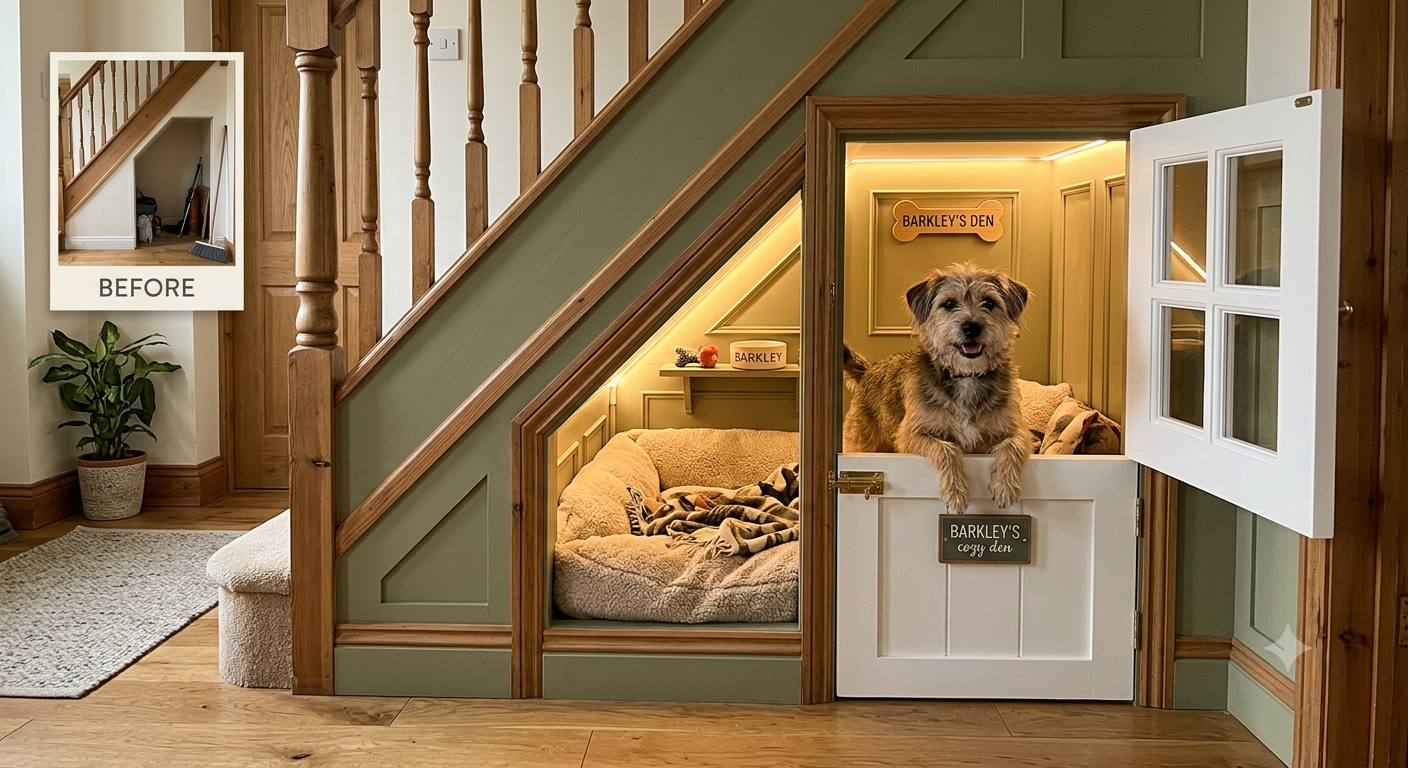
Turn that awkward space underneath your staircase into a cozy retreat with a plush bed, soft lighting, and ventilation. Add a Dutch door to give your pup privacy while staying connected to your family activities.
The under-stair space is the most naturally dog-compatible architectural feature in any multi-story home. It is enclosed. It is dark. It is warm. It is positioned in the heart of the home’s activity while remaining separate from it. Everything a dog’s instinctive preference for an enclosed resting spot requires is already present in the architectural reality of the under-stair space.
The conversion from unused storage area to deliberate dog den requires surprisingly little: clearing the space, installing a durable, washable flooring surface (rubber-backed mat or sealed concrete work well), adding a quality dog bed sized for the space, and installing either a Dutch door or a simple fabric curtain that gives the dog visual privacy when desired while maintaining connection to the household.
The design elements that elevate it:
A small LED strip light on a warm setting mounted along the roofline of the under-stair space provides gentle ambient lighting that makes the space visually appealing while giving the dog enough light to see without disturbing their sleep. A hook on the inside of the door or entrance panel for the leash. A small shelf at dog height for the water bowl. A name plate above the entrance — “Buddy’s Den” — that signals the intention of the space to every person who enters the home.
This is the dog room idea that most consistently generates the combination of “this is genius” and “I can actually do this” from people who see it. The space already exists. The conversion makes it deliberate.
10 Dog Corner Ideas That Are Cozy, Stylish, and Proof That Dogs and Design Can Coexist →
Idea 2: The Dog Crate Side Table — Furniture Disguise Done Right
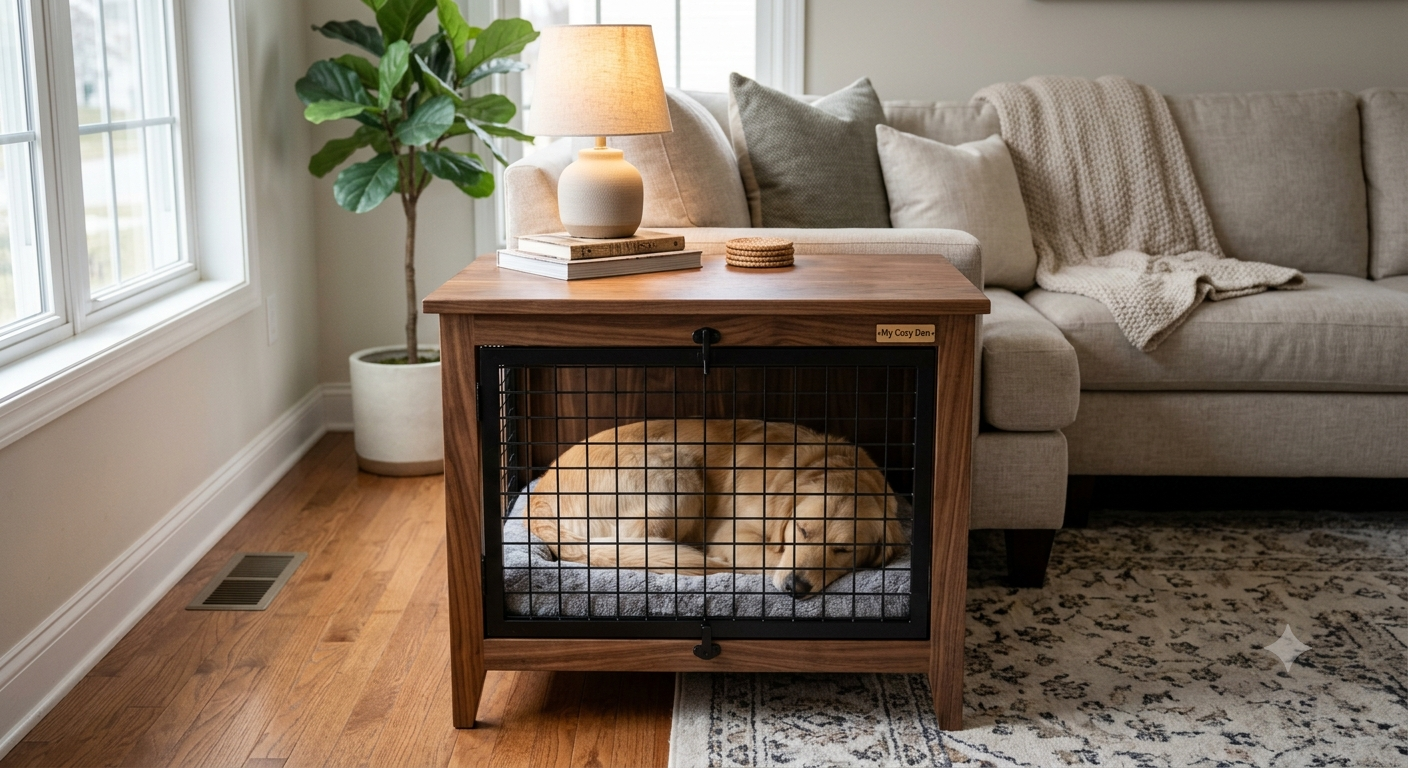
Wire dog crates are often bulky and not very appealing. Transform yours by covering it with an attractive cloth and using it as a side table. Place a stained wood top on the crate to match your room’s décor. This space-saving solution is perfect for small areas and keeps your pet close by while they relax or nap. The dog crate that is concealed within a piece of furniture that would exist in the room anyway is the approach that solves the aesthetic problem of dog crates without eliminating the functional benefit. Purpose-built dog crate furniture — end tables, coffee tables, console tables, and media units with integrated crate spaces — is one of the fastest-growing categories in pet furniture design.
The DIY version: A solid wood side table with the interior converted to a crate space by removing the bottom shelf and adding a crate door is achievable with basic woodworking skills. The finished piece reads as a normal side table with a small door. The dog reads it as their den.
The purchased version: Several furniture manufacturers now produce crate furniture at price points from $150 to $800+ that integrates seamlessly with standard interior design styles — mid-century modern, farmhouse, contemporary, and Scandinavian all have available crate furniture options.
Idea 3: The Mudroom Dog Station — Function at Its Finest
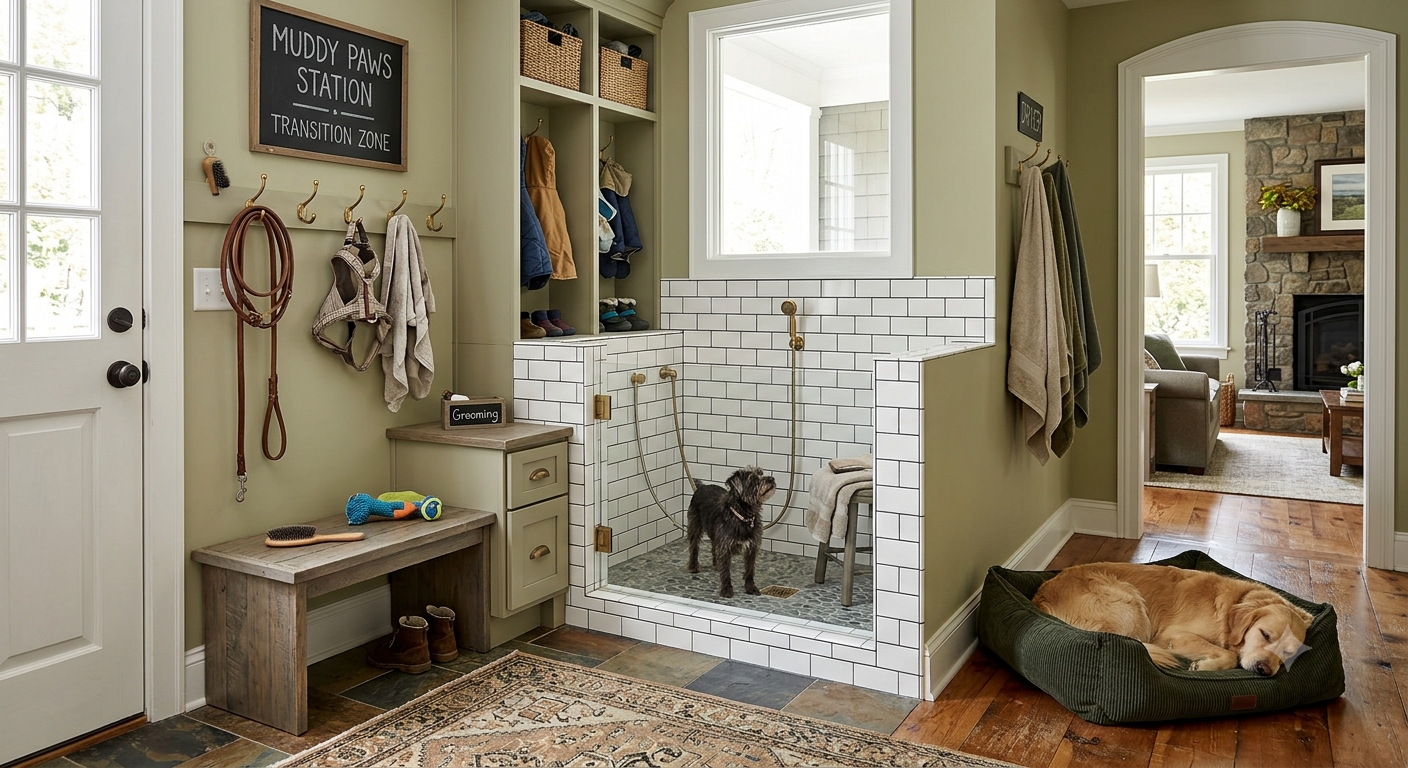
We have now started adding dog wash stations to our mudrooms.
Simplify dog bath time by installing a pet shower in your mudroom. This setup features subway tiles on the low walls and a handheld sprayer for rinsing your dog with ease.
The mudroom dog station is the dog room idea that provides the highest practical return of any design on this list. It creates a defined entry-transition space for the dog — the place where muddy paws are cleaned, leashes and harnesses are hung, outdoor gear is stored, and the dog shakes off the outside world before becoming an indoor dog again.
The complete mudroom dog station includes:
A wash-down area — at minimum a floor drain and handheld sprayer, ideally a purpose-built low-wall dog shower with sealed tile. A paw wipe station immediately inside the entry door — a bench height surface, hooks for leashes, and a drawer for grooming supplies. A drying area with a wall-mounted hook for hanging towels. Storage for outdoor dog gear — seasonal coats, boots, harnesses — in organized hooks or cubbies. A dog bed in the corner of the mudroom for the post-walk rest that most dogs immediately require.
The design principle: Everything that happens when the dog comes inside — wiping paws, removing gear, drying off, resting — happens in one contained, easy-to-clean space before the dog has access to the rest of the home. The result is a cleaner house and a dog who has a clear transition ritual between “outside dog” and “inside dog.”
Idea 4: The Living Room Dog Corner With Built-In Bed
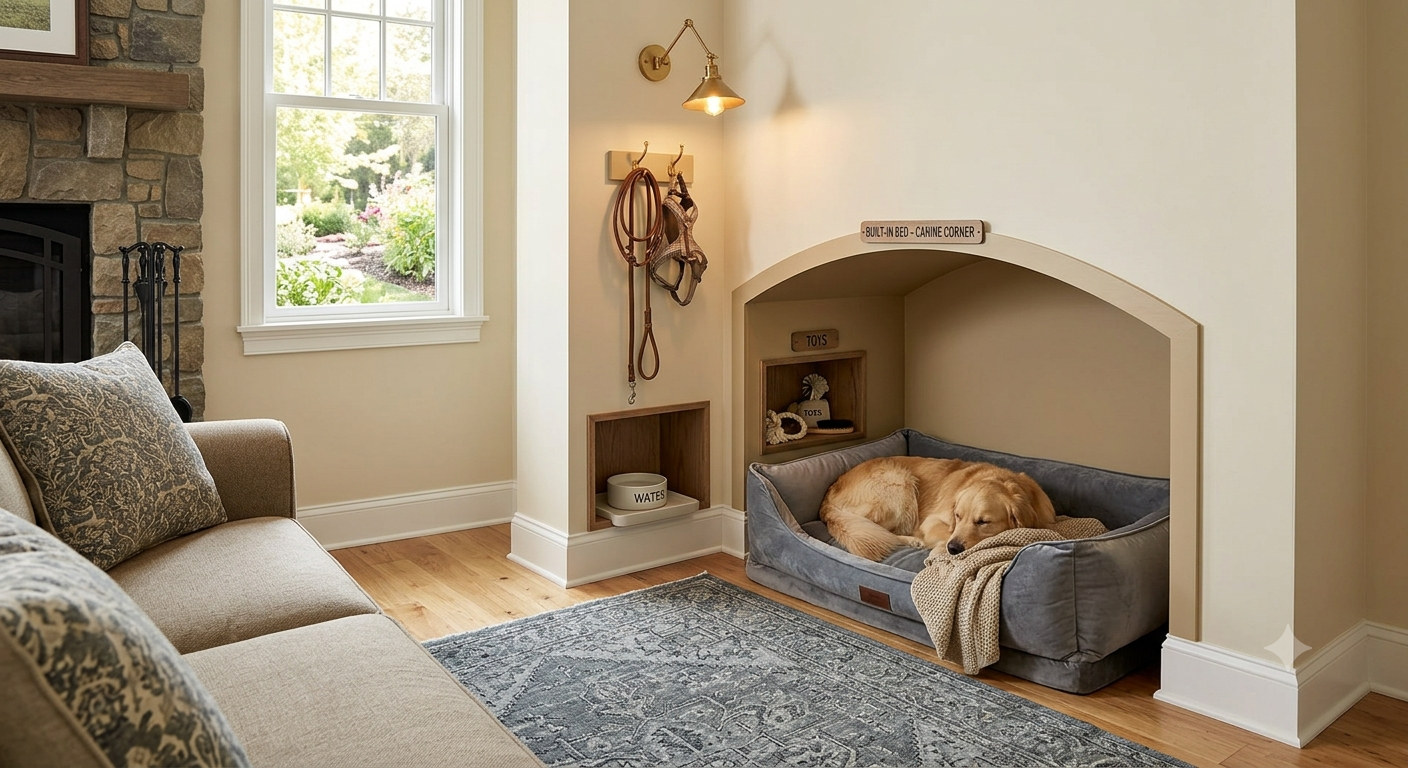
A warm and inviting space awaits your pup with a cozy canine corner enriched by plush bedding and soft textures. This design creates a snug retreat where your dog can relax amid soothing neutral tones, gentle lighting, and comfortable fabrics. Soft rugs enhance the tactile experience, while strategically placed cushions add style and warmth.
The dog corner is the most accessible dog room idea for households that cannot commit to a full room or make structural changes. It requires only a defined area, a quality dog bed, and the organizational intention that makes the corner genuinely theirs rather than simply where the dog happens to sit.
The elements that make a corner into a genuine dog space:
A non-slip area rug that defines the corner boundary — both for the dog (this is your area) and for the household’s visual language (this corner has a designated purpose). A quality dog bed with washable cover sized appropriately for the dog at full stretch. A wall hook above the corner for the leash. A small basket or drawer for toys. A water bowl integration — either a built-in tray or an elevated stand that keeps the bowl from being pushed around.
The visual design principle: The dog corner should use the same material palette as the surrounding room. A dog bed in a contrasting plaid in a neutral room looks like an afterthought. A dog bed in a material and color that complements the room’s palette looks like a design decision. The distinction between these two is the difference between a dog area that looks accidental and one that looks intentional.
Idea 5: The Cabinet Dog Bed — Built Into the Architecture
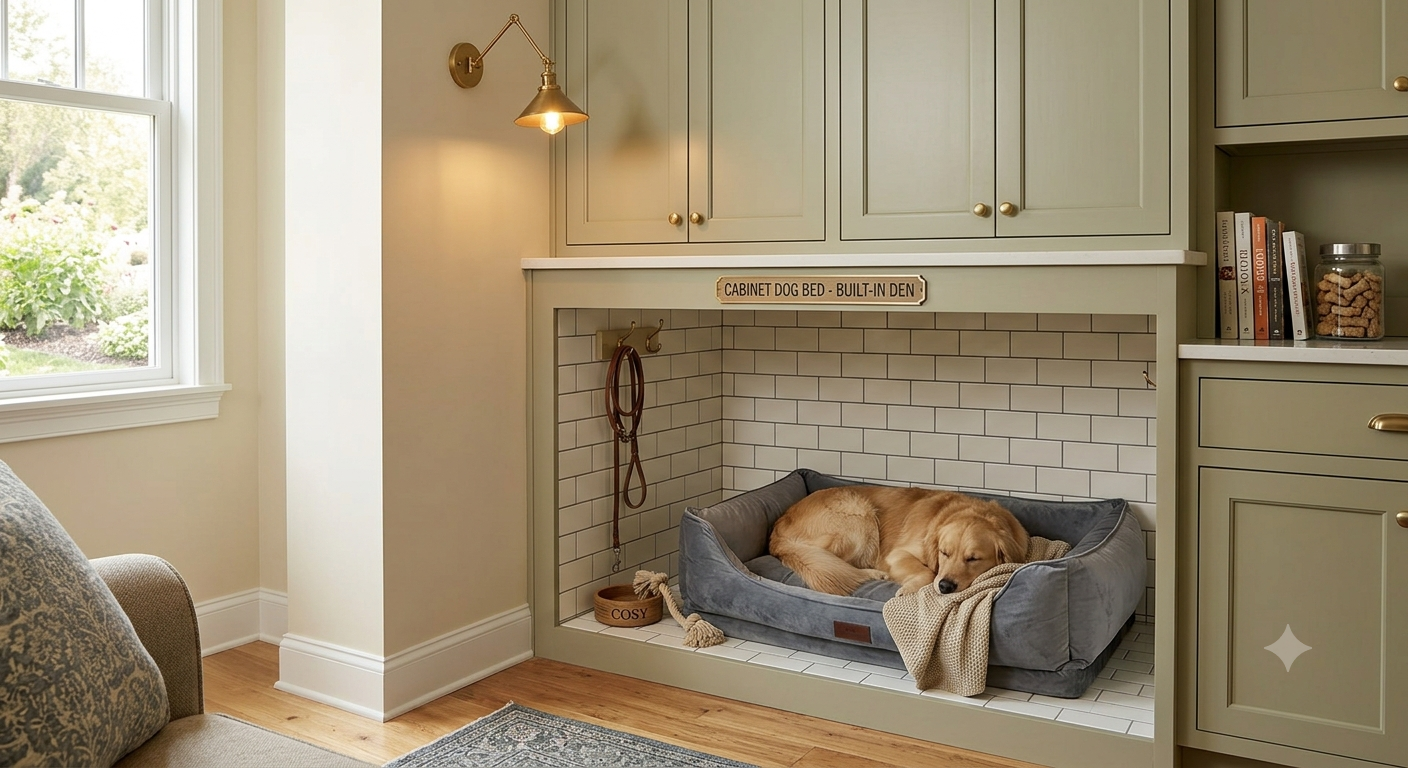
Take the door and screws off a cabinet to create a sleeping zone or feeding zone under a pre-existing piece of furniture. Setting up a dog bedroom in a closet will also allow you to easily hang up their collars, seasonal sweaters, and winter boots for easy dog storage.
A kitchen base cabinet, a wardrobe cabinet, or any cabinet with adequate interior dimensions converted to a dog sleeping space by removing the door, adding a dog bed that fits the interior, and lining the interior with a washable surface. The cabinet above becomes regular human storage — the cabinet dog bed simultaneously gains a dog bed and an interior design element that looks genuinely intentional.
The dimensions that work: A standard base kitchen cabinet — 24 inches wide, 24 inches deep, 30 inches tall — fits a small to medium dog comfortably. For larger dogs, two adjacent cabinet spaces with the divider removed create a wider, more appropriate den.
The styling: Paint or paper the interior of the cabinet in a complementary color or wallpaper pattern. The visible interior of the dog bed cabinet becomes a small, styled element — the dog’s bedroom visible as a design feature rather than hidden.
Idea 6: The Home Office Dog Cub — Work From Home With Your Best Coworker
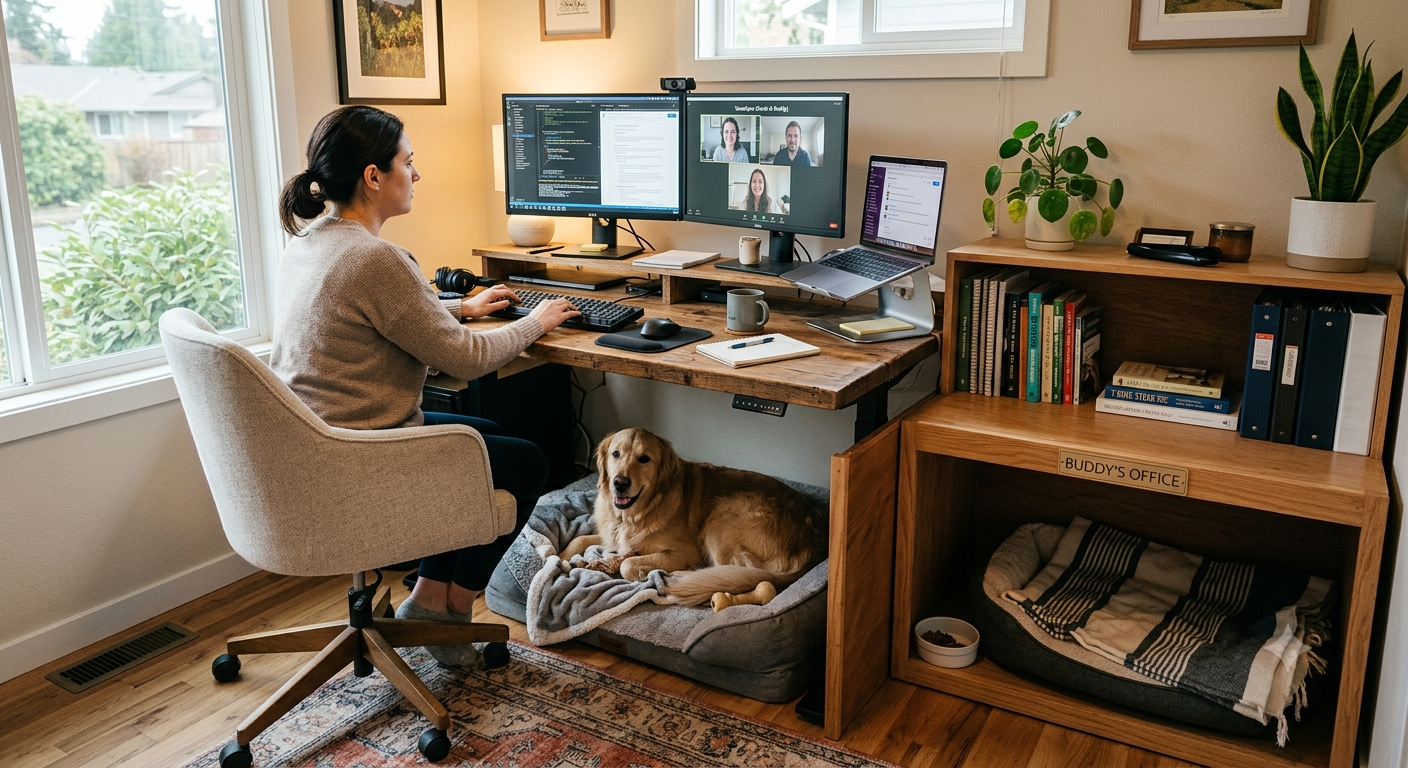
Do you have a home office where you spend a lot of your time? You can organize your home office to make room for an indoor dog den, so your best friend can be near you. Add a dog crate under your standing desk or install a dog cubby in your study. This cozy spot will allow you and your dogs to spend quality time together — whether you’re working or gaming online.
The work-from-home reality of contemporary life has created a specific demand for dog spaces adjacent to desk setups — the dog who cannot bear being in another room during work hours deserves a dedicated space that keeps them close without requiring them to settle for whatever floor space happens to be available.
The under-desk dog bed: A bed sized to fit the knee space of a standard desk, with low sides that define the boundary without blocking entry and exit, positioned so the dog is within the owner’s peripheral vision during video calls. This position satisfies the proximity need that most work-from-home dogs express without creating the attention-seeking behavior that emerges from a dog who has no defined spot and is waiting to be noticed.
The adjacent dog cubby: A low bookshelf unit positioned beside the desk, with the lower shelf cleared and fitted with a dog bed, creates a purpose-built dog den that is literally within reach of the working owner. The upper shelves continue as book or storage space. The lower shelf is permanently, clearly the dog’s.
Idea 7: The Laundry Room Dog Space — Multi-Purpose Done Beautifully
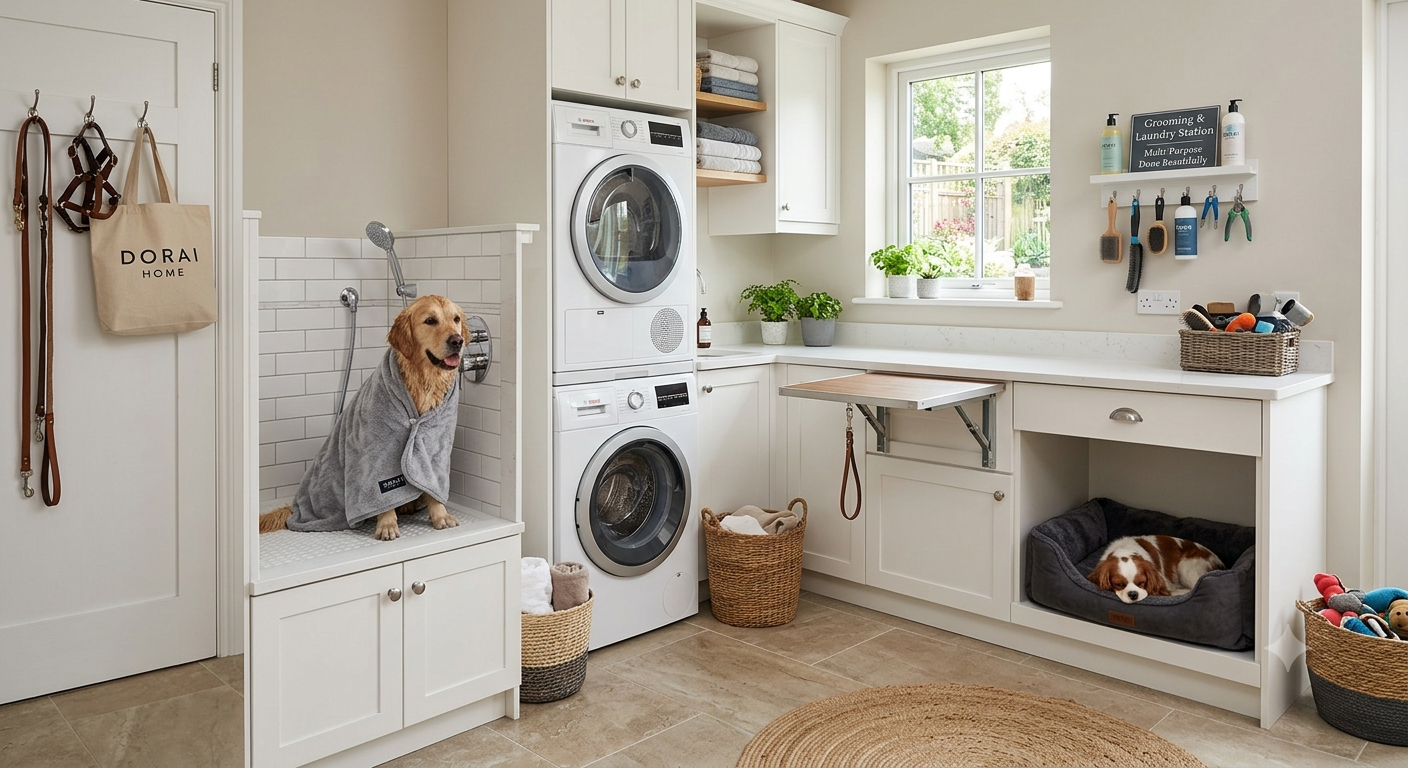
Combine an eco-friendly laundry space with a grooming station next to your washer and dryer. Add a comfy dog bed next to your washer and dryer to easily create a multi-purpose room.
The laundry room is already a utility space — the addition of a dog function extends the utility without compromising the primary purpose. Laundry rooms are typically tiled or have sealed concrete floors (easy to clean), have plumbing nearby (convenient for wash stations), and have cabinet space (available for dog supply storage).
The minimum laundry room dog addition: A dog bed positioned beside the dryer (the warmth of the operating dryer creates a consistently warm resting spot that most dogs actively seek). A hook on the back of the laundry room door for leashes and harnesses. A small basket for dog toys and accessories.
The upgraded laundry room dog station: A wall-mounted grooming table that folds down when needed. A small dog shower with a handheld sprayer integrated into the utility sink area. Built-in storage for grooming supplies, medications, and dog accessories. A dog bed built into the base cabinet space beneath the counter.
Idea 8: The Basement Dog Room — Full Conversion
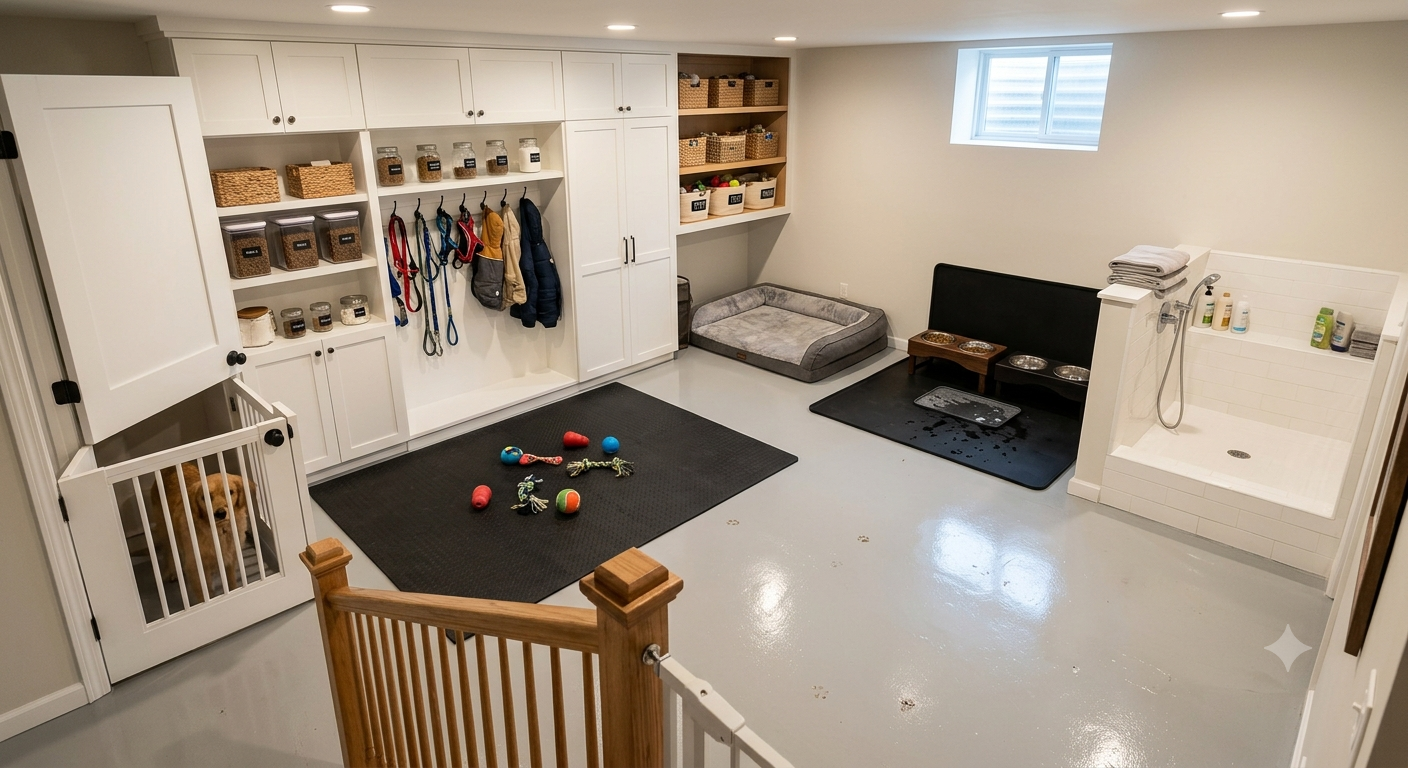
The indoor dog room ideas are endless when you have an open basement. Basements and other areas of your home that typically serve as bonus rooms can provide an open area for your furry family members to play, relax, run, and more. Your basement area can also provide lots of dog storage for toys, leashes, and other pet must-haves.
The full basement conversion is the dog room idea at maximum scale — a complete room dedicated to the dog’s needs, separate from the main living areas, designed for both the dog’s comfort and ease of cleaning.
The full basement dog room elements:
Flooring: Epoxy-sealed concrete or luxury vinyl plank — both are waterproof, scrubbable, and dog-safe. No carpet in a full dog room unless it is modular tiles that can be individually replaced.
Zones: A sleeping zone (quality dog bed in a defined corner), a play zone (rubber mat area with toy access), a feeding zone (elevated bowls on a mat that catches spills), and a grooming zone (if space allows — a tub or shower area).
Storage: Built-in shelving for food (sealed containers), toys (organized baskets), leashes and harnesses (hooks), medications and grooming supplies (closed cabinet), and seasonal gear. The well-organized dog room stores everything related to the dog in one location — eliminating the distributed clutter of dog supplies spread across multiple rooms.
Containment options: A Dutch door at the top of the basement stairs allows air circulation while containing the dog when needed. A baby gate with dog door (allows the dog through while blocking unsupervised access) achieves the same with less construction.
Idea 9: The Garage Dog Zone — The Underused Potential Space
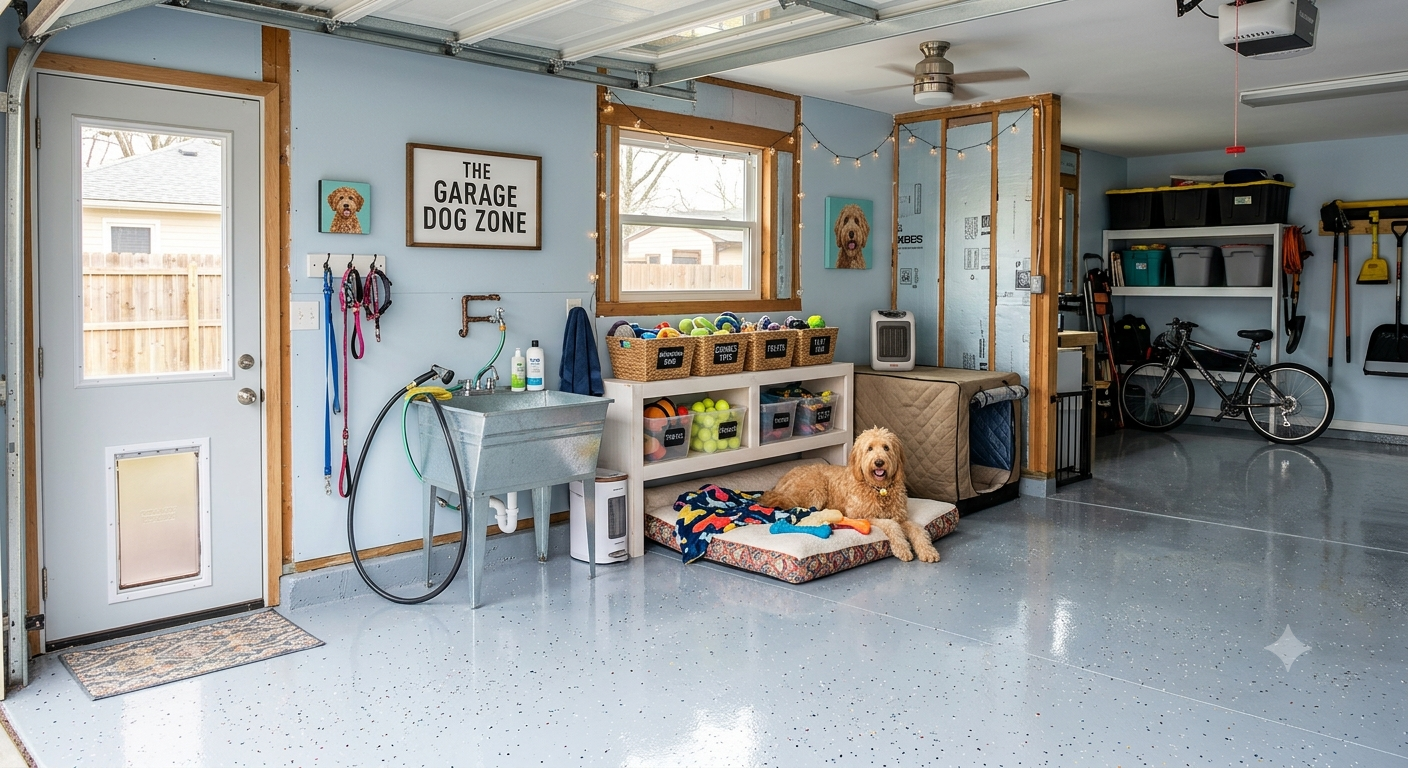
A garage is the perfect puppy zone. If you don’t plan to store cars, lawn equipment, and other tools here, transform your garage into a cute dog space — complete with beds, blankets, dog toy storage, decor, and more.
An unused or partially used garage becomes a genuinely excellent dog space for owners who want to give their dog more room than the interior of the house provides — particularly for high-energy breeds who need space to move and a surface that can sustain the impact of indoor zoomies without household concern.
The garage dog zone conversion:
Epoxy floor coating in the dog area (bright, reflective, easy to clean). An outdoor dog door installed in the garage side door or window for secure yard access. Climate management — a portable electric heater for winter, a fan system for summer, insulation if the dog will spend significant time here. Crate or dog bed in the warmest corner. Toy storage on low shelving. A wash station with a basic rubber hose connected to an outdoor spigot.
Idea 10: The Organized Feeding Station — The Detail That Changes Everything
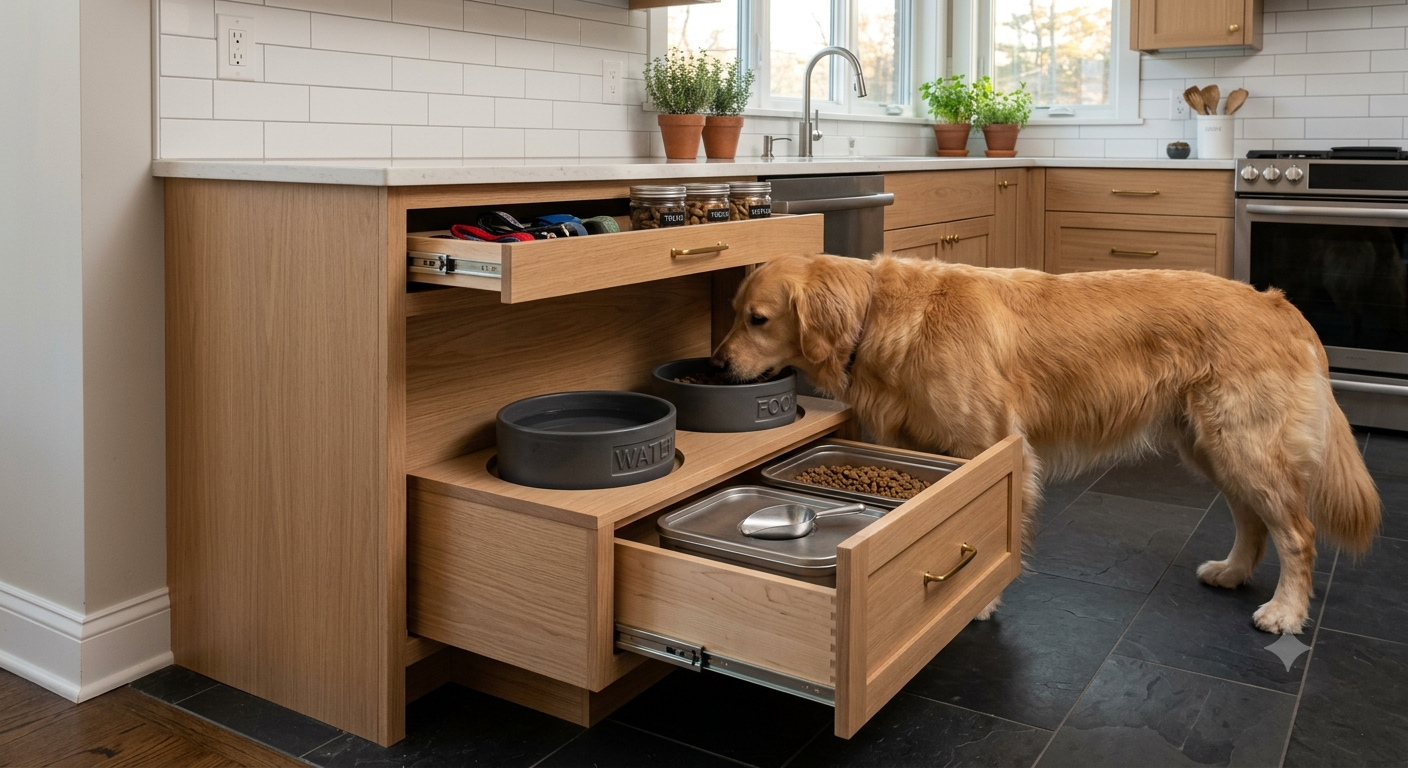
Create an organized dining area with a Large, Weighted Ceramic Dog Water Bowl integrated into custom cabinetry. Pull-out drawers keep food fresh and easily accessible while maintaining a clean aesthetic.
The feeding station is not a separate room — it is the specific, dedicated organization of the feeding area that transforms it from scattered bowls on the floor to a deliberate, designed element of the kitchen or utility space.
The built-in feeding station: A pull-out drawer at floor level containing the food storage container — the drawer pulls out to scoop the meal, then closes to seal the food. A side-by-side bowl integration built into the base cabinet at floor level — the bowls sit in cutouts in a raised platform, keeping them in position and raising them slightly off the floor for better posture during eating. The entire area is easy to clean because everything has a defined place.
The standalone feeding station: An elevated feeder on a platform with storage beneath — the food container lives inside the platform base, and the bowls are mounted at the appropriate height for the dog’s size. Positioned against the kitchen wall, this reads as a piece of furniture rather than a random bowl on the floor.
Idea 11: The Spa Dog Room — For the Owner Who Goes All In
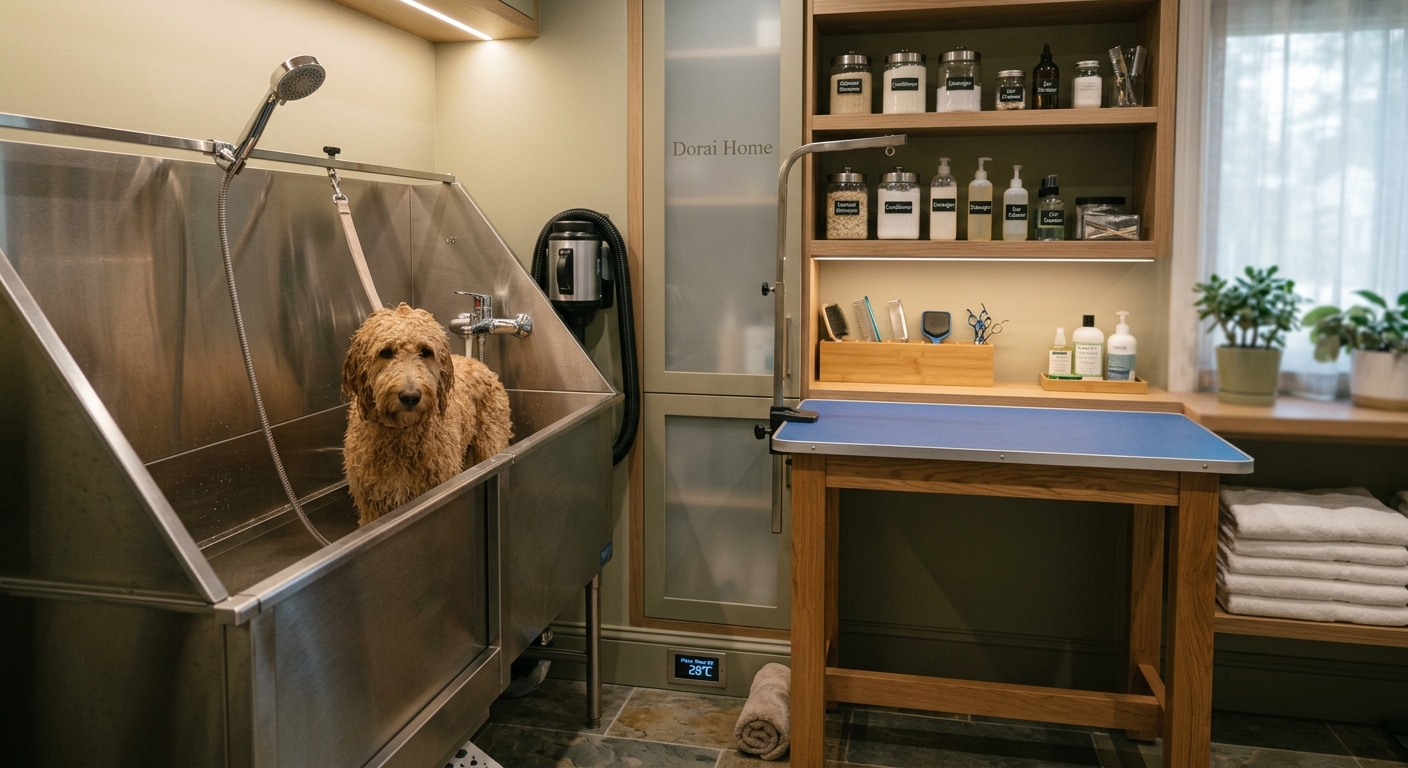
Create an area that serves as a spa-like retreat with a professional grooming table, built-in hair dryer mount, and organized product storage. Add calming lighting for a serene atmosphere.
A washing station is a genius addition to any dog room, especially if your pup likes to go on grand outdoor adventures or requires routine grooming. Having an extended shower head makes it the ideal spot to clean off pets easily.
Radiant floor heat is a serious luxury for older dogs and short-coated dogs living in cooler climates.
The spa dog room is the full-investment version — typically converted from a bathroom or utility room, containing every grooming and care element in one dedicated, professional-level space.
The complete spa dog room:
A raised grooming table — either wall-mounted and fold-down for space efficiency or freestanding. A dog shower with non-slip tray, handheld sprayer, and warm-water connection. A built-in hair dryer mount at appropriate height. Organized product storage — shampoos, conditioners, grooming tools — in clear containers on accessible shelves. A hook or arm for restraint during grooming. Heated floor tiles for the post-bath comfort of older or short-coated dogs.
This is the dog room for owners of breeds with significant grooming requirements — Poodles, Cocker Spaniels, Goldendoodles, Shih Tzus, and any breed whose professional grooming appointment cost is significant enough that at-home grooming capability becomes financially justified.
Idea 12: The Modern Dog Room With Glass Panels — Contemporary Aesthetic
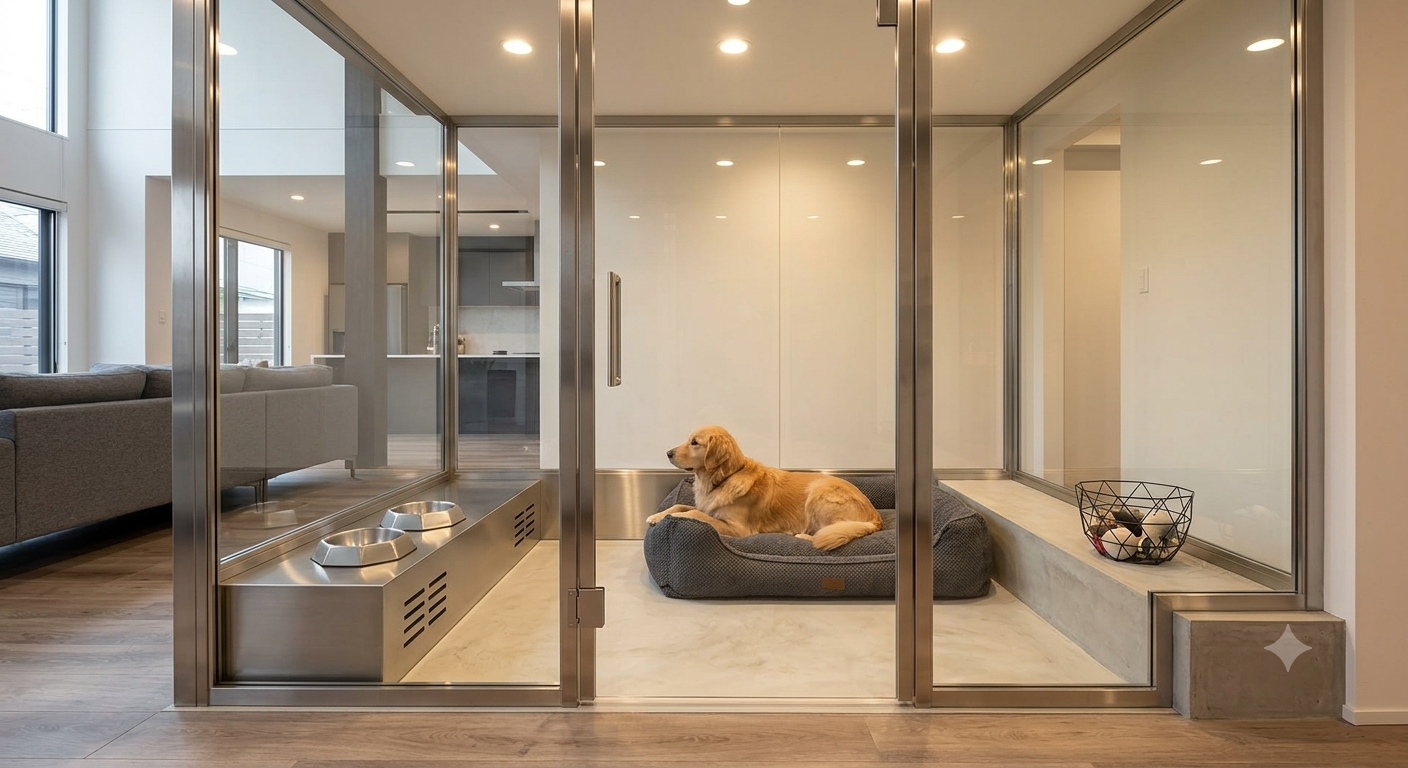
Create a modern space for your dog with glass panels and stainless steel accents. Add ventilation slats and a comfortable bed for a contemporary look that keeps your pet visible and connected to family life.
The contemporary dog room design uses clean lines, transparent or semi-transparent materials, and minimal ornamentation to create a dog space that reads as design-forward rather than functionally pragmatic. Glass panels instead of traditional crate bars. Stainless steel food and water bowls integrated into a brushed steel platform. White or concrete-look flooring. Geometric toy storage in matte black wire baskets.
The transparency of the glass panel design maintains the visual connection between the dog and the household — the dog can see the family, the family can see the dog — while providing the defined boundary that good dog space design requires.
The contemporary dog room principle: Every material is the same material used elsewhere in the home. Nothing reads as “pet product” — everything reads as “interior design element that happens to be for a dog.”
The Storage System That Makes Any Dog Room Work
Incorporate floating shelves and hidden storage compartments. Use matching baskets to organize toys and supplies while maintaining a minimalist aesthetic.
Regardless of which of the twelve ideas you implement, the organizational system that supports the dog space is what determines whether it remains a deliberate, functional design element or descends into the clutter that most dog households experience.
The minimal storage system for any dog space: one designated container for toys (a low basket the dog can access for self-selection), one sealed container for food, one hook or hook row for walking gear (leash, harness, poop bag holder), one drawer or shelf for grooming supplies and medications, and one designated towel hook for paw-drying towels.
Every item related to the dog lives in one of these five categories, in one location. This is the system that makes the dog room work as a design element rather than as a collection point for scattered dog-related items.
Your dog does not need a room. They need a space — any size, any location, any budget — that is unambiguously, consistently, permanently theirs. The under-stair den and the full basement conversion are both equally successful at providing this, because what the space communicates is the same regardless of its scale: this is where you belong. This is yours.
Twelve ideas. Something available to every home, every budget, and every dog. Save your favorites to Pinterest, share this with every dog owner you know who is still placing dog beds wherever happens to be convenient, and start building the space that your dog has been asking for simply by occupying every available corner of your home.
Now you know what they were looking for all along.