You know your Frenchie. You know their specific version of too hot — the change in their breathing pattern, the way they seek the kitchen tile instead of their usual spot, the specific quality of sluggishness that means this is not laziness; this is thermoregulation. You know it when you see it. And you want to fix it.
The French Bulldog cannot self-regulate in heat the way a longer-muzzled dog can. The panting mechanism that cools most dogs efficiently is compromised by the compressed airway of the brachycephalic face — the same face that makes the breed immediately recognizable and immediately endearing. So when temperature rises, the Frenchie relies more heavily on external help than most dogs need, and the owner who knows how to provide that help is the owner whose Frenchie gets through summer comfortably.
These ten cooling strategies are practical, evidence-based, and field-tested by Frenchie owners in hot climates. Not all of them will apply to every situation. But having the full toolkit means having the right tool for whatever the day demands.
Tip 1: The Cooling Vest — Wearable Temperature Management
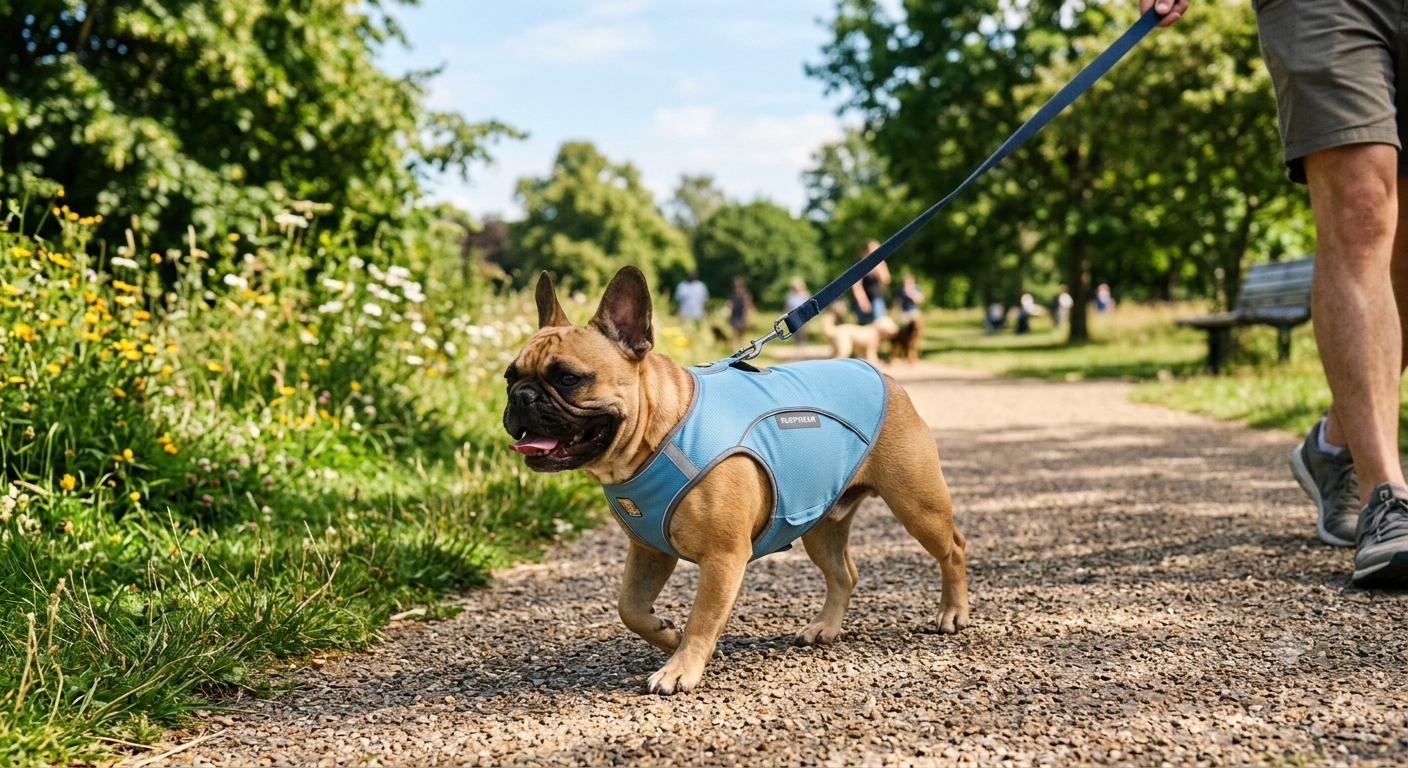
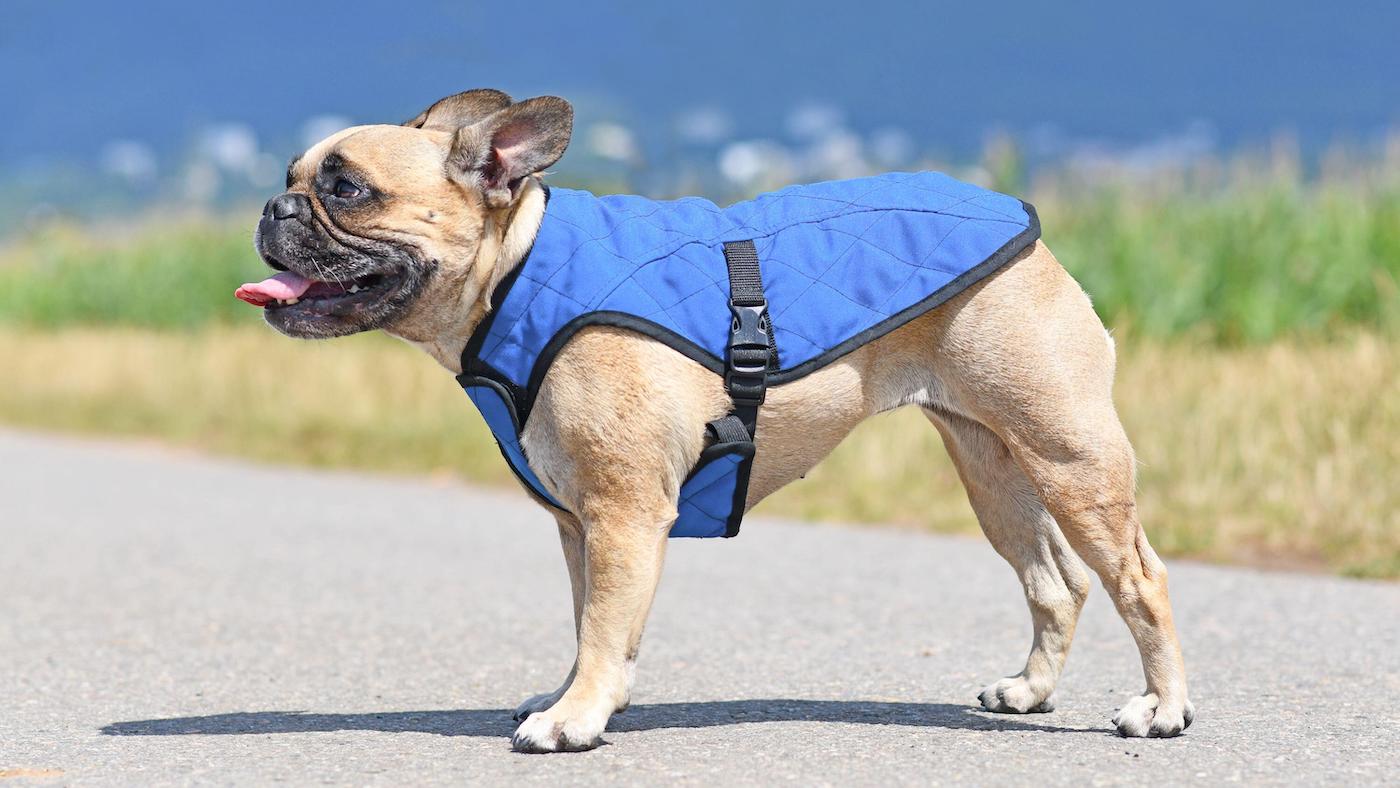
A cooling vest — soaked in water and wrung out, then placed on the dog — uses the physics of evaporative cooling to maintain a lower skin surface temperature for twenty to sixty minutes per application. The water evaporating from the vest surface carries heat away from the dog, providing the same cooling mechanism that human sweating provides — a mechanism French Bulldogs cannot access through their own physiology.
How to use it effectively: Soak the vest in cool (not ice) water. Wring until it is damp rather than dripping. Place on the dog and secure. Re-soak when dry (typically every 20 to 40 minutes in hot conditions).
The limitation: A cooling vest requires reapplication as it dries, which means active management rather than a set-and-forget solution. For outdoor activity in hot weather, pack the vest and carry water specifically for re-soaking.
Tip 2: Frozen Treat Station — The Multiple Format Approach
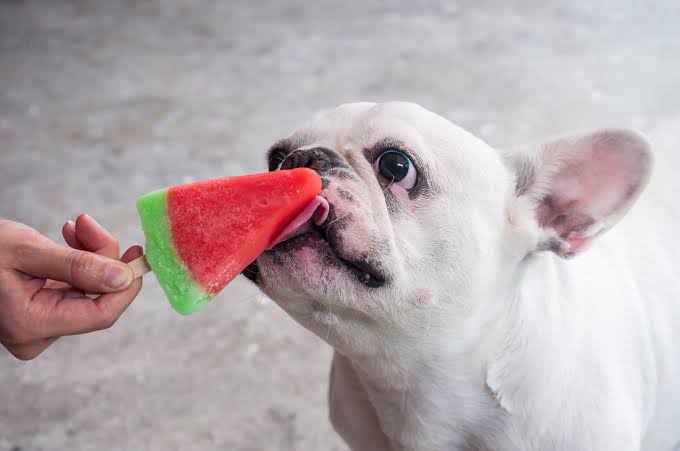
Rather than a single frozen treat option, a rotation of different frozen formats maintains novelty (which drives consumption) and provides different cooling delivery methods (licking, chewing, water drinking).
The French Bulldog summer frozen treat rotation:
Monday/Thursday: Frozen chicken broth ice cubes in a bowl (drinking + licking)
Tuesday/Friday: Frozen peanut butter Kong (sustained licking, extended engagement)
Wednesday/Saturday: Watermelon chunks partially frozen (eating, high water content)
Sunday: Plain yogurt and blueberry ice cubes (licking, probiotic benefit)
The rotation means the dog receives a different experience each day, maintaining their enthusiasm for the cooling routine throughout the season.
12 Essential French Bulldog Care Tips That Will Keep Your Frenchie Healthy and Happy →
Tip 3: The Damp Mat — Free and Effective
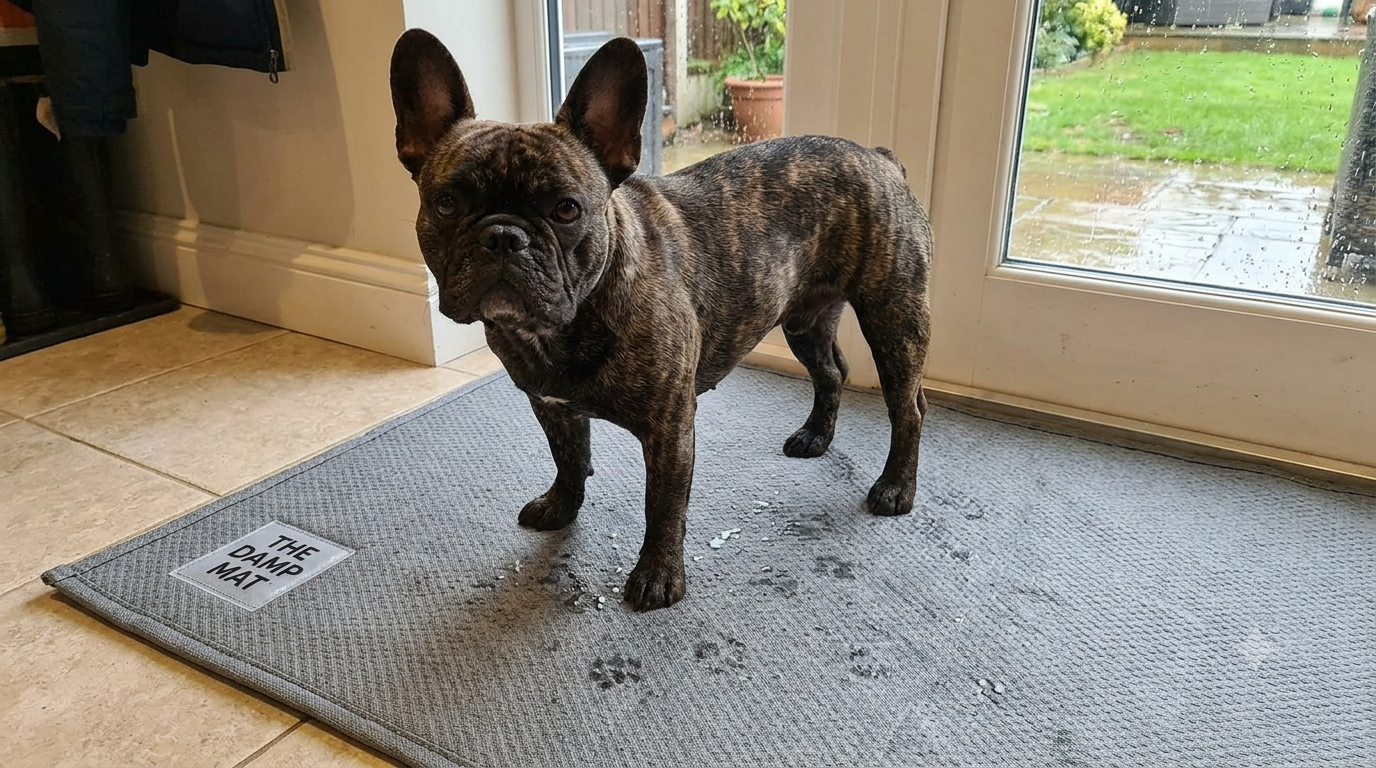
A large bath towel or dog mat soaked in cool water and placed on the floor in the Frenchie’s favorite resting spot provides a passively cooling surface that the dog can access at any time without human management.
The damp mat works through body contact — the cool moisture conducts heat from the skin surface more effectively than a dry surface at the same temperature. Many French Bulldogs will seek out damp surfaces on hot days instinctively.
Refresh every two to three hours: The mat dries and warms with use. A mat that is warm and damp is no longer cooling and may contribute to skin fold issues if the dog is lying on it for extended periods.
Tip 4: The Cool Bandana — Quick Deployment Option
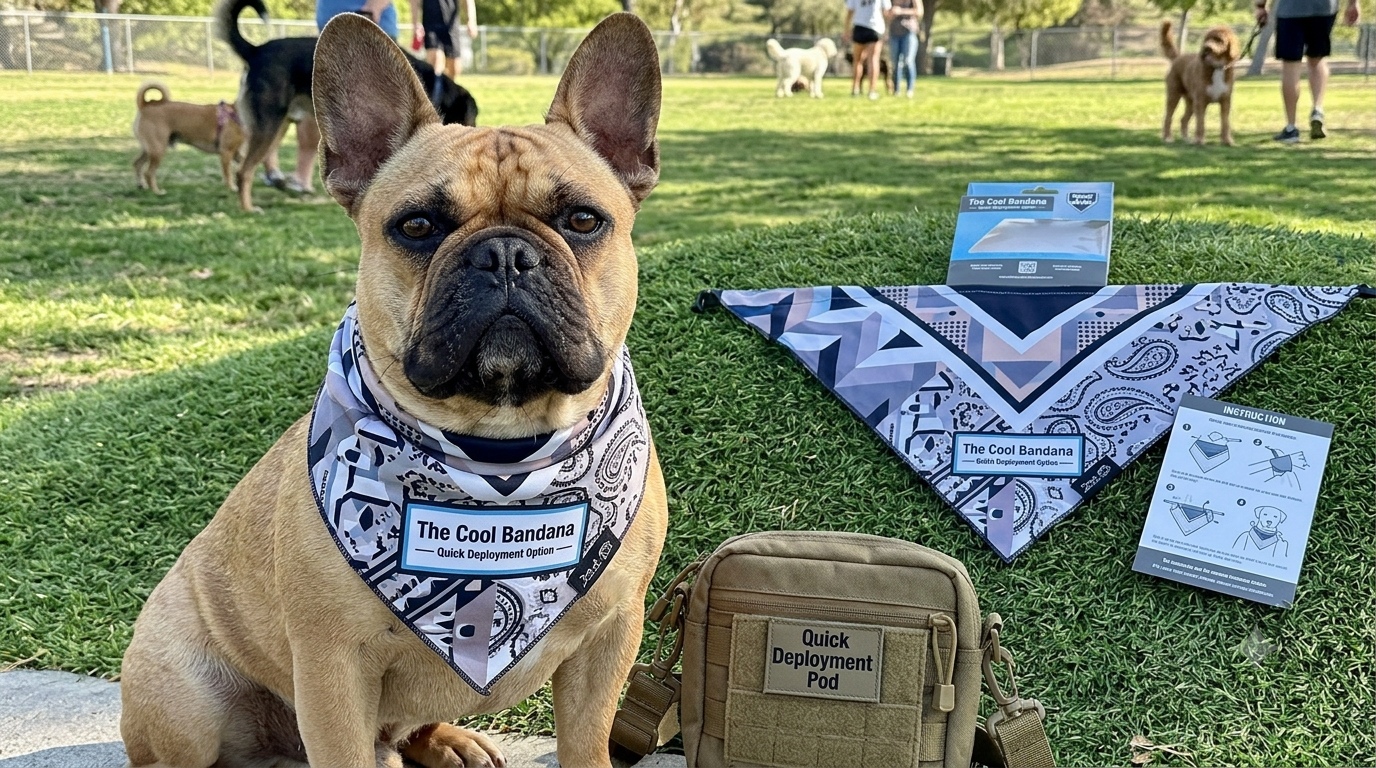
A lightweight bandana, soaked in cool water and tied around the neck — not tightly, not restricting the airway, loosely and comfortably — provides evaporative cooling at the neck, where major blood vessels are close to the skin surface. Cooling the blood at these points contributes to overall core temperature reduction.
The neck bandana is the most portable cooling option on this list — it fits in any pocket, can be re-soaked in any available water source, and does not restrict the dog’s movement or add weight. It is the cooling tool for walks, outdoor meals, and any situation where a vest or mat is unavailable.
Tip 5: The Ice Pack Under the Belly — Targeted Cooling
During rest periods on hot days, placing a wrapped ice pack (wrapped in a thin towel to prevent direct skin contact, which can cause cold burns) under the dog’s belly provides targeted cooling at one of the most thermally efficient points on the body — the abdomen, where internal organs are closest to the body surface, and major blood vessels are accessible.
This is the cooling technique used by veterinary professionals managing heat stress cases: cooling the abdominal region cools the blood supply to the major organs efficiently. At home, it is simply a wrapped ice pack under a resting Frenchie on a hot afternoon.
Tip 6: Strategic Fans — Airflow Positioning
A fan alone does not cool a brachycephalic dog the way it cools a human — it cannot activate the sweating mechanism that makes fans effective for people. But a fan directed across a cool, damp surface — a damp mat, a wet dog post-misting — creates evaporative cooling that functions effectively.
Position a fan to direct airflow across the damp mat position, across the cooling vest surface, or across the dog after a cool water misting. The combination of moisture and airflow produces genuine cooling rather than simply moving hot air around the space.
Tip 7: Water Misting — Regular Intervals During Hot Days
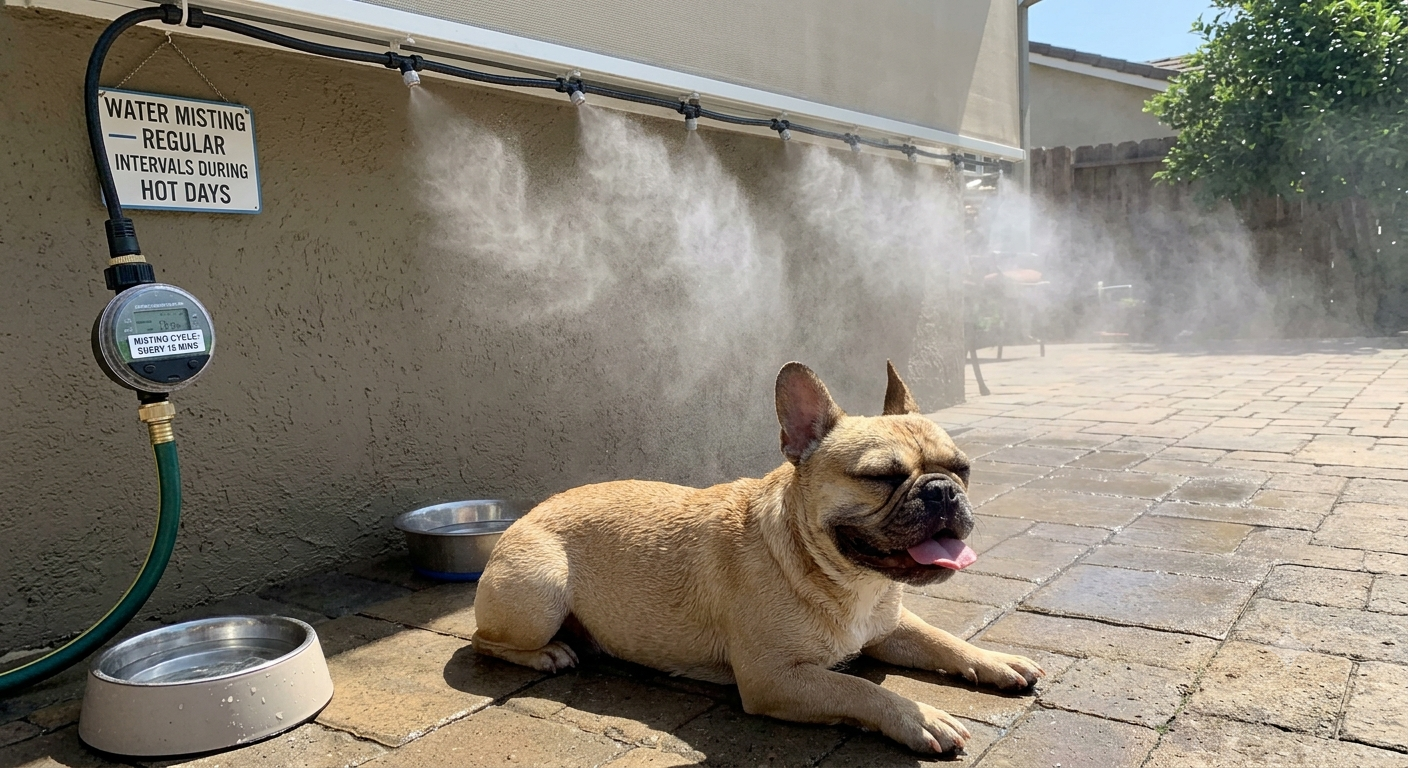
A simple spray bottle filled with cool water, used to mist the dog’s coat every 20 to 30 minutes during hot periods, maintains the surface moisture that makes both natural and fan-assisted evaporative cooling effective.
Mist the paw pads, the belly, and the back — areas where blood vessels close to the skin surface allow the most efficient heat exchange. The face should be misted carefully around the eyes and avoided in the ear canals.
The combined approach: Mist the dog, position the fan across them, and allow the evaporative cooling to work for five to ten minutes. This sequence, repeated every 30 minutes during peak heat hours, produces significantly better thermoregulation than any single cooling method alone.
Tip 8: The Elevated Dog Bed — Airflow From Below
A raised, mesh-surface dog bed — elevated four to six inches off the floor on legs or a frame — allows airflow beneath the dog as well as above, providing cooling from both surfaces simultaneously. The floor beneath a conventional flat bed often becomes warm from the dog’s body heat with no air circulation to dissipate it. An elevated mesh bed eliminates this trapped heat effect.
Placement: Position the elevated bed in the path of any air conditioning output or fan airflow for maximum cooling benefit.
Tip 9: Timing the Wrinkle Cleaning With Cooling in Mind
The daily wrinkle cleaning routine that French Bulldog owners perform for skin fold hygiene has a summer bonus: the process of cleaning the folds with a cool damp cloth simultaneously cleans the skin and provides mild topical cooling.
Use a cloth dampened with cool water for the cleaning process on hot days. Work through each fold systematically. The mild cooling effect is not dramatic — but it is present, and the routine care that needs to happen daily anyway provides some cooling benefit is an efficient use of a necessary process.
Tip 10: The After-Walk Cooling Protocol
The walk that happened during the safe morning or evening window still produces some thermoregulatory load — your Frenchie returns from the walk with elevated body temperature and elevated respiratory effort. The post-walk cooling protocol addresses this before the dog returns to normal rest temperature on their own:
- Move immediately to an air-conditioned space on return
- Offer cool water in small amounts (not large quantities — drinking too much rapidly can cause vomiting in a breathing-compromised dog)
- Place on a cool damp mat or apply the cooling vest
- Allow 15 to 20 minutes of complete rest in the cool space before any subsequent activity
- Monitor breathing — respiratory rate should return to the dog’s resting baseline within 10 minutes of the above protocol. If it does not, this is a sign that the walk was longer or more thermally demanding than optimal.
The post-walk protocol is the transition management between outdoor exertion and a comfortable resting state. Without it, the Frenchie who was fine during the walk may continue building thermal load for twenty minutes after returning home because they are not being actively supported in the transition.
Your French Bulldog’s summer comfort is not something they can manage for themselves. They will try — they will seek the tile, the cool spot, the shade — but the management ceiling they can achieve through their own behavioral thermoregulation is lower than any dog with a functional panting mechanism.
Ten cooling strategies. A practical toolkit for every situation summer presents. The vest for outdoor activity. The frozen treat rotation for the hottest hours. The misting and the fan for the afternoon. The elevated bed and the damp mat for the rest of the day.
Implement these tools consistently, and your Frenchie’s summer is not a season of managed survival — it is a season of comfort with appropriate precautions. Which is exactly what it should be.
Save this guide to Pinterest, share it with the Frenchie owner in your life who is about to face their first hot summer, and go check your ice cube trays. They should be full all summer, without fail.