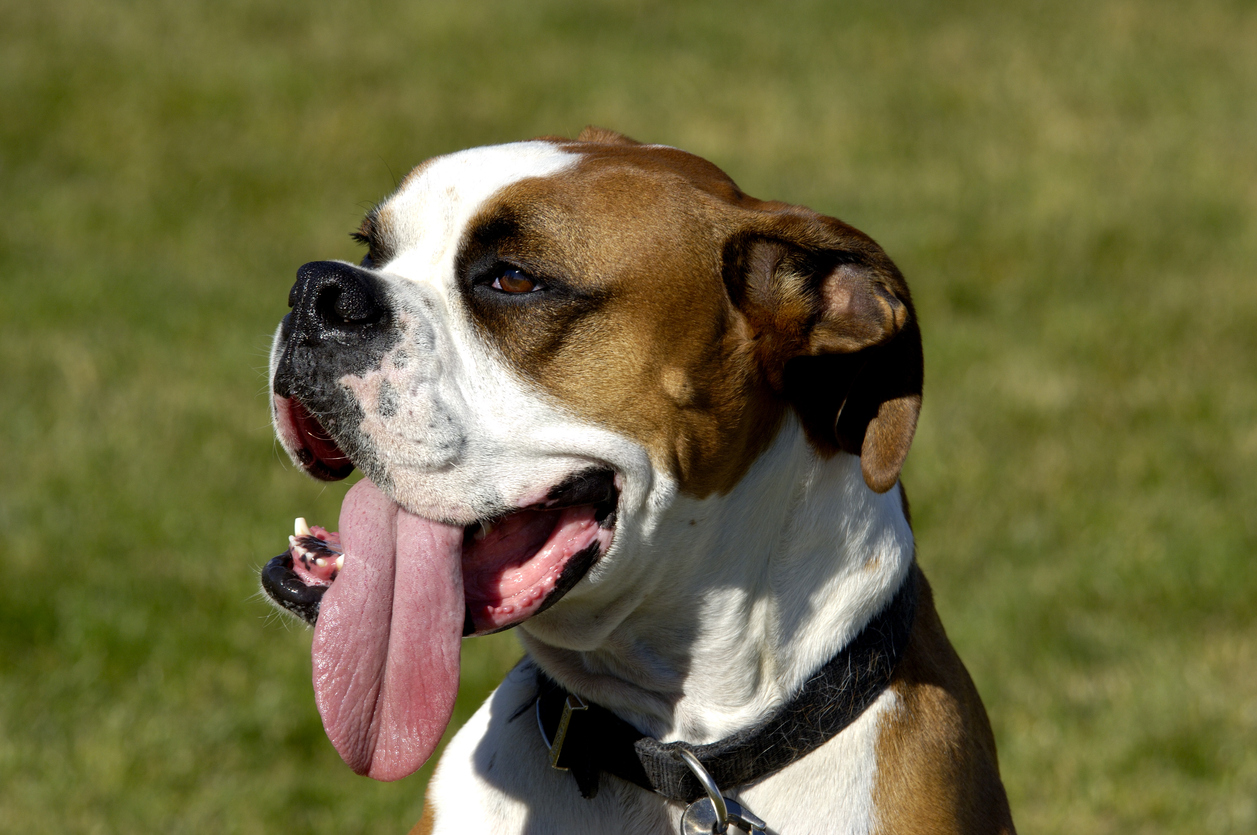
The French Bulldog’s face is one of the most recognizable, most beloved, most photographed features in the entire dog world. The flat muzzle, the wide eyes, the bat ears, the compact, wrinkled expression that manages to communicate both regal dignity and absolute nonsense simultaneously.
That same face is also the feature that makes summer a genuine medical management challenge for every French Bulldog owner. The brachycephalic (flat-faced) anatomy that produces the breed’s distinctive appearance also compresses the airway in ways that dramatically reduce the dog’s ability to regulate their body temperature through panting — the primary cooling mechanism available to all dogs.
A dog with a longer muzzle pants effectively because the incoming air passes over a large surface area of moist tissue, cooling through evaporation before it enters the lungs. A French Bulldog’s compressed airway significantly reduces this surface area and the efficiency of the entire system. The Frenchie who is working hard to breathe in hot weather is not just uncomfortable — they are a dog whose primary thermoregulation mechanism is compromised, in conditions that make thermoregulation urgently necessary.
This is not alarmist. French Bulldogs are wonderful dogs with wonderful lives — but those wonderful lives require specific, non-negotiable summer management from their owners.
Eight rules. None of them are optional.
Rule 1: Walk Only Before 9 am and After 7 pm — No Exceptions
French Bulldog exercise: short walks, light playtime, and indoor games are ideal. Avoid strenuous exercise, especially in hot or humid weather, as Frenchies struggle to regulate body temperature.
This rule sounds simple. It is harder than it sounds because your Frenchie does not know it is summer and will be enthusiastic about a walk at any time of day. Their enthusiasm is not evidence that the walk is safe — it is evidence that their drive to be with you and to move through the world exceeds their ability to accurately assess their own thermal state.
The pavement temperature rule applies doubly for French Bulldogs, whose shorter legs place their faces closer to the heat-radiating surface than any longer-legged breed. Heat rises from hot pavement, and a Frenchie walking on a 140°F pavement surface in the afternoon is breathing air that is significantly hotter than the ambient temperature.
If you miss the morning window: A walk during the heat of the day is not replaced by a shorter one. It is replaced by indoor mental enrichment — training sessions, puzzle feeders, indoor games — until the evening window opens.
Rule 2: Never Leave a French Bulldog in a Parked Car Under Any Circumstances
Every summer safety guide for every dog includes this instruction. For French Bulldogs, the urgency is amplified by the BOAS-compromised airway.
The interior of a parked car rises by approximately 40°F within the first hour of parking in the sun. A French Bulldog in a 110°F car cannot pant effectively enough to manage that temperature. The timeline from distress to heat stroke to death is significantly shorter for a brachycephalic breed than for a longer-muzzled dog in the same conditions.
There is no errand brief enough to make this safe. Not three minutes. Not with the windows cracked. Not in the shade. Not with the engine running (car air conditioning systems can malfunction, and engine heat contributes to interior temperature even with AC operating).
Leave the Frenchie home.
10 French Bulldog Health Problems Every Owner Must Know — And How to Manage Each One →
Rule 3: Maintain Air Conditioning as a Medical Necessity
Frenchies have a brachycephalic muzzle, making them prone to overheating since panting is less effective. Owners must take great care to avoid heat stress by keeping dogs cool.
For most dog breeds, air conditioning in summer is a comfort. For the French Bulldog, it is health infrastructure. A Frenchie who spends summer days in an un-air-conditioned home in a hot climate is a Frenchie who is managing heat stress for hours daily. The cumulative physiological load of chronic heat stress — elevated respiratory effort, elevated heart rate, elevated cortisol — is a meaningful health concern even in the absence of acute heat stroke events.
Power outage protocol: Know in advance where you would take your Frenchie in a summer power outage — a friend’s home, a pet-friendly hotel, a veterinary facility that is temperature-controlled. Having this planned means it is implemented within the first hour of an outage rather than after several hours of heat accumulation.
Rule 4: Know the Signs of Overheating — Earlier Than You Think They Appear
The signs of French Bulldog overheating appear earlier in the process than most owners realize — by the time the obvious signs are present, the dog is already past the early intervention window.
Early signs that require immediate action:
- Louder-than-normal breathing or snoring at rest
- Panting that is more effortful than usual
- Drooling more than their personal baseline
- Reduced activity, seeking cool surfaces with unusual urgency
- Becoming less interactive or responsive
Emergency signs — call the vet while beginning cooling:
- Labored, open-mouth breathing with visible effort
- Brick-red or pale gums
- Weakness, stumbling, or inability to rise
- Loss of consciousness
Immediate cooling protocol:
Move to the coolest available air-conditioned space immediately. Apply cool (not ice cold) water to the paw pads, the back of the neck, and under the armpits. Offer cool water in small amounts — do not force drinking. Fan the wet areas. Call the veterinary clinic while cooling and transport immediately for any serious signs.
Rule 5: The Harness Rule — No Collar-Only in Summer
A collar around the neck of a brachycephalic dog creates a potential point of airway restriction that is irrelevant in cooler conditions and potentially dangerous in hot ones. Any tension on a French Bulldog’s neck during exercise reduces the already-compromised airway capacity.
Use a harness for all walking and outdoor activity. The harness distributes force across the chest rather than the neck, completely removing the airway restriction concern. A well-fitted H-harness or Y-harness with no chest pressure point is the appropriate choice.
Rule 6: Frozen Treats Are a Management Tool, Not a Luxury
The same principle that applies to all brachycephalic breeds: cooling from the inside out through frozen treats reduces core temperature in ways that ambient cooling alone cannot match.
The French Bulldog summer frozen treat list:
- Frozen low-sodium chicken broth ice cubes (the most universally accepted)
- Frozen peanut butter Kong (verify all peanut butter is xylitol-free)
- Watermelon chunks, partially frozen
- Plain yogurt and blueberry ice cubes
Serve frozen treats in the morning during the hottest months before the day’s temperature peaks, and again in the afternoon as a cooling strategy during the hottest hours.
Rule 7: Watch the Weight — It Is a Summer Safety Issue
French Bulldogs are prone to obesity, which exacerbates their breathing difficulties.
Every additional pound of weight on a French Bulldog increases the effort required for the respiratory system to manage normal activity. In summer heat, that increased respiratory effort is being applied against an already-stressed thermoregulation system.
The French Bulldog who is at their ideal body weight breathes easier, manages heat better, and has lower health risk in every measure than the overweight equivalent. Summer is the season when weight management in this breed directly affects their safety — not just their health in the abstract.
Rule 8: Have the BOAS Conversation With Your Vet
BOAS (Brachycephalic Obstructive Airway Syndrome) is a genetic condition that a French Bulldog can be born with. This can be corrected with veterinary surgery to improve a French Bulldog’s quality of life and prevent future medical complications.
If your French Bulldog has never been assessed for BOAS severity, a veterinary assessment before or during summer provides the baseline information that allows you to manage their summer appropriately. The Frenchie with mild BOAS needs the same management as described above. The Frenchie with moderate to severe BOAS may need additional management — or may be a candidate for the corrective surgery that has meaningfully and permanently improved the quality of life and the summer safety of many affected dogs.
The surgical options (widening of the nostrils, shortening of the soft palate) are not cosmetic procedures. They are functional respiratory interventions that allow the dog to breathe more effectively in all conditions and substantially in hot ones. The conversation with your veterinarian about whether your Frenchie is a candidate is one of the most impactful health decisions available to their owners.
The French Bulldog gives you everything — the personality, the comedy, the loyalty, the completely absurd and entirely lovable face. What they ask in return is specific, informed management of the specific vulnerability that the anatomy their breeding produced has given them.
Eight rules. None difficult. All necessary. The summer that follows eight rules followed consistently is a summer without a heat stroke crisis, without an emergency veterinary visit, without the specific dread of watching a dog who cannot breathe adequately in conditions that their ancestry did not prepare them for.
Save this to Pinterest, share it with every Frenchie owner heading into summer, and turn the AC on before you need it. Your French Bulldog was not built for this heat. You were built to protect them from it.