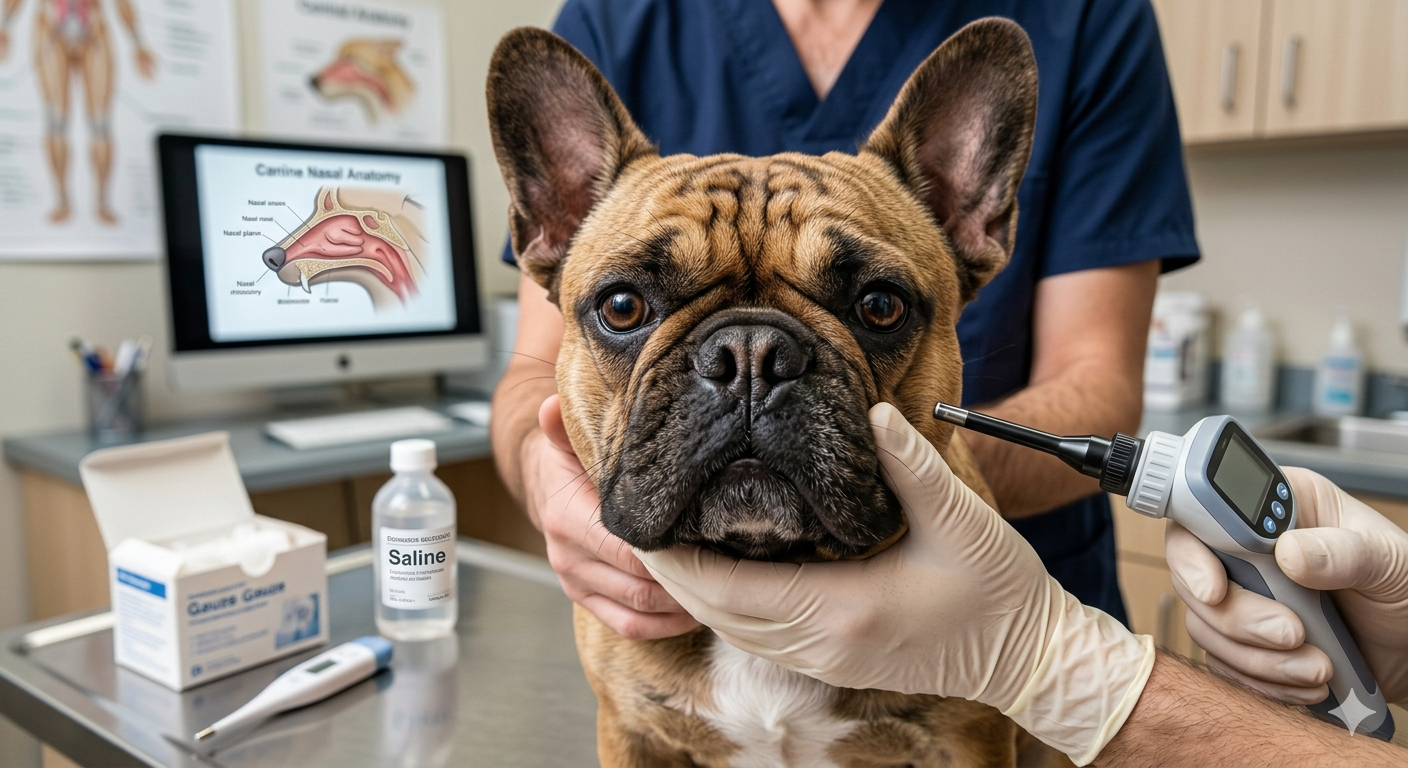
Loving a French Bulldog means loving all of them — the bat ears, the wrinkled face, the dramatic snoring, the personality that fills a room, and the specific, documented health vulnerabilities that come with the anatomy that makes them who they are.
French Bulldogs face unique breeding difficulties and may experience a range of inherited and structural health problems. Awareness and proactive management help ensure they live healthier lives.
This is not the guide that tries to scare you away from the breed. Millions of people have chosen the French Bulldog with full knowledge of these health realities and built extraordinary relationships with genuinely wonderful dogs. This is the guide that gives you the information to be the owner your Frenchie needs — the one who recognizes warning signs early, makes informed decisions, and provides the proactive care that extends and improves their quality of life.
Health Problem 1: BOAS — The Breathing Issue at the Center of Everything
Brachycephalic Obstructive Airway Syndrome (BOAS) is a genetic condition that a French Bulldog can be born with. Frenchies with BOAS typically have narrower nostrils and/or an elongated soft palate, making breathing more challenging.
BOAS is the umbrella term for the collection of anatomical abnormalities that affect breathing in flat-faced dog breeds. In French Bulldogs, these may include: stenotic nares (narrowed nostrils that restrict airflow), an elongated soft palate (tissue that partially blocks the airway), and a hypoplastic trachea (narrower-than-normal windpipe).
Frenchies have a brachycephalic muzzle, meaning their short skull compresses airways, causing breathing difficulties.
Severity range: From mild (noisy breathing that does not significantly affect quality of life) to severe (significant exercise intolerance, sleep disruption, and dangerous overheating risk).
Signs: Loud breathing or snoring at rest, extended recovery after minimal exertion, open-mouth breathing during calm activity, inability to exercise normally in mild conditions.
Management: BOAS can be corrected with veterinary surgery to improve a French Bulldog’s quality of life and prevent future medical complications. Surgical correction — widening of the nostrils and shortening of the soft palate — significantly improves breathing capacity in moderate to severe cases. Weight management is the most important non-surgical management tool.
Health Problem 2: Skin Fold Dermatitis — The Daily Care Consequence
The same facial folds that give French Bulldogs their distinctive, expressive appearance create areas where moisture, debris, and bacteria accumulate. When these folds are not cleaned daily, skin fold dermatitis develops — a painful inflammatory skin condition that produces redness, odor, and significant discomfort.
Clean wrinkles and eyes daily, monitoring for skin infections. Routine grooming, including wrinkle care, is essential for French Bulldog health.
Signs: Redness or dark discoloration between folds, distinctive yeasty or sour odor, your Frenchie pawing at their face or rubbing against surfaces.
Prevention: Daily fold cleaning with unscented wipes or a damp cloth. Allow folds to dry completely after cleaning or bathing.
Treatment: Mild cases respond to an improved cleaning routine. Established infections require veterinary treatment — typically antifungal or antibiotic therapy depending on the causative organism.
Health Problem 3: Heat Stroke — The Most Immediately Dangerous Risk
Overheating and heat strokes: Frenchies struggle to regulate body temperature due to their short snouts, making them highly vulnerable to overheating and heat strokes in dogs, especially in warm weather.
Heat stroke in French Bulldogs can develop with terrifying speed. A dog who appeared fine during a short walk in 80°F weather can be in a life-threatening emergency ten minutes later. The brachycephalic airway that limits oxygen intake also limits the dog’s ability to cool themselves through panting — the primary thermoregulation mechanism for all dogs.
Signs of heat stroke: Excessive drooling, labored breathing, brick-red or pale gums, rapid heart rate, weakness, collapse, loss of consciousness.
Immediate action: Move to a cool environment immediately. Wet with cool (not ice cold) water — particularly armpits, groin, and back of neck. Fan the dog. Get to a veterinarian within minutes — heat stroke is a genuine emergency.
Prevention: Walk during cooler hours, provide shade and water constantly, never leave in a parked car, and watch carefully in temperatures above 75°F.
Health Problem 4: Intervertebral Disc Disease (IVDD)
French Bulldogs have an elevated risk of IVDD — a condition where the cushioning discs between the spinal vertebrae degenerate or rupture, potentially pressing on the spinal cord and causing pain, weakness, or in severe cases, paralysis.
Use non-slip rugs or mats and discourage high-impact activities like jumping on and off furniture to reduce injury risk.
Signs: Back pain (reluctance to move, yelping when picked up, hunched posture), weakness in the rear legs, difficulty with stairs, changes in bladder or bowel control.
Management: Mild cases respond to rest and anti-inflammatory medication. Severe cases — particularly those involving neurological deficits — may require surgical intervention. The prognosis is significantly better when treatment is prompt.
Prevention: Minimize jumping from heights. Use ramps for furniture access. Maintain a healthy weight to reduce spinal load.
Health Problem 5: Hip Dysplasia and Joint Problems
Frenchies can have breathing issues, allergies, or joint problems. Regular vet visits keep your pup thriving.
French Bulldogs have a compact, heavy body structure that places significant demands on the hip and elbow joints. Hip dysplasia — abnormal joint development producing arthritis and pain — occurs with notable frequency in the breed.
Signs: Difficulty rising from rest, reluctance to exercise, bunny-hopping gait in the rear legs, visible muscle loss in the hindquarters.
Management: Weight management (the single most impactful intervention), anti-inflammatory medication, joint supplements (glucosamine and omega-3 fatty acids), and, in severe cases, surgical options. Swimming is an excellent low-impact exercise for dogs with joint disease.
Health Problem 6: Eye Conditions — Several Unique to This Breed
The prominent, round eyes of the French Bulldog that contribute so significantly to their expressive appearance also make them vulnerable to a range of eye conditions.
Cherry eye: Prolapse of the third eyelid gland — a red mass visible in the inner corner of the eye. Requires surgical replacement (not simple removal, which causes dry eye).
Corneal ulcers: The protruding eyes are vulnerable to scratches and injury from bushes, cat claws, and general environmental contact. Even minor scratches on the cornea require prompt treatment.
Entropion: The eyelid rolls inward, causing lashes to rub against the cornea. Causes significant discomfort and requires surgical correction.
Signs of any eye issue: Squinting, excessive tearing, discharge, cloudiness, or rubbing at the eye. Any of these warrants a same-day or next-day veterinary assessment.
Health Problem 7: Skin Allergies — The Itchy Ongoing Challenge
Frenchies can have breathing issues, allergies, or joint problems. Regular vet visits keep your pup thriving.
French Bulldogs are significantly more prone to environmental allergies (atopic dermatitis) and food allergies than most breeds. Allergies in dogs manifest primarily through the skin — itching, recurrent skin infections, chronic ear infections, paw licking, and general dermatological discomfort.
Signs: Persistent scratching, licking of paws, recurrent skin infections in specific locations, chronic ear infections, and post-bath skin redness.
Management: Allergy identification (through elimination diet trials for food allergies, or allergy testing for environmental triggers), management of the identified triggers, and veterinary medication ranging from antihistamines to immunotherapy for severe cases.
Health Problem 8: Patellar Luxation
Patellar luxation — the kneecap temporarily slipping out of its normal position — is common in many small breeds, including French Bulldogs. The condition ranges from grade I (occasional slipping that self-resolves) to grade IV (permanent dislocation requiring surgical correction).
Signs: Occasional skipping or hopping on a rear leg, then resuming normal gait; leg-shaking to pop the kneecap back in; reluctance to use the affected leg.
Management: Mild cases (grades I and II) are monitored rather than treated surgically — weight management and exercise modification reduce discomfort. Grades III and IV typically require surgical correction for good long-term outcomes.
Health Problem 9: Tracheal Hypoplasia
Tracheal hypoplasia — a trachea that is narrower than normal — is a condition specific to brachycephalic breeds and occurs with some frequency in French Bulldogs. It is a fixed anatomical feature that cannot be corrected surgically, and its impact ranges from minimal to significant depending on the degree of narrowing.
Signs: Persistent respiratory noise, exercise intolerance disproportionate to the dog’s apparent BOAS severity, and recurrent respiratory infections.
Management: Avoiding any respiratory triggers — obesity, heat, over-exertion — is the primary management approach. Dogs with tracheal hypoplasia require particularly careful monitoring and more conservative limits on exercise and heat exposure.
Health Problem 10: Birthing Difficulties
Over 80% of French Bulldog females require caesarean sections because puppy head size and female pelvic structure often prevent natural birth. Furthermore, many males have difficulty mating naturally due to breed conformation, making artificial insemination a common necessity.
If you are purchasing or adopting a French Bulldog puppy, this health reality is relevant to understanding the cost and ethical implications of the breed. The standard birthing process for most dog breeds — unassisted or with minimal veterinary support — is not possible for the majority of French Bulldogs. Every French Bulldog you encounter likely required significant veterinary intervention to arrive in the world.
This is the context for the breed’s characteristic high purchase price and for the importance of choosing breeders who prioritize health-tested breeding stock and are transparent about the medical realities of the breed.
ENDING:
The French Bulldog health profile is specific, real, and manageable with the right knowledge and the right veterinary relationship. Every condition on this list has a management approach. Every early sign caught early enough has better outcomes than the same condition caught late.
Save this guide to Pinterest, discuss it with your veterinarian at your Frenchie’s next appointment, and share it with anyone considering the breed. The best French Bulldog owner is an informed French Bulldog owner