
There is a specific quality that Cocker Spaniel puppies have in abundance and that no photograph adequately captures: the combination of those long, silky ears, those soulful dark eyes, and a personality that is simultaneously gentle and absolutely determined to be the center of everything happening in the room.
With their long ears, soulful eyes, and joyful personalities, it’s no wonder they’ve been one of Canada’s most beloved dog breeds for generations.
The Cocker Spaniel originated in Spain, was refined in England, and later in America. The breed split into two distinct types: the American Cocker Spaniel, known for its domed head and compact size, and the English Cocker Spaniel, taller and more athletic. Both were originally bred for flushing and retrieving game birds — and their sporting instincts remain intact today.
The Cocker Spaniel puppy who arrives in your home at eight weeks is the product of this history — a dog built for cooperation, built for connection with a human partner, built for the joyful purpose of working alongside someone they trust. Understanding this heritage is what makes the next twelve months not just survivable but genuinely wonderful.
This guide covers everything from that first chaotic night to the specific training challenges, grooming habits, health watchpoints, and developmental milestones that define the Cocker Spaniel’s first year. Keep it. You will reference it more than once.
The Two Breeds — American vs English

Before everything else: the distinction that affects every subsequent piece of advice.
The breed split into two distinct types: the American Cocker Spaniel, known for its domed head and compact size, and the English Cocker Spaniel, taller and more athletic.
American Cocker Spaniel: Smaller (20–30 lbs), more rounded head, more profuse coat, slightly more sensitive temperament on average. The quintessential lap dog. Very people-oriented. Coat requires significant ongoing maintenance.
English Cocker Spaniel: Taller, more athletic, more working-dog energy. The English variety has a stronger exercise drive and a slightly more robust temperament. Still people-oriented but more suited to an active outdoor lifestyle.
Unless specifically noted, this guide applies to both — the core puppy care, training, and development principles are shared between them.
What to Prepare Before the Puppy Arrives
Cocker Spaniels are gentle, relatively easy-to-manage puppies. But “easy to manage” assumes the setup is correct from the beginning.
Essential equipment:
- A crate — appropriately sized for the puppy (small enough that a toilet corner cannot be designated)
- A puppy pen for creating a larger safe containment area
- Puppy food matching what the breeder has been feeding — no changes for the first two weeks
- Food and water bowls in stainless steel or ceramic
- A soft grooming brush — start grooming handling from day one
- A harness rather than a collar — developing tracheas benefit from harness use
- Puppy-safe chew toys — the Cocker Spaniel puppy will chew everything without appropriate alternatives
Grooming tolerance: Practice all grooming elements daily. This is not optional for a breed that needs professional grooming every 6–8 weeks for life.
This point cannot be stated too clearly. The Cocker Spaniel puppy who learns to accept grooming from the first week becomes the adult dog who goes to the groomer without drama. The puppy who has no grooming handling in their early weeks becomes an adult dog who is difficult and expensive to groom — and who requires grooming every six to eight weeks regardless.
The First Night

With a consistent routine, your puppy will quickly learn when it’s time to eat, play, and snooze. Provide structure: ensure feeding, play, and toilet training happen at the same time each day. Puppies have small bladders.
As part of your Cocker Spaniel puppy care routine, put your pup into his crate after an activity, for example, after eating, playtime, or training.
The first night is the night that most new puppy owners are least prepared for. The puppy has been removed from every familiar thing — their mother, their littermates, the specific smells of their birth environment, the warmth of a puppy pile. The crate they are placed in is a small, unfamiliar box. And they have opinions about this.
The vocalization on night one is normal, predictable, and temporary. It resolves within three to seven days for most Cocker Spaniel puppies when crate training is handled correctly. Place the crate beside your bed for the first week — the sound of your breathing and your proximity significantly reduce distress. A worn item of your clothing placed in the crate and a ticking clock wrapped in a blanket (mimicking a heartbeat) both help.
Do not bring the puppy into the bed unless you intend that to be the permanent arrangement. One night in the bed establishes an expectation that the crate subsequently violates.
The Cocker Spaniel Puppy Personality

Cocker Spaniels are known for their happy, affectionate, and eager-to-please nature. They’re incredibly sociable and usually get along well with children, adults, and other pets.
These puppies still require early socialization and foundational training to prevent unwanted behaviors common in this breed, such as leash pulling, separation anxiety, mouthing, and picking up your prized possessions around the house.
The Cocker Spaniel’s eagerness to please is real, and it is one of the most rewarding qualities in the breed — it makes training genuinely enjoyable because the dog wants to get it right. But there is a flip side that new owners need to understand: the same sensitivity that produces the eager-to-please quality also produces sensitivity to harsh handling.
Never use harsh corrections or punishment with a Cocker; they can become timid and shut down if treated roughly.
A Cocker Spaniel who is trained with punishment-based methods does not become more compliant — they become anxious, avoidant, and less able to engage with the training process because their emotional state has been compromised. Positive reinforcement is not just the recommended approach for this breed. It is the only approach that produces the full expression of their cooperative, joyful nature.
Training: The Window and What to Do With It

Cocker Spaniels are among the most trainable family breeds — eager to please, gentle, and food-motivated. Positive reinforcement works extremely well. Puppy class: Enroll as soon as vaccinated. Socialization during the 8–16 week window is critical. Cockers are sociable by nature, but early positive exposure builds confidence. Basic obedience: Sit, down, stay, come, leave it. These dogs learn fast — keep sessions short (5–10 min) and positive.
The 8-16 week socialization window is the most time-sensitive investment you will make in your Cocker Spaniel’s development. Everything encountered positively during this period becomes “normal” for this dog — everything they do not encounter requires significantly more effort to introduce positively later.
During this period, focus on gentle socialization, getting them comfortable with handling, starting toilet training, and introducing simple cues like sit or come in short, fun sessions.
The specific socialization priorities for Cocker Spaniels:
- Grooming handling (as emphasized above — essential and time-sensitive)
- Veterinary handling — examining ears, mouth, feet
- Children of different ages
- Men with beards (a specific socialization gap that produces adult fear responses in dogs not exposed early)
- Umbrellas, bicycles, strollers, and other common environmental surprises
- Different flooring surfaces, including slippery floors
- Car travel
Toilet Training: Consistency Is Everything
Socialisation will help your puppy grow up confident, happy, and be the best he can be.
The toilet training rule: outside after every sleep, every meal, every play session, and every 30 to 45 minutes during waking hours. Do not wait for the puppy to signal — take them at the scheduled times. The signal will come later, once they understand the expectation.
Puppies have small bladders. Expecting a young puppy to wait is not realistic. The accidents are not mistakes — they are the inevitable result of an immature bladder meeting a schedule that asks too much of it. The response to accidents is cleanup and schedule adjustment, not correction.
Praise and reward every successful outdoor elimination immediately and enthusiastically. The precision of the reward timing matters — the praise must come within one to two seconds of the elimination completing to correctly identify what is being rewarded.
Ear Care: The Most Important Ongoing Commitment

Clean the ears regularly and check for signs of infection. Cockers are prone to ear issues due to their long, floppy ear shape.
Their coat is part of their charm, and with the right care, it stays soft, shiny, and tangle-free.
The Cocker Spaniel’s long, heavy ears hang down and cover the ear canal opening — this reduces airflow into the ear canal, creates a warm, moist, dark environment, and sets up the conditions for chronic ear infections. This is the breed’s most significant and most preventable health concern.
Ear care routine:
- Weekly inspection: check the inside of the ear flap for redness, odor, or dark discharge
- Weekly cleaning with a vet-approved ear cleaner: apply cleaner, massage the base of the ear, allow the dog to shake, then gently wipe the accessible ear canal with a cotton ball
- Never insert anything into the ear canal itself
- Dry the ears after swimming or bathing — moisture trapped in the covered ear canal after water exposure is a primary infection trigger
Introduce ear cleaning from the first week home with treats and gentle handling — the adult Cocker Spaniel who has had their ears cleaned weekly since puppyhood accepts the process. The one encountering it for the first time at six months does not.
Signs of ear infection: Head shaking, scratching at the ear, dark brown or black discharge, odor, redness and swelling inside the ear flap. Any of these warrant veterinary assessment.
Feeding the Cocker Spaniel Puppy
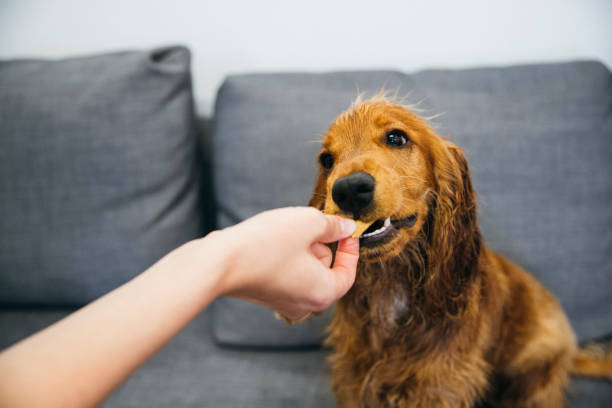
At birth, Cocker Spaniels weigh between half a pound and a pound. By the time these pups are ready to leave their mothers around 10 weeks, most weigh between 8 and 12 pounds.
Feed three meals daily until six months, then transition to two meals daily. Cocker Spaniels are not extreme food grazers like Labradors, but they can develop obesity — particularly in the second half of their life — if portion management is not established as a habit from puppyhood.
Use a quality puppy food specifically formulated for small to medium breeds. Continue with the breeder’s chosen food for the first two weeks minimum — digestive upset from an immediate food change compounds the stress of the new environment.
The First Year Development Milestones
A: Absolutely! Healthy puppies need 16–20 hours of sleep per day, and a quiet, secure bed or crate to do so.
8–12 weeks: Socialization priority, basic commands begin, toilet training foundation. The puppy sleeps 16-20 hours daily — build activities around the sleep schedule.
3–6 months: Rapid learning, teething begins (expect more chewing), continue socialization, begin leash training, first professional grooming appointment.
6–12 months: Adolescence begins. The eager-to-please quality becomes slightly less reliable as the dog develops independence. Maintain training consistency without increasing correction — this phase passes. Continue professional grooming every 6-8 weeks.
12 months: Approaching adult size and temperament. The Cocker Spaniel who has been consistently trained, consistently socialized, and consistently groomed from eight weeks is, at twelve months, one of the most genuinely delightful companion dogs available.
Training your Cocker Spaniel puppy can be a fun and rewarding experience! These dogs are eager to please and respond well to positive reinforcement.
The Cocker Spaniel is the dog that rewards investment with enthusiasm and warmth in equal measure. The grooming is real. The ear care is real. The sensitivity that requires gentle handling is real. And the companion that emerges from the first year — the dog who works alongside you, who reads your emotional state, who greets every day with the specific joyful energy that the breed has maintained through every generation of selective breeding — is entirely and completely worth all of it.
Save this guide to Pinterest, share it with every new Cocker Spaniel owner you know, and go brush those ears tonight. Week one is where the lifetime of easy grooming begins.