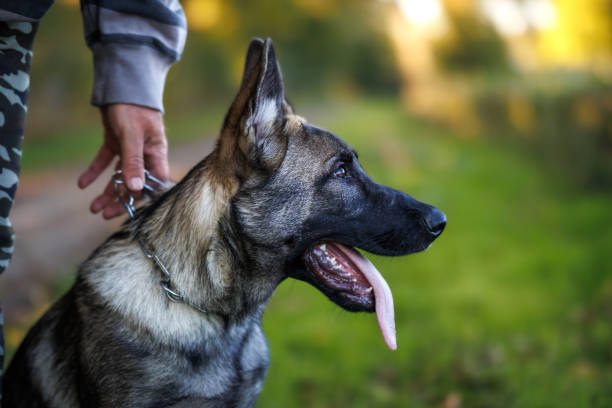
You already know your German Shepherd is intelligent. What nobody told you when you brought them home is that intelligence cuts both ways. A bored GSD will dismantle your furniture, test every boundary you set, and find creative ways to make your life chaotic — not because they are badly behaved, but because their brain is running at full speed with nowhere productive to go. The hacks in this guide are not shortcuts that skip proper training. They are the specific techniques, principles, and insider approaches that work specifically with this breed’s exceptional brain, high drive, and deep sensitivity — and that produce results noticeably faster than generic dog training advice applied to a dog that was built for something far more demanding than generic advice. Whether you are starting from scratch with a puppy or resetting a problematic adult GSD, start here.
Why Standard Dog Training Advice Often Fails German Shepherds
Before the hacks, this piece of context mattered. German Shepherds have high prey drive, high defense drive, and intense environmental awareness. These traits are genetically hardwired — they are not behavior problems. Suppressing drive creates frustration. Frustration creates reactivity, destructive behavior, and the obsessive repetitive patterns GSD owners dread.
Most generic dog training guides treat the GSD like a more energetic Labrador. That approach misses the point entirely. The same genetic traits that make a German Shepherd exceptional at police work, search and rescue, and protection are the exact traits that make them challenging to live with when those drives have no legitimate outlet. The training approach that works with this breed does not fight their nature — it channels it. Every hack in this guide works because it uses the GSD’s own intelligence, drive, and sensitivity as the engine of the training rather than treating those qualities as obstacles to manage.
Training sessions should challenge the mind, not just the body. Short, focused sessions multiple times a day outperform long, repetitive drills. This breed responds best to confident, calm guidance. Harsh corrections often backfire, creating avoidance or defensive behavior rather than understanding.
Keep that framework in mind through every technique below, and you will understand not just what to do but why it works.
Hack 1 — The Name Game: Build the Foundation Every Other Command Depends On
Most owners skip this step entirely. They teach sit, stay, and come without first establishing something more fundamental — the reliable habit of their dog orienting toward them on name recognition alone. A German Shepherd should reliably respond to their name and offer eye contact. This skill becomes the foundation for recall, leash work, and impulse control.
Here is how to build it in three days. Say your dog’s name once in a neutral, clear tone. The moment your dog turns their head toward you or makes eye contact — even briefly — say “yes” in a bright, immediate tone and deliver a high-value treat. Do this 20 to 30 times across a single day in different locations. You are not asking for anything else. You are simply building the strongest possible association between the dog hearing their name and choosing to orient toward you. The speed of this association formation in a German Shepherd is remarkable — this breed makes strong associations quickly, which is an asset you want to establish before anything else.
By day three, begin adding a half-second delay between the dog orienting toward you and the treat. This teaches the dog to maintain eye contact rather than just glancing toward you. By the end of the first week, a German Shepherd trained this way will snap their focus onto you the moment they hear their name, regardless of what else is happening nearby. That instant focus on the name is the foundation upon which every other command in this guide is built — recall, heel, down, stay, and reactivity management all begin with the dog choosing to look at you.
The hack within the hack: never use your dog’s name to call them for something unpleasant — a bath, nail clipping, ending play, a vet visit. For those things, go to them. The name must always predict good things, or the orientation response degrades over time.
Hack 2 — The 10-Minute Rule: Why Less Time Produces More Learning
Ten-minute sessions are more effective than 30-minute sessions for this breed. German Shepherds lose focus when drills drag on, leading to frustration for both handler and dog. Keep it short.
This is the hack that feels counterintuitive but produces genuinely faster results. Every time you run a training session past the point of your dog’s optimal engagement, you are not just wasting time — you are actively practicing frustration and disengagement, which are the mental states you want least during a training session. A German Shepherd that ends a session because you called it done at peak engagement comes back to the next session enthusiastic and ready. A German Shepherd that ends a session because they lost interest and started making errors comes back to the next one with a slightly more reluctant attitude.
Three 10-minute sessions distributed through the day produce more total learning than one 30-minute session, because each session begins with a fresh, focused dog rather than continuing with a mentally fatigued one. The schedule that works for most GSD owners is morning before the first walk, midday if possible, and evening before the second walk. Each session should cover one to three skills rather than working through the entire command repertoire.
The session structure itself matters. Begin with something your dog already knows confidently — this produces immediate success, rewards the brain’s reward circuitry, and puts the dog in a positive learning state. Introduce or work on the target skill during the middle of the session. End with something the dog succeeds at enthusiastically so that the emotional tone of the session ending is positive. This three-part arc — easy win, main work, easy win — is what professional dog trainers use, and it works because dogs, like humans, form memories of events colored by their emotional state at the end.
Hack 3 — The Drive Outlet Principle: Use Their Energy Instead of Fighting It
The secret is to give the drive a legitimate outlet. Structured tug games build impulse control while satisfying prey drive. Scent detection work satisfies the GSD’s nose drive and provides intense mental stimulation. Flirt pole sessions mimic prey chase in controlled bursts and are incredibly tiring in just five to ten minutes.
Here is the specific application that most GSD owners never figure out on their own. Tug is not just a game — when played with specific rules, it is one of the most powerful impulse control training tools available for a high-drive dog. The rules are non-negotiable: tug starts on your cue, tug pauses on your cue, tug ends on your cue, and your dog must release on your cue before the game resumes. This structure teaches your dog that access to the most exciting thing in their world — the chase and grab they are genetically wired for — is granted and removed by you based on their behavior. A German Shepherd who has learned that following your cues leads to tug will start offering attention, calm behavior, and compliance at other times because those behaviors predict access to the reward they genuinely want.
For mental exhaustion without long physical exercise, scent work is the GSD owner’s greatest ally. Turn fetch into a find-it game. Let your dog watch you hide a toy, then send them to find it. This uses their nose and problem-solving skills. Increase difficulty over time — hide it when they are not looking, hide it in a different room. This simple change turns a physical activity into a brain workout. A 20-minute scent session produces a level of mental fatigue that an hour of running does not, because scenting engages the olfactory processing centers of the brain intensely and continuously. A mentally tired German Shepherd is a calm, settled German Shepherd — the state that makes every other aspect of their training and life together dramatically easier.
Hack 4 — The Marker Timing Hack: The 1.6-Second Window That Determines Whether Training Works
Timing is the most important technical skill in dog training, and with a fast, sensitive dog like a German Shepherd, imprecise timing produces confusion faster than with most breeds. The behavior you mark is the behavior you train. If your dog sits, then looks away, then you deliver the treat — you trained “look away.” If your dog comes to you on recall, then shakes their head, then you say “yes” — you trained “head shake.” These associations form at a neural level regardless of your intentions.
Use a marker — a clicker or the word “yes” delivered in a consistent tone — to bridge the gap between the correct behavior and the treat delivery. The marker is delivered at the exact millisecond the correct behavior occurs. The treat follows within two to three seconds of the marker. The dog learns that the marker sound means “that exact thing you just did is what earned the reward,” which means your timing only needs to be accurate to the marking moment rather than to the treat delivery.
Practice your marker timing before working on any specific command by playing this game: sit in front of your dog with treats ready and mark the precise moment all four paws are simultaneously on the ground while they take a step. This requires fast, precise observation — if you can mark that correctly and consistently, your timing for every other behavior is already good enough to produce clear, fast learning in even a very quick, sensitive German Shepherd.
Hack 5 — The Three-D Approach to Bulletproof Commands
The most common reason a German Shepherd obeys a command perfectly at home and ignores it completely at the park is not disobedience — it is that the command was only trained in one context at one level of distraction. Behavior does not generalize automatically. Every new environment, every new distraction level, and every new arousal state represents a fresh training context.
The three D framework — Duration, Distance, and Distraction — is the systematic approach that builds commands that hold in the real world. Work on only one D at a time, keeping the other two at their current reliable level. If you are building duration on a stay, keep your distance close and distractions minimal. When duration is solid, add distance while keeping duration modest and distractions low. When both are reliable, begin adding mild distractions while reducing the duration and distance back to easy levels.
For a German Shepherd specifically, the distraction progression matters enormously because this breed’s environmental awareness is exceptionally high. The correct distraction sequence moves from household sounds to outdoor sounds to other people at a distance to moving people to other dogs at a distance to other dogs nearby. Jumping from kitchen training to dog-park recall in one step is the guaranteed path to a broken recall. Moving through the distraction progression systematically over weeks produces a dog who looks at you the moment their name is called in any environment, because they have been rewarded for doing exactly that in every environment you have built to.
Hack 6 — The Recall Nuclear Option: Building the Emergency Command
Recall is vital — it could save your dog’s life. Never practice recall when you are unsure your dog will come. Every failed recall teaches your German Shepherd that the command is optional. Start in a small, enclosed space. Call your dog in an excited, happy voice. When they arrive, throw a party — multiple treats, enthusiastic praise.
The hack here is the emergency recall — a secondary recall cue kept specifically for genuine emergency situations and charged with a reward level that dwarfs anything in your regular training. The emergency recall is a sound or word you never use in regular training — some trainers use a specific whistle pattern, others use an unusual word, others use a high-pitched sound unique to this purpose. It is built using the following method.
Start with your dog in front of you. Make your emergency recall sound and immediately deliver five to ten high-value treats in rapid succession — the fastest, most enthusiastic reward event your dog has ever experienced in training. Repeat this ten times across a session, but do not ask the dog to do anything — they just hear the sound and good things erupt. After several sessions of this pure charging, begin making the sound when your dog is a few feet away and reward extravagantly when they come. Gradually extend the distance over weeks, always maintaining the party-level reward, and never using the cue in a context where the dog might not come.
Never call your dog to you for something unpleasant, like ending playtime or giving medicine. Go get them instead. Use a long training leash of 15 to 30 feet to practice recall with more distance while maintaining control.
The emergency recall is reserved for genuine emergencies — a gate left open, a dropped leash near traffic, a dangerous encounter developing. Used sparingly and charged extravagantly, it remains the one cue that bypasses every distraction and brings your dog back to you at full speed, regardless of what is competing for their attention. A German Shepherd trained on an emergency recall with this level of consistent positive association will interrupt prey chase, ignore other dogs mid-approach, and return from a hundred yards away because the emotional weight of that cue is simply too powerful to ignore.
Hack 7 — The Reactivity Counter-Conditioning Hack
German Shepherds were selectively bred for vigilance. On a neighborhood walk, that hardwiring produces a dog who is scanning constantly, cataloging potential threats, and reacting to anything that reads as unfamiliar or unpredictable. What drives reactivity is almost always anxiety, not aggression, and that distinction changes everything about how you address it.
The counter-conditioning method that works specifically with German Shepherds follows this sequence. Identify your dog’s threshold — the distance at which they notice a trigger but have not yet begun to react. This is your working distance. At this distance, the moment your dog sees the trigger — another dog, a cyclist, a stranger — mark with “yes” and deliver a high-value treat before any reaction begins. You are not asking for any behavior. You are simply pairing the sight of the trigger with the arrival of something wonderful. Repeat this at every exposure at or under threshold.
Every time your GSD sees another dog and something good happens — treats or play — you are rewriting the emotional response. This is counter-conditioning, and it works especially well with GSDs because they form strong associations quickly. The same learning speed that can create reactivity can be redirected to create confidence.
The critical detail that separates successful counter-conditioning from failed attempts is the threshold management. If your dog reacts — barks, lunges, hackles up — you went over threshold, and the session produced the wrong association. Increase your distance until the dog notices the trigger without reacting, and work from that distance. Progress is measured in feet and weeks, not sessions. Going too fast from a quiet place to a place of many distractions will cause the dog to fall backward. Only when the dog is reliably calm at one level do you decrease the distance slightly. CO-Z
The practical technique to add once threshold management is established is the “watch me” cue — asking your dog to make eye contact with you when you anticipate a trigger approaching. A dog looking at you cannot simultaneously be escalating toward a trigger, and the watch-me habit, combined with counter-conditioning, creates a dog who, upon seeing another dog, automatically looks up at their handler rather than locking forward onto the trigger.
Hack 8 — The Go to Place Command: The Calm Control Skill That Changes Everything at Home
Go to place training teaches the dog to settle on a mat or bed until told to leave. It is the ultimate calm-control skill. Start small, then increase the duration. Add distractions, like someone walking past. This teaches impulse control.
This single command resolves more of the daily frustrations of GSD ownership than almost any other — the dog charging the door when guests arrive, the dog underfoot in the kitchen, the dog unable to settle when you need them to, the dog that cannot separate its arousal from whatever is happening in the room. A GSD with a solid “place” command has a specific behavior to perform in high-arousal situations, which gives its brain something concrete to do rather than amplifying into chaos.
Build it this way. Place a mat or bed in a specific location. Lure your dog onto it with a treat, say “place” the moment all four paws are on the mat, and reward. Ask them to stay on the mat for increasing durations — five seconds, ten seconds, thirty seconds, two minutes. Build duration first with no distance and no distractions. Once five minutes of steady mat time is reliable, begin adding distance — step away from the mat and return to reward. Once distance is reliable, begin adding distractions — walking past, a knock on the door, the sound of food preparation.
The game-changing application is pre-empting the door. When a visitor is about to arrive, send your dog to its place before the knock happens. The dog that was trained to go to a place when told, including at high-arousal moments, has something to do that is incompatible with charging, jumping, and losing their mind at the door. It also gives them a clear behavioral job at the exact moment they are most likely to act out without one, which is precisely what a working-breed brain needs.
Hack 9 — Feeding Time as a Training Session: The Free Meal You Can Stop Wasting
This is the hack that requires no additional time and no extra treats and produces meaningful daily training results simply by changing how you deliver your dog’s existing meals. Every kibble your German Shepherd eats from a bowl is a missed training opportunity. A dog that receives every meal free of charge has no particular reason to work for food reward in training sessions — the food is always available regardless of behavior.
Instead, measure out your dog’s daily meal and use it as the treat currency for the day’s training sessions. Scatter a portion across the lawn for a foraging and scent-work session. Use portions in training sessions throughout the day. Feed the remainder from a slow feeder or puzzle feeder that requires the dog to work. The total food intake is unchanged. The behavioral relationship to food — the dog now earns everything they eat by working, thinking, or solving — changes dramatically. A German Shepherd that earns its food through engagement with you is more focused, more responsive, and more motivated in training than one that has an unlimited free supply waiting in a bowl. This is the feeding approach used in most professional working dog programs for exactly this reason.
Hack 10 — The Impulse Control Sequence: The One Drill That Improves Everything Else
Introduce impulse control exercises, such as waiting before meals. The better self-control your German Shepherd has, the calmer and more patient they will be. It can also help to prevent them from developing bad habits. You can make impulse control training fun by turning it into a game. Insuranceopedia
The impulse control sequence works like this. Ask your dog to sit. Hold a treat at chest level — visible to the dog but not yet delivered. Your dog will likely stand up, nose toward your hand, paw at you, or vocalize. Say nothing and do nothing except wait. The moment your dog makes any movement back toward the sit — even a weight shift — mark with “yes” and deliver the treat. Over repetitions, your dog learns that the behavior that makes the treat arrive is sitting calmly and waiting, not the behavior that follows arousal.
Progress the sequence over weeks. Ask for a sit, present the treat, and ask your dog to wait while you place the treat on the floor in front of them. The moment your dog looks up at you rather than diving for the treat, mark and release them to take it. Gradually extend the duration before the release. The behavioral lesson your dog is learning — that controlling their impulse to take the obvious thing leads to being given the obvious thing — transfers directly to every context where impulse control matters: the open door they must not charge through, the food that fell on the floor they must leave, the other dog they must not lunge at. Impulse control is a trainable cognitive skill that improves every other aspect of a German Shepherd’s behavior when developed deliberately and consistently.
The Thread Running Through Every Hack
Every technique in this guide works because it operates with the German Shepherd’s nature rather than against it. The intelligence that makes them challenging is the same intelligence that makes every skill transferable when taught correctly. The drive that produces reactivity and destruction is the same drive that makes training deeply motivating when channeled into tug, scent work, and structured games. The sensitivity that makes them respond poorly to harsh corrections is the same sensitivity that makes them deeply responsive to consistent, clear, positive guidance. Work with what you have in this breed, and the result is one of the most capable, connected, and genuinely impressive dogs you will ever share your life with.