German Shepherds are extraordinary animals. They are intelligent enough to learn almost anything, loyal enough to be genuinely protective, and athletic enough to need more physical engagement than most owners are prepared to provide. They are also among the breeds most likely to develop serious behavioral problems, health crises, and deep anxiety when their specific needs are misunderstood or ignored. This is not a gentle, forgiving breed that adapts to neglect or inconsistency without consequence. A German Shepherd that is under-exercised, under-stimulated, under-socialized, or trained with fear-based methods becomes a different animal from the one you thought you were getting — reactive, destructive, anxious, and difficult to manage in the world. Every mistake in this guide is correctable. Almost everything is easier to prevent than to fix. Start here. Also Read 12 German Shepherd Care Tips That Separate Good Owners From Great Ones
Mistake One: Drastically Under-Exercising a High-Drive Working Breed
Why This Mistake Happens
People adopt German Shepherds based on their intelligence and loyalty, without fully accounting for the physical demands of a breed that was developed to work all day. They provide a daily walk and consider the exercise requirement met. The dog’s increasing restlessness, destructive chewing, excessive barking, and indoor hyperactivity are interpreted as behavioral problems rather than as the completely predictable consequence of unspent physical energy.
Why It Matters
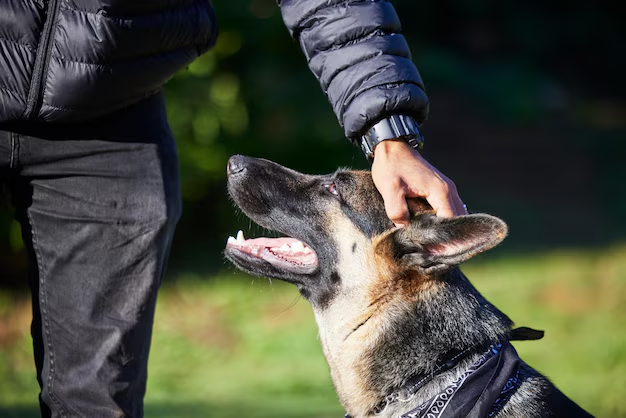
German Shepherds are an active and athletic breed that require one to two hours of exercise every day for their physical and mental health. Without ample exercise and mental stimulation, they will develop unfavorable behaviors due to irritation and pent-up energy. The behaviors that result from chronic under-exercise — destructive chewing, digging, excessive barking, fence-running, and in some dogs redirected aggression — are not training failures. They are energy management failures. You cannot train away the consequences of unmet physical need in a working breed. The need must be met first, and then the behavior follows.
The Fix
Commit to a minimum of 60 minutes of genuine physical exercise daily for an adult German Shepherd, ideally split across two sessions. A 30-minute morning session and a 30-minute evening session are the practical baseline. Genuine exercise means sustained movement that raises heart rate — brisk walking, jogging, off-leash running in a safely enclosed space, fetch, or swimming. A slow neighbourhood walk does not meet the physical requirement of this breed, regardless of duration.
Add structured mental exercise on top of the physical. Without proper mental stimulation and ongoing training, German Shepherds can become bored and restless, leading to destructive behaviors such as chewing and excessive barking. Scent work games, where you hide food or a toy and send the dog to find it, provide intensive mental engagement that tires a GSD as effectively as physical exercise. Obedience training sessions of 10 to 15 minutes, puzzle feeders at mealtimes, and “working for their food” by asking for known commands before each meal all provide the mental stimulation this breed requires to be calm indoors.
For puppies under 18 months, the exercise approach is different and critically important. Puppies’ growth plates are not closed, and high-impact, sustained exercise like long runs, forced fetch, or extended hikes causes joint damage that accumulates silently and presents as severe hip and elbow problems in adulthood. Puppy exercise should consist of free play in a safe space, short leash walks, and swimming — never forced, sustained running or high-impact jumping.
Mistake Two: Skipping Early Socialization During the Critical Window
Why This Mistake Happens
New GSD owners are told their dog is protective and take this as permission to limit social exposure during puppyhood, believing they are preserving the dog’s guarding instincts. Others simply do not get around to structured socialization during the first few months. By the time the dog is six months old, the critical developmental window is closing, and the behavioral patterns formed during it are hardening.
Why It Matters
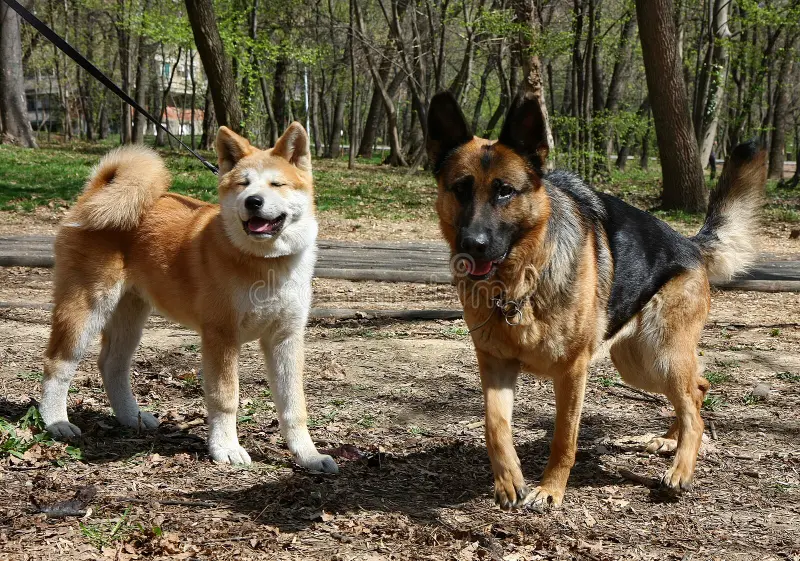
One of the primary reasons for behavioral problems in German Shepherds is insufficient early socialization. Puppies learn about the world during their critical socialization period, and inadequate exposure to various people, animals, environments, and experiences can result in fearfulness, anxiety, and aggression later in life. A German Shepherd that was not properly socialized during the first 16 weeks of life does not become a stable, confident protection dog — it becomes a fearful, reactive one. The aggression that results from fear-based reactivity is far more dangerous and far harder to manage than the controlled protectiveness of a properly socialized GSD, because it is unpredictable and does not respond to commands when triggered.
The Fix
Begin socialization from the day you bring your puppy home, even before their vaccination schedule is complete. Controlled exposure to safe environments — carrying the puppy to outdoor cafes, exposing them to traffic sounds, introducing them to calm, vaccinated adult dogs owned by people you know, and having a wide variety of people of different appearances, ages, and genders interact positively with the puppy — can and should begin at 8 weeks. The risk of behavioral damage from under-socialization during this window is greater than the infection risk of carefully managed pre-vaccination exposure.
Socialization is not about flooding the puppy with overwhelming experiences. Every new exposure should be positive and controlled — the puppy should be able to approach, investigate, and retreat on their own terms. Forced exposure to something that frightens the puppy during this period causes sensitization rather than desensitization, making the fear response stronger rather than weaker. Watch for stress signals — yawning, lip-licking, turning away, tail tucking — and create distance from whatever is causing them before proceeding. A positive association must be present for socialization to work.
Mistake Three: Using Punishment-Based Training Methods
Why This Mistake Happens
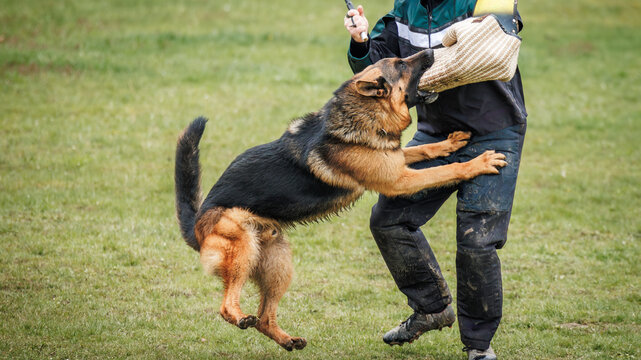
German Shepherds look like tough, dominant dogs, and many owners adopt training approaches designed to assert dominance — physical corrections, alpha rolls, prong collars, and punishment for disobedience. These methods are widely marketed for large breeds and have a long history in traditional dog training. They can appear to produce compliance in the short term, which reinforces their continued use.
Why It Matters
Punitive or negative reinforcement training methods can lead to fear, aggression, and a damaged relationship between the dog and owner. In a breed with the intelligence, physical size, and protective instincts of a German Shepherd, fear-based training does not produce a reliable, cooperative dog — it produces a stressed dog that complies under threat and redirects its anxiety into aggression when the threat level drops or when it encounters a trigger in a context where the owner is not present to enforce. The 2026 Bark Busters national analysis identifies reactivity as the leading dog training problem in the US, and the majority of reactive German Shepherds presenting for professional intervention have a history of punishment-based training.
The Fix
Train your GSD using positive reinforcement exclusively — reward the behaviors you want to see more of, and manage the environment to prevent the behaviors you do not want, rather than punishing them after the fact. Positive reinforcement gives you a precise way to mark the exact moment your dog does the right thing through a treat, praise, or a clicker sound, so there is no confusion about what earned the reward. Punishment, by contrast, often comes too late or gets associated with the wrong thing. A dog who gets corrected for chewing a shoe they found 10 minutes ago does not connect the correction to the chewing — they connect it to the owner’s unpredictable behavior, which increases anxiety and erodes trust.
Use a clicker or a consistent verbal marker like “yes” to precisely mark the moment of correct behavior before delivering the reward. Keep training sessions to 10 to 15 minutes maximum for adult dogs and 5 minutes for puppies — German Shepherds are cognitively capable of intense focus, but they fatigue and frustrate like any animal, and frustrated training sessions build negative associations with the training relationship rather than strengthening it.
Mistake Four: Ignoring the Early Warning Signs of Hip Dysplasia
Why This Mistake Happens
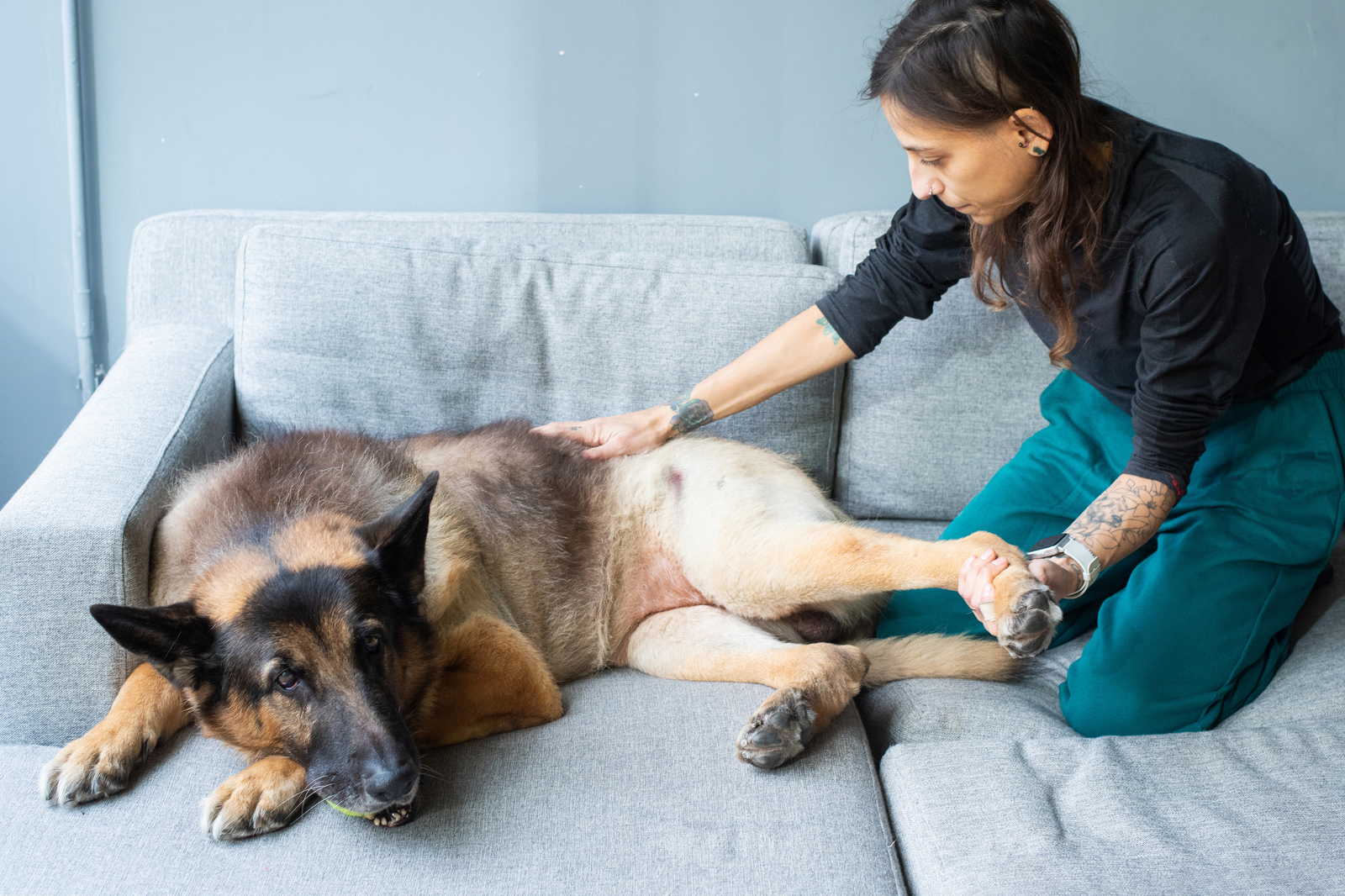
The early signs of hip dysplasia in German Shepherds — occasional stiffness after rest, mild reluctance to climb stairs, slight asymmetry in the hindquarters during movement — are easy to attribute to normal aging, a long walk the day before, or a temporary soreness. By the time the dog is visibly lame or in obvious pain, the joint damage is advanced, and the management options are more limited and more expensive.
Why It Matters
Hip and elbow dysplasia are not edge cases in this breed. A 2024 study found that roughly half of all German Shepherds will face at least one major orthopedic or neurological condition in their lifetime. Degenerative myelopathy — a progressive spinal cord disease that causes hind leg weakness progressing to full paralysis — typically becomes apparent between 8 and 14 years and shares early symptoms with hip dysplasia, making correct early diagnosis particularly important. Diagnostic tools include MRI imaging, blood work, and DNA testing for the SOD1 gene mutation.
The Fix
Watch specifically for these early signs from middle age onward: difficulty rising from a lying position, reluctance or inability to jump into a car or onto furniture they previously used easily, progressive narrowing of the stride in the rear legs, visible shifting of weight to the front legs during standing, and hind nails that are wearing unevenly or dragging slightly on the ground. Present any of these observations to your veterinarian — do not wait for the dog to be limping or crying. Early intervention with controlled exercise modification, joint supplementation including omega-3 fatty acids and glucosamine-chondroitin, weight management, and, in appropriate cases, surgical assessment changes the trajectory of both hip dysplasia and early degenerative myelopathy significantly. Supportive treatments include physical therapy, hydrotherapy, and weight control to minimize spinal strain. Environmental safety adjustments, including non-slip flooring, accessible food and water bowls, and comfortable resting spaces, help prevent injuries.
Mistake Five: Leaving a High-Bond Breed Alone Too Long, Too Often

Why This Mistake Happens
German Shepherds are chosen partly because of their famous loyalty and bond with their owners. That same quality makes them profoundly vulnerable to separation anxiety when owners’ schedules require them to be left alone for extended periods regularly. Owners interpret the destructiveness, barking, and house soiling that follows as misbehavior rather than as distress.
Why It Matters
German Shepherds often form strong bonds with their families. When left alone, they may exhibit signs of anxiety such as barking, destructive behavior, or attempts to escape. Separation anxiety in German Shepherds is not a training problem that can be solved with obedience commands — it is an anxiety disorder that requires specific desensitization work and, in severe cases, veterinary behavioural support. A German Shepherd with untreated separation anxiety that is left alone for 8 to 10 hours daily will develop chronic stress that affects their immune function, digestive health, and overall temperament, even when the owner is present.
The Fix
Build independence gradually from puppyhood using systematic desensitization to departures — practice short absences of 5 minutes, then 10, then 30, rewarding calm behaviour on your return rather than making emotional departures and arrivals that amplify the dog’s anxiety. Provide a safe, enriched environment during absences — a Kong stuffed with frozen food, puzzle feeders, and a consistent background noise source. For adult dogs already showing separation anxiety, work with a certified applied animal behaviourist rather than attempting to fix the problem through punishment or through simply leaving the dog to cope — neither approach works, and both cause harm.
A German Shepherd Properly Cared For Is One of the Most Magnificent Animals on Earth
The mistakes in this guide shrink the lives of dogs that were capable of so much more. Fix them — meet the exercise requirement, socialise early, train with rewards, catch the joint problems early, and build independence thoughtfully — and the German Shepherd you live with becomes the German Shepherd they were bred to be: capable, confident, calm, and genuinely extraordinary.