
You fell in love with the look of a Spaniel. The long, silky ears, the soulful eyes, the gentle expression that seems to understand everything you are feeling. What you may not have realized yet is that “Spaniel” is not one breed — it is a family of over fifteen recognized breeds that differ significantly in size, energy level, grooming demands, health vulnerabilities, and the kind of life they genuinely thrive in. Choosing the wrong Spaniel for your lifestyle is one of the most common mistakes new dog owners make, and this guide exists to make sure you do not make it. Here is every major Spaniel breed explained honestly — what they are like to actually live with, what they need, and who they belong with.
What All Spaniels Share — Before the Differences Matter

Every Spaniel breed descended from hunting dogs developed in Spain and later refined in England. They were bred to work closely with humans, flush birds from cover, and retrieve game — work that required intelligence, endurance, sensitivity to handler signals, and a deep desire to stay connected to the person they were working with. Every modern Spaniel carries those traits in different measures. All of them are intelligent and trainable. All of them form strong bonds with their families and do poorly with long hours of isolation. All of them have coat grooming requirements that exceed what most low-maintenance breeds demand. And all of them are among the most emotionally responsive, affectionate dogs you can share your life with. The differences between breeds determine how much exercise, space, grooming, and health management you are committing to — and those differences are significant enough to make the breed choice genuinely important.
The Cocker Spaniel — The Most Popular Spaniel in the World for Good Reason

What They Are Like
Known as gentle and laid-back dogs once they have matured, Cocker Spaniels are wonderful with children and unusually friendly with strangers. Like the Springer Spaniel, the Cocker thrives on human attention and will seek it out. The Cocker is the Spaniel that works for the widest range of owners — active enough to enjoy real exercise but calm enough for apartment living if that exercise is genuinely provided, small enough to travel easily but substantial enough to be a real companion presence in the home. Their emotional sensitivity makes them responsive and easy to train and also means they feel the emotional climate of their household acutely — a stressed or anxious home produces a stressed or anxious Cocker.
Size and Physical Reality
Cocker Spaniels are the smaller of the two most common spaniel breeds, typically weighing between 20 to 30 pounds and standing 13 to 15 inches tall. There are two distinct varieties — the American Cocker Spaniel, which is slightly smaller with a more domed head and dramatically longer coat, and the English Cocker Spaniel, which is slightly leaner, longer in the leg, and has a slightly less extreme coat. Both share the same core temperament and health profile.
What They Actually Need
Daily brushing is not optional — Cocker Spaniels require coat and teeth brushing every day, as well as a more thorough clean every week, and bathing and clipping at least every 8 weeks. Their ears require weekly cleaning and monitoring as a minimum, and for owners who do not stay on top of this, chronic ear infections become an expensive, painful, recurring reality. Exercise needs are moderate — 45 to 60 minutes of real daily activity keeps a Cocker genuinely happy. They are best suited to owners who are home for significant portions of the day, as their social nature makes extended solitude genuinely distressing for them.
Who They Belong With
The Cocker Spaniel is ideal for families with children, single owners who work from home or part-time, and anyone who wants a dog deeply embedded in their daily domestic life. They are not ideal for extremely busy owners with long working hours away from home, for owners who want a low-maintenance coat, or for anyone who underestimates the ear care commitment this breed requires.
The English Springer Spaniel — The Working Dog That Never Really Retired

What They Are Like
Springer Spaniels thrive with energetic and active owners who can give them several hours a day of attention, activity, and mental stimulation. Due to their boundless energy, keeping this breed in an apartment is not recommended. If you spend a lot of time away from home, a Springer Spaniel might not be a good choice because they like to be near their humans all the time.
The Springer is a different animal from the Cocker in terms of energy and physical requirements. This is a breed that was developed for and continues to excel at long days of hunting work — the kind of sustained physical output most pet owners are not prepared to match. A Springer that does not get sufficient exercise and mental engagement becomes a force of chaos in the home — destructive, hyperactive, and seemingly immune to fatigue. Given what it needs, however, a Springer is one of the most joyful, capable, and loyal companions in the entire dog world.
Size and Physical Reality
The Springer Spaniel is much larger, standing 19 to 20 inches tall and weighing up to 50 pounds. They are lean, athletic dogs with a noticeably longer muzzle and shorter ears than the Cocker. Their coat should always be a combination of colors — black, white, red, and liver — and they should never have a solid coat. They have an undercoat, which makes them well-equipped for all weather conditions.
What They Actually Need
A minimum of 90 minutes to two hours of genuine exercise daily, including significant off-leash running time. Mental stimulation through scent work, training, retrieving games, or organized dog sports is as important as the physical exercise — a physically tired but mentally bored Springer is still a behaviorally challenging dog. Grooming is less demanding than the Cocker’s but still requires regular brushing to manage their double coat and feathering, with professional trimming every 8 to 12 weeks.
Who They Belong With
The Springer is ideal for active owners, runners, hikers, families with older, energetic children, and anyone with a genuine outdoor lifestyle who wants a dog that can keep up with them. They are not suited to sedentary owners, apartment living without exceptional daily exercise commitment, or anyone who cannot provide significant daily attention and engagement.
The Cavalier King Charles Spaniel — The Companion Breed That Redefines Gentle

What They Are Like
The Cavalier is the smallest and gentlest of the major Spaniel breeds and the one most specifically bred for companionship rather than working ability. Cavalier King Charles Spaniels are very loving towards their humans, fellow dogs, and young children. They are well-suited to families with children who want a relaxed pet. They are calm, affectionate to a degree that borders on constant, and genuinely happy in a small living space as long as they have their person within proximity. The Cavalier will follow you from room to room with quiet devotion and will sleep against you at every opportunity given.
Size and Physical Reality
Compared to other Spaniel dog breeds, the Cavalier King Charles Spaniel is the smallest. They only weigh around 13 to 18 pounds and stand 12 to 13 inches tall, putting them in the toy size category. Their coats are wavier than the Cocker Spaniel, but are still medium-length and silky. Cavalier King Charles Spaniels shed slightly less than other spaniels and can be groomed less often.
The Heart Health Reality You Must Know Before You Choose This Breed
The Cavalier’s single most defining characteristic as an ownership experience is not its personality — it is its health vulnerability. Mitral valve disease is about 20 times more prevalent in the Cavalier King Charles Spaniel than in other breeds. By five years of age, 50% have a heart murmur characteristic of mitral valve disease. By ten years old, nearly all do. This is not a rare complication in an otherwise healthy breed. It is the statistical reality of owning a Cavalier, and every prospective owner must understand it fully before committing. The MVD article elsewhere in this collection covers everything you need to know about identifying, managing, and living with this condition. Read it before you buy.
Who They Belong With
The Cavalier is ideal for elderly owners, people with limited mobility, families wanting a gentle dog safe around very young children, apartment dwellers who provide moderate daily walks, and anyone who wants a deeply affectionate companion-first dog. They are not ideal for owners who will be away for long periods, for anyone seeking a high-energy exercise companion, or for anyone who cannot commit to regular veterinary cardiac monitoring.
The Welsh Springer Spaniel — The Loyal One-Family Dog Most People Have Never Heard Of
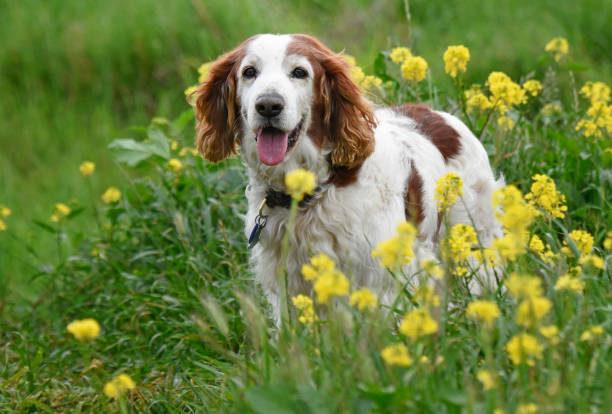
The Welsh Springer is an older and rarer breed that sits between the English Cocker and English Springer in size, with a distinctive rich red and white coat and a temperament notably more reserved with strangers than its more famous relatives. Welsh Springers bond intensely with their immediate family and are warm and playful within that circle, but they require thorough early socialization to prevent the wariness around strangers from becoming an entrenched behavioral pattern. They need substantial daily exercise similar to the English Springer, have a moderate double coat that requires regular grooming, and are robustly healthy compared to many other Spaniel varieties. They are ideal for experienced dog owners who want a loyal, intelligent working-type Spaniel and do not need their dog to be immediately friendly with everyone it meets.
The Clumber Spaniel — The Heavy, Slow, and Entirely Underrated Gentleman

The Clumber is the largest Spaniel breed and the most low-key — a heavy-boned, white-coated dog with a deeply dignified expression and an energy level more suited to leisurely country walks than athletic pursuits. They were the preferred spaniels of English aristocracy precisely because they were productive hunters who worked at a pace that suited a gentleman on foot rather than a rider. Today, a Clumber is for the owner who loves the Spaniel personality and history but genuinely does not want a high-energy dog. They shed heavily, drool, snore, and are among the most companionable dogs you can own. Their most common health concerns are hip dysplasia and entropion — inward-rolling eyelids that require surgical correction in severe cases.
The Field Spaniel — The Overlooked Alternative Worth Knowing About

The Field Spaniel is rarer than all the breeds above and offers a compelling middle ground between the Cocker’s compact size and the Springer’s working energy. Slightly larger than a Cocker, with a noble head and a coat that is somewhat easier to maintain than the showier Spaniel varieties, the Field Spaniel was nearly extinct by the mid-twentieth century and has been carefully rebuilt as a breed. They are active, intelligent, and deeply loyal — genuinely good for active families who want a Spaniel that is less common and whose breeders are typically exceptionally knowledgeable and invested in the breed’s health because the community is small and dedicated.
The Breed Comparison at a Glance
Before you make your final decision, run through these four questions honestly. How many hours per day are you genuinely available to your dog — not in the same building but actively engaged? A Cocker needs more than a Springer in this regard because of its greater emotional sensitivity. How much exercise can you realistically commit to daily, in all weather, not just on your best days? How much grooming time and budget are you prepared for every single week without exception? And are you financially and emotionally prepared for breed-specific health management — the ear care of the Cocker, the cardiac monitoring of the Cavalier, the joint considerations of the Clumber? Answer these honestly, and the right Spaniel will identify itself clearly. Every breed in this family is exceptional. The right one for you is the one you can genuinely meet the needs of.