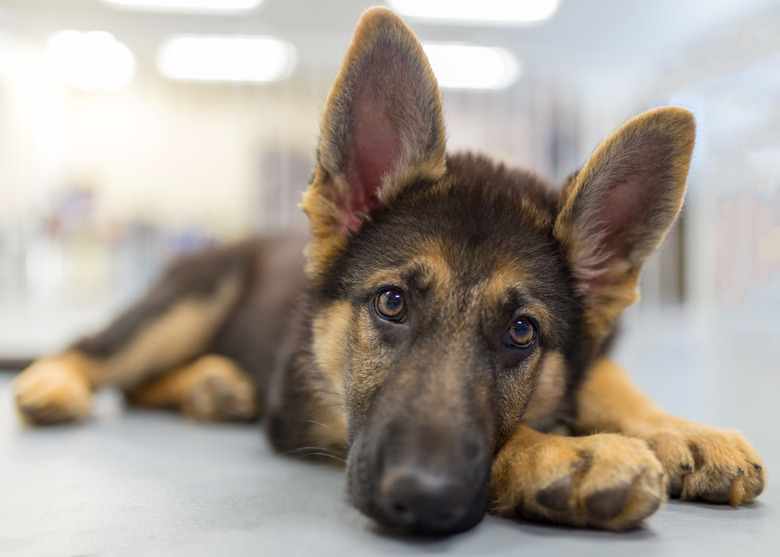
The German Shepherd is the second most popular dog breed in the United States, the most widely deployed working dog in law enforcement and the military worldwide, and — without question — one of the most misunderstood companion dogs a family can bring home.
The misunderstanding works in both directions. Some people underestimate the breed — expecting a large, friendly dog who will be satisfying to own without significant investment of time, training, or mental engagement. Others overestimate the complexity, assuming that a dog deployed for police work must be beyond the reach of ordinary owners.
Neither is correct. The German Shepherd is not a passive dog that maintains themselves, and they are not a dog exclusively for professionals. They are a dog who thrives in the hands of an owner who understands what they require — and who provides it consistently.
These twelve points are about understanding applied practically.
Point 1: This Is a Working Dog, Not a Decorative One — Everything Else Follows From This
The German Shepherd is a bold, intelligent, and deeply loyal breed best known for its work in police, military, and service roles — but also as a devoted family companion. GSDs thrive on structured activity, mental stimulation, and consistent leadership.
The working dog heritage is not a historical context — it is a daily reality. A German Shepherd who does not have a job, a task, a purpose, or a sufficiently structured activity to occupy their considerable intelligence and energy will create their own occupation. The occupations a bored German Shepherd invents are not occupations their owners enjoy.
Everything that follows in this guide flows from this single understanding: this breed was developed to work all day alongside a human, performing complex tasks that require both physical endurance and active problem-solving. Meeting that need — even in a domestic suburban setting — is the foundation of everything.
Point 2: Exercise Means More Than Walking
German Shepherds possess unique characteristics that set them apart from other breeds. Their intelligence ranks among the top three smartest dog breeds, making them highly trainable but also requiring consistent mental challenges. These dogs were bred for work, which means they have naturally high energy levels. Without proper outlets, this energy can turn into destructive behaviors like excessive barking or chewing.
The minimum exercise requirement for an adult German Shepherd is 60 to 90 minutes of physical activity daily. But the quality and type of that exercise matter as much as the quantity. A German Shepherd that walks for ninety minutes has had their body exercised. A German Shepherd who walks for thirty minutes, trains obedience for fifteen minutes, and plays a game of structured fetch for fifteen minutes has had both their body and their brain exercised — and the brain is the organ that generates the problem behaviors when under-stimulated.
Activities that meet the GSD’s mental exercise needs alongside physical: obedience training, agility, Schutzhund sport, scent work, structured fetch with obedience interruptions, and anything that requires the dog to think and respond rather than simply move. A tired German Shepherd who has been mentally engaged is a calm, settled companion. A tired German Shepherd who has only been physically exercised is still looking for something to solve.
10 German Shepherd Training Hacks That Actually Work →
Point 3: Training Begins on Day One and Never Fully Ends
German Shepherds excel with ongoing education and exposure. Begin formal obedience and crate training by 8–10 weeks.
The German Shepherd is among the easiest dogs to train — and among the breeds where the consequences of not training are most significant. Their intelligence means they learn quickly, but what they learn is not limited to what you intend to teach them. A German Shepherd who is not being trained is training themselves, and they are applying the same intelligence to that process.
Basic obedience — sit, down, stay, come, leave it, loose-leash walking — should be fluent before the dog reaches six months. Not because six months is arbitrary, but because the adolescent phase (six to eighteen months for German Shepherds) brings a testing of established rules that is significantly easier to navigate when those rules are already solidly built.
The training never fully ends because the GSD’s mind requires ongoing engagement. Obedience maintenance sessions, new skills, ongoing socialization, and puzzle-based enrichment feed the brain throughout the dog’s life and prevent the boredom that produces behavioral problems at every age.
Point 4: Socialization Is the Most Time-Sensitive Investment You Will Make
A German Shepherd who is properly socialized in the critical window — three to fourteen weeks — develops the confident, adaptable temperament that makes them the trustworthy family companion the breed is capable of being. A German Shepherd who is not adequately socialized during this window develops the reactive, anxious behaviors that make them genuinely difficult to manage — and that are significantly harder to address after the window closes.
The GSD’s protective instincts — one of their most valued characteristics in working roles — require careful early socialization to develop appropriate discrimination between genuine threat and ordinary daily encounters. A German Shepherd that has not been well socialized does not have better protective instincts. They have less appropriate ones — alerting to everything, discriminating nothing, and producing a dog who is genuinely difficult to take anywhere.
Puppy classes, deliberate exposure to different people, environments, sounds, and surfaces during the first sixteen weeks, and ongoing positive social experiences through adolescence are the investments that produce the stable, trustworthy adult GSD.
Point 5: The Coat Requires More Management Than It Appears to Need
German Shepherds should be brushed at least 2–3 times a week to control shedding and maintain a healthy coat. During heavy shedding seasons (spring and fall), daily brushing is ideal.
The German Shepherd’s double coat — a dense, weather-resistant outer coat and a thick insulating undercoat — sheds consistently throughout the year and spectacularly during seasonal changes. The volume of hair produced by a German Shepherd during their twice-yearly blowing of the undercoat is something that genuinely needs to be experienced to be understood.
German Shepherds have no need for fancy haircuts and shouldn’t have them due to the coat’s role in temperature regulation. Never shave a German Shepherd. The double coat provides thermoregulation in both winter cold and summer heat — shaving removes this protection and exposes skin to UV radiation while disrupting the coat’s natural regrowth pattern.
The tools that make GSD grooming manageable: a slicker brush for regular use, an undercoat rake for the dense undercoat, and a de-shedding tool during shedding season. Brush your dog every day with a pin brush. German Shepherds shed a lot, but frequent brushing can help reduce the amount of hair that ends up on your floor and furniture.
Point 6: Bathing Less Frequently Produces Better Coat Condition
German Shepherds typically need baths every 6–8 weeks unless they get particularly dirty. Over-bathing strips natural oils that keep their coat healthy and water-resistant. Use dog-specific shampoo to maintain proper pH balance.
The German Shepherd’s double coat has natural weatherproofing properties maintained by the oils the skin produces. Frequent bathing strips these oils, producing a coat that appears dull and loses its weather resistance. Monthly bathing with a quality dog shampoo is the standard for most German Shepherds — active dogs in muddy environments may require more frequent bathing, but the shampoo choice matters significantly. Human shampoos have a different pH balance and should never be used.
Point 7: Hip and Elbow Dysplasia Are the Primary Health Priority
German Shepherds are prone to hip dysplasia, digestive sensitivities, and allergies, so proactive care is key.
Hip dysplasia is the health concern most associated with German Shepherds and the one that warrants the most attention in breed selection and early care. The condition — abnormal development of the hip joint leading to arthritis and pain — has a significant genetic component and is screened for in responsible breeding programs.
Reducing risk through management: Maintain a lean body weight throughout the dog’s life — excess weight measurably increases joint load and accelerates the progression of any developing dysplasia. Avoid over-exercising puppies under twelve months — high-impact repetitive exercise on developing joints increases dysplasia risk. Feed a large-breed appropriate food that controls growth rate in puppies.
Choosing a responsible breeder: OFA (Orthopedic Foundation for Animals) certifications for both parents’ hips and elbows are the standard health documentation for responsible German Shepherd breeding. A breeder who cannot or will not provide this documentation is a breeder whose dogs have not been tested.
Point 8: Degenerative Myelopathy — The Hidden Breed Concern
Degenerative myelopathy (DM) is a progressive neurological condition that affects the spinal cord, causing gradual hind leg weakness that eventually produces paralysis. It is significantly more common in German Shepherds than in most other breeds, and a DNA test identifies dogs who are at risk (homozygous for the DM gene variant).
Responsible breeders test for DM carrier status and avoid breeding two carriers. Purchasing from a breeder who provides DM testing results dramatically reduces the risk of this condition.
Signs that warrant neurological assessment: subtle changes in gait, knuckling of the rear paws, difficulty rising from lying, or any progressive weakness in the hind legs. Early assessment provides management options that slow progression.
Point 9: Digestive Sensitivity Is Common and Manageable
German Shepherds thrive with a balanced approach to health and wellness. Their diet should include high-quality protein, healthy fats, and essential vitamins to support muscle strength, joint health, and digestion. Consider breed-specific formulas or fresh, raw diets tailored to their needs.
German Shepherds have a documented higher prevalence of gastrointestinal sensitivity than many breeds — conditions including inflammatory bowel disease, exocrine pancreatic insufficiency, and general digestive sensitivity occur with notable frequency. Signs of digestive issues: chronic loose stools, frequent vomiting, significant weight loss despite adequate food intake, or intermittent digestive upset without a clear cause.
Dietary management: a high-quality food with limited ingredients, consistent without frequent changes, and appropriate for the dog’s age and activity level. Sudden food changes are particularly disruptive to GSD digestion — any transition between foods should be gradual over seven to ten days.
Point 10: Bloat Is a Breed-Specific Emergency to Know
Large, deep-chested breeds — of which the German Shepherd is one — have an elevated risk of Gastric Dilatation-Volvulus (GDV), commonly called bloat. This is the condition where the stomach fills with gas and rotates on its axis, cutting off the blood supply, and can be fatal within one to two hours without treatment.
Know the signs: distended abdomen, unproductive retching, extreme restlessness, and inability to find a comfortable position. If you see these signs in any large breed dog, emergency veterinary care is required immediately — do not wait and see.
Preventive management: feeding two or more smaller meals rather than one large daily meal reduces (though does not eliminate) bloat risk. Restricting vigorous activity immediately before and after meals is also recommended. Discuss the option of prophylactic gastropexy (surgical stomach tacking) with your veterinarian — this procedure prevents rotation and is increasingly offered at spay/neuter time for at-risk breeds.
Point 11: Mental Health Requires the Same Attention as Physical Health
If you want a brave, brilliant dog that thrives on teamwork and purpose, the German Shepherd could be your ideal breed. With the right care and leadership, they become a lifelong loyal partner.
German Shepherds are emotionally attuned dogs who form deep bonds with their families and show the stress of inadequate social connection through behavioral problems that range from destructive behavior to genuine anxiety disorders. They should not be regularly isolated for extended periods — they are not independent dogs who maintain themselves emotionally in the absence of human contact.
Signs of stress in German Shepherds: pacing, excessive barking, destructive behavior directed at exits, excessive panting, and in severe cases, self-directed behaviors like paw licking or flank biting. These are symptoms of a dog whose needs are not being met — not character flaws requiring correction.
Point 12: They Are Extraordinary Partners — When Their Needs Are Met
Every German Shepherd owner who is committed to what the breed requires describes the same thing: a dog who is unlike anything else available. The dog is actively monitoring the household’s safety. Who knows every family member’s schedule and adjusts their routine accordingly. Who is the first to notice when someone is unwell and positions themselves accordingly? Who learns new skills with an enthusiasm that makes training sessions feel collaborative rather than directive.
Your German Shepherd thrives on having a job to do. Success with German Shepherds comes from understanding their needs and providing consistent, loving guidance. With proper care, these remarkable dogs will reward you with years of unwavering loyalty and companionship.
That reward is real. It is what makes German Shepherd owners evangelical about the breed, and what makes people who have owned one rarely choose anything else afterward.
ENDING:
The German Shepherd is not the right dog for every household. They require exercise, training, mental engagement, and human connection at levels that genuinely exceed what many owners are prepared to provide. For the household that can meet what the breed requires — and does so consistently — the German Shepherd gives back something that is genuinely difficult to find elsewhere.
Save this guide to Pinterest, share it with anyone considering the breed, and come back to the exercise and training sections whenever the boredom behaviors begin developing. That is the guide telling you what needs more attention.