Beauty in a dog breed is a subjective thing — until you see an Irish Setter moving at full stride through autumn grass, and then it becomes the most objective thing in the world. Hunting dogs were not bred for beauty. They were bred for function, endurance, sensory capability, and physical intelligence. And in the process of building all those functional traits, breeders inadvertently produced some of the most visually stunning animals that exist. This guide is specifically for the beauty of it — the eight hunting dog breeds whose appearance stops conversations, fills gallery walls, and makes professional photographers follow them into fields at golden hour.
1 — The Irish Setter: Living Fire
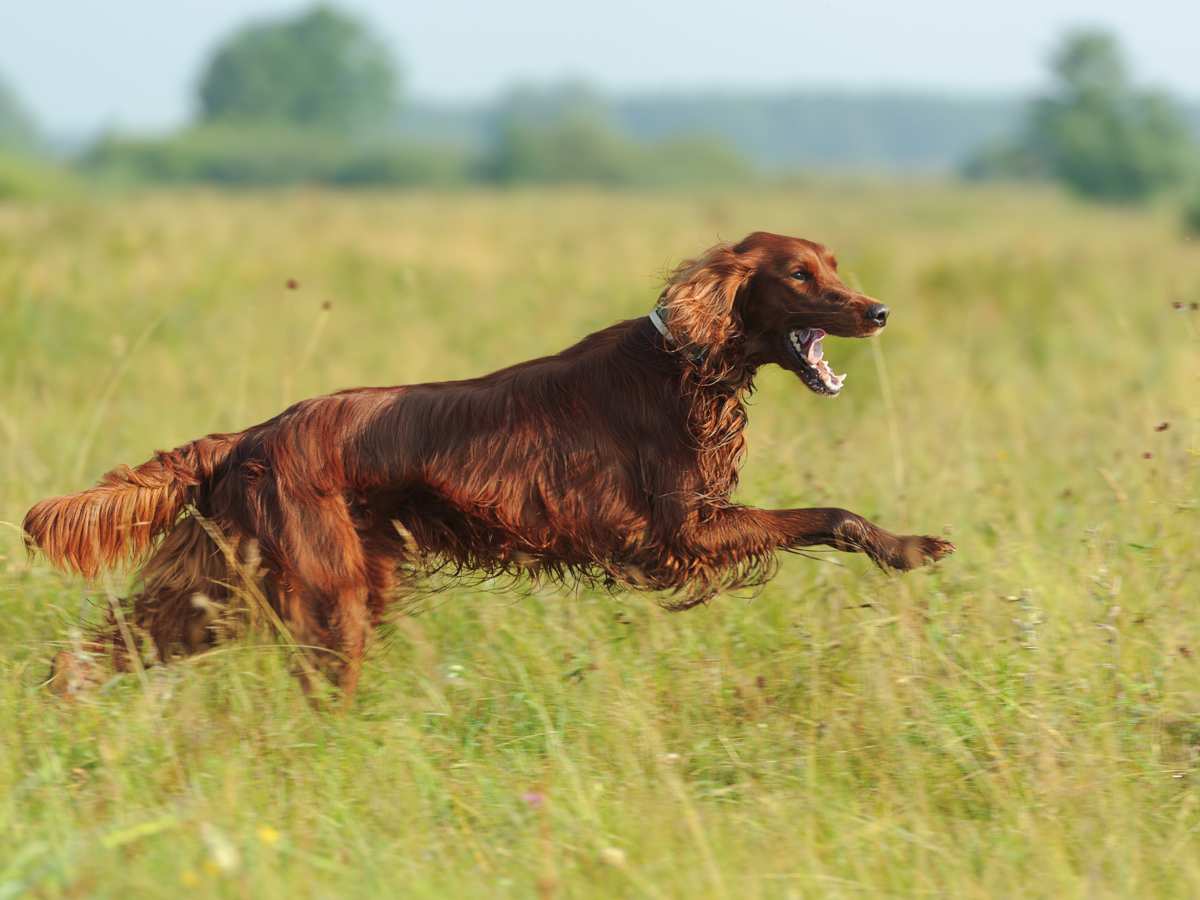
There is no polite way to describe an Irish Setter other than spectacular. The deep mahogany-red coat — not orange, not brown, but specifically the color of dark copper burnished in firelight — falls in silky waves from a lean, elegant body built for speed across upland terrain. Known for its speed and stamina, the Irish Setter excels in flushing game, particularly upland birds. But it is not the hunting capability that makes people pull over their cars when they see one on a walk. It is the coat. The ears. The way the whole dog seems to glow from inside when the afternoon light catches it at the right angle.
The Irish Setter is the hunting breed most likely to be mistaken for something painted rather than something alive. Long-time hunting dog photographers will tell you that you don’t need to do anything special to make an Irish Setter look extraordinary in a photograph. You need light. And a field. The dog does the rest.
2 — The English Setter: The Living Painting
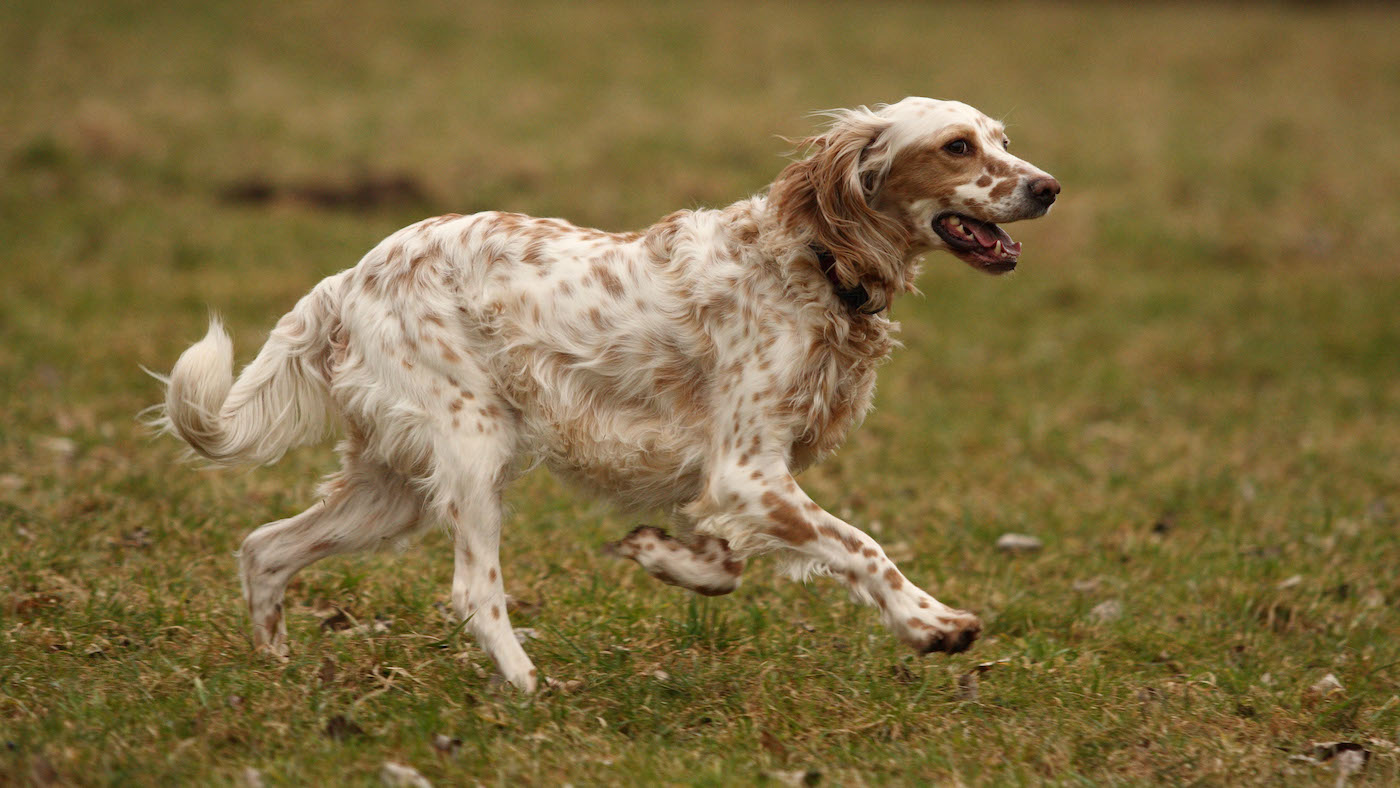
If the Irish Setter is fire, the English Setter is watercolor — the complex, delicate mottling of the belton pattern against white creating a coat that looks less like dog fur and more like something applied with a very fine brush over a long afternoon. English Setter ownership has steadily increased, and the breed narrowly surpassed the German Shorthaired Pointer to become the most commonly owned bird dog among upland hunters in 2026. Part of that increase is utility. Part is undeniably the beauty.
The belton pattern — the term for the specific mottling of color in white English Setter coats — comes in blue belton (black and white), orange belton, lemon belton, liver belton, and tricolor variations, each with its own particular quality of visual complexity. A blue belton English Setter in full point in a grey November field is an image that has been reproduced in sporting art for two hundred years and has not lost any of its power.
10 Hunting Dog Breeds That Are Just as Good at Being Family Pets as They Are in the Field →
3 — The Vizsla: Golden in Every Sense
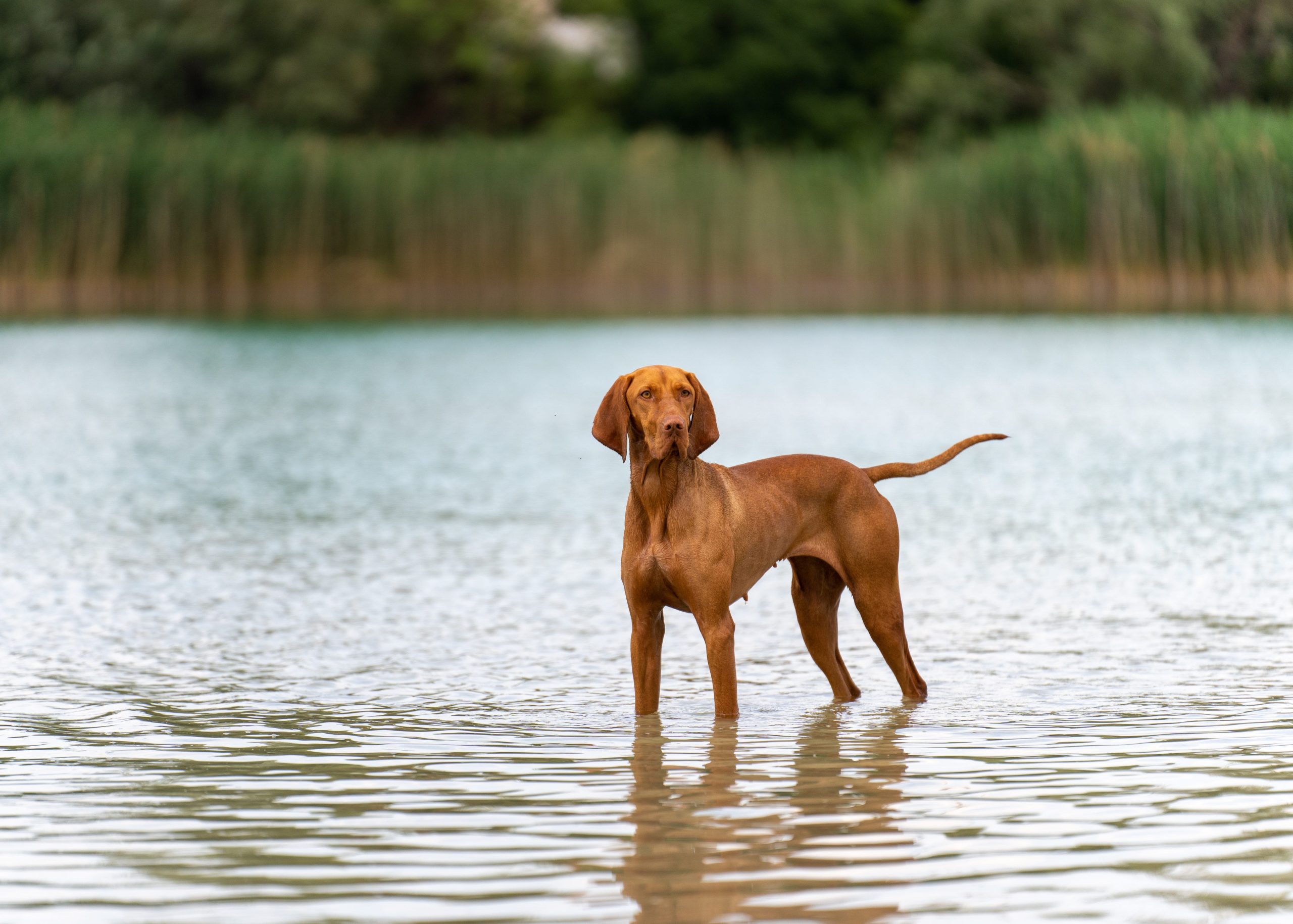
The Vizsla is a study in monochromatic elegance — the entire dog, coat, nose, eyes, and nails exist in variations of the same warm golden amber that makes every photograph taken in autumn light look specifically designed for them. One of the oldest known hunting dog breeds, the Vizsla is a type of gun dog originally bred for both pointing and retrieving.
The Vizsla’s beauty is not the showy, complex kind — it is the beauty of perfect proportion. The head that sits exactly right on the neck. The chest depth that matches the lean flank. The amber eyes that are neither too large nor too small. Everything in perfect balance, covered in a coat that catches light in a way that makes them look like they are generating warmth from within. Every Vizsla photograph looks like it was taken by someone who knew what they were doing.
4 — The Weimaraner: The Silver Ghost
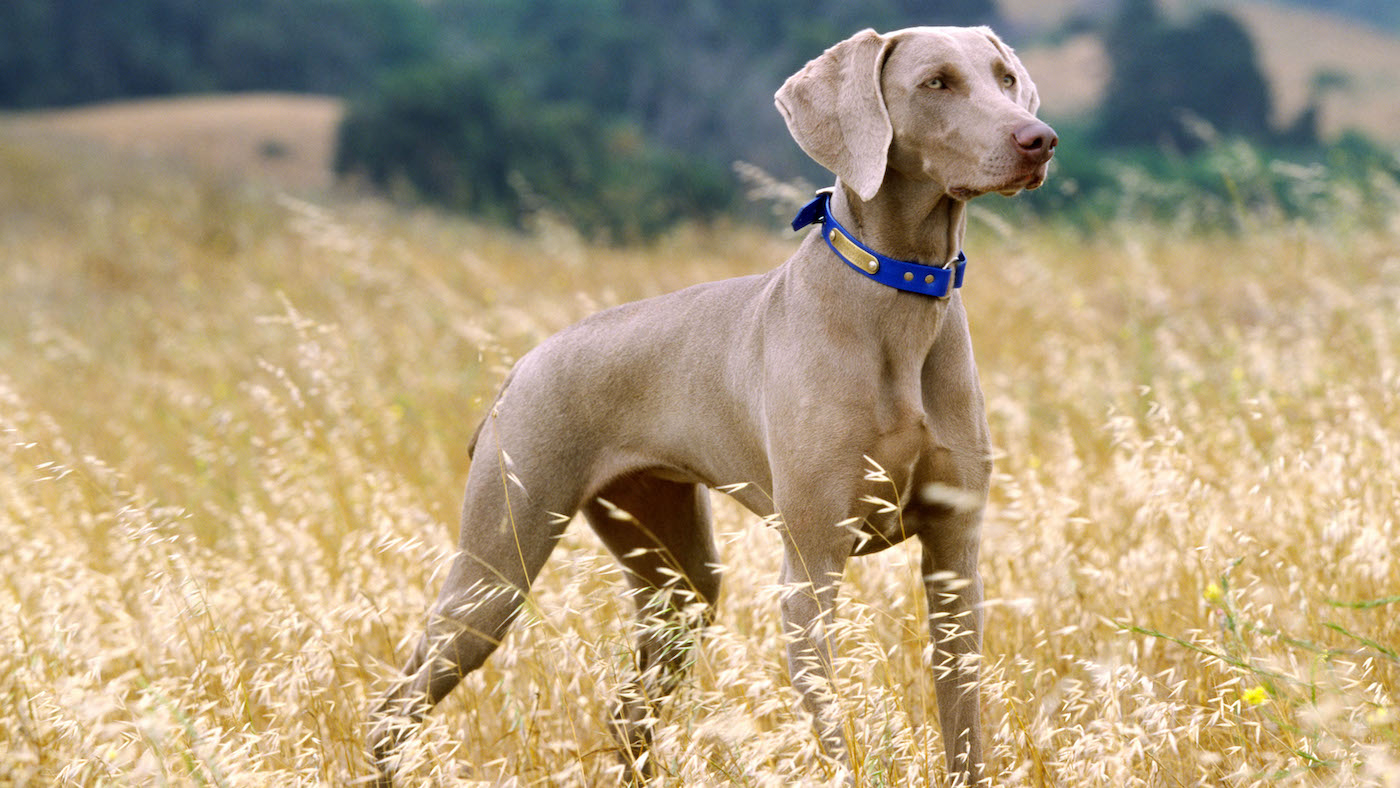
The nickname is not an exaggeration. In certain light conditions — early morning fog, overcast field conditions, the grey interior light of late November — a Weimaraner moving through cover seems to materialize and dematerialize rather than simply move. The silver-grey coat, the pale amber or blue-grey eyes, and the lean, muscular build combine to produce something that looks less like a domestic dog and more like a concept of a dog rendered in precious metal.
The Weimaraner is a picture of grace and speed. William Wegman built an entire photographic career around Weimaraners precisely because their visual quality is so extraordinary and so adaptable — they look magnificent in fields, in studios, wearing hats, gazing at the camera with an expression of profound philosophical engagement. The beauty of the Weimaraner is such that they make every photographer better simply by being in the frame.
5 — The English Pointer: Sculptural Perfection
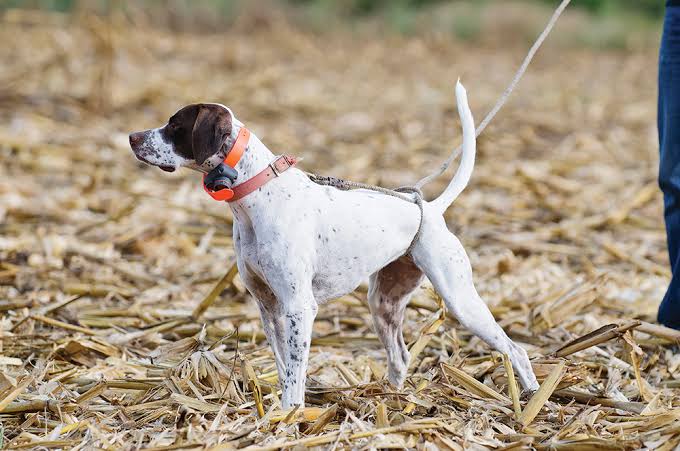
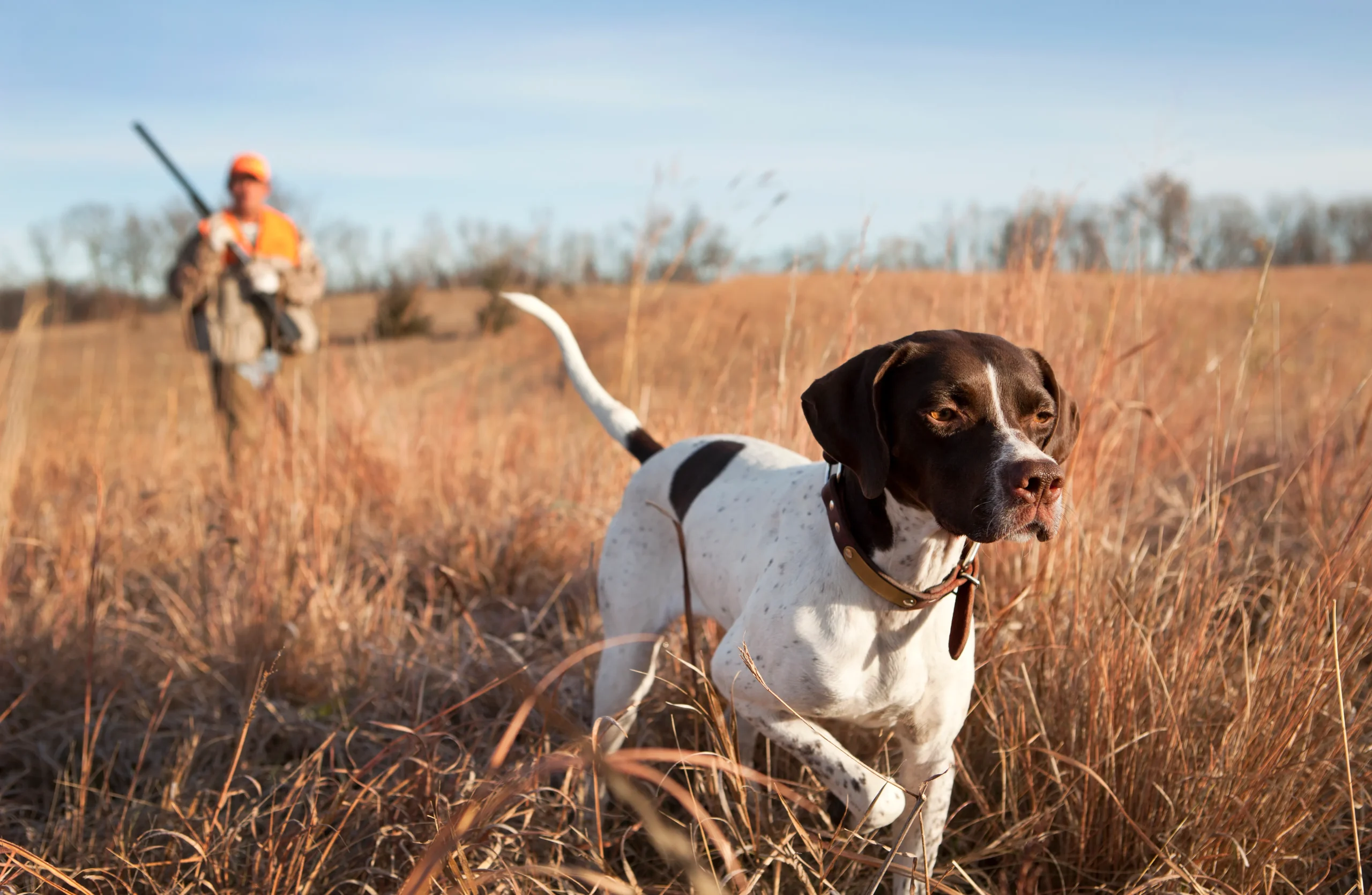
The English Pointer at full point is so physically perfect that the English Pointer has literally been used as an art reference for the proportional ideal of a working dog body. Lean, muscular, every tendon visible under a short coat that hides nothing, body balanced perfectly on three legs with one foreleg raised, the entire structure aimed like an instrument at something invisible — the English Pointer on point is a living sculpture.
The English Pointer is a gun dog distinguished among hunters for its exceptional prey drive, agility, and determination. The breed’s short, close coat — available in liver, lemon, black, and orange, all on a white base — shows the physical architecture of the hunting dog body in a way that longer-coated breeds do not. The beauty is in the structure, not the fur.
6 — The Chesapeake Bay Retriever: Rugged and Striking
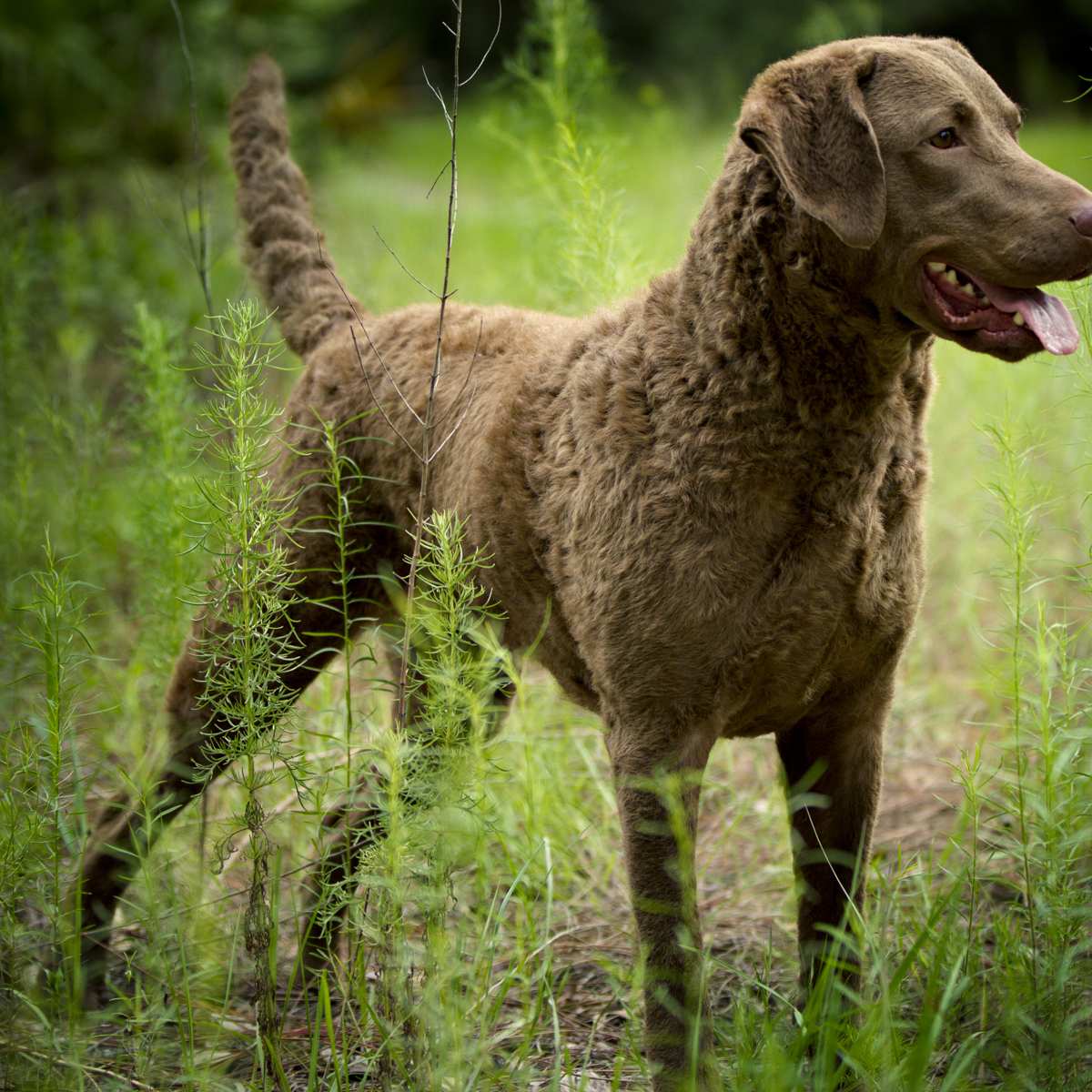
The Chessie is not beautiful in the delicate, romantic way of the Irish Setter or English Setter — it is beautiful in the way that extremely well-built working machinery is beautiful, in the way that efficiency of design produces its own aesthetic. The distinctive wavy coat and slightly more independent personality set the Chesapeake Bay Retriever apart from other retrievers. That distinctive wavy, oily coat — the feature that allows the Chessie to shake off water in the field and emerge nearly dry — creates a textural visual quality that no other retriever possesses. In shades of dead grass, sedge, and brown — all AKC-recognized colors — the Chessie was designed to be invisible in the marsh, and the camouflage is beautiful.
7 — The Gordon Setter: The Rarest Beauty in the Setter Family
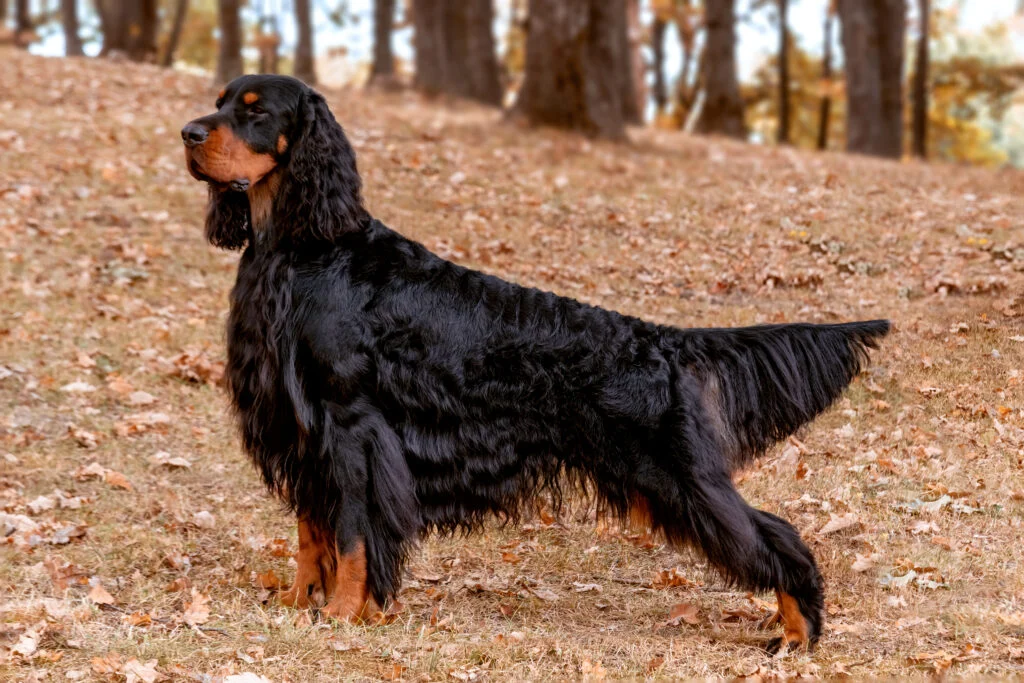
The Gordon Setter is the largest and least known of the three setter varieties — Irish, English, and Gordon — and arguably the most visually striking for its rarity. The black and rich mahogany tan pattern is unlike any other setter, giving the Gordon a darkness and depth that the orange and lemon setters do not have. In field conditions, Gordon’s black body coat disappears into shadow, and the tan points burn like small fires in the darkness of dense cover.
Gordon Setters are known for their stamina and agility. They were developed in Scotland, specifically by the fourth Duke of Gordon, for working in the challenging terrain and weather of the Scottish Highlands — a breeding context that produced a dog tougher and heavier-coated than the Irish Setter, built for cold and wet rather than the warmth the Irish variety was developed in.
8 — The Brittany: Small Dog, Outsized Beauty
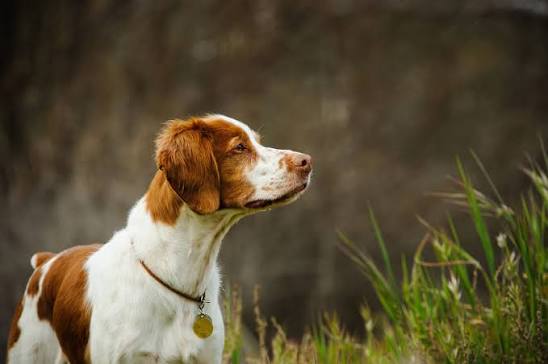
The Brittany is the most compact of the pointing breeds, and in its orange and white or liver and white coloring, it produces some of the most joyful, energetic bird dog photography available. Brittanys are energetic and versatile hunting companions with cheerful personalities. What the Brittany photograph always captures that other hunting dog photography sometimes misses is pure joy — the pleasure a dog takes in their own movement, their own purpose, their own belonging in the world they were made for.
A Brittany at the top of a field rises at golden hour, mid-stride, is not a painting anyone would have needed to compose — the subject composed it themselves.
The Camera Follows These Dogs
Every professional hunting dog photographer will tell you the same thing: you show up with the camera, you point it at the dog, and the dog does the rest. Hunting breeds are not beautiful in the still, static, posed way of some show dogs — they are beautiful in motion, in purpose, in the specific physical intelligence of a body doing exactly what it was built to do. That is the beauty that stops every scroll, fills every Instagram feed, and makes people who have never thought about bird hunting or waterfowl or rabbit tracking save a photograph of a dog in a field and feel, for a moment, something they cannot quite name.