
Your Frenchie’s begging face is basically a professional skill at this point — but giving in “just this once” can be far riskier for this breed than most owners realize. French Bulldogs aren’t just sensitive in terms of allergies and digestion; some common foods can cause genuinely serious, even life-threatening reactions in this breed faster than in larger dogs, simply because of their small size. Here are 6 foods that should never make it into your Frenchie’s bowl — including a few that might already be sitting in your kitchen right now.
Why French Bulldogs Are More Vulnerable to Toxic Foods Than Other Breeds
Toxicity in dogs is often dose-dependent — meaning the amount that causes harm is relative to body weight. French Bulldogs typically weigh somewhere between 16–28 lbs, which is small enough that even a “small” amount of a toxic food (relative to a Labrador or German Shepherd) can represent a much higher dose per pound for a Frenchie.
On top of that, this breed’s already-sensitive digestive system means that even non-toxic but inappropriate foods (like fatty table scraps) can trigger painful conditions like pancreatitis far more easily than in more food-tolerant breeds.
And because Frenchies are such enthusiastic, fast eaters, they’re also more likely to snatch up something off the floor or counter before you can stop them — which makes knowing these risks in advance even more important.
6 Foods French Bulldogs Should Never Eat
1. Chocolate

This is the most well-known food danger for dogs, but it’s worth understanding why it’s so dangerous — and why it’s especially risky for a small breed like a Frenchie. Chocolate contains theobromine and caffeine, both of which dogs metabolize far more slowly than humans do, allowing these compounds to build up to toxic levels. Darker chocolate (baking chocolate, dark chocolate, cocoa powder) contains significantly more theobromine than milk chocolate, making it more dangerous in smaller amounts. For a 20 lb Frenchie, even a relatively small piece of dark chocolate can be enough to cause symptoms ranging from vomiting and diarrhea to rapid heart rate, tremors, and in severe cases, seizures. What to watch for: restlessness, excessive thirst, vomiting, an unusually fast heart rate, or hyperactivity within a few hours of exposure.
2. Grapes and Raisins
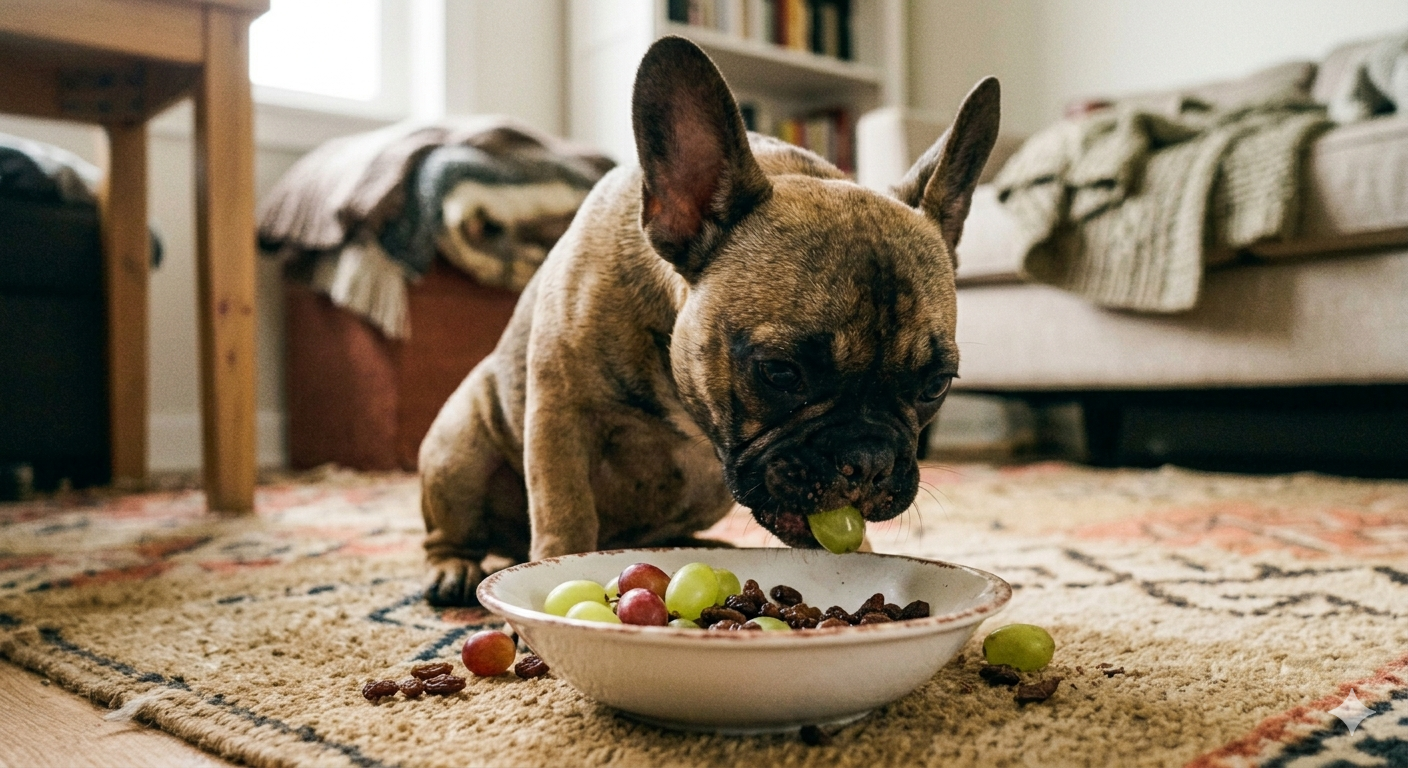
This is one of the most unpredictable toxicities in dogs — and one of the scariest, because the exact toxic mechanism still isn’t fully understood, and reactions can occur even with relatively small amounts. Grapes and raisins have been linked to acute kidney failure in dogs, and unlike some toxicities where “a little is probably fine,” vets generally treat any amount of grape or raisin ingestion in dogs as a potential emergency. This includes foods you might not immediately think of — raisin bread, trail mix, certain granola bars, and grape-flavored anything. What to watch for: vomiting within hours, followed by lethargy and decreased urination over the following 24–48 hours — though by the time symptoms appear, kidney damage may already be underway, which is why prevention (and immediate vet contact if ingestion happens) matters so much.
3. Onions and Garlic (Raw, Cooked, or Powdered)
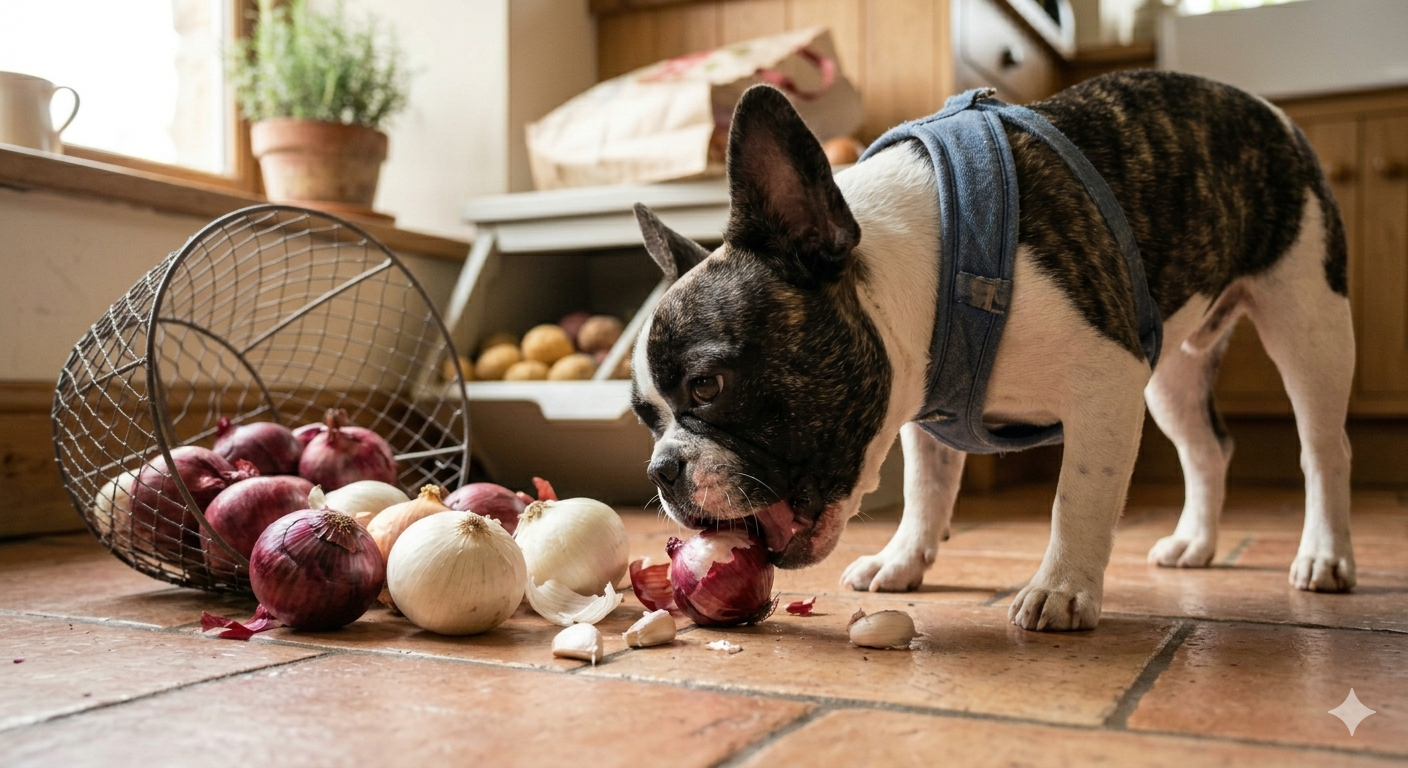
Onions and garlic — along with the rest of the allium family (leeks, chives, shallots) — contain compounds that damage a dog’s red blood cells, leading to a condition called hemolytic anemia. The tricky part? This damage is cumulative and doesn’t always show up immediately. A Frenchie who snags a piece of onion-seasoned food once might seem fine, but repeated small exposures (like regularly getting table scraps cooked with onion or garlic powder) can build up over time. Garlic is generally considered more potent than onion, gram for gram, which matters because garlic powder is hiding in an enormous range of seasoned foods, sauces, and pre-made dishes. What to watch for: pale gums, weakness, rapid breathing, and reddish or orange-tinted urine — signs that red blood cells are being affected.
4. Xylitol (Found in “Sugar-Free” Products)
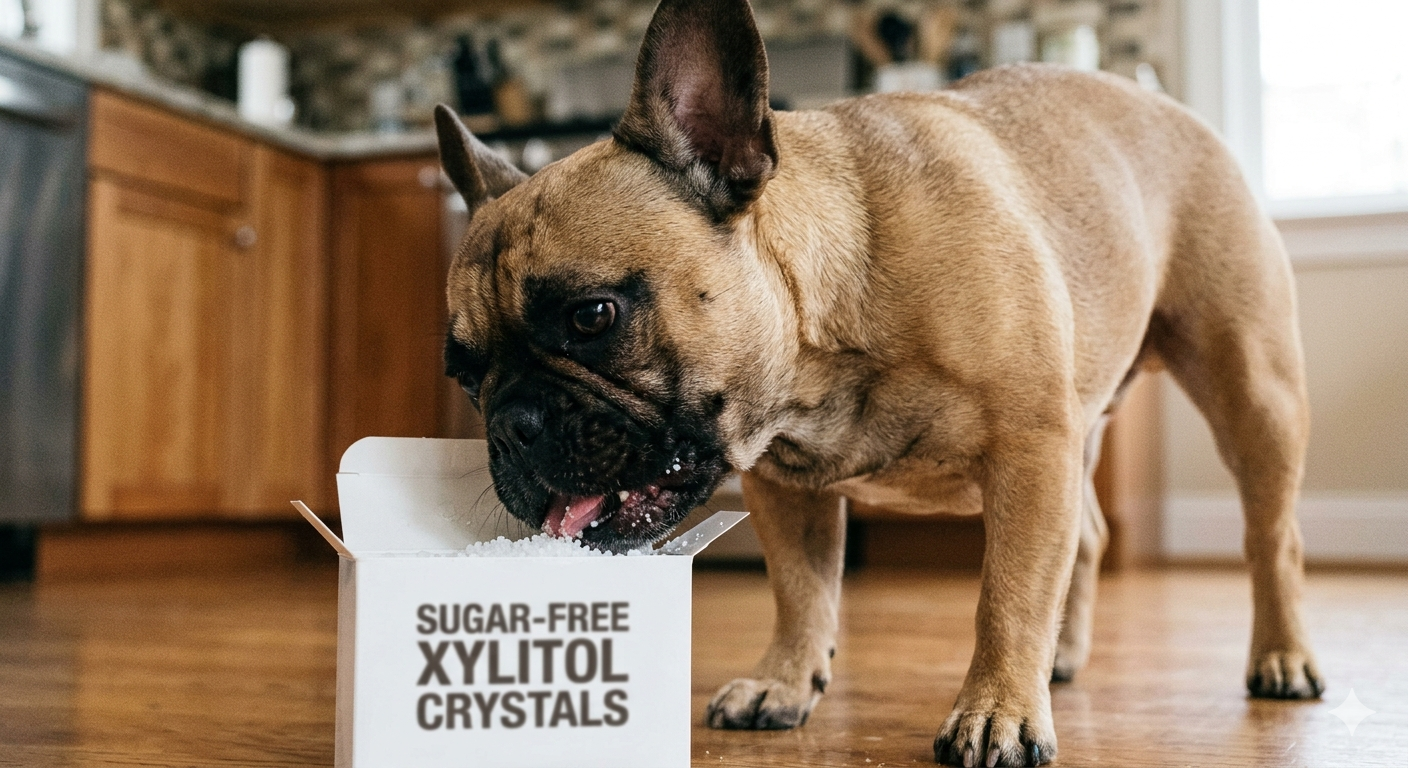
This is the one that surprises almost every owner — because it’s not really a “food” in the traditional sense, it’s an ingredient hiding inside everyday products. Xylitol is a sugar substitute found in sugar-free gum, candy, peanut butter, baked goods, toothpaste, and even some medications. In dogs, xylitol triggers a rapid, massive release of insulin, causing blood sugar to crash dangerously fast — sometimes within 30 minutes of ingestion. In larger amounts, it can also cause liver failure. Because Frenchies are small and curious (and notorious counter-surfers when motivated), a dropped piece of sugar-free gum is a genuinely dangerous scenario — not a minor “oops.” What to watch for: sudden weakness, wobbliness, vomiting, or collapse — xylitol poisoning can escalate extremely fast and is considered a true emergency.
5. Dairy Products (Especially in Large Amounts)
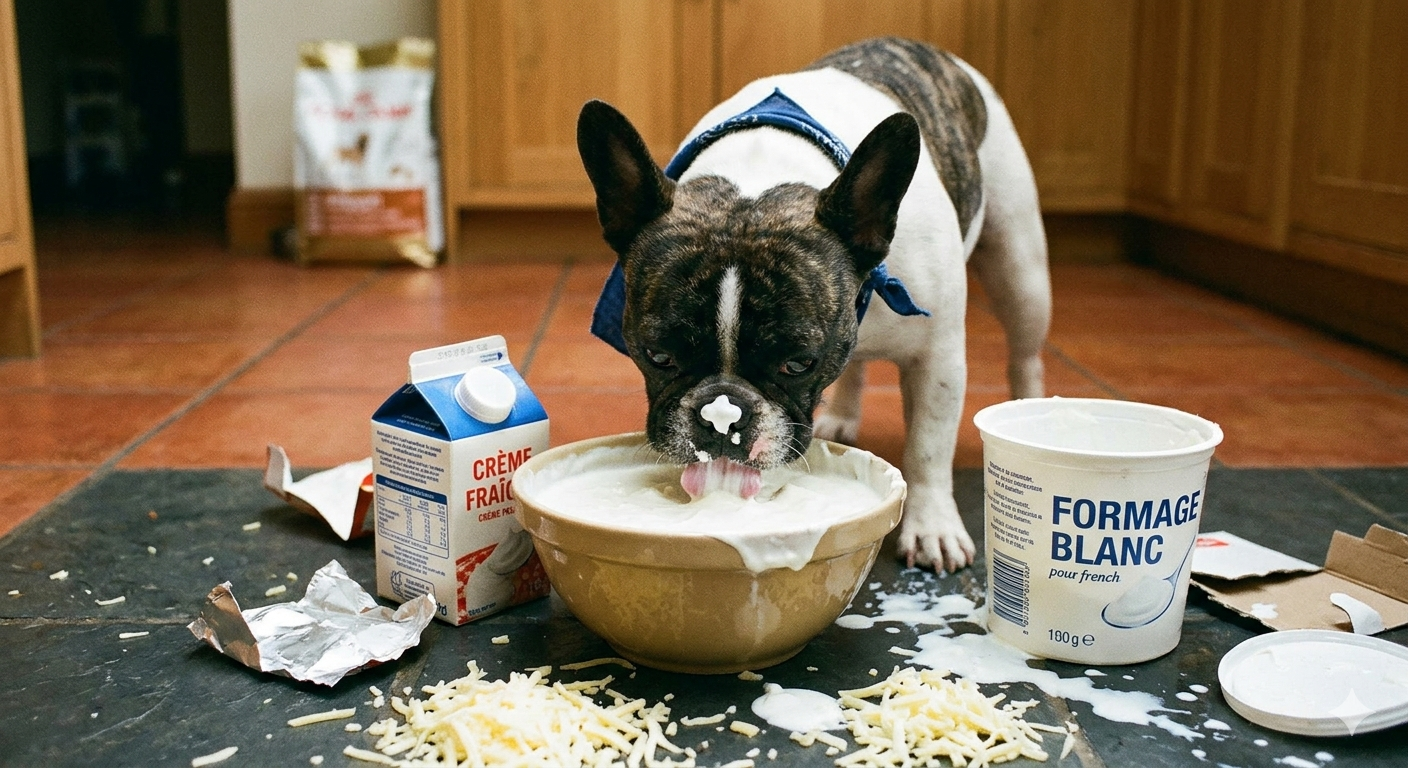
This one is more nuanced than the others — dairy isn’t “toxic” in the same way chocolate or grapes are, but it deserves a spot on this list because of how commonly it causes problems specifically in French Bulldogs. Many adult dogs, Frenchies included, have reduced ability to digest lactose, meaning dairy products like milk, ice cream, and certain cheeses can trigger gas, bloating, and diarrhea — symptoms this breed already deals with enough as it is. Beyond lactose intolerance, high-fat dairy products (like cream-based foods) can also contribute to pancreatitis risk in a breed that’s already prone to digestive inflammation. What to watch for: loose stool, excessive gas, or vomiting within several hours of dairy consumption — usually uncomfortable rather than life-threatening, but worth avoiding given how easily this breed’s gut gets upset.
6. Fatty, Fried, or Greasy Foods (and Cooked Bones)
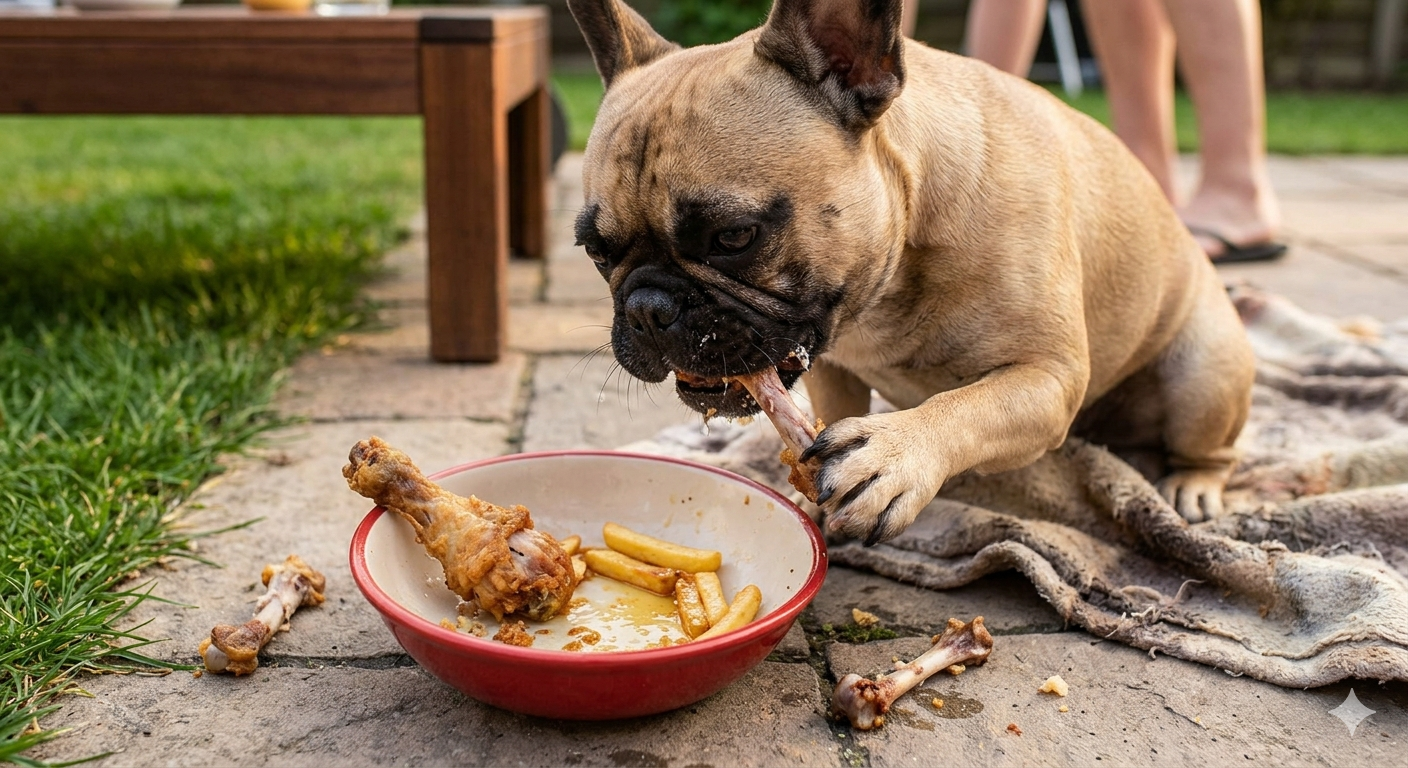
This category covers a lot of common “people food” temptations — bacon, fried chicken skin, gravy, and fatty meat trimmings. The issue here is pancreatitis: a sudden, painful inflammation of the pancreas that can be triggered by a single high-fat meal, even in dogs who’ve never had issues before. French Bulldogs, due to their existing digestive sensitivity, seem particularly prone to pancreatitis flare-ups after fatty food exposure. Cooked bones deserve a mention here too — they can splinter into sharp fragments that pose a choking and intestinal puncture risk, which is a serious concern for a breed already prone to airway issues if something gets lodged in the throat. What to watch for: sudden vomiting, a hunched or “praying” posture (a classic sign of abdominal pain), loss of appetite, and lethargy — symptoms of pancreatitis can come on quickly and require prompt vet attention.
What to Do If Your Frenchie Eats Something on This List
Time matters more than panic. Here’s a general framework (though always defer to your vet or an emergency animal poison control line for specifics):
Don’t wait for symptoms to appear. With several of these foods — especially grapes/raisins and xylitol — damage can begin before any visible signs show up. If you know (or strongly suspect) ingestion happened, contact your vet or an animal poison control hotline immediately, even if your Frenchie “seems fine.”
Try to determine the amount. If possible, figure out roughly how much was eaten and when — this information helps vets assess the level of urgency and appropriate next steps.
Don’t induce vomiting unless instructed. This is a common instinct, but in some cases (and with some substances) it isn’t recommended. Always get professional guidance first.
Keep packaging. If the food came in packaging — gum wrappers, chocolate bar labels, etc. — keep it on hand. Ingredient lists (especially for xylitol) can help vets identify exact risk levels.