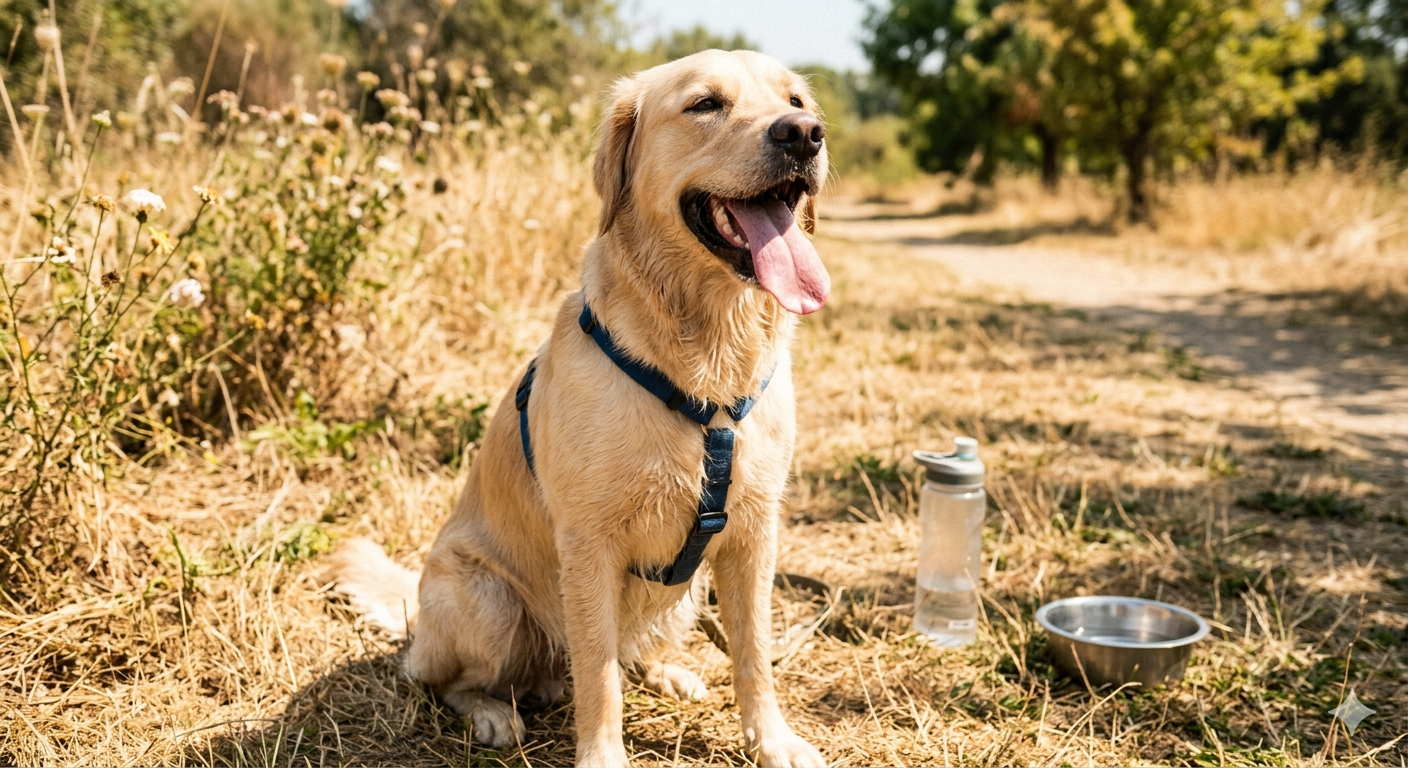
Summer with a dog is one of life’s genuinely great pleasures. The early morning walks when the air is still cool. The trips to dog-friendly beaches. The evenings in the garden, while your dog patrols the perimeter with the focused seriousness of a creature with important responsibilities.
But summer is also the season that sends more dogs to emergency veterinary clinics than any other. 1 in 7 dogs treated by vets for heatstroke die. Not because their owners did not care, but because they did not know what they were looking for until it was too late.
Heatstroke in dogs is a life-threatening emergency that requires pet owners to take quick action. Heatstroke occurs when a dog’s internal temperature rises dangerously high, typically above 104°F (40°C). Unlike humans, dogs don’t sweat efficiently. They rely mostly on panting to regulate their body temperature, which isn’t always enough to cool them down.
These ten signs are what you need to know before the temperature spikes. Learn them now, while everything is fine. The time you save by already knowing them could be the time that saves your dog.
Sign 1: Heavy Panting That Does Not Stop
Panting is how your dog cools down — it is normal during and immediately after exercise. What is not normal is panting that is heavier than usual, faster than usual, and does not slow down meaningfully after the dog has rested in the shade for several minutes.
If your dog is panting heavily and breathing super quickly, they need to cool down immediately.
Heavy panting, seeking shade, whining, reluctance to play, and drooling may be early signs that your dog is overheating. Bring them into cool air conditioning with access to water immediately.
This is the first and most important sign — the one that should trigger immediate action rather than continued observation. When panting is heavy and not resolving with rest and shade, move to a cool environment now. Do not wait to see if it improves.
📸 Image direction: Dog panting heavily in summer heat — mouth wide open, visible effort. Outdoor summer setting. The image communicates urgency without alarm.
Sign 2: Seeking Shade and Lying Down Suddenly
Often, the first signs of overheating are vague. Your pet may seek shade, become restless, whine or become vocal, or appear to have trouble breathing.
A dog who was happily trotting beside you ten minutes ago and has suddenly decided they are done — lying flat on the pavement or grass and refusing to continue — is telling you something important. Dogs do not quit walks out of stubbornness. They quit because something is wrong.
The dog who is actively seeking shade, pressing themselves against cool surfaces, or simply lying down and refusing to engage with the walk is displaying early overheating behavior. Honor the communication. Move to a cool area immediately.
Sign 3: Excessive Drooling — More Than Usual
They also drool excessively, their nose will dry up, and their heart rate increases.
Excessive drooling is a sign of heat exhaustion — keep an eye out for lots of drool, or drool that is thicker and stickier than usual.
Every dog drools to some degree during warm weather. The warning sign is drool that is significantly more than their personal baseline — pooling rather than dripping, thicker in consistency than normal, or appearing alongside other signs on this list. The combination of excessive drooling with reduced responsiveness is a genuine emergency indicator.
Sign 4: Bright Red or Dark Red Gums
Bright red gums are one of the clearest signs that a dog’s cooling system is in serious distress. Heat stroke shows severe signs like stumbling, confusion, or bright red gums.
Dogs often react to extreme heat the same way people do — they attempt to seek cooler environments, drink more water, and act tired. Panting is typical, and their breathing becomes labored, and their gums often become a dark red.
Normal dog gums are pink — the shade of bubblegum. Gums that are bright red, dark red, or — in severe cases — pale or white indicate that circulation and oxygenation are being affected. Check your dog’s gums by lifting their lip and pressing your finger briefly against the gum. The color you see tells you the severity of what you are dealing with.
Gum color guide:
- Pink: Normal
- Bright red: Overheating — act immediately
- Dark red or purple: Heat stroke emergency — veterinarian now
- Pale or white: Shock — emergency clinic immediately
📸 Image direction: Split image showing normal pink dog gums vs. the warning color — a rare educational image that earns saves because owners know they need this reference.
Sign 5: Stumbling, Confusion, or Loss of Coordination
Some dogs may experience a lack of balance, almost like they’re drunk. As they continue to be exposed to the heat, their condition worsens, and they go into shock.
Heat stroke shows severe signs like stumbling and confusion. A dog that’s just hot will typically respond normally to commands and recover quickly when moved to a cooler environment. Heat stroke, however, gets worse rather than better, even in a cool place.
A staggering dog, bumping into things, failing to respond to their name, or appearing confused about their surroundings is experiencing neurological effects of overheating. This is a late-stage sign. This dog needs to be in a veterinary clinic, not at home with cooling measures applied. Call ahead while you drive.
Sign 6: Vomiting or Diarrhea During or After Heat Exposure
If your dog continues to excessively pant and drool, or they begin to have difficulty breathing, bloody diarrhea, vomiting, weakness, confusion, seizures, or collapse, then they should be taken to a veterinary hospital immediately — these are signs of heatstroke, which is a life-threatening medical emergency.
Vomiting during or after summer activity — particularly bloody diarrhea — indicates that the dog’s core temperature has risen to a level affecting organ function. The gastrointestinal tract is one of the first systems to show the effects of dangerous overheating. This sign, combined with any of the others on this list, requires emergency veterinary care.
Sign 7: Reluctance to Move or Complete Exhaustion After Normal Activity
Dogs often react to extreme heat the same way people do — they attempt to seek cooler environments, drink more water, and act tired.
A dog who is profoundly exhausted after a walk that would normally tire them only slightly — who lies down and cannot be coaxed to move for an extended period, who seems dull and unresponsive rather than simply resting — is showing a concerning level of heat-related fatigue. This sign warrants careful monitoring and veterinary contact if it does not resolve quickly with cool water and air conditioning.
Sign 8: Rapid or Irregular Heartbeat
As they continue to be exposed to the heat, their condition worsens, and they go into shock; dehydration becomes more severe, their heartbeat becomes irregular, and they may become lethargic.
If you place your hand on your dog’s chest during suspected overheating and feel a heartbeat that is significantly faster than usual or irregular in rhythm, this is a sign that the cardiovascular system is under stress. A dog’s normal resting heart rate ranges from 60 to 140 bpm, depending on size. During overheating, it can accelerate dramatically.
Sign 9: Dry or Tacky Nose and Mouth
Signs of dehydration include a dry nose, visible tiredness, excessive panting, and sunken eyes.
Their nose will dry up.
A dog’s nose is typically moist. A nose that is dry, cracked, or visibly parched — combined with a mouth that feels tacky rather than appropriately moist — indicates dehydration, which both accelerates and compounds overheating. Offer water in small amounts frequently rather than allowing the dog to drink a large quantity at once, which can cause vomiting.
Sign 10: Seizures or Collapse
Heat stress is the first stage marked by panting, increased thirst, and lethargy. If cooling measures are not instituted and activity is ceased, a dog’s temperature will continue to rise, and symptoms will progressively get worse. This leads to heat exhaustion. If left untreated, heat stroke, the last stage, will occur. This stage is marked by seizures, a temperature of 104°F or more, shock, and death.
Seizures or collapse are the final signs before death from heat stroke. If your dog collapses or experiences a seizure in summer heat conditions, you have a maximum of minutes to begin cooling and transport to an emergency veterinary clinic. Do not wait. Do not call ahead from home. Begin cooling measures immediately and drive.
What to Do When You Recognize These Signs
Move your dog to a cool area immediately and apply room temperature water to their paws, belly, and neck — never use ice-cold water as this can cause shock. Call an emergency veterinary clinic right away while beginning these cooling measures.
Remove your dog from the hot environment immediately. Begin gentle cooling with cool (not ice-cold) water. Do not use any ice. Offer fresh water, but don’t force drinking.
The cooling protocol:
- Move to a cool, shaded, or air-conditioned space immediately
- Apply cool (not cold) water to paw pads, armpits, groin, and back of neck
- Fan the wet areas to accelerate evaporative cooling
- Offer small amounts of cool water — do not force drinking
- Call the veterinary clinic while you cool — most will advise you to come in
- Transport to the clinic with cooling measures continuing in the car
Take your dog to the veterinarian if it’s been 30 minutes in the shade or an air-conditioned room and they are still showing symptoms.
The Dogs Most at Risk This Summer
Brachycephalic breeds (short-muzzle breeds such as Pugs, Bulldogs, Boston Terriers, Boxers, etc.) cannot pant as efficiently and have a harder time keeping themselves cool, putting them at a higher risk in hot or humid weather. Extra precaution should also be taken with overweight dogs, elderly dogs, those with underlying heart or breathing conditions, and those with thick or dark colored coats.
If your dog falls into any of these categories, the temperature threshold at which these signs can appear drops significantly. If your pet is one of those brachycephalic breeds, be very careful outside when the temperature is over 70 degrees.
Summer Prevention: The Rules That Keep These Signs From Appearing
Avoid midday walks during hot weather — opt for early morning or evening, preferably before sunrise and after sunset. Provide plenty of water and access to shade when outside. Limit exercise on hot or humid days. Use cooling mats or vests if your dog is prone to overheating.
Never leave pets in a car or a hot room. Remember, hot pavements can burn paws — if it’s too hot to hold your hand on, it’s too hot for your pet to walk on.
According to a recent study, the temperature inside a car increases by an average of 40°F per hour. This means even if it is only 70°F outside, the inside of the car can easily be greater than 110°F. A dog should never be left alone in the car, even if the windows are partially open or the AC is running.
ENDING:
Your dog cannot tell you they are overheating. They cannot tell you they need to stop. They cannot tell you they are frightened. They rely entirely on you to read the signs that their body is communicating and to act on them with the speed the situation requires.
Now you know all ten. Save this to Pinterest before summer arrives. Share it with every dog owner you know — because the information that takes thirty seconds to share could be the information that saves someone’s dog this July.
Stay cool. Keep your dog cooler.